
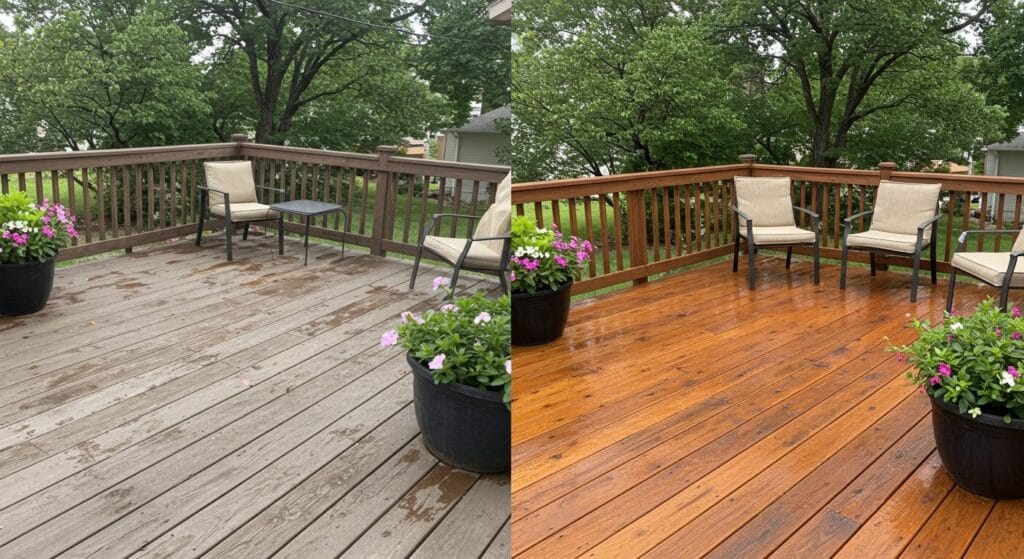
Your backyard deck should be your favorite outdoor retreat, but when it’s looking weathered, gray, or downright unsafe, it becomes more of an eyesore than an oasis. Maybe you’ve been putting off that restoration project because it feels overwhelming, or perhaps you’re not sure where to even begin.
Here’s what I’ve learned after helping countless homeowners breathe new life into their outdoor spaces: deck restoration doesn’t have to break the bank or require professional contractors. With the right approach and these tried-and-true tips, you can transform your deck into the stunning outdoor living space you’ve always wanted.
Whether your deck needs a simple refresh or a complete makeover, these 17 backyard deck restoration tips will guide you through every step of the process.
1. Start With a Thorough Inspection

Before diving into any restoration work, walk every inch of your deck with a critical eye. Look for loose boards, protruding nails, soft spots that might indicate rot, and wobbly railings. This isn’t the fun part, but it’s absolutely crucial for safety.
Pay special attention to areas where water tends to collect – around planters, under furniture that doesn’t get moved often, and near downspouts. These spots are prime candidates for damage that might not be immediately visible.
Don’t forget to check the structural elements underneath your deck. Joists, posts, and footings all need to be in good condition before you start beautifying the surface.
2. Deep Clean Before You Do Anything Else
This step makes the biggest visual difference for the least amount of money. A good deep clean can sometimes eliminate the need for more expensive treatments, especially if your deck is just dirty rather than damaged.
Start by removing all furniture, planters, and accessories. Sweep away debris, then use a stiff brush and deck cleaner to scrub away years of grime. For stubborn stains, let the cleaner sit for 10-15 minutes before scrubbing.
A pressure washer can speed up the process, but use caution – too much pressure can damage wood fibers and create a fuzzy surface that won’t take stain well. Keep the nozzle at least 12 inches away and use a fan tip rather than a pinpoint spray.
3. Replace Damaged Boards Immediately

Once you’ve identified damaged boards during your inspection, don’t hesitate to replace them. Even if they look “okay” from the surface, compromised boards will only get worse and could become safety hazards.
Matching existing wood can be tricky, especially if your deck is several years old. Consider replacing an entire section or creating an intentional pattern with new boards if perfect matching isn’t possible.
When installing new boards, predrill holes to prevent splitting and use galvanized or stainless steel fasteners to prevent rust stains. This small detail makes a huge difference in the long-term appearance of your deck.
4. Sand for a Professional Finish
Sanding might seem tedious, but it’s what separates amateur-looking results from professional ones. You don’t need to sand the entire deck down to bare wood unless you’re dealing with multiple coats of old paint or stain.
Focus on smoothing rough areas, removing splinters, and creating a surface that will accept new stain evenly. A belt sander works well for large areas, while a palm sander is perfect for railings and detailed work.
Always sand with the grain, not against it. Start with coarser grit (around 80) for rough work and finish with finer grit (120-150) for a smooth surface ready for staining.
5. Choose the Right Stain for Your Climate

Not all deck stains are created equal, and what works in Arizona won’t necessarily be the best choice for Maine. Consider your local climate when selecting products – high UV areas need stains with excellent sun protection, while wet climates require superior water resistance.
Transparent stains show off natural wood grain but offer less protection. Semi-transparent stains provide a good balance of beauty and protection. Solid stains offer maximum protection but completely hide the wood grain.
Oil-based stains penetrate deeper and typically last longer, while water-based stains dry faster and have less odor. For most home improvement projects, I recommend starting with a high-quality semi-transparent oil-based stain.
6. Apply Stain in Ideal Weather Conditions
Timing your staining project correctly can make or break the results. Avoid staining in direct sunlight, on windy days, or when rain is expected within 24-48 hours. Early morning or late afternoon applications often work best.
Temperature matters too – most stains perform best when applied between 50-80°F. Wood should be completely dry before application, which means waiting at least 48 hours after cleaning or rain.
Test your chosen stain on an inconspicuous area first. This lets you see how the color looks on your specific wood and ensures proper absorption before committing to the entire deck.
7. Invest in Quality Brushes and Application Tools
The tools you use for staining can dramatically affect your final results. Cheap brushes leave streaks and shed bristles, while quality synthetic brushes designed for deck staining create smooth, even coverage.
For large, flat areas, consider using a stain pad or roller followed by a brush to smooth out the finish. This technique speeds up application while still achieving brush-quality results.
Don’t forget about extension poles for hard-to-reach areas and drop cloths to protect plants and hardscaping. Professional results come from attention to these details.
8. Create Proper Drainage and Ventilation

Water is your deck’s biggest enemy, so improving drainage should be a priority in any restoration project. Ensure your deck slopes slightly away from your house – even a quarter-inch per foot makes a difference.
Clear any debris from between deck boards that might trap moisture. If gaps between boards are too narrow (less than 1/8 inch), consider spacing them wider during your restoration to improve airflow.
Check that gutters and downspouts direct water away from your deck area. Poor drainage around the deck’s perimeter can cause foundational problems that no amount of surface restoration can fix.
9. Address Railing and Baluster Issues
Railings take a beating from weather and daily use, but they’re often overlooked during deck restoration. Wobbly railings aren’t just unsightly – they’re dangerous and likely violate building codes.
Tighten all connections and replace any loose or damaged balusters. If your railings feel unstable, the issue might be with the posts themselves. This is definitely a safety issue that needs immediate attention.
Consider upgrading to composite or metal balusters if you’re tired of maintaining wood ones. These materials require less upkeep and can actually improve your deck’s overall appearance while reducing future maintenance needs.
10. Update Hardware and Fasteners
Old, rusty screws and nails can cause unsightly stains and structural problems. Part of proper deck maintenance involves replacing corroded fasteners with galvanized or stainless steel alternatives.
If you’re dealing with popped nails, don’t just hammer them back down. Remove them and replace with appropriate deck screws, which have better holding power and won’t work loose as easily.
Consider upgrading to hidden fasteners if you’re replacing deck boards. These create a cleaner look and eliminate the safety hazard of protruding screw heads.
11. Plan for Future Maintenance

The best restoration project includes a plan for keeping your deck beautiful long-term. Set up a maintenance schedule that includes annual cleaning, bi-annual inspections, and re-staining every 2-4 years depending on your climate and stain choice.
Keep a small amount of your chosen stain for touch-ups. High-traffic areas and spots that get extra weather exposure might need attention between full re-staining cycles.
Document what products you used, when you applied them, and any issues you encountered. This information becomes invaluable for future maintenance and helps you make better product choices next time.
12. Consider Composite Deck Boards for High-Wear Areas
If certain sections of your deck see constant heavy use, consider replacing those areas with composite materials during your restoration. You can create interesting design patterns by mixing materials strategically.
Composite boards around grill areas, main walkways, and seating zones can significantly reduce future maintenance while maintaining the natural wood look in less trafficked areas.
This approach lets you enjoy the beauty of natural wood while gaining the durability benefits of composite materials where you need them most.
13. Improve Lighting for Safety and Ambiance

Deck restoration is the perfect time to upgrade your outdoor lighting. Proper lighting makes your deck safer and extends its usable hours into the evening.
Solar lights have come a long way and can be installed without electrical work. Consider post cap lights, stair lights, and perimeter lighting for both safety and atmosphere.
If you’re comfortable with electrical work or hiring an electrician, low-voltage LED systems offer the most versatility and long-term value. String lights remain popular for creating cozy ambiance in outdoor spaces.
14. Seal the Deal With Quality Sealers
Even the best stain needs protection from UV rays and moisture. A quality sealer applied over your stain can significantly extend its life and keep your deck looking fresh longer.
Choose a sealer that’s compatible with your stain – some stains include sealers, while others require separate application. Read the manufacturer’s instructions carefully to avoid compatibility issues.
Apply sealers in thin, even coats and avoid over-application, which can lead to peeling and flaking. Like staining, weather conditions matter – apply sealers during moderate temperatures with low humidity for best results.
15. Address Surrounding Landscape
Your deck doesn’t exist in isolation. Overgrown plants touching deck surfaces can trap moisture and cause damage. Trim back vegetation to allow proper air circulation around all deck surfaces.
Consider the impact of sprinkler systems on your deck. Automatic sprinklers that regularly spray deck surfaces can cause premature stain failure and water damage.
Plant selection around your deck matters too. Choose plants that don’t drop sticky sap or excessive debris onto deck surfaces. Your future self will thank you during routine maintenance.
16. Budget for Professional Help When Needed
While many aspects of deck restoration are DIY-friendly, some situations require professional expertise. Structural issues, major repairs, and electrical work should be handled by qualified contractors.
Don’t let pride or budget constraints lead to safety compromises. A professional consultation can often identify issues you might miss and provide solutions that actually save money long-term.
If you’re tackling the project yourself, at least have a professional inspect your work before considering the project complete. This is especially important for any structural modifications or repairs.
17. Document Your Success
Take before, during, and after photos of your restoration project. These serve multiple purposes – they help you remember what you did, provide proof of maintenance for warranty purposes, and give you bragging rights on your beautiful transformation.
Keep receipts and product information in a dedicated file. This documentation helps with future maintenance, warranty claims, and can even add value if you sell your home.
Consider sharing your success story with others. Your experience and lessons learned can help other homeowners tackle their own outdoor deck care projects with confidence.

Your deck restoration project doesn’t have to be overwhelming when you break it down into manageable steps. Start with safety and structural issues, then move on to the aesthetic improvements that will make your outdoor space shine.
Remember that good deck refinishing is as much about preparation as it is about the final finish. Take your time with cleaning, repairs, and surface prep – these steps determine how professional your final results will look.
The investment you make in proper deck maintenance now pays dividends in extended deck life, improved safety, and enhanced enjoyment of your outdoor living space. Whether you’re planning intimate family dinners or larger gatherings, a well-maintained deck becomes the foundation for countless memorable moments.For more inspiration on creating beautiful outdoor seating areas and maximizing your exterior space, explore our collection of outdoor living ideas. Your restored deck is just the beginning of transforming your backyard into the retreat you’ve always wanted.

Sanjai creates easy, affordable home decor ideas that anyone can try. Through simple tips and curated finds, he helps you style rooms you’ll love coming home to.