Making the switch to renewable energy has never been more appealing for homeowners. With rising electricity costs and growing environmental consciousness, solar panel installation represents one of the smartest home improvement ideas you can invest in today.
The journey toward solar power for homes might seem overwhelming at first glance. Between understanding different system types, navigating permits, and choosing qualified installers, there’s definitely a learning curve involved. But here’s the thing – thousands of homeowners successfully make this transition every year, and with the right information, you can too.
Understanding Home Solar Systems: Your Foundation for Success

Before diving into installation specifics, you need to grasp what you’re actually putting on your roof. Solar panels work by converting sunlight into electricity through photovoltaic cells, which then gets converted from DC to AC power through an inverter system.
The most common residential setup involves roof-mounted panels connected to your home’s electrical system. These systems typically include the panels themselves, mounting hardware, an inverter (or multiple microinverters), and monitoring equipment to track your energy production.
Ground-mounted systems offer an alternative for homes with unsuitable roofs or ample yard space. While they require more property and often cost slightly more, they can be positioned for optimal sun exposure and are easier to clean and maintain.
Evaluating Your Home’s Solar Potential

Your roof’s condition, age, and orientation play crucial roles in determining solar viability. South-facing roofs with minimal shading typically produce the most energy, though east and west-facing installations can still be highly effective depending on your local utility rates and energy usage patterns.
Most solar companies recommend roof replacement if your shingles are more than 10-15 years old. This timing consideration becomes part of your overall home improvement planning, as combining projects can save money on labor and scaffolding costs.
Professional solar assessments include detailed shading analysis using specialized tools. Even partial shading from trees, chimneys, or neighboring buildings can significantly impact system performance, so accurate evaluation is essential before committing to installation.
The Installation Process: What to Expect Step by Step

Solar panel installation typically takes 1-3 days for most residential systems, though the entire process from contract signing to system activation spans 6-12 weeks. Permitting and utility approvals account for most of this timeline, not the actual physical installation.
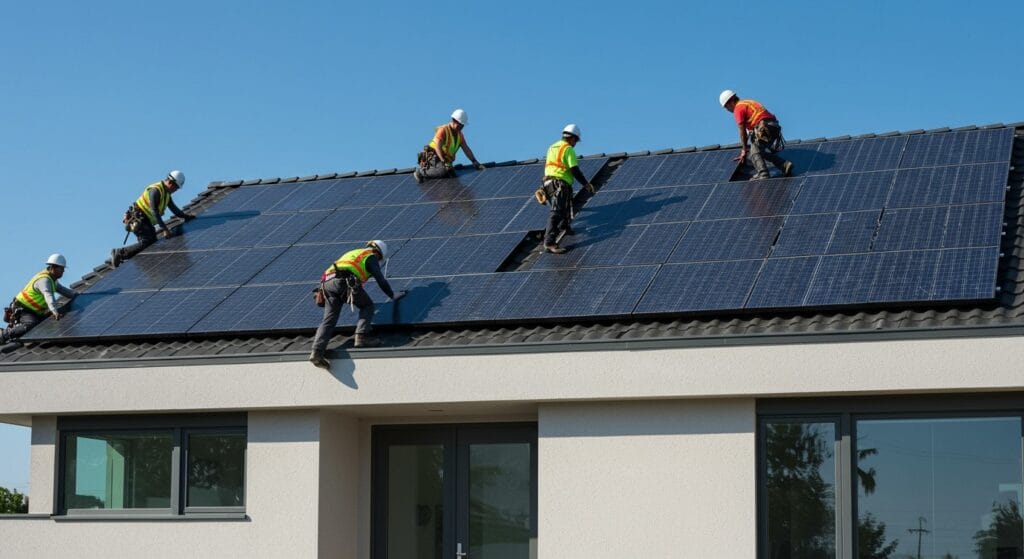
Your installation crew will start by setting up safety equipment and marking panel locations according to your approved design. They’ll install mounting rails directly into roof rafters, ensuring proper structural support and weatherproofing around all penetration points.
Panel mounting happens relatively quickly once the racking system is in place. Crews then run DC wiring between panels and to your inverter location, followed by AC wiring to your electrical panel and utility meter.
Permits, Inspections, and Regulatory Requirements

Every solar installation requires building permits from your local jurisdiction, and requirements vary significantly by location. Your installer typically handles all permitting, but understanding the process helps you ask informed questions and avoid delays.
Most areas require structural engineering reviews to ensure your roof can support additional weight. Panel systems add roughly 2-4 pounds per square foot, which most modern homes handle easily, but older structures may need reinforcement.
Electrical inspections focus on proper grounding, disconnect switches, and code-compliant wiring. Your local electrical inspector will verify everything meets National Electrical Code standards before approving your system for operation.
Choosing the Right Solar Equipment and Technology

Panel technology has evolved dramatically in recent years, with higher efficiency models producing more power from smaller roof areas. Monocrystalline panels typically offer the best efficiency and longevity, while polycrystalline options provide solid performance at lower costs.
Inverter selection significantly impacts system performance and monitoring capabilities. String inverters offer the lowest upfront cost but can be affected by shading on individual panels. Microinverters and power optimizers cost more initially but provide panel-level monitoring and better performance in partially shaded conditions.
Battery storage integration is becoming increasingly popular, especially in areas with time-of-use electricity rates or frequent power outages. While batteries increase initial investment substantially, they provide energy independence and can reduce long-term electricity costs in certain scenarios.
Financial Considerations and Return on Investment

Solar panel installation costs vary widely based on system size, equipment quality, and local market conditions. According to the Solar Energy Industries Association, residential systems typically range from $15,000 to $30,000 before incentives, with most homeowners seeing payback periods of 6-10 years.
Federal tax credits currently provide 30% of installation costs back through tax savings, while many states and utilities offer additional rebates or performance incentives. Some areas also allow net metering, where excess solar production credits offset future electricity usage.
Financing options include cash purchases, solar loans, leases, and power purchase agreements. Cash purchases typically provide the best long-term returns, while solar loans can make systems accessible with little to no money down and immediate monthly savings.
Finding and Vetting Solar Installation Companies

Choosing the right installer matters as much as selecting quality equipment. Look for companies with proper licensing, insurance, and local Better Business Bureau ratings. NABCEP (North American Board of Certified Energy Practitioners) certification indicates professional training and competency.
Get multiple quotes from different installers to compare pricing, equipment recommendations, and warranty terms. Be wary of door-to-door salespeople or high-pressure tactics – reputable companies provide detailed proposals and allow time for decision-making.
Ask about workmanship warranties, equipment warranties, and performance guarantees. Most quality installers provide 10-20 year workmanship warranties and help facilitate manufacturer warranties on equipment, which typically last 20-25 years for panels and 10-12 years for inverters.
Much like researching contractors for other projects such as smart home automation or major renovations, thorough vetting prevents costly mistakes and ensures professional installation quality.
Maintenance and Long-term Performance Expectations

Solar systems require minimal maintenance, but regular monitoring ensures optimal performance over their 25+ year lifespan. Most modern systems include smartphone apps that track daily energy production and alert you to potential issues.
Panel cleaning frequency depends on your local environment – dusty or heavily polluted areas may benefit from annual cleaning, while most residential systems stay clean through natural rainfall. Professional cleaning services are available, though many homeowners handle this simple task themselves.
Inverter replacement represents the most likely maintenance expense, as these components typically last 10-15 years compared to 25+ years for panels. Budget roughly $1,000-$3,000 for inverter replacement, depending on your system size and technology type.
Integration with Home Design and Curb Appeal

Modern solar installations can actually enhance your home’s appearance when properly designed and installed. Sleek, low-profile mounting systems create clean lines that complement most architectural styles, from traditional to contemporary designs.
Panel layout planning considers both energy production and aesthetic impact. Skilled installers work around roof features like dormers, chimneys, and vents to create balanced, symmetrical arrangements that look intentional rather than random.
Color coordination between panels and roofing materials helps create cohesive visual appeal. All-black panels tend to blend better with darker roofing, while traditional blue panels may complement certain architectural elements depending on your home’s color palette.
Consider how solar installation fits into your broader home improvement vision. Just as you might plan outdoor seating areas or backyard improvements to enhance your property’s value and enjoyment, solar panels represent both functional and aesthetic upgrades when properly implemented.
Common Installation Challenges and Solutions

Roof complexity can present installation challenges, particularly with multiple levels, unusual angles, or extensive dormers. Experienced installers adapt mounting strategies and may recommend ground-mounted alternatives for especially complicated roof configurations.
Electrical panel upgrades sometimes become necessary to accommodate solar interconnection, especially in older homes with outdated service panels. While this adds cost and complexity, it’s often beneficial for overall home safety and may be required regardless of solar installation.
Homeowner association (HOA) restrictions occasionally complicate solar installations, though many states have “solar rights” laws limiting HOA authority over renewable energy systems. Review your HOA covenants and work with your installer to address any concerns early in the planning process.

Solar panel installation represents a significant but worthwhile investment for most homeowners. The combination of environmental benefits, long-term energy savings, and potential property value increases makes renewable energy systems increasingly attractive options.
Success depends largely on careful planning, quality equipment selection, and working with experienced professionals who understand local requirements and best practices. Take time to research thoroughly, get multiple quotes, and ask detailed questions about equipment, warranties, and expected performance.
The solar industry continues evolving rapidly, with improving technology and falling costs making home solar systems more accessible every year. Whether you’re motivated by environmental concerns, energy independence, or financial savings, solar installation can be a smart addition to your home improvement portfolio.

Sanjai creates easy, affordable home decor ideas that anyone can try. Through simple tips and curated finds, he helps you style rooms you’ll love coming home to.