When you’re dealing with a tiny bedroom, every square inch counts – especially inside your dresser drawers. I’ve been there, staring at a jumbled mess of clothes wondering how everything fits so poorly when the dresser looked perfectly sized in the store.
The truth is, most of us never learned how to properly organize dresser drawers. We just stuff things in and hope for the best. But with the right small bedroom dresser organization hacks, you can double (or even triple) your storage capacity while keeping everything neat and accessible.

Whether you’re working with a vintage hand-me-down or a sleek modern piece, these dresser storage tips will help you maximize every drawer. From clever folding techniques to brilliant divider solutions, you’re about to discover how to turn your dresser chaos into organized bliss.
1. Master the Art of Vertical Folding

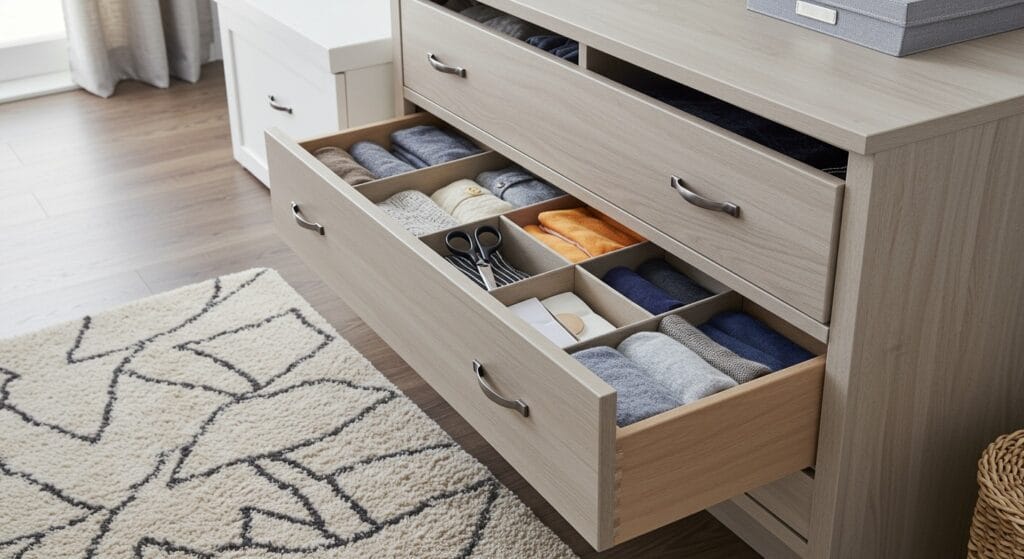
Forget everything you know about folding clothes flat and stacking them. The Marie Kondo method of vertical folding isn’t just trendy – it’s a complete game-changer for dresser organization.
When you fold clothes to stand upright, you can see every single item at a glance. No more digging through piles to find that one shirt buried at the bottom. This technique works especially well for t-shirts, tank tops, pajamas, and casual pants.
The key is creating rectangular packages that can stand independently. Fold your shirt in thirds lengthwise, then fold it in half or thirds depending on drawer depth. Practice makes perfect, but once you get the hang of it, you’ll wonder why you ever folded any other way.
2. Use Drawer Dividers Like a Pro

Adjustable drawer dividers are the secret weapon of organized people everywhere. They create designated zones for different clothing categories and prevent everything from shifting around when you open and close drawers.
Look for expandable dividers that can adjust to your exact drawer dimensions. Bamboo versions are sturdy and eco-friendly, while plastic options often come in sets with multiple sizes. The investment pays for itself when you can find everything instantly.
Don’t limit dividers to just underwear and socks. Use larger sections for folded jeans, workout clothes, or seasonal bedroom items. The goal is creating a home for everything so nothing gets lost in the shuffle.
3. Maximize Shallow Drawers with Small Items

Those frustratingly shallow top drawers that seem useless? They’re actually perfect for small accessories when organized properly. Think jewelry, watches, hair accessories, and undergarments.
Use small containers or ice cube trays to create individual compartments for rings, earrings, and delicate items. Velvet jewelry trays work beautifully for this purpose and protect your pieces from scratches.
Consider dedicating one section to items you use daily – hair ties, favorite earrings, watch, or reading glasses. Having everything visible and separated prevents that frantic morning search for matching socks or your go-to necklace.
4. Roll Clothes for Maximum Space

Rolling works wonders for certain types of clothing, especially when combined with vertical storage. T-shirts, tank tops, pajama sets, and casual dresses all roll beautifully and take up significantly less space than folded alternatives.
The rolling technique works particularly well for small bedroom storage solutions because it eliminates wasted air space between folded items. You can fit nearly twice as many rolled items in the same drawer space.
Try the military roll for ultimate space efficiency – fold sleeves in, roll tightly from the bottom, and tuck the top edge around the roll to secure it. These little packages stay neat and won’t unroll even when you’re rummaging around the drawer.
5. Create Zones for Different Clothing Categories

Stop mixing everything together and start thinking like a store merchandiser. Group similar items in dedicated zones within each drawer – or better yet, dedicate entire drawers to specific categories.
One drawer could be exclusively for sleepwear and loungewear, another for undergarments and socks, and a third for casual tops and bottoms. This system makes getting dressed faster and helps you see exactly what you have.
Label the inside edge of each drawer if you’re sharing the dresser with a partner or roommate. Clear zones eliminate confusion and make it easier for everyone to maintain the organization system you’ve worked hard to create.
6. Utilize Vertical Space with Stackable Organizers

Don’t forget about the vertical space inside your drawers. Stackable organizers and tiered trays can effectively double your storage capacity in deeper drawers.
Look for organizers with different compartment sizes to accommodate various items. Small compartments work for jewelry and accessories, while larger sections handle folded undergarments or rolled socks.
These systems work particularly well in the deeper bottom drawers of your dresser. You can create multiple levels of storage while still keeping everything easily accessible and visible.
7. Add Shelf Liners for Easy Maintenance

Shelf liners aren’t just for kitchen cabinets – they’re brilliant for dresser drawers too. Choose washable options that can handle the occasional spill or transfer from damp clothes.
Non-slip liners help keep organizers and folded clothes exactly where you place them. No more shifting piles every time you open a drawer. This small detail makes a huge difference in maintaining your organization system long-term.
Scented liners add a lovely touch and keep clothes smelling fresh. Cedar options naturally repel moths and other insects while adding a pleasant, clean scent to your storage and organization setup.
8. Repurpose Household Items as Organizers

Before buying expensive organizers, look around your home for items that can do double duty. Small boxes, mason jars, and even clean food containers can create perfect compartments for dresser organization.
Shoebox lids work wonderfully as shallow trays for socks and undergarments. Clean yogurt containers are perfect for separating different types of accessories. Wine boxes can be cut down to create custom-sized dividers.
This approach is especially helpful when you’re just starting to organize and aren’t sure what sizes and configurations work best for your specific needs. Once you determine your ideal setup, you can invest in prettier permanent solutions.
9. Store Seasonal Items in Bottom Drawers

Keep your most-used items in the top drawers where they’re easiest to access. Reserve bottom drawers for seasonal clothing, extra bedding, or items you don’t need daily.
Vacuum storage bags work well for bulky seasonal items like sweaters or heavy pajamas. They compress down significantly and can fit in spaces where the full-sized items wouldn’t. Just remember to label them clearly.
Rotate seasonal items quarterly to keep your most accessible storage filled with clothes you actually wear. This prevents you from digging through summer tank tops to find winter sweaters every morning.
10. Use the Inside of Drawer Fronts

The inside surface of your drawer fronts offers valuable real estate for organization. Small hooks can hold belts, scarves, or jewelry. Adhesive pockets work well for flat items like patterns or inspiration photos.
Over-the-door shoe organizers can be cut down and attached to drawer fronts to create multiple small pockets. This works particularly well for underwear, socks, or accessories that tend to get lost in larger spaces.
Make sure whatever you attach doesn’t interfere with the drawer closing properly or add too much weight. The goal is maximizing space without compromising functionality.
11. Implement the One-Week Test

Before committing to any organization system, try living with it for a full week. This test period reveals whether your setup actually works with your daily routine or just looks pretty in photos.
Pay attention to which areas get messy first and which organizing tools you actually use versus ignore. Real life has a way of showing you what works and what doesn’t, regardless of how Pinterest-perfect something appears.
Adjust your system based on your actual habits rather than fighting against them. If you always drop clothes in a particular spot, put a basket there instead of trying to change the behavior.
12. Create a Capsule Wardrobe Approach

Sometimes the best organization hack is simply having fewer items to organize. Consider implementing elements of a capsule wardrobe approach, keeping only pieces you genuinely love and wear regularly.
This doesn’t mean throwing out everything you own, but rather being more selective about what earns prime dresser real estate. Store occasional-wear items elsewhere and keep daily essentials easily accessible.
A streamlined wardrobe makes organization exponentially easier and helps you make faster decisions each morning. Quality over quantity applies perfectly to small bedroom organization situations.
13. Label Everything for Long-Term Success

Labels might seem excessive for personal dresser organization, but they’re incredibly helpful for maintaining your system over time. Clear labels help family members respect your organization and make it easier to put things back correctly.
Use a label maker for a professional look, or simple masking tape and a marker work just fine. Focus on labeling divider sections and drawer categories rather than individual items.
Consider picture labels if you’re organizing a child’s dresser or sharing space with someone who might not remember your system. Visual cues work better than words for many people and help maintain organization long-term.
14. Regular Maintenance is Everything

The most brilliant organization system in the world fails without regular maintenance. Set aside 10 minutes weekly to reset your drawers and put everything back in its designated spot.
Use this time to also remove items that no longer fit or aren’t being worn. Donation bags should be a regular part of any clothing organization system, especially in small spaces where every item needs to earn its place.
Consider doing a monthly deep clean where you wipe down drawers, wash organizers, and reassess whether your current system still serves your needs. Organization is an ongoing process, not a one-time project.
Transform Your Dresser Into an Organized Haven
These small bedroom dresser organization hacks prove that size limitations don’t have to mean storage compromises. With the right techniques and tools, even the tiniest dresser can hold an impressive amount while keeping everything neat and accessible.
The key is finding the right combination of folding techniques, organizers, and systems that work with your specific space and habits. Start with one or two hacks that appeal to you most, then gradually implement others as you see what works best.
Remember, the goal isn’t to create magazine-perfect drawers that you’re afraid to use. You want functional, beautiful organization that makes your daily routine easier and your small bedroom feel more spacious. With these proven strategies, you can turn your dresser from a source of frustration into your favorite organizational success story. For more ways to maximize your space, check out our comprehensive guide to storage ideas for small homes, and don’t miss our storage hacks for home organization for room-by-room solutions.

Sanjai creates easy, affordable home decor ideas that anyone can try. Through simple tips and curated finds, he helps you style rooms you’ll love coming home to.