Does your bedroom wardrobe feel more like a game of Tetris than an organized storage solution? You’re definitely not alone. Most of us have stood in front of our closets, wondering how we accumulated so much stuff and where on earth to put it all.
The truth is, a well-designed bedroom wardrobe isn’t just about having a place to hang your clothes – it’s about creating a system that actually works for your lifestyle. Whether you’re working with a tiny reach-in closet or dreaming of a spacious walk-in, the right design can transform your daily routine and make getting dressed feel effortless rather than overwhelming.
From clever built-in solutions to creative DIY hacks, these 22 wardrobe design ideas will help you maximize every inch of storage space while keeping your bedroom looking polished and organized.
Built-In Wardrobe Solutions
1. Floor-to-Ceiling Custom Built-Ins
Custom built-in wardrobes are the holy grail of bedroom storage solutions. By extending from floor to ceiling, you’re utilizing every available inch of vertical space that would otherwise go unused. These wardrobes can be designed to fit awkward spaces, work around slanted ceilings, or incorporate existing architectural features.

The beauty of custom built-ins lies in their ability to blend seamlessly with your room’s architecture. You can choose materials and finishes that complement your bedroom ideas perfectly, whether that’s painted MDF for a clean modern look or natural wood for warmth and texture.
What makes these particularly effective is the ability to customize the interior layout completely. You can designate specific areas for different types of clothing, incorporate pull-out shoe racks, or even include a small vanity area within the wardrobe itself.
2. Corner Wardrobe Designs
Corner spaces are often the forgotten heroes of bedroom storage. A well-designed corner wardrobe can turn an awkward, unusable space into a storage powerhouse. L-shaped configurations work particularly well, allowing you to wrap storage around the corner for maximum capacity.

Consider incorporating carousel systems or lazy Susan-style rotating shelves in the deep corner areas. These rotating mechanisms ensure that items stored in the back remain easily accessible, preventing the dreaded “black hole” effect that corners can create.
The key is working with your room’s natural flow rather than against it. A corner wardrobe can actually make your bedroom feel more spacious by keeping all storage contained in one area, leaving the rest of the room open and uncluttered.
3. Sliding Door Built-Ins
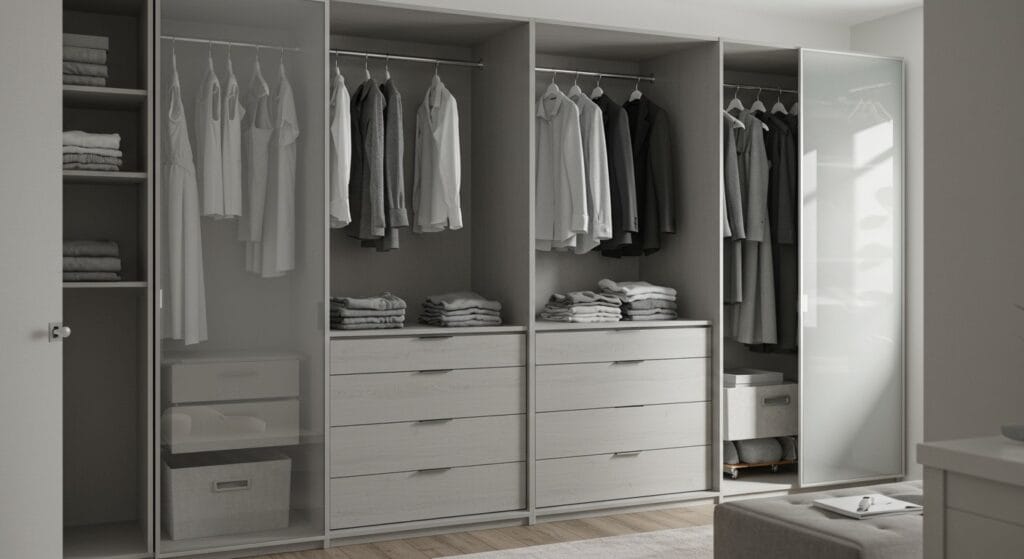
When floor space is at a premium, sliding doors are your best friend. Unlike traditional hinged doors that require clearance to open, sliding doors glide along tracks, making them perfect for narrow bedrooms or when your wardrobe sits close to your bed.

Modern sliding door systems have come a long way from the basic mirrored versions of the past. You can choose from frosted glass for a contemporary look, fabric panels for softness, or even chalkboard paint for a functional, creative touch.
The interior organization becomes even more important with sliding doors since you’re typically accessing one section at a time. Consider dividing your wardrobe into zones – work clothes, casual wear, seasonal items – so you can slide to exactly what you need without having to search through everything.
Walk-In Wardrobe Inspirations
4. Boutique-Style Walk-In Closets
Transform your walk-in closet into a personal boutique experience. This approach focuses on displaying your clothes and accessories like merchandise in a high-end store, making everything visible and easily accessible.

Install glass-front cabinets for your most beautiful pieces, add LED strip lighting under shelves, and consider a central island with drawers for accessories. The goal is to make your wardrobe feel like a destination rather than just a storage space.
Think about incorporating elements you’d find in your favorite clothing store: beautiful hangers, organized color coordination, and strategic lighting that makes everything look its best. This approach works especially well if you have a collection of special occasion pieces or investment items that deserve to be showcased.
5. U-Shaped Walk-In Layout
The U-shaped layout is incredibly efficient for walk-in closets, providing maximum storage along three walls while maintaining a clear pathway through the center. This configuration works well in square or rectangular spaces and allows for different zones for different types of clothing.

Designate one wall for long items like dresses and coats, another for shorter items like tops and pants, and the third for accessories, shoes, or seasonal storage. The central space can accommodate a small bench or ottoman, providing both seating and additional storage.
This layout also works beautifully with the principles of storage and organization ideas, allowing you to create distinct zones that make finding what you need much more intuitive.
6. Walk-In with Central Island
A central island transforms your walk-in closet into a true dressing room. The island provides additional storage, a surface for laying out clothes, and often includes a mirror for outfit coordination.

Consider including specialized storage in your island: jewelry drawers with felt-lined compartments, pull-out bins for lingerie, or even a small laundry hamper. The top can serve as a folding surface or display area for accessories you use frequently.
The island also creates a natural workflow for getting dressed – you can pull items from the surrounding walls and use the island as a staging area to put together complete outfits.
Small Space Wardrobe Solutions
7. Reach-In Closet Maximization
Don’t underestimate the potential of a small reach-in closet. With the right organization system, even a narrow closet can hold a surprising amount of clothing and accessories.

Double hanging rods are your first line of defense against limited space. By hanging shorter items like shirts and pants on two levels, you immediately double your hanging capacity. Add shelf dividers to keep folded items neat and prevent toppling stacks.
Over-the-door organizers can hold shoes, accessories, or even cleaning supplies. Consider clear containers for the upper shelves so you can see what’s stored there, and use vacuum storage bags for out-of-season items to compress them down to a fraction of their normal size.
8. Armoire and Furniture Solutions
Sometimes the best wardrobe solution isn’t built into the walls at all. A beautiful armoire or wardrobe furniture piece can provide substantial storage while adding character to your bedroom.

Modern armoires often come with adjustable shelving and multiple hanging rods, allowing you to customize the interior to your specific needs. Look for pieces with additional features like built-in lighting or soft-close drawers.
The advantage of furniture-based solutions is flexibility – you can take them with you when you move, and they can be repositioned within your room as your needs change. Plus, they often cost less than custom built-ins while still providing excellent storage capacity.
9. Under-Bed Wardrobe Extensions
Your bed represents a huge amount of untapped storage potential. Under-bed storage box ideas can extend your wardrobe capacity significantly, especially for items you don’t need to access daily.

Seasonal clothing is perfect for under-bed storage. Vacuum-sealed bags can compress winter coats and bulky sweaters down to manageable sizes, while rolling drawers provide easy access to items like extra bedding or workout clothes.
Consider the height of your bed when choosing under-bed storage. Low-profile containers work best for platform beds, while higher beds can accommodate deeper storage boxes or even multiple layers of organization.
Smart Organization Features
10. Pull-Out Shoe Racks
Shoes can quickly overwhelm a wardrobe if not properly organized. Pull-out shoe racks maximize space while keeping your footwear collection visible and accessible.

Consider your shoe collection when choosing a rack system. If you have many high heels, look for racks with adjustable heights. For sneaker collections, wider shelves accommodate bulky athletic shoes better than narrow traditional shoe racks.
Angled shoe racks work particularly well because they display shoes clearly while taking up minimal depth in your wardrobe. Some systems even include LED lighting to illuminate your options clearly.
11. Jewelry and Accessory Drawers
Dedicated storage for jewelry and accessories prevents tangling, loss, and damage while keeping these smaller items organized and easy to find.

Felt-lined drawers protect delicate items from scratches, while clear acrylic organizers let you see everything at a glance. Consider including a small LED strip inside accessory drawers – the improved visibility makes selecting pieces much easier.
Think about your daily routine when organizing these drawers. Items you wear frequently should be in the most accessible spots, while special occasion pieces can be stored in secondary locations.
12. Belt and Tie Organization
Belts and ties present unique storage challenges – they need to be wrinkle-free and easily visible, but they can quickly become tangled messes in traditional drawers.

Pull-out tie racks keep neckties smooth and visible, while belt hooks or sliding belt organizers prevent the tangled heap that often develops in drawers. Some systems combine both functions in one compact unit.
Consider installing these organizers at eye level for easy browsing. The key is making each item visible without having to move others out of the way.
Lighting Solutions for Wardrobes
13. LED Strip Lighting
Proper lighting transforms a wardrobe from a dark storage cave into a bright, functional space where you can actually see your clothing colors accurately.

LED strips are energy-efficient and produce minimal heat, making them perfect for enclosed wardrobe spaces. Install them under shelves, around the perimeter of the wardrobe, or vertically along the sides to eliminate shadows.
Motion-activated LED strips are particularly convenient – they turn on automatically when you open the wardrobe and turn off after a set period, saving energy while providing instant illumination when needed.
14. Chandelier or Pendant Lighting
For walk-in closets, a beautiful light fixture can transform the space into a glamorous dressing area while providing excellent overall illumination.

Choose fixtures that complement your bedroom’s overall design aesthetic. A small chandelier adds elegance and drama, while modern pendant lights provide clean, contemporary styling.
Consider the height of your ceiling when selecting fixtures. You want adequate clearance for walking and reaching, but the light should be positioned to minimize shadows throughout the closet space.
15. Motion-Activated Lighting Systems
Motion sensors make wardrobe lighting completely automatic, turning lights on when you enter and off when you leave. This convenience factor can’t be overstated, especially for early morning or late evening wardrobe access.

Battery-powered motion lights are particularly useful for wardrobes without existing electrical connections. These systems have improved dramatically in recent years, offering bright LED illumination with long battery life.
Consider placing sensors at multiple points – the main entry, inside drawers, and in corner areas that might not be covered by a single sensor. This ensures complete coverage throughout your wardrobe space.
Creative Design Ideas
16. Open Wardrobe Systems
Sometimes the best wardrobe solution is no doors at all. Open systems can make a bedroom feel more spacious while keeping your clothing collection on display.

Open wardrobes work best when you maintain high organization standards – everything needs to look good all the time since it’s always visible. Color coordination and consistent hangers become more important in open systems.
This approach works particularly well in modern minimalist bedroom decor schemes where the wardrobe becomes part of the room’s overall aesthetic rather than something to hide away.
17. Mixed Material Wardrobes
Combining different materials – wood, metal, glass, fabric – creates visual interest while serving different functional needs within your wardrobe system.

Wood provides warmth and works well for visible elements like shelving and drawer fronts. Metal components like hanging rods and hardware add durability and modern appeal. Glass doors showcase special pieces while protecting them from dust.
Fabric elements like bins and drawer linings add softness and can introduce color or pattern to coordinate with your bedroom’s overall design scheme.
18. Wardrobe with Integrated Vanity
Combining your wardrobe with a vanity area creates an efficient getting-ready zone that consolidates all your morning routine needs in one location.

The vanity can be as simple as a pull-out drawer with a mirror above it, or as elaborate as a full makeup station with professional lighting and electrical outlets for styling tools.
Consider the workflow between clothing selection and grooming when designing this combination. The mirror should be positioned so you can see complete outfits, and storage for grooming supplies should be within easy reach of the vanity area.
Technology Integration
19. Smart Wardrobe Features
Modern technology can transform your wardrobe into a smart storage system that helps you manage your clothing collection more effectively.

Smart mirrors can display weather information to help with outfit selection, or connect to apps that track your wardrobe usage patterns. Some systems even photograph your outfits to help you remember successful combinations.
Automated features like motorized hanging systems or rotating carousels make accessing items in high or deep storage areas much easier. While these features represent a significant investment, they can be particularly valuable in luxury homes or for people with mobility concerns.
20. App-Connected Organization
Wardrobe organization apps can help you catalog your clothing collection, plan outfits, and track what you wear most (and least) frequently.

These apps work particularly well when combined with good wardrobe lighting and organization. You can photograph items as you organize them, creating a digital inventory that helps with shopping decisions and outfit planning.
Some apps also integrate with weather services to suggest appropriate clothing based on daily conditions, or with your calendar to recommend outfits suitable for your planned activities.
Budget-Friendly Solutions
21. DIY Wardrobe Makeovers
You don’t need a huge budget to dramatically improve your wardrobe organization. Many effective solutions can be created with basic tools and materials from home improvement stores.

Simple additions like extra hanging rods, wire shelving, and over-the-door organizers can transform a basic closet. Paint can brighten the interior space, while peel-and-stick wallpaper or contact paper can add pattern and personality.
For those comfortable with basic carpentry, building custom shelving or drawer systems using standard lumber and hardware can provide custom-quality organization at a fraction of the cost of professionally built systems.
22. Repurposed Furniture Solutions
Creative repurposing of existing furniture can provide unique wardrobe solutions while saving money and adding character to your storage system.

Bookshelves can become excellent clothing storage with the addition of baskets or fabric bins. Vintage dressers can be repurposed as sock and underwear storage within larger wardrobe systems. Even old ladders can become unique hanging systems for accessories or frequently worn items.
The key is thinking creatively about how different types of furniture can serve wardrobe functions. Sometimes the most interesting storage solutions come from combining unexpected elements in new ways.
Look for pieces at thrift stores, estate sales, or online marketplaces that have good bones but might need refinishing. With some creativity and elbow grease, you can create storage solutions that are both functional and full of personality.
Maximizing Your Wardrobe’s Potential
Creating an efficient bedroom wardrobe design isn’t just about cramming more stuff into available space – it’s about creating systems that make your daily routines smoother and more enjoyable. The best wardrobe solutions work with your natural habits rather than requiring you to completely change how you think about getting dressed.
Remember that the most beautiful wardrobe in the world won’t work if it doesn’t match your lifestyle. If you’re someone who prefers everything visible, open systems or glass doors make sense. If you want a clean, minimalist look, hidden storage with sleek doors might be your preference.
Whether you’re starting with a small closet organization project or planning a complete bedroom renovation, these ideas can be adapted to work with your space, budget, and personal style. The key is starting with a clear understanding of what you need to store, how you prefer to access it, and what aesthetic you want to achieve.
Your wardrobe should be a space that inspires you to look and feel your best every day. With thoughtful planning and the right design elements, even the most challenging storage situations can become organized, efficient, and beautiful spaces that enhance your daily life.

Sanjai creates easy, affordable home decor ideas that anyone can try. Through simple tips and curated finds, he helps you style rooms you’ll love coming home to.