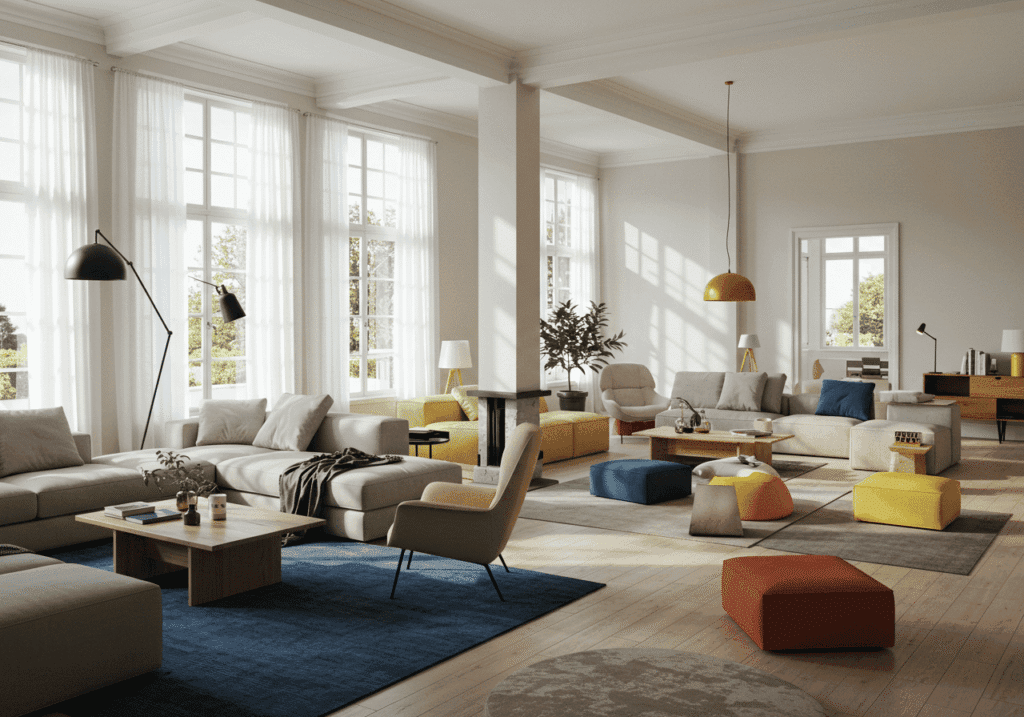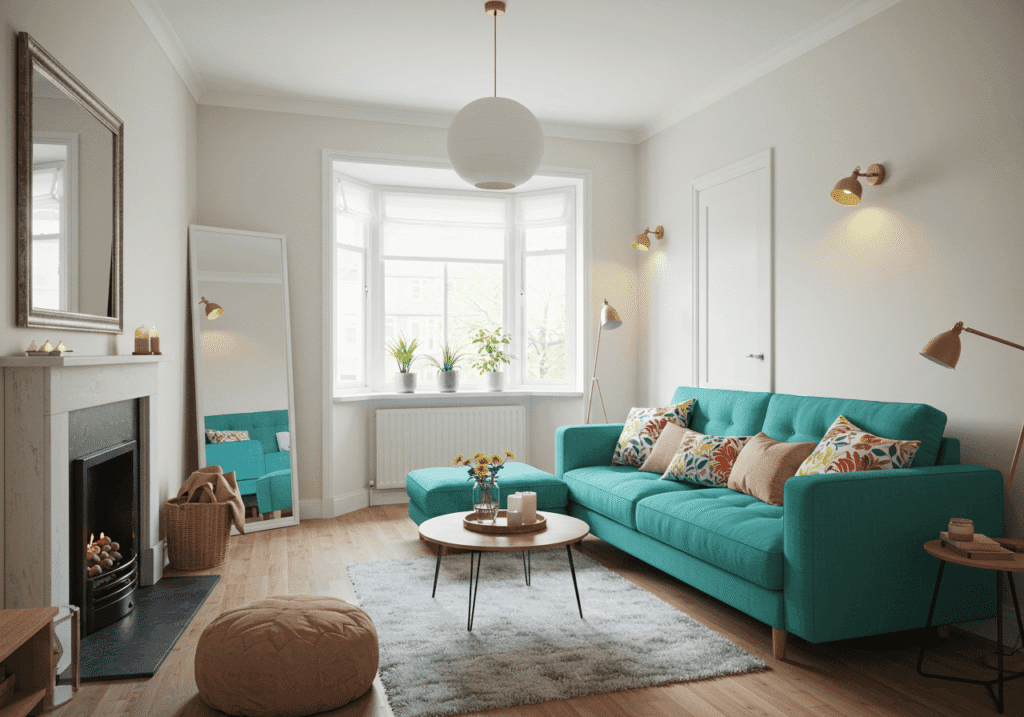

Have you ever walked into a living room that just felt… wrong? Maybe it was too bright, too dim, or somehow lacking that cozy factor you see in magazine photos? The secret isn’t expensive furniture or perfect paint colors – it’s mastering the art of layered lighting.
Most people rely on a single overhead light fixture and wonder why their space feels flat or unwelcoming. But here’s what interior designers know: layered lighting is the foundation of any inviting room. It’s about combining different types of light sources to create depth, mood, and functionality all at once.
Think of it like getting dressed – you wouldn’t wear just a t-shirt in winter, right? Your lighting needs layers too. When done correctly, layered lighting makes your living room feel like that perfect coffee shop where you could sit for hours, or that friend’s house where everyone naturally gravitates toward the couch.
Understanding the Three Essential Layers of Light
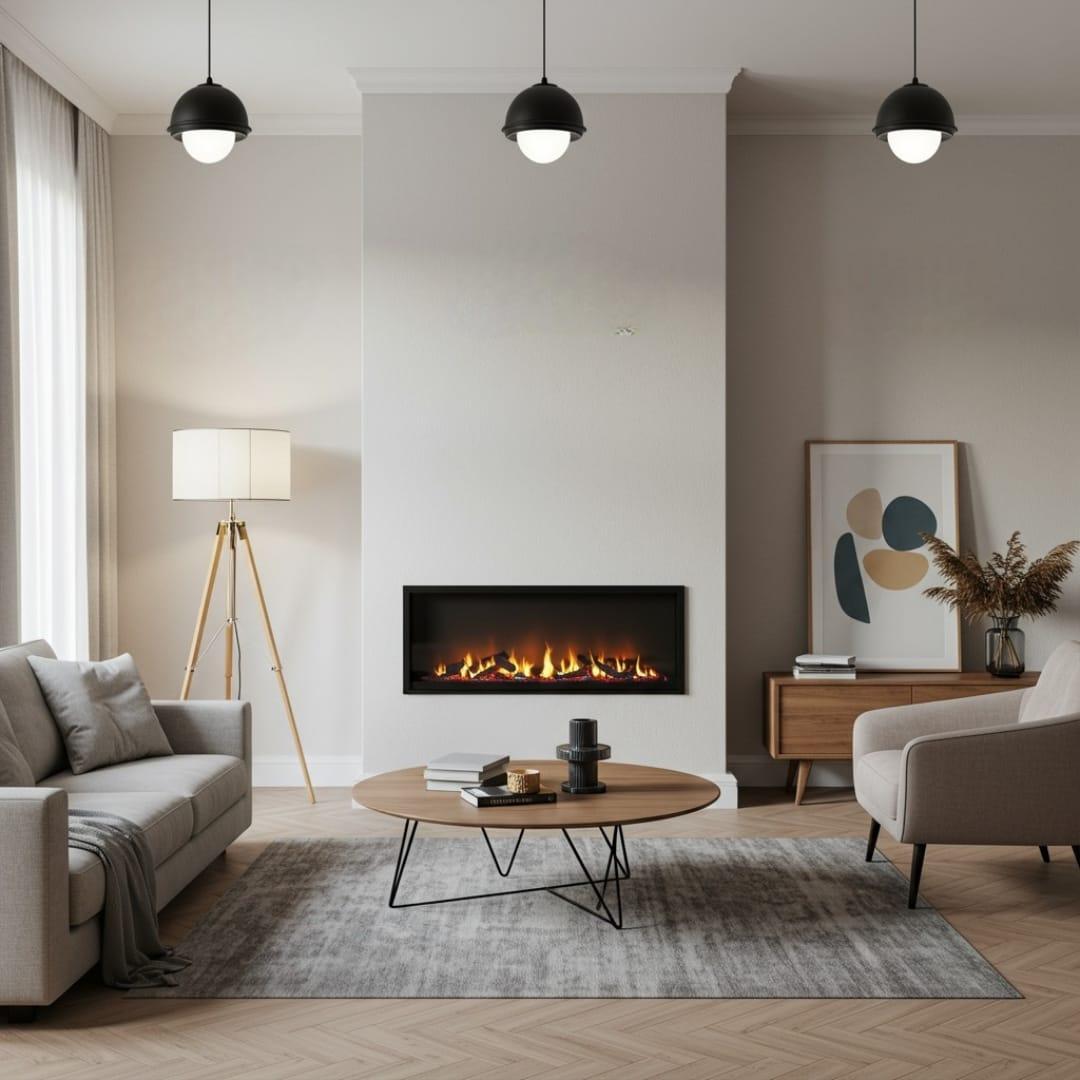
Creating the perfect lighting scheme isn’t complicated once you understand the three fundamental layers. Each serves a specific purpose, and when combined thoughtfully, they transform your space from ordinary to extraordinary.
Ambient lighting forms your foundation layer. This is your general, overall illumination that fills the room with soft, even light. Think ceiling fixtures, recessed lights, or large floor lamps that cast light upward. It’s the lighting equivalent of your base layer of clothing – essential but not meant to do all the heavy lifting alone.
Task lighting is your functional layer, designed for specific activities like reading, working, or cooking. Table lamps beside your sofa, pendant lights over a side table, or adjustable floor lamps all fall into this category. This layer ensures you can actually use your space comfortably without straining your eyes.
Accent lighting adds the magic – it’s your decorative layer that creates visual interest and highlights specific features. Wall sconces, picture lights, candles, or LED strips behind your TV all serve as accent lights. This layer brings personality and depth to your room, making it feel curated rather than just functional.
The beauty lies in how these three layers work together. You might use all three for entertaining, dial down to ambient and accent for movie nights, or focus on ambient and task lighting for reading time.
1. Building Your Foundation with Ambient Lighting
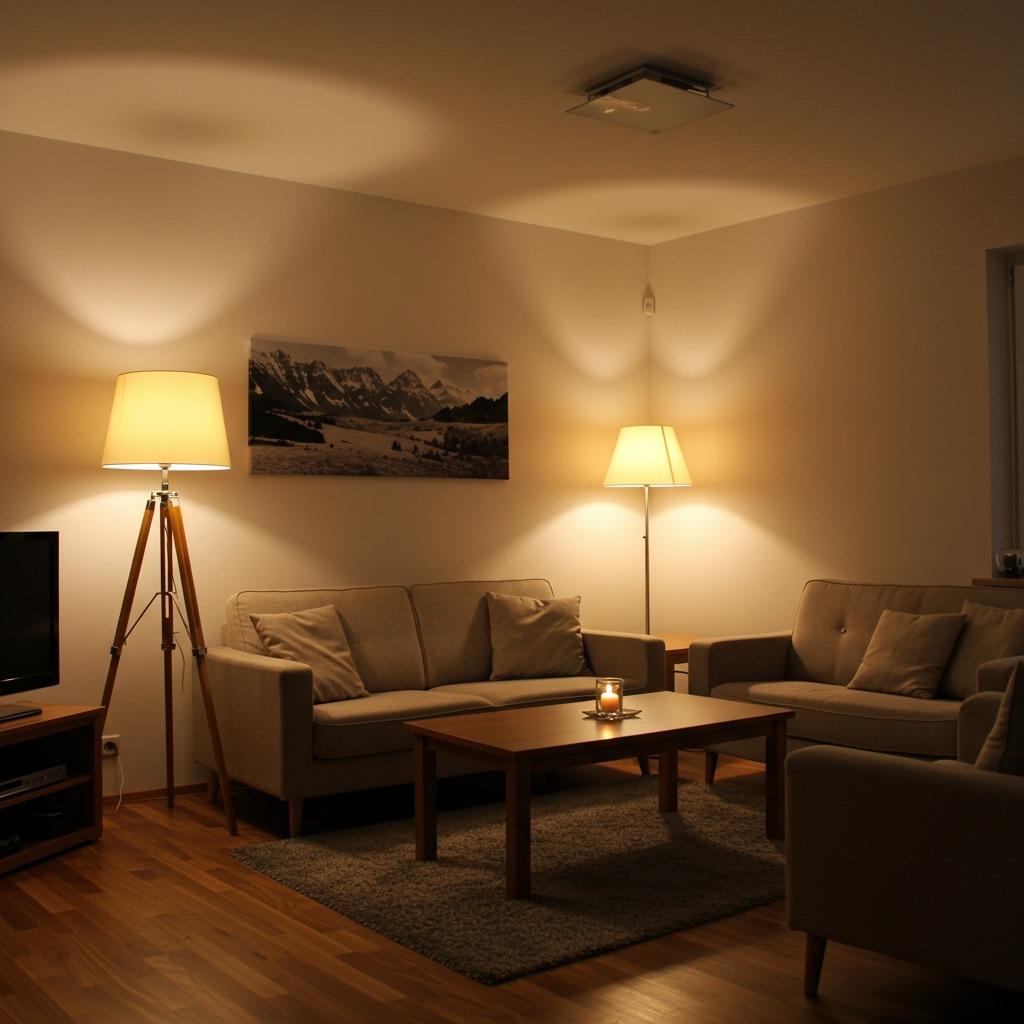
Your living room ideas start with getting the ambient lighting right. This base layer should provide enough general illumination to move safely through the space while creating a welcoming atmosphere.
Ceiling-mounted fixtures remain the most common ambient lighting choice, but they don’t have to be boring builder-grade options. Consider a statement chandelier, modern flush-mount fixture, or even a series of pendant lights if your ceiling height allows. The key is choosing something that distributes light evenly throughout the room.
Recessed lighting offers a clean, modern approach to ambient lighting. Space them about 4-6 feet apart for even coverage, and choose warm-toned LED bulbs (2700K-3000K) to avoid that harsh, office-like feel. If you’re working with existing recessed lights, switching to dimmable LED bulbs can dramatically improve the ambiance.
Don’t overlook floor lamps that cast light upward. A torchiere-style floor lamp in a corner can bounce soft light off the ceiling, creating beautiful ambient lighting without the need for electrical work. This works especially well in small living room layouts where every square foot matters.
For rooms with unique architectural features, consider cove lighting or LED strips hidden behind crown molding or inside built-ins. This indirect lighting approach creates a sophisticated glow that makes ceilings appear higher and rooms feel more spacious.
2. Adding Functionality with Strategic Task Lighting
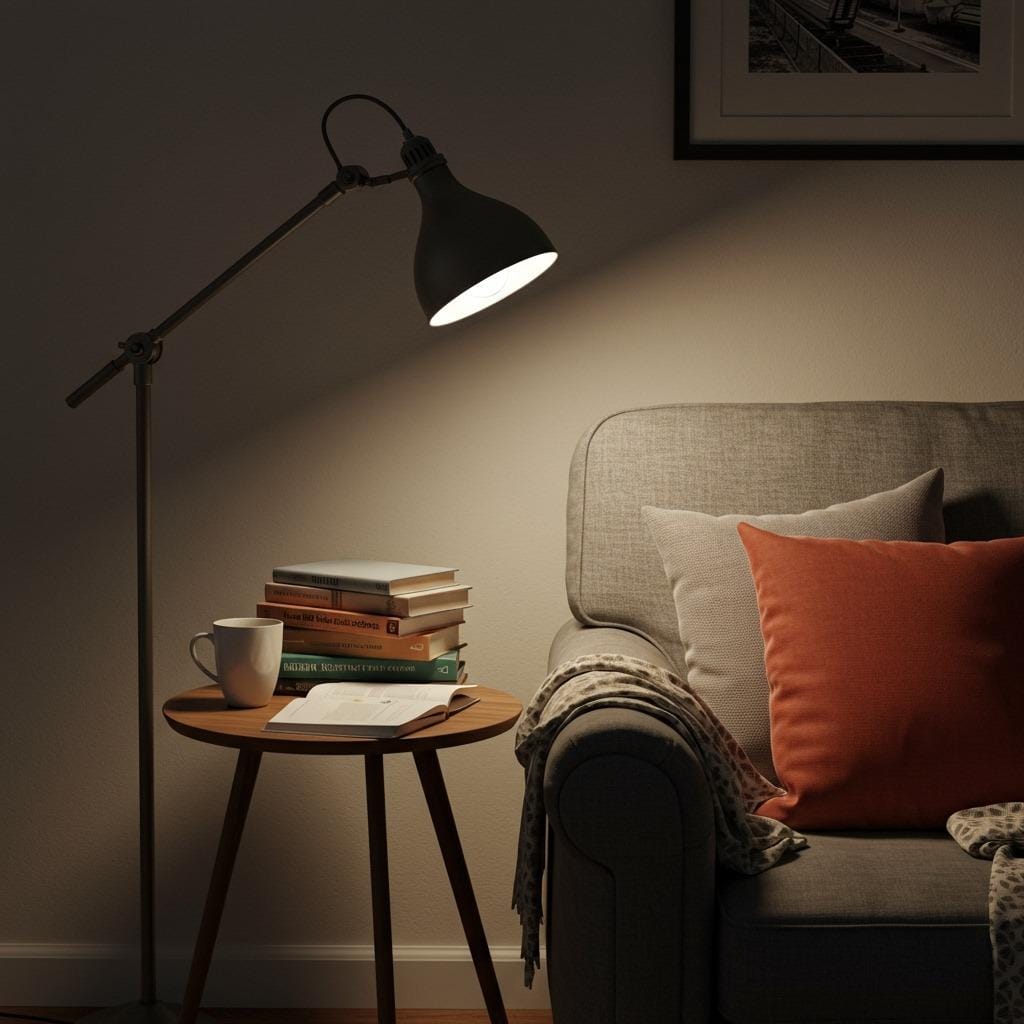
Task lighting bridges the gap between general illumination and specific needs. The goal is to provide focused light exactly where activities happen, without creating harsh shadows or glare.
Reading areas deserve special attention in any living room design. A table lamp on an end table should have its bottom edge at about shoulder height when you’re seated. This positioning prevents shadows from falling across your book or magazine. Adjustable swing-arm lamps work beautifully because you can direct light exactly where needed.
Floor lamps with adjustable heads or multiple brightness settings offer flexibility for different tasks. Position them slightly behind and to the side of seating areas – never directly overhead, which creates unflattering shadows on faces during conversation.
Side table lamps serve double duty as both task and ambient lighting, depending on their shade and bulb choice. Linen or fabric shades diffuse light beautifully for ambient purposes, while metal shades with open tops and bottoms direct light both up and down for more focused task lighting.
Consider the activities that happen in your space. Do you work on a laptop from the couch? Add a small table lamp nearby. Do guests often gather around a particular seating area? Ensure adequate task lighting there too. The best living room furniture arrangement includes thoughtful lighting placement.
3. Creating Drama and Depth with Accent Light Ideas
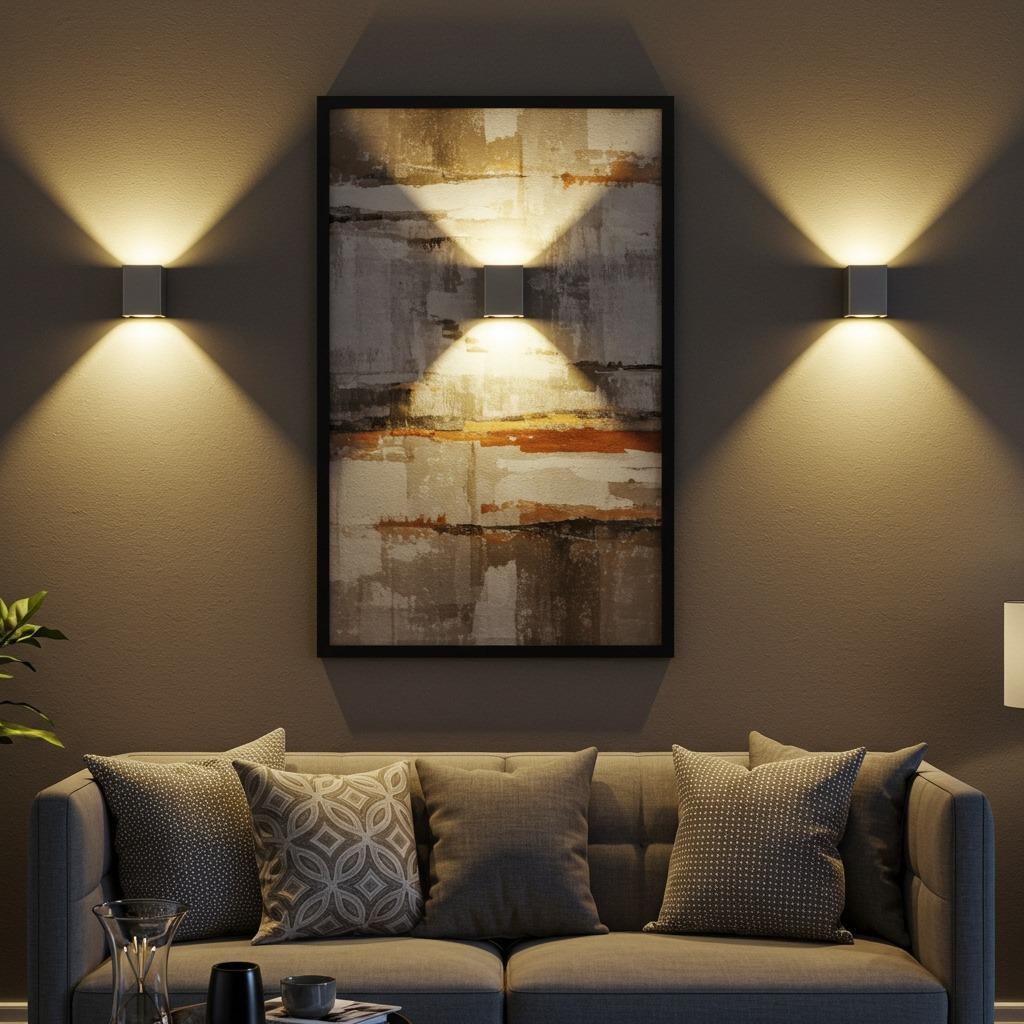
Accent lighting is where your personality shines through. This layer adds visual interest, highlights your favorite features, and creates that coveted “designer look” that makes spaces feel intentional and polished.
Wall sconces offer an elegant way to add accent lighting while freeing up table space. Install them at eye level (approximately 60-66 inches from the floor) and consider dimmable options for maximum versatility. Sconces work particularly well flanking a fireplace, artwork, or architectural feature.
Picture lighting specifically designed for artwork creates gallery-like sophistication. LED picture lights produce minimal heat, protecting your pieces while providing focused illumination. For a more budget-friendly approach, strategically placed track lighting can highlight multiple wall features.
Don’t underestimate the power of decorative string lights or LED strips. Hidden behind floating shelves, inside built-ins, or along the back edge of a TV console, they create a warm glow that adds depth without overwhelming the space. This technique works especially well in contemporary living room designs.
Candles and battery-operated LED candles provide the ultimate accent lighting for cozy evenings. Group them in odd numbers on coffee tables, mantels, or side tables. The flickering light creates movement and warmth that no other light source can replicate.
Table lamps with unique or colorful shades can serve as accent lighting when you want to make a statement. A bold lamp shade becomes both a light source and a decorative element, especially effective in neutral color schemes.
4. Choosing the Right Bulbs and Controls for Each Layer
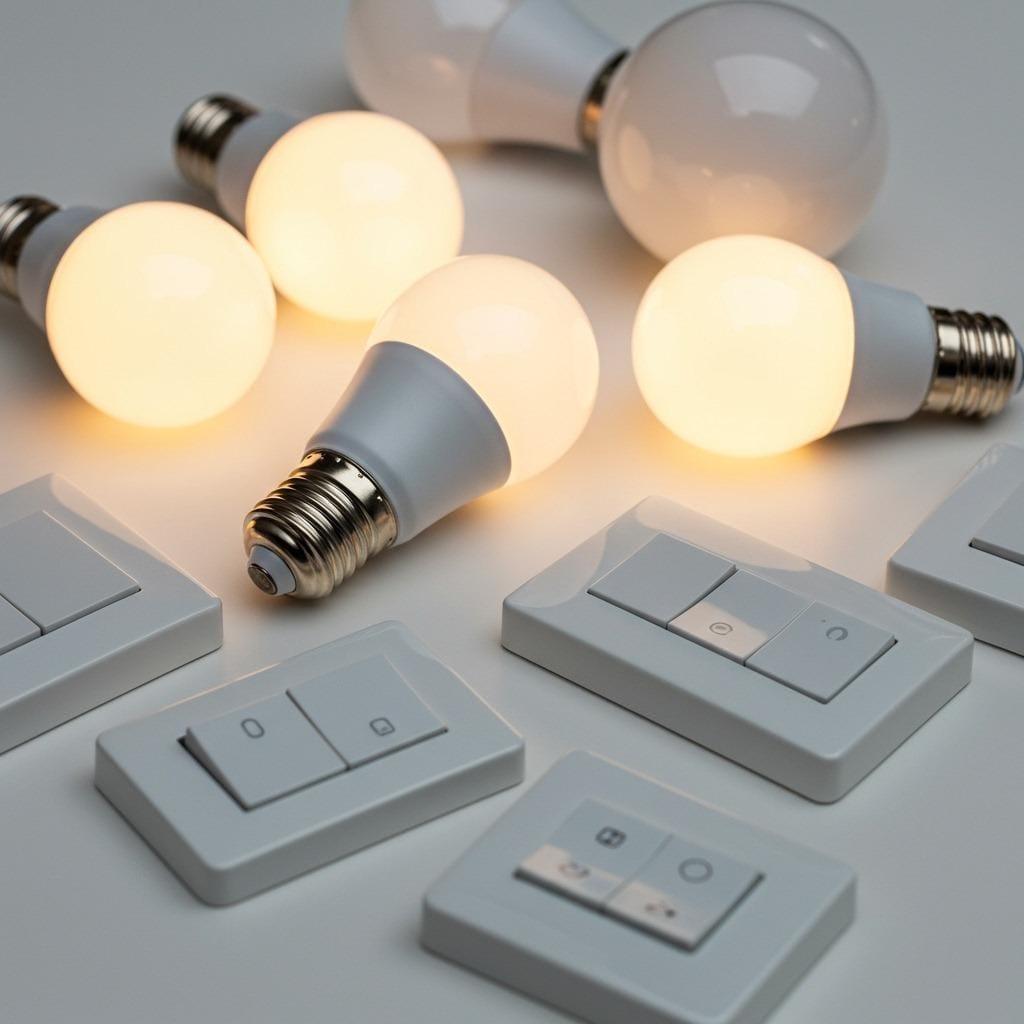
The bulbs you choose can make or break your layered lighting scheme. Color temperature, measured in Kelvin, dramatically affects the mood of your space. For cozy living rooms, stick with warm light (2700K-3000K) across all layers to maintain consistency.
LED bulbs offer the best combination of energy efficiency, longevity, and light quality. Look for high-quality LEDs with a Color Rendering Index (CRI) of 90 or higher – this ensures colors appear natural and vibrant under the light. Cheap LEDs often have a harsh quality that undermines even the best lighting design.
Dimmable options are non-negotiable for successful layered lighting. Each layer should be controllable independently, allowing you to adjust the lighting throughout the day and for different activities. Smart dimmer switches or smart bulbs make this easier than ever, often controllable from your smartphone.
Consider smart lighting systems that can be programmed for different scenarios. “Movie night” might dim ambient lighting to 20%, turn off task lighting, and activate subtle accent lights behind the TV. “Reading time” could brighten task lighting while keeping other layers soft and warm.
For bedroom lighting ideas that extend into adjoining spaces, maintain consistency in color temperature and dimming capabilities across connected rooms. This creates flow and prevents jarring transitions as you move through your home.
5. Common Mistakes to Avoid When Layering Lights
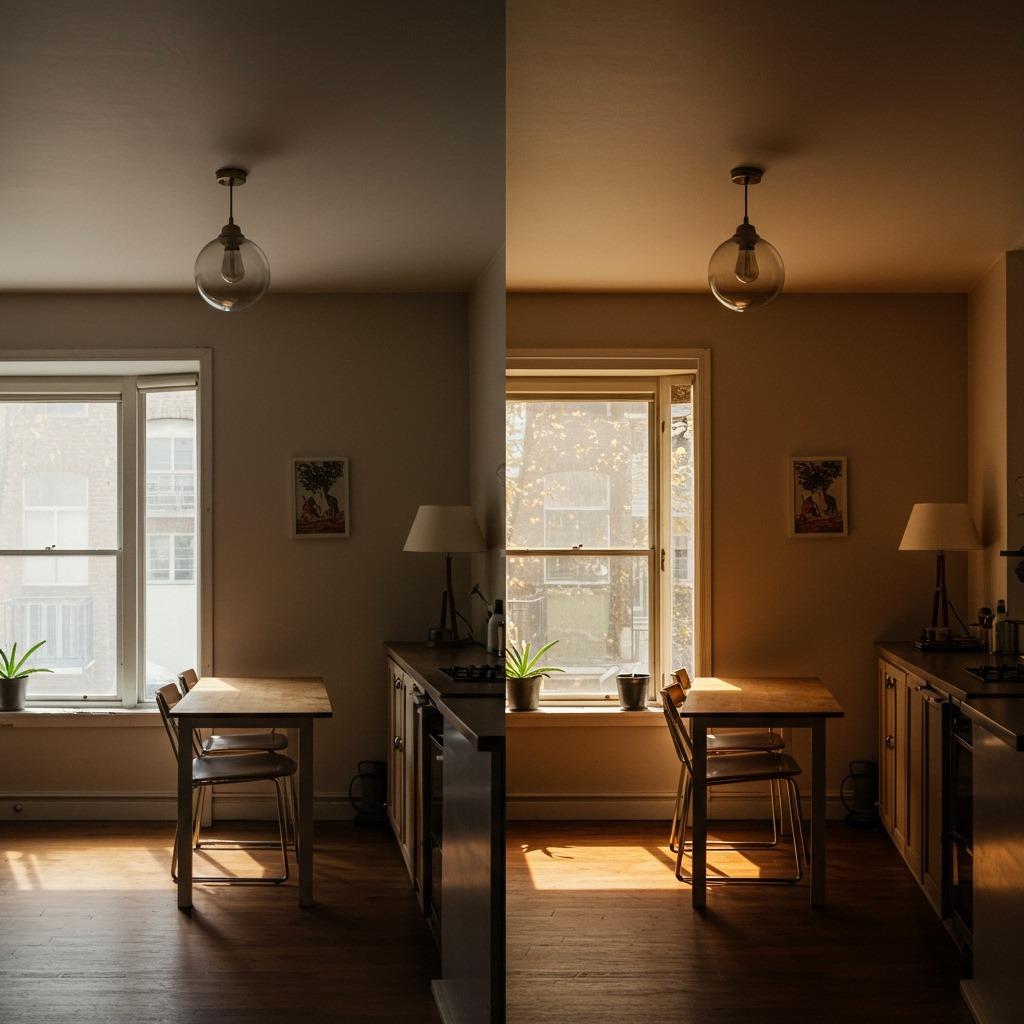
Even well-intentioned lighting plans can go wrong. Understanding these common pitfalls helps you create a more successful layered lighting scheme from the start.
Over-relying on overhead lighting is the biggest mistake homeowners make. A single ceiling fixture, no matter how beautiful, cannot create the depth and warmth that multiple light sources provide. If you currently depend on one overhead light, start by adding table lamps or floor lamps to create instant improvement.
Ignoring the height of light sources creates an unbalanced feel. All your lights shouldn’t be at the same level – vary the heights with floor lamps, table lamps, wall sconces, and overhead fixtures. This variation creates visual interest and more flattering light distribution.
Choosing the wrong bulb temperatures can make your carefully planned layers clash with each other. Mixing cool white (daylight) bulbs with warm white bulbs creates an uncomfortable, disjointed feeling. Stick with one color temperature family across all your fixtures.
Forgetting about natural light during the planning process leads to schemes that work at night but feel off during the day. Consider how your layered lighting interacts with windows and skylights. Sometimes the best daytime lighting plan involves turning off certain layers and relying on natural light plus minimal artificial sources.
Position lights to avoid glare and harsh shadows. Light sources should rarely be visible when you’re in your normal seating positions. If you can see the bulb directly, it’s likely creating glare that makes the space less comfortable.
6. Budget-Friendly Ways to Add Layers Without Major Renovation
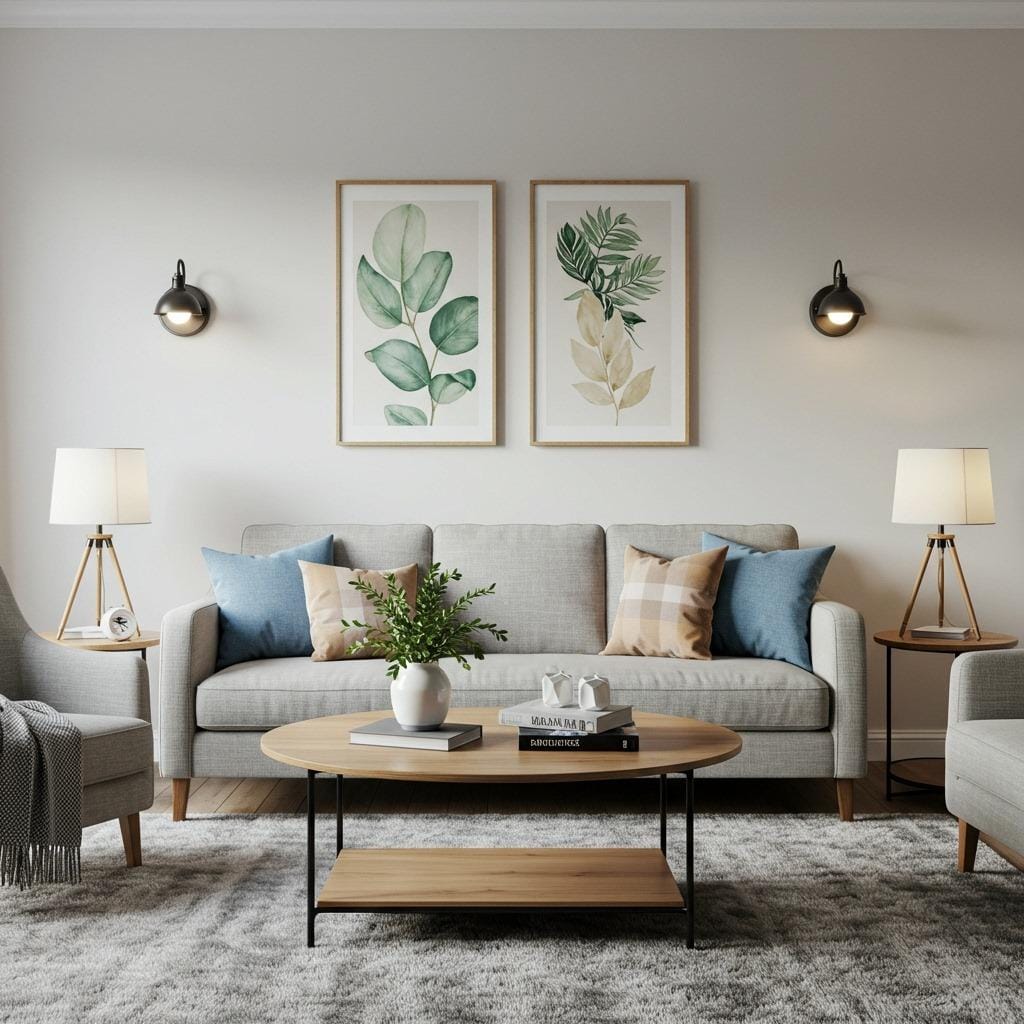
Creating beautiful layered lighting doesn’t require an electrician or major renovation budget. Many effective solutions plug into existing outlets or require minimal installation.
Plug-in wall sconces offer the look of hardwired fixtures without the electrical work. Many styles include a decorative cord cover that makes the installation look intentional and polished. These work particularly well for accent lighting around artwork or architectural features.
Battery-operated LED lights have improved dramatically in recent years. Puck lights under shelves, LED strips behind furniture, or wireless sconces provide accent lighting flexibility without any wiring. Look for options with remote controls or smartphone apps for easy operation.
Floor and table lamps remain the most accessible way to add task and ambient lighting layers. Thrift stores, discount retailers, and online marketplaces offer countless options. Focus on the shade shape and size rather than the base – you can always update a lamp base with spray paint or decorative techniques.
Smart plugs can turn any standard lamp into a programmable light source. Set schedules, create groups, and control multiple lamps simultaneously without replacing a single fixture. This approach works especially well for small living room tips where space is limited but impact is essential.
Consider rental-friendly options if you can’t make permanent changes. Adhesive LED strips, clip-on lights, and tension pole lamps provide layered lighting without modifications that might violate lease agreements.
7. Creating Different Moods with Your Layered Lighting System
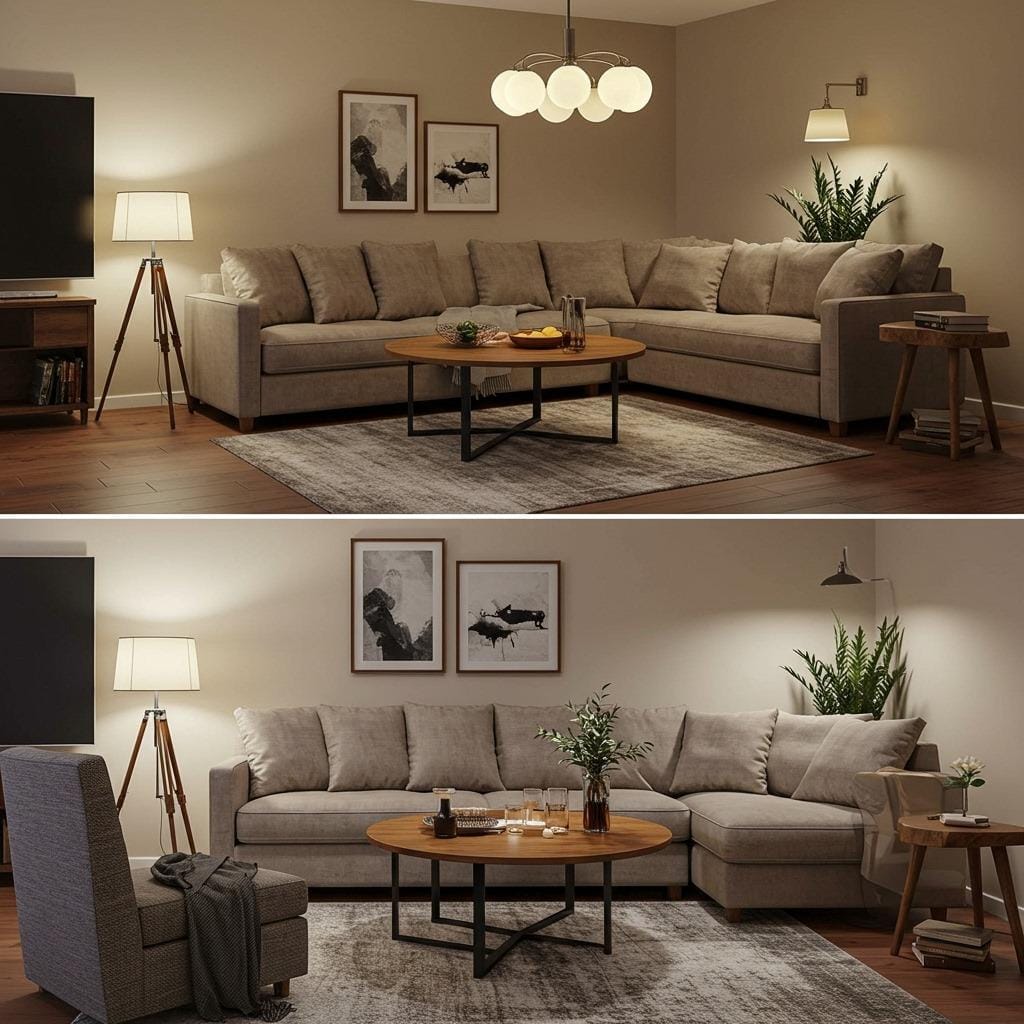
The true power of layered lighting reveals itself when you start adjusting the layers for different occasions and moods. Your lighting should be as flexible as your furniture arrangement, adapting to how you use the space throughout the day.
Morning and cleaning mode calls for maximum ambient lighting with task lights as needed. This combination provides even, bright illumination for practical activities like tidying up, paying bills, or getting kids ready for school. Don’t be afraid to use all your light sources when function takes priority over mood.
Evening entertaining benefits from reduced ambient lighting, strategic task lighting, and enhanced accent lighting. Dim your overhead fixtures, keep reading lamps at low settings, and let candles or decorative lights create warmth. This combination encourages conversation and makes everyone look their best.
Relaxation and TV time works best with minimal ambient lighting, turned-off task lights, and soft accent lighting. Consider LED strips behind your TV to reduce eye strain, or rely on a single table lamp in the corner for gentle background light. This approach creates the cozy atmosphere that makes you want to sink into your sofa.
Reading and focused activities require bright task lighting with moderate ambient light for context. Avoid stark contrasts between your reading light and the rest of the room – too much difference causes eye strain and fatigue.
The winter living room decor cozy feeling many people crave comes largely from thoughtful lighting adjustments. Shorter days call for earlier activation of accent lights and longer periods of warm, layered illumination.
Your layered lighting scheme should feel effortless once established. The goal is creating a system so intuitive that adjusting the mood becomes second nature, like reaching for a favorite sweater on a cool evening.
By understanding these three essential layers – ambient, task, and accent lighting – and implementing them thoughtfully throughout your space, you’ll transform your living room into a welcoming retreat that adapts to your lifestyle. The key lies not in expensive fixtures or complicated systems, but in the strategic combination of different light sources working together to create depth, functionality, and that elusive cozy factor that makes a house feel like home.

Sanjai creates easy, affordable home decor ideas that anyone can try. Through simple tips and curated finds, he helps you style rooms you’ll love coming home to.