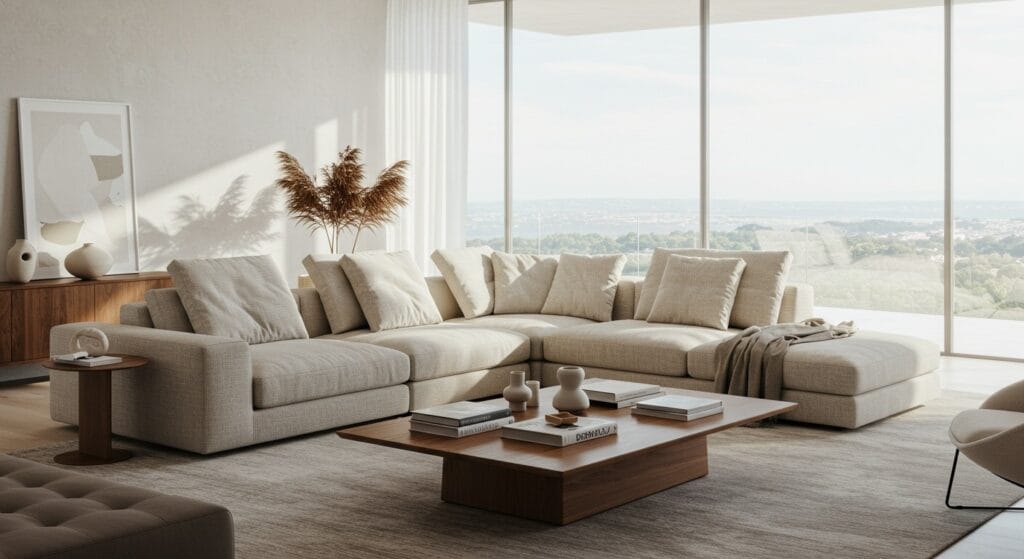
Your living room deserves furniture that works as hard as you do. Whether you’re hosting game night with eight friends or creating a cozy reading nook for one, a modular sofa can transform to meet every moment. These innovative seating solutions let you rearrange, expand, and customize your space without the commitment of traditional sectional sofas.
What makes modular sofas so appealing? They’re like building blocks for grown-ups. Each piece can stand alone or connect seamlessly with others, giving you endless possibilities for your space. Think of it as furniture that grows with your needs – from a compact loveseat for small spaces to a sprawling sectional for family gatherings.
The best part? You’re not stuck with one layout forever. Life changes, and your furniture should too. Let’s explore how these flexible seating options can solve your living room challenges while keeping comfort and style at the forefront.
1. The Classic L-Shape Configuration
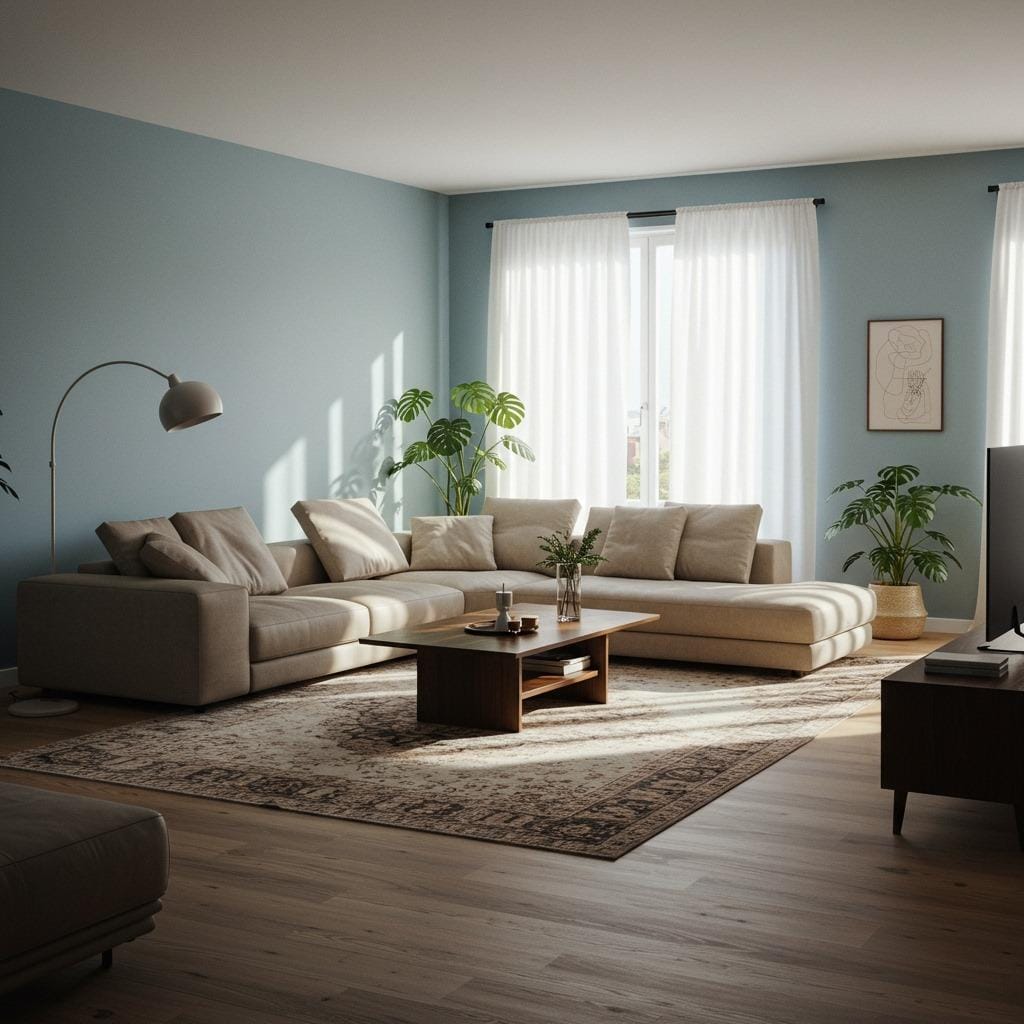
The L-shaped arrangement remains the most popular choice for good reason. This configuration maximizes seating while defining your conversation area beautifully. Position the longer section along your main wall and let the shorter piece float into the room to create natural flow.
This setup works particularly well in open concept living rooms where you need to separate spaces without blocking sight lines. The corner piece becomes a natural anchor point that grounds your entire seating arrangement.
Consider your room’s traffic patterns when positioning your L-shape. You’ll want to ensure people can move freely around the configuration while still maintaining that cozy, intimate feeling that makes conversation effortless.
2. U-Shaped Theater Experience
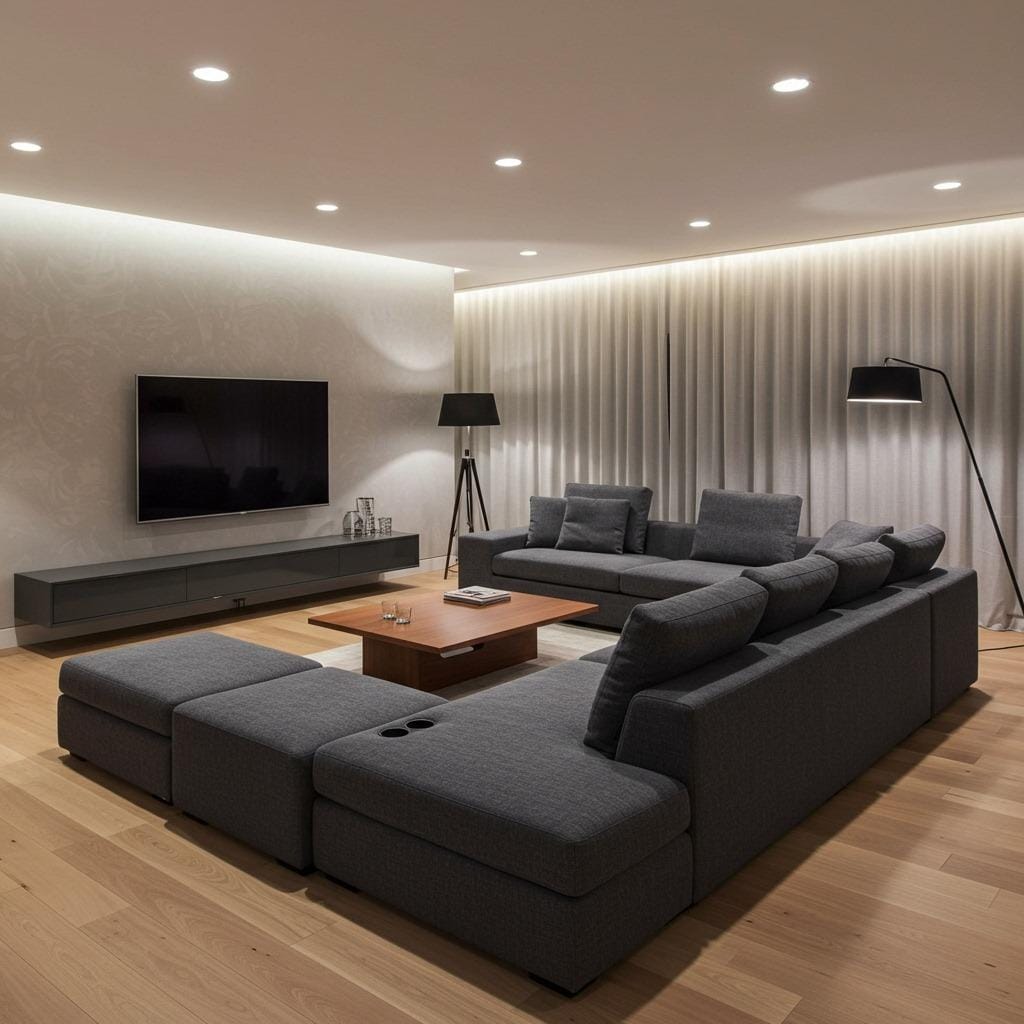
Transform your living room into a home theater with a U-shaped modular arrangement. This configuration puts everyone at the perfect angle for movie watching while creating an incredibly social seating dynamic. The center remains open for a large coffee table or ottoman.
The beauty of this setup lies in how it encourages interaction. Unlike traditional rows of seating, everyone faces slightly inward, making conversation during commercial breaks or halftime much more natural. It’s perfect for families who love their entertainment time together.
You can customize each section with different features too. Some manufacturers offer living room furniture pieces with built-in storage, cup holders, or even charging stations to enhance your viewing experience.
3. Floating Island Design
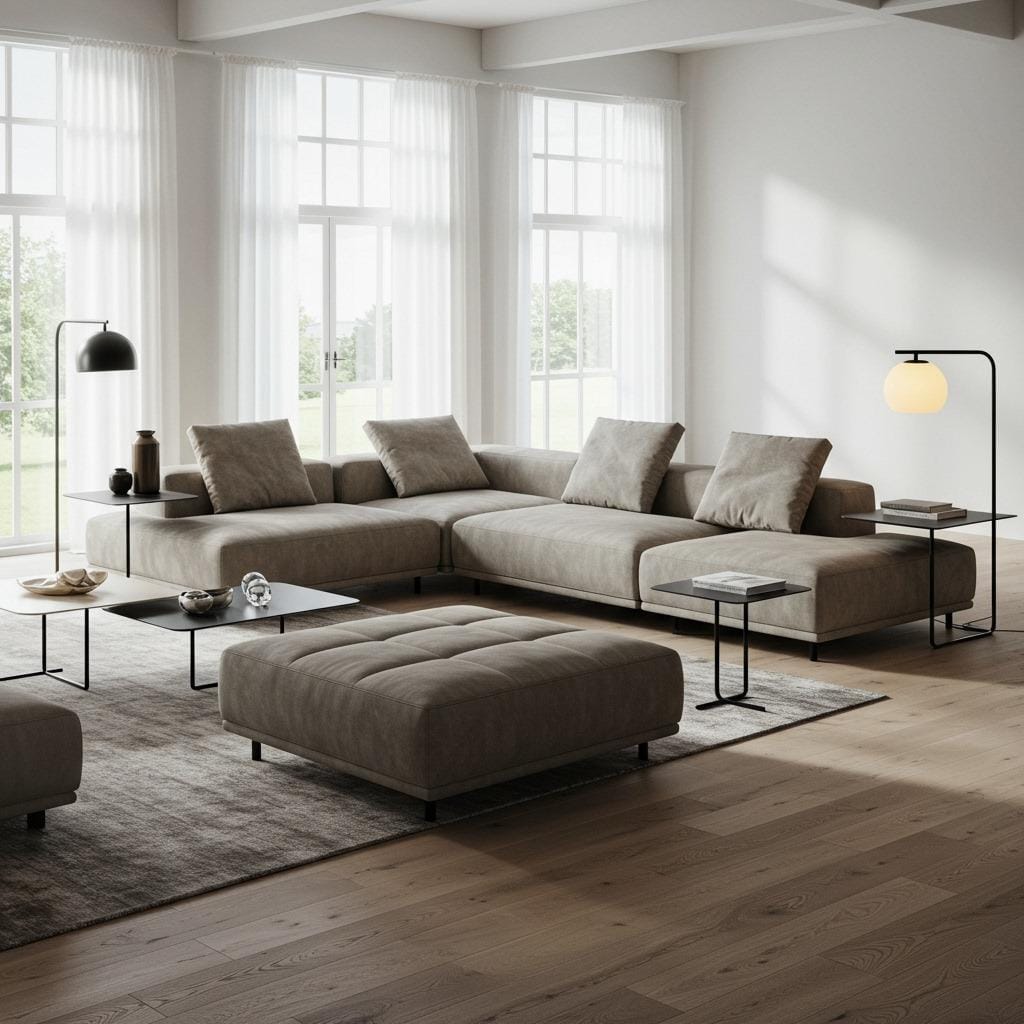
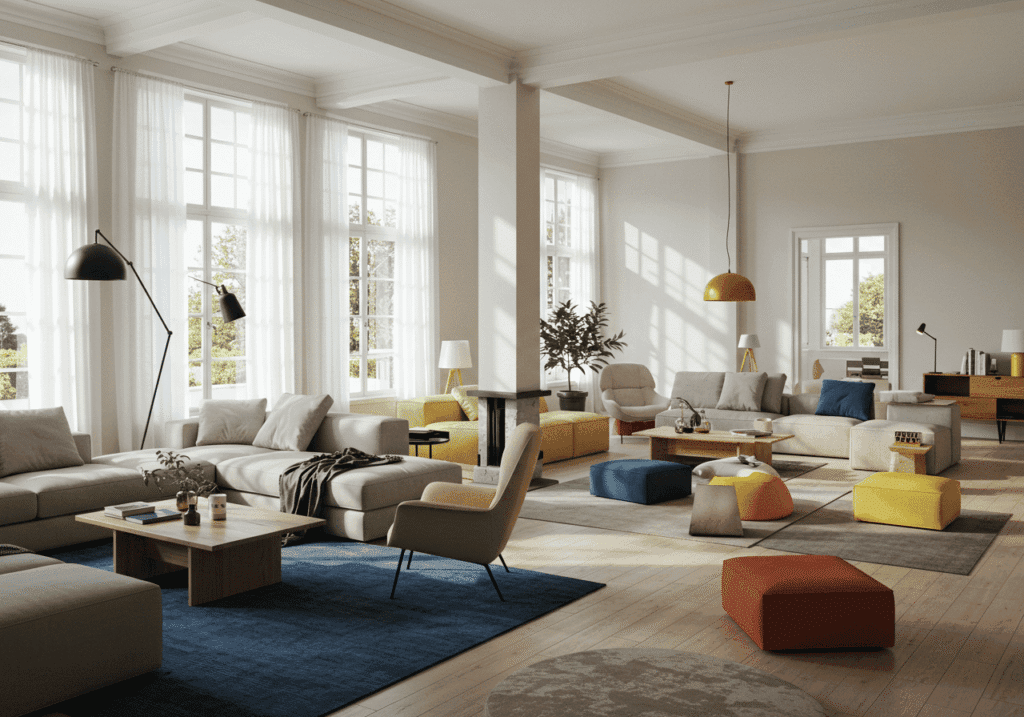
Place your modular sofa in the center of your room to create a sophisticated floating island effect. This bold approach works exceptionally well in large, open spaces where traditional wall-hugging arrangements might feel lost or disconnected.
The floating island concept allows you to create multiple zones within a single room. Position occasional chairs or reading nooks around the perimeter while your modular sofa becomes the central gathering point. It’s particularly effective in contemporary living rooms with minimal architectural features.
This arrangement requires careful consideration of scale and proportion. Your modular pieces should be substantial enough to anchor the space without overwhelming it. The key is creating visual weight that feels intentional rather than accidentally placed.
4. Separate Seating Pods
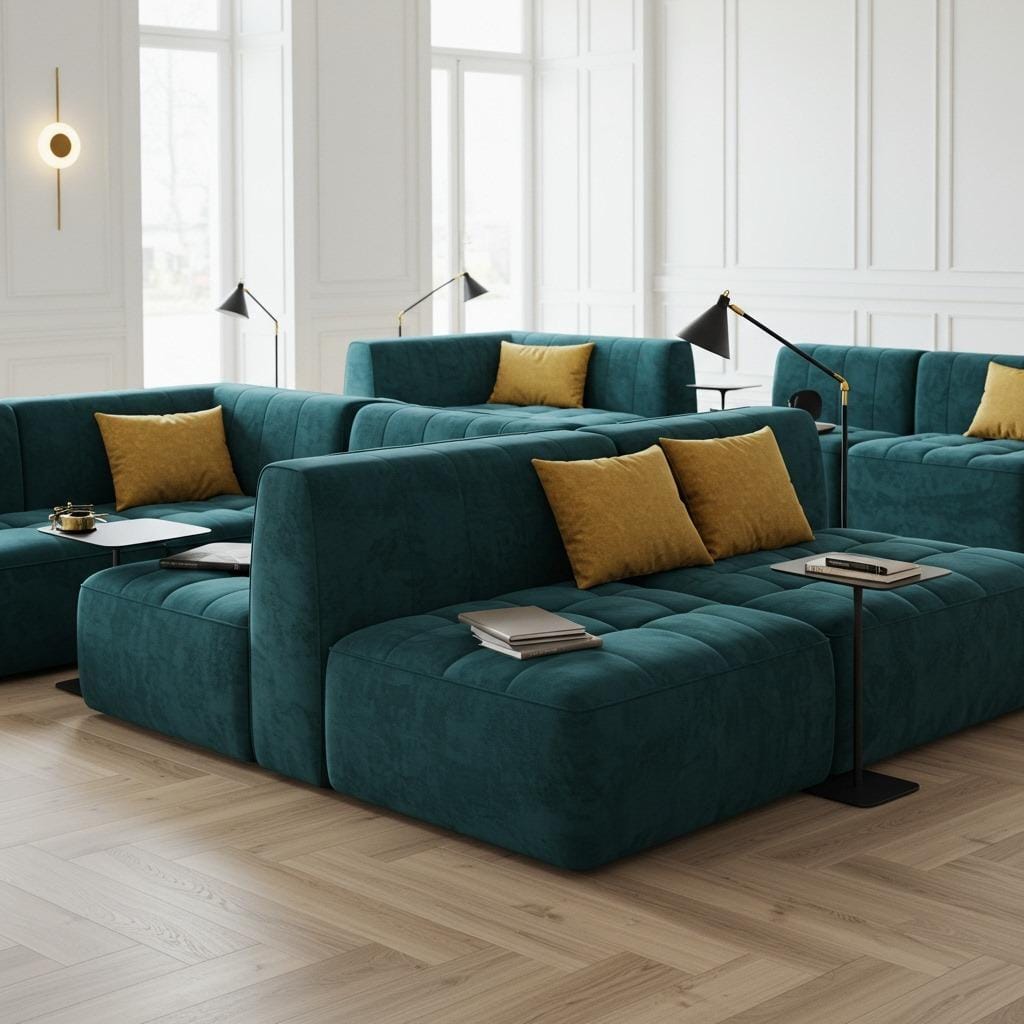
Sometimes the most flexible approach is keeping your modular pieces completely separate. This pod-like arrangement gives everyone their own space while maintaining visual cohesion through matching upholstery and styling.
Individual pods work beautifully for families with different preferences. Someone can curl up with a book while others watch TV, all within the same room but with personal space respected. It’s also perfect for homes that frequently rearrange furniture for different occasions.
The trick to making separate pods feel intentional is maintaining consistent spacing and creating visual connections through coffee table styling, area rugs, or coordinated accessories between each piece.
5. Corner Maximization Strategy
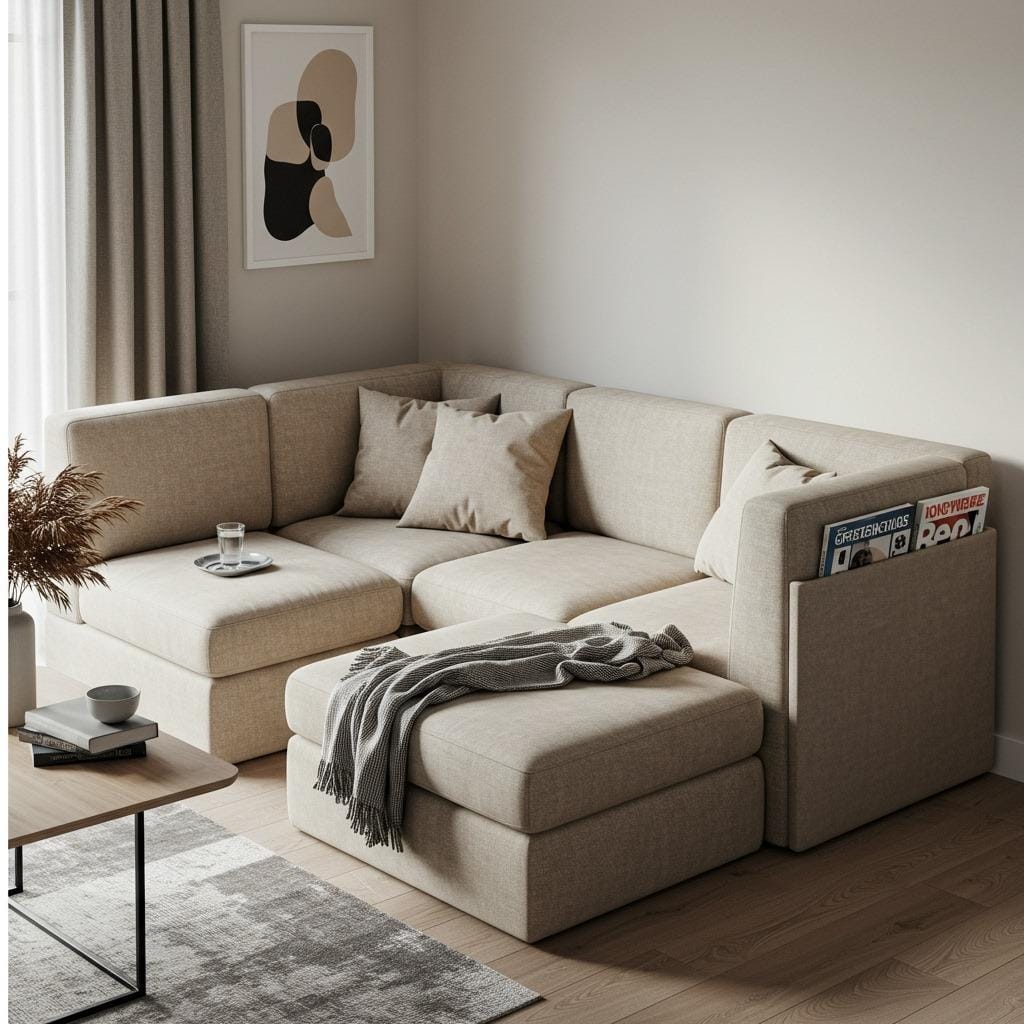
Don’t overlook your room’s corners when planning your modular layout. A well-designed corner arrangement can provide surprising amounts of seating while leaving the center of your room open and spacious.
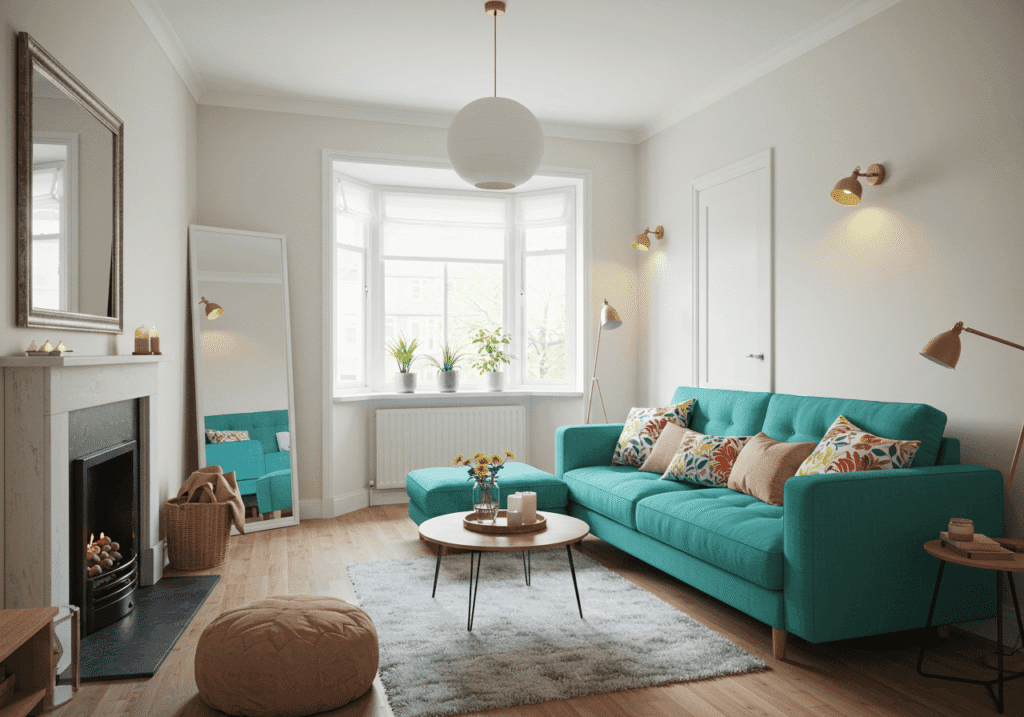
This approach particularly shines in small living room layouts where every square foot counts. By hugging the corner, you create a cozy nook that feels intentional rather than cramped. Add a floor lamp and side table to complete the reading retreat vibe.
Corner arrangements also offer unique opportunities for built-in storage solutions. Many modular systems include corner pieces with hidden compartments, perfect for stashing throw blankets, books, or games.
6. Linear Wall-Hugging Layout
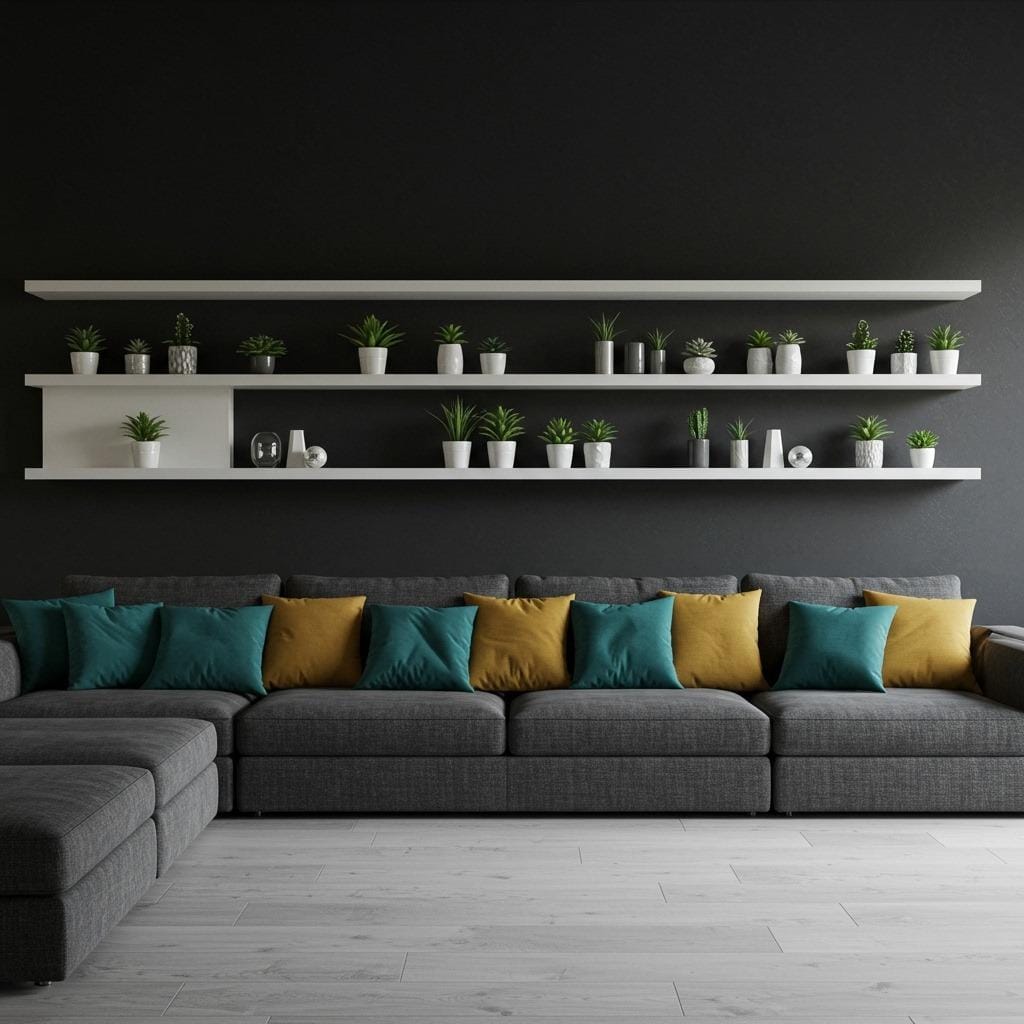
Sometimes simplicity wins. A linear arrangement along your longest wall creates clean lines while maximizing floor space in the center of your room. This configuration works particularly well in narrow living rooms or spaces with challenging proportions.
The linear approach allows you to create a gallery wall effect above your seating while keeping the arrangement feeling uncluttered. It’s also the easiest configuration for conversation since everyone naturally faces the same direction initially but can easily turn to engage with others.
Consider varying the heights of your modular pieces in a linear arrangement. Mix standard height sections with higher-backed pieces to create visual interest while maintaining the clean, streamlined aesthetic.
7. Curved Conversation Setup
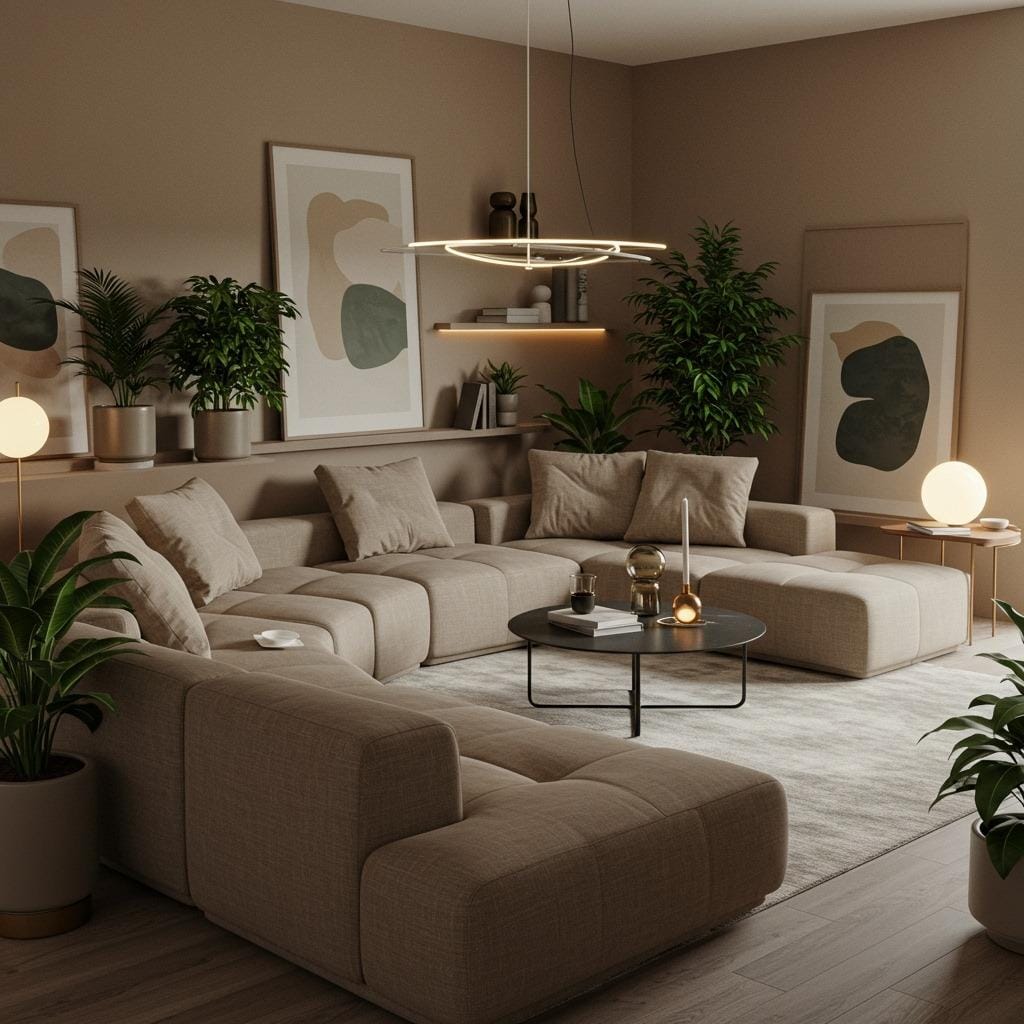
Create intimacy and encourage conversation with a curved modular arrangement. This organic shape feels more welcoming than harsh right angles while still providing the flexibility you need for different occasions.
The curved setup works particularly well for entertaining since it naturally draws people together while ensuring no one feels left out of the conversation. It’s like having a built-in conversation pit without the architectural commitment.
You can achieve this curve with corner pieces or by simply angling your straight sections slightly. The goal is creating a gentle arc that feels natural rather than forced. Complement this arrangement with round coffee table decor to echo the curved lines.
8. Multi-Level Platform Design
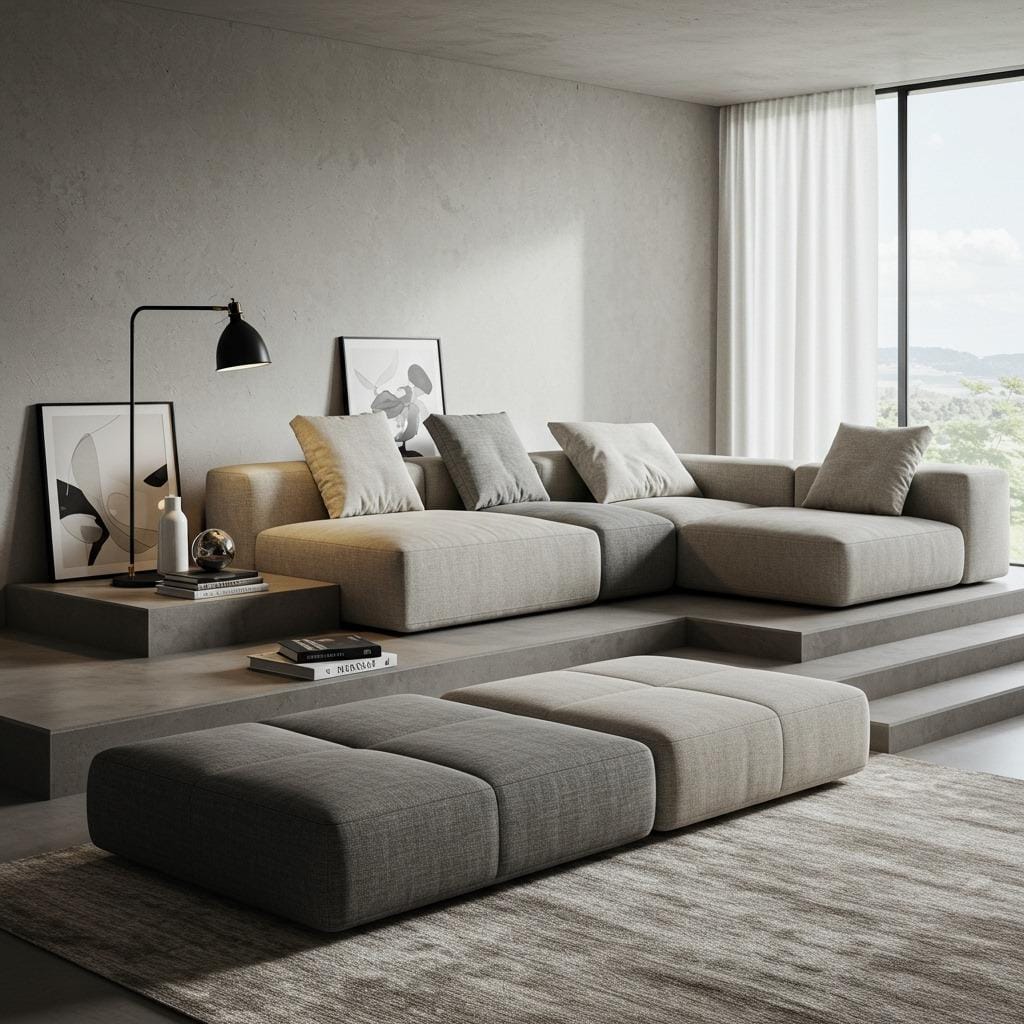
Add architectural interest by placing some of your modular pieces on low platforms or different floor levels. This multi-level approach creates visual drama while maintaining the practical benefits of flexible seating.
Platform arrangements work especially well in homes with existing architectural features like sunken living rooms or raised areas. You can also create artificial levels with area rugs or low wooden platforms to achieve this layered effect.
The key to success with multi-level arrangements is ensuring the height differences feel intentional rather than awkward. Keep variations subtle – a few inches can create significant visual impact without compromising comfort.
9. Sectional to Singles Transformation

The magic of modular sofas lies in their ability to completely transform your room’s personality. Start with a connected sectional for movie nights, then separate into individual pieces for party hosting or room cleaning.
This transformation capability makes modular sofas particularly valuable for people who entertain frequently but also need intimate family spaces. You can literally reconfigure your room’s social dynamic in minutes rather than moving heavy furniture.
Document your favorite configurations with photos so you can quickly recreate successful arrangements. Some families even assign different setups to different seasons or activities, keeping their living room ideas fresh year-round.
10. Storage-Integrated Seating Solution
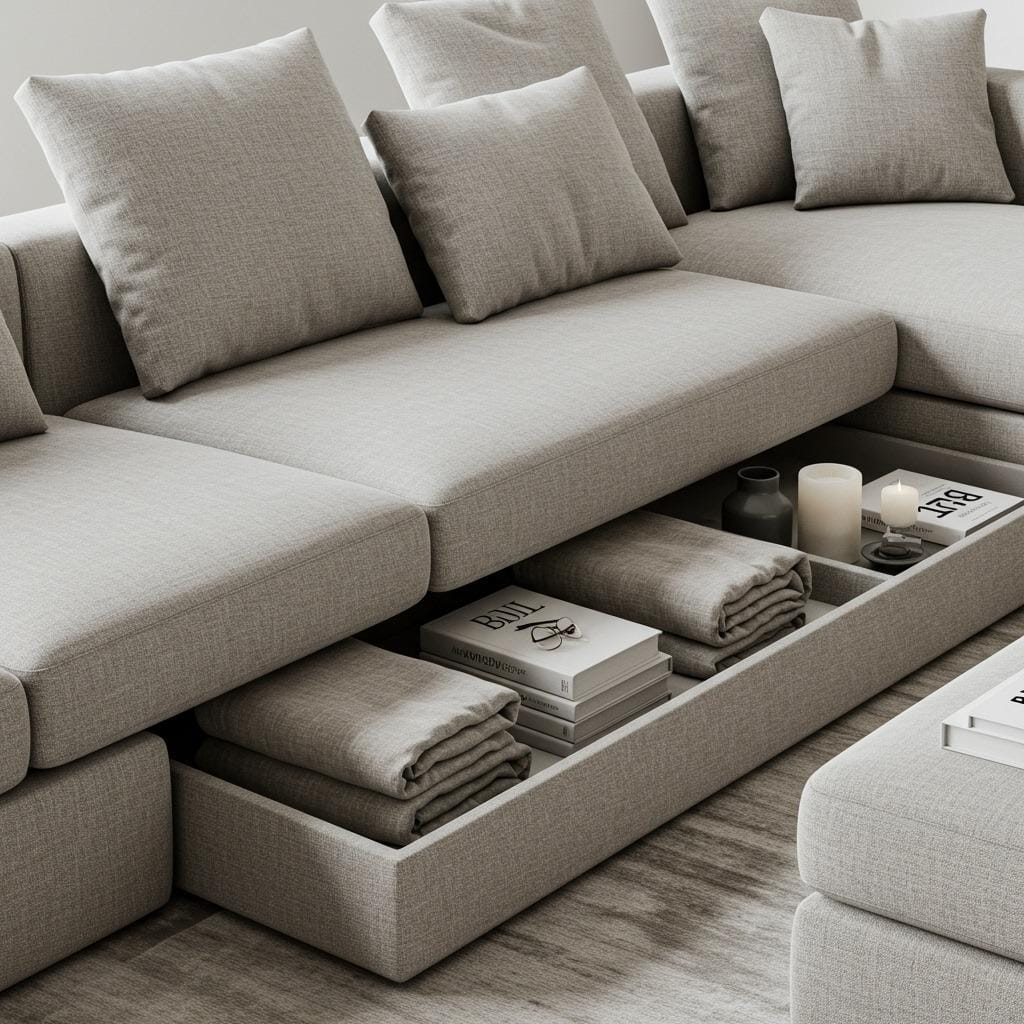
Maximize functionality by choosing modular pieces with integrated storage solutions. Ottoman pieces can hide everything from extra pillows to board games, while some sectional pieces feature lift-up seats with spacious compartments underneath.
Storage-integrated modular sofas solve two problems simultaneously – they provide comfortable seating while reducing clutter in your living space. This is particularly valuable in small living room tips where every piece needs to work overtime.
Think beyond traditional storage when selecting pieces. Some modern modular systems include built-in side tables, cup holders, charging stations, or even mini-refrigerators for the ultimate in convenience and functionality.
11. Color-Coordinated Mix and Match
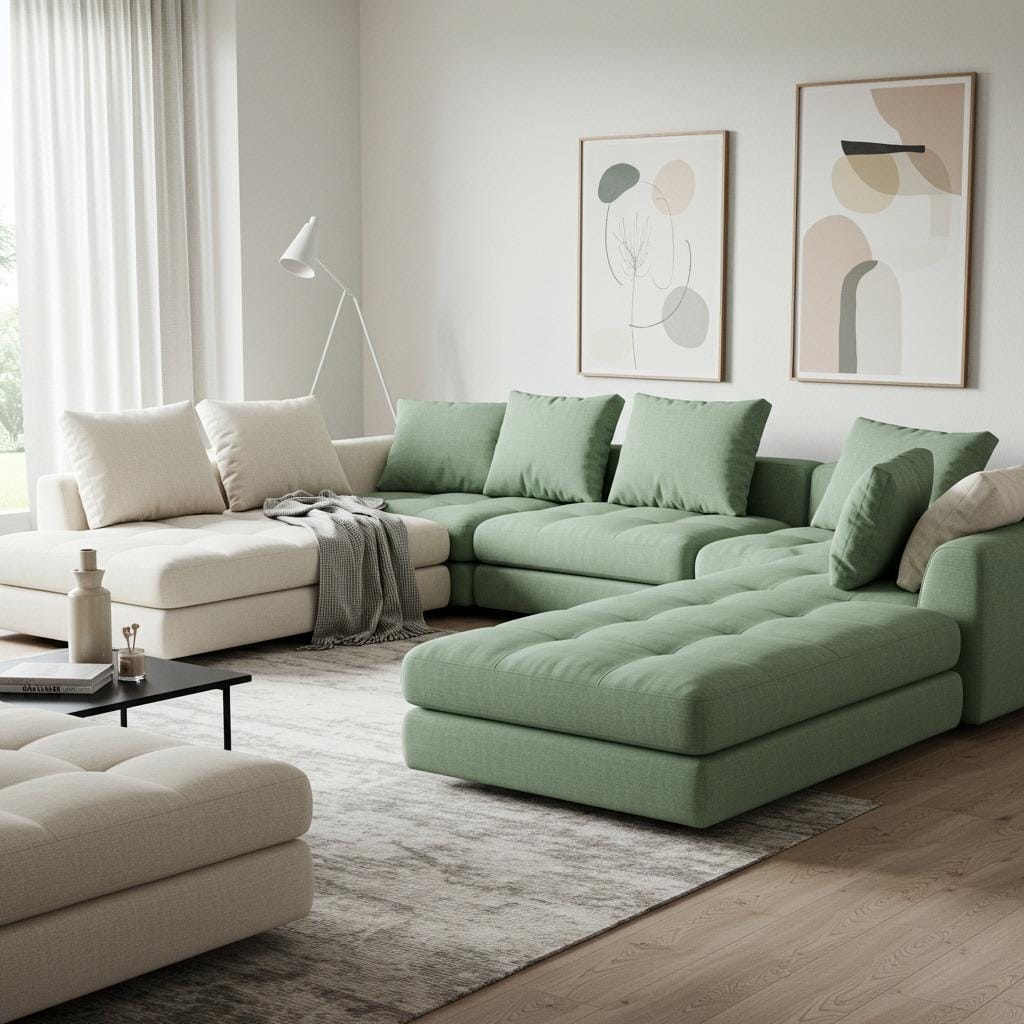
Who says all your modular pieces need to match perfectly? Create visual interest by mixing coordinated colors or textures within the same modular system. This approach adds personality while maintaining cohesion through consistent scale and style.
The key to successful color mixing is choosing pieces from the same family or complementary palette. Think cream with soft gray, or navy with lighter blue variations. This creates depth without chaos, especially when paired with thoughtful neutral living room accent wall ideas.
Use accessories like throw pillows, blankets, and artwork to tie your mixed-color modular pieces together. This approach allows you to experiment with color while maintaining the flexibility to rearrange or replace individual pieces over time.
12. Indoor-Outdoor Transition Design
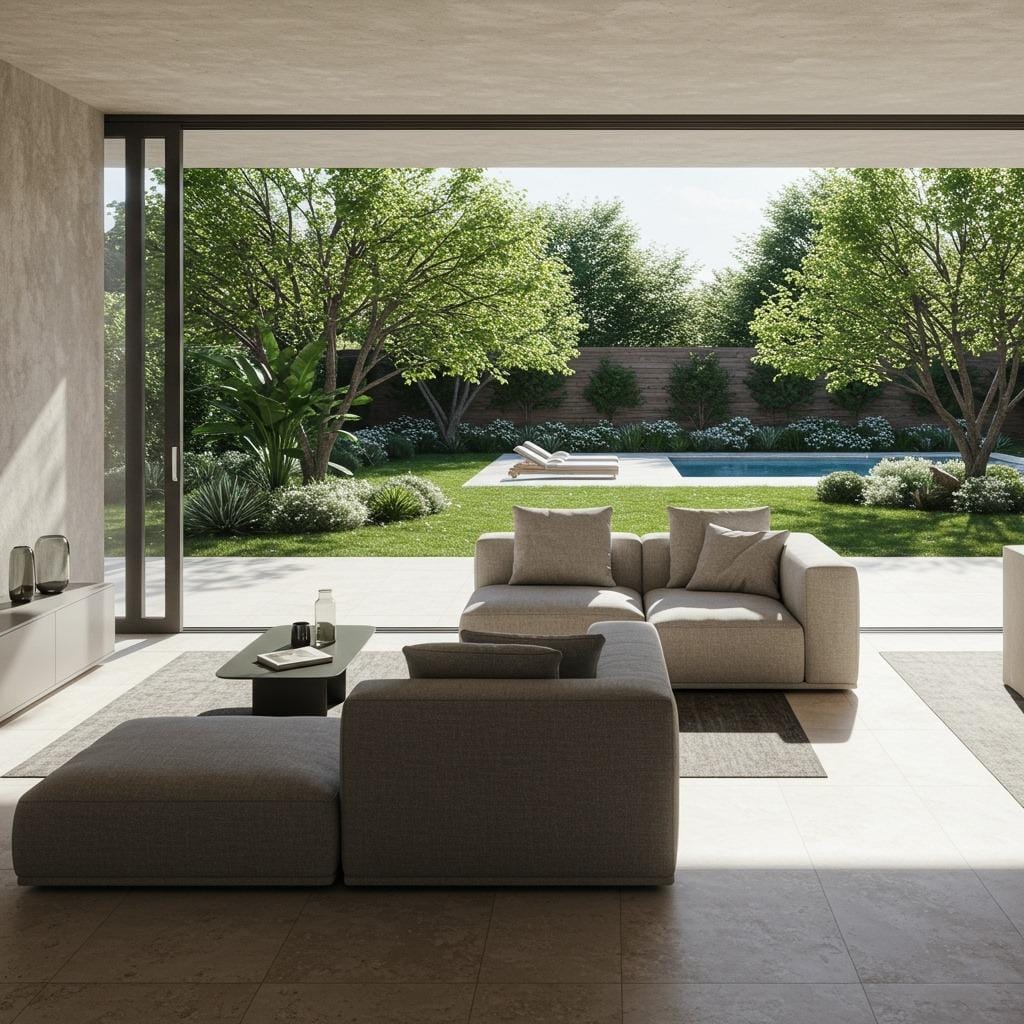
Extend your living space beyond traditional boundaries with weather-resistant modular pieces that flow from indoor to outdoor areas. This approach works particularly well with large sliding doors or covered patios where the line between inside and outside blurs naturally.
Indoor-outdoor modular arrangements require careful material selection. Look for pieces specifically designed for dual use, with quick-dry fabrics and weather-resistant frames that can handle humidity changes and occasional moisture.
This configuration is perfect for homes that love to entertain since you can easily expand your seating capacity by opening doors and extending your arrangement onto the patio. It’s like having an instant outdoor seating ideas solution that integrates seamlessly with your indoor decor.
13. Workstation Integration Setup
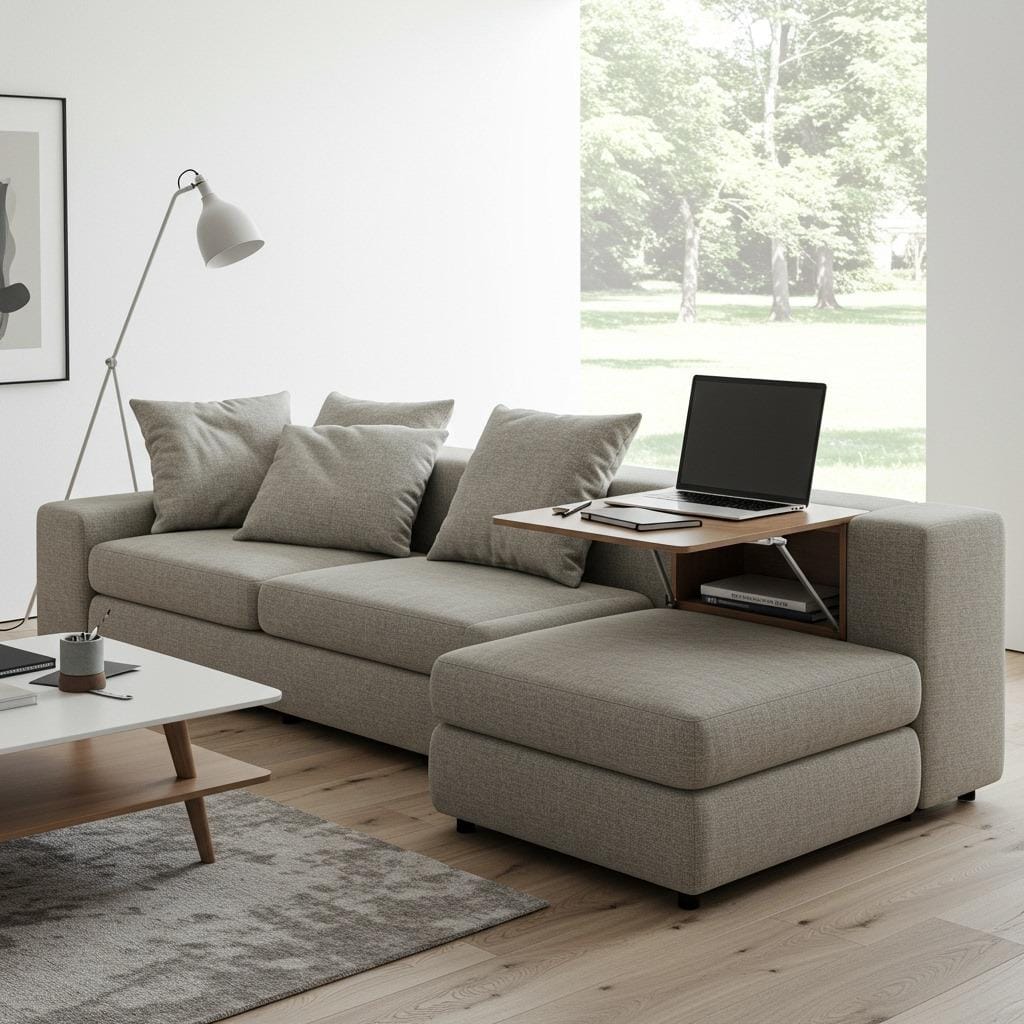
Modern life requires furniture that adapts to work-from-home realities. Some modular systems now include pieces that convert from comfortable seating to functional workstations, complete with adjustable surfaces and integrated power outlets.
This dual-purpose approach is particularly valuable in smaller homes where dedicated office space isn’t available. Your living room can serve as a collaborative workspace during the day and comfortable entertainment zone in the evening, all with the same furniture configuration.
Look for modular pieces with adjustable heights, fold-out work surfaces, or integrated technology features. Some even include acoustic panels to help reduce noise when you’re taking calls from your living room workspace.
14. Seasonal Reconfiguration System

Think of your modular sofa as seasonal decor that changes with your needs throughout the year. Winter configurations might focus pieces closer together around a fireplace for winter living room decor cozy vibes, while summer arrangements could spread pieces out to catch cross-breezes and garden views.
Seasonal reconfiguration keeps your space feeling fresh without requiring new furniture purchases. It’s like getting a room makeover four times a year just by rearranging your existing pieces in response to changing light, temperature, and activity patterns.
Document your seasonal configurations with photos and notes about what works best for each time of year. You might find that certain arrangements work better for holiday entertaining while others optimize natural light during darker months.
Making Your Modular Sofa Choice
Choosing the right modular sofa system requires thinking beyond just appearance. Consider your lifestyle, space limitations, and how you actually use your living room on a daily basis. The most beautiful configuration won’t serve you well if it doesn’t match your real-world needs.
Quality matters significantly with modular furniture since individual pieces need to connect securely while maintaining their structural integrity over time. Look for systems with solid connection mechanisms and durable fabrics that can handle regular rearrangement without showing wear.
Think about your future needs too. Your ideal configuration today might change as your family grows, kids move out, or your entertaining style evolves. The beauty of modular systems lies in their ability to adapt to these life changes without requiring complete furniture replacement.
Budget for the full system you want rather than settling for fewer pieces initially. While modular sofas offer flexibility, they work best when you have enough pieces to create truly functional arrangements for your space and lifestyle needs.

Sanjai creates easy, affordable home decor ideas that anyone can try. Through simple tips and curated finds, he helps you style rooms you’ll love coming home to.