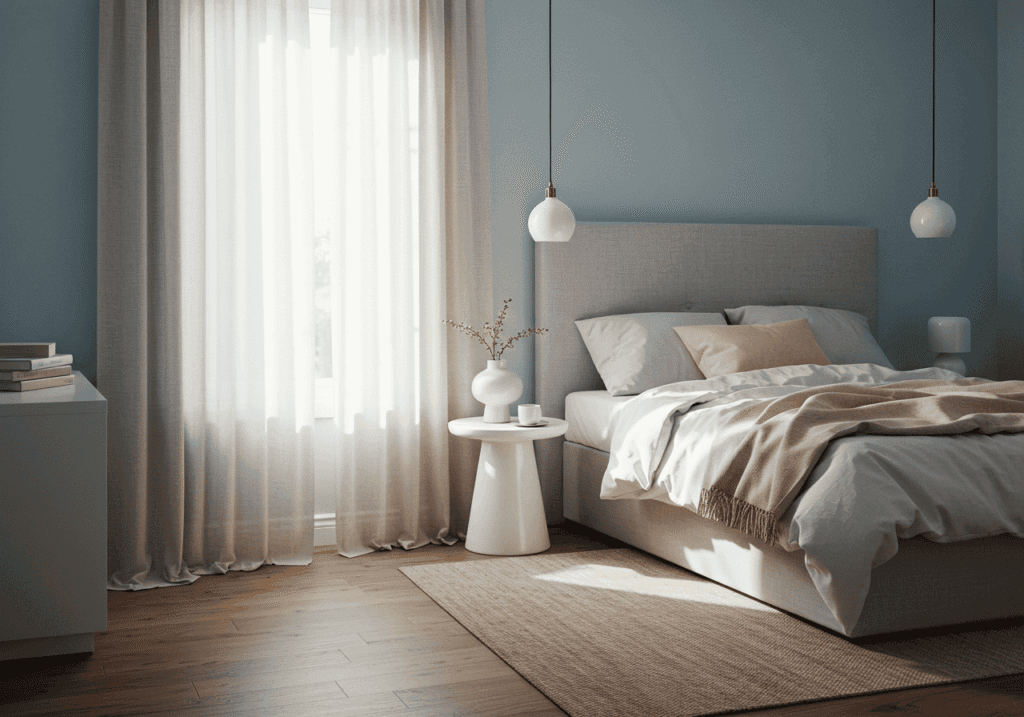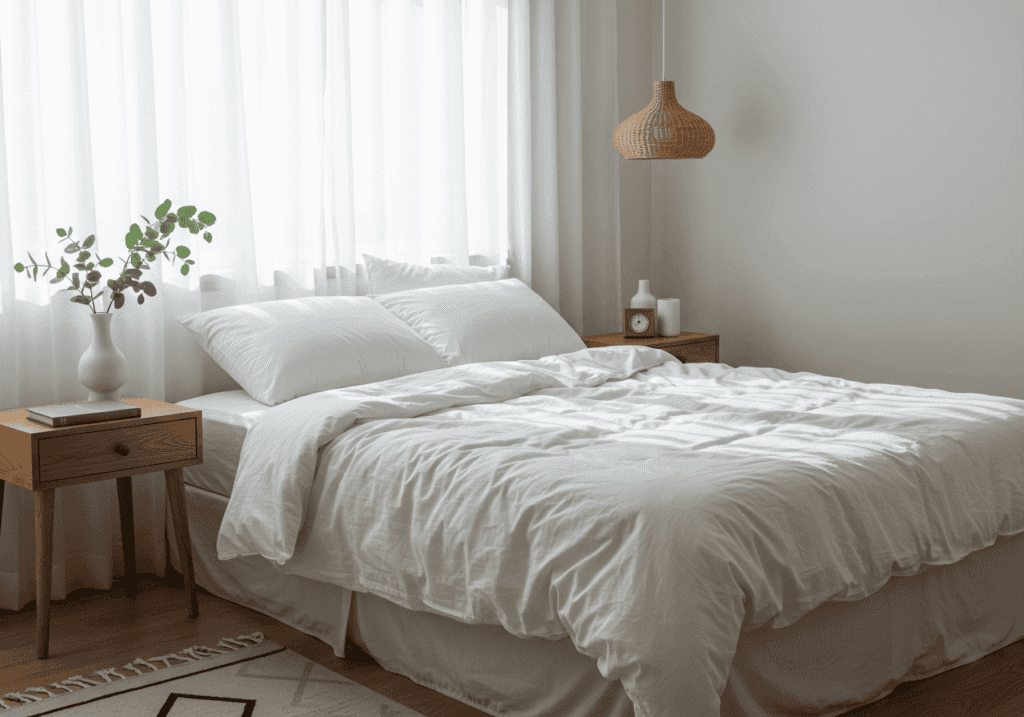
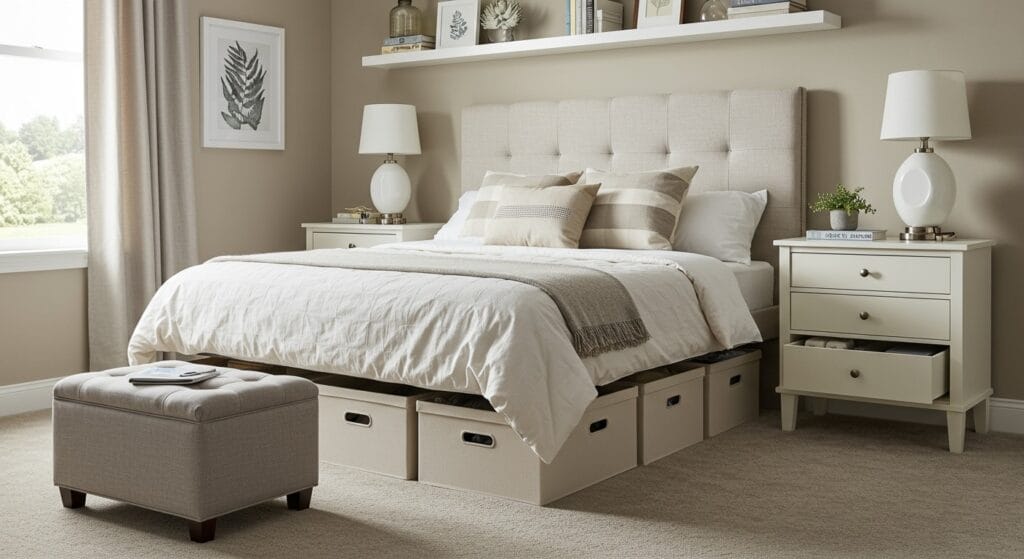
Your bedroom should be your peaceful retreat, but when clothes are piling up on chairs and nightstands are overflowing with random items, that serenity quickly disappears. The truth is, most of us struggle with bedroom storage – especially in smaller spaces where every square inch counts.
I’ve been there too, staring at a room that somehow accumulates stuff faster than I can organize it. But here’s what I’ve learned: smart bedroom storage ideas aren’t just about buying more containers. They’re about rethinking how you use your space and choosing solutions that actually work with your daily routines.
Whether you’re dealing with a tiny apartment bedroom or just want to maximize what you have, these 19 storage ideas will help you create a space that’s both functional and beautiful. Some might surprise you, others will make you wonder why you didn’t think of them sooner.
1. Maximize Under-Bed Real Estate
Let’s start with the obvious spot that most people underutilize. The space under your bed is prime storage territory, but throwing random boxes underneath creates more chaos than organization.
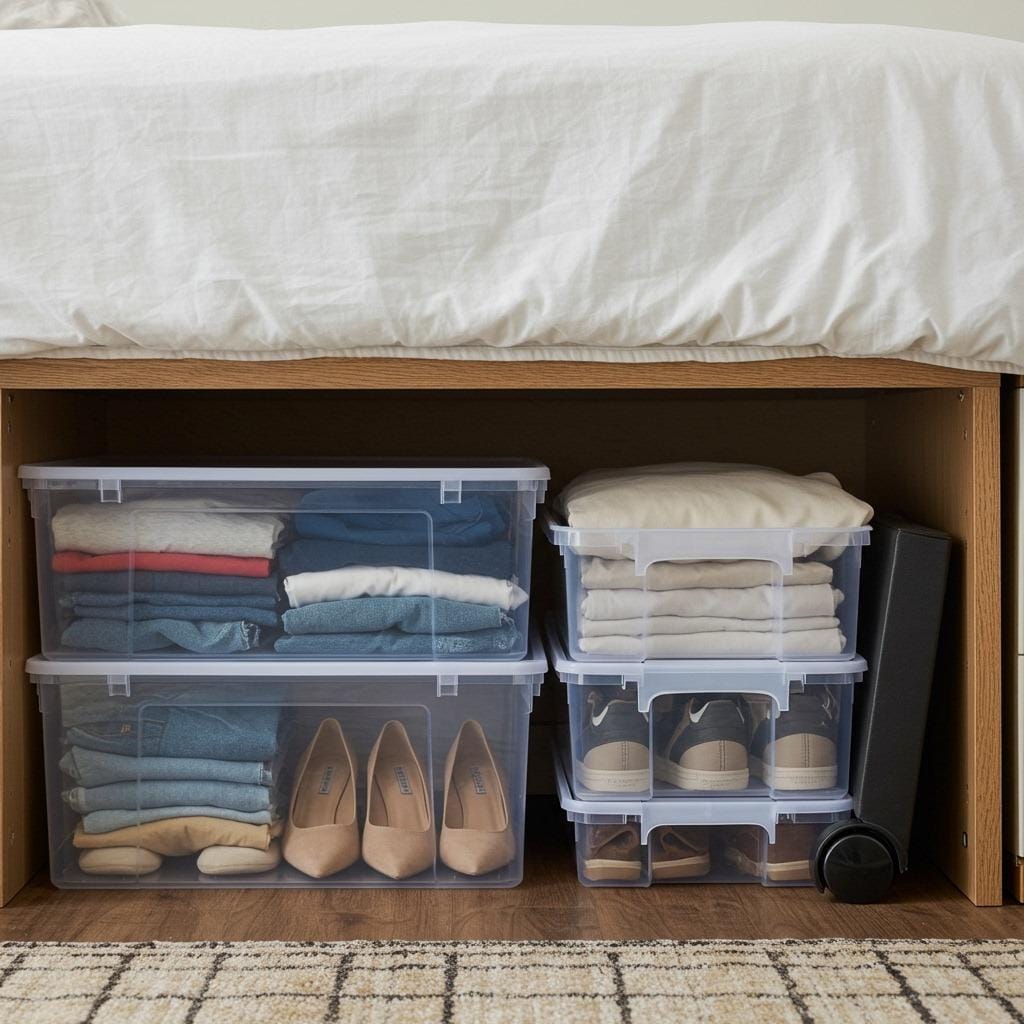
Invest in proper under-bed storage containers that slide out easily. Clear plastic bins work well because you can see what’s inside, but fabric boxes look cleaner if your bed frame is low. Store seasonal clothing, extra bedding, or shoes that you don’t wear daily.
For beds without much clearance, consider vacuum-sealed storage bags for bulky items like comforters and winter coats. They compress everything down to a fraction of the original size. Just remember to label everything clearly – you’ll thank yourself later when you’re searching for that specific sweater.
If you’re in the market for a new bed frame, choose one specifically designed with storage in mind. Platform beds with built-in drawers or hydraulic lift mechanisms give you tons of hidden storage without taking up any additional floor space.
2. Install Floating Shelves Strategically
Wall-mounted shelves are a game-changer for small bedroom organization, but placement matters more than you might think. Instead of just putting them wherever there’s empty wall space, think about your daily routines.
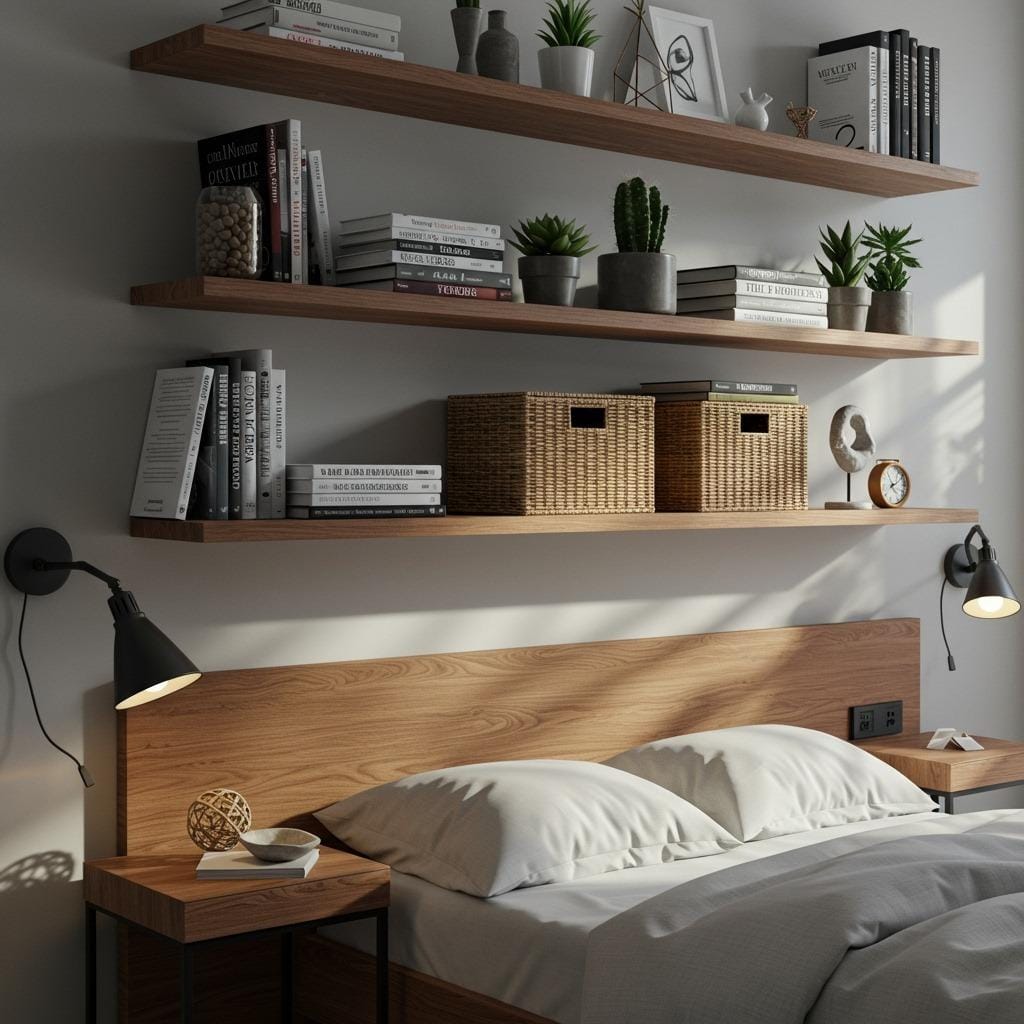
Position shelves near your bed for books, water bottle, and nighttime essentials. Higher shelves work perfectly for items you don’t need daily access to – think extra pillows, decorative objects, or seasonal items. The key is keeping frequently used items within easy reach.
Consider installing shelves in unexpected places too. That awkward corner where nothing else fits? Perfect for a corner shelf. The space above your bedroom door often gets ignored but can hold books or storage boxes beautifully. Even narrow spaces between windows can accommodate slim shelving.
Floating shelves in the living room follow similar principles, but bedroom shelves should prioritize calm aesthetics alongside functionality.
3. Choose Multi-Purpose Furniture Wisely
Every piece of furniture in your bedroom should earn its place by serving multiple functions. This doesn’t mean cramming storage into everything, but being selective about pieces that genuinely add value.

An ottoman or bench at the foot of your bed provides seating and hidden storage for extra blankets or out-of-season clothes. Choose one that’s the right height to also serve as a surface for laying out tomorrow’s outfit or folding laundry.
Nightstands with drawers beat open shelves every time when it comes to keeping things tidy. Look for ones with different sized compartments – small drawers for jewelry and personal items, larger ones for books or electronics. Some even come with built-in charging stations to eliminate cord clutter.
A dresser that doubles as a TV stand or workspace makes sense in smaller rooms. Just make sure it’s the right height for comfortable viewing or working, and that you still have easy access to all the drawers.
4. Utilize Vertical Door Space
The back of your bedroom door is valuable real estate that most people completely ignore. It’s perfect for lightweight storage that keeps everyday items accessible but out of sight.
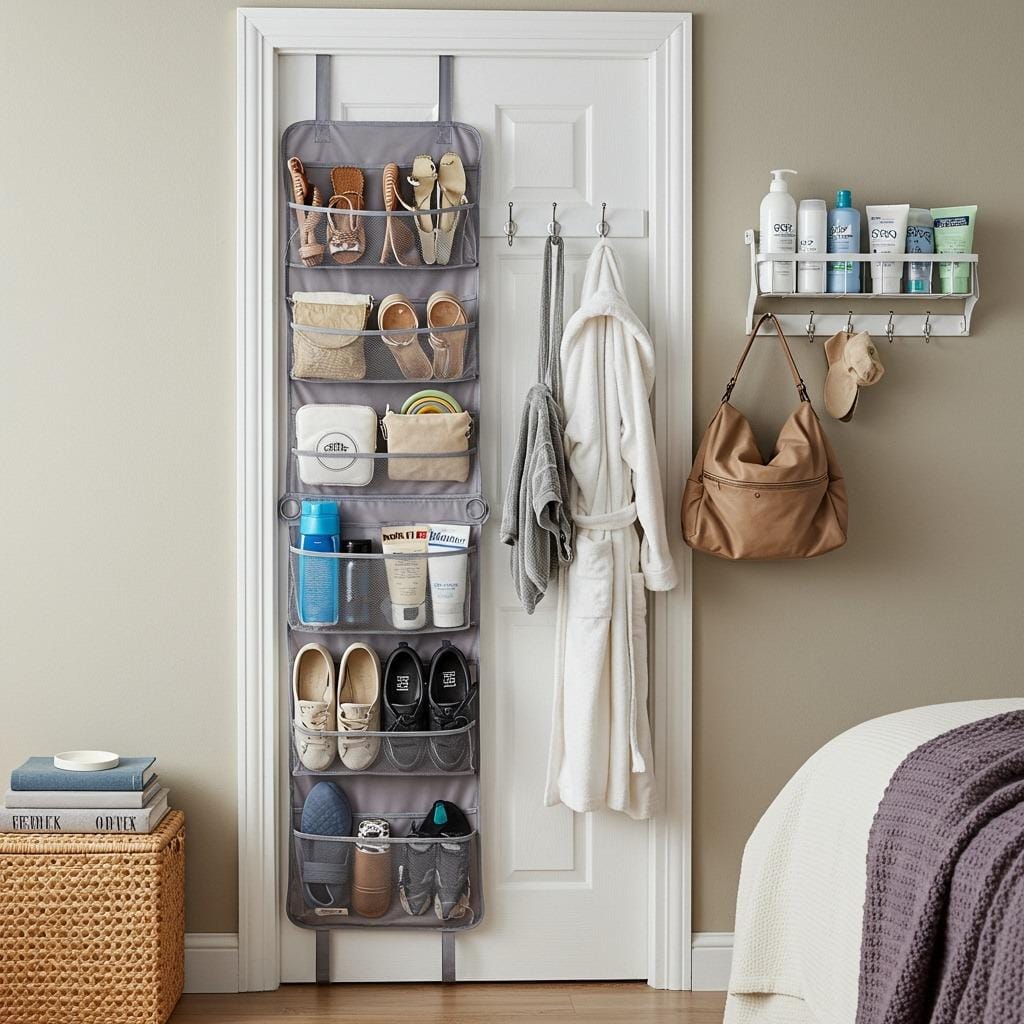
Over-the-door shoe organizers aren’t just for shoes. Use the clear pockets for scarves, belts, socks, or small accessories. They’re especially helpful for items you reach for regularly but don’t want cluttering up drawer space.
Install sturdy hooks for robes, bags, or jackets you’ll wear again. Just don’t go overboard – too many hooks create a chaotic look. Stick to 2-3 hooks maximum and choose ones that coordinate with your room’s style.
A slim over-the-door storage rack can hold everything from jewelry to hair accessories. Look for ones with multiple tiers and adjustable shelves so you can customize the spacing based on what you need to store.
5. Create a Bedside Storage System
Your nightstand shouldn’t be a dumping ground for random items. Creating an intentional storage system here makes your mornings smoother and your evenings more relaxing.
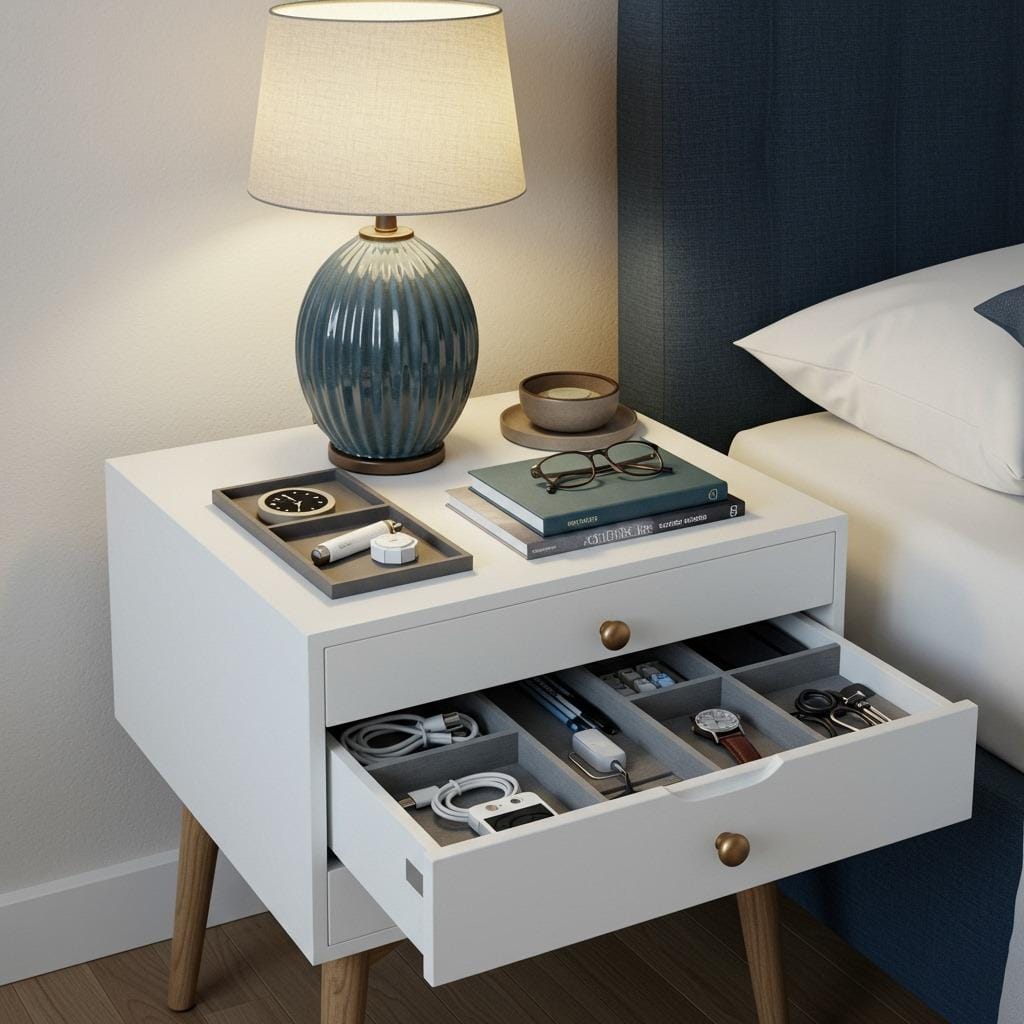
Use drawer dividers to create designated spots for different items. Small compartments keep jewelry untangled, while larger sections hold books, notebooks, or electronics. Having a specific place for everything means you’ll actually put things back where they belong.
Keep the nightstand surface minimal but functional. A small tray corrals daily essentials like your phone, watch, or lip balm without letting them scatter across the entire surface. Choose one that complements your decor but is large enough to be actually useful.
If your nightstand lacks drawers, a small basket or box on the lower shelf provides hidden storage for items you want nearby but not on display. This works especially well for charging cables, which always seem to multiply when you’re not looking.
6. Optimize Closet Rod Space
Most bedroom closets have a single hanging rod that wastes tons of vertical space. A simple adjustment here can nearly double your hanging storage capacity.

Install a second hanging rod below the first one to create two levels of hanging space. Use the top rod for shorter items like shirts and blouses, and the bottom for pants or shorter dresses. This works particularly well if most of your hanging clothes don’t require the full height of the closet.
Add shelf dividers to keep folded clothes in neat stacks instead of letting them topple over. These simple wire or plastic dividers prevent the domino effect that happens when you pull one item from the bottom of a pile.
Consider your hanging patterns too. Group similar items together and hang clothes in the direction you naturally reach. If you’re right-handed, you’ll probably grab from the right side first, so put frequently worn items there.
7. Add Storage Benches and Ottomans
A storage bench serves triple duty in the bedroom: extra seating, a place to set things down, and hidden storage. The key is choosing the right size and style for your space and needs.
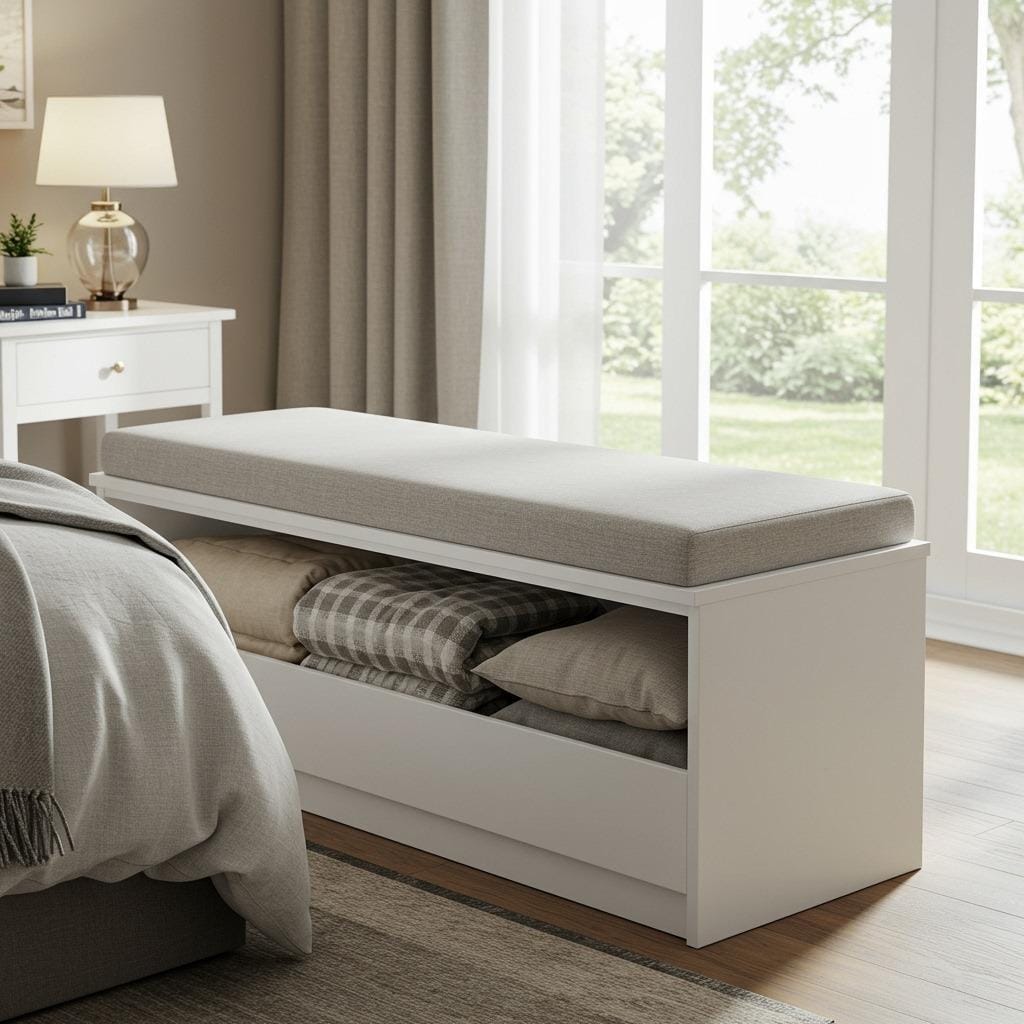
Position a storage bench under a window for a cozy reading nook that also houses extra pillows or throws. This spot gets natural light and creates a functional zone that doesn’t compete with your sleep area.
At the foot of the bed, a storage bench provides a convenient spot to sit while putting on shoes or laying out clothes. Store seasonal bedding, extra blankets, or items you don’t need daily access to. Choose one with a padded top if you’ll use it for seating frequently.
Round storage ottomans work well in corners or tight spaces where a rectangular bench might feel too bulky. They’re perfect for storing small items like magazines, books, or craft supplies while maintaining the room’s flow.
8. Install Wall-Mounted Hooks
Strategic hook placement can eliminate that dreaded “chair wardrobe” where clothes pile up because you’re too tired to hang them properly. But placement and quantity matter more than you might think.

Install hooks near your closet for clothes you’ll wear again but aren’t ready to wash. This prevents them from ending up on furniture while keeping them easily accessible. Limit yourself to 2-3 hooks to avoid creating a messy appearance.
Place a hook inside your closet door for belts, ties, or bags you use regularly. This keeps accessories organized without taking up shelf or drawer space, and you can see everything at a glance when getting dressed.
Consider decorative hooks that complement your bedroom style. They should be functional but also add to the room’s aesthetic rather than looking like an afterthought. Wood, metal, or ceramic options can coordinate with your existing decor.
9. Use Stackable Storage Boxes
Stackable storage containers help you build upward instead of outward, making them perfect for small bedroom organization. But not all stackable boxes are created equal.
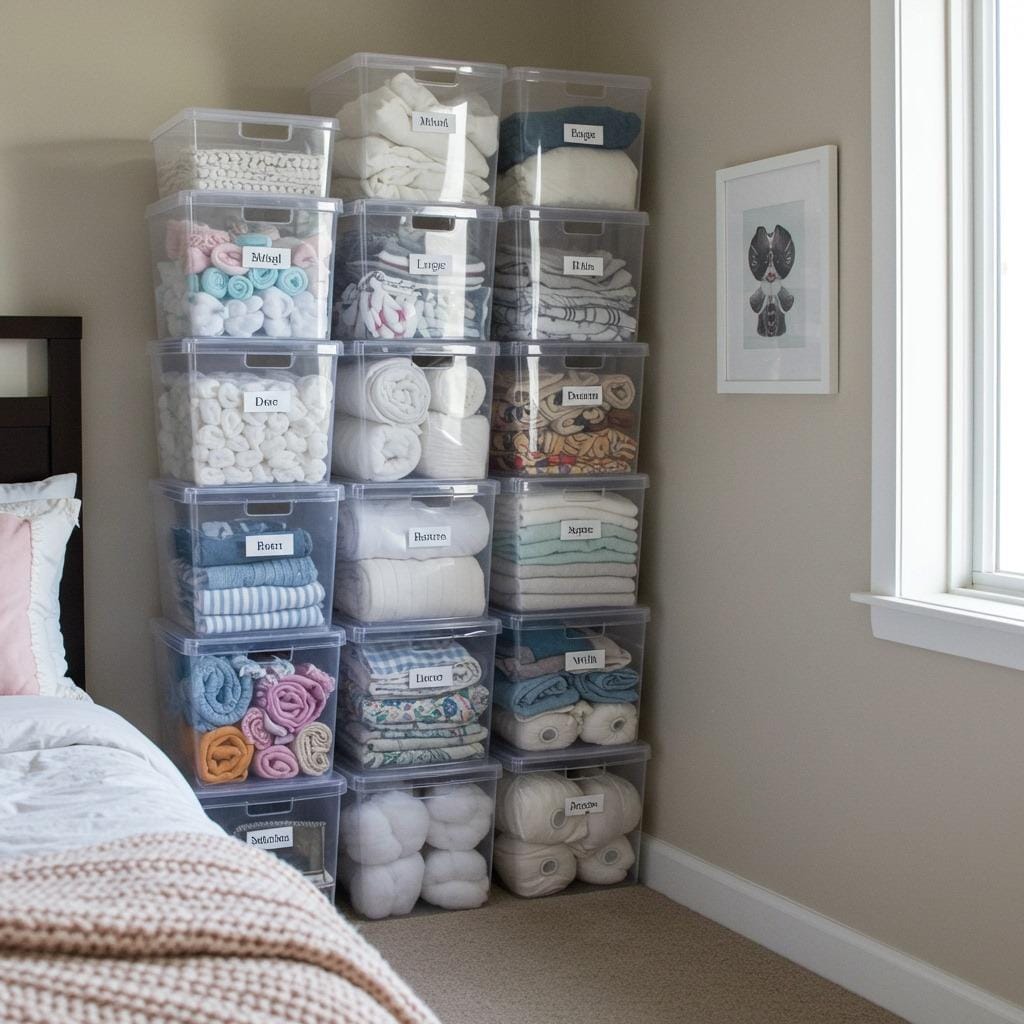
Choose boxes with secure lids that won’t shift when stacked. Clear containers let you see what’s inside without opening everything, but opaque boxes can look cleaner if your storage area is visible. The key is consistency – stick to one style and color for a coordinated look.
Label everything clearly, even clear boxes. You’d be surprised how similar folded sweaters can look through plastic. Use a label maker or attractive handwritten labels that coordinate with your room’s style.
Stack strategically by weight and frequency of use. Heavier boxes go on bottom, and items you access most often should be in the most reachable positions. Don’t stack too high – you should be able to safely reach the top box without climbing on furniture.
10. Create Under-Window Storage
The space under bedroom windows often gets wasted, but it’s perfect for creating additional storage that doesn’t interfere with the room’s layout or natural light flow.
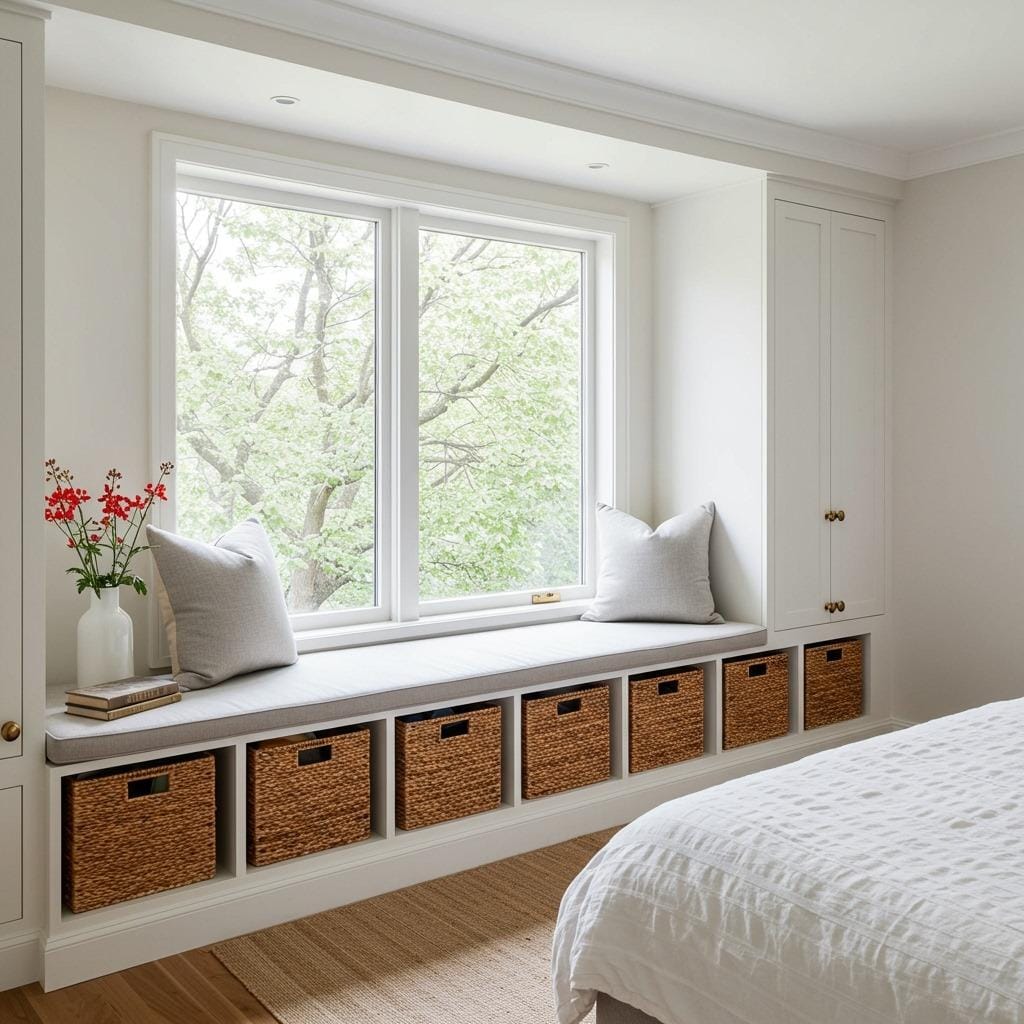
A low bookshelf or storage cube unit fits perfectly under most windows without blocking light. Use it for books, decorative storage boxes, or items you want easy access to but off the floor and surfaces.
Built-in window seats with storage underneath work beautifully if you’re planning a renovation or have basic carpentry skills. They create a cozy reading spot while providing substantial hidden storage for linens, seasonal clothes, or rarely used items.
If building isn’t an option, arrange a few storage baskets or boxes under the window in an attractive way. Choose containers that complement your decor so they look intentional rather than like temporary storage solutions.
11. Maximize Dresser Drawer Space
Most people just toss things into dresser drawers, but a little organization here goes a long way toward keeping your bedroom ideas functional and peaceful.

Drawer dividers are essential for keeping small items like socks, underwear, and accessories separated and easy to find. You can buy adjustable dividers or make your own using small boxes or containers that fit your drawer dimensions.
Fold clothes using methods that let you see everything at a glance. The Marie Kondo filing method works particularly well for t-shirts and casual clothes – everything stands upright so you can see each item without disturbing the rest.
Reserve the top drawer for items you need daily access to. Lower drawers work well for seasonal or less frequently worn items. This simple hierarchy makes getting dressed more efficient and keeps your most used items from getting buried.
12. Add Behind-the-Door Storage
The space behind your bedroom door offers storage opportunities that don’t take up any floor space or interfere with your room’s layout. It’s often completely overlooked but incredibly useful.
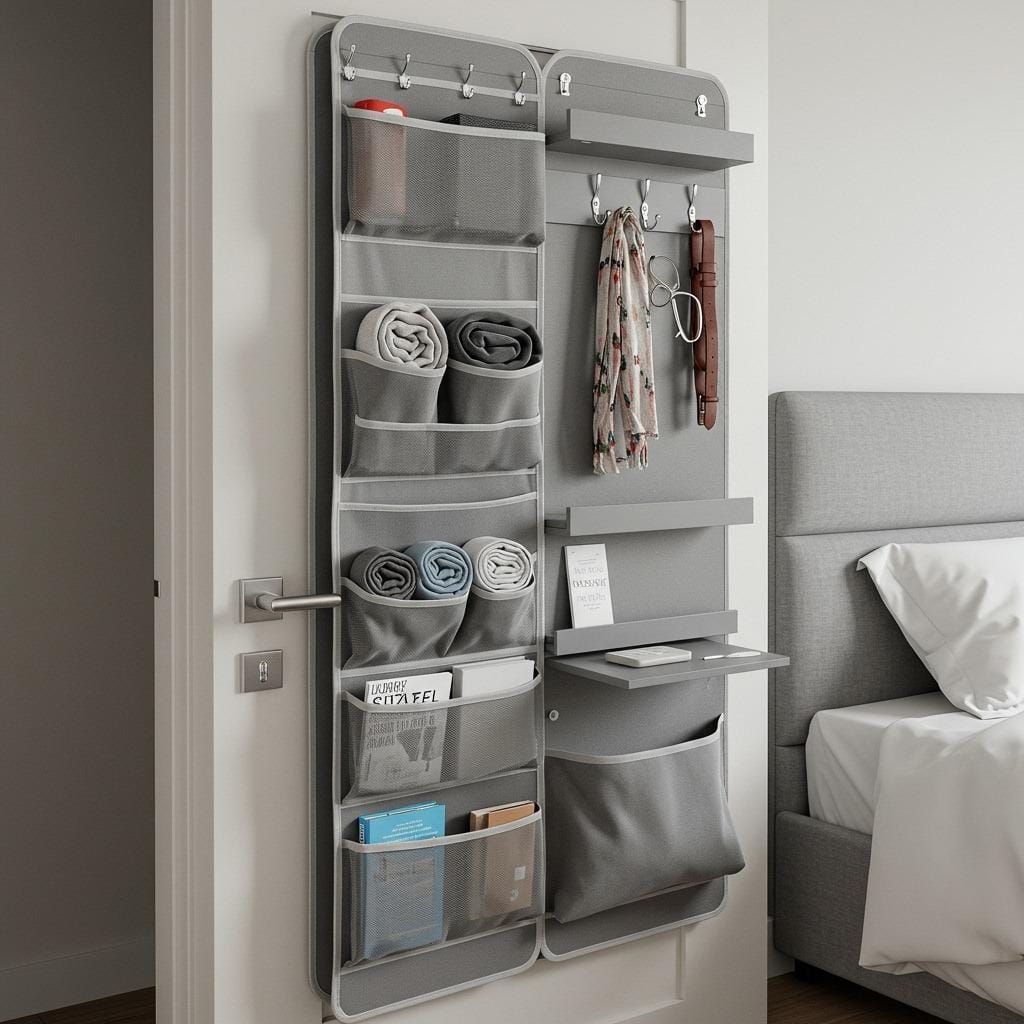
A slim behind-the-door organizer with multiple pockets can hold everything from accessories to small electronics. Look for ones specifically designed to hang flat against the door so they don’t interfere with door operation.
Install a narrow shelf system designed for door mounting. These work well for books, small decorative items, or storage containers for frequently used small items. Make sure the shelves are deep enough to be functional but shallow enough that they don’t hit the door frame.
Keep the weight reasonable for door-mounted storage. Doors aren’t designed to support heavy loads, and too much weight can damage the hinges or cause the door to sag over time. Stick to lightweight items and distribute weight evenly.
13. Utilize Headboard Storage
If you’re in the market for a new headboard or planning a bedroom refresh, consider options that incorporate storage. This often-overlooked opportunity can add significant functionality without taking up additional floor space.

Headboards with built-in shelves provide convenient storage for books, water bottles, phones, or decorative items. Look for designs with different sized compartments to accommodate various items while maintaining a clean appearance.
Some headboards include hidden storage compartments or drawers that are accessible from the sides. These work well for items you want nearby but not on display – think extra chargers, medications, or personal items.
If DIY is your thing, you can create headboard storage by mounting shelves or small cabinets on the wall behind your bed. Just ensure everything is securely attached and positioned where you won’t bump your head.
14. Install Ceiling-High Storage
Looking up reveals often-wasted storage potential in most bedrooms. The space between the top of your closet or furniture and the ceiling can accommodate quite a bit if organized properly.
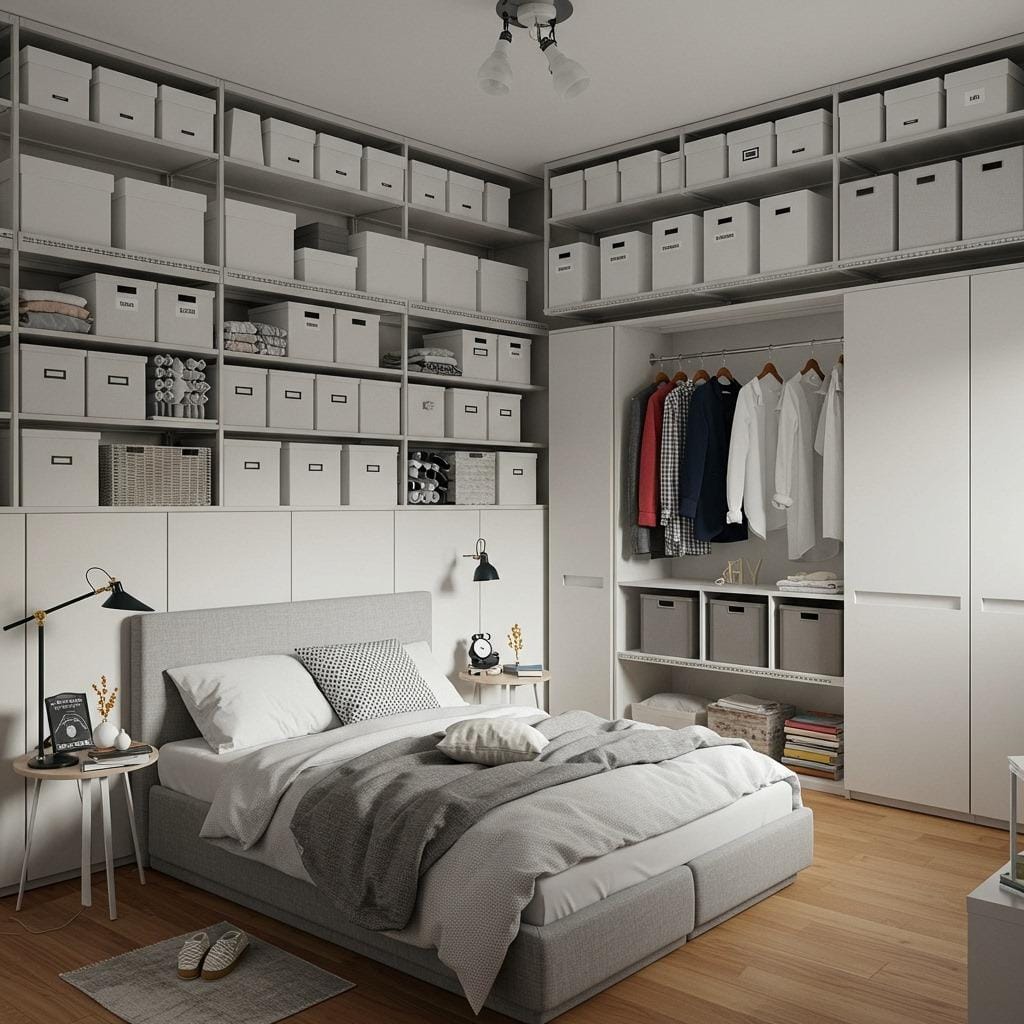
Tall shelving units that reach the ceiling provide maximum storage in a small footprint. Use the upper shelves for items you don’t need regularly – seasonal decorations, extra bedding, or sentimental items you want to keep but don’t use often.
In closets, add shelves above the hanging rod area. This space is perfect for storing items in labeled boxes or bins. Use a small step stool to access these areas safely, and keep heavier items on lower shelves.
Consider the visual impact of ceiling-high storage. While it maximizes space, it can make a room feel smaller if not done thoughtfully. Choose storage solutions that complement your room’s style and don’t create visual clutter.
15. Create a Charging Station
Electronics clutter is real, and bedroom charging chaos can make even organized spaces feel messy. Creating a dedicated charging station keeps cords contained and devices accessible.
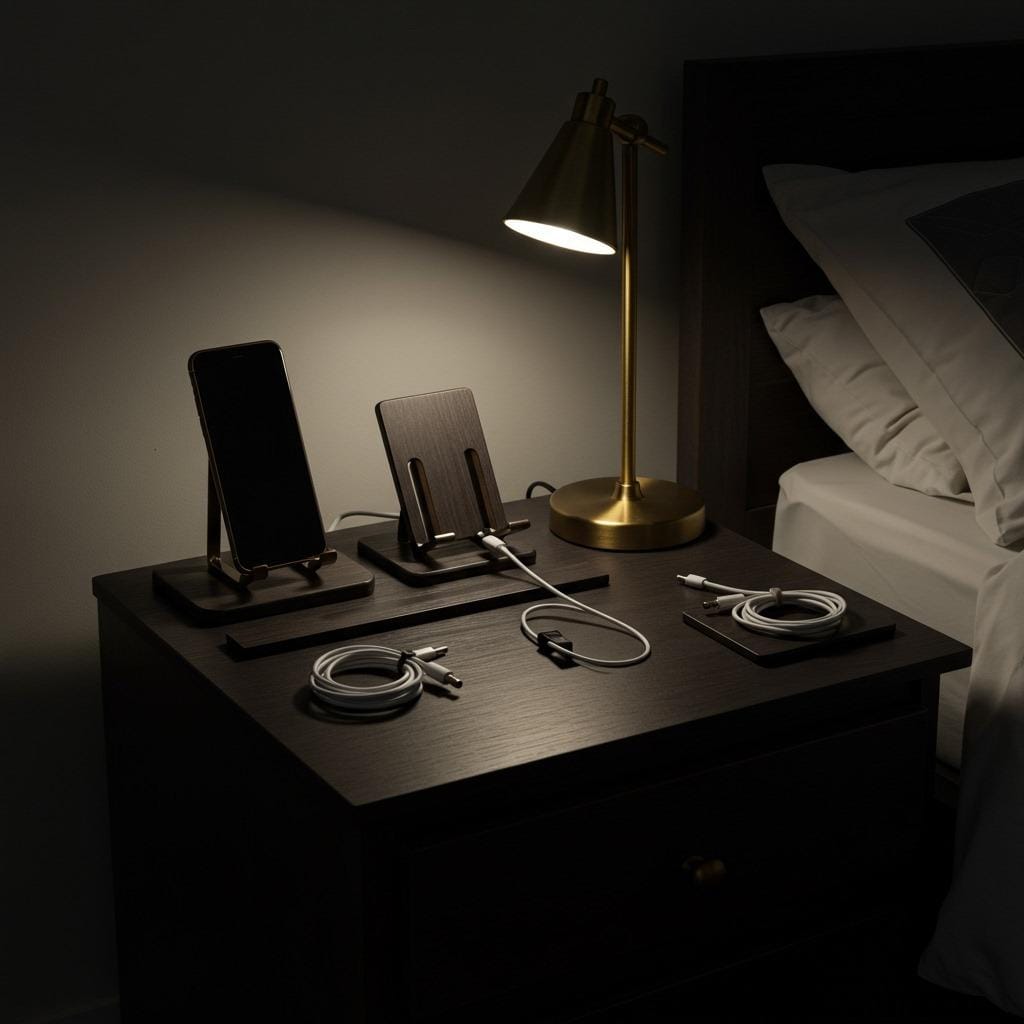
Use a decorative box or tray with cord management features to keep charging cables organized and devices in one place. Some charging stations have built-in slots for phones and tablets, keeping everything upright and easy to grab.
A nightstand with built-in USB ports eliminates the need for bulky adapters and keeps cords shorter and more manageable. If you’re furniture shopping, this feature is worth considering for the convenience it provides.
Hide unsightly power strips and excess cords using cord management solutions. Cable organizers, cord covers, or even a decorative box with holes cut for cords can keep the functional stuff functional but not visually distracting.
16. Use Rolling Storage Carts
Rolling carts bring storage where you need it when you need it, then tuck away when you don’t. They’re particularly useful in bedrooms where space is at a premium but needs vary.
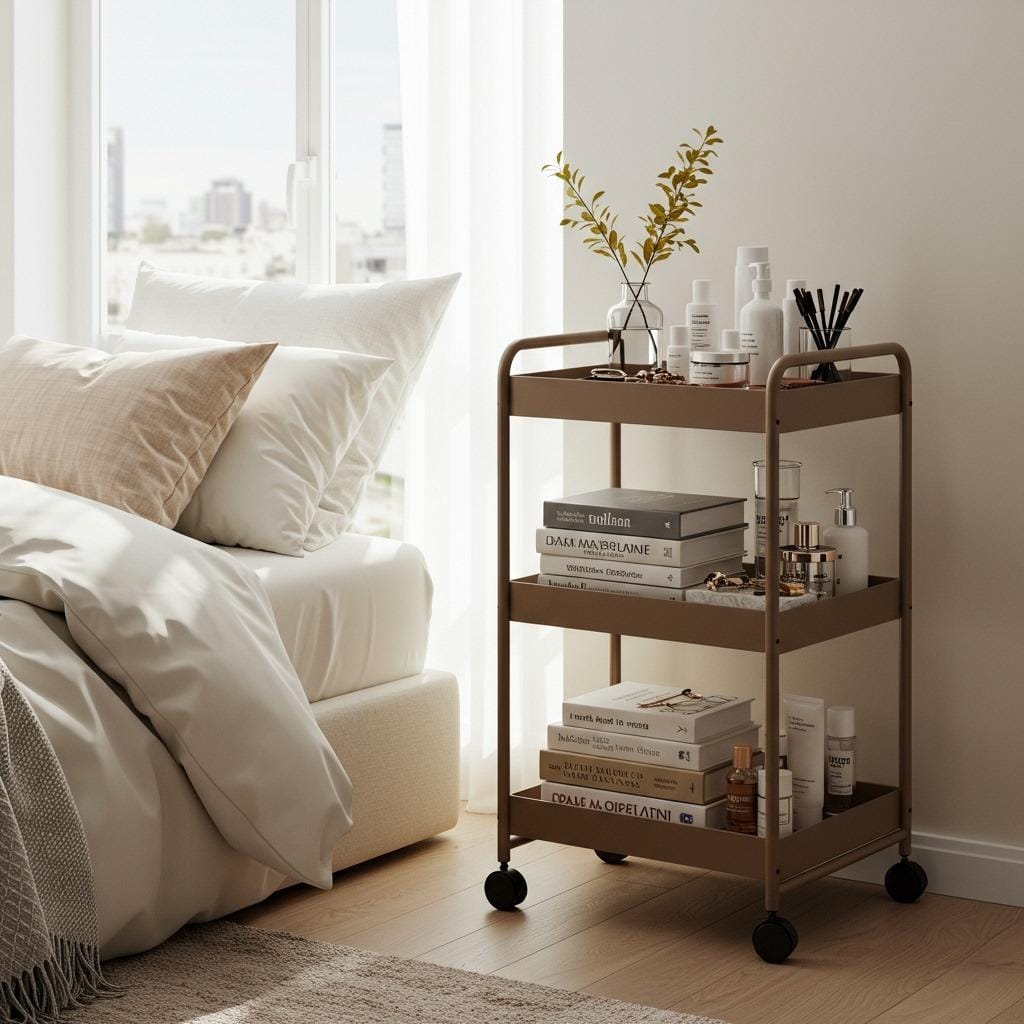
A narrow rolling cart can slide between furniture or into closets when not needed, then roll out to serve as extra storage or surface space. Use it for items you need access to but don’t want permanently displayed.
Bedside rolling carts work well if you don’t have room for traditional nightstands. They can hold books, water, and nighttime essentials, then roll away during the day if you need more space.
Choose carts with the right proportions for your space. Very tall carts can look overwhelming in smaller rooms, while too-small carts might not provide enough storage to justify the floor space they occupy.
17. Incorporate Drawer Organizers
Drawer chaos is a universal problem, but the right organizers can transform even the messiest drawers into functional storage spaces. The key is choosing organizers that fit your specific needs and drawer dimensions.
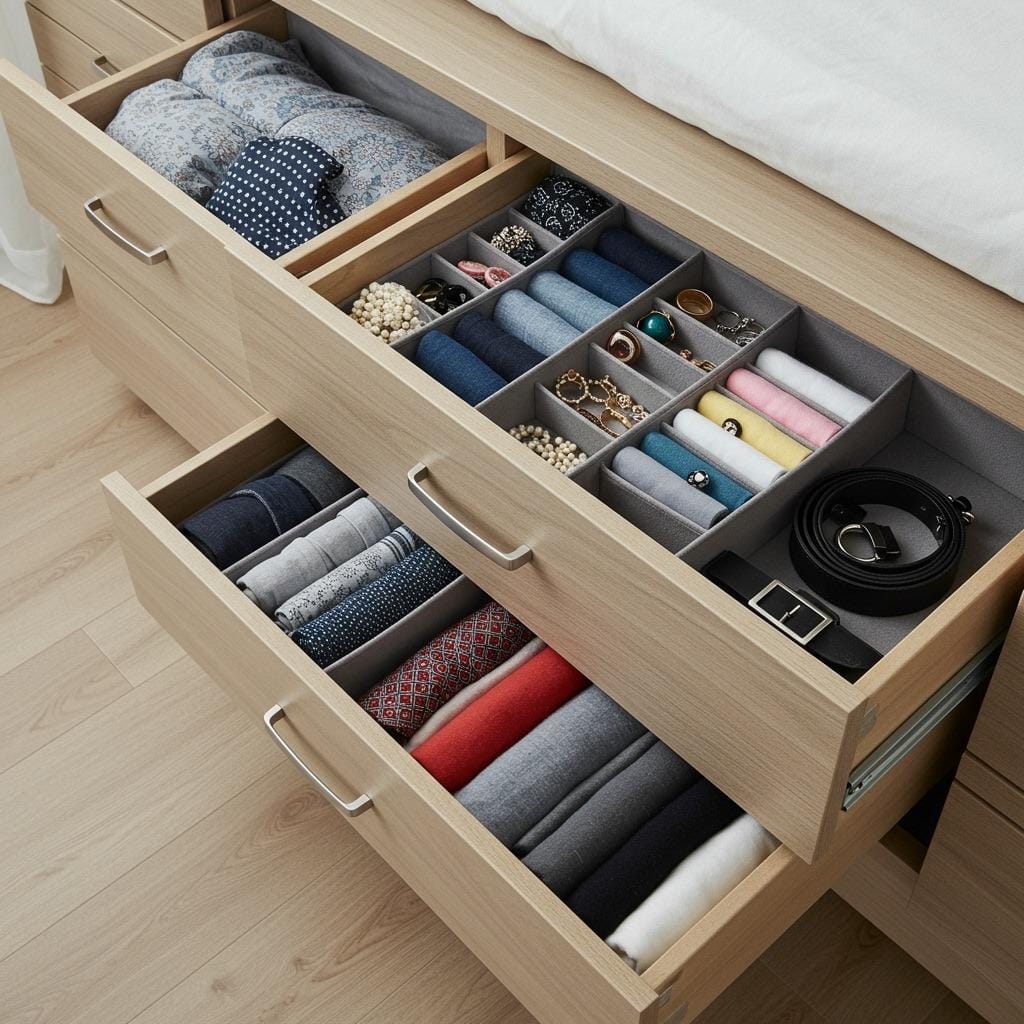
Adjustable drawer dividers work well for most situations because you can customize the compartment sizes based on what you’re storing. They’re particularly useful for clothing drawers where item sizes vary significantly.
For jewelry and small accessories, use small containers or ice cube trays to keep items separated and prevent tangling. Clear containers let you see everything at a glance, while opaque ones create a cleaner look if your drawer organization is visible when opened.
Don’t forget about deep drawers, which often become dumping grounds because they’re hard to organize effectively. Drawer organizers with varying heights help you use vertical space efficiently and keep items from getting lost at the bottom.
18. Add Closet Door Storage
Closet doors offer valuable storage real estate that’s often completely ignored. Whether you have sliding doors, bifold doors, or traditional hinged doors, there are storage solutions that can work.
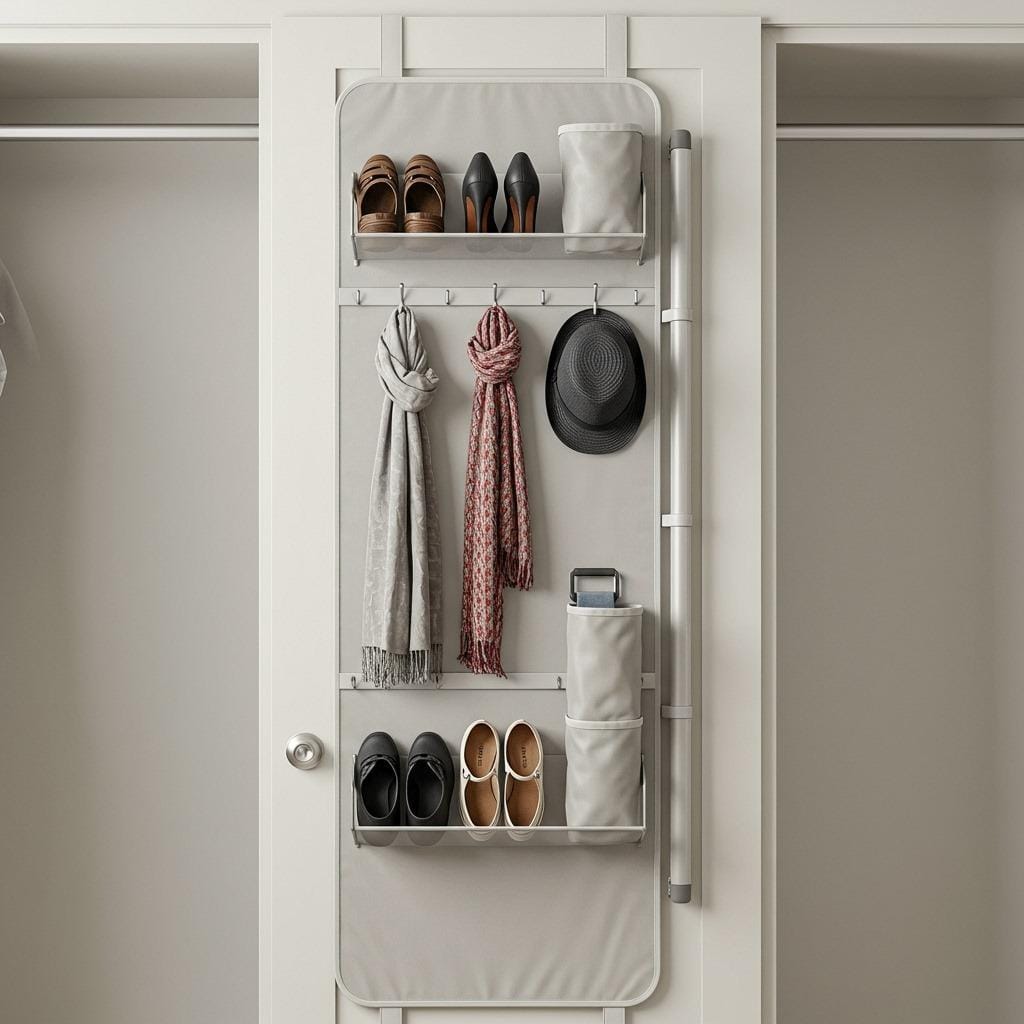
Over-the-door shoe organizers with clear pockets work for more than just shoes. Use them for accessories, socks, ties, or small clothing items. The clear pockets let you see everything at a glance, making getting dressed more efficient.
For sliding closet doors, consider adhesive hooks or small hanging organizers that don’t interfere with the door’s operation. These work well for frequently used items like belts, scarves, or bags.
Full-length mirrors on closet doors serve double duty – they’re functional for getting dressed and can hide storage solutions mounted behind them. Some mirrors are designed with shallow storage compartments built in.
19. Optimize Corner Spaces
Bedroom corners often become dead space, but they’re perfect for storage solutions that don’t interfere with traffic flow or the room’s primary functions.
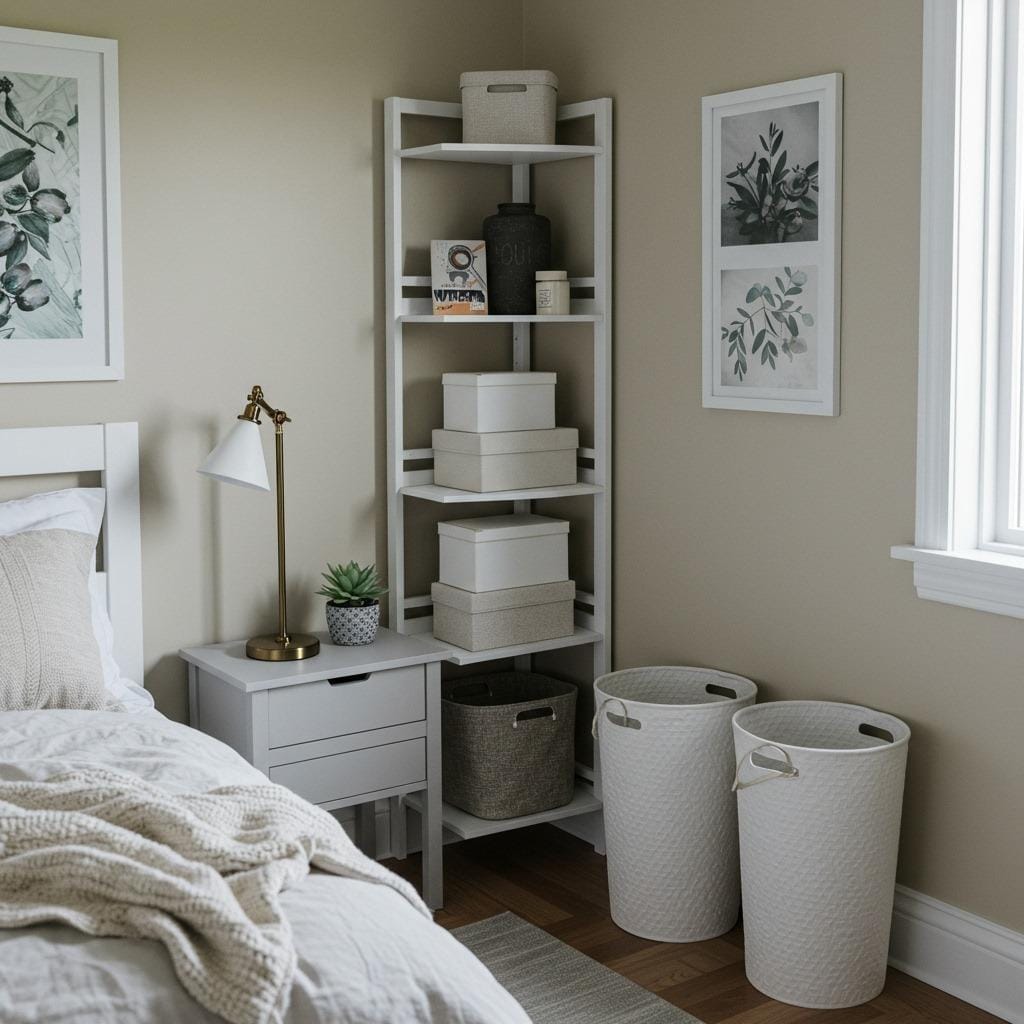
Corner shelving units, whether floor-to-ceiling or smaller accent pieces, make use of space that might otherwise go unused. They’re perfect for books, plants, or decorative storage containers.
A corner hamper or laundry basket keeps dirty clothes contained without taking up wall space that might be better used for furniture. Look for ones with lids to keep laundry out of sight.
Tall corner storage towers work well in rooms with high ceilings. They provide substantial storage in a small footprint and can house everything from books to linens to seasonal items.
These small bedroom storage solutions can be combined and customized based on your specific space and storage needs. The key is choosing solutions that work with your daily routines rather than against them.
Making It All Work Together
The most effective bedroom storage isn’t about implementing every single idea, but about choosing the right combination for your space and lifestyle. Start with your biggest pain points – is it clothing overflow, lack of surface space, or general clutter accumulation?
Consider how you actually use your bedroom too. If you get dressed in the closet, focus storage solutions there. If you tend to lay out clothes on furniture, create designated spaces for that habit instead of fighting it.
Remember that storage and organization ideas work best when they’re maintained consistently. Choose systems that are easy enough for you to actually use every day, not just when you’re motivated to be super organized.
The goal isn’t perfection – it’s creating a bedroom that supports rest and relaxation while keeping the practical stuff contained and accessible. When you can find what you need quickly and your space feels calm, you’ve succeeded regardless of which specific storage solutions you’ve chosen.
According to the National Sleep Foundation, a clutter-free bedroom environment significantly improves sleep quality and reduces stress levels, making these organizational efforts well worth the initial investment of time and energy.
Your bedroom should work for you, not against you. With the right storage solutions in place, you can maintain that peaceful sanctuary feeling even in the midst of daily life’s inevitable accumulation of stuff.

Sanjai creates easy, affordable home decor ideas that anyone can try. Through simple tips and curated finds, he helps you style rooms you’ll love coming home to.