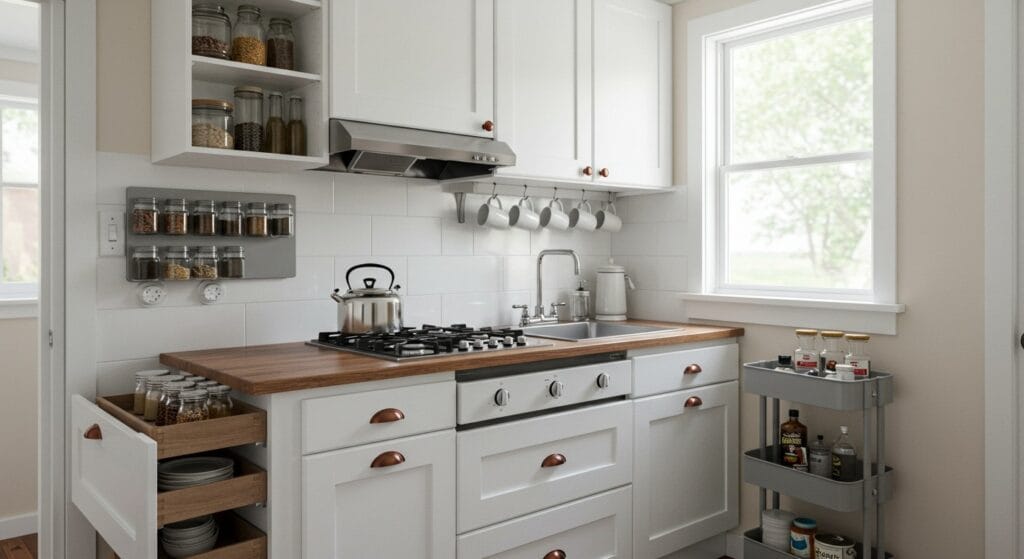
Living in a compact space doesn’t mean sacrificing functionality or style in your kitchen. When you’re working with limited square footage, every inch counts – and that’s where smart tiny kitchen organization becomes your best friend.
I’ve spent years figuring out how to make small kitchens work harder, not just look prettier. The truth is, most kitchens accumulate way too much stuff that rarely gets used. What if I told you that getting organized isn’t about buying more containers, but about creating systems that actually make sense for how you cook?
Whether you’re in a studio apartment, a cozy cottage, or just dealing with an awkwardly sized kitchen, these ideas will help you reclaim counter space, find what you need faster, and maybe even enjoy cooking a bit more. Let’s get into it.
1. Install a Magnetic Knife Strip
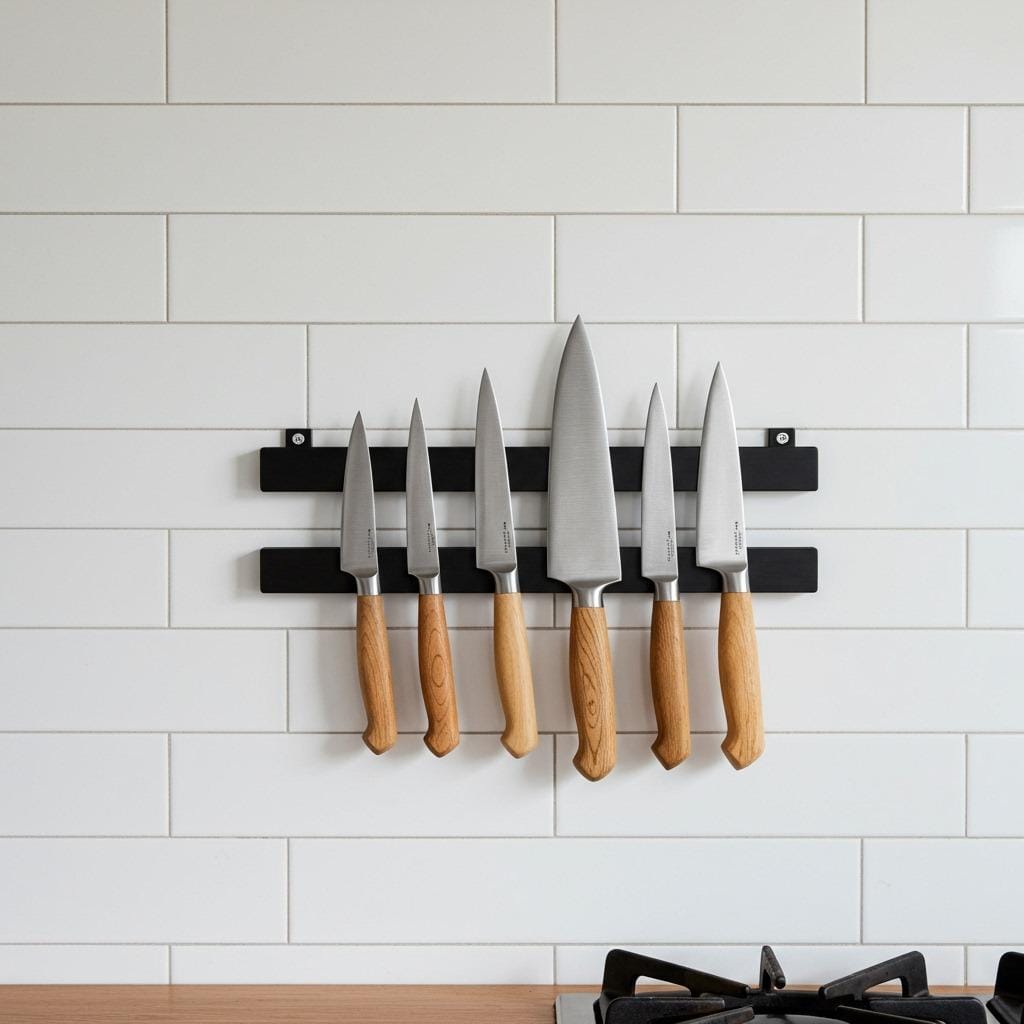
Drawer space is precious real estate in a tiny kitchen. A magnetic knife strip mounted on your wall keeps your knives accessible, safely stored, and completely off your counters.
Beyond knives, these strips can hold metal utensils, scissors, and even small metal containers with spices. I’ve seen people use them in the most unexpected spots – inside cabinet doors or on the side of the fridge. The Container Store offers various lengths and finishes that blend seamlessly with different kitchen styles.
This simple addition opens up an entire drawer for other items. Plus, your knives stay sharper when they’re not banging against other utensils.
2. Use Drawer Dividers for Utensils
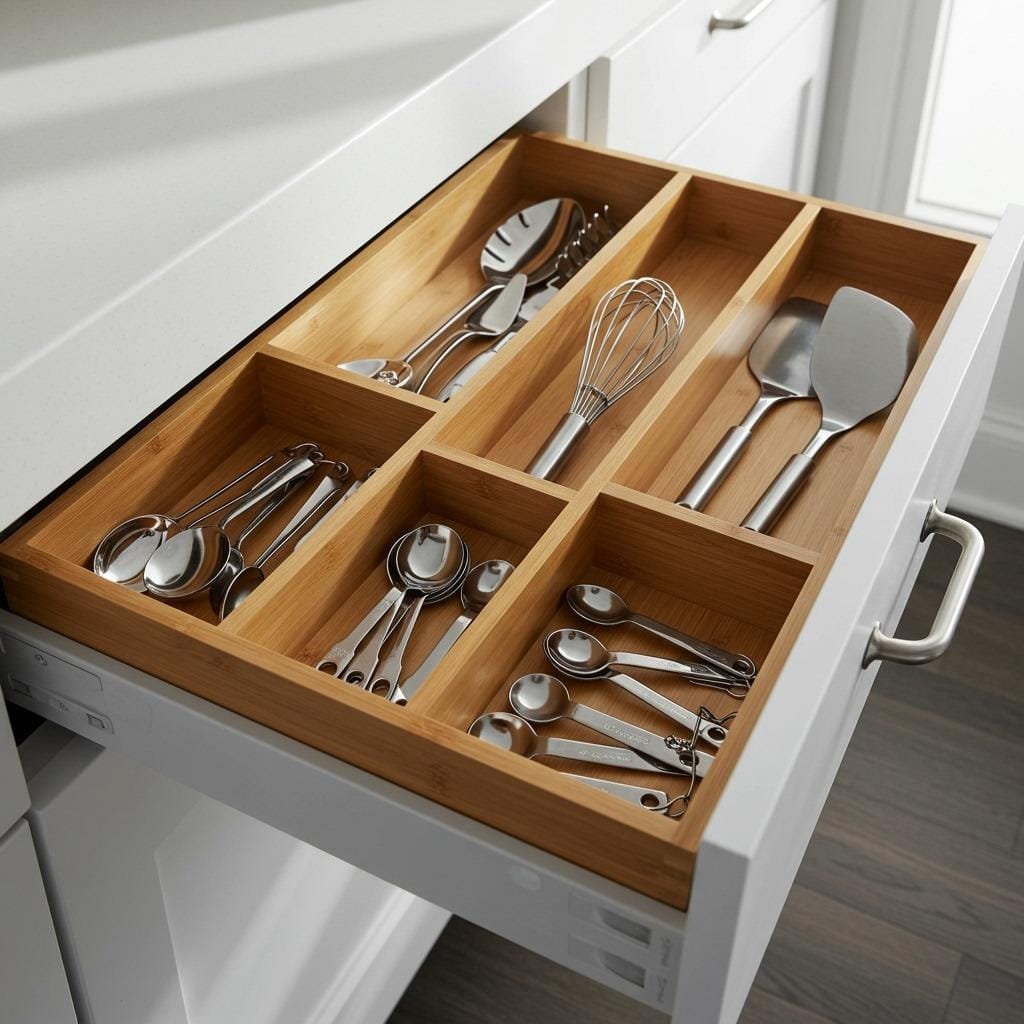
Messy utensil drawers waste time and create unnecessary frustration. Installing drawer dividers transforms chaotic jumbles into organized sections where everything has its place.
You can find adjustable dividers that fit any drawer size, or try the DIY drawer dividers approach for a custom solution. The key is grouping similar items together – measuring spoons in one section, spatulas in another, whisks somewhere else.
When you can see everything at a glance, you’ll stop buying duplicates of tools you already own. That alone makes this worth the small investment.
3. Add Under-Shelf Baskets
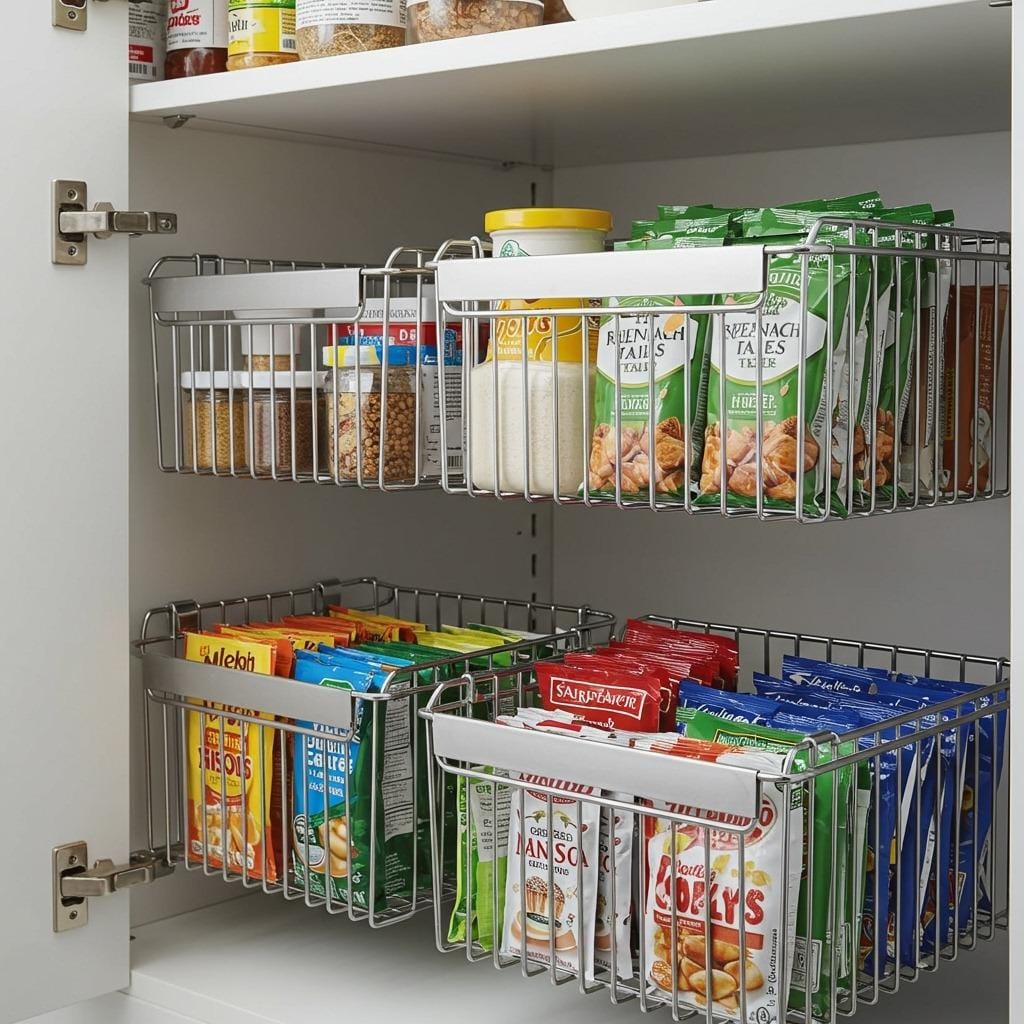
That empty space between your cabinet shelves? It’s wasted vertical real estate just waiting to be used.
Under-shelf baskets hook directly onto existing shelves without any installation. They’re perfect for storing lightweight items like snack bags, tea boxes, or small containers. I particularly love using them in pantry areas where shelf space runs out fast.
These baskets essentially double your storage capacity in cabinets. You can find them in various widths to fit different cabinet configurations, making them a flexible solution for small kitchen storage.
4. Mount a Pegboard for Pots and Pans

Cabinet space disappears quickly when you’re stacking pots and pans. A pegboard system puts your cookware on display while keeping it within easy reach.
You can customize pegboards endlessly with different hook configurations. Hang your most-used pots and pans, add small shelves for lids, or create spots for cooking utensils. The visual aspect actually adds character to your kitchen rather than hiding everything away.
This approach works especially well if you have a blank wall near your stove. Paint the pegboard to match your kitchen aesthetic for a cohesive look.
5. Utilize the Inside of Cabinet Doors
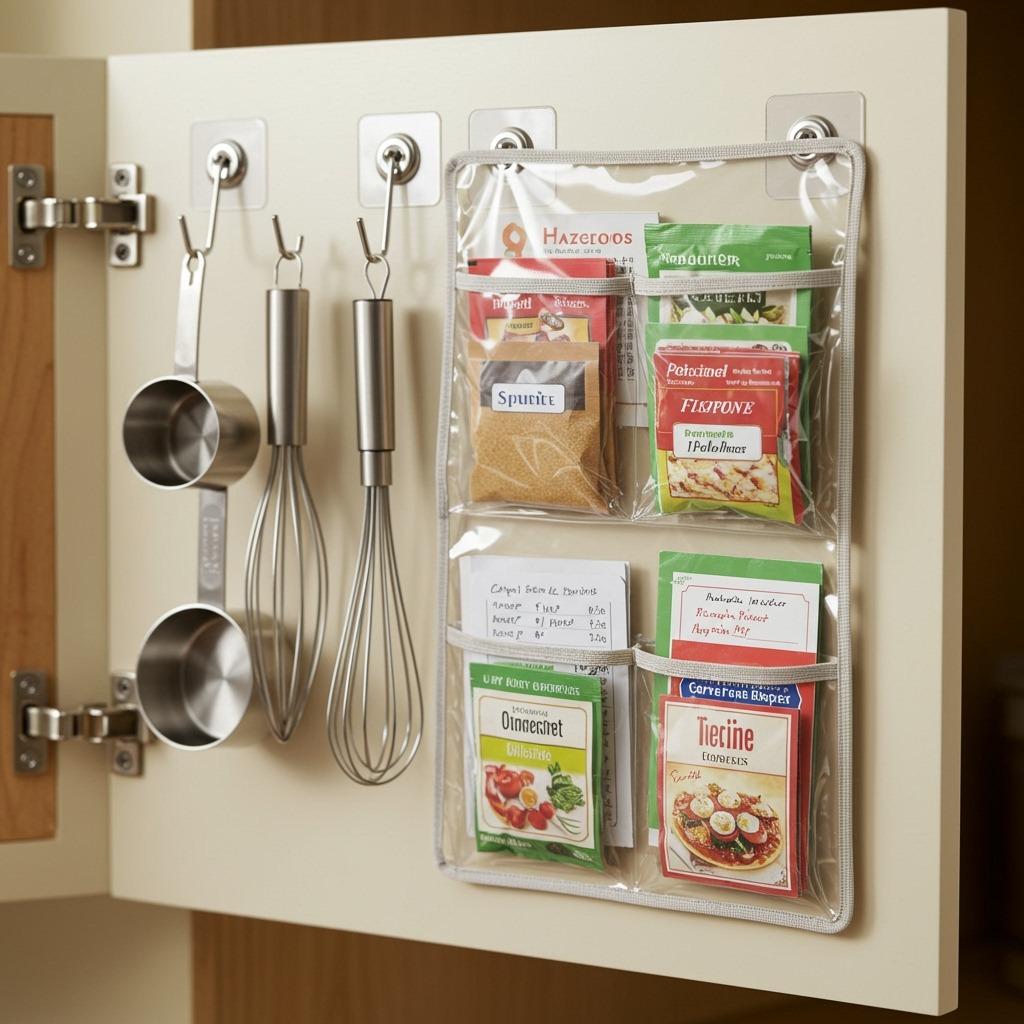
Cabinet doors are basically blank canvases for storage opportunities. Adhesive hooks, small racks, or pocket organizers can transform these forgotten spaces into functional storage zones.
Try mounting a small rack on the inside of your sink cabinet door for storing sponges and dish brushes. Under the main cooking area, you might add hooks for oven mitts or measuring cups. Just make sure whatever you add doesn’t interfere with the cabinet closing properly.
This trick adds storage without taking up any additional space in your kitchen footprint. It’s one of those solutions that feels obvious once you do it.
6. Invest in Stackable Clear Containers
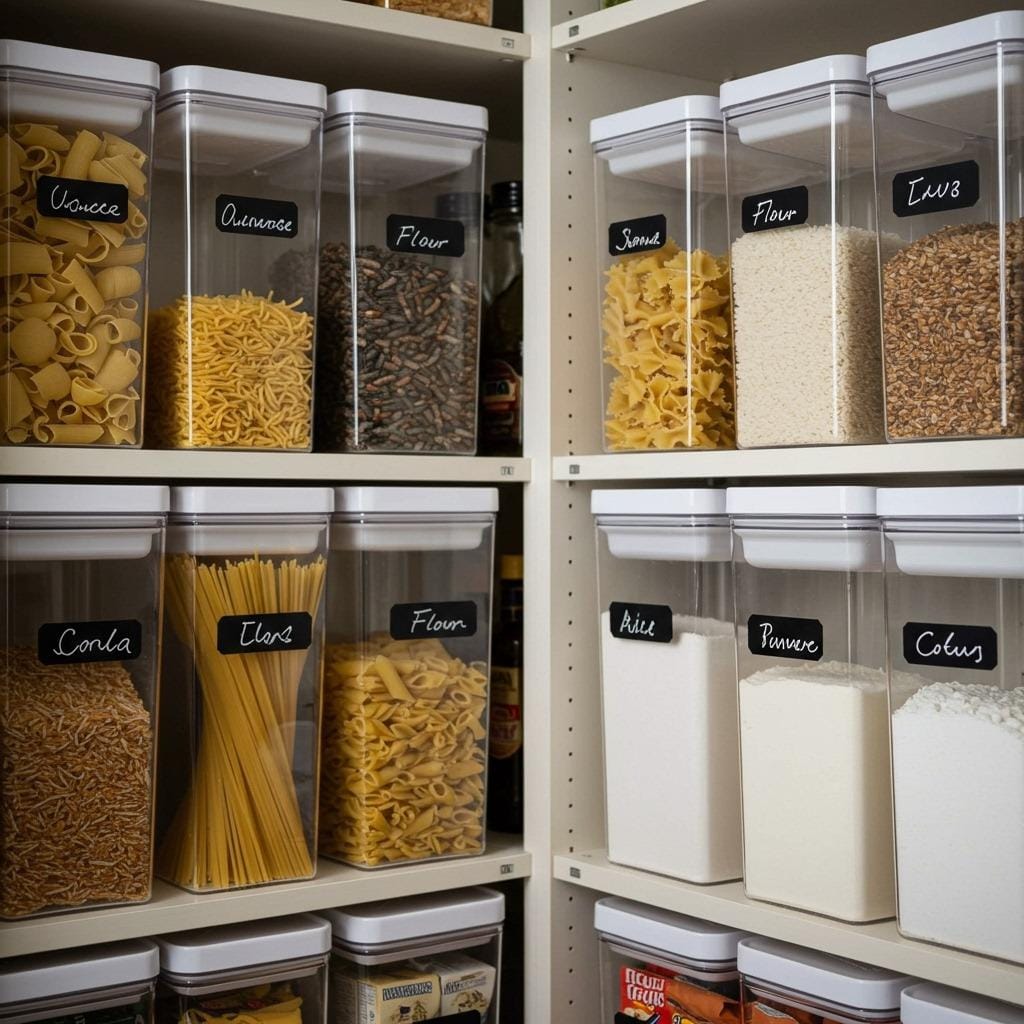
Mismatched packaging takes up more space than it needs to and makes it hard to see what you actually have. Transferring dry goods into stackable clear containers creates a more efficient kitchen pantry organization system.
Clear containers let you see exactly how much of each ingredient remains at a glance. Stack them to maximize vertical space, and suddenly your pantry looks like it doubled in size. Label everything clearly – I use a label maker, but even masking tape and a marker works.
This system also keeps food fresher longer and prevents those half-open bags of rice from spilling everywhere. It’s an upfront investment that pays off daily.
7. Add a Rolling Kitchen Cart
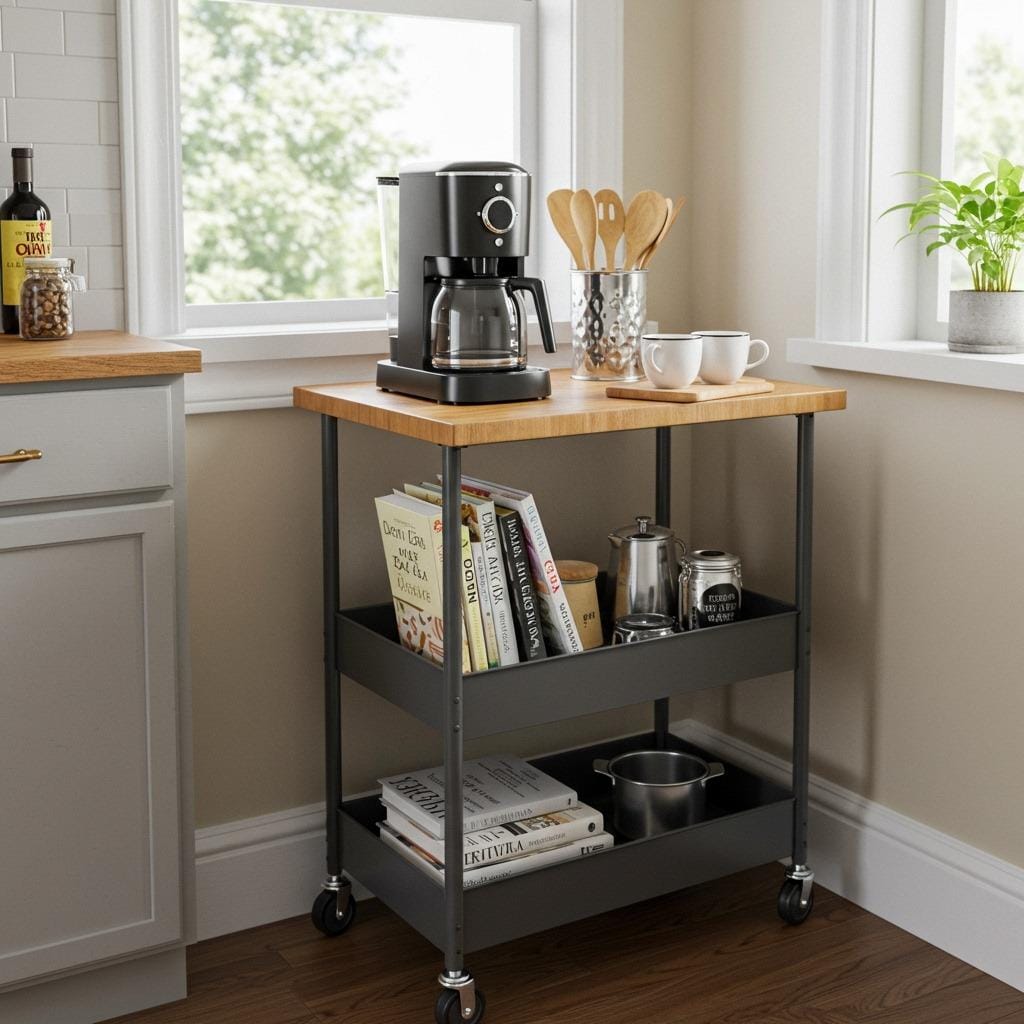
Extra counter space is like gold in a tiny kitchen. A rolling cart provides a mobile prep area that you can wheel around as needed.
Use the top as additional workspace when cooking, then roll it out of the way when you’re done. The shelves below offer storage for appliances, cookbooks, or frequently used ingredients. Some carts even have built-in wine racks or towel bars for extra functionality.
Look for carts with locking wheels so they stay put during food prep. You can also find options with butcher block tops that double as cutting boards for maximum efficiency in kitchen and dining ideas.
8. Hang Mugs Under Cabinets

Mug collections eat up serious shelf space. Installing hooks under your upper cabinets keeps mugs accessible while freeing up room inside for other items.
This works particularly well near your coffee station. Grab your mug, pour your coffee, and you’re done – no cabinet doors to open. The visual display can actually add personality to your kitchen if you have mugs you love.
Just measure carefully to ensure the mugs won’t hit the countertop or backsplash. Leave enough clearance for comfortably removing and replacing them.
9. Use Tension Rods as Dividers
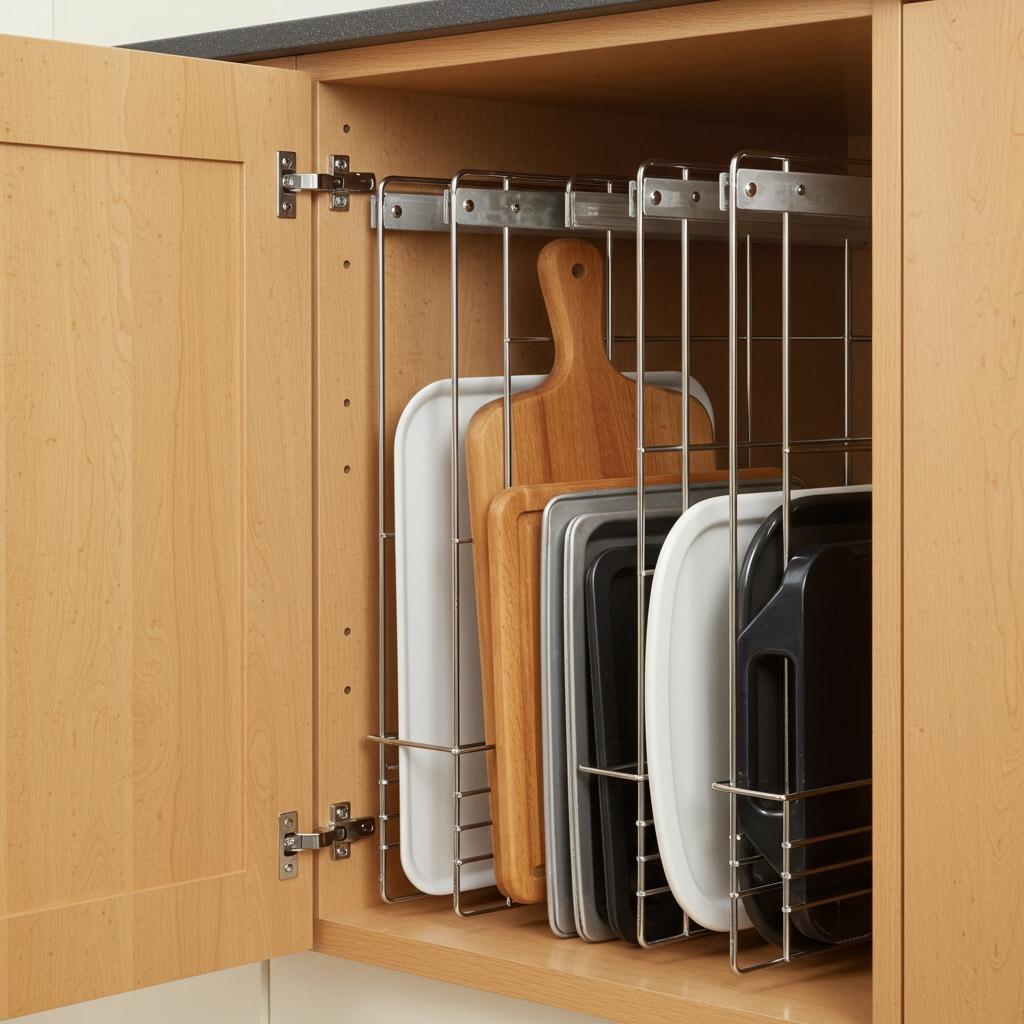
Storing flat items like baking sheets and cutting boards horizontally wastes so much space. Tension rods create vertical dividers that let you file these items upright instead.
Install two or three tension rods vertically in a cabinet or between shelves. Suddenly you can slide out just the pan you need without unstacking everything. This method works for lids, cutting boards, serving platters, and cooling racks too.
Tension rods require zero installation beyond twisting them into place. You can adjust them or remove them anytime, making this a perfect renter-friendly small kitchen storage solution.
10. Create a Command Center
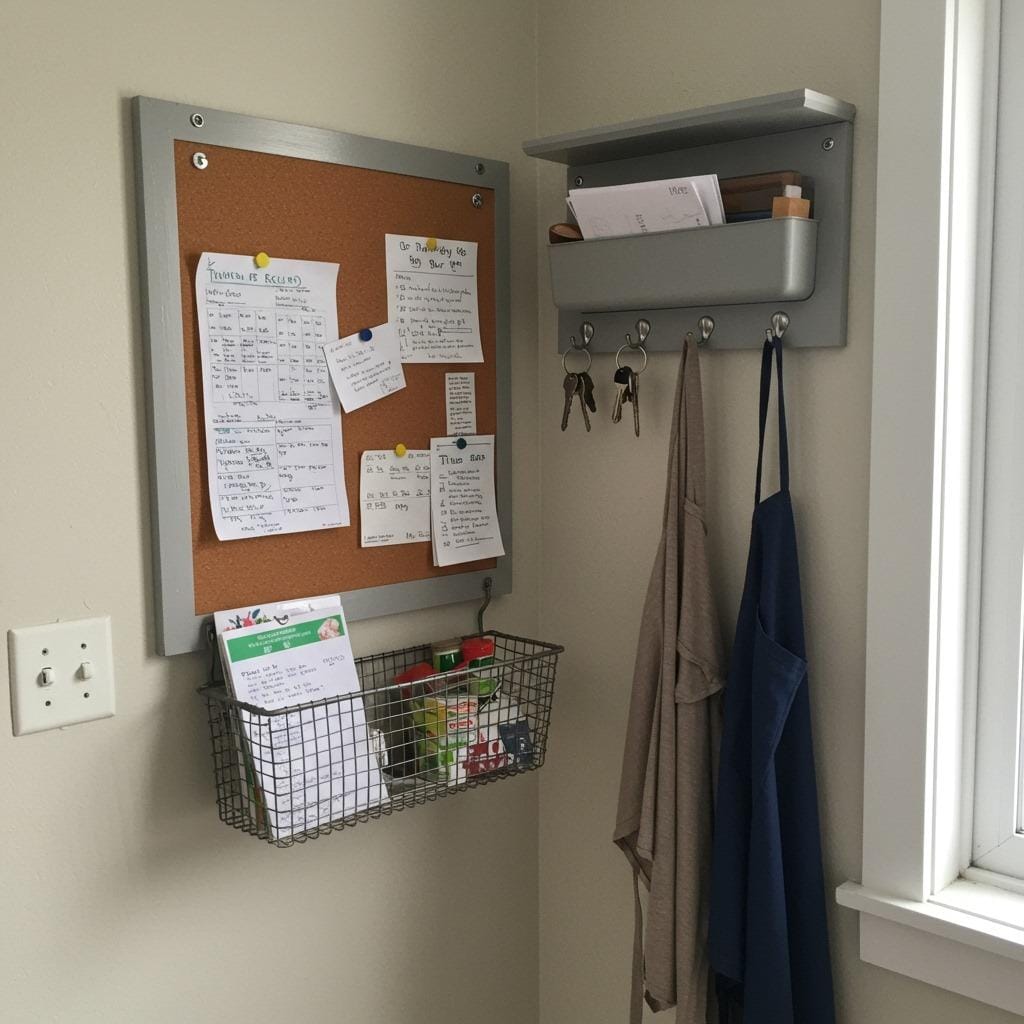
Kitchens often become drop zones for mail, keys, and random papers. A dedicated command center corrals this chaos into one contained area.
Mount a small corkboard or magnetic board on an empty wall section. Add a basket or mail sorter below for papers that need attention. Include hooks for keys and reusable shopping bags so you always know where to find them.
This prevents counter clutter from spreading across your entire kitchen. Everything has a designated landing spot instead of becoming part of the general mess.
11. Install a Fold-Down Table
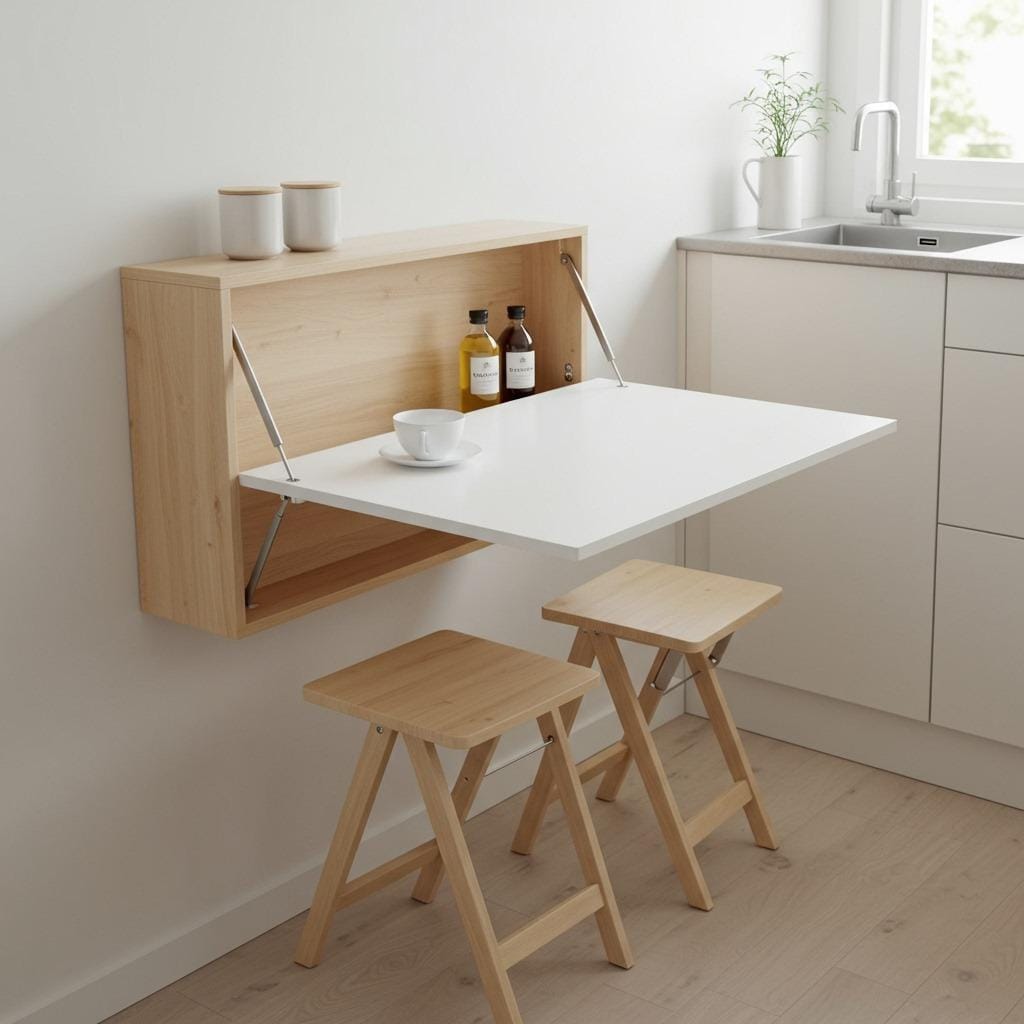
Sometimes you need more surface area, but there’s simply nowhere to put a permanent table. A fold-down table mounts to the wall and disappears when not in use.
Use it as extra prep space during big cooking projects, then fold it away to restore your walkway. Some versions include storage shelves or slots for keeping cutting boards and placemats. You can even use it as a casual dining spot for quick meals.
These tables come in various sizes to fit different spaces. Choose one that’s proportional to your kitchen so it doesn’t overwhelm the room when extended.
12. Maximize Corner Cabinets with Lazy Susans
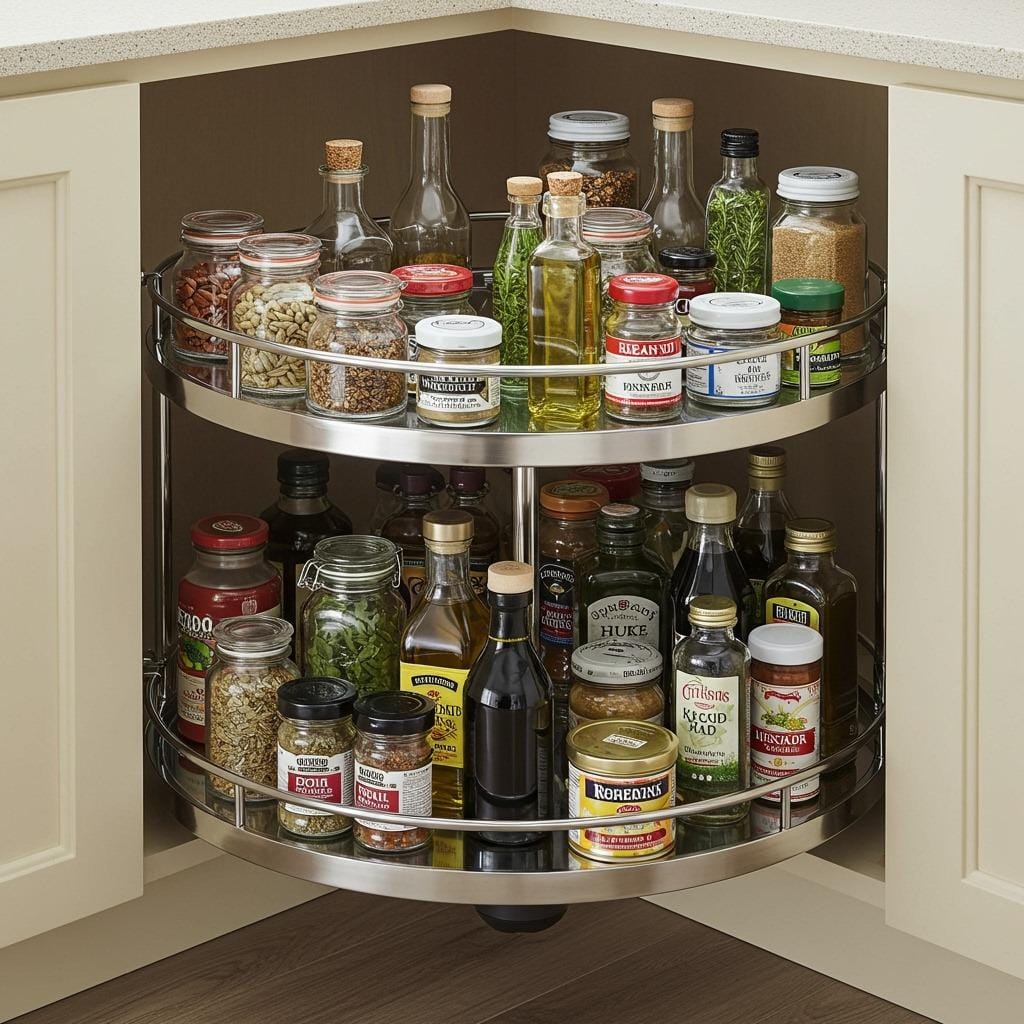
Corner cabinets are notorious black holes where things go to die. Lazy Susans bring items from the back to the front with a simple spin.
These rotating trays work brilliantly for spices, oils, condiments, or cleaning supplies. You can stack two lazy Susans for double the storage. Everything becomes visible and accessible instead of requiring you to practically climb inside the cabinet.
Choose lazy Susans with raised edges to prevent items from sliding off during rotation. They’re especially valuable in upper corner cabinets that are otherwise nearly impossible to use efficiently.
13. Use Over-the-Door Organizers
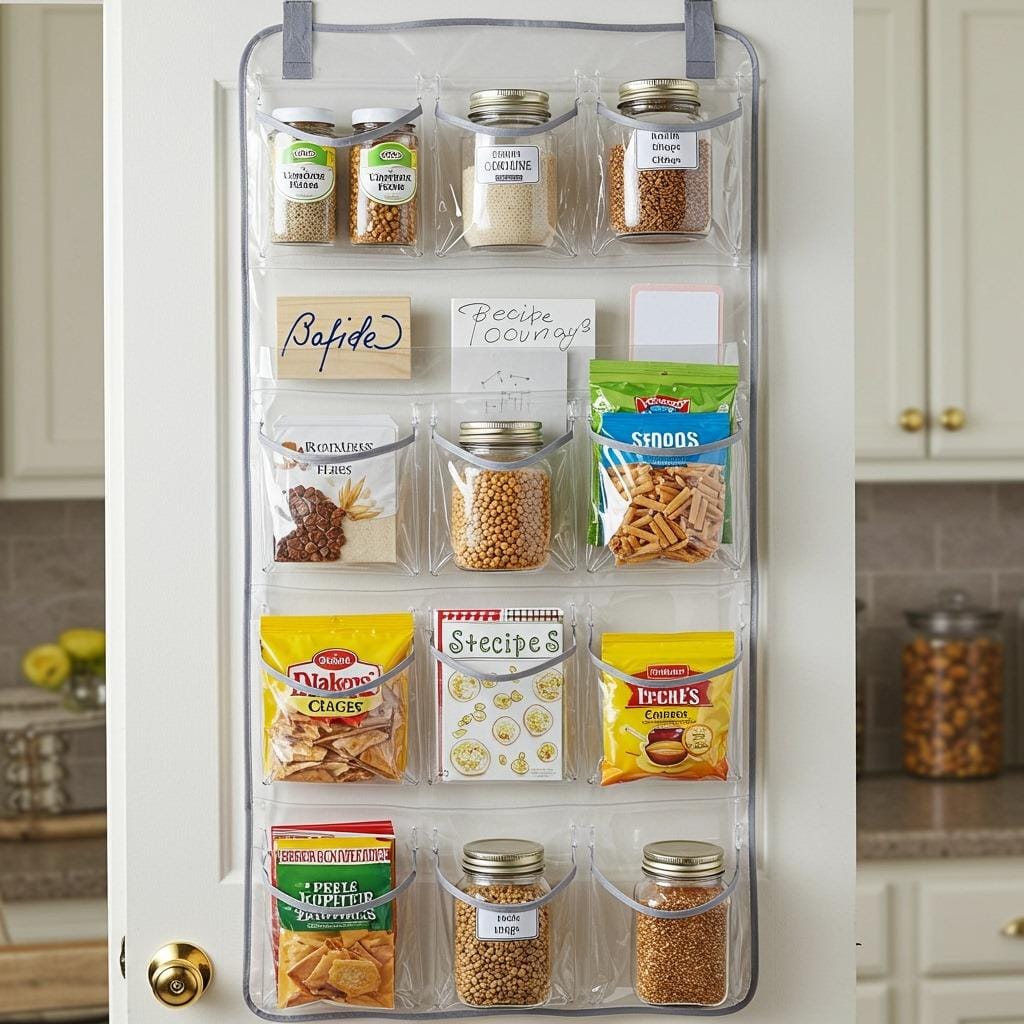
Pantry doors offer vertical storage space that often goes unused. Over-the-door organizers with pockets or racks add instant storage without any installation.
Store spices, snacks, measuring cups, or even cleaning supplies in these organizers. The clear pocket versions let you see everything at once. Just be mindful of weight limits – don’t overload them with heavy items.
This solution works on any door in your kitchen area. I’ve even seen people use them on the inside of cabinet doors for a hidden storage boost.
14. Add Pull-Out Organizers to Base Cabinets
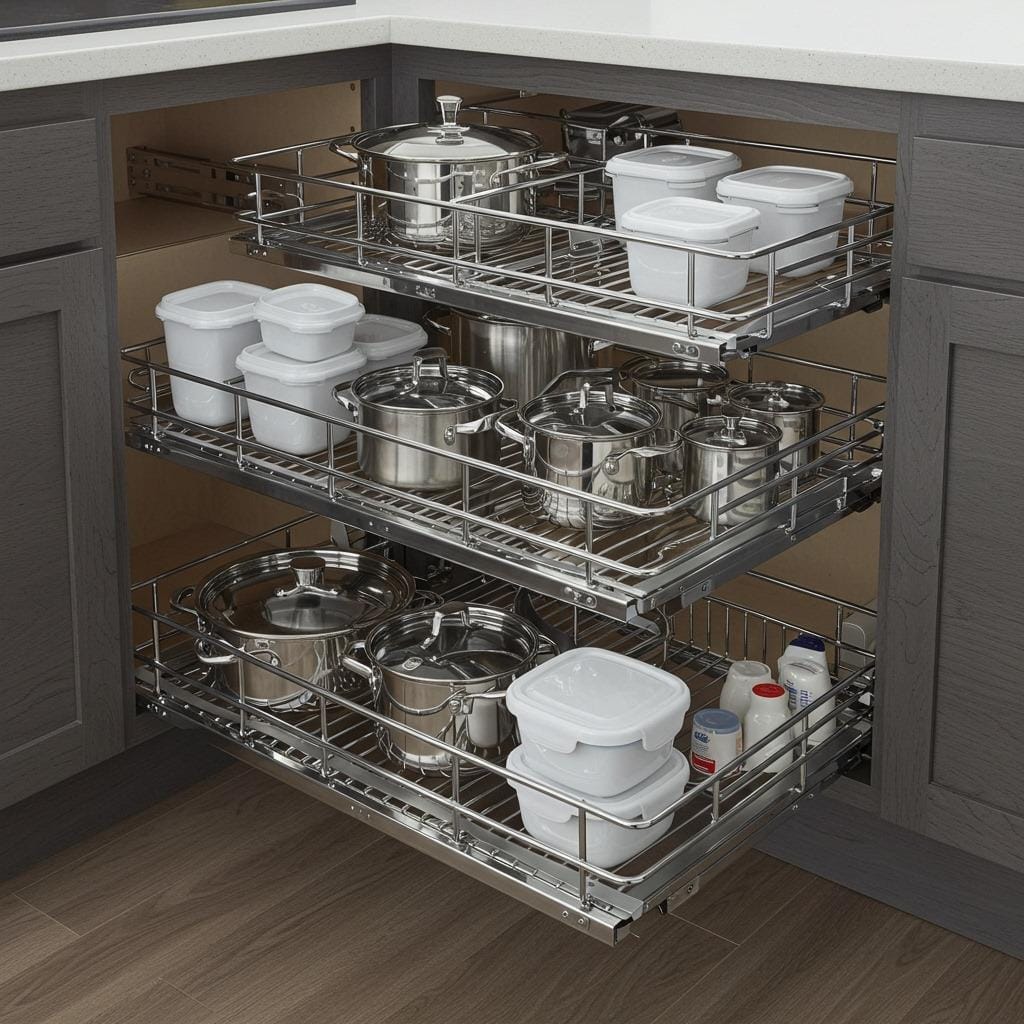
Reaching into deep base cabinets means crouching down and rummaging blindly. Pull-out organizers bring everything to you with a simple tug.
These sliding systems work for pots and pans, Tupperware, or even trash and recycling bins. You can install them yourself with basic tools, or hire someone if you’re not handy. The improvement in accessibility is immediate.
Consider your specific needs before choosing a system. Two-tier organizers work well for pots and pans, while single deep baskets suit larger items better, as detailed in our storage hacks for home organization guide.
15. Mount a Paper Towel Holder Under Cabinets
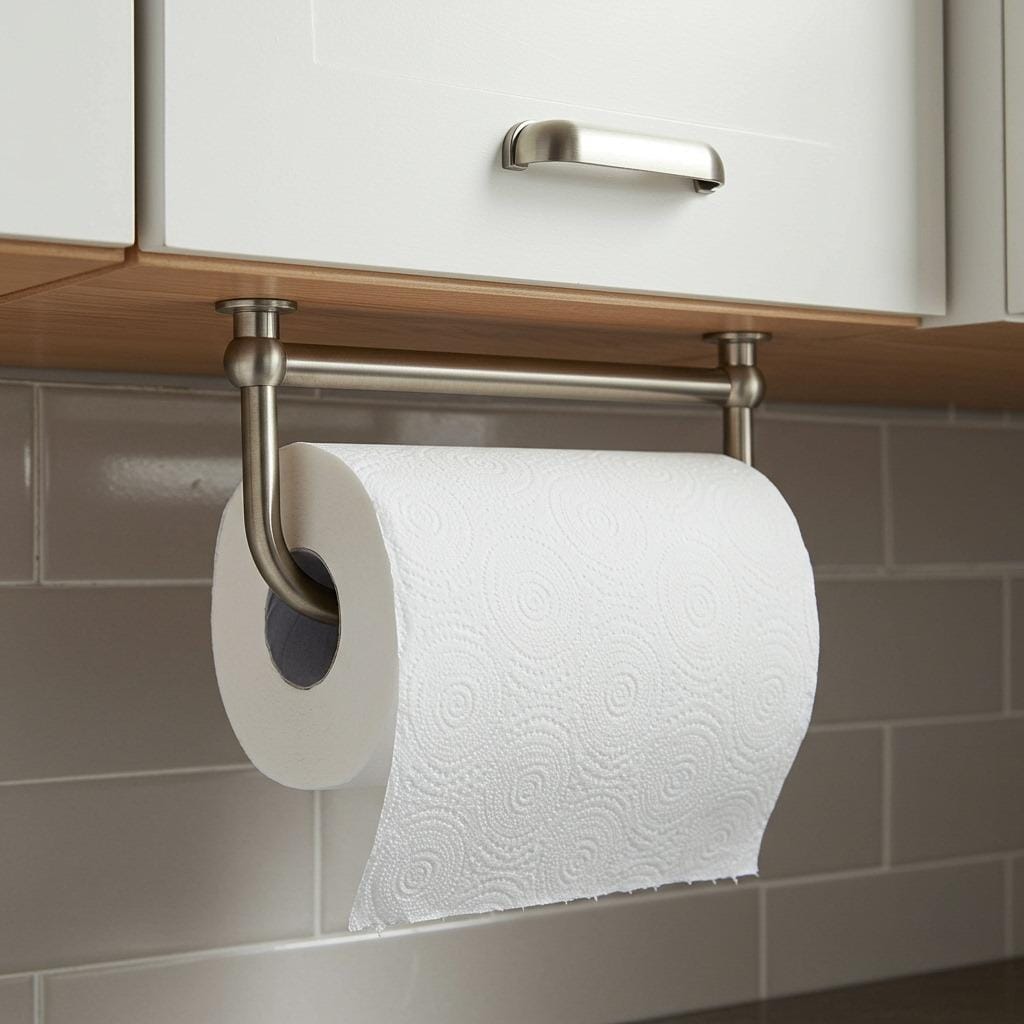
Paper towel holders on the counter waste precious workspace. Mounting one under your upper cabinets keeps paper towels accessible while clearing your counter.
This simple change opens up several square inches of usable prep area. You can still easily tear off sheets with one hand, but the roll itself doesn’t take up real estate. Some versions even include small shelves for additional storage.
Choose a holder that matches your kitchen hardware for a cohesive look. Installation typically requires just a few screws and takes less than ten minutes.
16. Create Zones for Different Activities
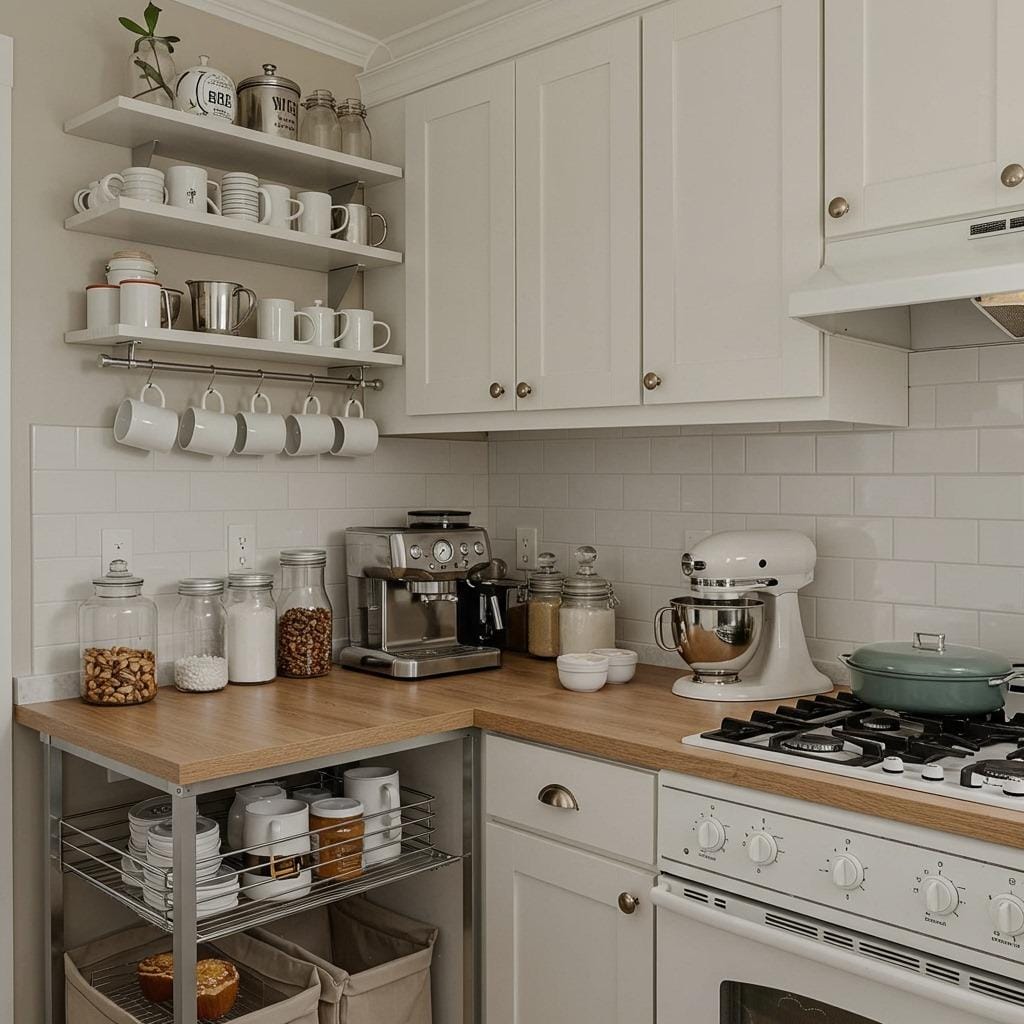
Randomly placing items around your kitchen creates chaos. Establishing specific zones for different activities makes cooking more intuitive and efficient.
Create a coffee station with mugs, coffee, and filters all in one spot. Set up a baking zone with mixing bowls, measuring cups, and common baking ingredients nearby. Keep cooking utensils and spices near the stove. When everything related to one task lives together, you waste less time hunting for items.
This concept mirrors how professional kitchens operate. Think about your typical workflow and arrange items accordingly. Your simple kitchen styling will naturally improve.
17. Use Wall-Mounted Rails with S-Hooks
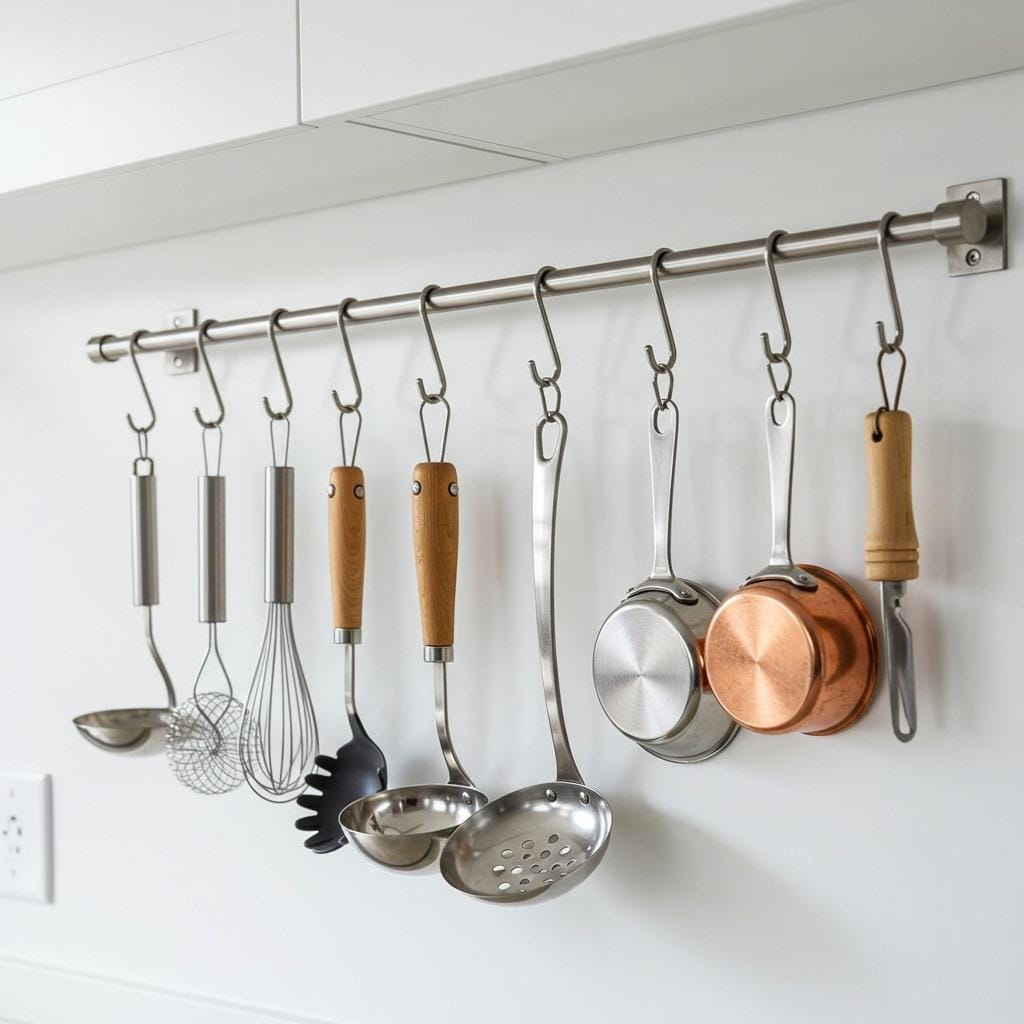
Utensils in drawers are out of sight and often forgotten. A wall-mounted rail with S-hooks keeps your most-used tools right where you need them.
Install the rail on your backsplash or any empty wall section near your cooking area. Hang spatulas, whisks, measuring cups, or small pots. Everything is visible and grabbable without opening a single drawer.
This system works especially well for items you use daily. Less frequently used tools can stay in drawers, while everyday essentials get prime real estate on your walls.
18. Add Shelf Risers in Cabinets
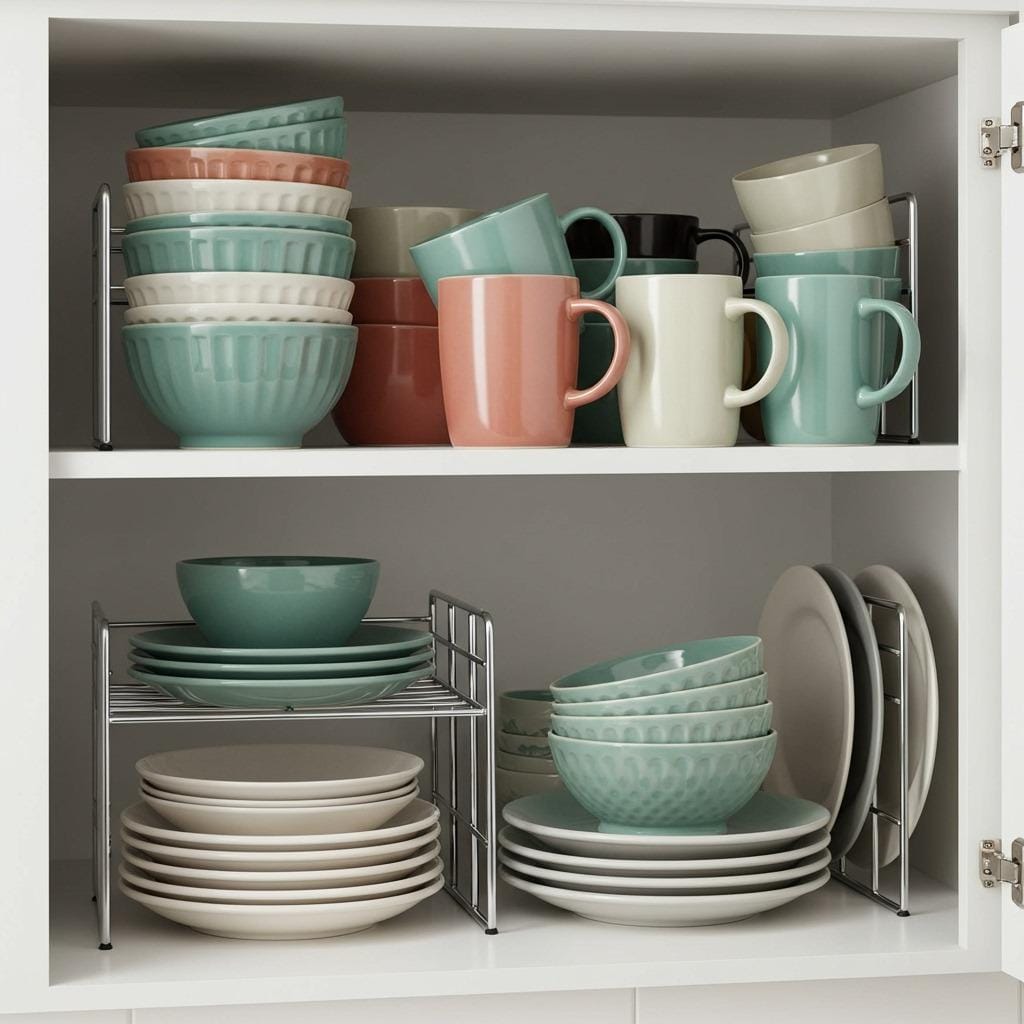
Tall cabinet spaces often have wasted air between the shelf and the next level. Shelf risers create an additional tier for storing items.
Use them for plates, bowls, mugs, or canned goods. Suddenly you’ve doubled the capacity of that shelf without making anything harder to access. You can find adjustable risers that expand or contract to fit different cabinet widths.
This trick is particularly useful in upper cabinets where you might have eight inches of vertical space but only four inches of dishes. Don’t let that extra height go to waste.
19. Install a Pot Rack
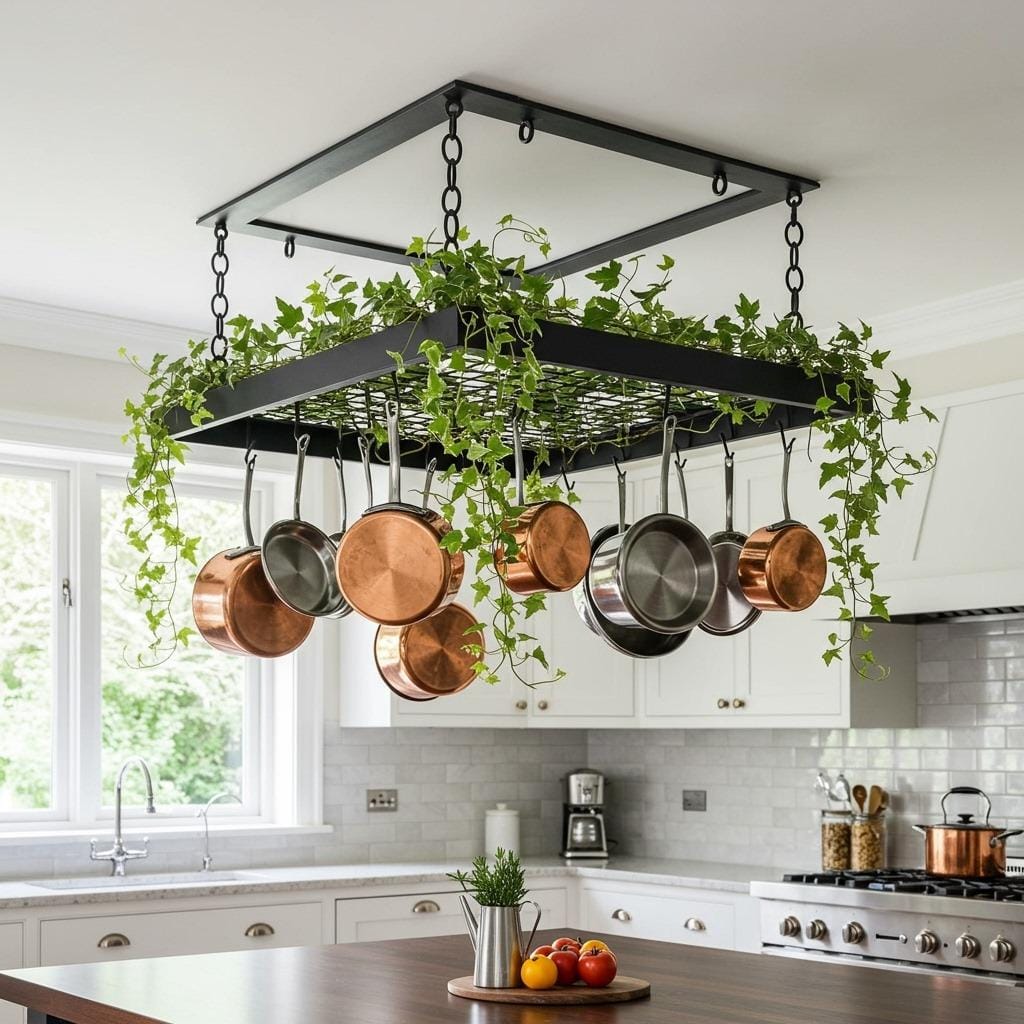
Pots and pans are bulky and awkward to store. A ceiling-mounted or wall-mounted pot rack turns them into functional decor while freeing up cabinet space.
Hanging pots overhead works best if you have at least some ceiling height to work with. Wall-mounted versions offer similar benefits for lower ceilings. Either way, you reclaim entire cabinets for other storage needs.
Choose a style that complements your kitchen aesthetic. Rustic iron racks suit farmhouse kitchens, while sleek metal versions fit modern spaces. Just ensure it’s properly anchored to support the weight of your cookware.
20. Declutter Regularly
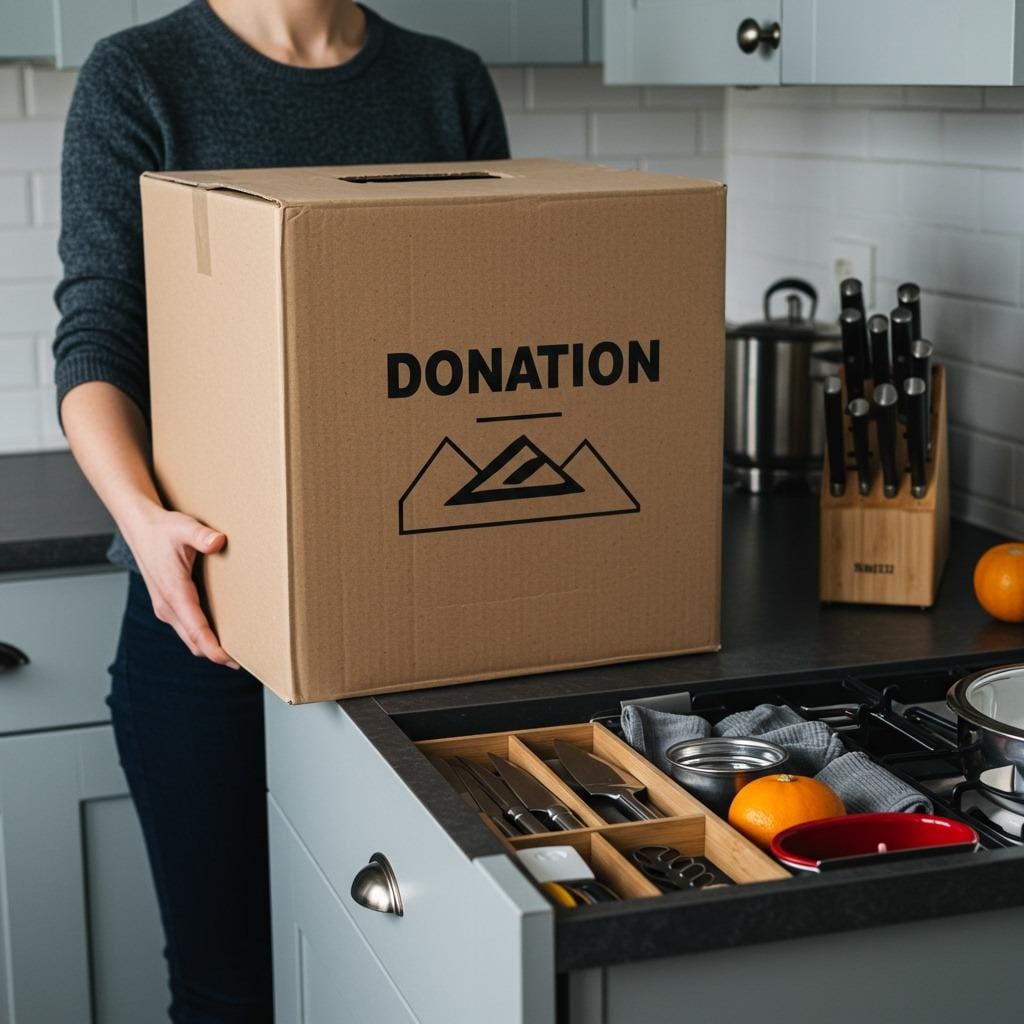
Here’s the thing nobody wants to hear: organization systems only work if you actually need what you’re organizing. Regular decluttering is the foundation of tiny kitchen organization.
Every few months, pull everything out of your cabinets. Do you really use that bread maker? When’s the last time you needed that specialty bundt pan? Be honest about what earns its keep in your limited space. Donate or sell items that don’t serve you regularly.
This process prevents reaccumulation and keeps your systems functional. It’s also a good time to assess whether your current organization methods are actually working or need tweaking. The less stuff you own, the easier everything becomes – a principle explored further in our guide on how to declutter kitchen pantry in one day.
Getting organized isn’t about achieving magazine-perfect aesthetics or spending a fortune on fancy containers. It’s about creating systems that reduce daily friction so cooking feels less stressful.
Start with one or two ideas that address your biggest pain points. Maybe that’s the jumbled utensil drawer that drives you crazy every morning, or the pots and pans situation that requires a minor excavation project. Small changes create momentum for bigger ones.
Remember, tiny kitchen organization is an ongoing practice, not a one-time project. Your needs will shift, new items will arrive, and you’ll discover what works through trial and error. The goal isn’t perfection – it’s creating a kitchen where you can actually find what you need and enjoy the process of making meals.

Sanjai creates easy, affordable home decor ideas that anyone can try. Through simple tips and curated finds, he helps you style rooms you’ll love coming home to.