There’s something about walking into a kitchen that feels rooted in nature. You know the kind – where the wood grain tells a story and the stone seems to anchor everything in place. It’s not trendy in that way-too-perfect Instagram sense. It’s just… right.
Natural wood and stone kitchen designs have this quiet confidence. They don’t shout for attention, but somehow they make you want to linger over your morning coffee a little longer. Maybe it’s because these materials have been around forever, literally pulled from the earth, so they carry a sense of permanence that laminate just can’t touch.
What’s interesting is how these organic kitchen materials can work in almost any style. I’ve seen them in sleek modern spaces where the stone is polished to a mirror finish, and in cozy rustic kitchen design setups where everything feels a bit weathered and lived-in. Both work. Both feel authentic in their own way.
Why Natural Materials Create Kitchens That Last
Okay, so why are we all suddenly obsessed with bringing the outdoors in? Part of it is practical – wood and stone are ridiculously durable when you choose the right ones. But there’s also this emotional piece that’s harder to pin down.
Natural finishes age differently than manufactured materials. A wooden countertop might develop a patina. Stone might show slight wear patterns where you always chop vegetables. Some people would call those flaws. I call them character. Your kitchen starts to hold memories in its surfaces.
Plus, there’s research suggesting that natural materials actually reduce stress. Something about biophilic design – our innate connection to nature – makes us feel calmer in spaces that incorporate organic elements. Your kitchen becomes less of a task zone and more of a place where you actually want to be.
1. Reclaimed Wood Island with Marble Countertops
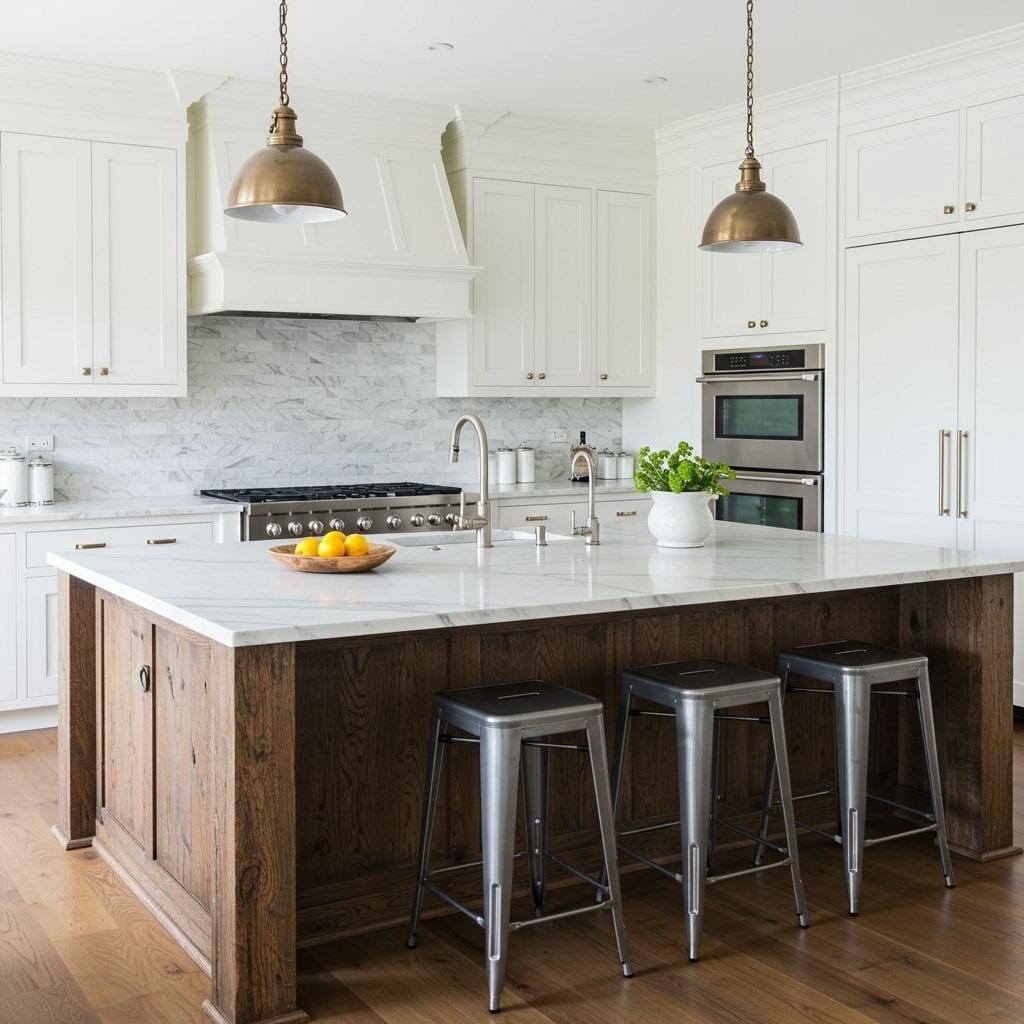
Here’s where opposites really do attract. The rough, textured story of reclaimed wood paired with the cool elegance of marble creates this tension that somehow just works. The wood brings warmth and history, while the marble adds that touch of sophistication.
I love how each piece of reclaimed wood is completely unique. You might find old nail holes, saw marks, or color variations that tell you where this wood came from. Maybe it was a barn in Kentucky or a warehouse in Brooklyn. That backstory becomes part of your kitchen’s identity.
The marble top isn’t just pretty either. It’s genuinely functional for rolling out pastry dough since it stays naturally cool. Just be aware that marble can stain and etch from acidic foods, so it needs a bit of care. Some people seal it religiously; others embrace the developing patina as part of the material’s evolution.
2. Live Edge Wood Shelving Against Stone Walls
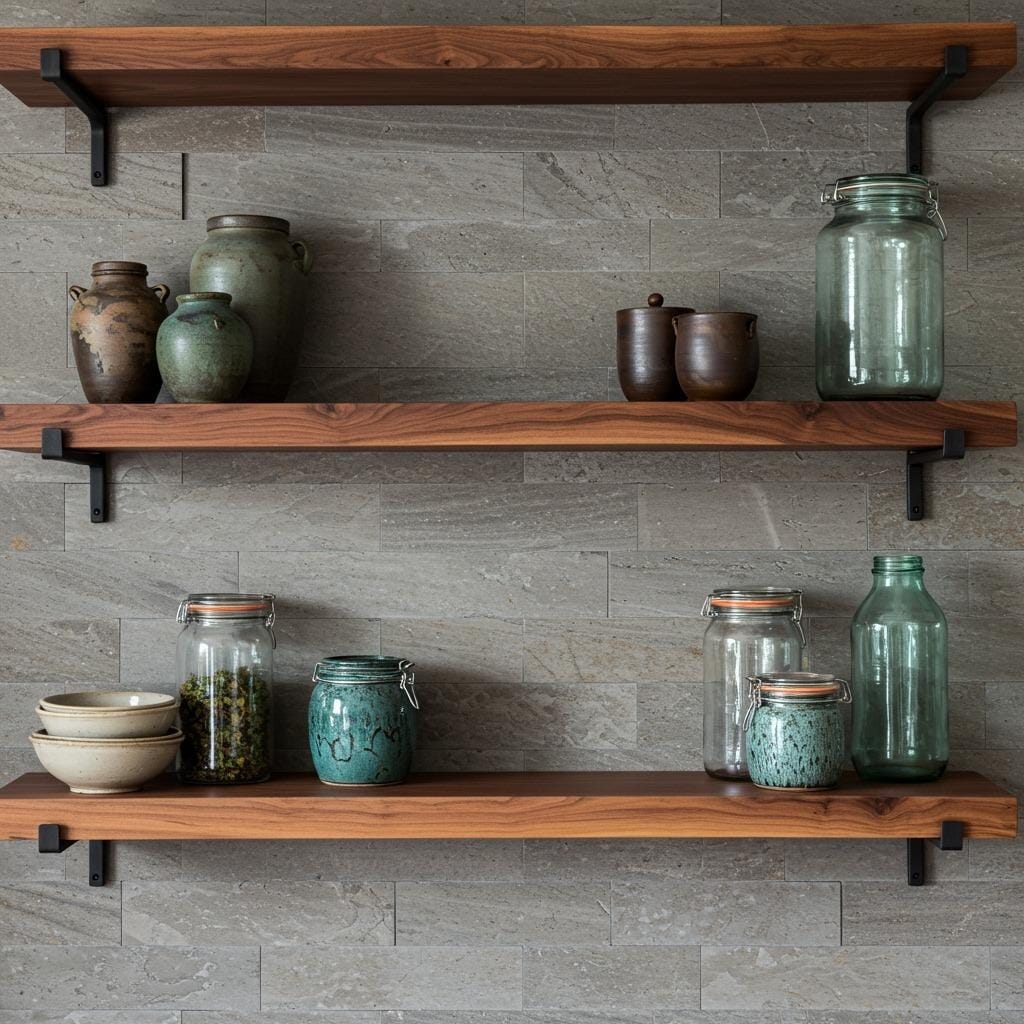
Live edge shelving feels a bit like bringing actual tree branches into your kitchen – because essentially, that’s what you’re doing. The natural curve of the wood where it met the bark stays intact, giving you these organic lines that contrast beautifully with straight architectural elements.
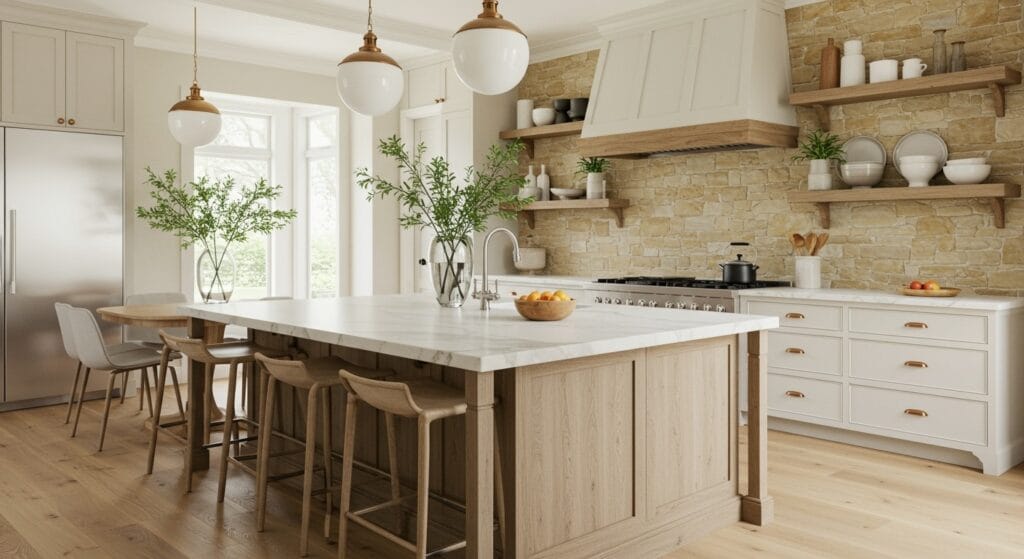
When you mount these shelves against stone walls, you get this layered texture that’s almost sculptural. The rough stone provides a stable backdrop that makes the wood grain really pop. It’s all about playing with different natural textures in one space.
This approach works especially well if you’re going for that rustic kitchen design vibe but don’t want it to feel too cabiny. The live edge brings enough visual interest that you can keep everything else fairly simple. Just style your open shelving thoughtfully so it enhances rather than clutters the natural beauty.
3. Butcher Block Counters with Slate Backsplash
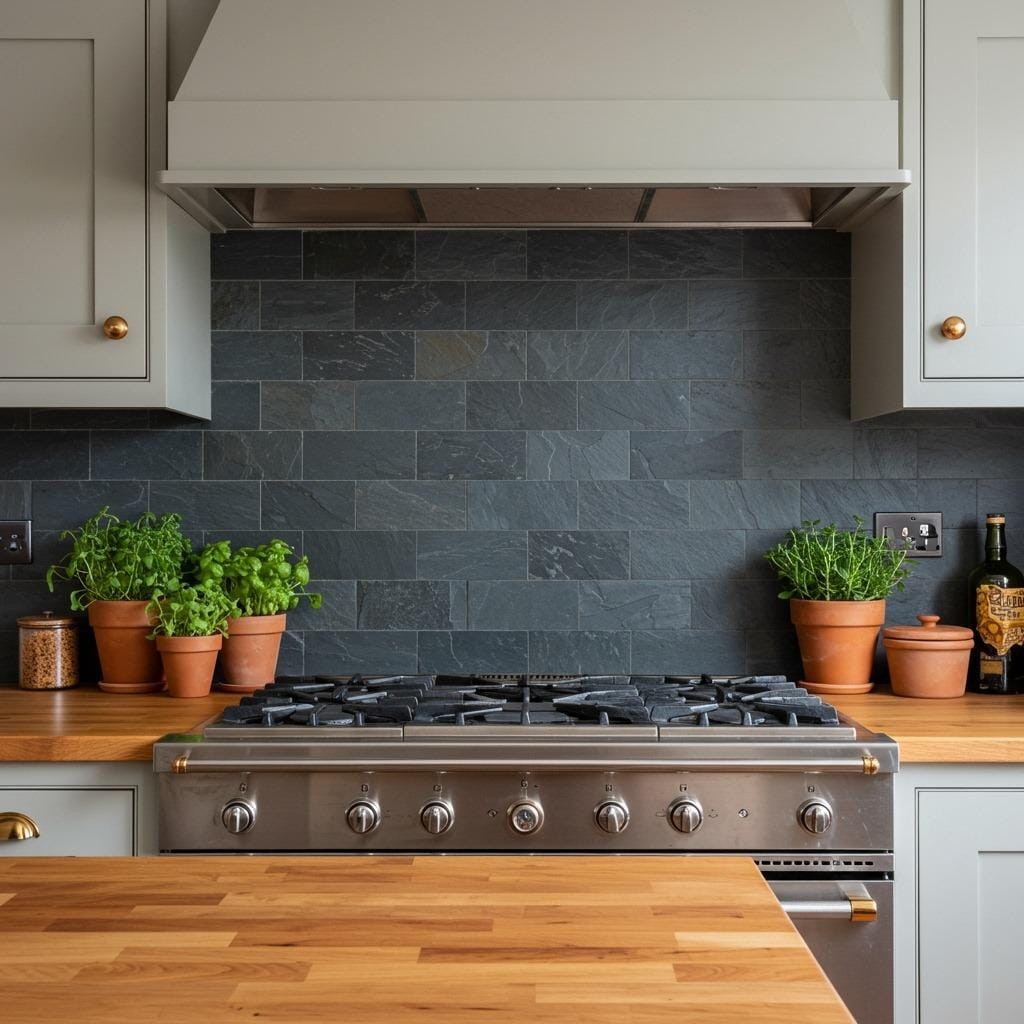
Butcher block countertops have this immediate warmth that makes a kitchen feel approachable. The wood is literally designed to be worked on – you can chop directly on it, and minor scratches just blend into the surface over time. It’s forgiving in a way that feels relaxing.
Pairing it with a slate backsplash creates this earthy color story – warm honey tones against cool charcoal. Slate has this slightly rough texture that catches light differently throughout the day. Unlike perfectly smooth tile, it has depth and variation that feels more organic.
One thing about butcher block – it needs regular oiling to maintain its water resistance and keep it from drying out. Some people find this maintenance annoying; others see it as a mindful ritual. Either way, it’s less fussy than it sounds. A quick wipe with mineral oil every month or so keeps it looking great.
4. Stone Floor Tiles with Wooden Beam Ceilings
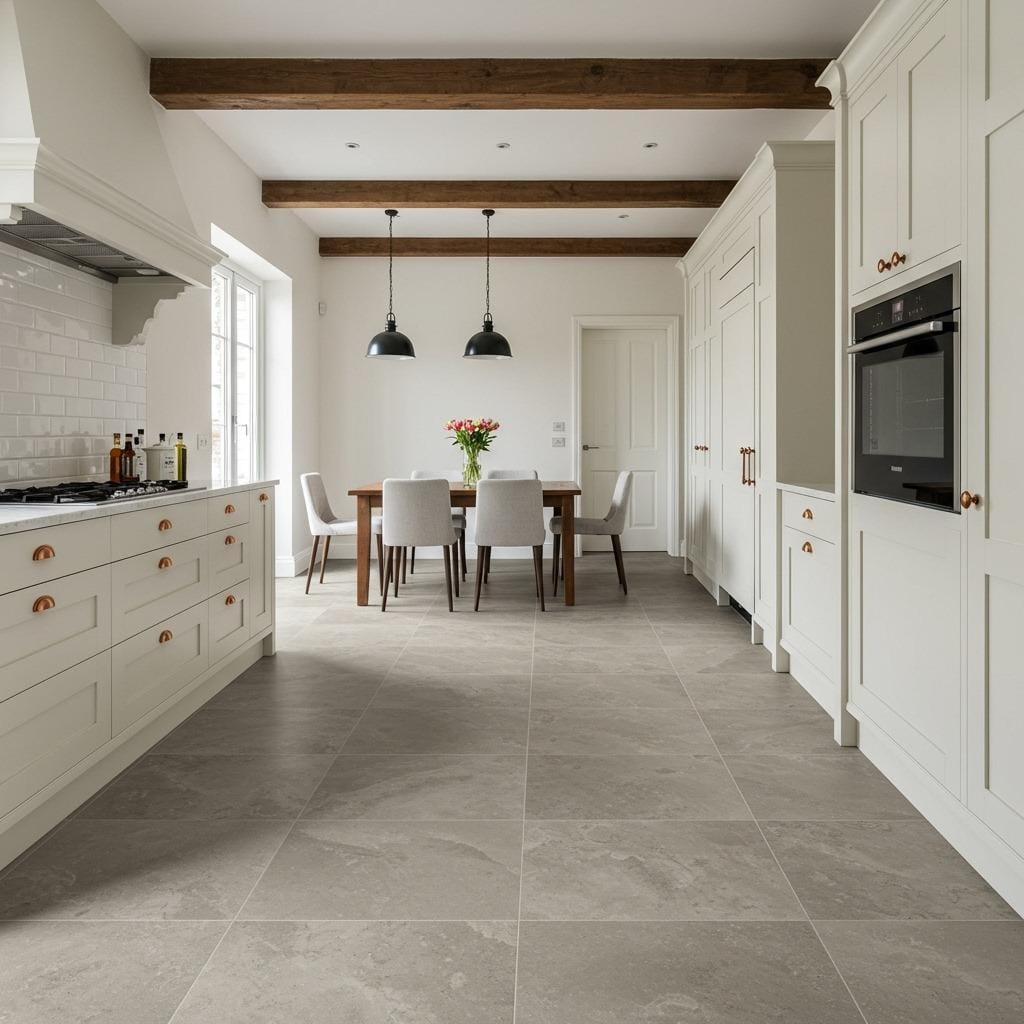
Looking up and down matters just as much as what’s at eye level. Stone flooring grounds the space literally and figuratively – it’s cool underfoot in summer and feels substantial in a way that connects you to the foundation of the house.
The wooden beams overhead create a visual anchor that draws your eye upward. This vertical movement makes the ceiling feel higher than it actually is. If your beams are original to the house, even better – they add architectural character that new construction often lacks.
The temperature contrast is interesting too. Stone stays naturally cool, while wood has this visual warmth. Your kitchen becomes this balanced environment that doesn’t feel too heavy or too cold. It’s especially effective in open concept spaces where you want definition without actual walls.
5. Quartzite Waterfall Island with Wood Cabinetry
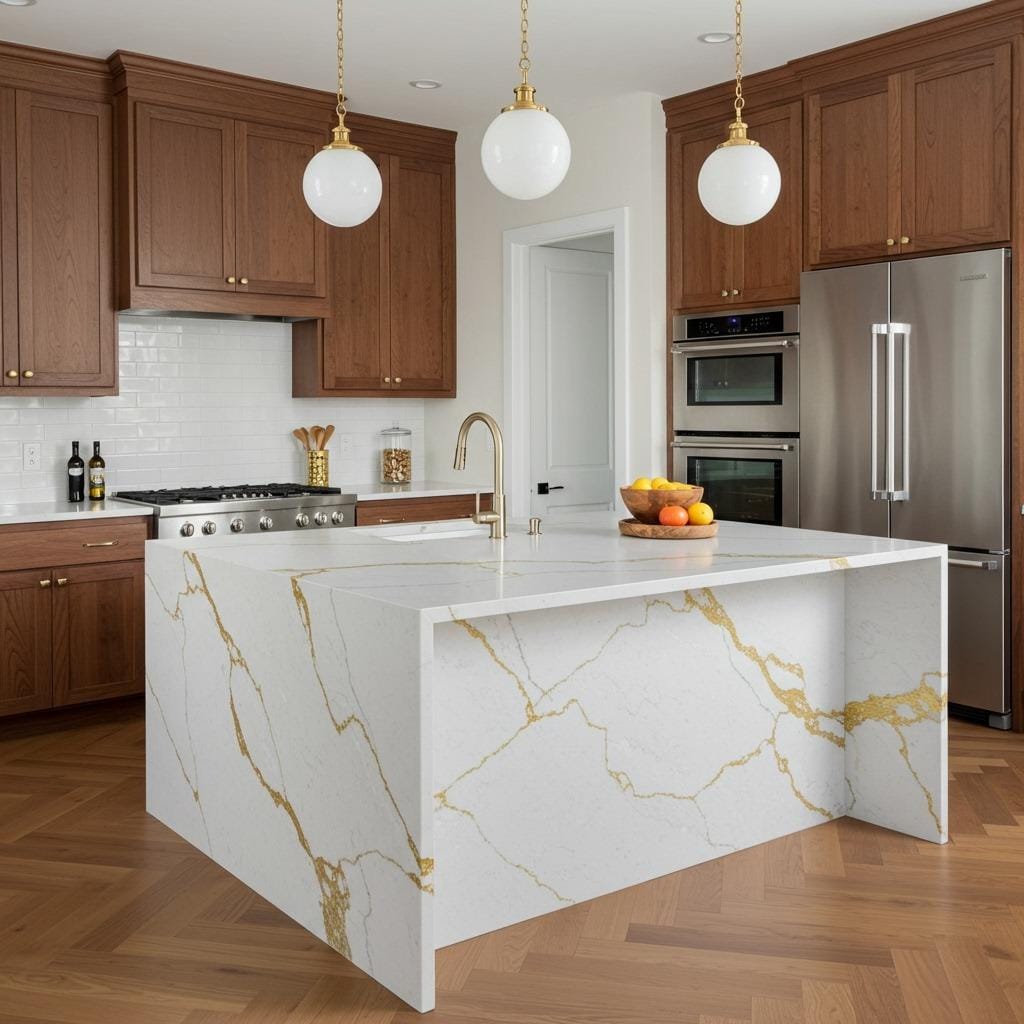
The waterfall edge is having a moment, and I get why. There’s something visually satisfying about watching stone flow continuously from the top surface down the sides to the floor. It creates a focal point that feels intentional and designed without being fussy.
Quartzite gives you that stone look with better durability than marble – it resists staining and etching more effectively. The natural veining is formed by mineral deposits over millions of years, so every slab tells a different geological story. You’re essentially installing ancient art in your kitchen island.
The wood cabinetry softens all that stone drama. If you did stone everything, the space might feel cold or hotel-like. The wood brings it back to residential scale and adds warmth. Choose a wood tone that either complements or contrasts with your stone – both approaches can work depending on the overall vibe you’re after.
6. Soapstone Counters with Hickory Cabinets
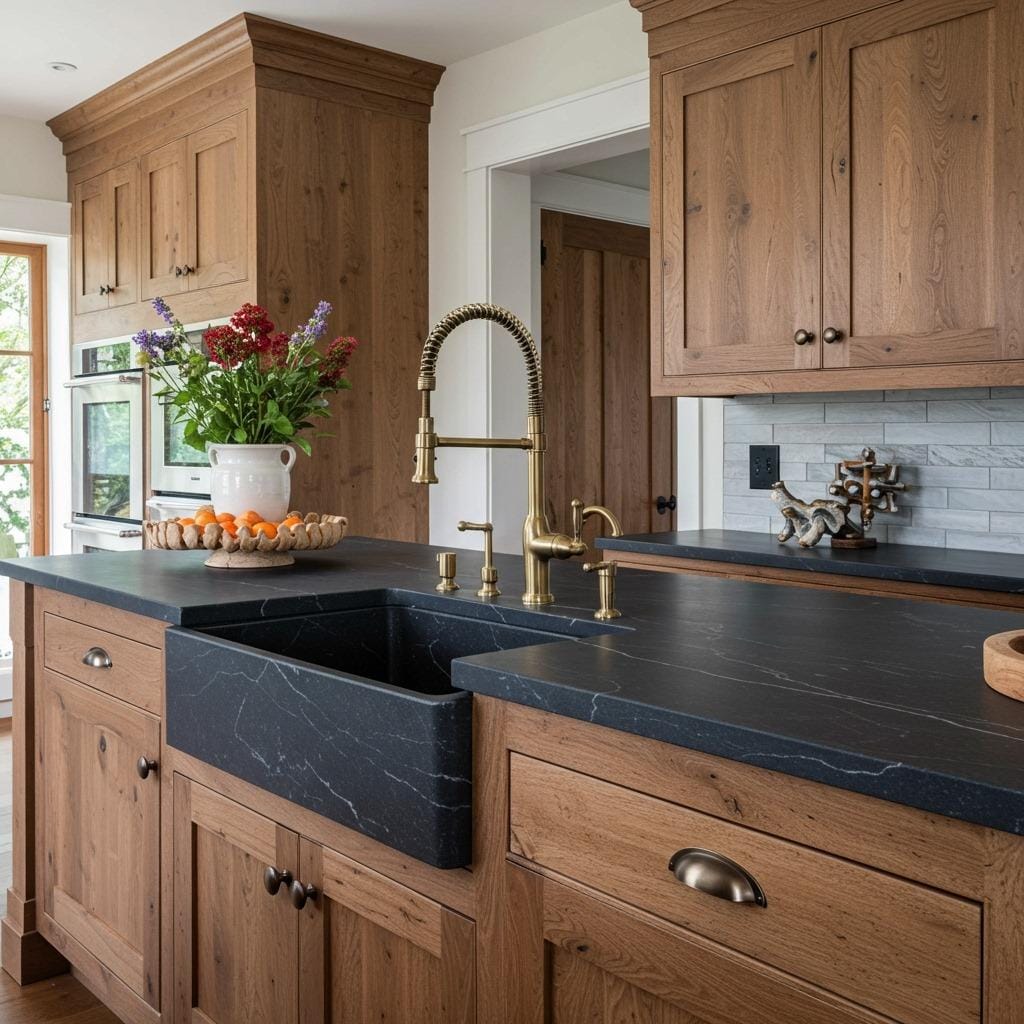
Soapstone is the unsung hero of stone countertops. It’s softer than granite, which means it can get minor scratches, but here’s the thing – you can literally sand them out. Or just let them develop naturally and enjoy how the stone darkens and develops patina over time with oiling.
Hickory wood has this wild grain pattern with lots of character – knots, color variation, mineral streaks. Some woodworkers call it “rustic,” but really it’s just expressive. Not every piece looks identical, which is precisely the point. It brings movement and visual interest to your kitchen cabinetry.
This combination leans heavily into that rustic kitchen design aesthetic, but it doesn’t have to feel country. With modern hardware and simple kitchen styling, you can make it feel more contemporary farmhouse than straight-up cabin.
7. Granite Countertops with Cedar Wood Accents
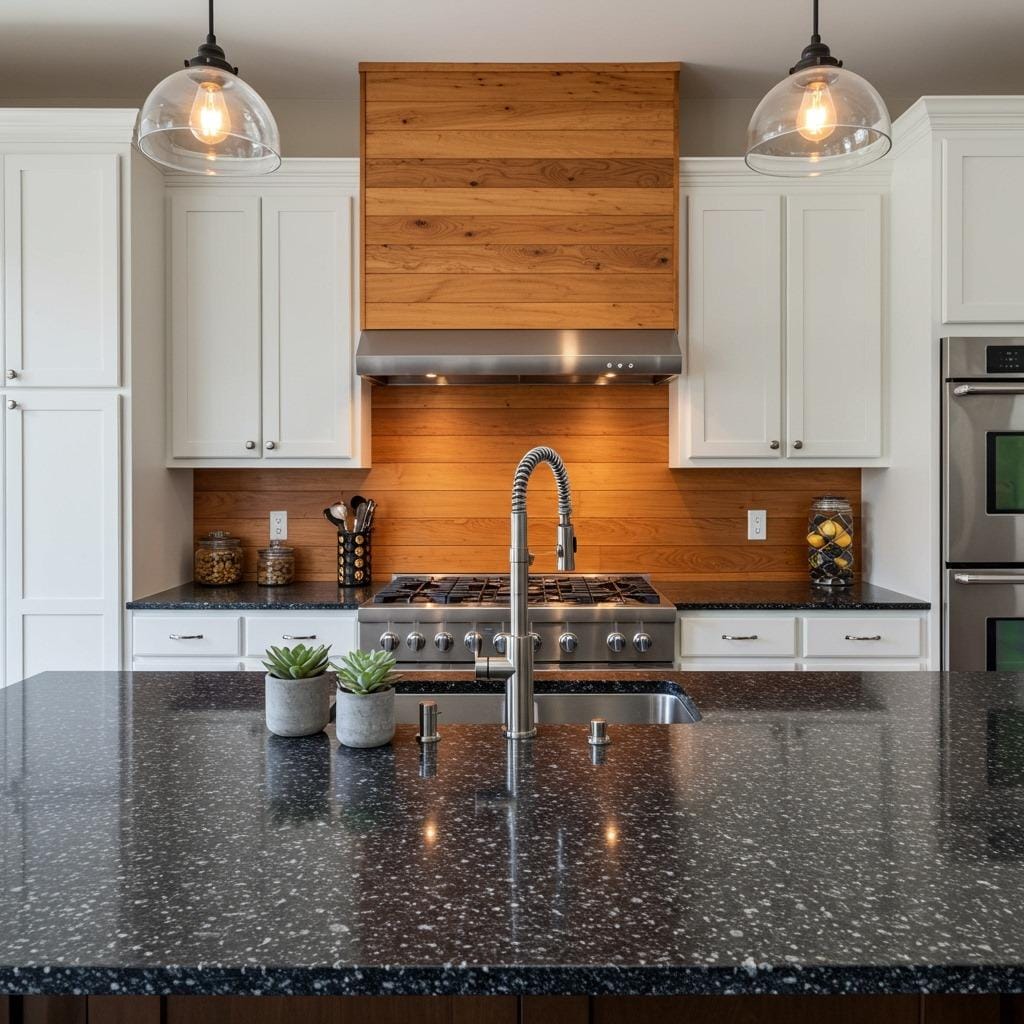
Granite gets dismissed sometimes as “dated,” which is unfair. Sure, some granite patterns feel very 2005, but there are incredibly beautiful slabs with subtle patterns that feel timeless. The key is choosing carefully and not going for the busiest option available.
Cedar brings this aromatic quality that makes your kitchen smell amazing – especially when it’s new or when humidity changes. That scent is actually from natural oils that also make cedar resistant to moisture and insects. It’s both beautiful and functional, which is really the sweet spot for any kitchen material.
Using cedar as an accent rather than everywhere prevents it from overwhelming the space. A feature wall behind the range or as a section of open shelving gives you that warm wood presence without committing to wood-everything. It’s about strategic placement rather than saturation.
8. Limestone Backsplash with Walnut Floating Shelves
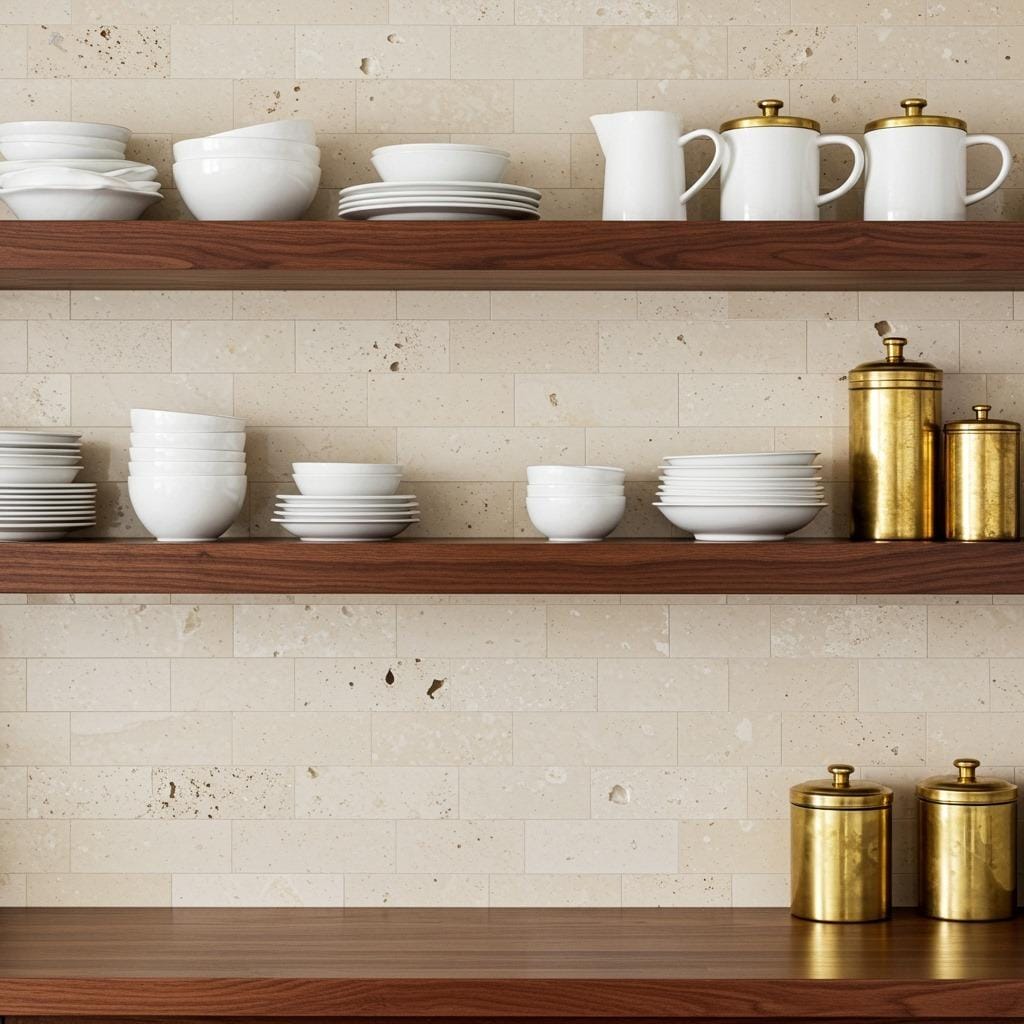
Limestone has this soft, almost powdery appearance that feels less formal than marble but more refined than basic ceramic tile. The natural variation in color – creams, tans, subtle grays – means your backsplash becomes this textured backdrop rather than a flat surface.
Walnut floating shelves bring in that deep, chocolatey brown that feels incredibly rich against pale stone. The wood grain in walnut tends to be straighter and more consistent than something like hickory, which gives it a more sophisticated vibe. It’s the natural material equivalent of a tailored jacket.
According to the National Kitchen and Bath Association, open shelving continues to be popular because it makes kitchens feel larger and less closed-in. When you use quality materials like solid walnut, those shelves become display pieces themselves, not just storage.
9. Travertine Floors with Exposed Wood Cabinets
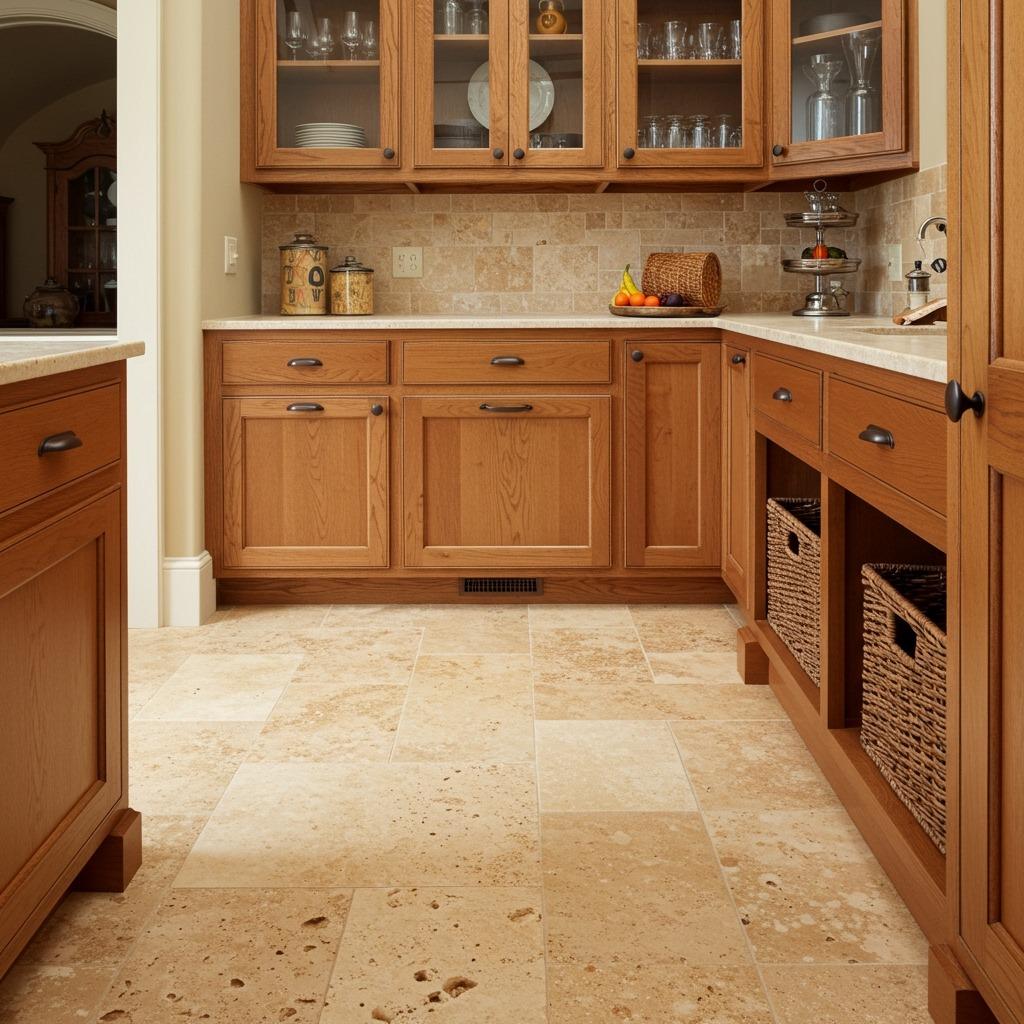
Travertine has these natural pits and voids that give it texture right out of the earth. Some people fill them for a smoother surface; others leave them unfilled for more character. Either way, you get this ancient Rome vibe – because they literally used travertine for the Colosseum.
The exposed wood cabinets let you see the wood grain patterns clearly rather than painting over them. There’s honesty in that approach – you’re celebrating the material for what it is rather than hiding it. Plus, natural wood cabinetry tends to age more gracefully than painted cabinets, which can show chips and wear more obviously.
The warmth of both materials works together to create a space that feels inviting rather than cold. Stone floors can sometimes feel stark, but travertine’s honey and beige tones bridge nicely to wood cabinetry in similar warm tones.
10. River Rock Accent Wall with Pine Cabinetry
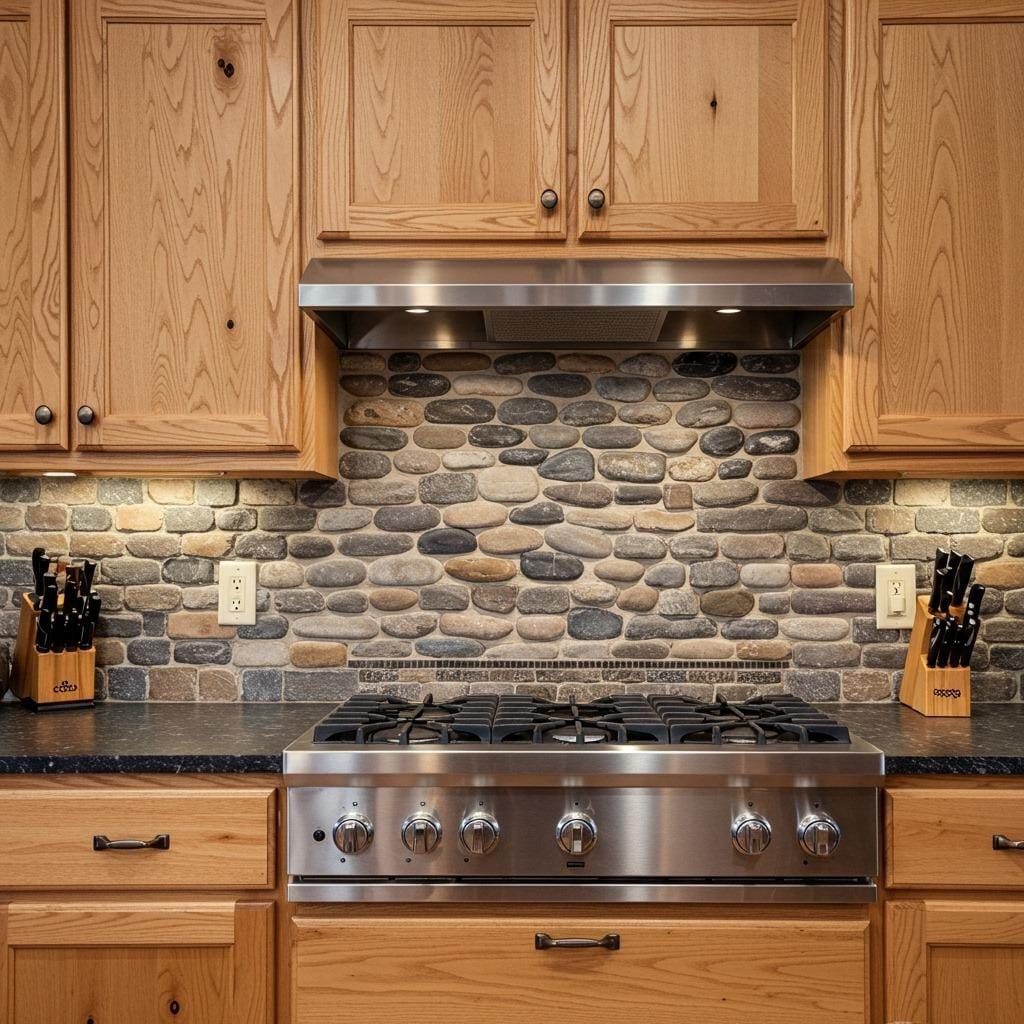
River rocks bring this zen, natural feel that immediately makes you think of streams and forests. Each stone is smoothed by water over time, so they have these organic rounded shapes. When you stack them as a wall treatment, you get incredible texture and visual interest.
Knotty pine embraces imperfection in a way that feels refreshing. Those knots and resin pockets that furniture makers sometimes reject become design features. This combination works particularly well if your kitchen opens to the outdoors or if you want to create a cabin-inspired feel.
One practical note – river rock walls do have crevices that can collect dust, so they need occasional attention with a soft brush. But that slight maintenance is worth it for the unique texture they bring. It’s a focal point that photographs beautifully and creates a conversation piece.
11. Concrete Counters with Reclaimed Barn Wood Cabinets
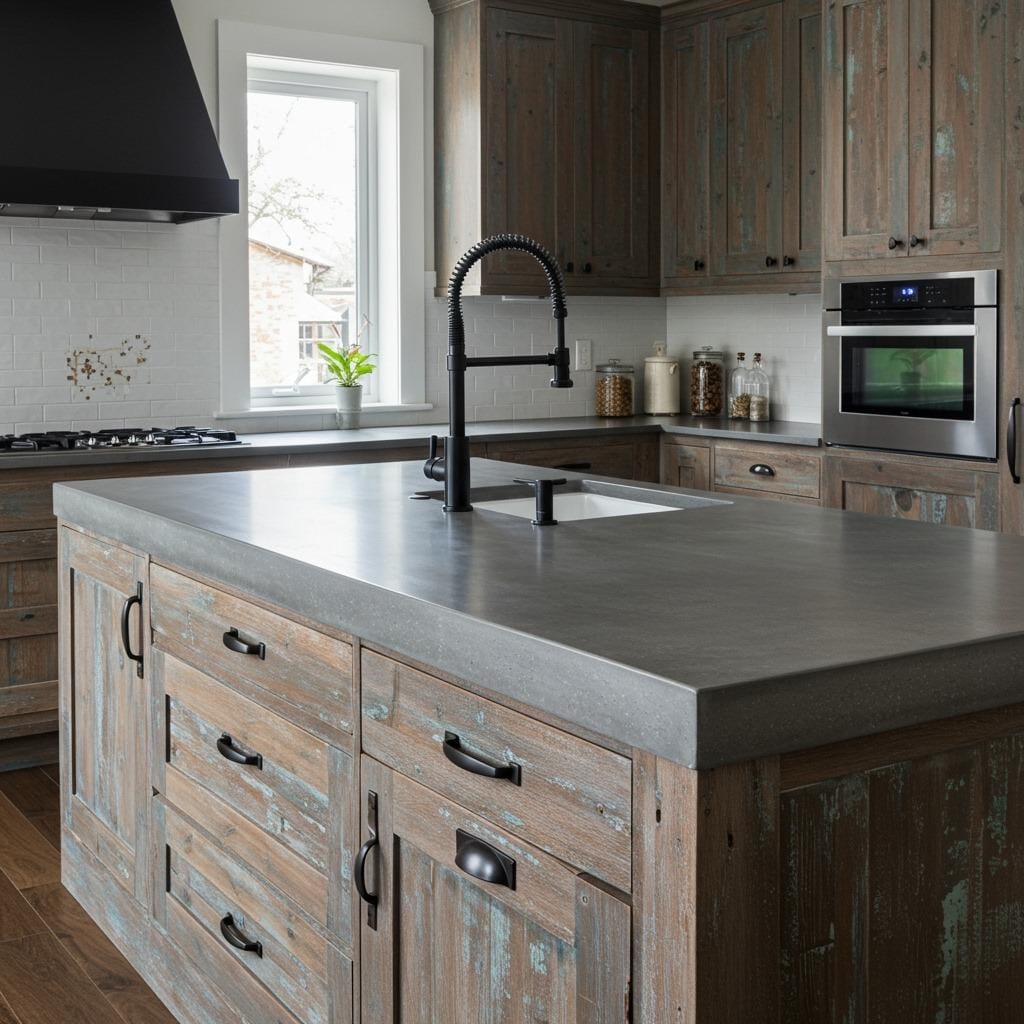
Concrete might not seem like a “natural” material initially, but it’s made from limestone, water, and aggregate – all earth-derived materials. Modern concrete counters can be custom tinted, sealed for durability, and even embedded with interesting aggregates or patterns.
The reclaimed barn wood cabinets bring that salvaged, storied quality. Each board carries marks from its previous life – maybe faded paint, nail holes, or weathering patterns. This creates a rustic kitchen design with an edge that feels less country and more industrial-meets-vintage.
This combination walks an interesting line between rough and refined. The concrete is smooth and modern, while the wood is textured and historical. Together they create a kitchen that feels curated rather than matchy-matchy. It’s the kind of space that develops more character over time rather than looking dated.
12. Sandstone Walls with Bamboo Cabinetry
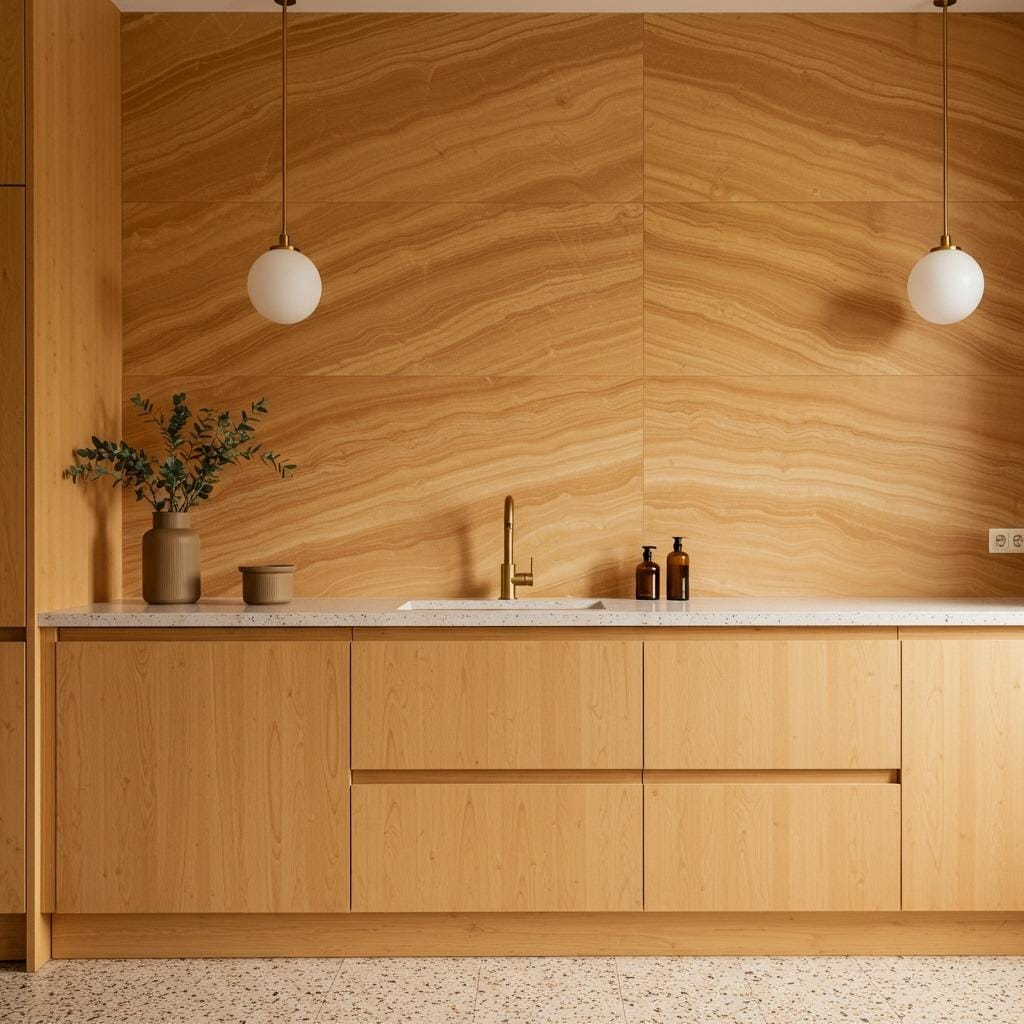
Sandstone’s layered appearance comes from centuries of sediment compression, creating these horizontal bands of color variation. It’s softer than granite or marble, which gives it a warmer, more approachable feel. The earthy tones – ochres, tans, soft reds – work beautifully in kitchens that embrace natural color palettes.
Bamboo is technically a grass, not a wood, but it’s harder than many traditional hardwoods. It grows incredibly fast, making it a sustainable kitchen material. The natural grass nodes create subtle vertical lines that add texture without being busy.
Together, these materials create a kitchen that feels globally inspired – a bit Asian-influenced perhaps, or maybe just internationally modern. The combination works especially well in minimalist kitchen decor where the materials themselves provide all the visual interest you need.
13. Bluestone Counters with Oak Cabinets
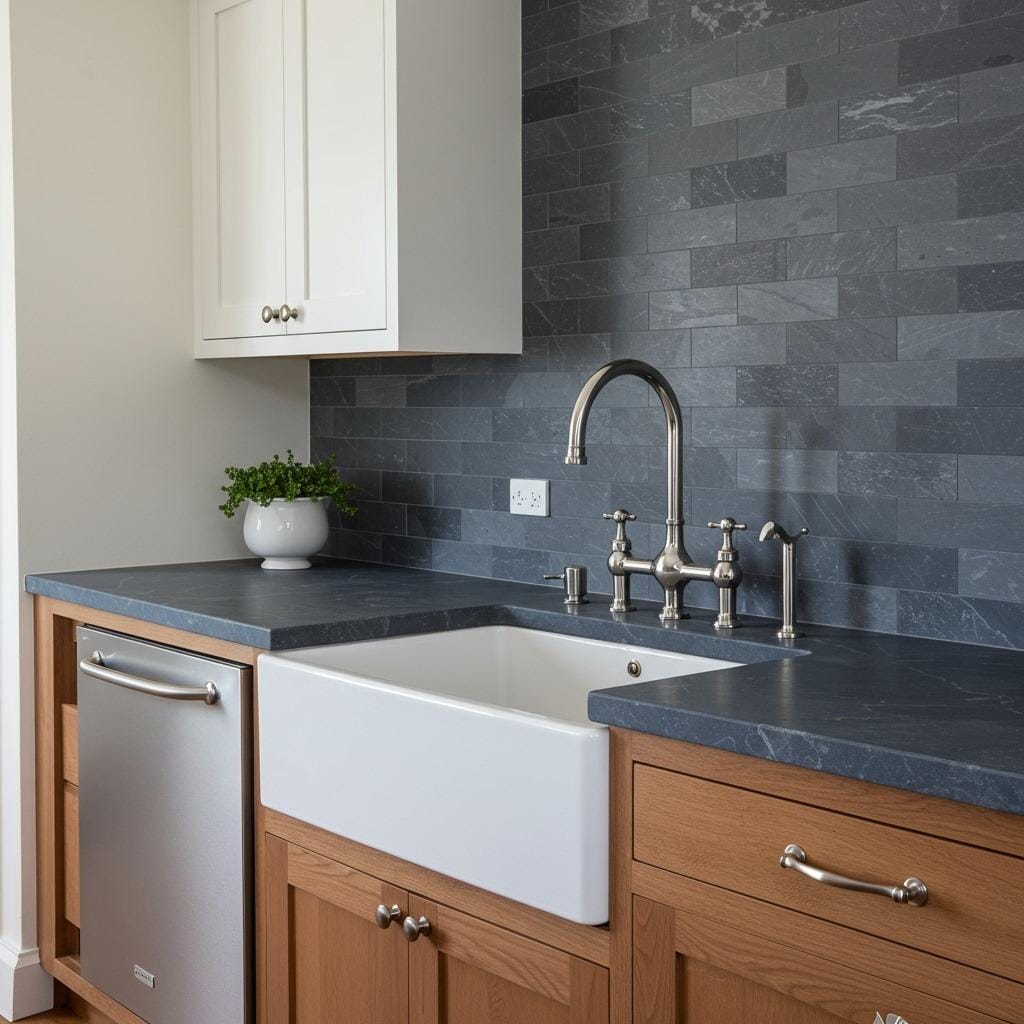
Bluestone has this subtle blue-gray color that feels calming and sophisticated. The thermal finish gives it a slightly textured surface that’s less slippery than polished stone and hides wear better. It’s been used for centuries in European architecture, so it carries this sense of permanence and history.
White oak has made a huge comeback lately, and for good reason. The ray fleck pattern in quarter-sawn oak creates these beautiful horizontal markings that catch light. It’s less orange than red oak and feels more contemporary while still being a classic choice that won’t feel dated in five years.
This pairing creates what I’d call “quiet elegance.” Neither material screams for attention, but together they create a cohesive, well-considered space. It’s the kind of kitchen that feels expensive without trying too hard – just quality materials treated simply.
14. Stacked Stone Island Base with Walnut Countertop
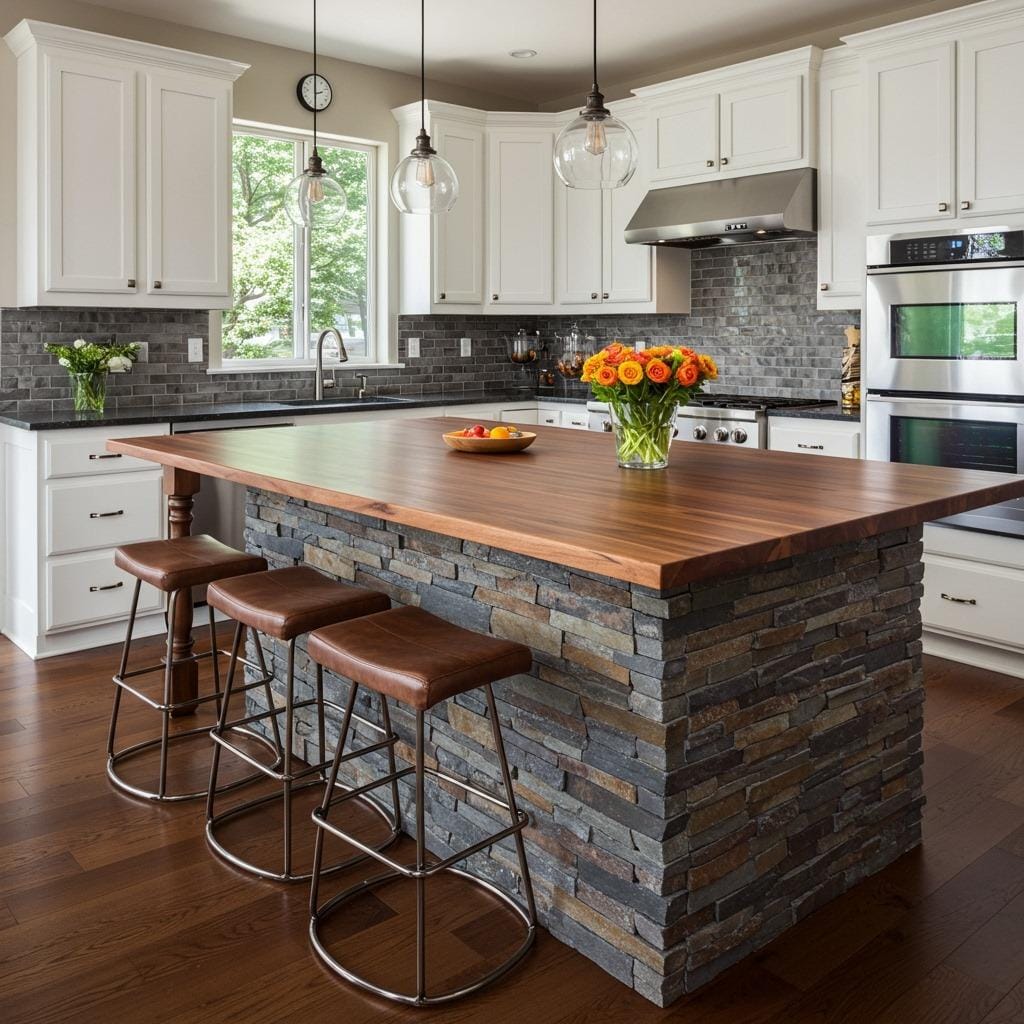
Stacked stone gives you this three-dimensional texture that makes an island feel more like furniture than a built-in. The ledgestone profile creates shadow lines that change throughout the day as light moves. It’s architectural sculpture that also happens to be incredibly durable.
Edge-grain walnut countertops show the linear pattern of wood grain running lengthwise, creating a more uniform appearance than butcher block while still being functional for food prep. Walnut darkens beautifully over time, developing a rich patina that only improves with age.
This combination creates a clear focal point in your kitchen. The island becomes the visual anchor that everything else relates to. It works particularly well in open plan spaces where the island defines the kitchen zone without needing walls.
15. Marble Backsplash with Mixed Wood Cabinets
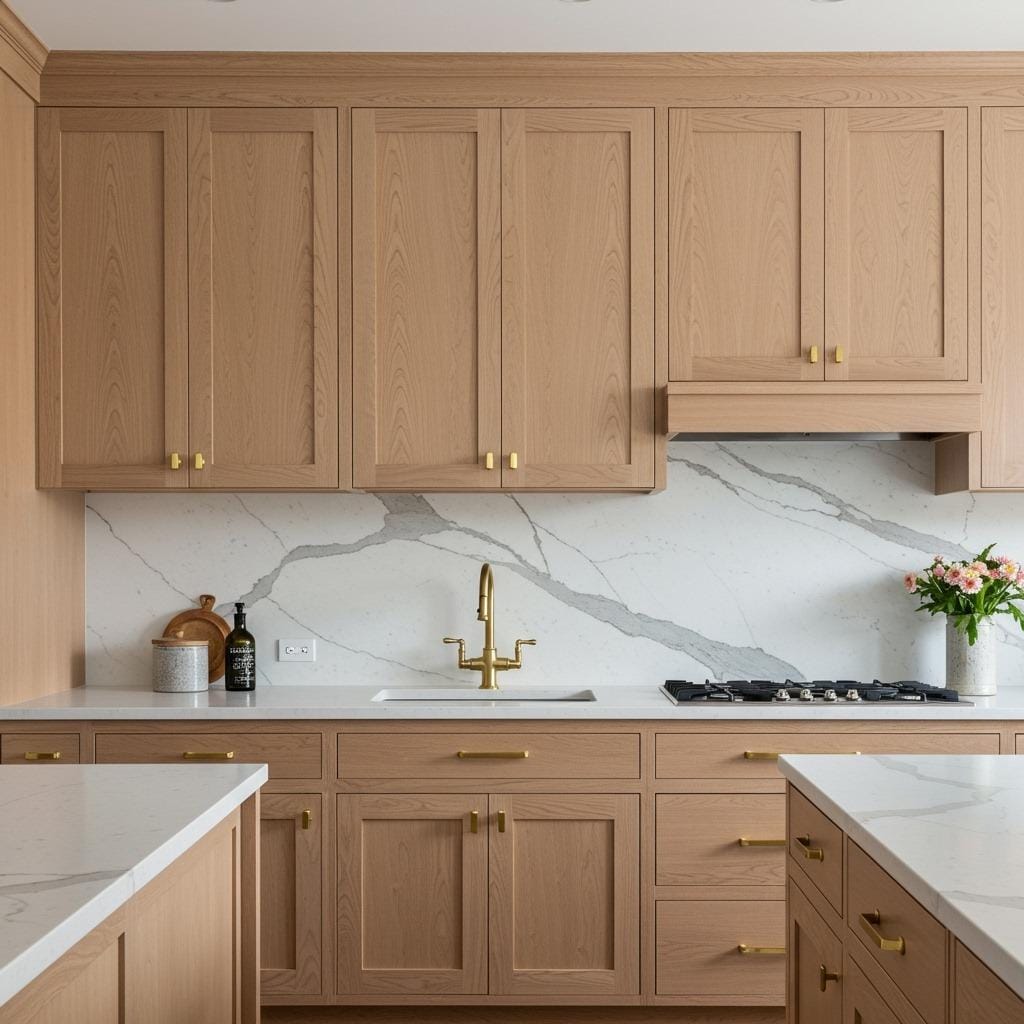
A full-height marble slab backsplash makes a statement – there’s no dancing around that. But when you pair it with mixed wood tones, you balance that elegance with warmth and approachability. The marble becomes the jewel, and the wood becomes the setting.
Mixing wood species in cabinetry is trickier than using one wood throughout, but when done thoughtfully, it adds depth and interest. The key is making it feel intentional – maybe darker lowers with lighter uppers, or kitchen island in a contrasting wood.
This approach works especially well in modern farmhouse kitchen ideas where you want that lived-in, collected-over-time feel rather than everything matching perfectly. It’s curated casualness – relaxed but refined.
Caring for Natural Materials in Your Kitchen
Here’s what nobody tells you until you’ve already committed – natural materials need different care than synthetic ones. Wood surfaces generally want oil or wax periodically. Stone needs sealing (frequency depends on porosity). But honestly? That maintenance becomes part of the relationship you have with your kitchen.
I’ve found that caring for these materials is less burdensome than you’d think. It’s not daily work – more like seasonal check-ins. Oil the butcher block every few months. Reseal the marble once a year. Clean stone floors with pH-neutral cleaners. Once you establish a routine, it becomes automatic.
The payoff is that these materials genuinely last. We’re talking decades of use if you treat them reasonably well. Compare that to laminate counters that might need replacing in 10-15 years, and suddenly that maintenance doesn’t seem like such a big deal. According to HomeAdvisor, stone and wood kitchens also maintain resale value better than synthetic materials.
Creating Balance with Natural Finishes
The trick with natural wood and stone kitchen design is balance. Too much wood can feel heavy; too much stone can feel cold. You’re looking for that sweet spot where materials complement rather than compete.
Consider the ratio rule – if your counters are stone, maybe your cabinets are wood. If your floors are stone, perhaps your ceiling has wooden beams. Create contrast not just in material but also in texture – smooth stone against rough wood, polished surfaces beside matte finishes.
Don’t forget about negative space either. Natural materials are visually rich, so they benefit from breathing room. This might mean fewer accessories on your counters or more restrained kitchen counter decorating. Let the materials themselves provide the visual interest.
Choosing the Right Wood and Stone Combinations
Not all wood and stone pairings work equally well. Generally, you want some contrast – either in color or temperature. Cool-toned stones (blue-gray, charcoal) pair beautifully with warm woods (walnut, cherry). Warm stones (travertine, sandstone) look stunning with cooler woods (white oak, maple).
Think about the scale of patterns too. If your stone has bold veining, maybe choose a wood with subtler grain. If your wood has lots of character (knots, color variation), perhaps select a more uniform stone. You want visual interest, not visual chaos.
Budget matters, obviously. If you’re working with constraints, invest in stone where it counts most – maybe just the island countertop or backsplash – and use wood more extensively since it’s often more affordable. Quality wood cabinets with limited stone accents can feel just as luxurious as stone-everything when executed thoughtfully.
Making Natural Materials Work in Small Kitchens
Natural materials aren’t just for spacious modern luxury kitchens. They can actually make small kitchen spaces feel more intentional and curated rather than just cramped. The key is choosing carefully and not overcrowding.
In smaller kitchens, consider using stone in just one area – maybe the backsplash or a small section of counter – as your statement piece. Let wood cabinetry do most of the heavy lifting. This creates visual interest without overwhelming the space with too many competing textures.
Lighter stone and wood tones generally make small spaces feel larger. That doesn’t mean you can’t use darker materials, but you might use them more strategically – perhaps a dark wood island with lighter perimeter cabinets, or light stone counters with darker wood uppers.
Natural wood and stone kitchens feel timeless because these materials have literally stood the test of time. They’ve been used in homes for centuries because they work – practically and aesthetically. When you bring them into your kitchen, you’re tapping into something deeper than just current design trends.
The beauty is that these materials adapt to your style rather than dictating it. The same combination of oak and marble can read rustic farmhouse or sleek contemporary depending on how you treat it. That flexibility means your kitchen can evolve with you without requiring a complete renovation.
Ultimately, choosing natural materials is about creating a kitchen that feels substantial and real. These aren’t materials pretending to be something else – they’re wood and stone showing you exactly what they are. There’s something deeply satisfying about that honesty in a world where so much feels manufactured and fake.
Your kitchen becomes a place with integrity – built with materials that age gracefully, that improve with use, that tell a story about where they came from and how they’ve been lived with. That’s not just design. That’s creating a space that actually means something.

Sanjai creates easy, affordable home decor ideas that anyone can try. Through simple tips and curated finds, he helps you style rooms you’ll love coming home to.