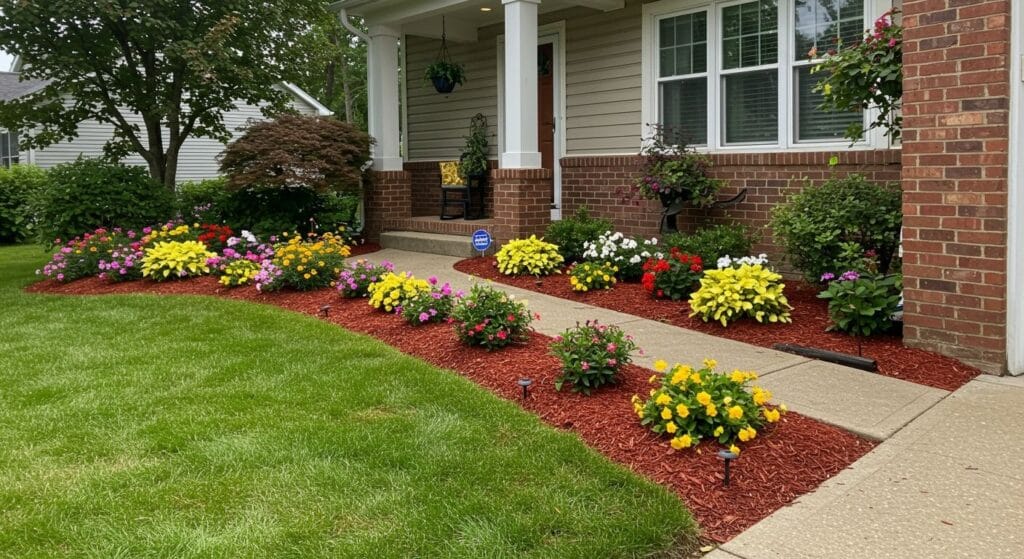
Your front yard is the first thing people notice about your home. And nothing says “welcome” quite like thoughtfully designed flower beds in front of house spaces that frame your entrance with color and life.
I’ve walked past countless homes where the front beds made me slow down and really look. Sometimes it’s the way the colors play off the house color, or how the plants seem to flow naturally from one section to another. Other times, it’s just the obvious care someone put into creating something beautiful.
The truth is, you don’t need a massive budget or a degree in horticulture to create stunning front yard landscaping. What you do need is a plan that works with your home’s style, your climate, and honestly, the amount of time you want to spend maintaining it. Let’s explore how to design flower beds that enhance your curb appeal without overwhelming your weekends.
Understanding Your Front Yard’s Potential
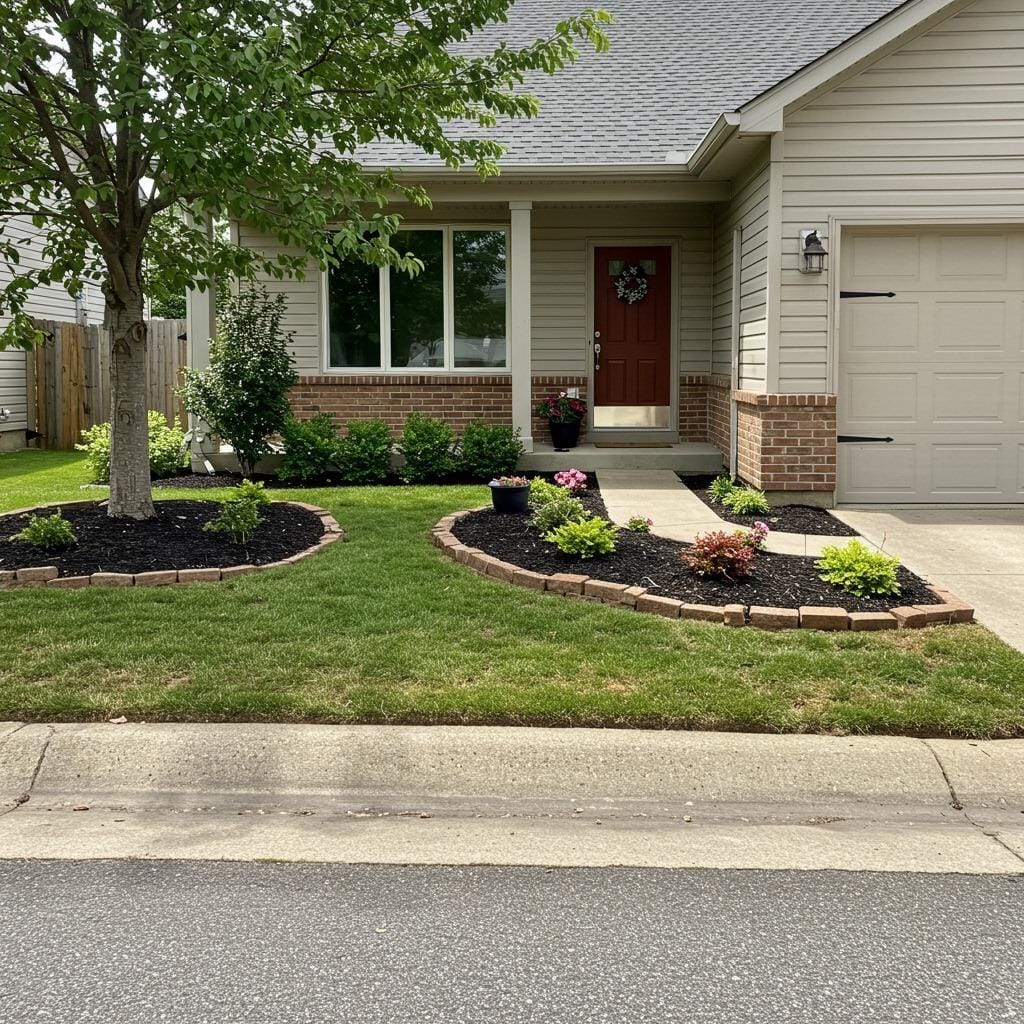
Before you grab a shovel and start digging, take a moment to really see what you’re working with. Walk across the street and look at your house. What draws your eye? What feels off?
Your front yard has specific conditions that will determine what grows well and what struggles. Sun exposure matters more than most people realize. That bed on the south side of your house gets completely different light than the one tucked under the eaves on the north side.
Soil quality varies too, sometimes dramatically within just a few feet. The area right next to your foundation might be compacted and alkaline from concrete leaching, while spots further out could be rich and loamy. Spending an hour understanding these basics will save you months of frustration later.
Choosing the Right Bed Shape and Size
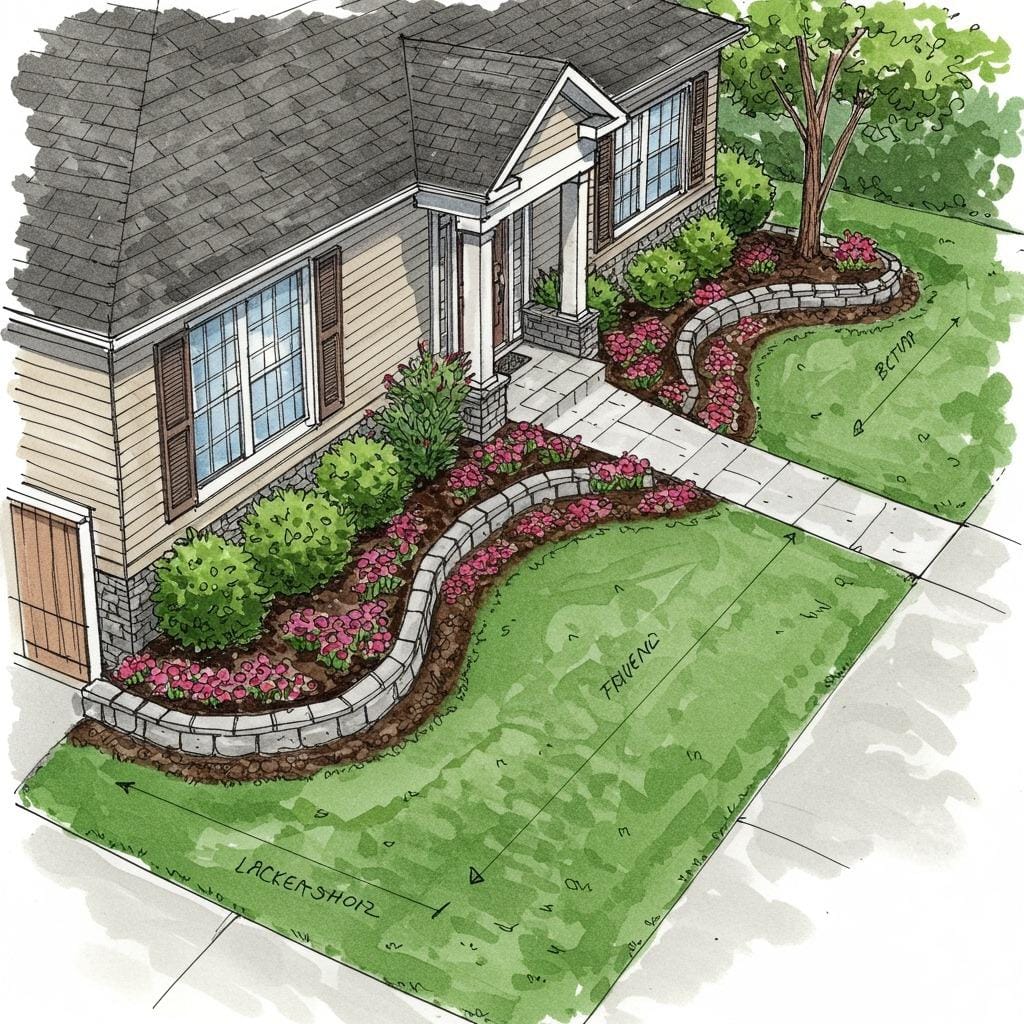
The shape of your flower beds should complement your home’s architecture, not fight against it. Straight, geometric beds often look best with modern or traditional homes, while curved, flowing lines suit cottage or ranch-style houses better.
Scale matters just as much as shape. A common mistake is making beds too narrow, especially along the foundation. A bed that’s only 18 inches deep won’t give you enough room for layered plantings or visual impact. Aim for at least 3-4 feet of depth if space allows.
Consider how the beds connect to other landscape features. Do they flow naturally toward walkways? Do they balance with existing trees or hardscaping? The goal is creating visual harmony that guides the eye pleasantly around your front porch ideas and entry.
Foundation Planting Strategies That Work
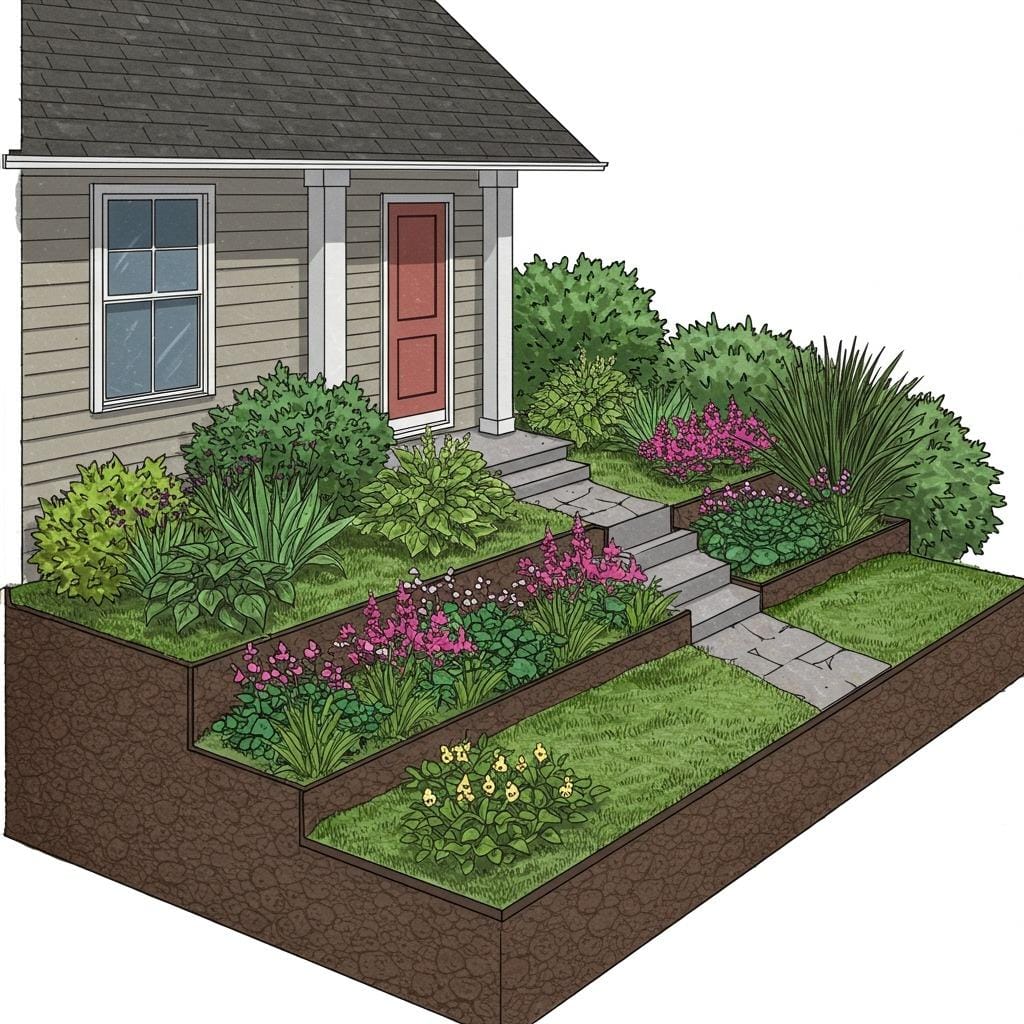
Foundation plantings serve a specific purpose beyond just looking pretty. They should soften the transition between your house and the ground while drawing attention to your entrance.
The classic approach uses a “thriller, filler, spiller” technique adapted for in-ground beds. Place taller statement plants (your thrillers) at key points, fill in with medium-height plants, and edge with low-growing groundcovers. But honestly? This isn’t a hard rule. Sometimes breaking it creates more interesting results.
What matters more is creating layers that look intentional. Taller plants generally go toward the back near the foundation, but varying the heights creates depth and visual interest. And please, leave room for plants to grow. That cute little shrub might be three feet wide in five years.
Pay attention to mature sizes before planting, especially with shrubs. I’ve seen too many homes where foundation plantings eventually swallowed the windows. For more ideas on enhancing your home’s exterior, check out these modern farmhouse exterior concepts that incorporate smart landscaping choices.
Selecting Plants for Year-Round Interest
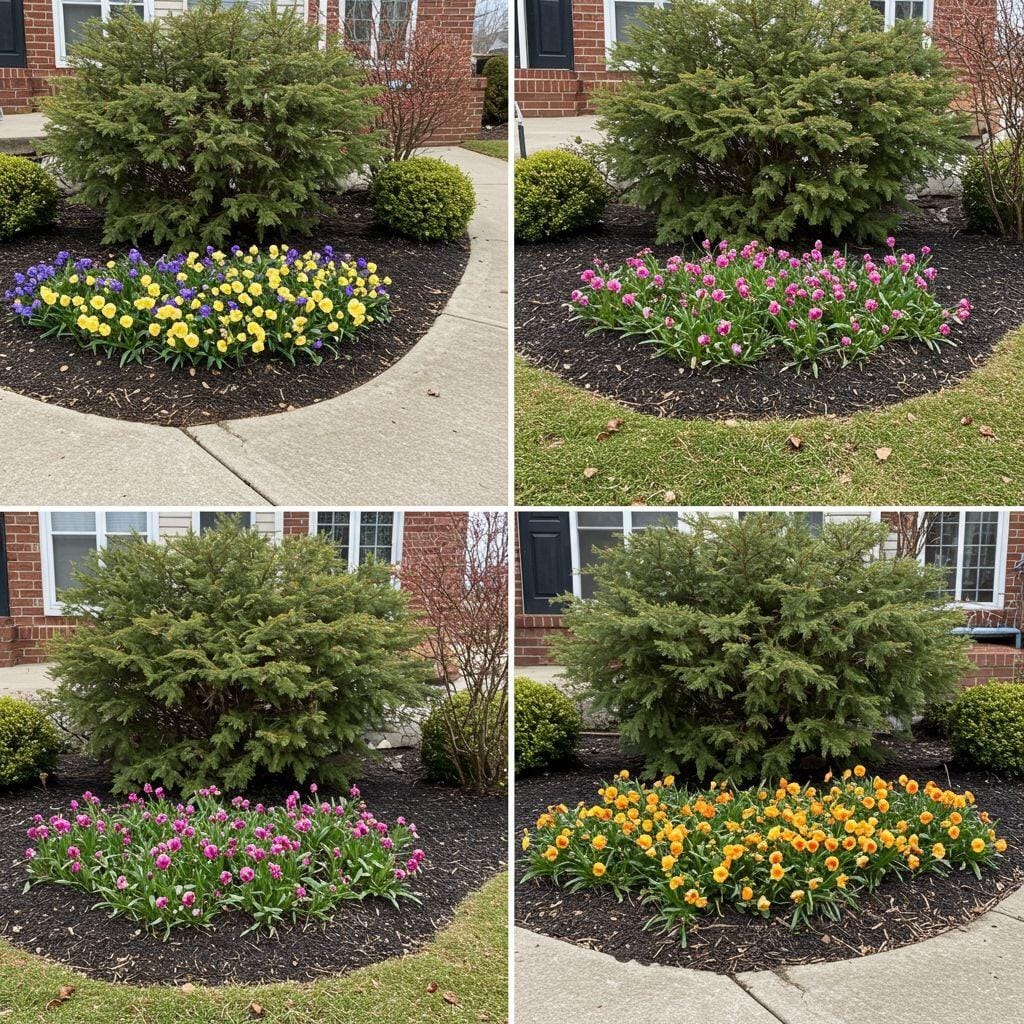
The best planting ideas for curb appeal include something happening in every season. Spring bulbs, summer perennials, fall color, and winter structure all play a role in keeping your beds looking intentional rather than abandoned.
Start with a backbone of evergreen shrubs. These give your beds structure year-round and prevent that bare, depressing look in winter. Boxwoods, hollies, and dwarf conifers work in many climates, though your specific options depend on your zone.
Layer in perennials that peak at different times. Early spring might bring daffodils and hellebores, summer could showcase coneflowers and daylilies, and fall might feature asters and ornamental grasses. This staggered bloom schedule keeps something interesting happening for months.
Don’t forget foliage. Plants with interesting leaf shapes, colors, or textures often contribute more to your design than their flowers do. Hostas, heucheras, and ornamental grasses add visual weight even when nothing’s blooming.
Color Schemes That Enhance Curb Appeal
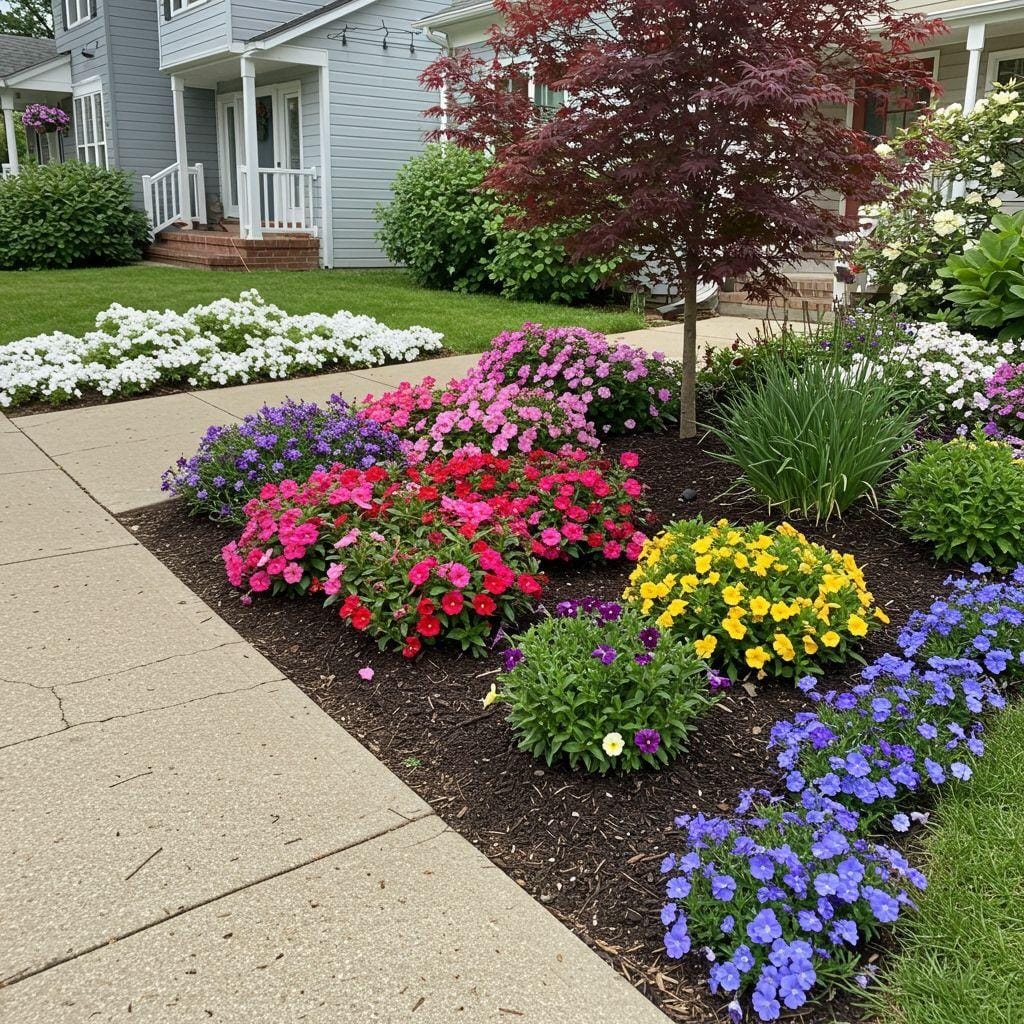
Color either makes or breaks a front yard design. The safest approach is choosing colors that complement your house rather than competing with it. Look at your siding, trim, and front door, then select flowers that harmonize.
A monochromatic scheme using various shades of one color creates sophisticated elegance. White and cream flowers look stunning against dark siding. Blues and purples cool down warm brick tones. Warm yellows and oranges pop against gray or blue houses.
If you want more variety, try an analogous scheme using colors next to each other on the color wheel. Purple, pink, and red work beautifully together. So do yellow, orange, and red. These combinations feel cohesive while offering more visual interest than a single color.
Bold contrast creates drama. If that’s your style, pair complementary colors like purple and yellow, or blue and orange. Just use restraint. Too many competing colors create chaos rather than curb appeal. Your outdoor spaces should feel inviting, not overwhelming.
Seasonal Flower Beds for Continuous Color
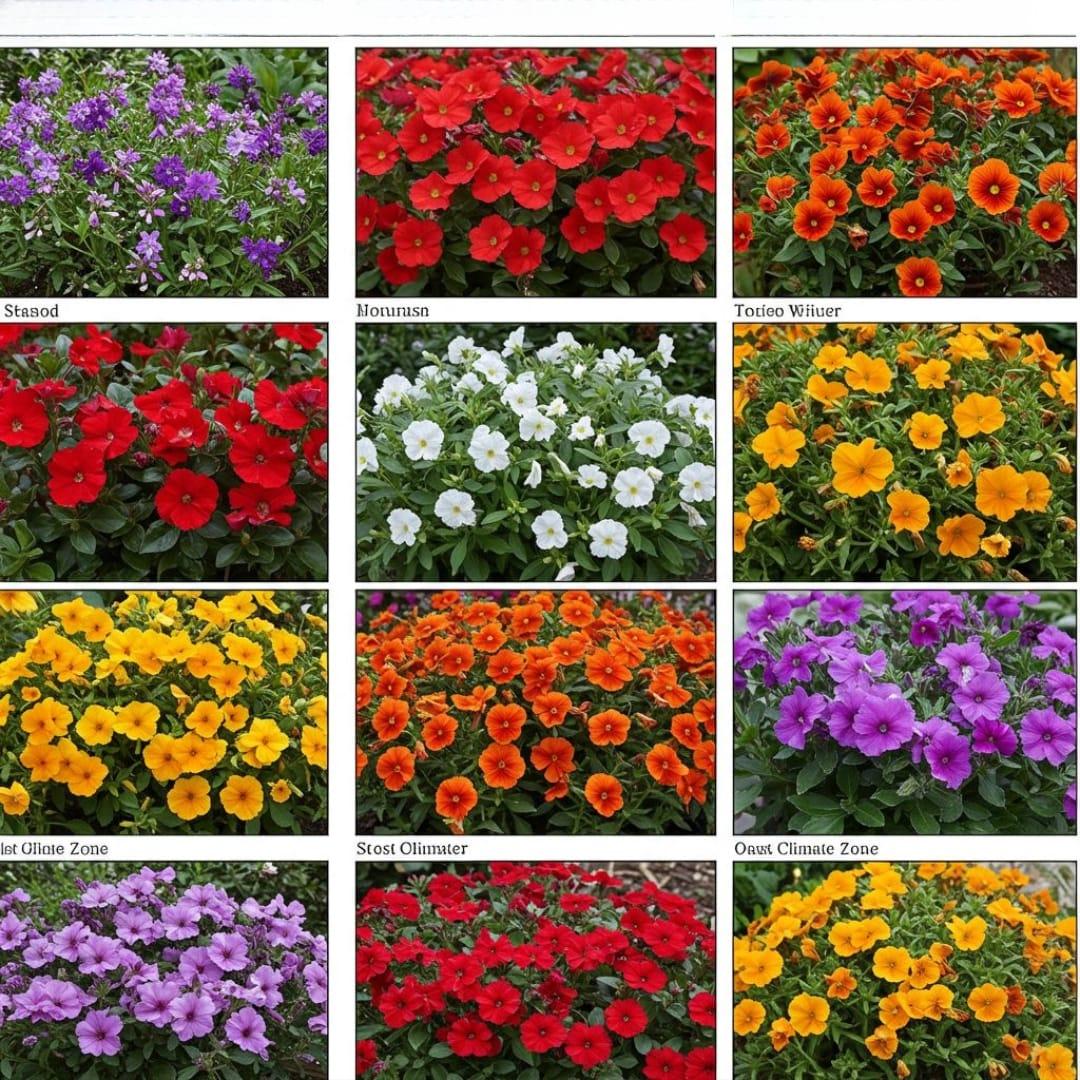
Seasonal flower beds require more maintenance but deliver spectacular results if you’re willing to put in the work. The strategy involves swapping out annuals two or three times a year for peak seasonal impact.
Spring typically features cool-season annuals like pansies, snapdragons, and dianthus. These tolerate light frosts and bloom heavily in cooler weather. Plant them in late winter or early spring depending on your climate.
Summer calls for heat-loving annuals once temperatures consistently stay warm. Petunias, zinnias, marigolds, and begonias thrive in hot weather. The key is timing your planting after the last frost date for your area.
Fall can go two ways. Either keep summer annuals going until frost, or refresh beds with chrysanthemums, ornamental kale, and pansies again for cooler weather. I usually decide based on how worn out the summer plants look.
Winter in mild climates might feature pansies or violas. In cold climates, focus on evergreen structure and maybe some strategically placed containers that can be moved or protected. According to the National Garden Bureau, planning for seasonal transitions helps maintain consistent curb appeal throughout the year.
Low-Maintenance Perennial Combinations
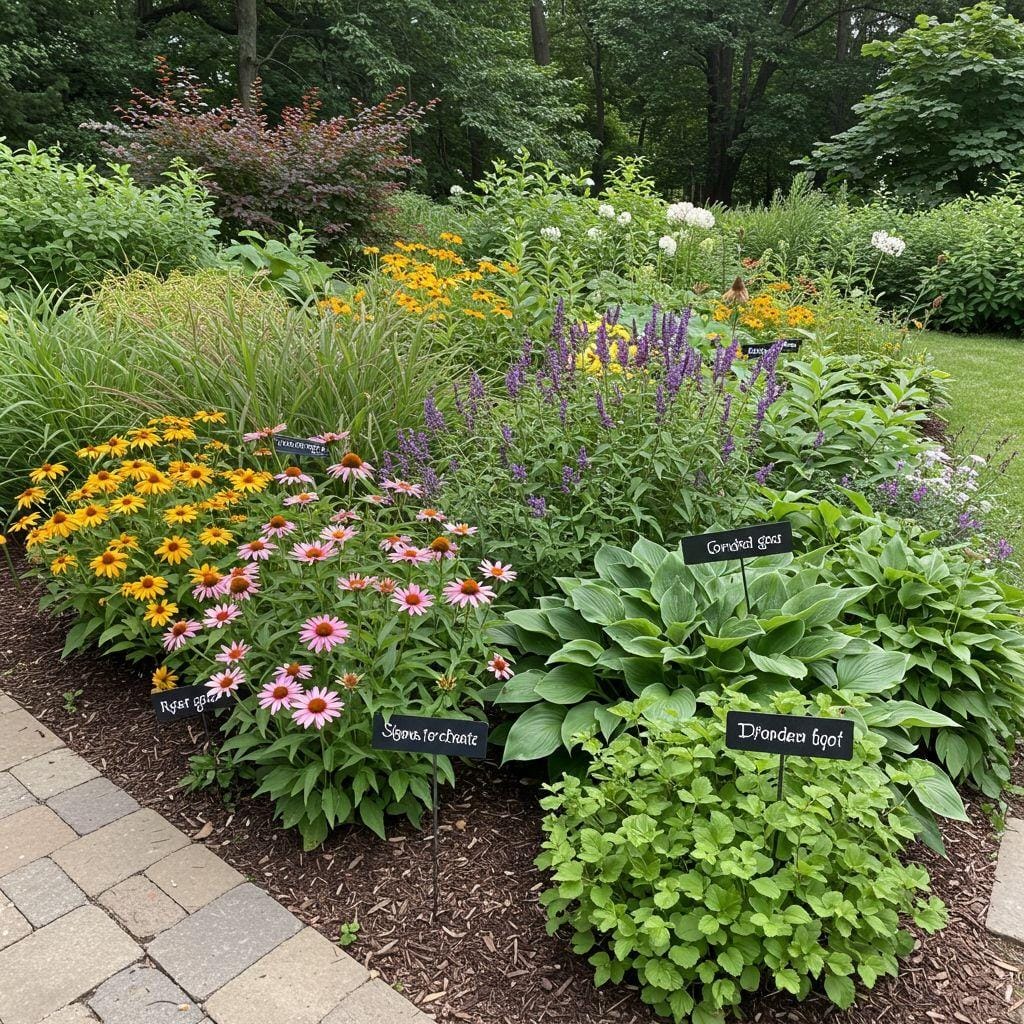
Perennials are the backbone of low-maintenance front yard landscaping. Unlike annuals, they return year after year with minimal fuss once established. The trick is choosing combinations that look good together and suit your conditions.
For sunny spots, try combining coneflowers, black-eyed Susans, daylilies, and ornamental grasses. These tough perennials handle heat and drought once established. They also provide the height variation that creates visual interest.
Shade gardens need a different approach. Hostas anchor many shade beds with their bold foliage. Pair them with astilbe for feathery flowers, ferns for texture, and shade-loving groundcovers like lamium to fill gaps.
The secret to making perennial beds look full is planting in odd-numbered groups. Three, five, or seven of the same plant create natural-looking drifts rather than the spotty look you get from singles. This mirrors how plants grow in nature and creates stronger visual impact.
Edging and Borders for Clean Lines
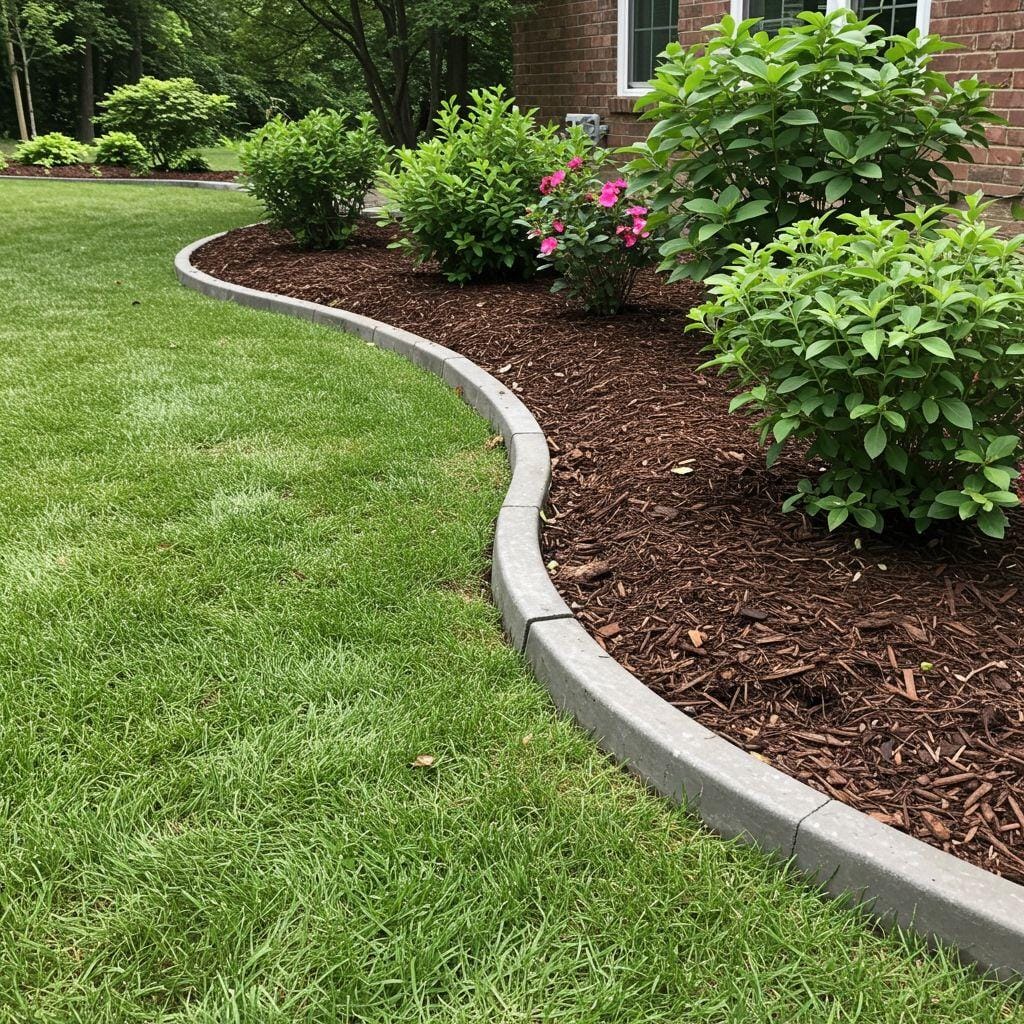
Clean edges make the difference between professional-looking beds and messy ones. The edge defines where lawn ends and bed begins, keeping grass from creeping into your plantings.
Several edging options work well. Metal or plastic landscape edging creates crisp lines and lasts for years. Stone or brick edging adds traditional charm and works beautifully with certain home styles. Natural mulch edges can work too if you maintain them regularly with a sharp spade.
Installation matters. Edging should sit slightly below soil level so your mower can run over the top without catching. This creates a maintenance-free moving strip and eliminates tedious trimming. Take time to install edging properly the first time.
The width of your border also affects the overall look. A narrow strip of mulch or stone between lawn and plants creates a defined boundary that reduces maintenance. This transition zone keeps grass roots from competing with your flowers.
Mulching for Health and Beauty
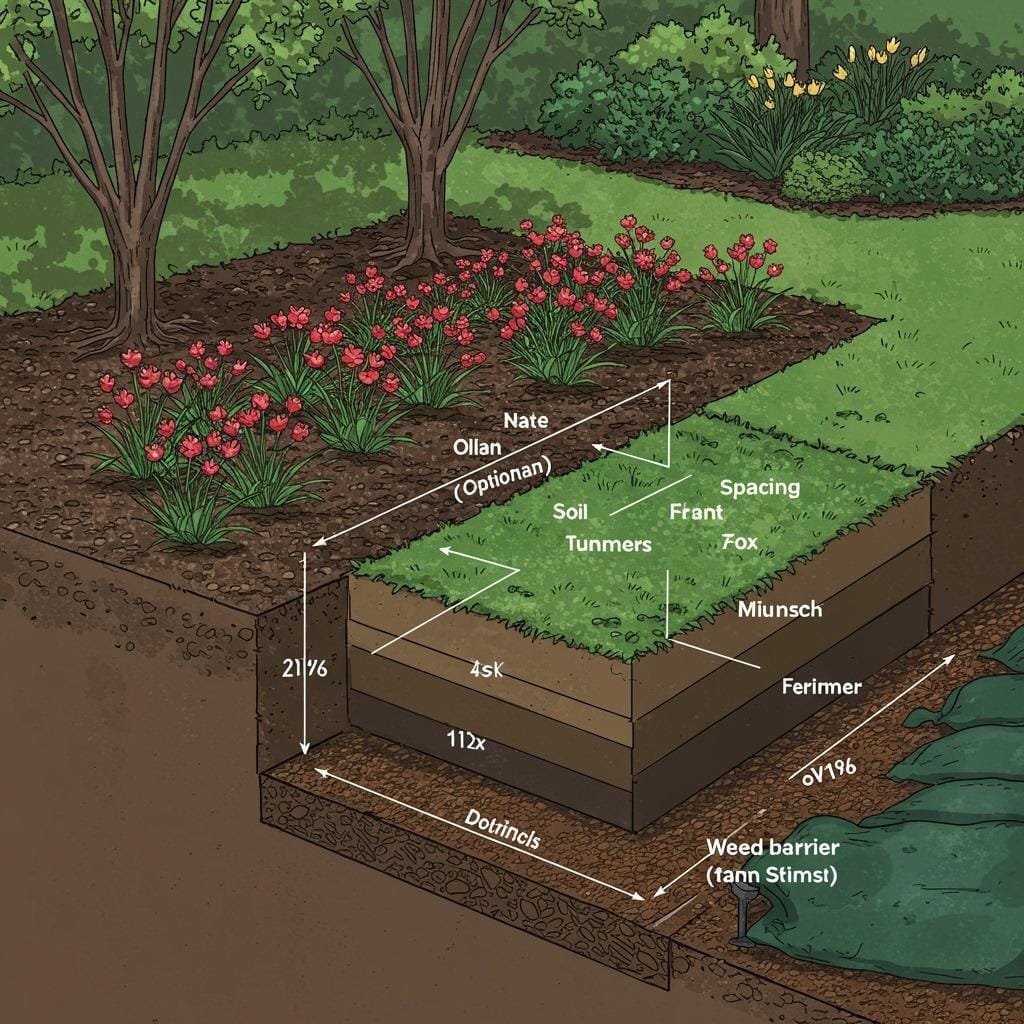
Mulch does more than make your beds look tidy. It suppresses weeds, retains moisture, regulates soil temperature, and breaks down to improve soil over time. Choosing the right mulch and applying it correctly matters.
Organic mulches like shredded bark, wood chips, or pine straw are popular for good reason. They look natural, improve soil as they decompose, and come in colors that complement most homes. Dark brown or black mulch creates strong contrast, while natural tones blend more subtly.
Apply mulch 2-3 inches deep around plants, but keep it pulled back slightly from stems and trunks. Mulch piled against plants creates moisture problems and invites pests. That gap of bare soil right around the base is important.
Refresh mulch annually or as needed. Some mulches break down faster than others. A spring top-dressing keeps beds looking fresh and maintains the weed-suppressing benefits. Don’t just pile new mulch on old indefinitely though. Occasionally rake back excess buildup.
Incorporating Shrubs for Structure
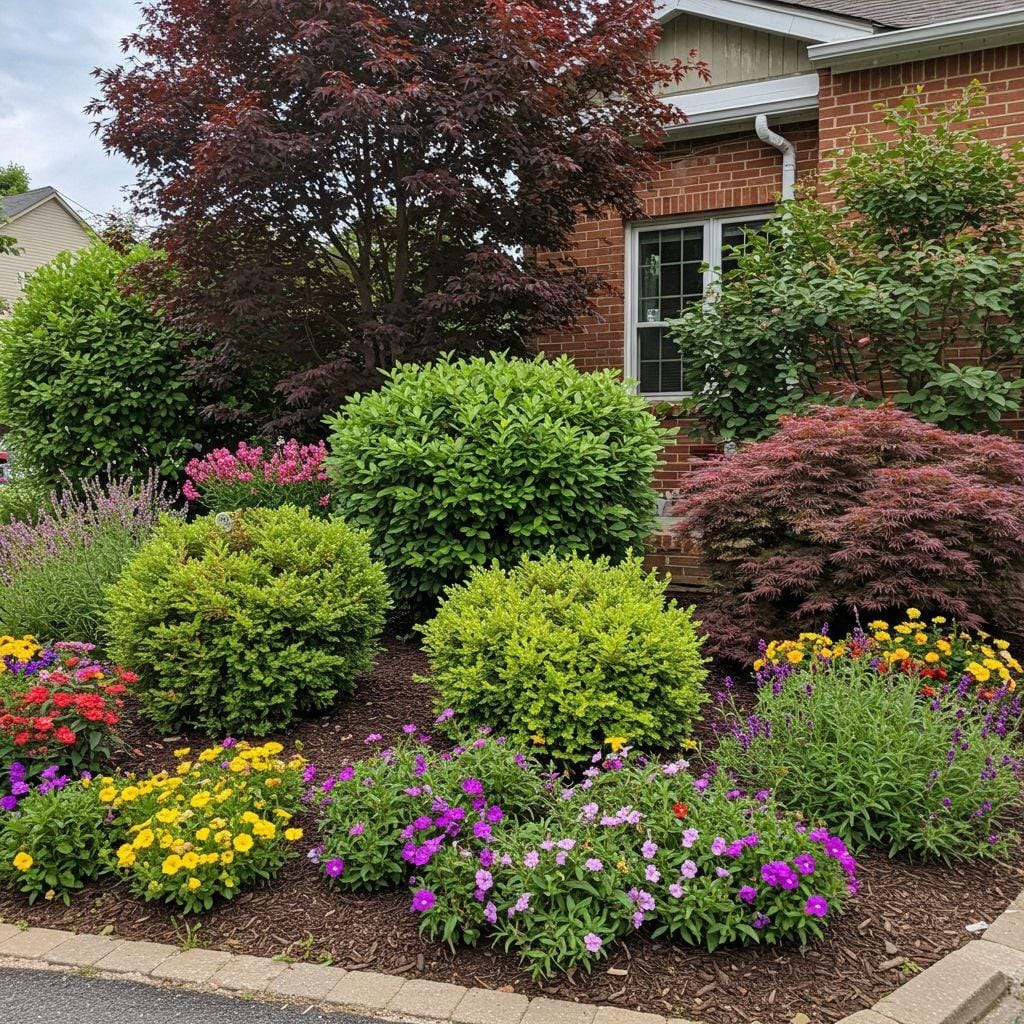
Shrubs provide the permanent framework that holds your flower bed design together. They’re there through winter when perennials die back, and they define the bed’s shape and mass.
Choose shrubs based on mature size, not nursery size. That “dwarf” shrub might still reach four feet tall and wide. Read tags carefully and space accordingly. It feels sparse initially but saves you from constant pruning later.
Evergreen shrubs earn their keep by looking good year-round. Boxwoods work in many styles and climates. Hollies add glossy leaves and often berries. Dwarf conifers provide fine-textured contrast. Mix in deciduous shrubs too for seasonal interest.
Placement matters for both aesthetics and function. Larger shrubs can anchor bed corners or flank entryways. Medium shrubs work well spaced along the foundation. Small shrubs bridge the gap between foundation plantings and flowers. This layered approach creates depth that flat beds lack. If you’re working on multiple home improvement ideas, strategic shrub placement can tie different outdoor elements together.
Designing Symmetrical vs. Asymmetrical Beds
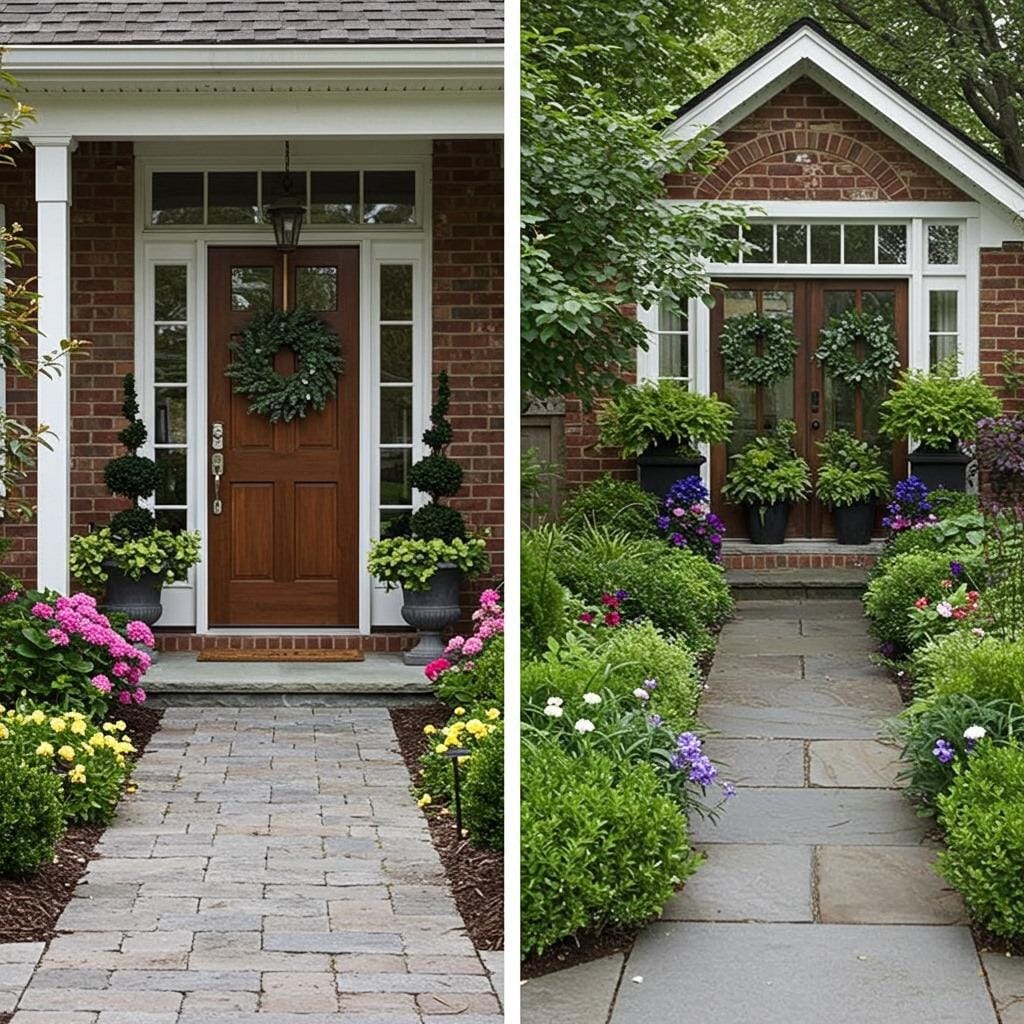
The debate between symmetrical and asymmetrical design often comes down to your home’s architecture and personal taste. Both approaches work, but they create very different feelings.
Symmetrical designs suit formal homes beautifully. Mirror plantings on either side of your front door create balance and elegance. This works especially well with colonial, Georgian, or other traditional architectural styles where symmetry already features prominently.
Asymmetrical designs feel more relaxed and natural. They work well with cottage, ranch, or contemporary homes. The key is creating visual balance without mirror images. A large shrub on one side might balance a grouping of smaller plants on the other.
You don’t have to commit fully to either approach. Many successful designs use symmetry near the front door for formal balance, then transition to more naturalistic plantings as beds extend along the foundation. This hybrid approach satisfies both the need for structure and desire for creativity.
Adding Height and Dimension
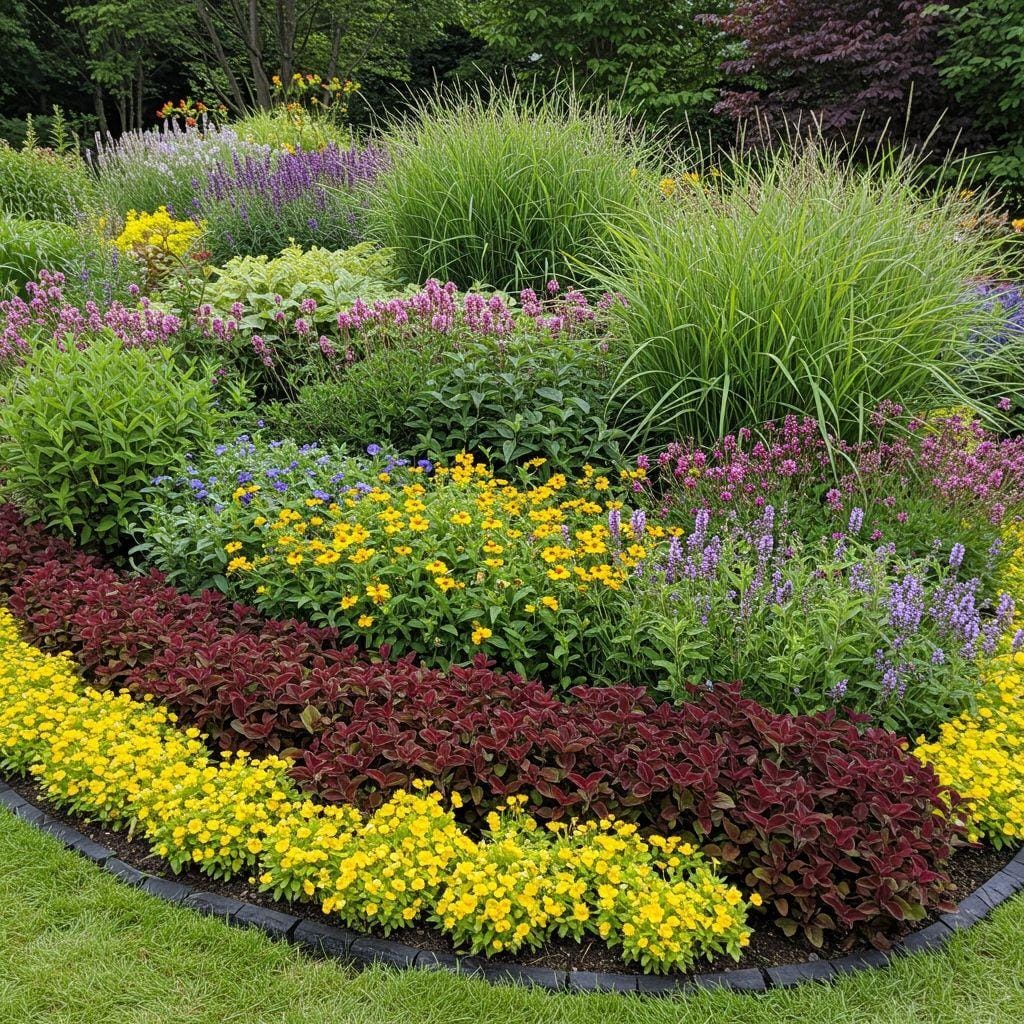
Flat beds feel boring. Creating vertical interest transforms ordinary plantings into something eye-catching that draws the eye around your landscape.
Tall perennials and ornamental grasses add natural height. Black-eyed Susans, Joe Pye weed, and taller ornamental grasses like maiden grass create focal points and movement. Just position them thoughtfully so they don’t block windows or architectural features.
Structures add instant height when you need it. Obelisks or tuteurs give climbing plants like clematis or mandevilla something to scale. Small decorative fences or short sections of picket fencing create backdrop interest behind lower plantings.
Layering front to back creates depth even in narrow beds. The tallest plants go toward the house, medium heights in the middle, and low groundcovers or edging plants at the front. But breaking this rule occasionally by pulling a tall, airy plant forward creates visual interest and prevents cookie-cutter predictability.
Lighting Your Flower Beds
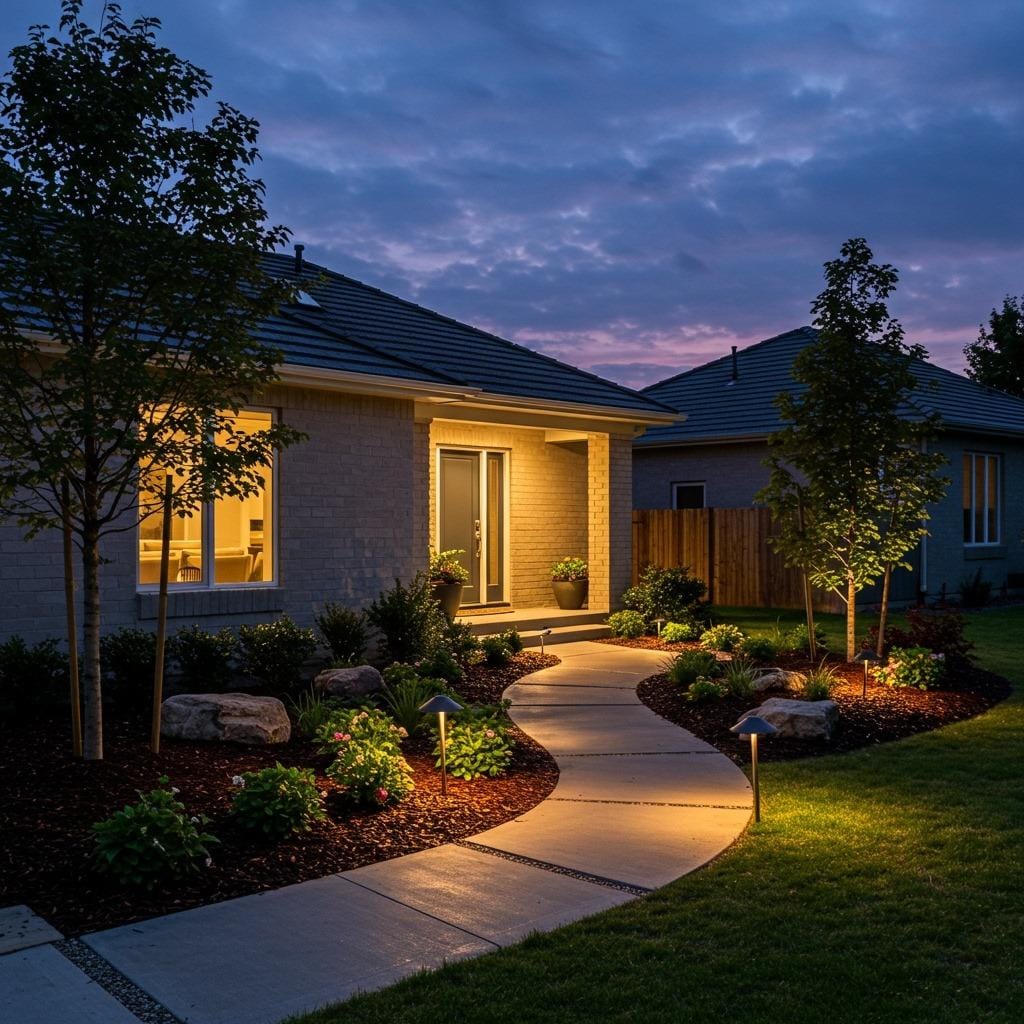
Landscape lighting extends the enjoyment of your flower beds beyond daylight hours. It also adds security and makes your home more welcoming when you arrive after dark.
Uplighting showcases specific plants or trees, creating dramatic shadows and highlighting interesting forms. Position lights at the base of the plant and aim upward. This works beautifully with ornamental grasses, specimen shrubs, or small trees.
Path lighting along walkways edges makes navigation safer while highlighting bed borders. Solar lights offer easy installation without wiring, though wired fixtures provide more reliable, brighter light.
Downlighting from trees or under eaves creates soft, moonlight-like effects that feel magical. This technique illuminates larger areas more naturally than multiple spotlights. It’s subtle but effective for creating ambiance. For more ideas on outdoor illumination, explore these outdoor lighting ideas for patio spaces that can be adapted for front yard beds.
Budget-Friendly Bed Creation Tips
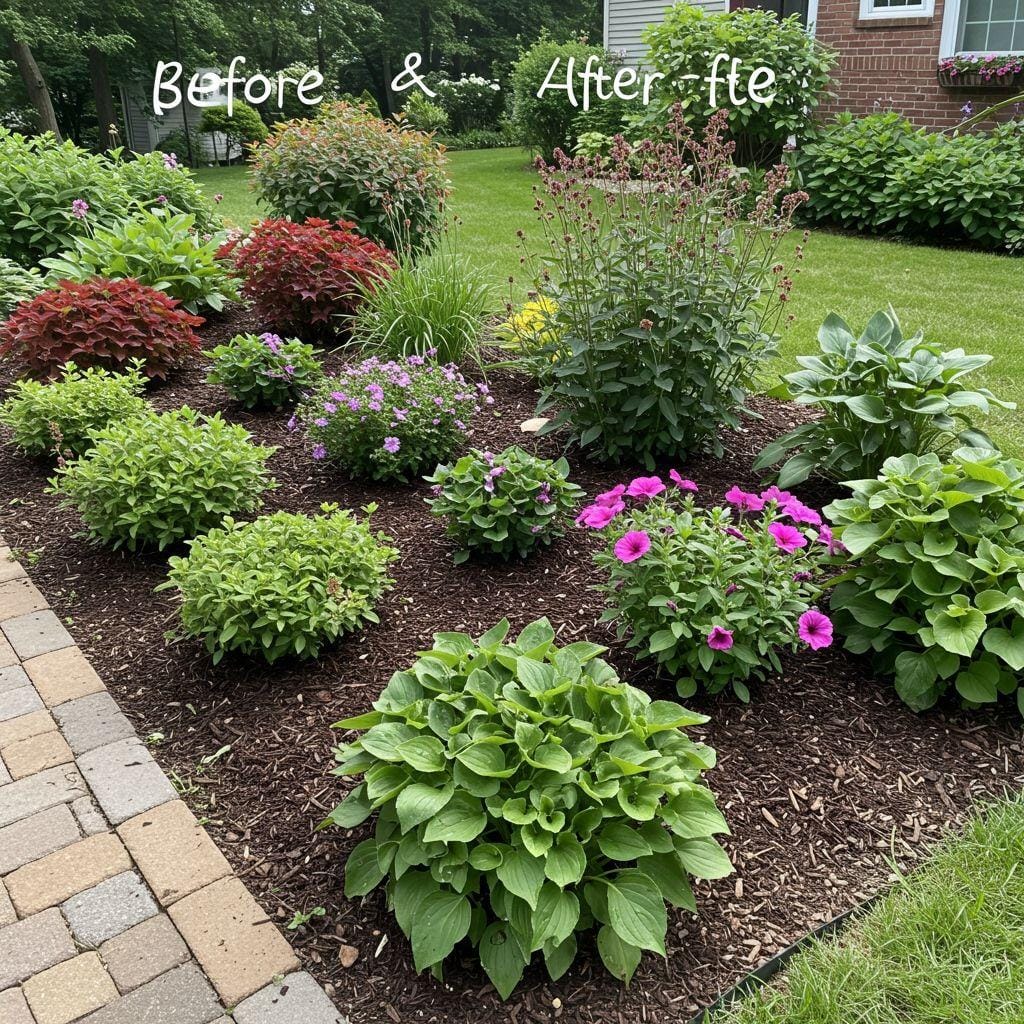
Creating beautiful flower beds in front of house spaces doesn’t require unlimited funds. Smart strategies stretch your budget while delivering impressive results.
Start small and expand gradually. Build one well-executed bed rather than several mediocre ones. You can always add more sections next season. This approach also prevents overwhelm and lets you learn what works before committing to larger areas.
Propagate plants from divisions or cuttings rather than buying everything. Many perennials can be divided from existing plants in your yard or from generous neighbors. Hostas, daylilies, and ornamental grasses divide easily and bulk up quickly.
Shop end-of-season sales for deep discounts on perennials and shrubs. Late summer and fall bring clearance prices on plants that will establish just fine if planted soon. They might not look like much immediately, but they’ll return strong the following spring.
Choose fast-growing, reliable plants that deliver impact quickly. Some perennials take years to reach impressive size. Others, like coneflowers or black-eyed Susans, establish quickly and bulk up fast. Get your money’s worth by choosing proven performers.
Dealing with Common Front Yard Challenges
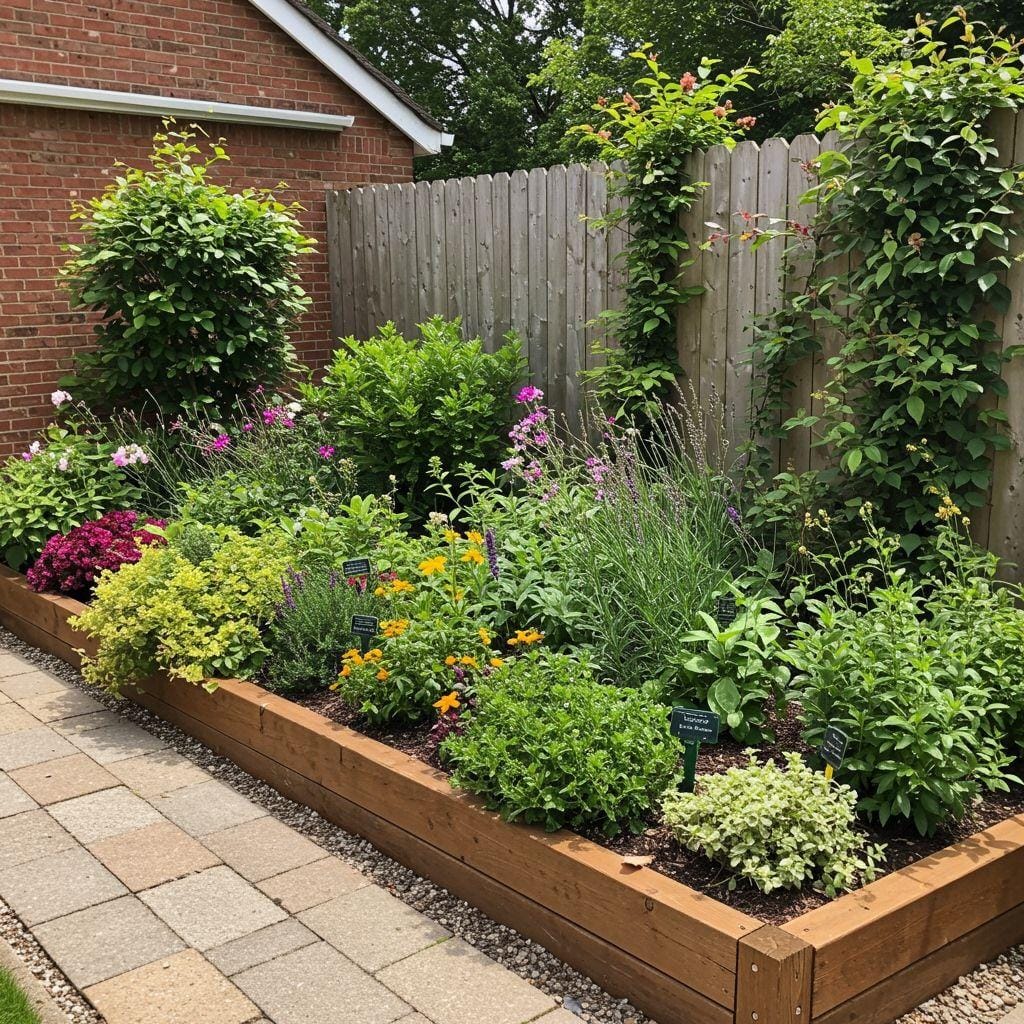
Every front yard comes with its own set of challenges. Knowing how to work with these limitations rather than against them leads to better results.
Heavy shade under trees or deep eaves requires shade-loving plants. Hostas, ferns, astilbe, and heucheras thrive in low light. Accept that you won’t have the bright color range available in sun, but you can create lush, interesting foliage combinations.
Poor drainage or clay soil needs addressing before planting. Amend soil with compost to improve structure. In severe cases, consider raised beds or berms to lift plants above problem areas. Some plants actually prefer these conditions, like Louisiana iris or marsh marigolds.
Narrow planting strips between sidewalks and houses limit options but aren’t hopeless. Choose vertical-growing plants that won’t spread into pathways. Consider a single row of carefully selected specimens rather than trying to force a complex design into inadequate space.
Creating a Cohesive Look with Your Home’s Style
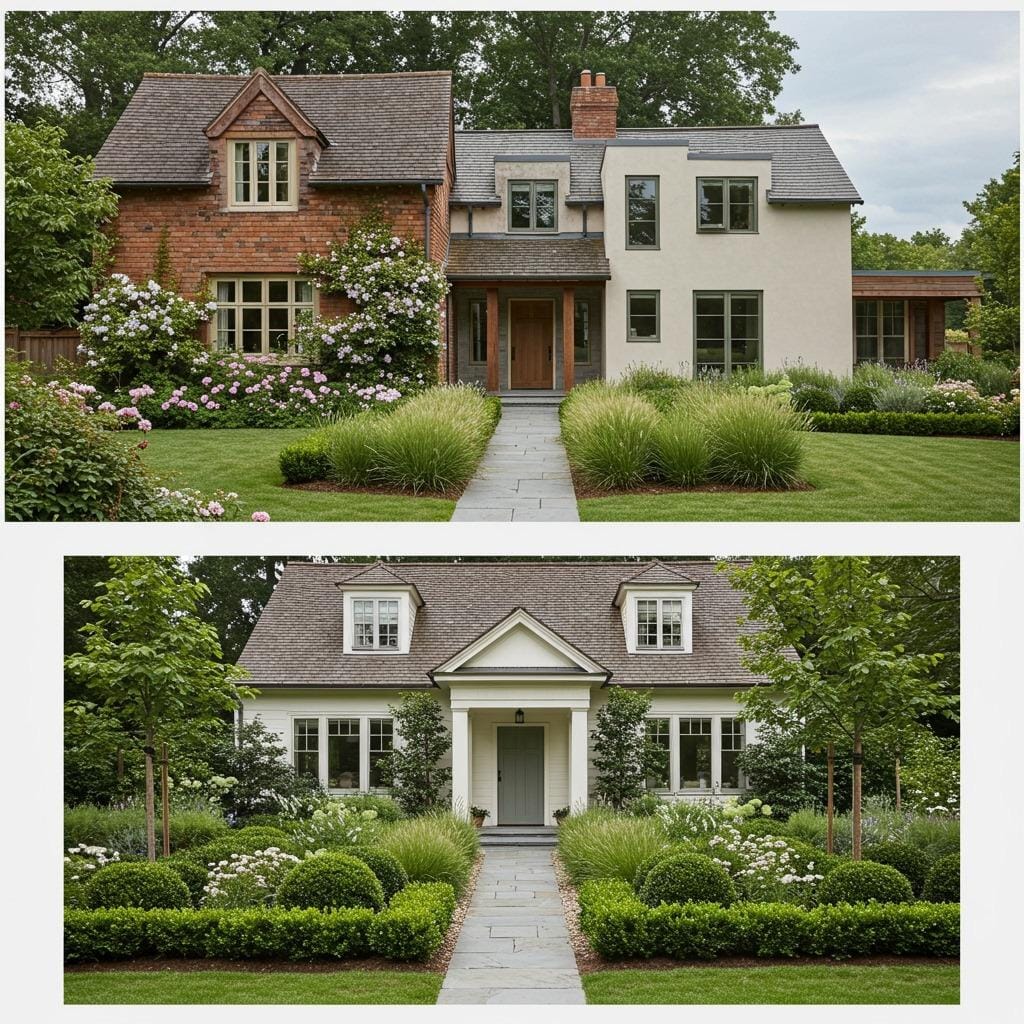
Your flower beds should enhance your home’s architectural character, not clash with it. The style of plantings should echo the house design for a cohesive, intentional look.
Cottage-style homes call for abundant, romantic plantings. Roses, lavender, foxgloves, and old-fashioned perennials create the right feeling. Allow plants to spill and mingle naturally rather than maintaining rigid spacing.
Modern contemporary homes need clean lines and architectural plants. Ornamental grasses, succulents, and plants with bold forms work better than fussy flowers. Limit the color palette and focus on foliage texture and form.
Traditional homes look best with classic, formal plantings. Boxwood hedges, symmetrical arrangements, and restrained color schemes respect the architectural formality. Think timeless rather than trendy. Your garden landscaping choices should complement the home’s era and style.
Maintenance Calendar for Healthy Beds
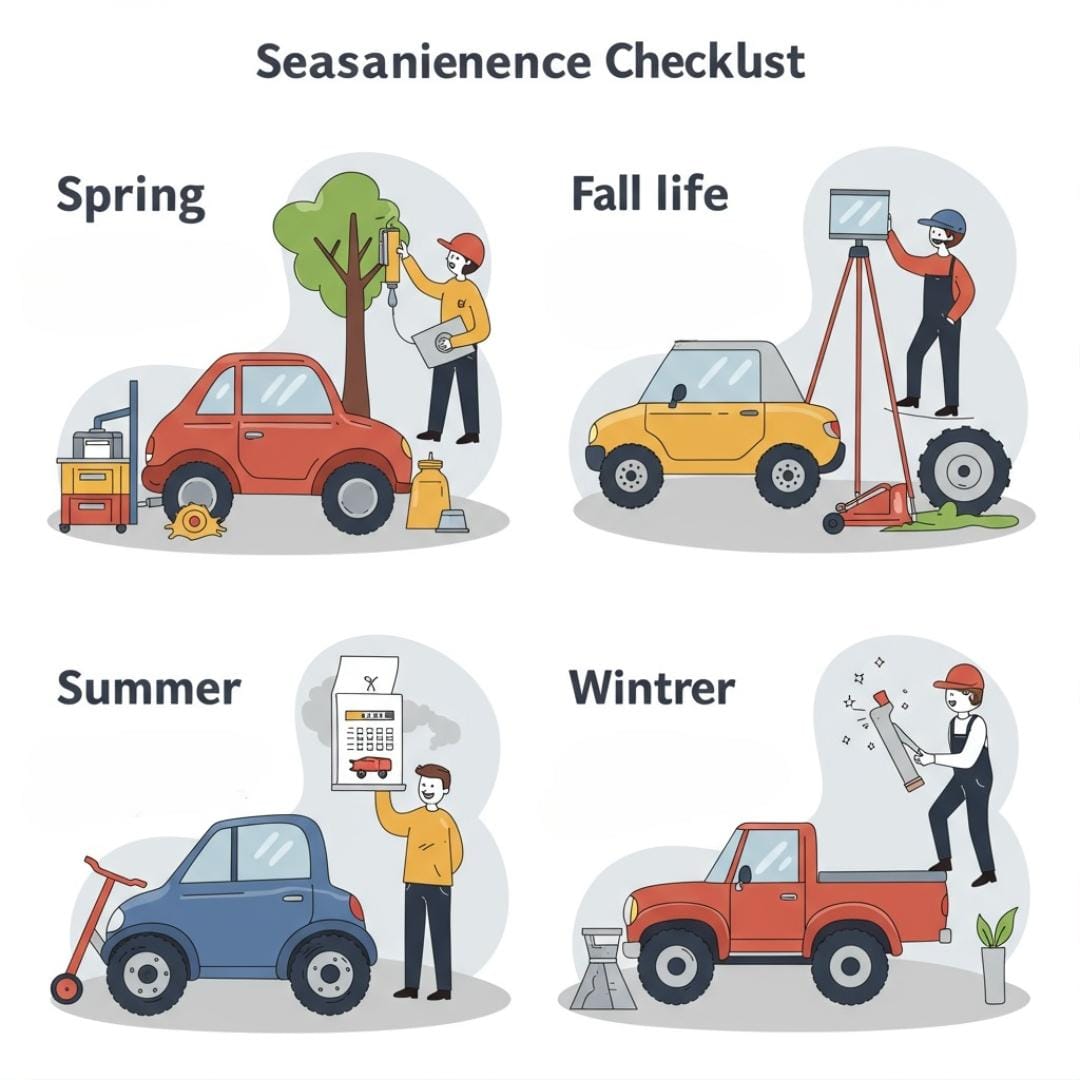
Knowing when to perform specific tasks keeps your flower beds looking their best without constant emergency interventions. A seasonal maintenance rhythm makes the work manageable.
Spring cleanup happens as plants emerge. Cut back dead perennial foliage, divide overcrowded plants, refresh mulch, and feed beds with compost or balanced fertilizer. This is also prime planting time for most areas.
Summer maintenance focuses on deadheading spent flowers, watering during dry spells, and monitoring for pests. Most established beds need about an inch of water weekly from rain or irrigation. Newer plantings need more attention until roots establish.
Fall involves different tasks depending on your climate. In cold areas, leave perennial foliage standing for winter interest and protection. In milder climates, you might cut back plants and do another round of dividing. Plant spring bulbs now for next year’s display.
Winter requires little active maintenance in cold climates beyond planning for spring. In mild areas, continue monitoring moisture and tidying beds as needed. This quiet season is perfect for garden seating area planning and dreaming about next year’s changes.
Sustainability and Native Plant Choices
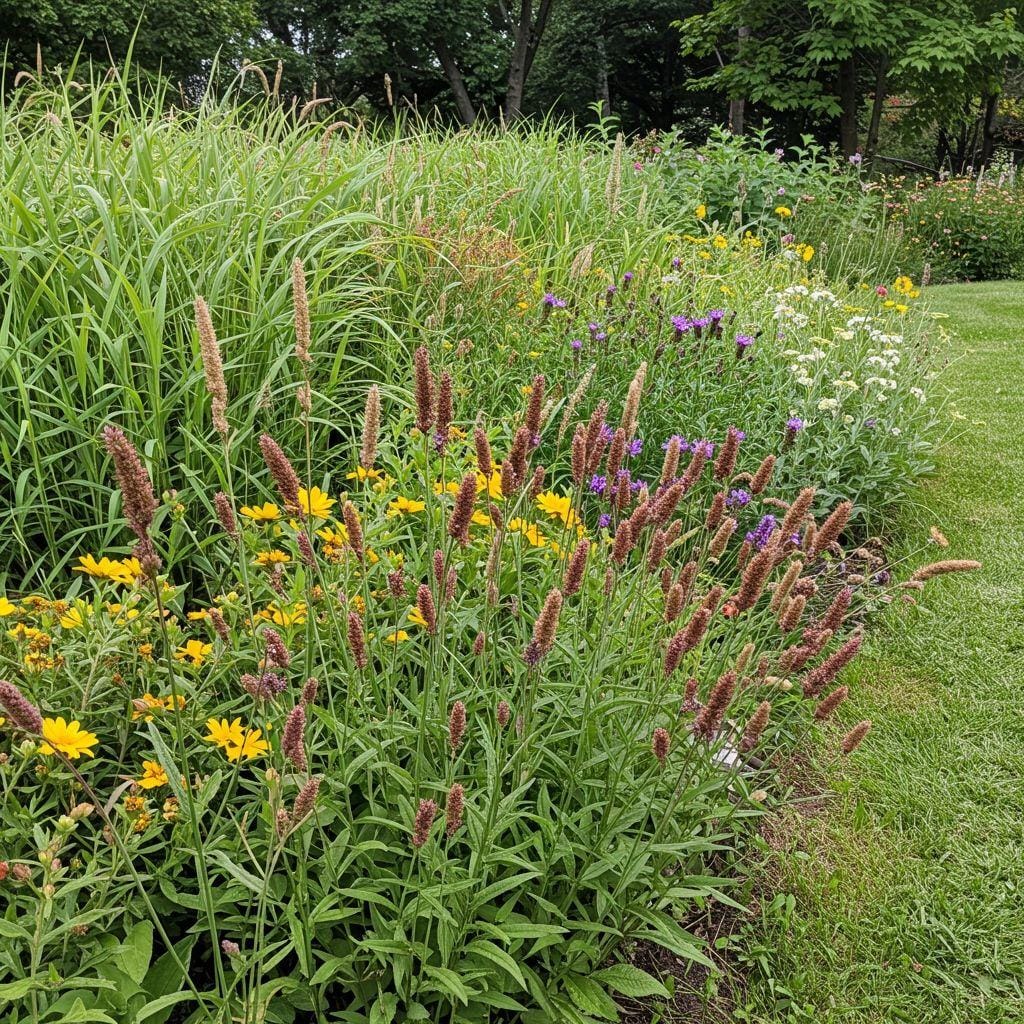
Creating environmentally responsible flower beds benefits both your landscape and the broader ecosystem. Native plants and sustainable practices reduce maintenance while supporting local wildlife.
Native plants evolved in your region and naturally thrive in local conditions. They need less water, no fertilizer, and minimal pest control once established. They also provide food and habitat for native pollinators and birds that co-evolved with these plants.
Research what’s truly native to your specific area. “Native” isn’t universal. Plants native to your state might not be native to your county. Local native plant societies or extension services can guide you toward appropriate selections.
Reduce chemical inputs by building healthy soil and choosing disease-resistant varieties. Healthy plants resist pests and diseases naturally. When problems do arise, try organic solutions first. Encourage beneficial insects that prey on pests rather than reaching for pesticides.
Water wisely by grouping plants with similar needs and using drip irrigation or soaker hoses rather than sprinklers. Mulch heavily to retain moisture. Once established, many native perennials need no supplemental watering except during extreme drought.
Inspiration Gallery: Real Front Yard Transformations
Sometimes seeing actual examples makes concepts click better than any explanation. These real transformations show what’s possible with different budgets, styles, and conditions.
Small budget, big impact: A narrow foundation bed transformed with divisions from a neighbor’s hostas, clearance sale daylilies, and decorative stone edging. Total cost under $150, but the visual improvement was dramatic.
Modern minimalist approach: A contemporary home got three large beds of mixed ornamental grasses in varying heights with dark mulch and metal edging. The simplicity perfectly suited the architecture.
Cottage garden abundance: An older home’s foundation plantings were removed and replaced with layered perennials creating a romantic, overflowing look that bloomed spring through fall.
These examples prove you don’t need unlimited resources or professional designers to create impressive results. What you need is a clear vision, appropriate plant choices, and willingness to get your hands dirty.
Working with Existing Landscape Features
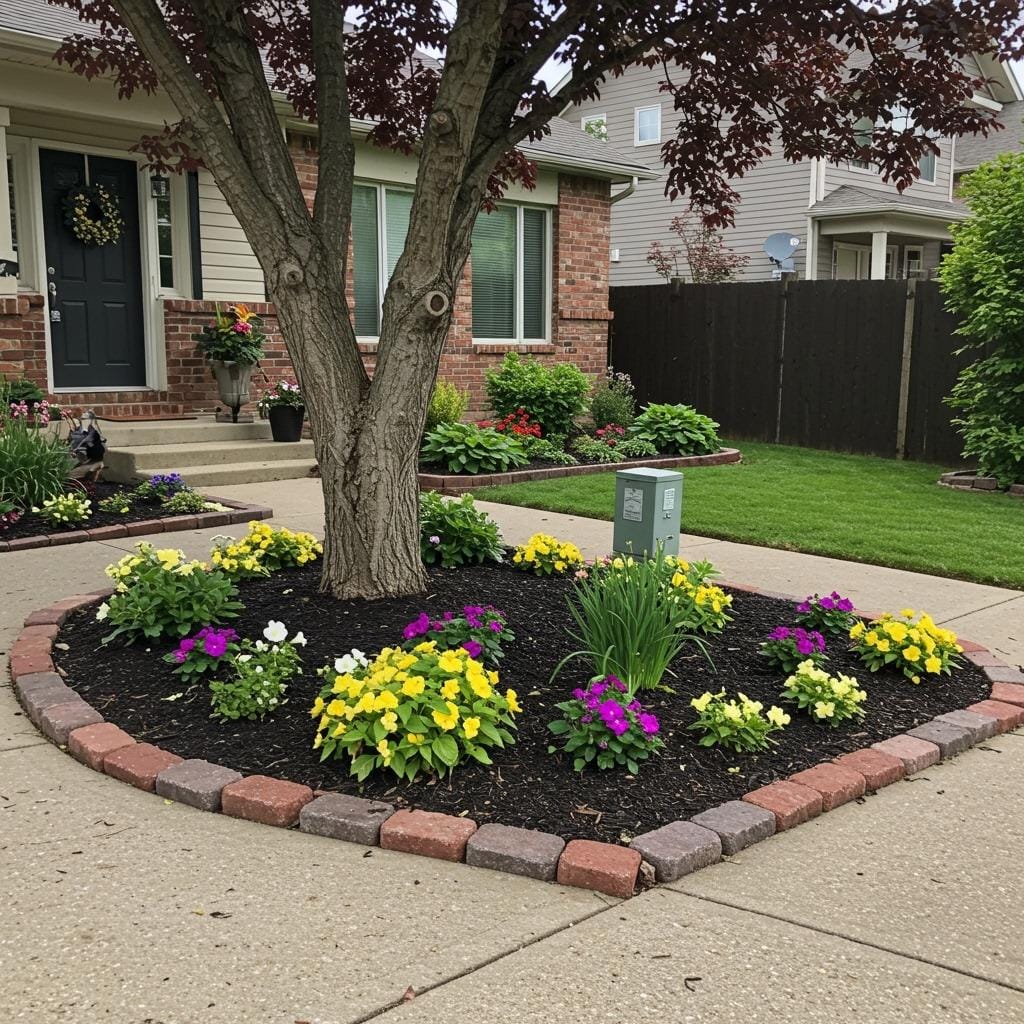
Most front yards aren’t blank slates. Learning to work with existing elements rather than fighting them leads to better, more cost-effective designs.
Mature trees provide wonderful shade but create specific challenges. Their roots compete with new plantings for water and nutrients. Choose shade-tolerant plants and add extra organic matter to improve soil. Don’t pile soil or mulch high against tree trunks.
Existing walkways and hardscaping define traffic patterns you need to respect. Design beds that complement these features rather than forcing people to walk through plantings. Use beds to highlight and frame pathways, not obscure them.
Utility boxes, air conditioner units, and downspouts exist in many front yards. Rather than pretending they’re not there, design around them thoughtfully. Taller plants can screen eyesores without blocking access. Keep beds clear of areas where utility workers need access.
Seasonal Color Through Strategic Bulb Planting
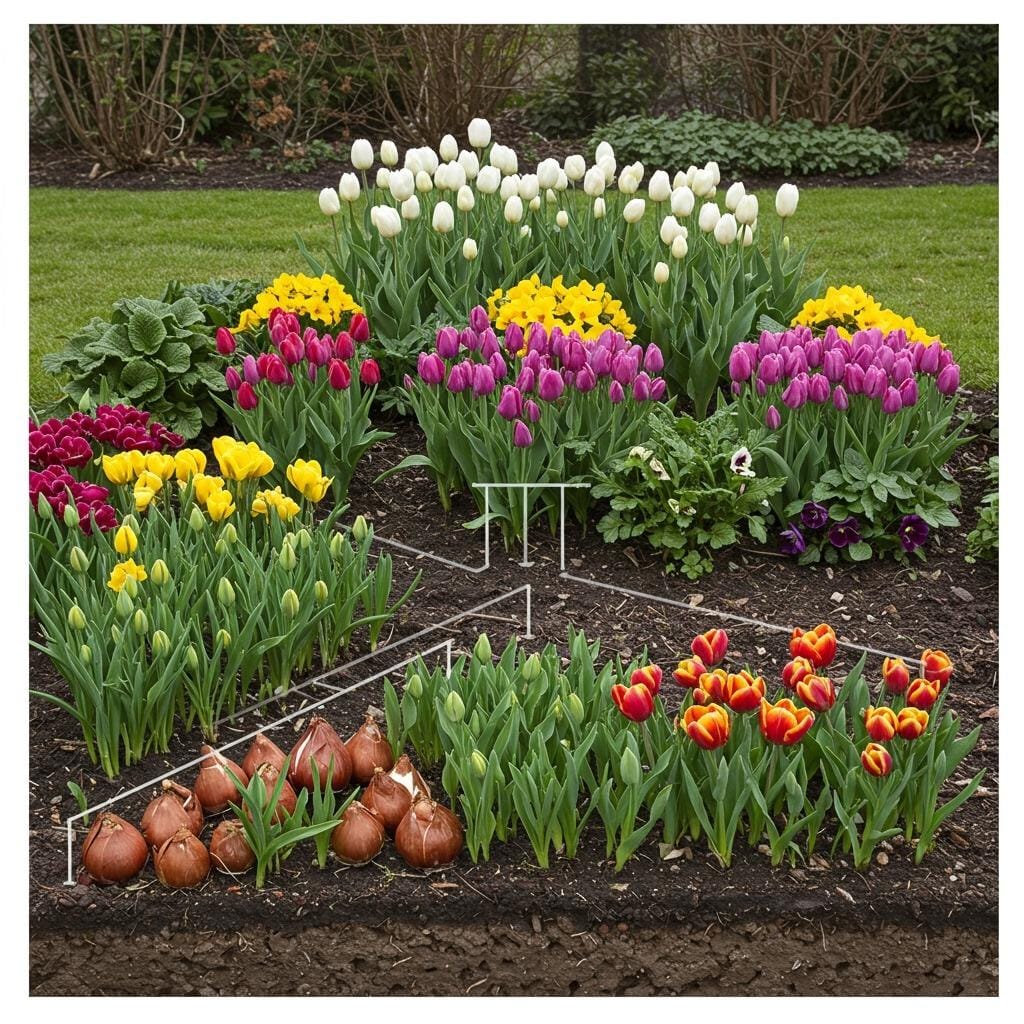
Spring bulbs deliver outsized impact for their cost and effort. Strategic bulb planting ensures your beds wake up colorful after winter’s dormancy.
Layer bulbs by bloom time for extended color. Early bulbs like snowdrops and crocuses emerge first, followed by daffodils, then tulips. This succession keeps something new happening for weeks rather than one brief show.
Plant bulbs in clusters rather than lines for natural-looking drifts. Groups of 10-15 of the same variety create visible impact, while singles get lost. Tuck clusters between perennials that will fill in as bulb foliage fades.
Choose perennial bulbs that return reliably without constant replacement. Daffodils, small bulbs like muscari and scilla, and many alliums naturalize readily. Tulips often need replacing every few years unless you choose perennializing varieties.
Plant bulbs at the proper depth, generally 2-3 times the bulb’s height. Use a bulb auger attached to a drill for making quick work of planting large quantities. Fall planting gives bulbs time to establish roots before winter.
Bringing It All Together
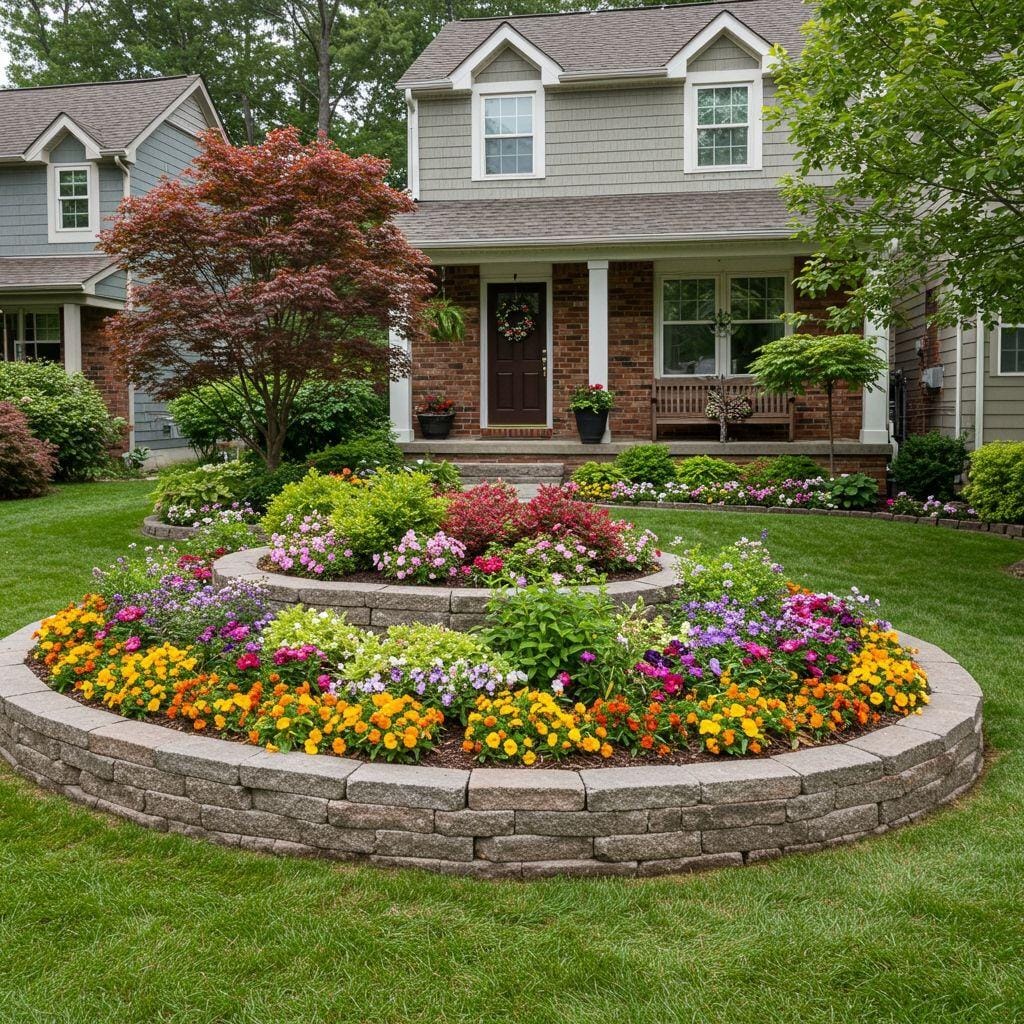
Creating beautiful flower beds in front of house spaces combines art and science. You’re working with living materials that grow and change, in conditions you can’t fully control, while trying to achieve a specific aesthetic vision.
Start with a solid plan but remain flexible as you learn what thrives in your specific conditions. That plant that was supposed to work might struggle, while an unexpected volunteer becomes your favorite feature. Gardens evolve, and that’s part of their charm.
Focus on building healthy soil first. Everything else becomes easier when plants grow in rich, well-draining earth. The time you invest improving soil pays dividends for years.
Remember that professional-looking beds didn’t happen overnight. Give yourself grace as you learn. Every gardener has killed plants, made design mistakes, and wished they’d done something differently. That’s how you develop the knowledge and instincts that eventually make it look easy.
Your front yard flower beds are an ongoing project, not a finished product. Each season brings opportunities to refine, experiment, and improve. Enjoy the process as much as the results, and your curb appeal will naturally follow.

Sanjai creates easy, affordable home decor ideas that anyone can try. Through simple tips and curated finds, he helps you style rooms you’ll love coming home to.