
When you’re working with limited square footage, every inch matters. A poorly planned compact kitchen-dining layout can feel cramped and chaotic, but a thoughtfully designed one? It becomes the heart of your home where cooking, eating, and gathering happen effortlessly.
The challenge isn’t just fitting everything in. It’s about creating a space that doesn’t make you feel like you’re playing Tetris every time you need to open the oven while someone’s sitting at the table. The right approach balances function with comfort, ensuring your space works with you, not against you.
This guide walks you through practical strategies for designing a compact kitchen-dining layout that genuinely flows. No theoretical fluff, just real solutions you can apply to your own space.
Understanding the Work Triangle in Small Spaces
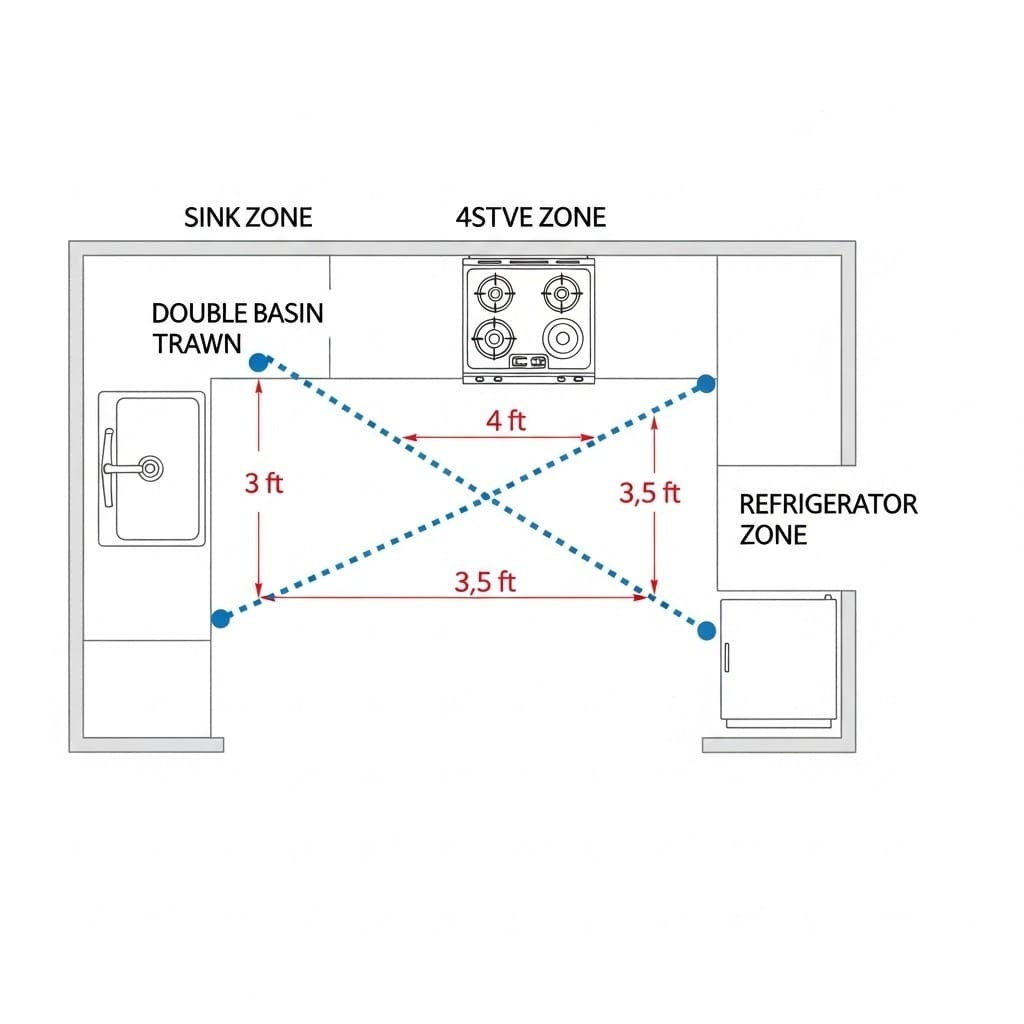
The classic kitchen work triangle connects your sink, stove, and refrigerator. In compact layouts, this principle becomes even more critical because you don’t have room for wasted steps. Each leg of the triangle should ideally measure between 4 and 9 feet, creating an efficient workspace without excessive walking.
But here’s where small spaces get tricky. You can’t always achieve the perfect triangle when you’re dealing with kitchen and dining ideas in a limited footprint. Sometimes you need to adapt the concept into a work zone approach instead.
Think of it as creating distinct but connected zones rather than a strict triangle. Your prep area near the sink, cooking zone at the stove, and storage at the fridge should still relate to each other logically. The goal is minimizing back-and-forth movement while maintaining clear pathways for kitchen traffic flow.
Choosing the Right Layout Configuration
Your room’s shape largely determines which layout will work best. Galley kitchens work brilliantly in narrow spaces, with parallel counters creating a natural corridor. One side handles cooking while the other provides prep and storage space.
L-shaped configurations are perfect for open plan kitchen tips because they naturally define the kitchen zone without blocking sightlines to the dining area. The corner becomes your anchor point, often housing the sink, while the two arms extend outward. This setup leaves one or two walls open for dining furniture.
For slightly larger compact spaces, consider a U-shape with one arm opening to the dining area. This creates maximum counter space while still maintaining that crucial connection between kitchen and dining. A small dining space decor approach can make the transition feel intentional rather than cramped.
Peninsula layouts add a protruding counter that doubles as a dining surface or bar seating. This configuration is genius for compact spaces because it eliminates the need for a separate dining table while providing extra storage underneath.
Strategic Placement of Your Dining Area
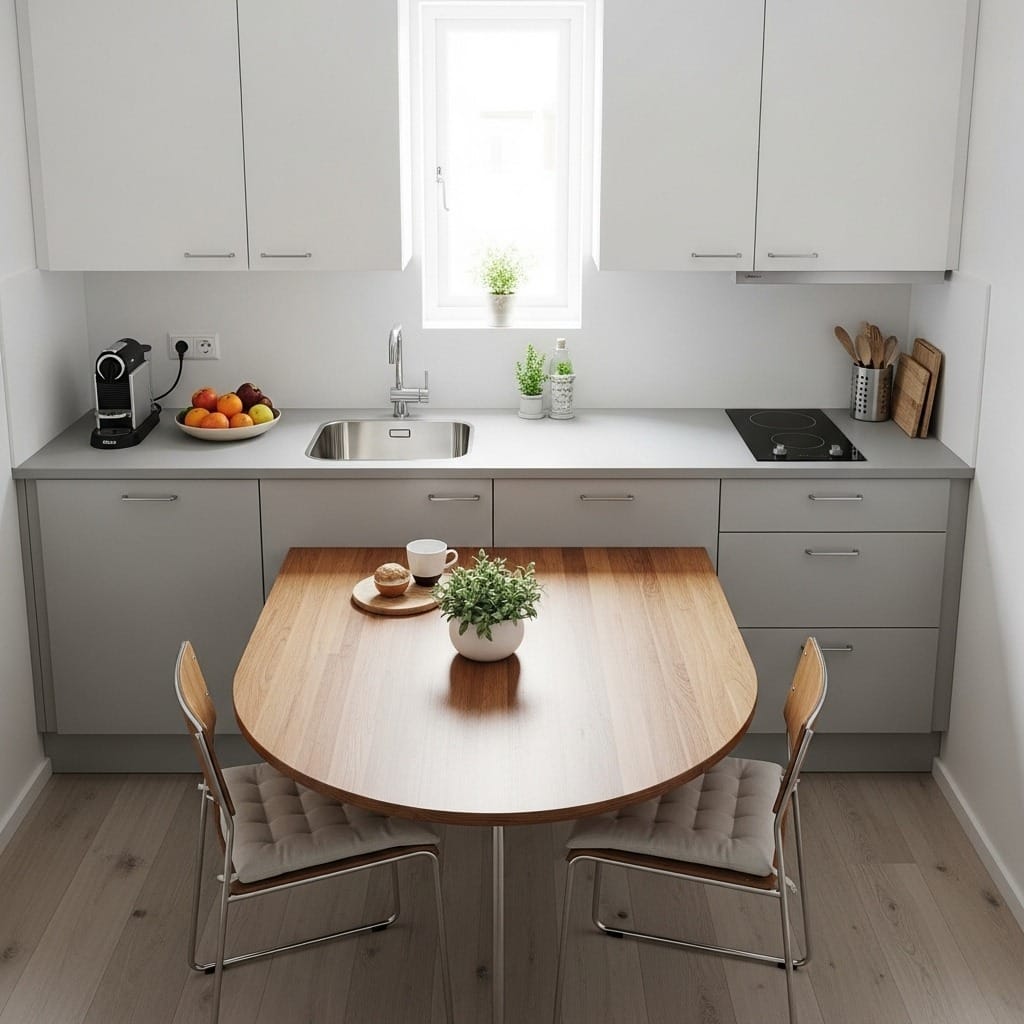
The dining space doesn’t need to be far from the kitchen. In fact, proximity makes serving and clearing easier. But you do need intentional separation to prevent the areas from bleeding into each other awkwardly.
Position your dining table perpendicular to the kitchen’s main workspace rather than parallel. This creates a visual break and improves kitchen traffic flow by keeping dining chairs out of the primary cooking path. Even a small shift in orientation can dramatically change how the space functions.
Consider a round or oval table instead of rectangular. Without sharp corners, these shapes allow easier movement around them and can actually seat more people in tight quarters. Plus, they create a softer, more organic flow between the two zones that feels less rigid than straight lines everywhere.
If wall space is at a premium, a drop-leaf or extendable table gives you flexibility. Keep it compact for daily meals, then expand when you’re entertaining. Storage underneath keeps the essentials within reach without cluttering counters.
Maximizing Traffic Flow and Clearances
Here’s a number worth remembering: 36 inches. That’s the minimum clearance you need for comfortable movement in a compact kitchen dining layout. Between your counter edge and any obstacle (wall, island, table), maintain at least this distance for one person to pass comfortably.
If two people need to pass each other or work simultaneously, bump that up to 42-48 inches. Yes, this might mean choosing a smaller table or narrower cabinets, but the payoff in daily usability is worth it. You’ll find more simple kitchen styling solutions work better when movement isn’t restricted.
Pay attention to door swings, both cabinet doors and the refrigerator. These need adequate clearance without blocking pathways or hitting the dining table. Sometimes switching to sliding cabinet doors or repositioning the fridge makes all the difference.
Create a mental map of your daily movements. Where do you stand while cooking? Where do dishes get washed? How do people enter and exit the dining area? Identifying these patterns helps you arrange furniture and appliances to support rather than obstruct natural traffic flow.
Dual-Purpose Furniture and Built-ins
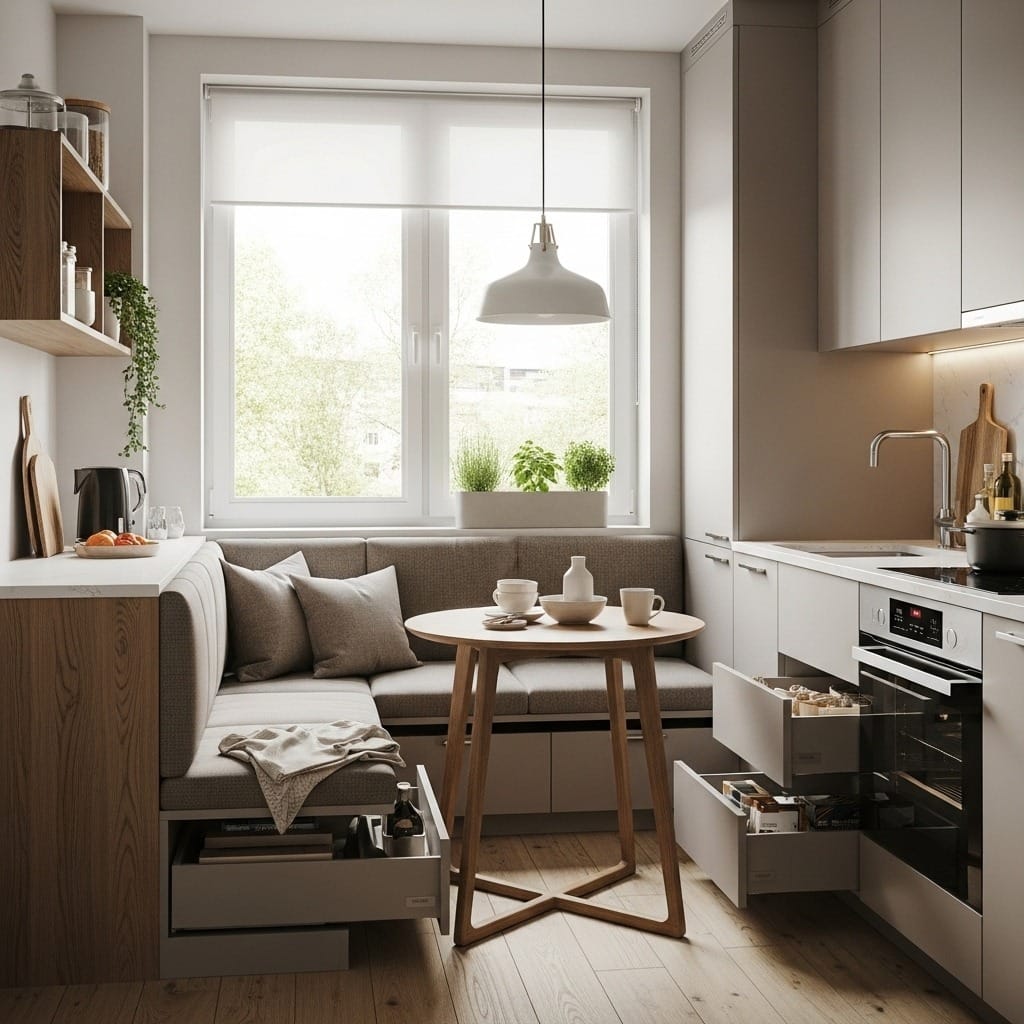
A peninsula or breakfast bar serves triple duty: food prep surface, casual dining spot, and visual divider between kitchen and dining zones. Add stools on one side and you’ve created an eat-in kitchen solution without sacrificing precious floor space.
Built-in banquette seating against a wall maximizes seating capacity while using less space than traditional chairs. The bonus? Storage drawers underneath for linens, small appliances, or rarely used serving pieces. This approach borrows from small kitchen dining ideas that prioritize vertical storage.
Kitchen islands in compact spaces should be mobile if possible. A rolling cart can function as extra prep space during cooking, then wheel away to open up the room for dining. Look for designs with drop leaves that expand the surface when needed.
Wall-mounted drop-down tables are another clever solution. Fold it up when cooking requires more floor space, flip it down for meals. Some designs incorporate storage shelves or wine racks that remain accessible even when the table is lowered.
Lighting That Defines Zones
Lighting plays a huge role in making a compact kitchen-dining layout feel cohesive yet distinct. Task lighting over work surfaces is non-negotiable – you need bright, shadow-free light for meal prep and cooking safety.
Pendant lights above a dining table or peninsula create a natural focal point and visually separate the eating area from the kitchen workspace. The key is hanging them at the right height: 30-36 inches above the table surface prevents head bumping while providing adequate illumination.
Under-cabinet lighting brightens counters without taking up space and adds depth to the room. This layered approach, combined with ambient ceiling lights, gives you flexibility to adjust the mood from bright and energetic during cooking to softer and more intimate during dinner.
Consider dimmer switches for flexibility. Full brightness while prepping meals, then dial it down when it’s time to eat. According to efficient kitchen layout principles, controlling light levels helps define how each zone functions at different times.
Color and Visual Flow Strategies
Using a consistent color palette throughout both zones creates visual continuity that makes the space feel larger. This doesn’t mean everything must match, but coordinate tones so the eye flows smoothly from kitchen to dining without jarring transitions.
Light colors on walls and cabinets reflect more light and create an airy feeling. White, soft gray, or pale neutrals expand the space visually. If you crave color, introduce it through accessories, artwork, or a single accent wall rather than dark cabinetry that can make a small space feel enclosed.
The flooring should ideally continue seamlessly from kitchen through dining area. Switching materials mid-space chops up the room visually and makes it feel even smaller. If you want definition, use a large rug under the dining table instead – it creates separation without permanent boundaries.
Open shelving in the kitchen keeps things feeling less heavy than solid cabinet doors, especially when displaying attractive dishes and glassware. This works particularly well in open plan kitchen tips where you want the space to feel connected and breathable.
Storage Solutions That Don’t Intrude
Vertical storage is your best friend in compact layouts. Tall cabinets that reach the ceiling provide maximum storage without consuming more floor space. Use the upper shelves for items you access less frequently, keeping everyday essentials at eye level.
Corner cabinets with lazy Susans or pull-out organizers prevent that awkward dead space from becoming a black hole. These mechanisms bring items to you rather than requiring you to dig into dark corners. Check out kitchen pantry storage hacks for more ideas on maximizing every inch.
Drawer organizers keep utensils and tools contained rather than rattling around loose. This might seem minor, but organized drawers mean you can find what you need quickly without rummaging, which improves the kitchen traffic flow by reducing time spent standing in place searching.
Wall-mounted solutions like magnetic knife strips, pot racks, or pegboards take advantage of vertical space while keeping counters clear. The more you can get off horizontal surfaces, the more breathing room your compact layout will have.
Creating Flexibility for Different Activities
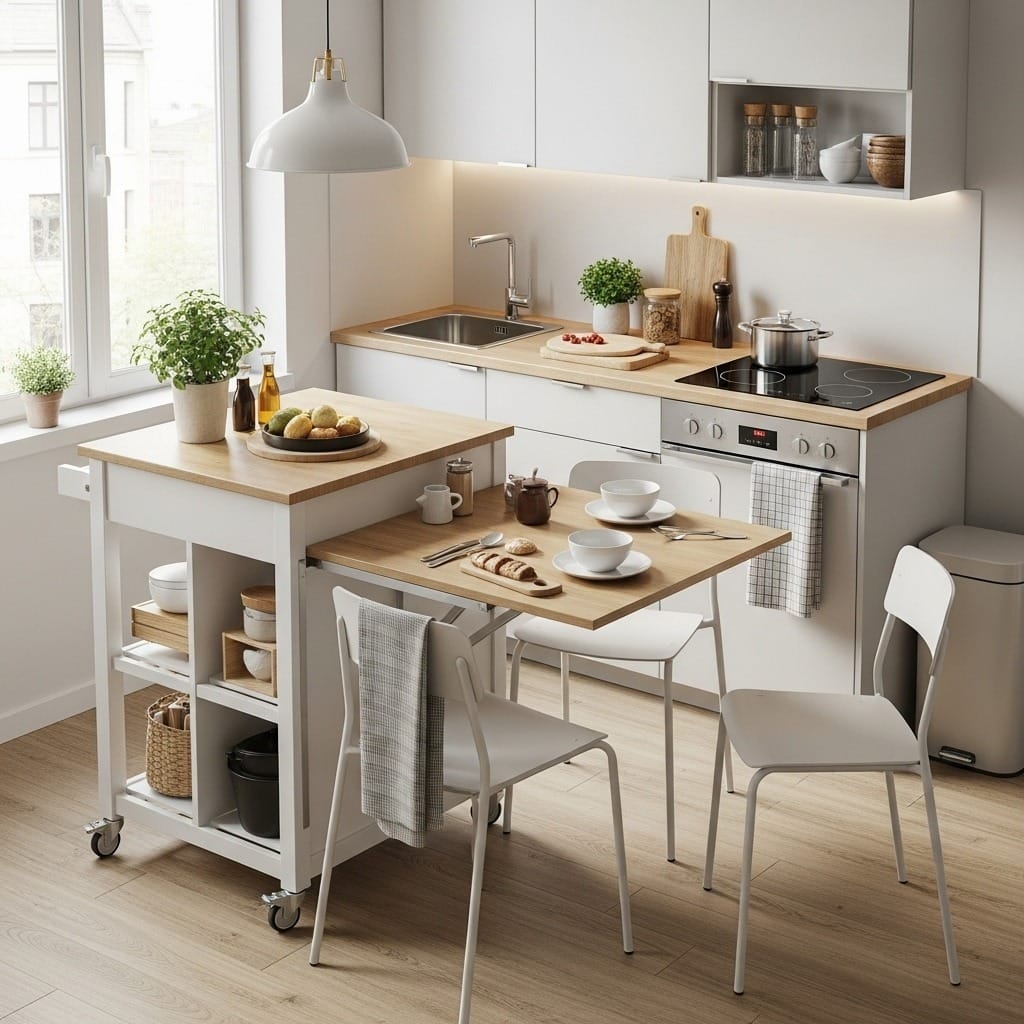
Your compact kitchen-dining layout needs to adapt to various scenarios: weekday breakfast rush, weekend cooking projects, dinner parties. Build in flexibility so the space can morph as needed rather than remaining static.
Nesting tables or stackable stools can be pulled out when extra seating is required, then tucked away when not in use. This approach borrows from small living room tips where furniture needs to work harder in limited space.
A fold-down prep surface attached to a wall or cabinet provides extra workspace during big cooking sessions without permanently reducing your floor space. When not needed, it becomes nearly invisible.
Consider your kitchen’s multiple roles. If it also functions as a homework spot or laptop workspace, ensure adequate surface area and electrical outlets. The dining table might serve as your desk during the day, so keep that in mind when selecting furniture height and comfort.
Common Mistakes to Avoid
Oversized furniture is the fastest way to ruin an efficient kitchen layout. That gorgeous dining table might look perfect in the showroom, but if it doesn’t leave adequate clearance in your actual space, it’s the wrong choice. Measure twice, buy once – and factor in chair pull-out space too.
Blocking natural light sources makes any small space feel smaller. Resist the urge to put tall cabinets or a large hutch in front of windows. If window placement limits your options, use sheer curtains or leave windows bare to maximize light penetration.
Cluttered counters sabotage even the best-designed layouts. In compact spaces, visual clutter creates stress and makes the area feel chaotic. Adopt a clear counter policy, storing appliances and utensils in cabinets rather than leaving everything out.
Ignoring the ceiling is a missed opportunity. Hanging pot racks, wine glass holders, or decorative elements draw the eye upward and emphasize height, which counteracts the limited floor space. Just ensure hanging items don’t obstruct sightlines or become head hazards.
Final Touches That Make It Feel Intentional
Cohesive hardware throughout creates polish. Matching cabinet pulls and drawer handles with your light fixtures ties the design together. This attention to detail signals intentional design rather than haphazard furniture placement.
Define the dining zone with a statement light fixture or piece of artwork. This creates a focal point that says “this is the eating area” without physical barriers. A dining table centerpiece also helps establish the space’s purpose.
Incorporate natural elements like potted herbs on the windowsill or a small vase of fresh flowers on the table. These organic touches soften hard surfaces and make the compact space feel lived-in and welcoming rather than purely functional.
Personal touches matter. Family photos, a favorite cookbook displayed on a stand, or colorful dish towels reflect your personality and make the space uniquely yours. The goal isn’t just an efficient layout – it’s creating a compact kitchen-dining area where you actually want to spend time.
Your small kitchen-dining space has more potential than you might think. With thoughtful planning focused on how you actually use the space, you can create a layout that feels open, organized, and genuinely enjoyable to live with every single day.

Sanjai creates easy, affordable home decor ideas that anyone can try. Through simple tips and curated finds, he helps you style rooms you’ll love coming home to.