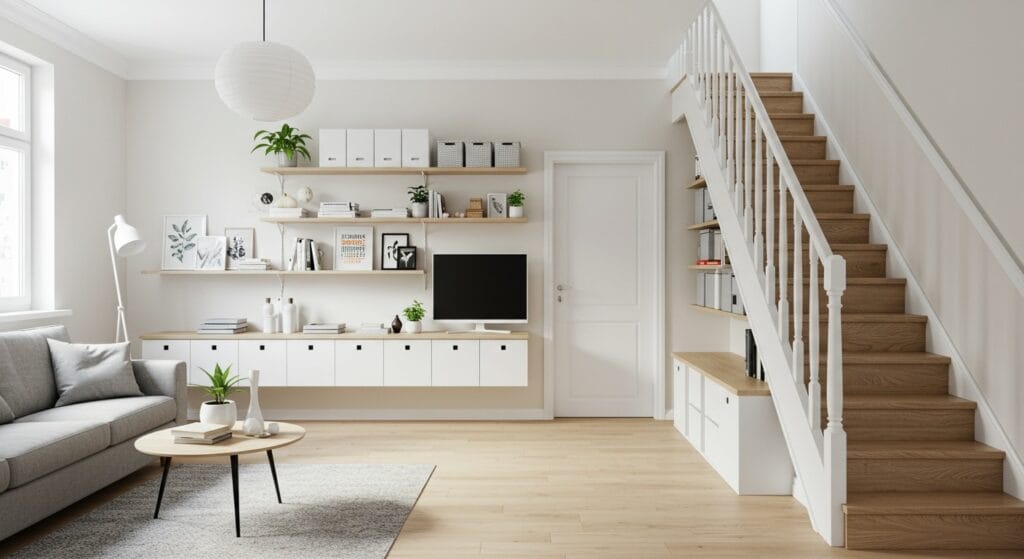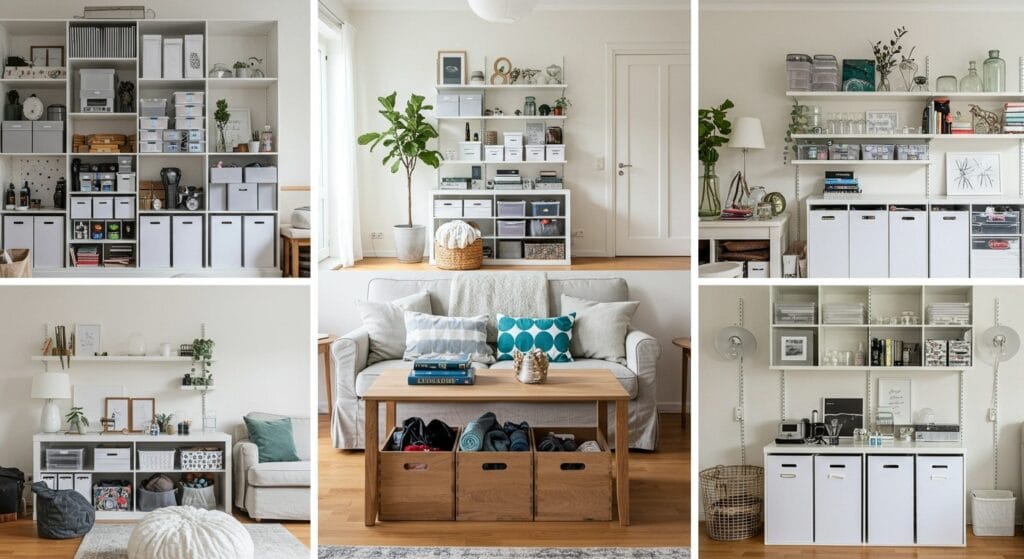
You know that feeling when you finally organize one room, only to realize the clutter just migrated somewhere else? Maybe it’s the kitchen junk drawer overflowing into the pantry, or the bedroom closet chaos spilling into the hallway. The problem isn’t that you lack storage. It’s that you’re organizing in isolation instead of thinking about your entire home as one connected system.
Building a whole-home storage plan isn’t about buying matching bins or following someone else’s minimalist fantasy. It’s about creating a realistic framework that works with how your household actually functions. This approach considers traffic patterns, daily habits, and yes, even those moments when you’re too tired to put things away properly.
In this guide, you’ll discover how to map out storage zones by room, develop decluttering systems that stick, and maintain long-term organization without constant upkeep. Whether you live in a sprawling house or a compact apartment, these strategies adapt to your space and lifestyle.
Why Most Storage Plans Fall Apart
Most people approach home organization like a sprint when it really needs to be a marathon. You spend a weekend purging closets, buy a dozen storage containers, and feel accomplished. Then three months later, everything’s a mess again. Sound familiar?
The issue is that traditional organizing advice treats storage as a one-time project rather than an ongoing home organization strategy. Without considering how items flow through your home or where they naturally accumulate, you’re just rearranging deck chairs. Those storage hacks for home organization only work when they’re part of a bigger picture.
Real life is messy. Kids drop backpacks wherever they enter. Mail piles up on counters. Seasonal items rotate in and out. A sustainable storage plan accounts for these realities instead of fighting against them.
Step 1: Audit Your Entire Home’s Storage Needs
Start by walking through your home with a notepad and fresh eyes. You’re not organizing yet, just observing. Which surfaces accumulate clutter? Where do things get dumped when you’re in a hurry? What items don’t have a logical home?
Pay attention to your frustration points. If you’re constantly searching for scissors or charging cables, that’s a sign those items need a designated spot. Notice which rooms get messiest fastest – those are your high-traffic zones that need the most thoughtful storage solutions.
Create a simple list for each room noting what needs to be stored there and what’s currently living there that shouldn’t be. This step reveals patterns you might not have noticed before, like how bathroom products somehow multiply in the kitchen pantry or how office supplies migrate throughout the house.
Step 2: Establish Primary Storage Zones by Room
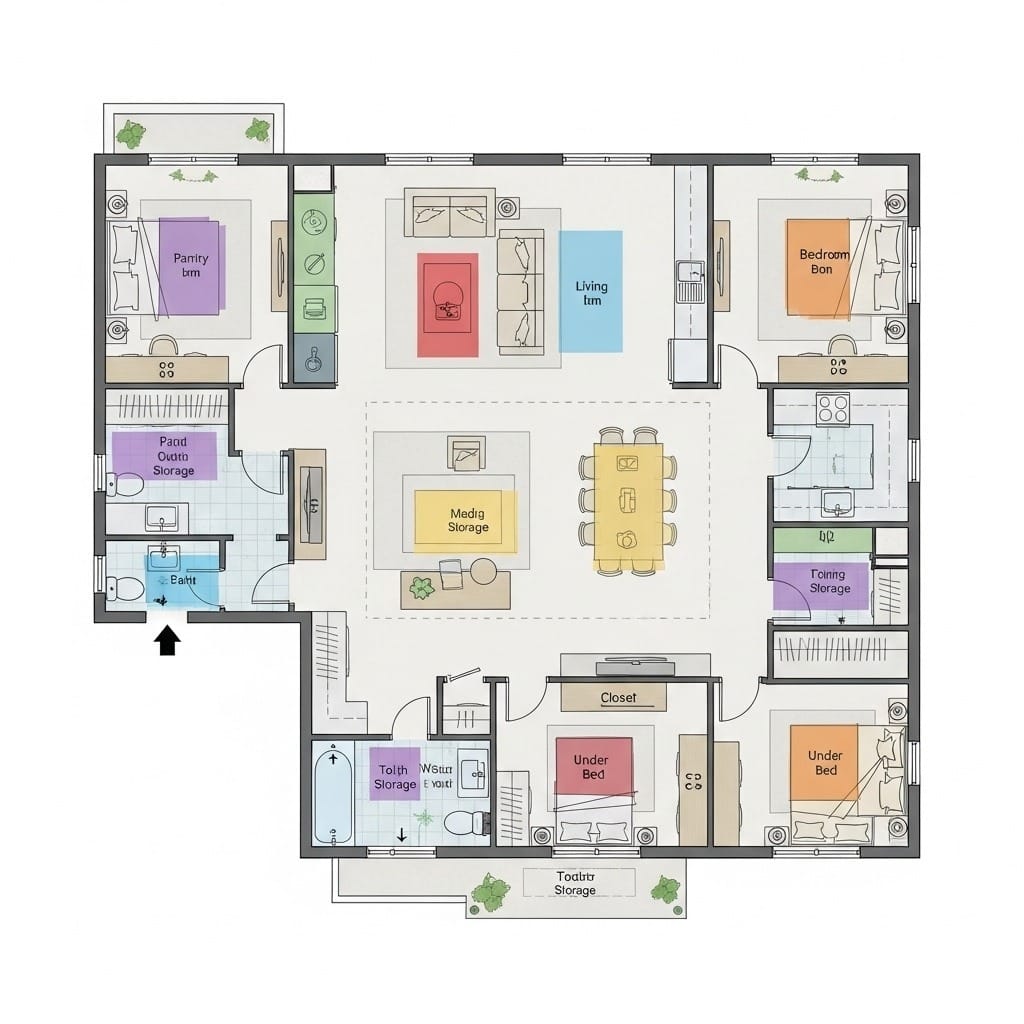
Every room should have a clear primary purpose that dictates its storage priorities. Your living room might be for relaxation and entertainment, which means storage should support those activities, not become a catch-all for everyone’s stuff.
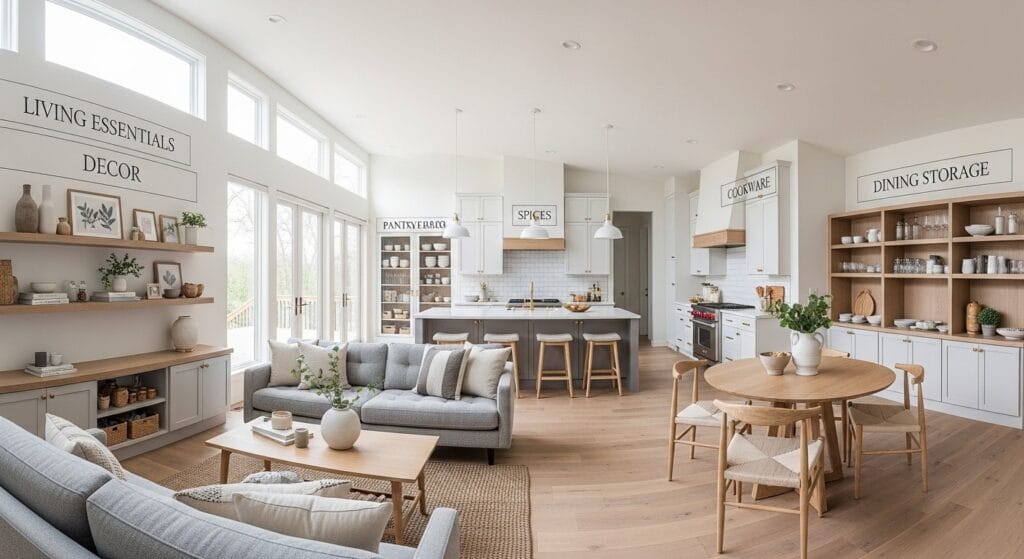
Think of storage zones like neighborhoods in a city. The bedroom zone handles clothes, linens, and personal items. The kitchen zone manages food, cooking equipment, and meal prep supplies. When items live in their proper zones, putting things away becomes intuitive rather than a chore.
For rooms with multiple functions, create sub-zones. An open concept living space might have a reading nook zone, a TV watching zone, and a kids’ play zone, each with its own contained storage. This prevents the dreaded “everything everywhere all at once” problem.
Step 3: Apply the “First Point of Entry” Rule
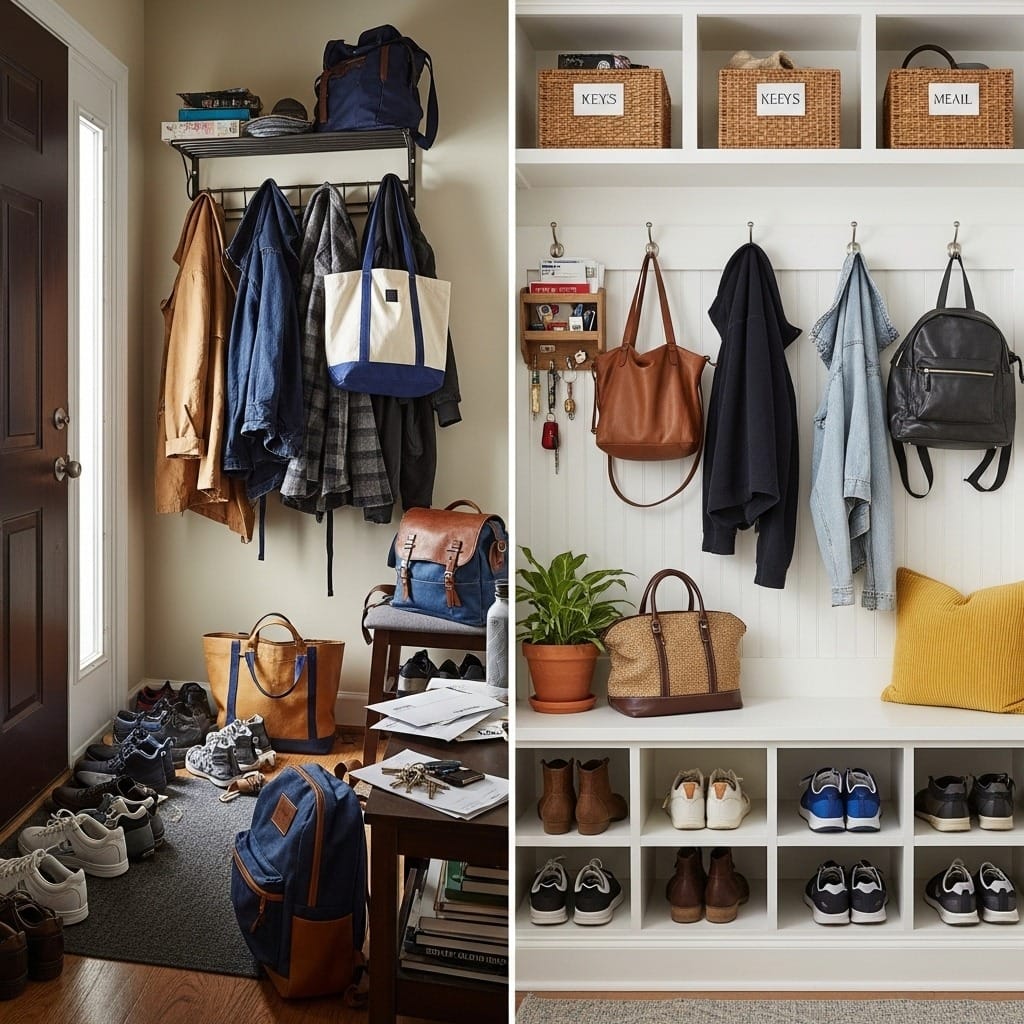
Here’s a game-changing concept: store items at their first point of entry into your life and home. Mail should have a system right where you walk in, not on the kitchen counter. Groceries need a clear path from door to kitchen storage without detours.
This principle works because it matches human behavior instead of fighting it. You’re more likely to hang up your coat if there’s a hook right by the door than if you have to walk upstairs to a closet. Those extra steps create friction that leads to clutter.
Apply this thinking to digital clutter too. Create a charging station where you naturally put down your phone. Set up a mudroom bench with storage for shoes and bags right where people enter. The easier you make the right choice, the more likely it’ll become a habit.
Step 4: Design Room-Specific Storage Strategies
Living Room Storage
Your living room probably handles more activities than you realize. TV remotes, reading materials, throw blankets, devices, and random stuff that lands on the coffee table all need homes. The key is making storage invisible or attractive enough to leave out.
Invest in furniture that works double-duty. Coffee tables with storage underneath, ottomans with hidden compartments, and media consoles with closed cabinets all hide clutter while serving their primary function. Floating shelves can display pretty things while keeping surfaces clear.
For families with kids, designate one basket or bin for toys that lives in the living room. When it’s full, items rotate out. This single-container rule prevents toy takeover while still allowing play in shared spaces. According to the National Association of Productivity and Organizing Professionals, limiting visible storage options actually improves the likelihood of maintaining organization.
Bedroom Storage Systems
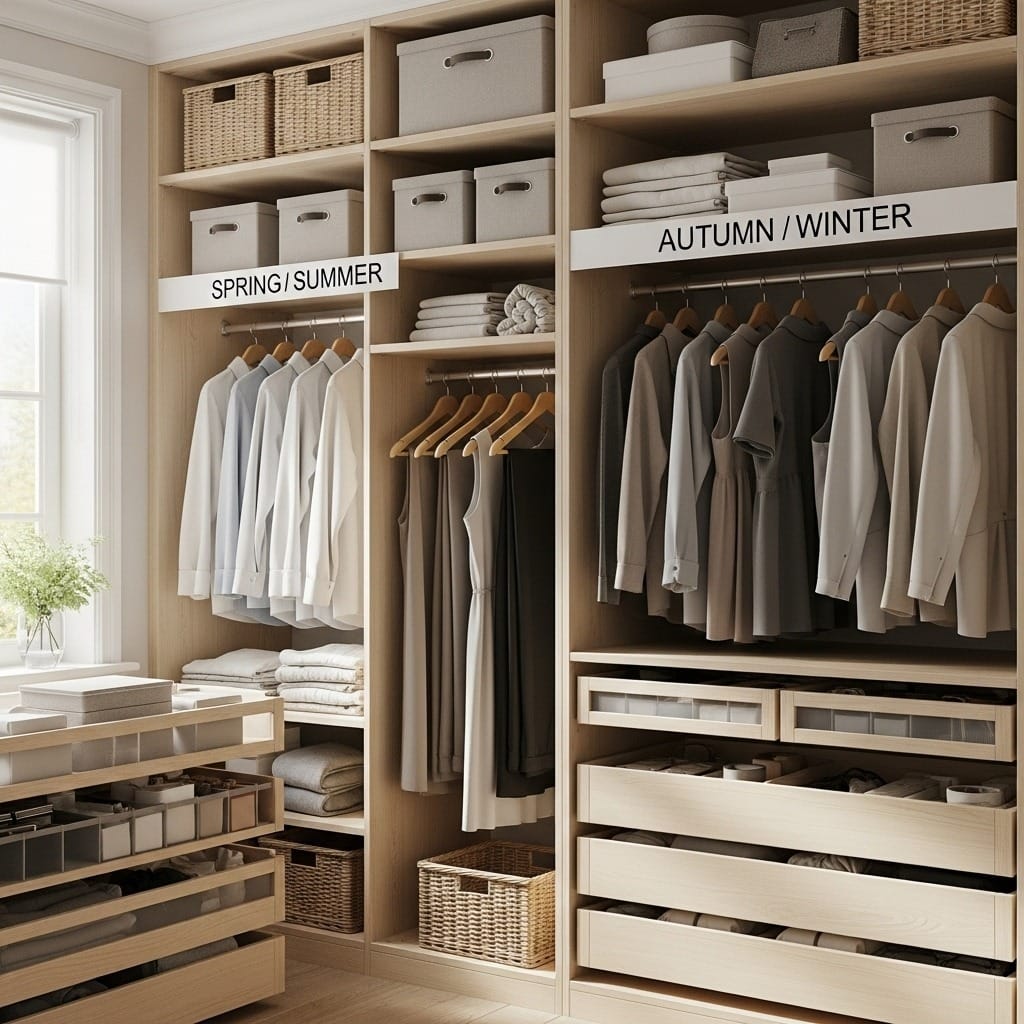
Bedrooms accumulate clothes, accessories, linens, and personal items at an alarming rate. Without a clear system, surfaces become dumping grounds and closets become black holes. Start with small bedroom storage solutions that maximize vertical space.
Use the one-in-one-out rule for clothing. When something new comes in, something old goes out. This isn’t about deprivation – it’s about maintaining equilibrium. Keep a donation bag in your closet that’s always ready to go when it fills up.
Separate daily-wear clothes from occasional-wear items. Your most-used pieces should be easiest to access, while seasonal or formal wear can live in under-bed storage boxes or higher shelves. This tiered approach makes getting dressed less overwhelming.
Kitchen and Pantry Organization
The kitchen is ground zero for clutter because it’s used multiple times daily by everyone in the household. Your home organization strategy needs to be bulletproof here. Start by grouping similar items – all baking supplies together, all breakfast items in one zone, all snacks accessible to kids.
The kitchen cabinet organization should reflect your cooking patterns. Things you use daily deserve prime real estate at eye level. Once-a-month items can live on top shelves or in the back. This isn’t revolutionary, but most people store items based on where they fit rather than how often they’re used.
Your pantry needs a decluttering system that works even when you’re grocery shopping in a hurry. Clear containers help you see what you have, but labels are what make the system stick. When everyone in the house knows where pasta goes, it’s more likely to end up there.
Bathroom Storage Solutions
Bathrooms present unique storage challenges because they’re often small but need to hold a surprising amount of stuff. Towels, toiletries, cleaning supplies, and personal care items all compete for limited space. The solution is ruthless editing plus smart vertical storage.
Most people own 3-5 times more bathroom products than they actually use. Be honest about what’s expired, what you bought but never loved, and what’s just taking up space. Then organize what remains using bathroom drawer organizers and floating shelves to maximize every inch.
Create a one-week rule: if you haven’t reached for it in a week, it doesn’t need to live on your counter. Those products can move to under-sink storage or a linen closet. This keeps your daily routine streamlined while still having backup supplies accessible.
Step 5: Create Transition Zones for Long-Term Organization
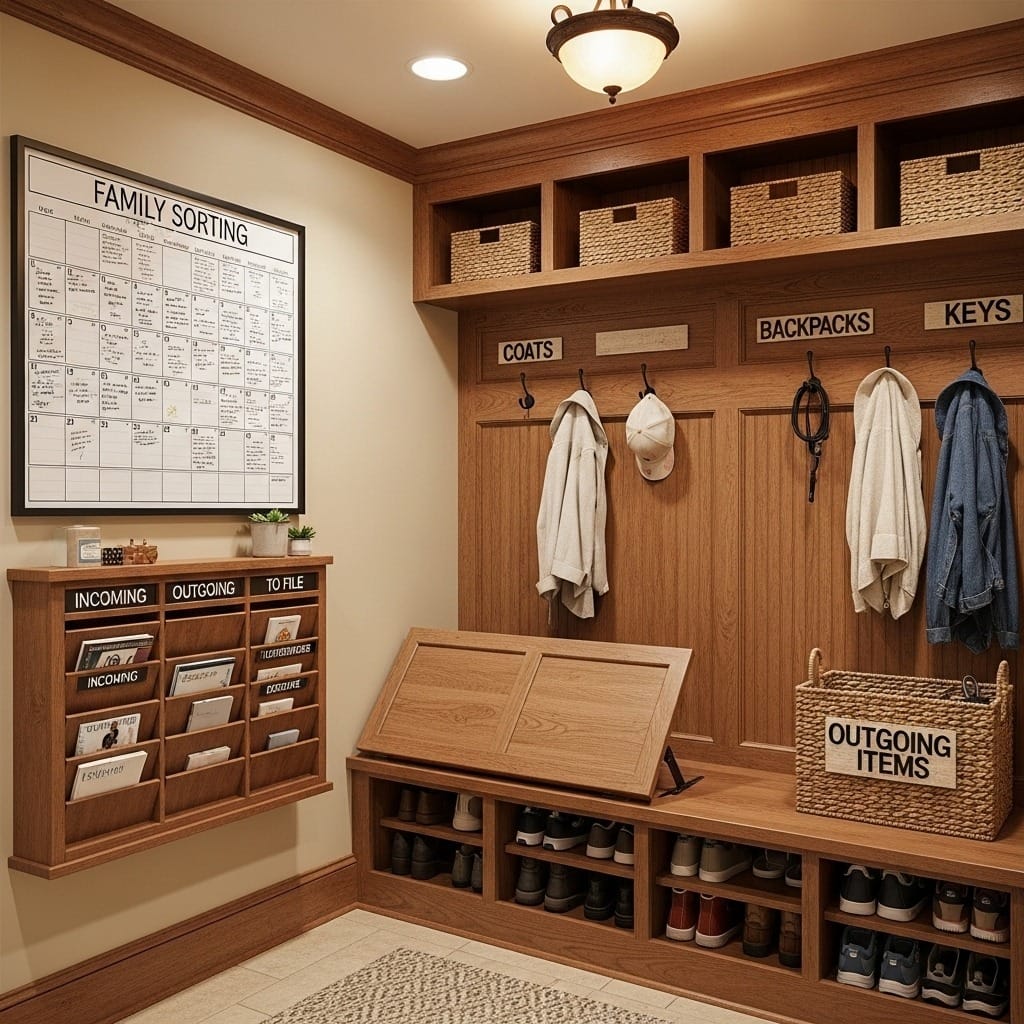
Transition zones are the secret weapon in a whole-home storage plan. These are designated spots where items can temporarily land before moving to their permanent homes. Without these buffer zones, clutter accumulates on counters, tables, and floors.
Set up a “to be put away” basket in high-traffic areas. This isn’t permission for permanent mess – it’s acknowledgment that sometimes you need 24 hours before dealing with something properly. Once daily, empty these baskets and return items to their zones.
Mudrooms or entryways function as transition zones between outside and inside. A simple system with hooks, a bench, and a few baskets prevents the entire home from becoming a dumping ground for shoes, bags, and outdoor gear. Even apartment dwellers can create a mini version of this near their door.
Step 6: Implement Maintenance Routines That Actually Work
This is where most organization plans fall apart. You can’t maintain a whole-home storage plan without regular maintenance, but it doesn’t need to be overwhelming. The key is building tiny habits into your existing routine rather than adding marathon organizing sessions.
Try the “reset” method: take 10 minutes each evening to return items to their proper zones. Set a timer, put on music or a podcast, and just move through your space. You’ll be amazed how much you can accomplish in 10 focused minutes when you’re not making decisions about where things should go – you already decided that when you created your storage zones.
Schedule monthly mini-audits of problem areas. Maybe it’s the small closet organization system that needs tweaking or the junk drawer that’s overflowing again. Catching issues early prevents them from becoming massive projects.
Common Storage Planning Mistakes to Avoid
Buying storage containers before decluttering is mistake number one. You can’t know what storage you need until you know what you’re keeping. Those beautiful matching bins might not fit your space or your stuff, leaving you with more clutter in the form of unused organizers.
Another trap is copying someone else’s system without adapting it to your life. Pinterest-perfect pantries with everything decanted into matching jars look amazing, but if you’re not the type to maintain that level of detail, it’ll frustrate you. Choose decluttering systems that match your actual habits, not your aspirational ones.
Failing to involve everyone in the household dooms your plan from the start. If you’re the only one who knows where things go, you’ll be the only one putting things away. Make sure storage solutions are intuitive enough that a house guest could figure them out. Label liberally, especially in shared spaces.
Adapting Your Plan for Different Home Sizes
Small homes and apartments require a different approach to a whole-home storage plan. Every piece of furniture should earn its place by providing storage in addition to its primary function. Beds with drawers underneath, dining tables with leaves that fold away, and walls covered in shelving all maximize limited square footage.
Vertical storage becomes crucial when floor space is limited. Look up – most rooms have unused wall space above eye level that could hold seasonal items, less-used equipment, or archived paperwork. Floating shelves in the kitchen or bathroom create storage without eating into room footprint.
Larger homes have the opposite challenge: too much space can enable clutter accumulation and make storage zones feel disconnected. The solution is treating each floor or wing as its own mini-home with complete storage systems. This prevents the “stuff migration” where items travel between floors but never find a permanent home.
Digital Tools and Physical Systems Working Together
A truly modern home organization strategy blends physical storage with digital tracking. Use your phone to photograph the contents of storage bins, then attach the photos to digital labels. When you’re looking for holiday decorations or camping gear, you’ll know exactly which bin to grab.
Shared digital shopping lists prevent duplicate purchases that create clutter. When someone uses the last of something, it immediately goes on the list. This works for everything from pantry staples to bathroom supplies to office materials.
Consider using a simple home inventory app for items with expiration dates, warranties, or maintenance schedules. This keeps you on top of replacing water filters, rotating seasonal clothes, or using food before it spoils. The digital system supports the physical organization rather than replacing it.
Seasonal Adjustments and Storage Rotation
Your storage plan needs to flex with the seasons. Winter coats and boots need prime real estate in January but can move to back-of-closet storage in June. This rotation prevents overcrowding and makes accessing current-season items easier.
Create a twice-yearly swap schedule. When you change your clocks for daylight saving time, also rotate seasonal storage. This regular rhythm ensures nothing lives in prime storage space longer than necessary. Pack away items in clearly labeled bins that stack in garage storage solutions or closet top shelves.
Holiday decorations deserve their own category. Instead of spreading them throughout the house, centralize them in one zone with clear labels by holiday. This makes decorating and packing away much faster. Some families even photograph their holiday setups before taking them down as a guide for next year.
When to Upgrade Your Storage Infrastructure
Sometimes the issue isn’t your system – it’s your actual storage infrastructure. If you’re constantly fighting with a closet that has one hanging rod and nothing else, adding shelves or a closet organization kit might be the real solution. Small investments in better infrastructure pay dividends in easier maintenance.
Evaluate whether your storage furniture is pulling its weight. That antique dresser might be beautiful, but if the drawers don’t open smoothly and you avoid using them, it’s creating problems rather than solving them. Form and function both matter in a storage plan that survives real life.
Built-in storage solutions like floating pantry shelves or under-sink storage systems often work better than freestanding furniture because they’re custom-fitted to your space. Even renters can add removable solutions that make a dramatic difference without requiring permission from landlords.
Teaching Kids to Use the Storage System
A family storage plan only works if everyone participates, including kids. The trick is making it simple enough that putting things away is easier than leaving them out. Low hooks they can reach, bins they can open, and labels with pictures all remove barriers to participation.
Assign each child ownership of specific spaces – their bedroom wardrobe, a shelf in a shared closet, or a toy bin in the living room. When they have clear boundaries, responsibility becomes concrete rather than abstract. Regular check-ins help them maintain their zones without nagging.
Build organizing into existing routines. Toys get cleaned up before dinner, backpacks get unpacked right after school, and dirty clothes go in the hamper before bedtime. These micro-habits prevent massive cleanup sessions and teach valuable life skills.
Creating a whole-home storage plan that survives real life isn’t about perfection. It’s about building a flexible framework that adapts to your changing needs while maintaining basic order. Some weeks will be messier than others, and that’s okay.
The difference between functional organization and Pinterest fantasy is sustainability. If your system requires daily intensive maintenance or looks pristine but stresses you out, it’s not working. The best storage plan is one you barely notice because everything has a logical place and returns there naturally.
Start with one room or even one zone this week. Implement the strategies that make sense for your household. As you see results, expand to the next area. Before you know it, you’ll have a cohesive system that actually survives the chaos of daily life – and that’s when you’ll realize that home organization isn’t about controlling everything. It’s about creating space for what matters.

Sanjai creates easy, affordable home decor ideas that anyone can try. Through simple tips and curated finds, he helps you style rooms you’ll love coming home to.