
Have you ever walked into a spa and wondered why everything feels so organized, so effortless? The secret isn’t just about square footage. It’s about how space is divided and used.
Most of us think bathroom storage means cramming products under the sink or stacking towels wherever they fit. But there’s a smarter approach that professional designers use – zoning. Whether you’re working with a cramped powder room or a generous master bath, understanding how to create functional zones changes everything. This bathroom layout infographic breaks down exactly how to carve out purposeful areas that make your morning routine smoother and your space feel twice as big.
What if your tiny bathroom could function like a luxury spa? Let’s map it out.
Understanding Bathroom Zones: The Foundation of Smart Storage
Think of your bathroom as a collection of activity centers rather than one big room. Each task you perform – washing your face, showering, getting dressed – deserves its own designated area with storage that supports it.
Professional designers typically identify four core zones in any bathroom: the wet zone (shower/tub area), the vanity zone (sink and mirror), the grooming zone (often overlaps with vanity), and the storage zone (linen closet or built-ins). In small bathroom style spaces, these zones might overlap considerably, but they should still exist conceptually. The difference between a chaotic bathroom and a calm one often comes down to how clearly these boundaries are defined.

A well-planned spa-like bathroom decor doesn’t happen by accident. It’s the result of intentional zoning that considers traffic flow, moisture levels, and daily habits. When you understand which items belong in which zone, organization becomes almost automatic.
Small Bathroom Storage Ideas: Maximizing Every Inch
Tiny bathrooms demand creative thinking. The trick isn’t finding more space – it’s using vertical surfaces and awkward corners that usually go ignored.
Start by looking up. That wall space above your toilet? Prime real estate for floating shelves or a compact cabinet. The back of your bathroom door can hold towel bars, hooks, or an over-the-door organizer for hair tools. Even the inside of cabinet doors can be fitted with small baskets or magnetic strips for tweezers and nail clippers. These small bathroom storage ideas transform overlooked areas into functional zones without eating up floor space.
Consider recessed storage options if you’re renovating. A recessed medicine cabinet sits flush with the wall instead of protruding into the room. Shower niches carved between wall studs provide shower product storage without bulky caddies. These built-in solutions feel custom and high-end while solving real storage problems. When working with limited square footage, every decision should serve double duty.
Corner shelves deserve special mention here. That triangular space where two walls meet is often wasted, but corner units – whether freestanding towers or wall-mounted shelves – can hold surprising amounts of toiletries and linens. The key is choosing narrow, vertical storage that doesn’t block movement through the space.
Spa Bathroom Layout: Creating Luxury Through Thoughtful Design
What makes a spa bathroom feel so different from a basic functional one? It’s not always about size or expensive fixtures. The magic lies in creating visual calm and easy access to everything you need.
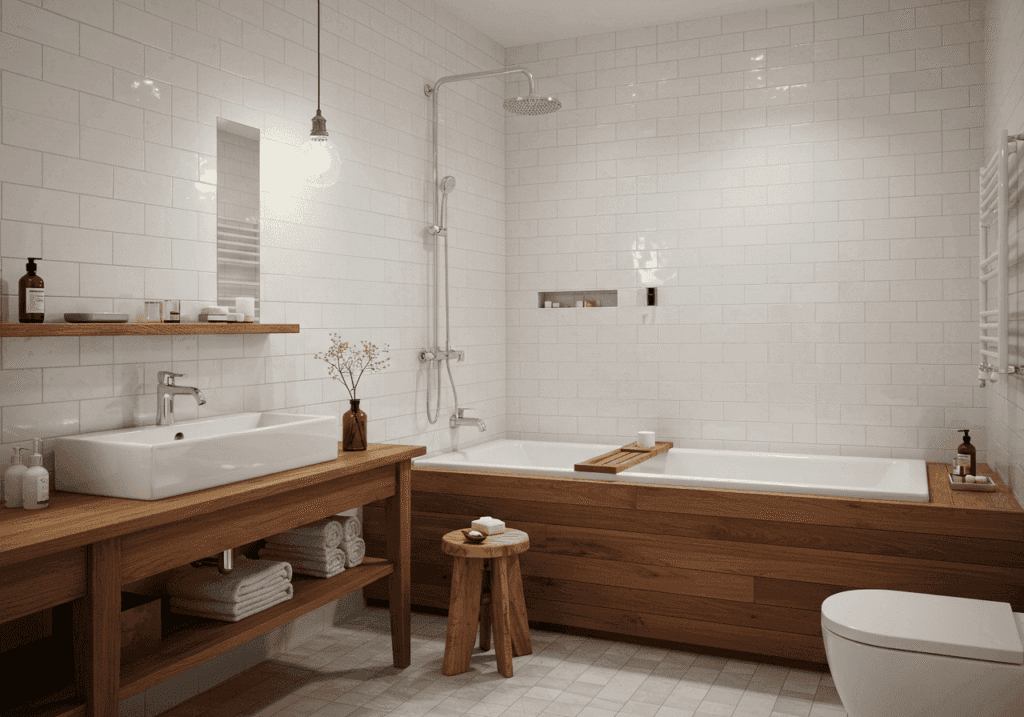
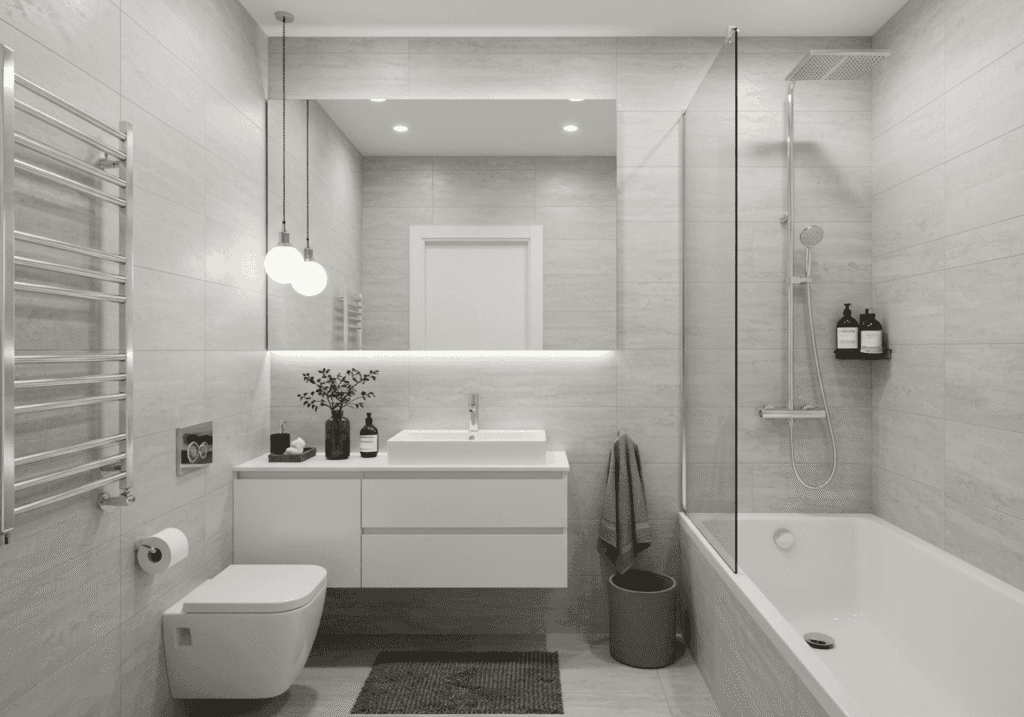
A true spa inspired bathroom decor ideas starts with symmetry and balance. If possible, center your vanity on the longest wall with matching storage on either side. This creates visual harmony that feels deliberate and expensive. Keep countertops nearly clear – a bathroom countertop tray can corral your daily essentials in one designated spot while everything else lives behind closed doors.
Lighting plays a bigger role than most people realize. Layered lighting with dimmers lets you adjust the mood from bright and functional during morning routines to soft and relaxing for evening baths. Installing sconces on either side of the mirror eliminates shadows and mimics professional makeup lighting. This attention to ambiance transforms a regular bathroom into a retreat space.
Material choices matter too. Natural elements like wood accents, stone surfaces, and plants bring that organic spa feeling home. A small wooden stool can serve as both seating and display space for rolled towels. Even in small bathroom tile ideas, choosing calming neutral tones over busy patterns keeps the space feeling serene rather than cluttered.
The Bathroom Zoning Guide: Where Everything Should Live

Let’s get specific about what belongs where. Your most-used items should live in the most accessible spots, while occasional-use products can occupy harder-to-reach storage.
The Vanity Zone is your daily command center. This area should house your toothbrush, toothpaste, face wash, moisturizer, and any products used morning and night. A bathroom drawer organizer keeps these items from becoming a jumbled mess. Store makeup and hair products here too if you style yourself at the vanity. The goal is having everything for your routine within arm’s reach without cluttering the counter.
The Shower Zone needs waterproof storage that drains well. Corner caddies, tension pole shelves, or built-in niches work best. Keep only active products here – body wash, shampoo, conditioner, shaving supplies. Everything else (backup bottles, special occasion products) belongs in the storage zone. This prevents the cluttered look of 12 half-empty bottles lining your tub edge.
The Linen Zone typically lives in a closet or tall cabinet and holds clean towels, washcloths, hand towels, and bath mats. Many people also store extra toilet paper, tissues, and cleaning supplies here. If you lack a dedicated linen closet, a floating bathroom vanity with drawers underneath or a narrow tower cabinet can serve the same purpose. The National Kitchen and Bath Association recommends storing only items used in that specific room to maintain organization.
According to a 2023 Houzz bathroom trends study, 45% of homeowners remodeling their bathrooms cited better storage and organization as their primary goal – even above aesthetic improvements.
Bathroom Organization Tips for Different Layout Types
Not all bathrooms are created equal. A narrow galley bathroom needs different solutions than a square L-shaped layout, and a jack-and-jill bathroom shared between bedrooms presents unique zoning challenges.
For Jack-and-Jill Bathrooms: Create distinct personal zones for each user. If possible, install double sinks with separate storage underneath. Use drawer dividers to keep individual items separated even in shared spaces. Consider color-coding towels or storage bins so each person knows their designated areas. Clear boundaries prevent the “whose stuff is this?” confusion that creates clutter.
For Powder Rooms: These small spaces serve guests, so focus on essentials only. A wall-mounted bathroom towel rack with hand towels, a small shelf or basket with extra toilet paper, and perhaps a decorative tray on the counter for hand soap and lotion. Everything else is unnecessary and makes the tiny space feel cramped. Check out these bathroom ideas for more inspiration on styling smaller spaces.
For Master Bathrooms: You have room to create specialized zones. Consider a separate grooming station with a magnifying mirror and good lighting for detailed tasks. A bench or seating area provides a place to sit while drying off or applying lotion. If space allows, designate a section for laundry hampers so dirty clothes don’t pile up elsewhere. The luxury of a larger bathroom is having a place for everything without compromise.
For Narrow Bathrooms: The challenge here is traffic flow. Keep the center pathway clear by using wall-mounted storage exclusively. Bathroom waterproof floating shelves above the toilet or along empty walls provide storage without blocking movement. A sliding door instead of a swinging door can save precious inches that make the space feel less tight.
Putting Your Bathroom Layout Infographic Into Action
Now that you understand the theory, how do you actually implement these zoning principles in your specific bathroom? Start with an honest assessment of what you own and what you actually use.
Empty everything from your bathroom and sort items into categories: daily essentials, weekly use, occasional use, and expired/unwanted. Be ruthless here. That hotel lotion sample from 2019? Toss it. The hair product you tried once and hated? Donate it. Most people discover they’re storing far more than they need, which makes organization impossible no matter how many clever storage solutions they buy.
Next, sketch your bathroom layout and mark your zones based on existing fixtures. You can’t move the toilet or shower, so work with what you have. Identify where you have unused vertical space, awkward corners, or areas that could accommodate storage furniture. Take measurements before shopping for storage solutions – nothing’s worse than bringing home a cabinet that doesn’t fit.
Invest in matching storage containers for a cohesive look. Clear acrylic organizers work beautifully for bathroom organization tips because you can see contents at a glance. Label shelves or bins if multiple people share the space. The goal is creating systems so intuitive that maintaining them becomes effortless. When everything has a designated home in the appropriate zone, even kids can help keep things tidy.
Smart Storage Solutions for Every Budget
You don’t need a full bathroom remodel to implement better bathroom zoning and storage. Start with these affordable upgrades that make an immediate impact.
Under $50: Drawer dividers, stackable bins for under the sink, over-the-toilet shelf unit, adhesive hooks for robes and towels, a shower caddy that actually drains. These simple additions can transform existing storage spaces from chaotic to organized. Sometimes the right container is all that stands between mess and order.
$50-$200: A narrow rolling cart that fits beside the vanity or toilet, a medicine cabinet with mirrored front, floating shelves professionally mounted, a vanity tray or organizer system, upgraded towel bars or hooks. These mid-range investments add storage where none existed before while elevating the overall look of the space.
$200+: A custom-built vanity with drawers designed for your specific needs, built-in recessed shelving between wall studs, a linen tower cabinet, or a bathroom vanity makeover with soft-close drawers and built-in outlets. These bigger projects create permanent storage solutions that add value to your home. If you’re considering renovation, explore storage hacks for home organization to see what might work in other rooms too.
The best approach combines a few investments at different price points. Spend more on the pieces you’ll use daily and see constantly (like a quality vanity or medicine cabinet), and save on behind-the-scenes organizational tools that nobody sees but keep everything running smoothly.
Smart bathroom storage isn’t about forcing more stuff into a small space. It’s about creating logical zones where everything you need lives exactly where you need it. The difference between a stressful morning routine and a calm one often comes down to how well your bathroom supports your habits.
Whether you’re working with 25 square feet or 200, the principles remain the same: define your zones, eliminate what you don’t need, and store items near where they’re used. A bathroom layout infographic like the one we’ve discussed helps you see your space with fresh eyes and spot opportunities you’ve been missing.
Ready to transform your bathroom into a well-organized oasis? Start with one zone this weekend. Clear out your vanity drawers, add some dividers, and return only what you actually use. That small victory will motivate you to tackle the next zone, and before you know it, you’ll have the spa-like bathroom you’ve been dreaming about.

Sanjai creates easy, affordable home decor ideas that anyone can try. Through simple tips and curated finds, he helps you style rooms you’ll love coming home to.