Have you ever walked into your bedroom and felt like something was just… off? Maybe the bed feels crammed against the wall, or there’s an awkward gap you can’t figure out how to fill. The truth is, a well-designed bedroom isn’t about expensive furniture or trendy decor – it’s about creating a layout that actually supports better sleep and easier movement.
I’ve spent years studying how bedroom layouts affect our rest, and the difference between a thoughtfully arranged space and a haphazard one is striking. Your bedroom’s size doesn’t determine how well you’ll sleep, but how you arrange it absolutely does. Whether you’re working with a cozy 10×10 space or a spacious primary suite, this guide breaks down exactly how to create a sleep-friendly layout that works.
Think of your bedroom as a series of zones rather than just a place to put a bed. There’s the sleep zone (obviously), a dressing area, possibly a reading nook, and those tricky transitional spaces where you move between them. Getting these zones right makes all the difference between a room that feels restful and one that feels chaotic.
Understanding the Foundations of Sleep-Friendly Design
Before we jump into specific layouts, it’s worth understanding what actually makes a bedroom conducive to good sleep. It’s not just about aesthetics, though those matter too. The National Sleep Foundation emphasizes that bedroom environment significantly impacts sleep quality, including factors like layout, light control, and air circulation.
Your bed’s position is the single most important decision you’ll make. Feng shui practitioners and interior designers actually agree on this one – your bed should have a clear view of the door without being directly in line with it. This “command position” isn’t just ancient wisdom; it taps into our psychological need to feel secure while resting. I’ve noticed that beds placed with the headboard against a solid wall almost always feel more grounding than those floating in the middle of a room.
Walkways matter more than most people realize. You need at least 24 inches of clearance on each side of the bed for comfortable movement, though 30-36 inches is ideal if your space allows. Ever stubbed your toe in the dark trying to reach the bathroom? That’s usually a clearance problem, not a coordination issue.

Natural light and air flow should guide your furniture placement as much as measurements do. Windows aren’t just for views – they’re critical for regulating your circadian rhythm. Positioning your bed where you can control morning light (with curtains or blinds) while still benefiting from natural illumination during the day creates a healthier sleep environment. If you’re looking for ways to enhance other areas of your home with smart layouts, check out these beautiful living room layouts for inspiration on creating flow throughout your space.
Small Bedroom Layouts (10×10 to 10×12)
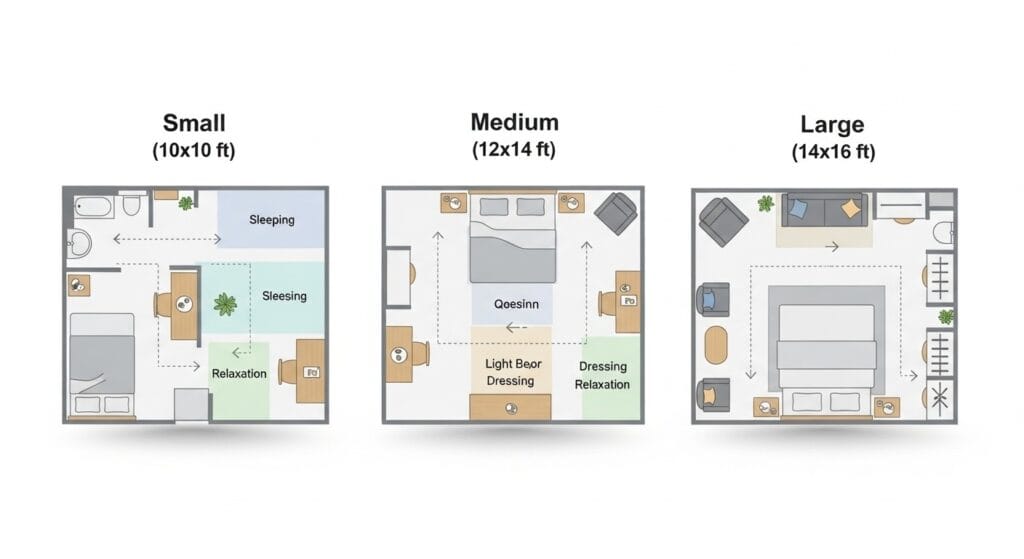
Small bedrooms get a bad reputation, but they can actually be incredibly cozy when designed thoughtfully. The key is embracing the intimacy of the space rather than fighting against it. A 10×10 bedroom gives you roughly 100 square feet to work with, which sounds limiting until you realize that’s plenty of space for everything you actually need.
The most functional small bedroom floor plan places a queen bed against the longest wall, leaving the door wall open for entry. This creates an immediate sense of spaciousness when you walk in. I prefer positioning the bed on the wall opposite the door when possible, with nightstands on either side – even if they’re small floating shelves rather than full tables. This symmetry tricks the eye into seeing more space than actually exists.
Vertical space becomes your best friend in compact bedrooms. Wall-mounted lighting frees up precious nightstand real estate, while tall dressers take up less floor space than wide ones. Under-bed storage isn’t just practical; it’s essential. Those few inches underneath can hold off-season clothing, extra bedding, or anything else that would otherwise clutter your limited square footage. For more space-saving solutions, these small bedroom storage solutions offer creative ways to maximize every inch.
Corner placement can work beautifully in small spaces if you’re working with a single sleeper or don’t need nightstands on both sides. Angling the bed across a corner creates an unexpected focal point and opens up floor space for a small chair or reading nook. Just make sure you can still change the sheets comfortably – there’s a fine line between cozy and claustrophobic.
Multi-functional furniture isn’t just a buzzword for small bedrooms; it’s survival. A storage ottoman serves as seating, a side table, and a place to stash extra blankets. A wall-mounted fold-down desk provides a workspace that disappears when you don’t need it. The goal is to create a cozy bedroom setup that doesn’t feel like you’re living in a storage unit. Want to see how others maximize tight quarters? These bedroom ideas showcase various approaches to small space challenges.
Medium Bedroom Layouts (12×14 to 13×15)

Medium-sized bedrooms hit that sweet spot where you have options without feeling overwhelmed by too much space. A 12×14 room gives you about 168 square feet – enough to include dedicated zones for sleeping, dressing, and even a small sitting area if you plan carefully. This is where bedroom layout ideas really start to open up.
The classic centered bed placement works beautifully in medium rooms. Positioning your bed centrally on the longest wall with matching nightstands creates instant symmetry and balance. You’ll have enough room for substantial nightstands (not just tiny shelves) and can even add bedside lamps that make a statement. This setup leaves the opposite wall perfect for a dresser or media console without the room feeling crowded.
A medium bedroom finally gives you space for that reading chair you’ve been dreaming about. Tuck it into a corner near a window with a small side table and a floor lamp, and you’ve created a genuine retreat within your retreat. This separate zone makes the bedroom feel more like a sanctuary and less like just a place to sleep. The key is defining these areas with rugs or subtle lighting changes rather than physical barriers.
Dressing areas become practical in medium bedrooms. You might place a full-length mirror on one wall with a small stool or ottoman nearby – suddenly you have a functional spot to get ready that doesn’t involve sitting on your bed. A dresser paired with a wall-mounted mirror creates a makeshift vanity without requiring a separate piece of furniture.
The foot of the bed is no longer wasted space at this size. A storage bench provides seating and a place to set tomorrow’s outfit or today’s decorative pillows. Some people prefer a small trunk or ottoman instead. Either way, this often-overlooked area becomes functional rather than just a path to walk around. If you’re working on other rooms simultaneously, these small living room tips share similar spatial planning principles.
Large Bedroom Layouts (14×16 and Up)
Large bedrooms present a different challenge – too much space can feel as awkward as too little if you don’t create intentional zones. A 14×16 bedroom gives you over 200 square feet, enough to essentially create multiple rooms within one space. The trick is making it feel cohesive rather than empty or disjointed.
Floating the bed away from walls becomes possible (and often preferable) in larger rooms. This creates a more luxurious, hotel-like feel while allowing you to define distinct areas behind or beside the bed. You might place the bed several feet from the wall with a console table behind it, creating a visual anchor and additional display space. This approach requires confidence, but the result feels sophisticated and intentional.
Sitting areas transition from luxury to necessity in large bedrooms. Two comfortable chairs with a small table between them, positioned near a window or fireplace, create a genuine conversation or reading space. This zone should feel separate from the sleeping area – different lighting, perhaps a different rug, definitely its own purpose. The goal is to make your bedroom feel like a suite rather than an oversized sleeping space.
Walk-in closets or dressing rooms often connect to large bedrooms, but even without that luxury, you can create a dedicated dressing zone. A full vanity with a proper chair, good lighting, and storage for makeup or accessories transforms getting ready from a chore to a pleasant ritual. If you’re fortunate enough to have the space, these cozy bedroom setup ideas show how to keep large rooms feeling warm rather than cavernous.

The challenge with large bedrooms is avoiding the “bowling alley” effect where furniture clings to walls and the center feels empty. Strategic rug placement helps define zones – one large rug under the bed extending to the nightstands, perhaps a separate smaller rug in the sitting area. Varying your furniture heights and profiles also helps fill vertical space without cluttering horizontal space.
Universal Sleep-Friendly Layout Principles
Regardless of your bedroom’s size, certain principles apply across the board. These aren’t just design preferences – they’re backed by sleep science and years of real-world testing in actual homes. Getting these fundamentals right matters more than following any specific floor plan.
Bed height affects both aesthetics and function. Your mattress should sit roughly 25 inches from the floor (including the frame), making it easy to get in and out while maintaining proportions that look right. Too high and you’re climbing into bed; too low and you’re struggling to stand up in the morning. This matters more as we age, but it’s worth getting right from the start.
Nightstand height should align with your mattress top or be slightly lower – never higher. This makes reaching for water, your phone, or a book natural rather than awkward. You need at least one hand’s width of surface space for essentials, though more is always better. Drawers beat open shelves for nightstands because you can hide clutter while keeping things accessible.
Distance from bed to dresser should be at least 36 inches to allow drawers to open fully with you standing in front of them. I’ve seen too many bedrooms where the dresser is positioned too close to the bed or the door, making it practically useless. Measure twice, arrange once – especially with larger pieces that are a pain to move.
Lighting layers create the flexibility a bedroom needs. Overhead lighting for cleaning and getting dressed, bedside lamps for reading, and perhaps accent lighting for ambiance – each serves a specific purpose. Dimmer switches are a small investment that pays huge dividends in creating a sleep-friendly environment. The bedroom lighting ideas article explores this concept in much more depth.
Temperature and air circulation often get ignored in layout planning, but they shouldn’t. Don’t block heating vents or air returns with furniture. If you’re using fans, position them where they’ll circulate air without blowing directly on the bed. These practical considerations might not look pretty on a floor plan, but they make the difference between sleeping well and tossing all night.
Color and Material Choices That Enhance Sleep
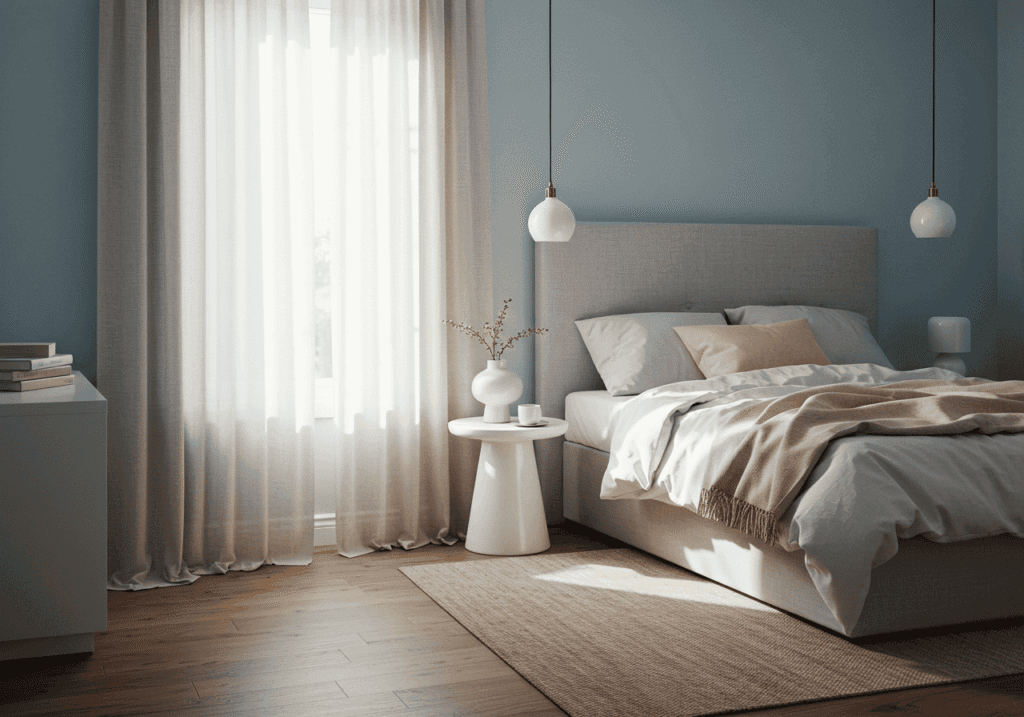
Layout matters, but so does what you’re looking at as you fall asleep. The colors and materials in your bedroom influence your nervous system more than you might realize. Cool tones like soft blues, gentle greens, and warm grays consistently perform best in sleep studies. They lower heart rate and blood pressure, signaling to your body that it’s time to wind down.

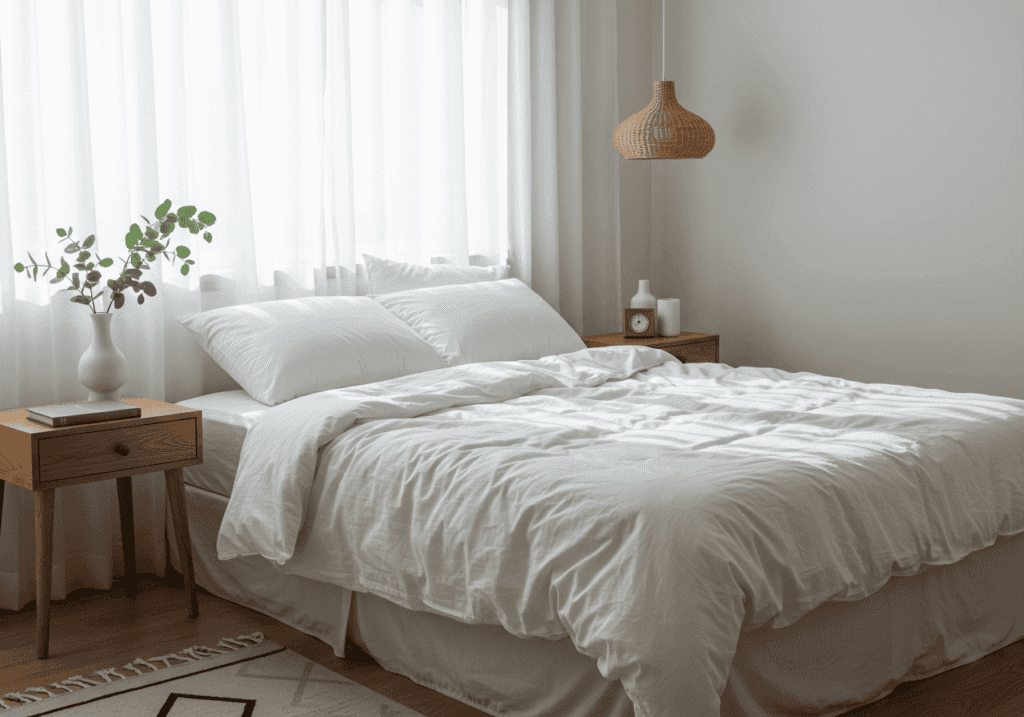
Texture adds depth without visual clutter. A chunky knit throw, linen bedding, a plush rug – these tactile elements make a room feel finished without adding visual noise. Too many patterns can feel stimulating, which is the opposite of what you want in a sleep space. I generally recommend keeping patterns to one or two elements maximum, with the rest of the room in solid colors or subtle textures.
Natural materials like wood, cotton, and wool create a calming atmosphere that synthetic materials struggle to match. There’s something about organic textures that feels inherently restful. A wooden bed frame, cotton sheets, a wool rug – these choices might cost more upfront but they age beautifully and maintain their calming effect over time. For specific color combination ideas that promote restful sleep, explore these bedroom color combinations that balance style with tranquility.
Reflective surfaces should be used sparingly in bedrooms. Large mirrors can make a space feel bigger, but too many reflective elements create visual stimulation that works against sleep. One well-placed mirror serves both function and form without overdoing it. Glass furniture and shiny metals might look sophisticated, but matte and natural finishes create a more restful environment.
Adapting Layouts for Specific Sleep Needs
Not everyone needs the same bedroom setup. If you share your space with a partner, you’ll need different considerations than someone sleeping alone. Couples benefit from nightstands on both sides of the bed (non-negotiable in my opinion) and enough space to move around independently. Mattress size matters too – a queen might work for some couples, but many sleep better with a king.
Light sleepers need extra attention to layout details. Position the bed as far from the door as possible to minimize disturbance from hallway noise or light. If you’re sensitive to morning light, place the bed on a wall perpendicular to windows rather than directly across from them. Blackout curtains help, but strategic positioning makes them work even better. These considerations align with creating a cozy minimal bedroom that prioritizes rest over visual complexity.
Shift workers or people with irregular schedules need bedrooms that support sleep at any time of day. This means excellent blackout capability, possibly white noise machines or sound dampening materials, and a layout that creates maximum distance from household activity areas. If your bedroom is near high-traffic areas of your home, consider a sound-absorbing rug and keep the bed positioned away from shared walls.
Medical considerations sometimes require layout modifications. If you need to get up frequently during the night, clear pathways become even more critical. Night lights positioned low to the floor provide guidance without fully waking you. If you use a CPAP machine or other medical equipment, plan for those outlets and storage needs in your initial layout rather than trying to work around them later.
Common Layout Mistakes to Avoid
Pushing all furniture against walls is probably the most common mistake I see, especially in medium and large bedrooms. This creates a “rental apartment” feel and wastes the opportunity to define distinct zones. Floating at least your bed (if space allows) immediately makes the room feel more designed and intentional.
Blocking natural light is another frequent error. Placing your tallest dresser or wardrobe in front of a window might seem like a space-saving solution, but it robs the room of its most valuable asset. Natural light is free, beautiful, and essential for healthy sleep cycles. Work with your windows, not against them.
Ignoring door swing patterns causes daily frustration. If your door hits furniture when it opens, you’ll either stop using that furniture or develop a constant low-level annoyance every time you enter the room. Measure door clearance before committing to any layout. Similarly, closet doors need adequate clearance – sliding doors solve many layout puzzles that hinged doors create.
Mismatched scale makes even expensive furniture look wrong. A king bed in a 10×10 room overwhelms the space, while a full bed in a 16×18 room looks lost and childish. Nightstands should be proportional to your bed – tiny tables beside a king bed look unbalanced, while oversized nightstands crowd a queen or full.
Forgetting about outlets is a modern layout killer. You need accessible outlets for bedside lamps, phone chargers, and possibly fans or other devices. Planning your furniture around existing outlets saves the hassle and hazard of extension cords snaking across floors. If you’re doing a more extensive renovation that includes layout changes, these small bathroom renovation ideas show how electrical planning influences the final design.
Creating a sleep-friendly bedroom layout isn’t about following rigid rules or copying magazine photos. It’s about understanding how space, light, and movement patterns affect your rest, then adapting those principles to your specific room and needs. The “perfect” layout is the one that helps you fall asleep easily, stay asleep comfortably, and wake up feeling actually rested.
Start with your bed position – everything else flows from that central decision. Consider your room’s size and shape, but don’t let limitations discourage you. Some of the most restful bedrooms I’ve seen have been small, quirky spaces where creative layout solutions made them feel special rather than cramped. Whether you’re working with a cozy 10×10 or a spacious suite, these principles apply.
Your bedroom should be your sanctuary, not just the room where you happen to sleep. Taking time to plan a thoughtful layout pays dividends every single night. Measure carefully, consider traffic flow, prioritize function over aesthetics (though you can absolutely have both), and create distinct zones that serve different purposes. The effort you invest in getting the layout right eliminates years of daily frustration.
What’s the one layout change you could make today that would improve your sleep tonight? Sometimes it’s as simple as moving a nightstand closer, angling your bed slightly differently, or clearing that clutter pile that’s been sitting in the corner for months. Small adjustments compound over time into significantly better rest. Start with one change, see how it feels, then keep refining until your bedroom truly supports the sleep you deserve.

Sanjai creates easy, affordable home decor ideas that anyone can try. Through simple tips and curated finds, he helps you style rooms you’ll love coming home to.