
Your coffee table is more than just a place to rest your morning cup – it’s the centerpiece that can instantly elevate your entire living room. After styling hundreds of spaces, I’ve discovered that the difference between a cluttered surface and a magazine-worthy display comes down to understanding a few key principles.
Whether you’re working with a sleek glass table or a rustic wooden piece, these styling secrets will transform your space from ordinary to extraordinary. The best part? You probably already have most of what you need hiding in other rooms.
1. Master the Power of Three
The rule of three isn’t just for photography – it’s your secret weapon for coffee table styling. Group items in odd numbers to create visual interest that feels natural and unforced.
Try combining a stack of books, a small plant, and a decorative object. This triangle formation guides the eye around your display and prevents that awkward “everything lined up in a row” look.
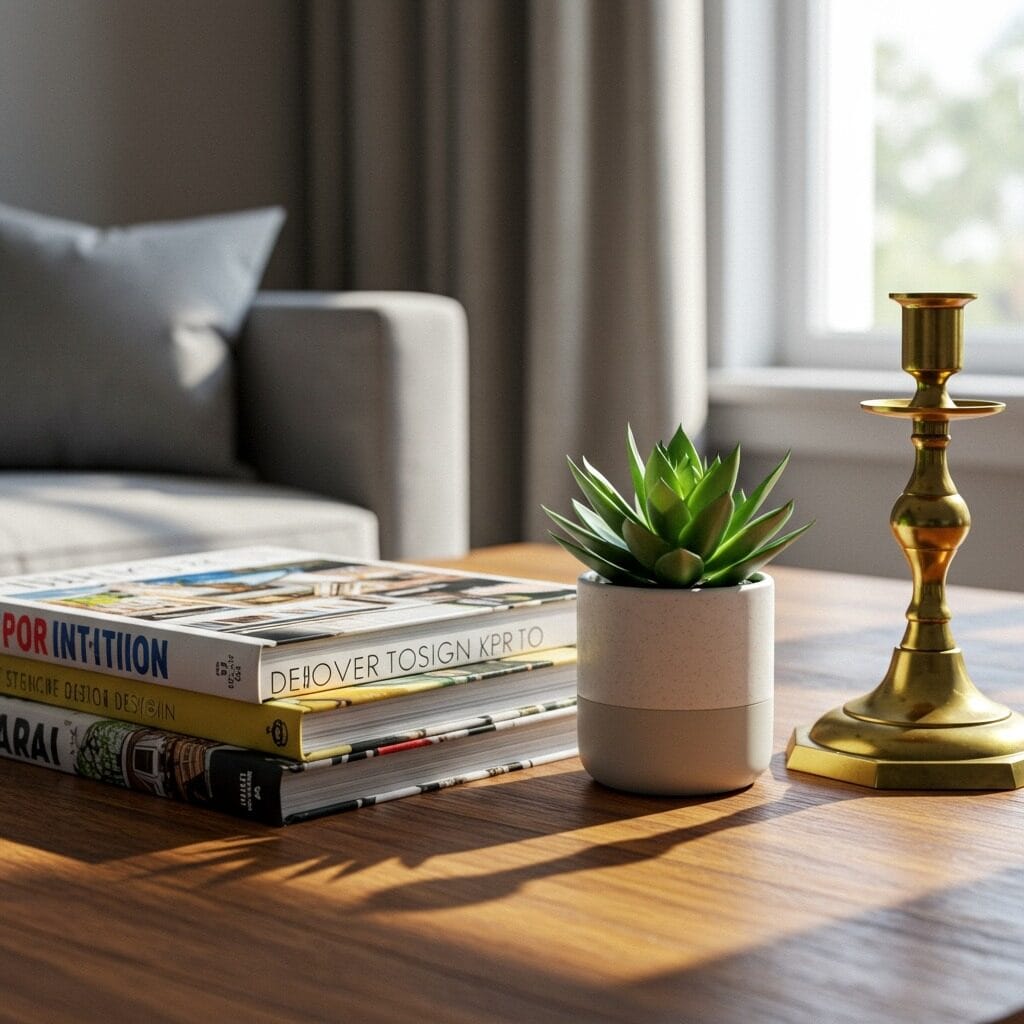
Don’t worry about making everything perfectly symmetrical. The slight imperfection actually makes the arrangement feel more lived-in and approachable. Sometimes I’ll intentionally angle a book or slightly offset an object to break up any rigid patterns.
2. Create Layers with Different Heights
Flat surfaces look boring, but varying heights create dimension that catches the eye. Think of your coffee table as a mini landscape – you want hills and valleys, not a prairie.
Stack books to create elevation, use candlesticks or small sculptures as your tallest elements, and let lower items like bowls or coasters ground the arrangement. The key is ensuring no two items are exactly the same height.
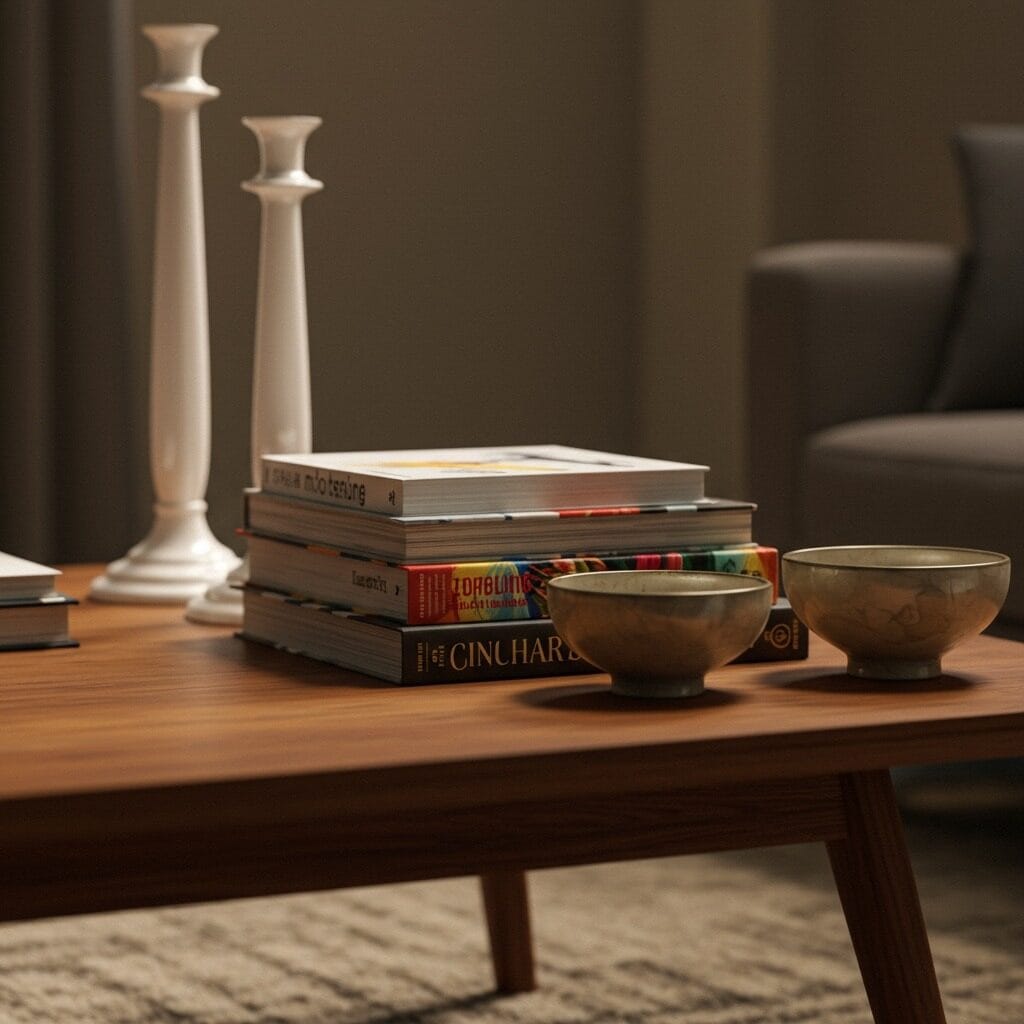
I often use vintage books as pedestals for smaller objects. A beautiful ceramic piece looks more important when it’s elevated on a stack of coffee table books about art or architecture.
3. Add Life with Greenery
Nothing breathes life into a space quite like plants. Even if you don’t have a green thumb, there are plenty of low-maintenance options that thrive on coffee tables.
Small succulents, air plants, or even a simple branch in a vase can add that organic element that makes a room feel fresh. The natural shapes contrast beautifully with the geometric lines of most furniture.
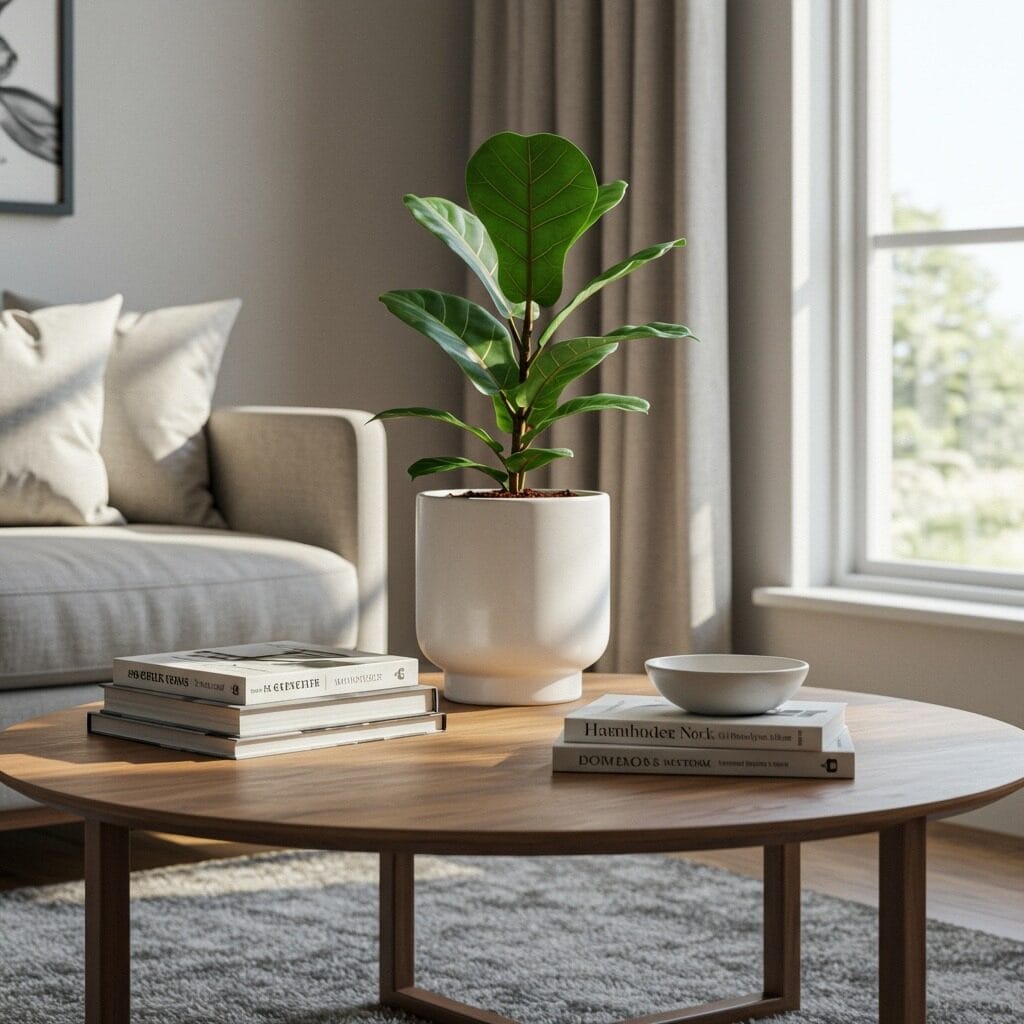
For those concerned about watering schedules or pet safety, high-quality artificial plants have come a long way. Just make sure to choose ones that look realistic – your guests shouldn’t be able to tell the difference from across the room.
4. Incorporate Personal Treasures
Your coffee table should tell your story, not look like a furniture store display. Mix in personal items that spark conversation – maybe a vintage camera, a piece of pottery from your travels, or a beautiful coffee cup collection.
These personal touches make your living room ideas feel authentic and lived-in rather than sterile. Guests will naturally gravitate toward these interesting pieces and ask about their stories.

The trick is balancing personal items with more neutral elements so the display doesn’t become too cluttered or specific to your interests. You want intrigue, not overwhelm.
5. Use Trays to Contain Chaos
Trays are the unsung heroes of coffee table styling. They create boundaries, make small items look intentional rather than scattered, and give you an easy way to clear the surface when you need the space.
Choose trays in materials that complement your table – maybe a wooden tray on a glass table for warmth, or a sleek metal one on wood for contrast. The tray becomes part of the styling, not just a practical element.
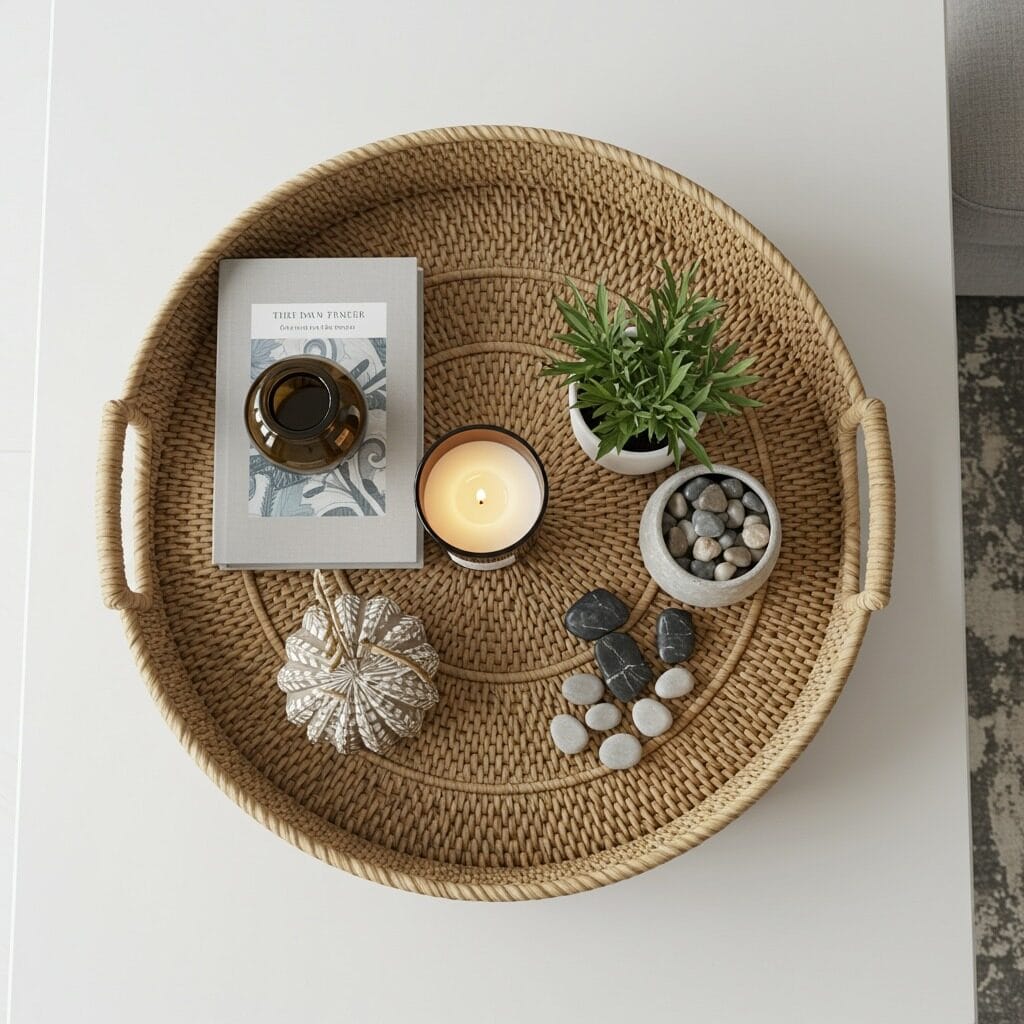
I like to use different sized trays for different purposes – a larger one for the main display and smaller ones for things like remotes or coasters that need to be easily accessible but still look organized.
6. Play with Texture and Materials
Mixing textures adds depth and visual interest to your arrangement. Combine smooth ceramics with rough natural materials, soft textiles with hard metals, matte finishes with glossy ones.
This interplay of textures makes people want to reach out and touch things, which creates a more engaging and memorable space. It’s the difference between looking at your room and truly experiencing it.
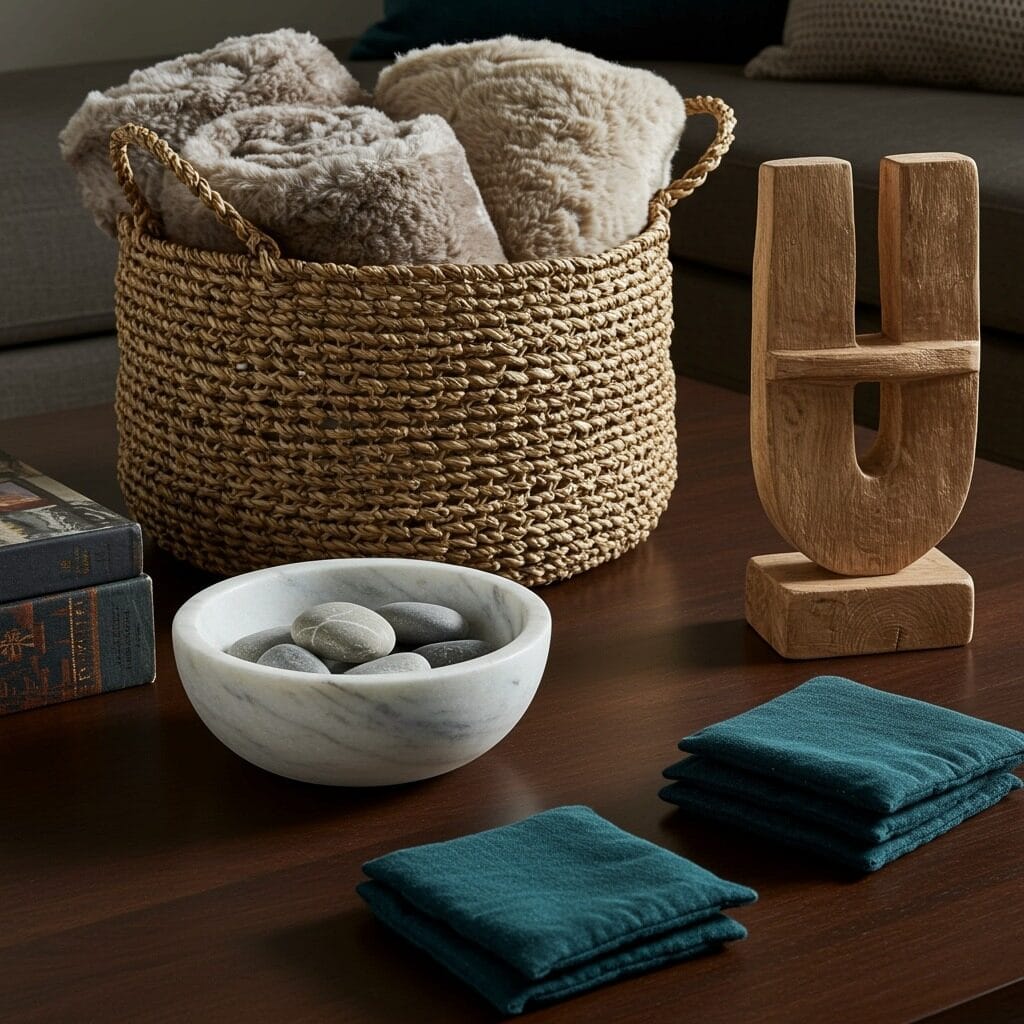
Don’t be afraid to break your own rules occasionally. Sometimes an all-white arrangement or all-natural materials can be stunning in their simplicity, especially if the rest of your room has plenty of visual interest.
7. Consider Scale and Proportion
The size of your styling elements should relate to both your table and your room. Tiny objects get lost on large tables, while oversized pieces can overwhelm smaller surfaces.
As a general rule, no single item should take up more than one-third of your table’s surface area. This leaves room for both visual breathing space and practical use of the table.
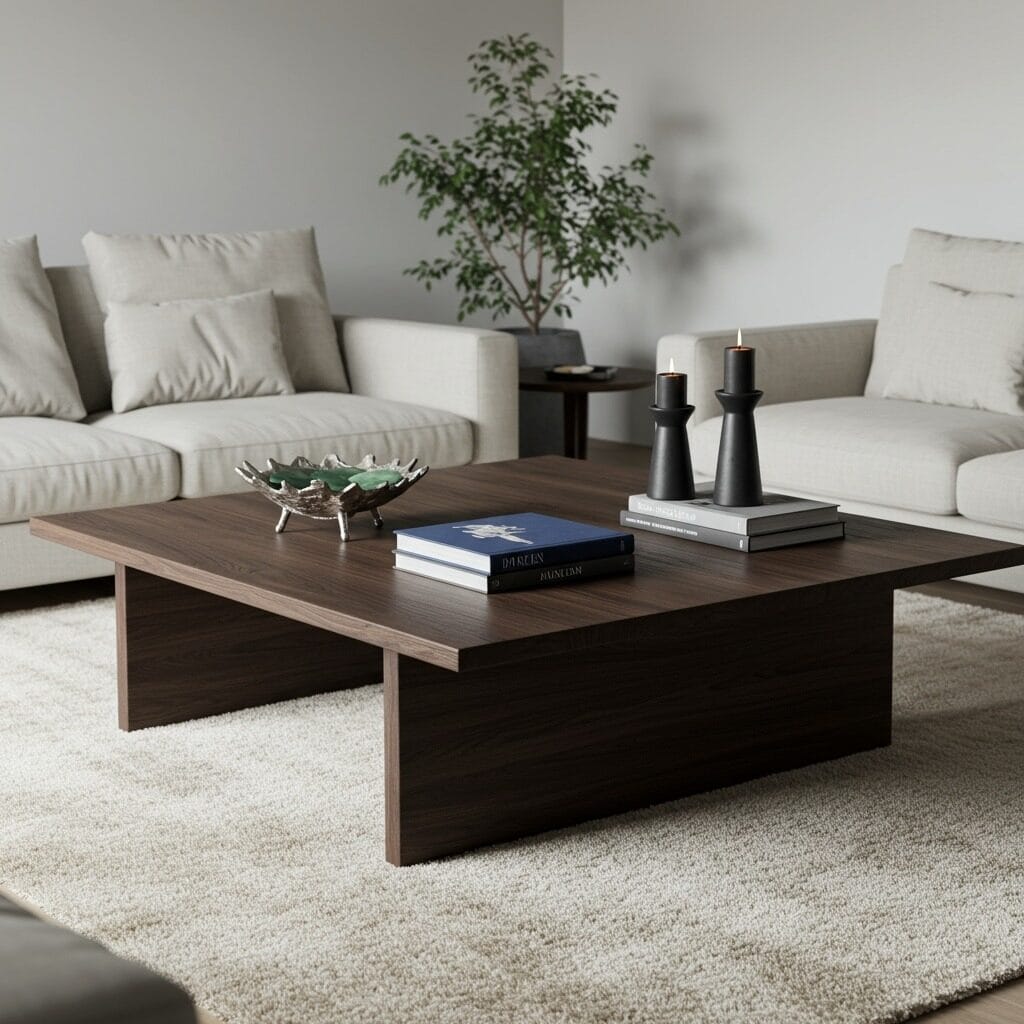
Your ceiling height matters too. In rooms with soaring ceilings, you can handle taller arrangements, while lower ceilings call for more horizontal displays that don’t compete with the architectural proportions.
8. Create Visual Weight Balance
Not all objects carry the same visual weight, even if they’re physically similar in size. Dark colors, complex patterns, and shiny surfaces draw more attention than light, simple, or matte items.
Distribute this visual weight evenly around your table. If you have one attention-grabbing piece, balance it with several smaller, quieter elements on the opposite side.
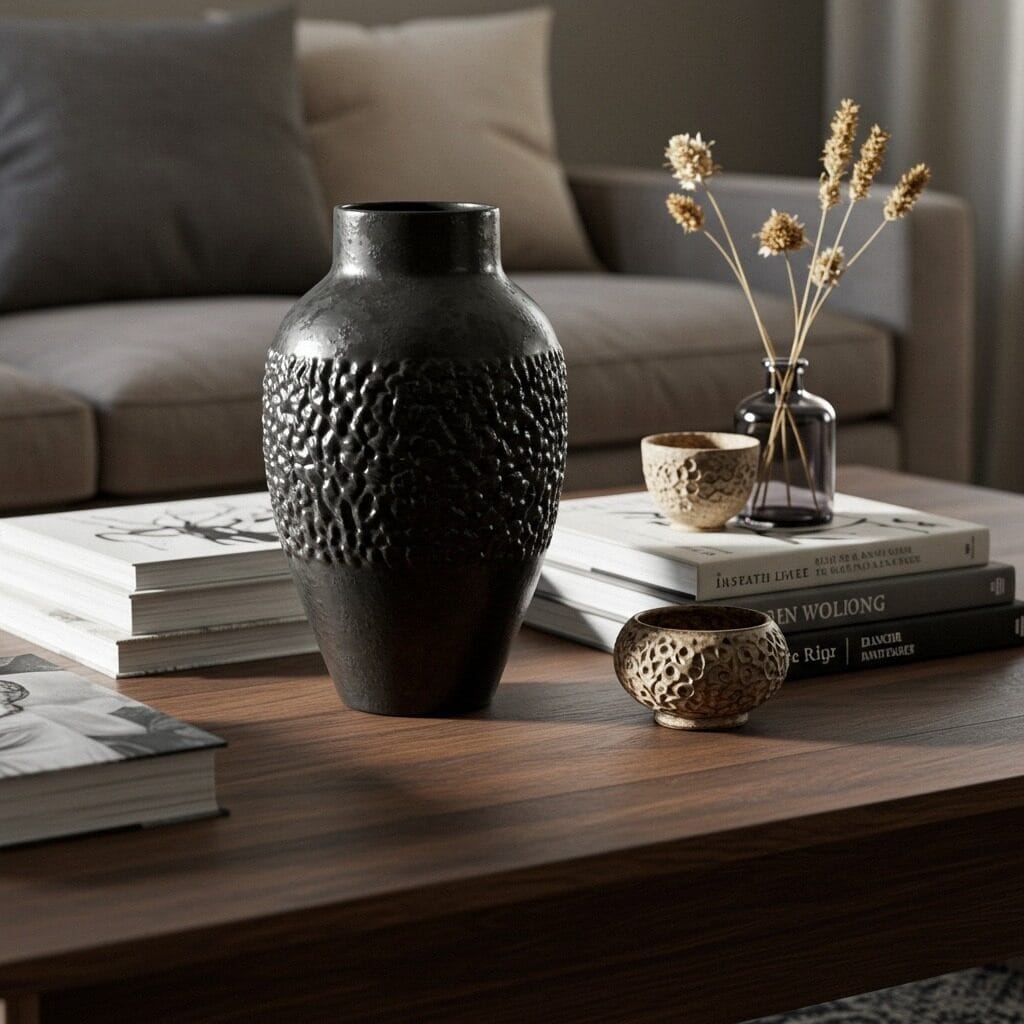
Sometimes I’ll use a colorful book cover or bright throw pillow nearby to help balance a particularly striking coffee table object. The eye needs these visual anchors to feel settled and comfortable.
9. Leave Breathing Room
One of the biggest mistakes I see is over-styling coffee tables until there’s no surface left visible. Your table’s material and shape are part of the design – let them show.
Aim to leave at least 50% of your table surface clear. This negative space isn’t wasted – it’s essential for both the visual success of your arrangement and the practical function of your table.
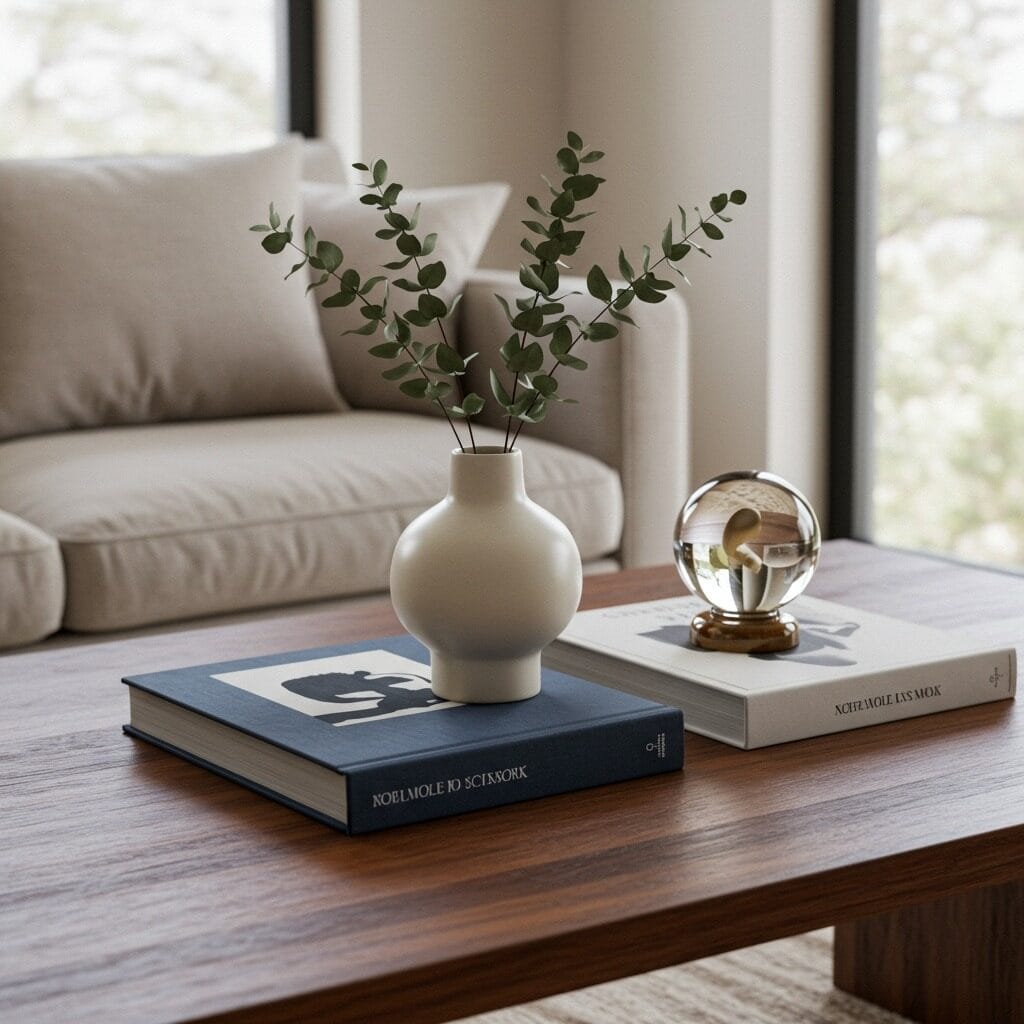
Remember, people need to actually use this table. They’ll want to set down drinks, books, or their feet. If your styling is so precious that it can’t accommodate real life, it’s not working.
10. Establish a Color Palette
Choose 2-3 main colors for your coffee table arrangement and stick to them. This creates cohesion and prevents the display from looking chaotic, even when you’re mixing different types of objects.
Your palette can either complement your existing living room furniture arrangement or provide a subtle contrast. Both approaches work beautifully when executed thoughtfully.
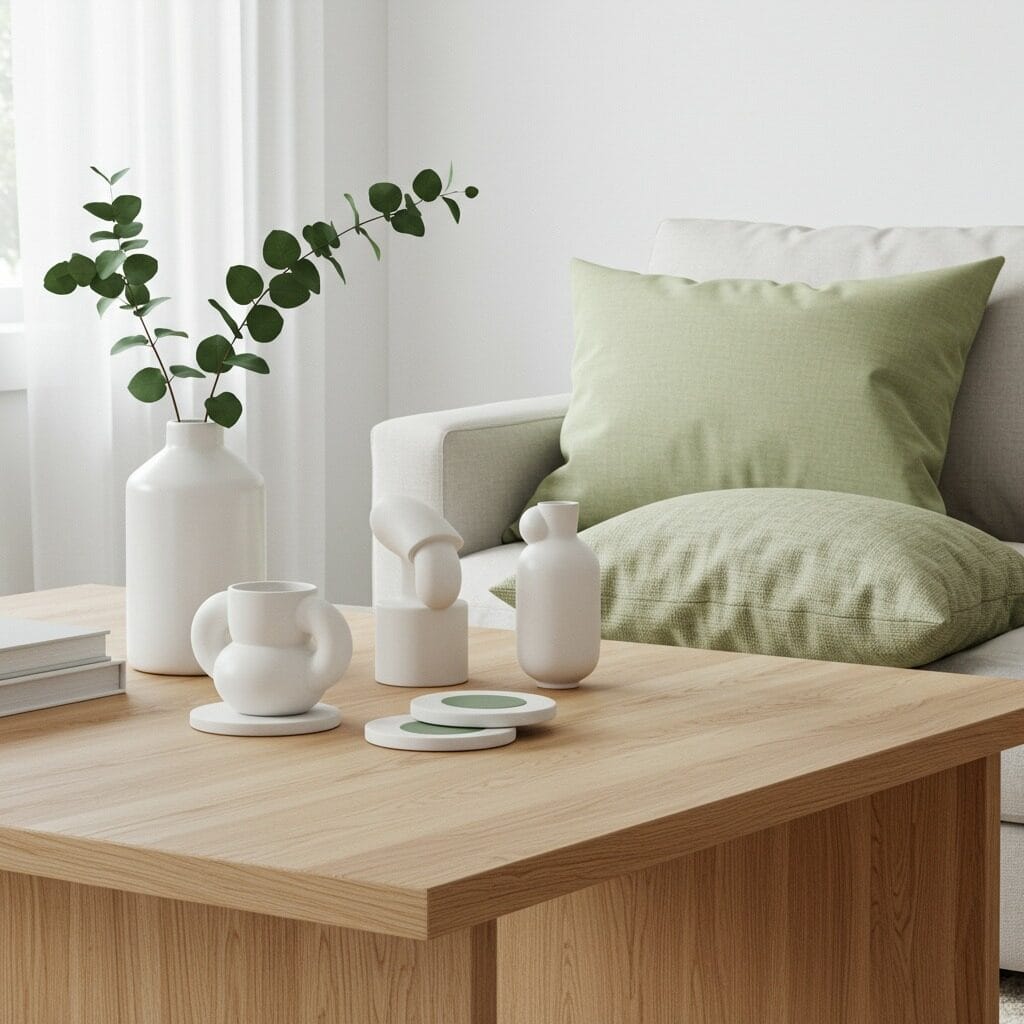
Metallics act as neutrals in most color schemes, so don’t worry about brass, copper, or silver accents disrupting your palette. They often help tie different elements together.
11. Think Beyond Books and Candles
While books and candles are coffee table staples for good reason, don’t limit yourself to these obvious choices. Consider unexpected items that reflect your personality and interests.
A beautiful wooden bowl, a piece of coral, a vintage magnifying glass, or even an interesting geometric object can serve as conversation starters while adding unique visual appeal to your space.
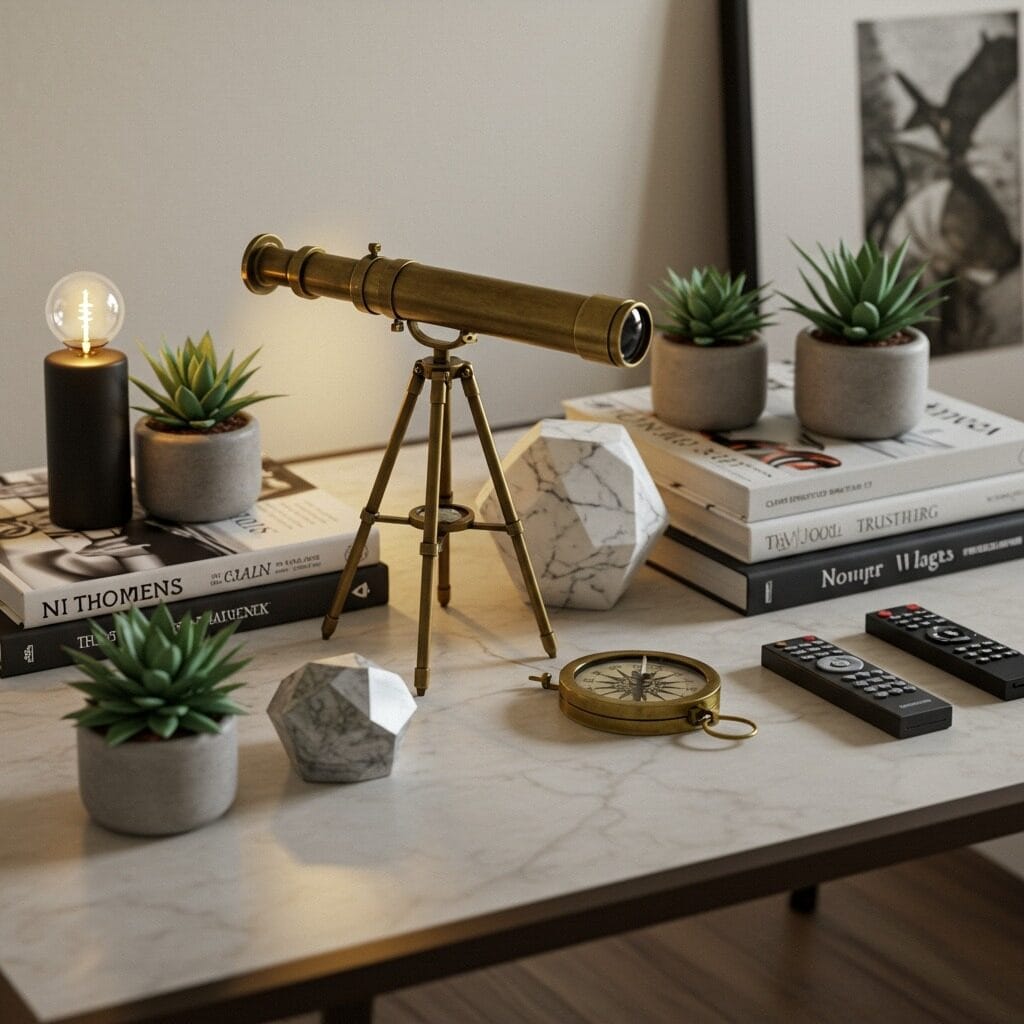
The key is choosing items that feel intentional rather than random. Each piece should contribute something to the overall composition, whether that’s color, texture, height, or personality.
12. Seasonal Styling Swaps
Keep your coffee table feeling fresh by making small seasonal adjustments. This doesn’t mean completely redecorating every few months – just swapping a few key pieces can transform the entire look.
Summer might call for lighter colors and fresh flowers, while winter living room decor cozy vibes might include warmer tones, pinecones, or cozy textiles. These subtle changes keep your space feeling current and intentional.
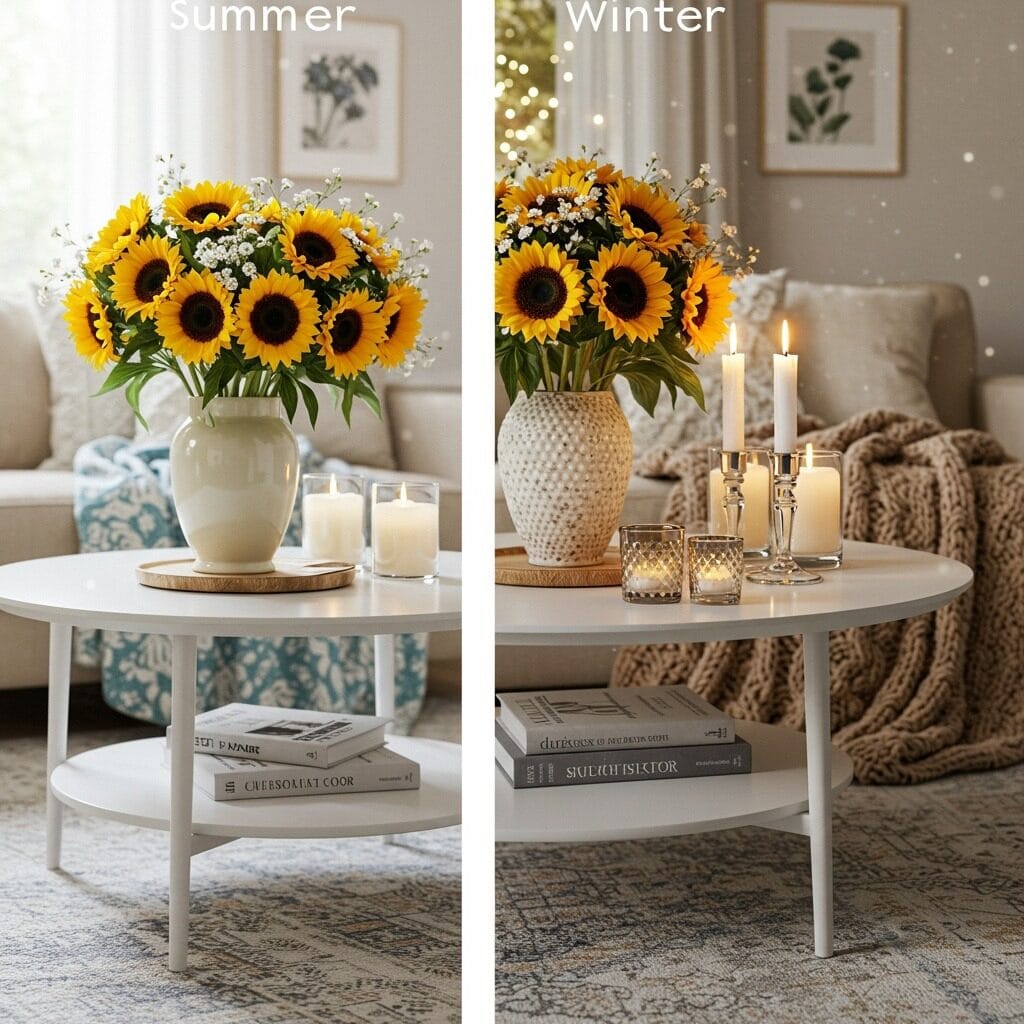
You can rotate objects you already own rather than constantly buying new things. That ceramic bowl that looks perfect with spring tulips might work equally well filled with pinecones come December.
13. Create Focal Points with Lighting
Table lamps, candles, or even battery-operated fairy lights can add warmth and ambiance to your coffee table styling while serving as beautiful focal points.
The soft glow creates an inviting atmosphere that makes your seating area feel more intimate and welcoming. It’s especially effective in the evening when overhead lighting can feel harsh.
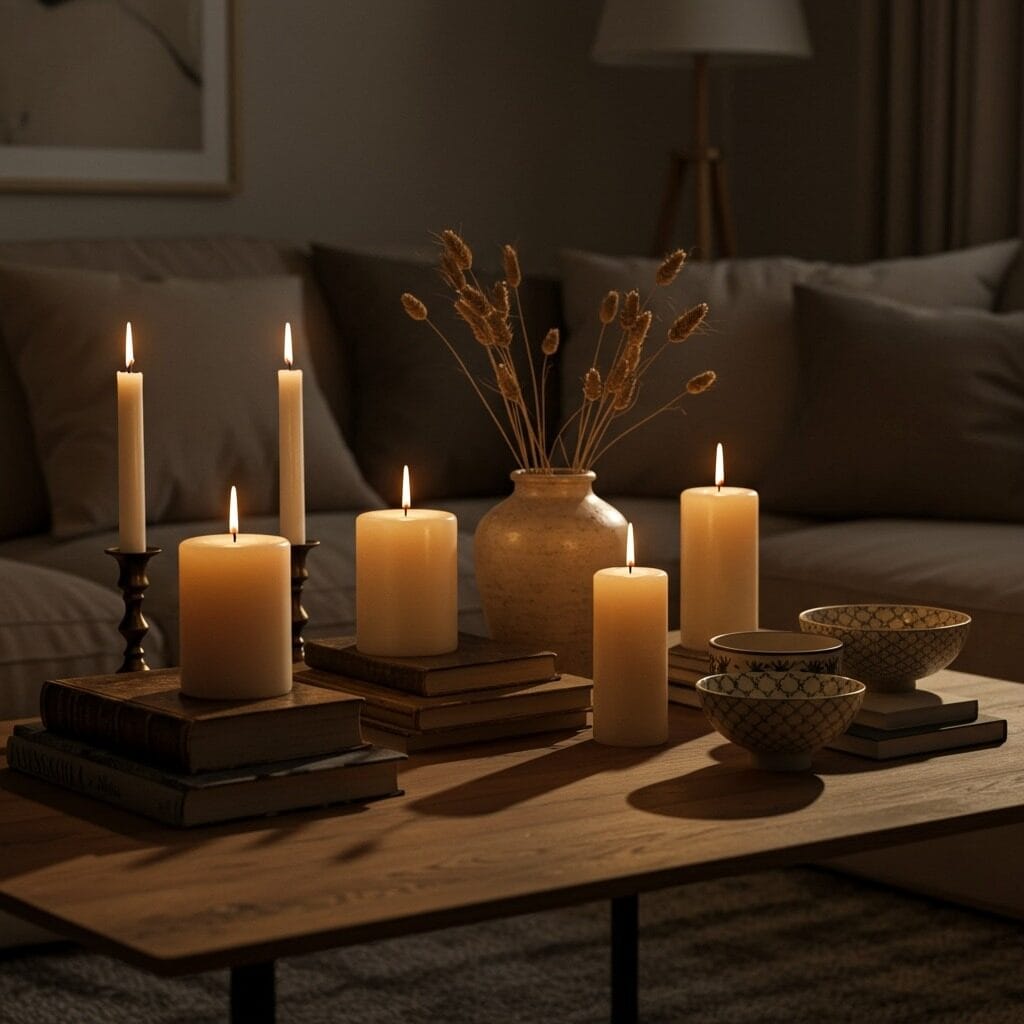
Consider the practical aspects too. A small table lamp on your coffee table can provide perfect reading light for the sofa, making your space both beautiful and functional.
14. Use Your Coffee Table’s Shape
The shape of your living room coffee table should influence how you style it. Round tables work well with curved arrangements, while rectangular tables can handle more linear displays.
For round tables, I often create a loose circular arrangement with items at different distances from the center. Square tables work beautifully with symmetrical displays or clear quadrant divisions.

Don’t fight against your table’s natural shape. Work with it to create arrangements that feel harmonious and intentional rather than forced.
15. Edit Ruthlessly
The final secret to professional-looking coffee table styling is knowing when to stop. After arranging everything you think you want, step back and remove one item. Then remove another.
This editing process is crucial. It’s the difference between a curated display and a cluttered mess. Every item that remains should earn its place by contributing something essential to the overall composition.
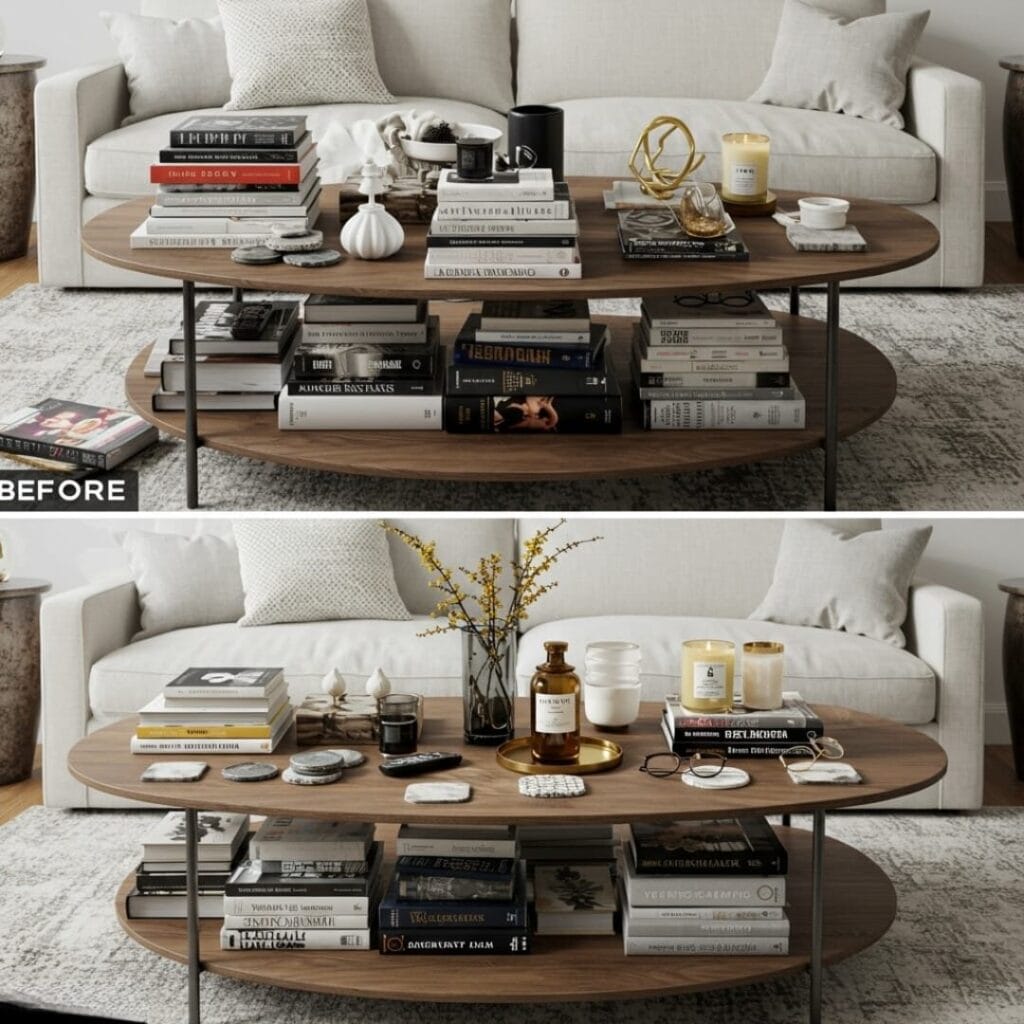
When in doubt, less is more. You can always add items back if the display feels too sparse, but it’s harder to identify what to remove once you’ve convinced yourself everything is necessary.
The magic happens when every element works together to create something more beautiful than the sum of its parts. Trust your instincts, embrace imperfection, and remember that the best coffee table styling feels effortless – even though we know the thought and care that went into creating it.
Your coffee table is a daily opportunity to practice the art of stylish living room tips, creating a space that welcomes both you and your guests with its thoughtful beauty. Start with these principles, but don’t be afraid to break the rules when your instincts tell you to. After all, the most memorable rooms are the ones that feel authentically yours.

Sanjai creates easy, affordable home decor ideas that anyone can try. Through simple tips and curated finds, he helps you style rooms you’ll love coming home to.