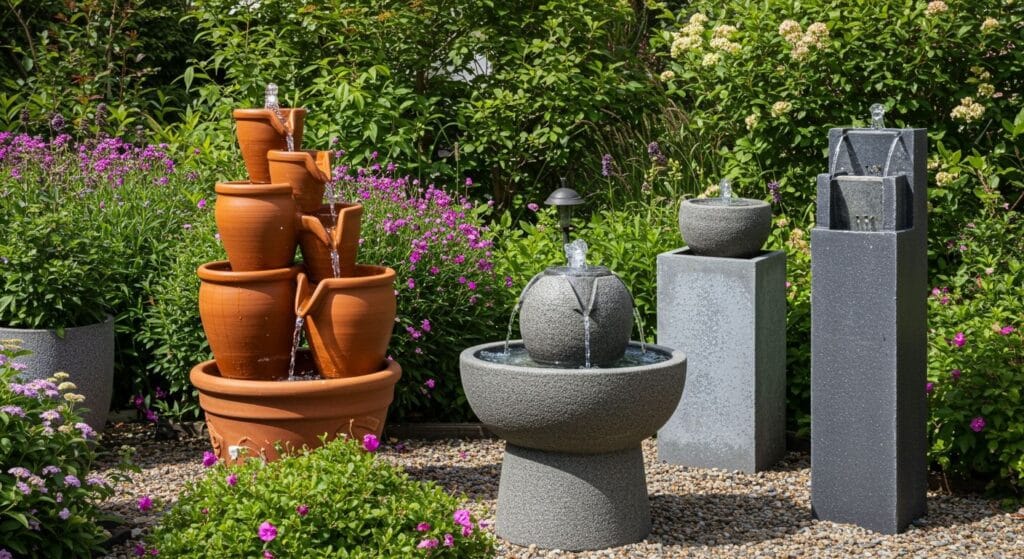
There’s something magical about the sound of trickling water in a garden. It immediately transforms your outdoor space into a peaceful retreat where you can unwind after a long day. But here’s the thing – you don’t need to spend thousands on a professionally installed water feature to get that tranquil vibe.
Creating your own fountain is easier than you might think, and it’s one of those outdoor DIY projects that delivers serious impact for minimal investment. Whether you’re working with a sprawling backyard or a cozy patio, there’s a fountain design that’ll fit your space perfectly. Plus, the satisfaction of building something with your own hands? That’s priceless.
I’ve rounded up 17 creative DIY fountain ideas that range from beginner-friendly to slightly more challenging. Some use materials you might already have lying around, while others require a quick trip to the hardware store. Ready to bring that soothing water element to your garden?
1. Classic Tiered Pot Fountain
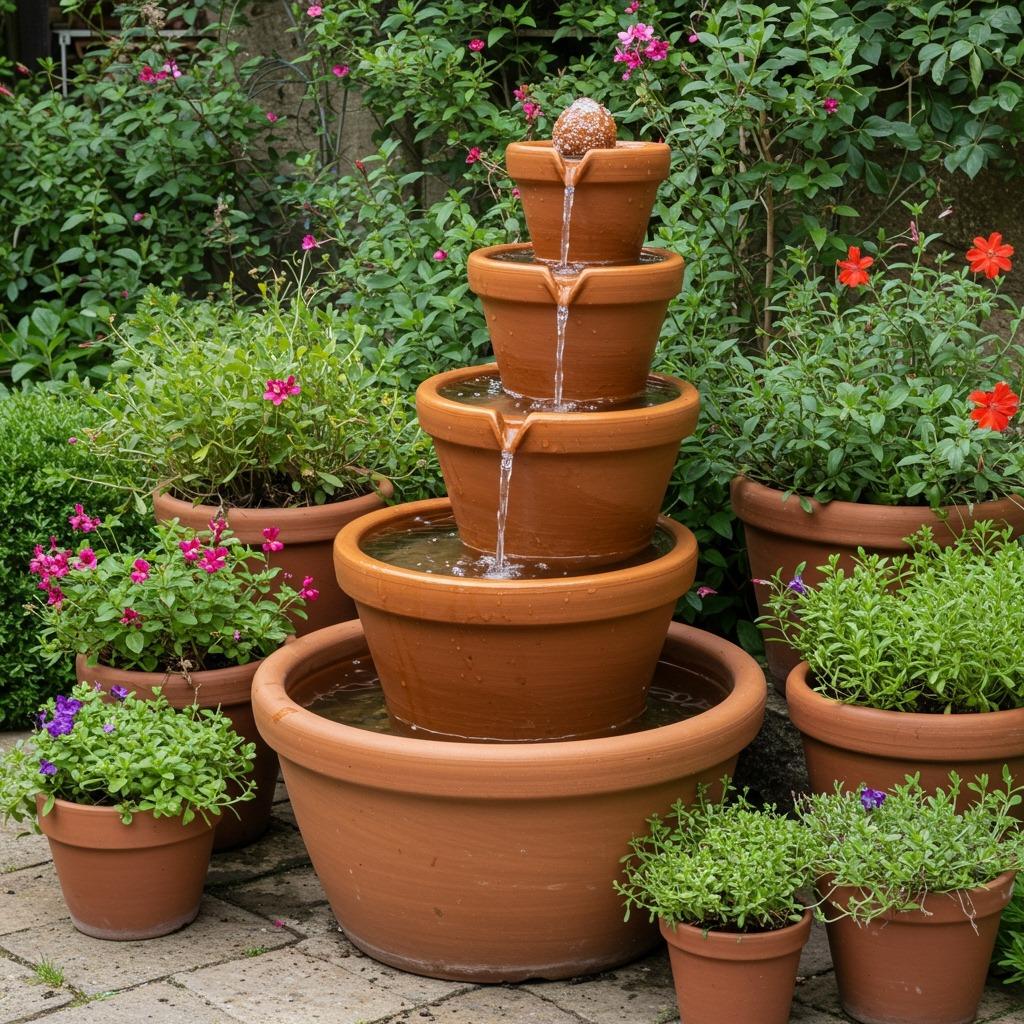
This timeless design stacks terracotta pots in graduating sizes to create a waterfall effect. You’ll drill holes in the bottom of each pot for the tubing, then seal them with waterproof caulk before assembling. The submersible pump sits hidden in the base, cycling water up through the center.
What makes this fountain so appealing is its versatility. You can paint the pots to match your garden’s color scheme, or leave them natural for that rustic Mediterranean feel. The gentle cascade creates a soothing sound without being overwhelming.
Position this near your seating area where you’ll actually hear and enjoy it. The dripping water also attracts birds and butterflies, adding even more life to your space. It’s one of those backyard water feature ideas that works in almost any garden style.
2. Minimalist Bamboo Spout Fountain
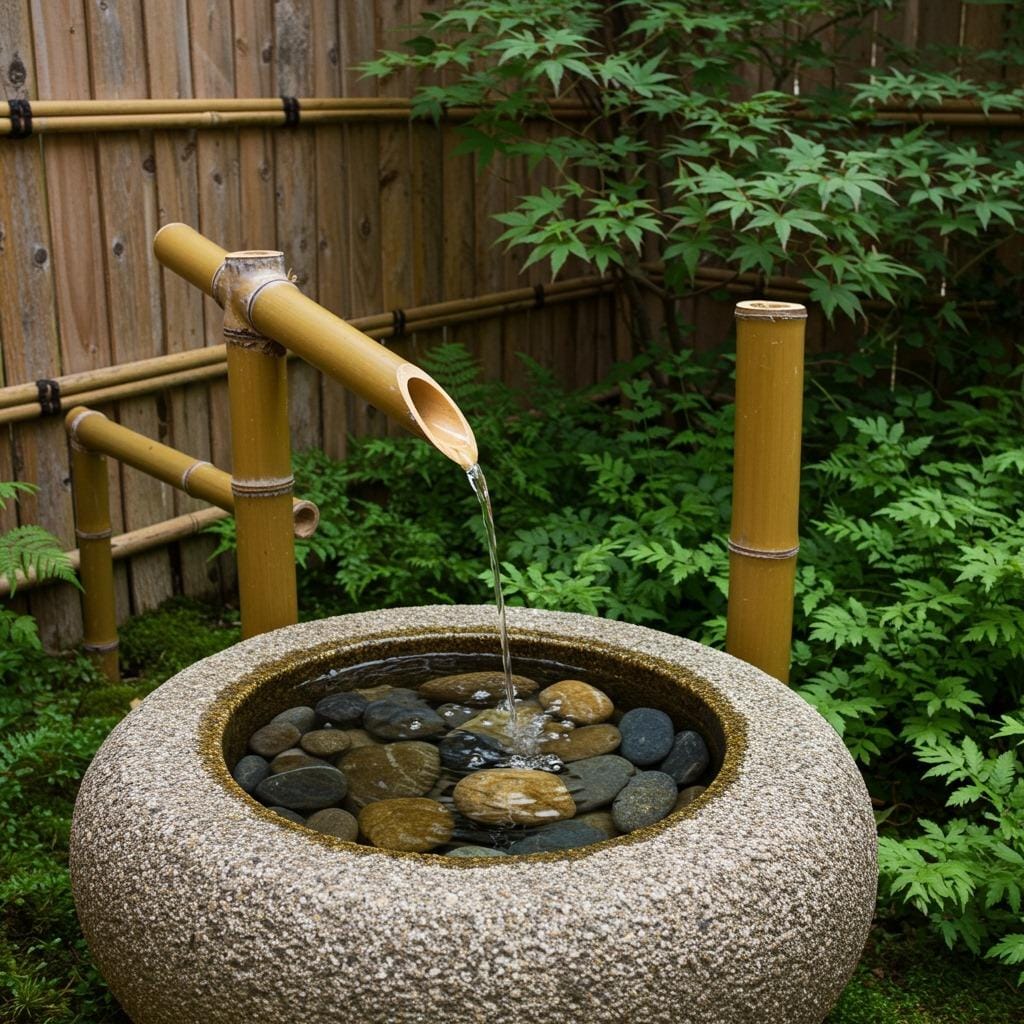
Bamboo fountains bring that spa-like serenity to your outdoor space. This design features a hollow bamboo pole angled over a basin, with water flowing through and splashing onto rocks below. The simplicity is what makes it so elegant.
You’ll need a sturdy bamboo pole (about 2-3 inches in diameter), a water basin, and your standard fountain pump. The trick is securing the bamboo at the right angle so water flows smoothly without splashing everywhere. Most people mount it on a wooden frame or drill it into a larger piece of bamboo acting as a stand.
This style works beautifully in Asian-inspired gardens or as a focal point in a meditation corner. The hollow sound of water hitting bamboo has this calming quality that’s hard to replicate with other materials.
3. Repurposed Watering Can Waterfall
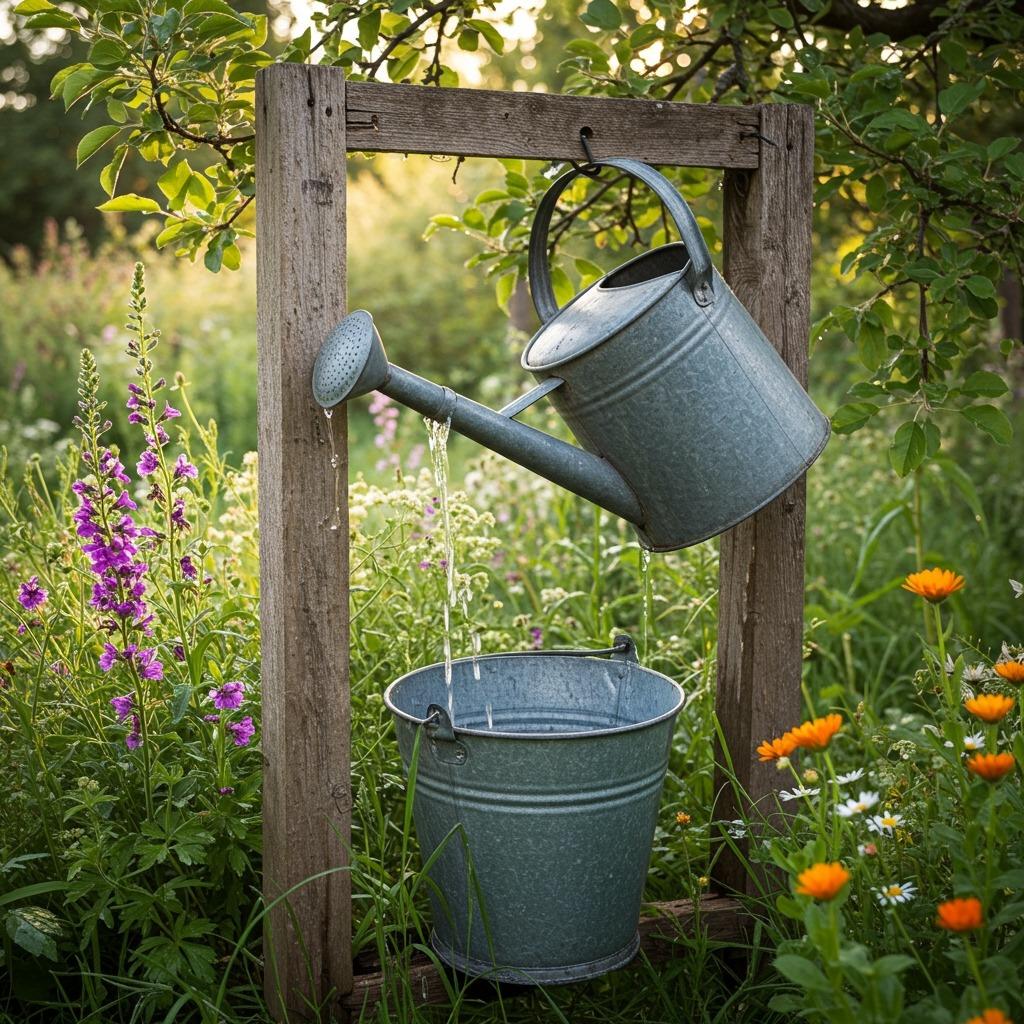
Here’s a fountain that celebrates garden whimsy. Vintage watering cans get a second life as water spouts, creating that illusion of an endless pour. You can stack multiple cans at different heights for added visual interest.
The setup requires drilling a hole in each can for the tubing, then suspending them on a sturdy frame. You could use an old ladder, a custom-built wooden structure, or even hang them from a pergola beam. The water collects in a basin below where the pump recirculates it.
What I love about this idea is how it adds personality to your garden. Hunt for unique vintage cans at flea markets or use modern ones you’ve distressed yourself. It’s perfect for cottage-style gardens or anyone who appreciates a touch of farmhouse charm in their outdoor spaces.
4. Stone Cairn Bubbler
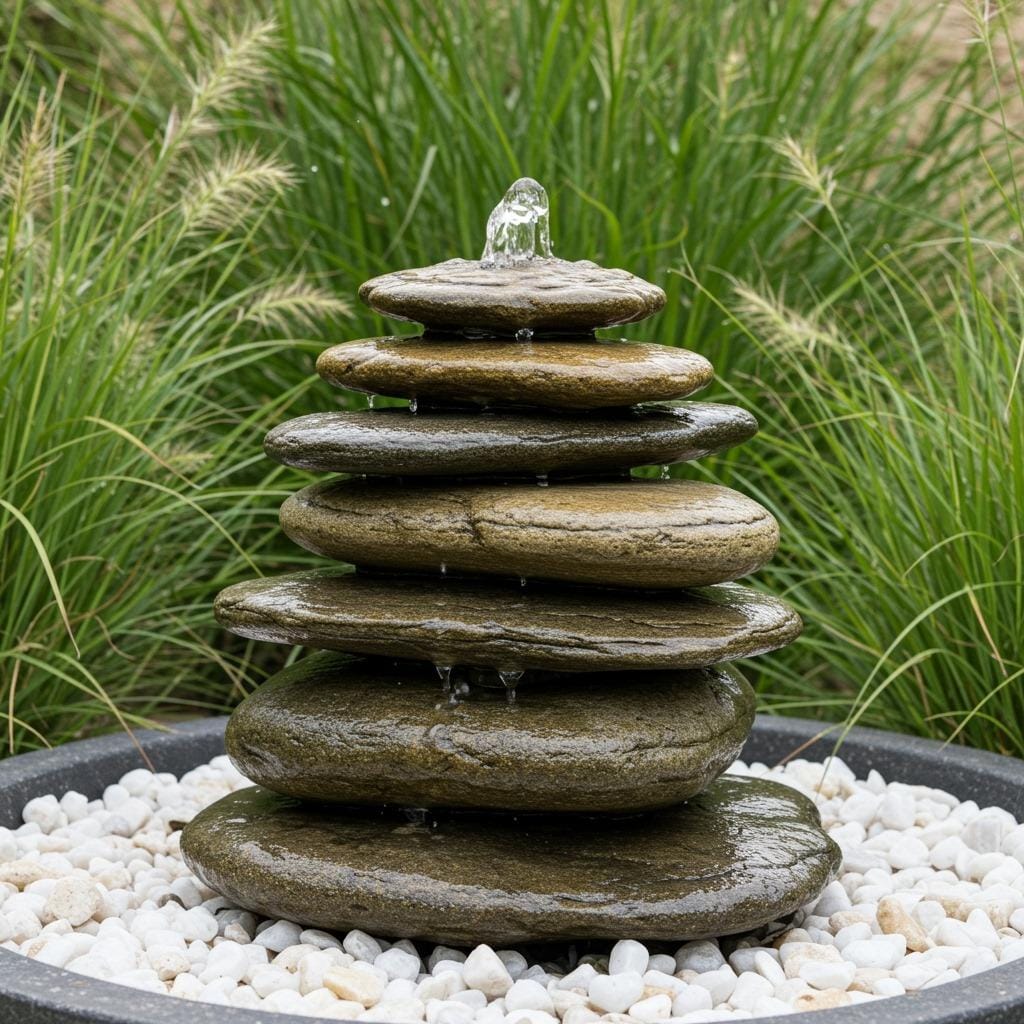
Stacked stone fountains have this ancient, organic quality that makes them feel like they’ve always been part of your landscape. Water bubbles up through the center of drilled stones, creating a gentle, meditative sound.
You’ll need flat rocks with holes drilled through them (or you can have a stone yard do this for you). Stack them on a water basin with the pump underneath, threading the tubing through each stone. The water flows up and spills down the sides, keeping the stones wet and glistening.
This design works particularly well in rock gardens or zen-inspired spaces. The irregular stacking means each fountain looks completely unique. Some builders add LED lights in the basin for nighttime drama.
5. Modern Concrete Geometric Fountain
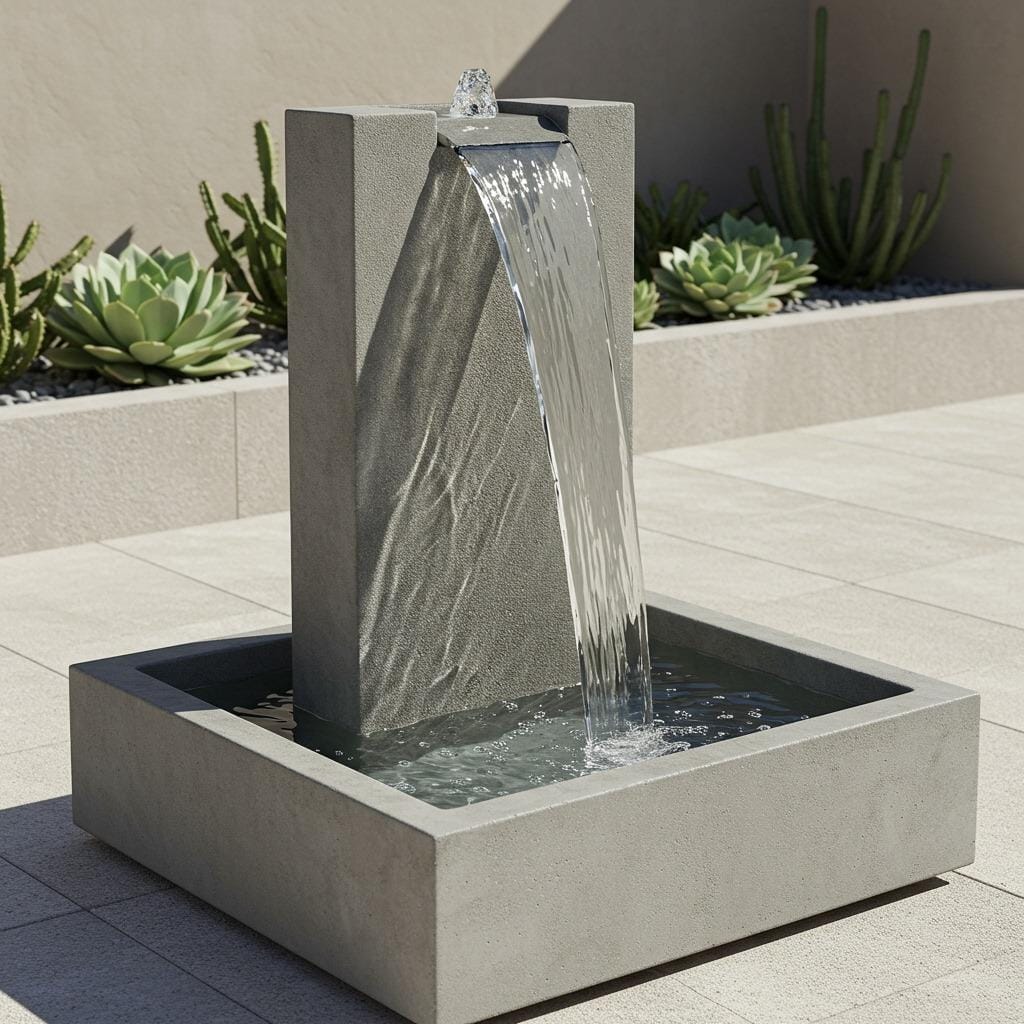
For those who prefer contemporary style, poured concrete fountains offer endless possibilities. You can create geometric shapes, smooth surfaces, or textured finishes depending on your mold. The water typically flows in a sheet down one face or bubbles from the top.
This project requires more planning and curing time, but the results look incredibly high-end. You’ll build a mold from melamine or plywood, pour your concrete mixture, and embed the tubing before it sets. After curing for several days, you can seal and finish it.
The beauty of concrete is its chameleon quality. Leave it natural gray for that industrial vibe, or add pigments for color. These fountains make stunning focal points in modern farmhouse exterior spaces or minimalist gardens.
6. Whiskey Barrel Basin Fountain
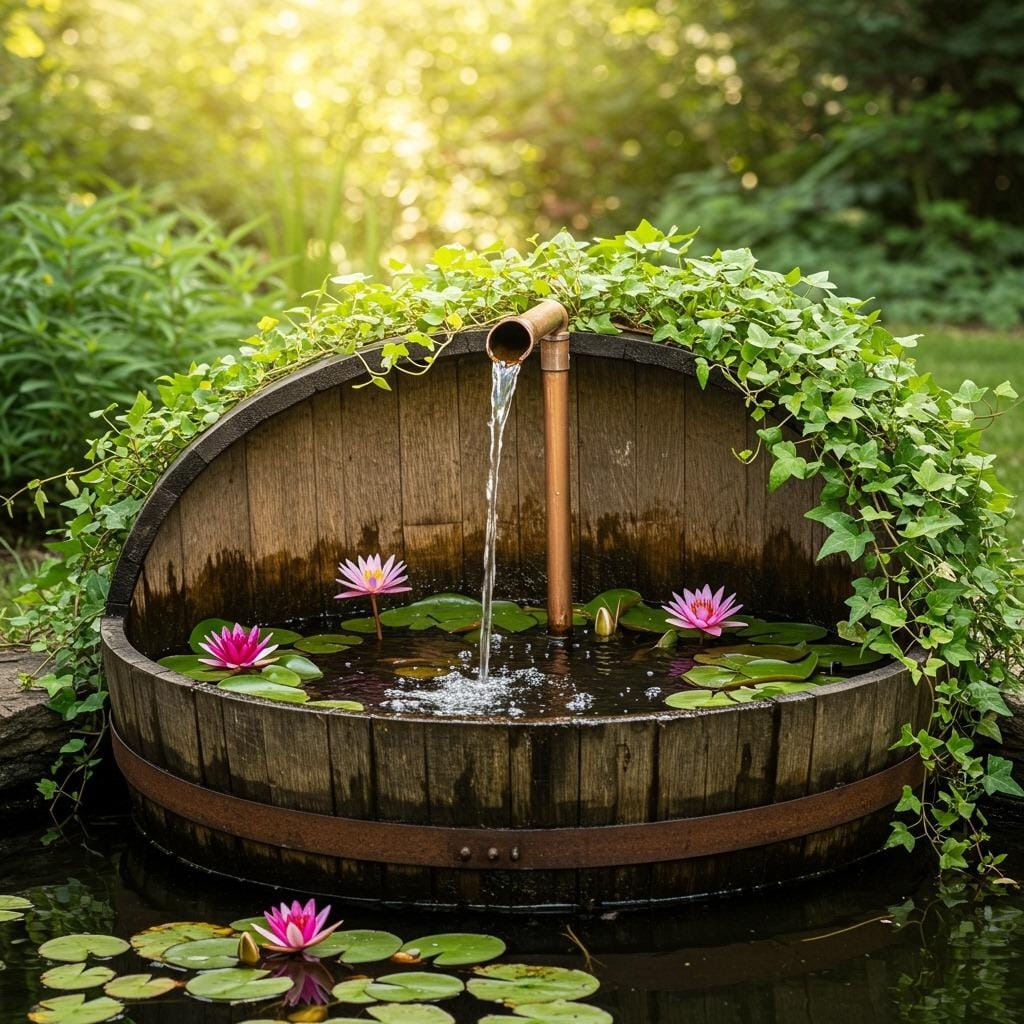
Half whiskey barrels make perfect ready-made fountain basins. Their rustic character adds instant charm, and they’re deep enough to accommodate a decent pump and even a few aquatic plants. You can add a central spout or create multiple small fountains within the barrel.
Line the barrel with a pond liner to prevent leaking (unless you’ve scored a watertight one). Position your pump and arrange decorative elements like rocks, driftwood, or ceramic pieces. Some people drill holes around the rim to thread rope lights through for evening ambiance.
This style fits beautifully in farmhouse gardens or rustic landscapes. You could even cluster multiple barrels at different heights for a more complex water feature. The generous size means less frequent water top-offs during hot weather.
7. Copper Pipe Fountain Wall
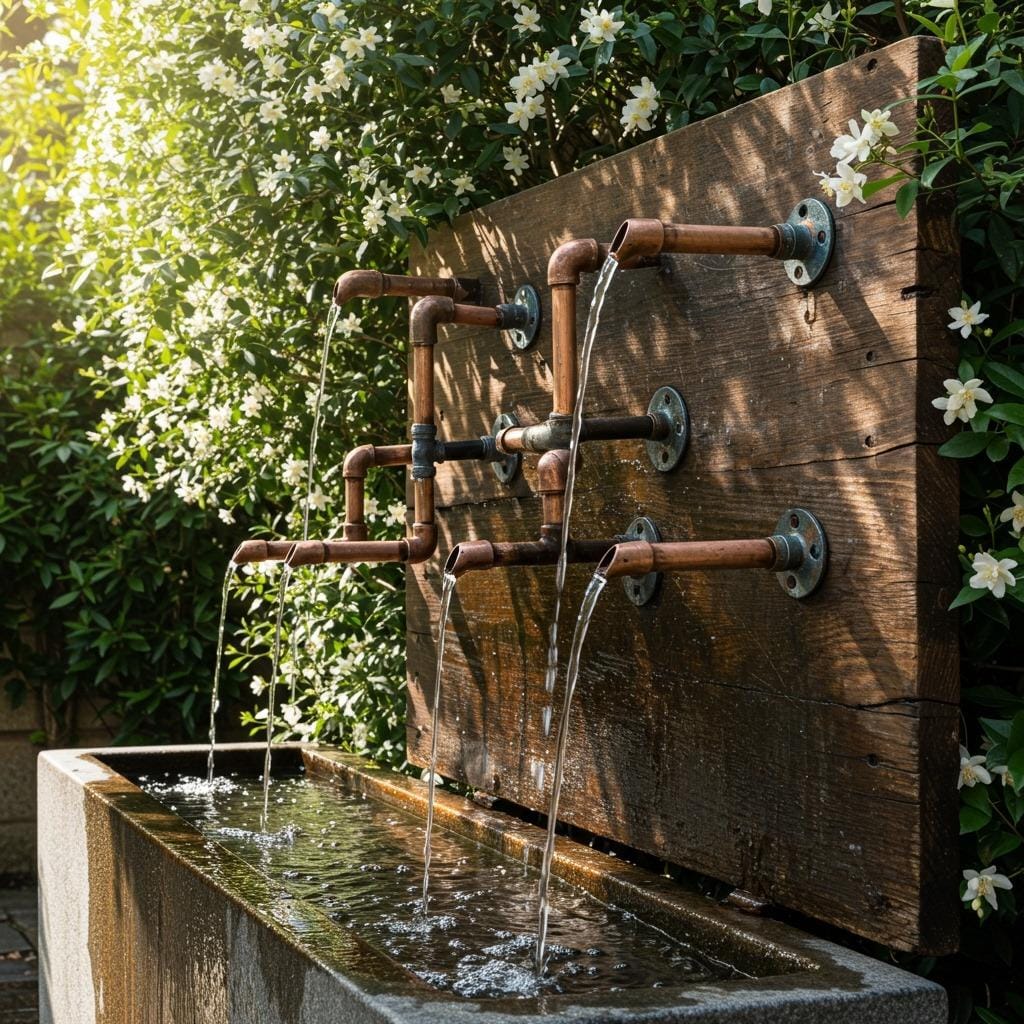
Here’s where garden fountain plans get a bit more architectural. Multiple copper pipes mounted at varying heights create a wall of water streams. The pipes develop that beautiful verdigris patina over time, adding character to your fountain.
Cut copper pipes to different lengths and solder caps on one end. Drill small holes in the caps for water to spray through, then connect them to a manifold system fed by your pump. Mount everything on a backing board or directly to a fence or wall.
This design works wonderfully as a privacy screen or focal point in narrow spaces. The sound of multiple water streams creates more presence than a single spout. It’s definitely one of those projects that looks complex but follows straightforward plumbing principles.
8. Salvaged Bicycle Wheel Fountain
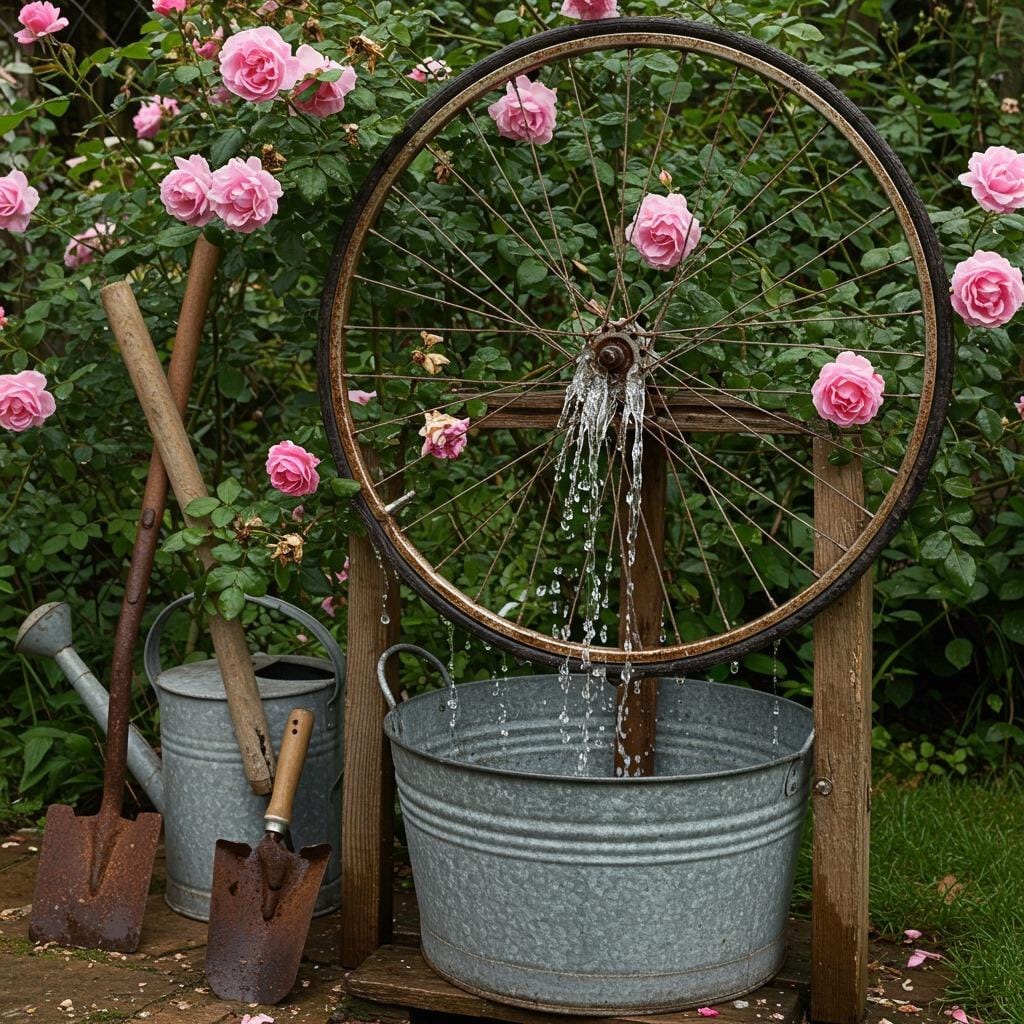
Talk about creative repurposing – an old bike wheel becomes garden art with water. Mount the wheel vertically and run tubing up to the hub. Water flows down the spokes, creating multiple small streams that catch light beautifully.
You can leave the wheel rusty for vintage appeal or paint it a bold color. Some people weave chains or beads through the spokes for added visual interest. The key is getting enough water pressure to reach all the spokes evenly.
This fountain suits eclectic gardens or spaces with an upcycled aesthetic. It’s a conversation starter that proves fountains don’t need to follow traditional forms. The moving water on spinning spokes creates fascinating patterns.
9. Urn Fountain With LED Lighting
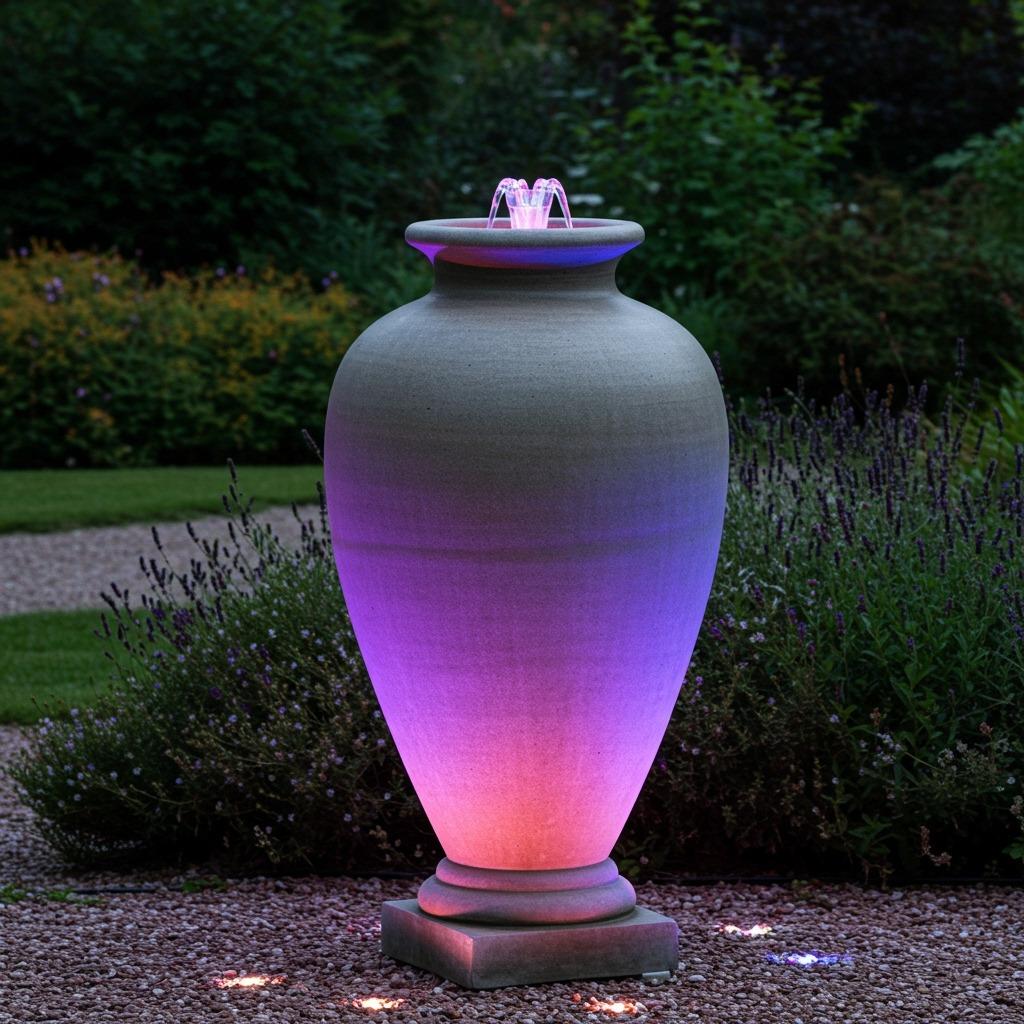
A single statement urn transforms into a fountain when water flows over its rim. This works with decorative urns in any style – classical, modern, or rustic. The water creates a thin sheet that hugs the curves as it descends into a hidden basin.
Drill a hole in the bottom of your urn (use a diamond drill bit for ceramic or stone). The urn sits on a grate over a buried basin that houses the pump. Seal the hole around the tubing to prevent leaks, then adjust the flow until water spills evenly over the rim.
Adding LED lights underneath creates magic after dark. The water catches and refracts the light, turning your fountain into a glowing beacon. This elevated look works perfectly in formal gardens or as an entryway feature near your front porch.
10. Rain Chain Fountain Alternative
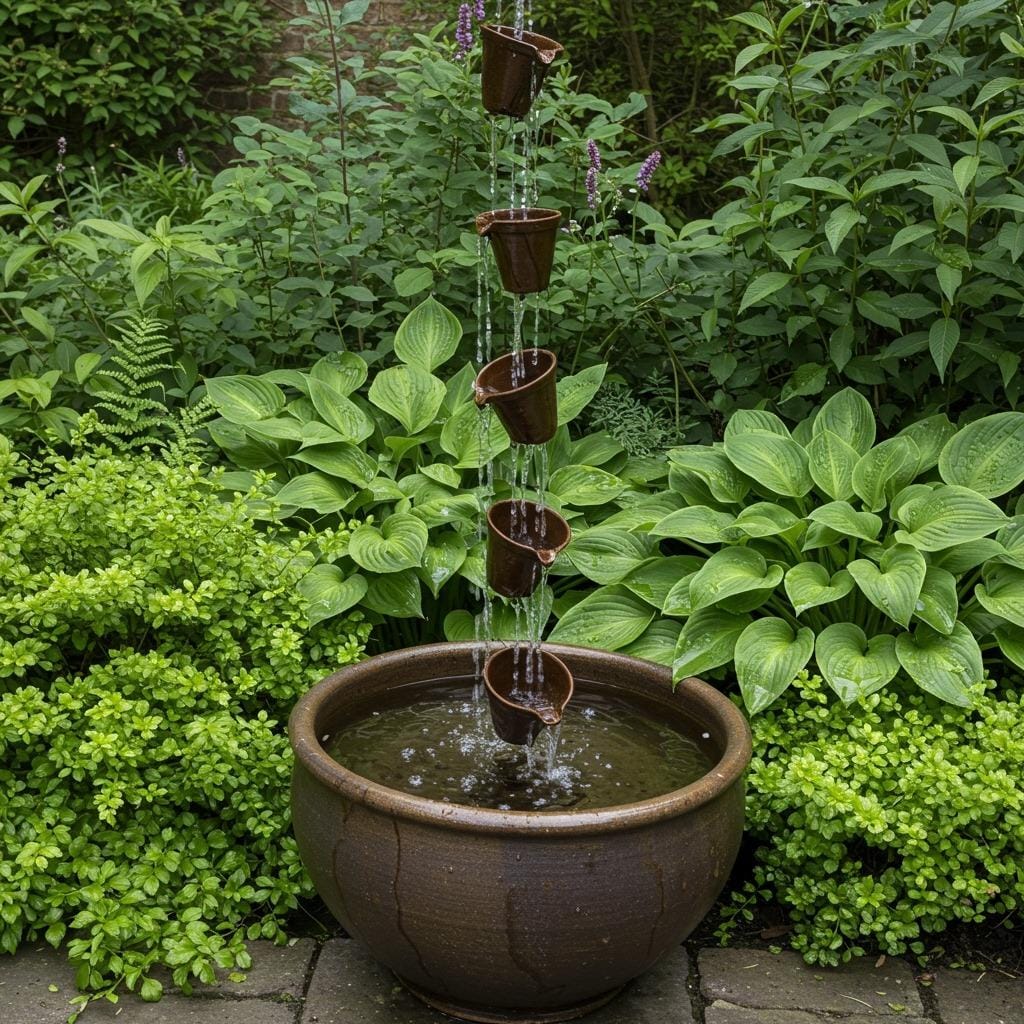
Rain chains aren’t traditional fountains, but they create similar water movement and sound. These Japanese-inspired chains replace downspouts, but you can set one up anywhere with a pump system feeding water to the top. Watch as water cascades from link to link.
You’ll find rain chains in various designs – simple linked chains, cup styles, or decorative shapes. Hang yours from a pergola beam, arbor, or purpose-built frame. Position a basin underneath to catch and recirculate the water.
The tinkling sound changes depending on water flow and chain style. Cup chains create more of a pouring sound, while link chains produce lighter trickling notes. This approach adds vertical interest to your garden while taking up minimal ground space.
11. Stacked Slate Waterfall
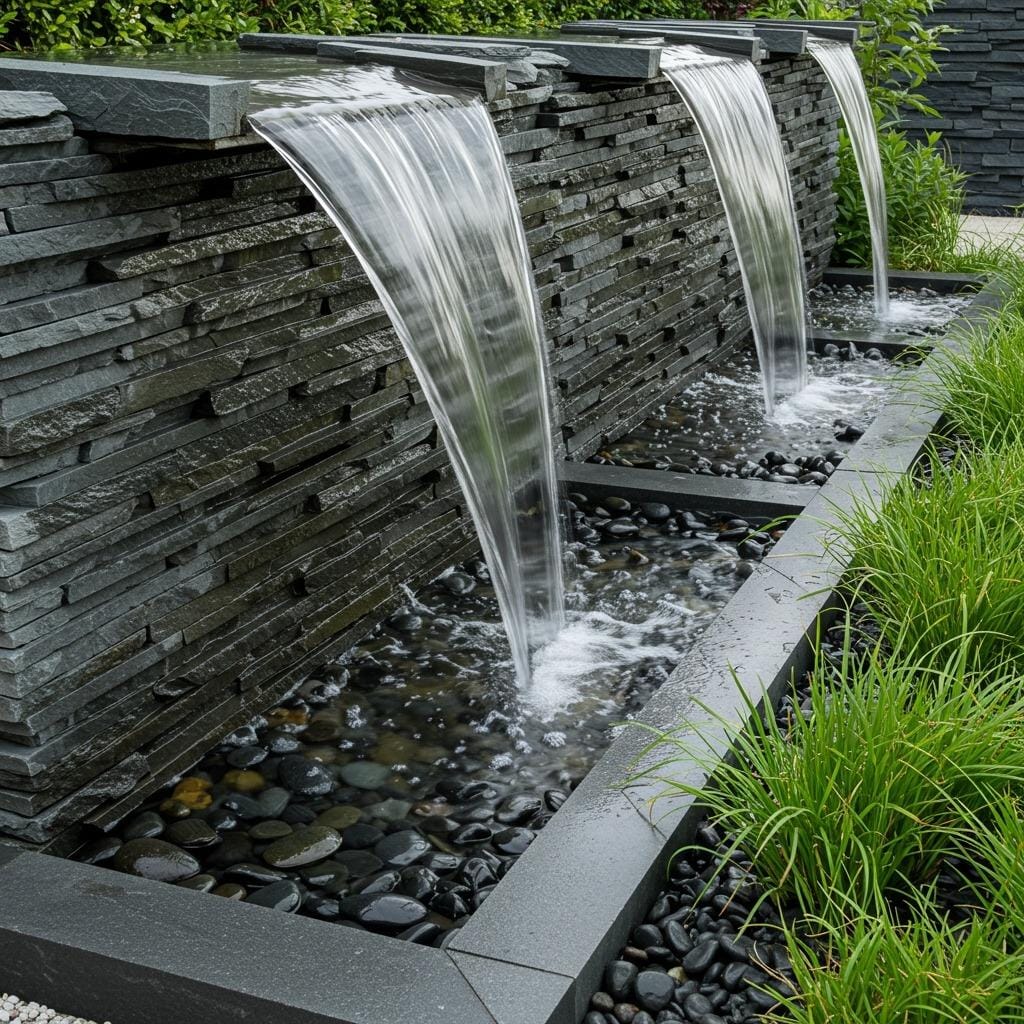
Slate’s flat planes create gorgeous water sheets when positioned correctly. Stack pieces at slight angles, allowing water to flow smoothly from one level to the next. The dark stone provides dramatic contrast, especially when wet.
This design requires careful balancing and sealing between slate pieces. Use aquarium-safe silicone to secure each piece while maintaining proper water flow. The pump needs enough power to push water to the top of your stack.
Position this fountain where you’ll catch glimpses of the water sheets reflecting light. It works particularly well in contemporary living room views through patio doors or as a focal point in modern landscape design. The clean lines suit minimalist aesthetics.
12. Glazed Pot Trio Fountain
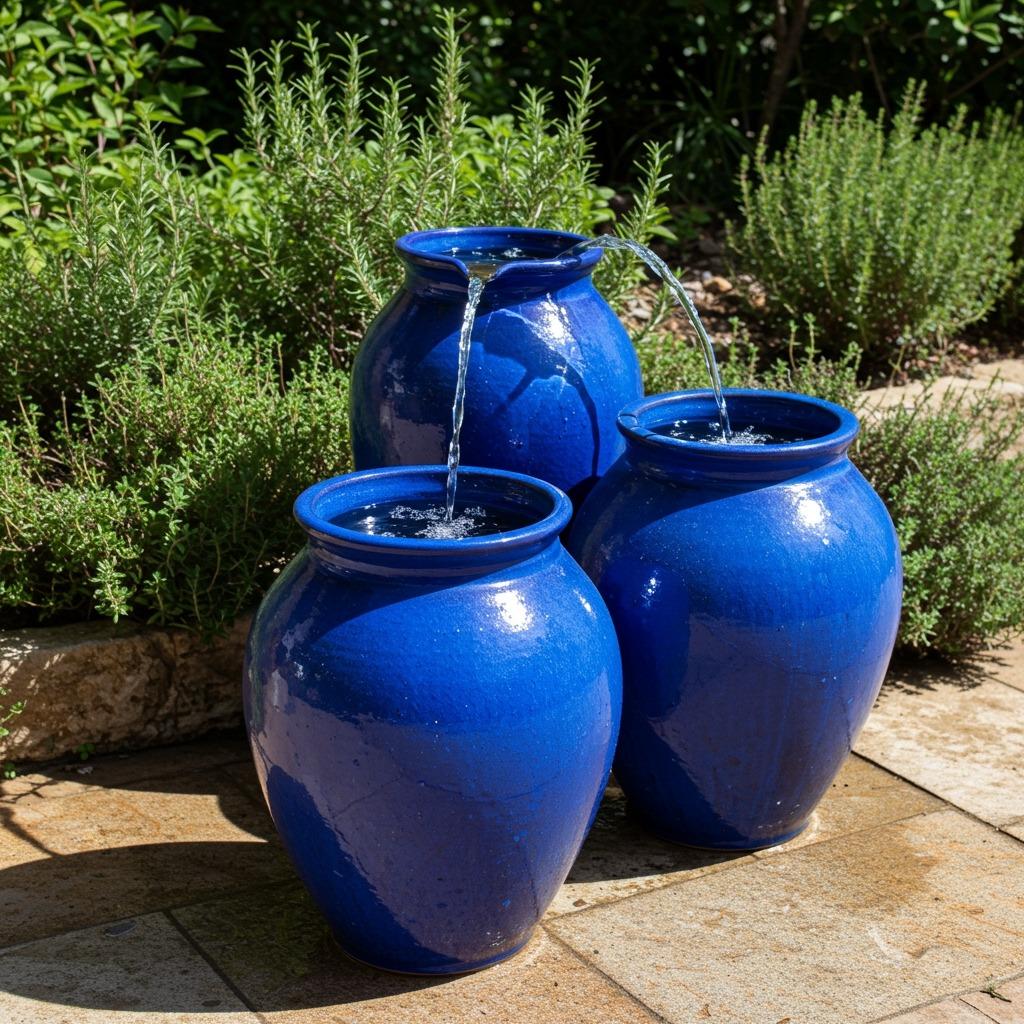
Colorful glazed pots become show-stopping fountains when water spills over their rims. Choose three or more matching pots in graduating sizes and arrange them at different heights. Each pot overflows into the next, creating a cascading effect.
You’ll need to drill holes for tubing and seal them properly. Stack pots on stands or bricks to achieve your desired heights. The pump sits in the lowest pot or a hidden basin below, pushing water up through the tallest pot first.
This design lets you introduce bold color into your garden through the pots themselves. Try matching them to your home’s exterior trim or choosing a shade that complements your plantings. The multiple overflows create more sound presence than a single spout.
13. River Rock Column Bubbler
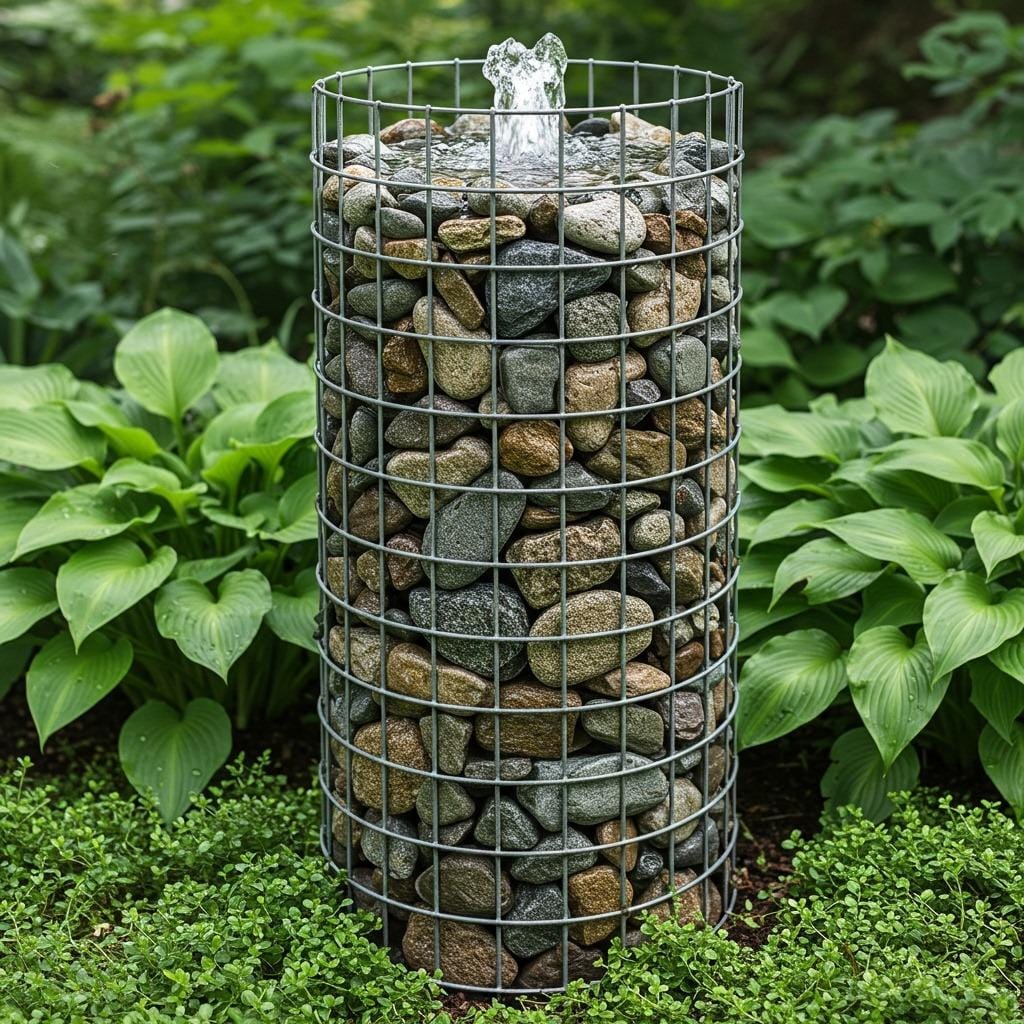
Here’s a fountain that’s almost maintenance-free. Build a column from wire mesh or hardware cloth, fill it with river rocks, and let water bubble up through the center. The water disappears back through the stones into a buried reservoir.
This disappearing fountain style is perfect for households with kids or pets since there’s no open water basin. The pump sits in an underground container covered by a metal grate. The rock column sits on top, with tubing running up the center.
You can make columns any height or diameter. Vary the rock sizes for different visual textures, or use a single size for uniformity. The sound ranges from gentle trickling to more substantial bubbling depending on pump power and rock arrangement.
14. Antique Pump Fountain Conversion
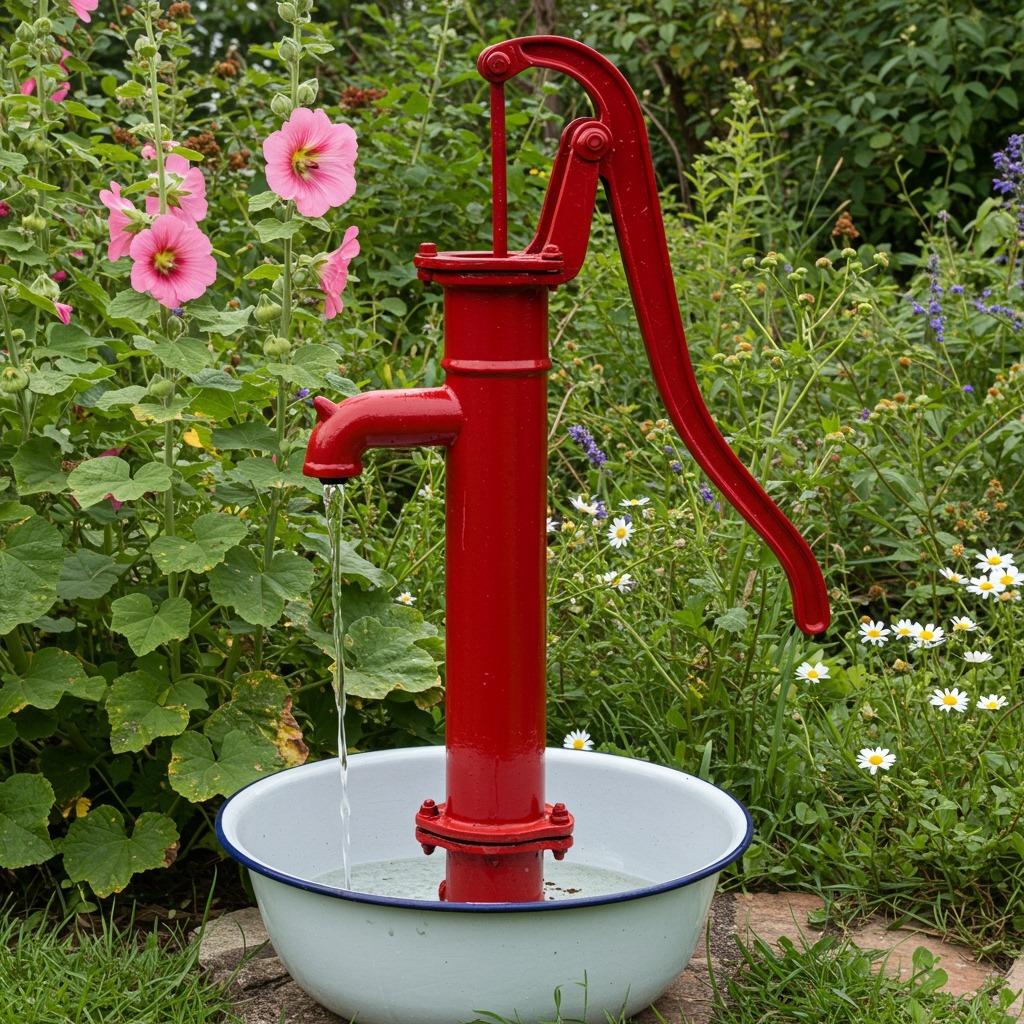
Vintage hand pumps find new purpose as fountain centerpieces. These nostalgic pieces evoke simpler times while adding vertical interest. Water flows from the spout just like it would have originally, but now it’s powered by electricity rather than elbow grease.
You can find old pumps at salvage yards or architectural antique shops. Some need restoration, others just cleaning. Route your tubing up through the pump mechanism so water emerges from the spout naturally. The pump below needs to provide enough pressure to reach that height.
This works beautifully in cottage gardens or farmhouse landscapes. The vintage character adds instant history to newer gardens. Pair it with period-appropriate elements like galvanized buckets or weathered wooden benches for an authentic look.
15. Multi-Level Stone Basin Fountain
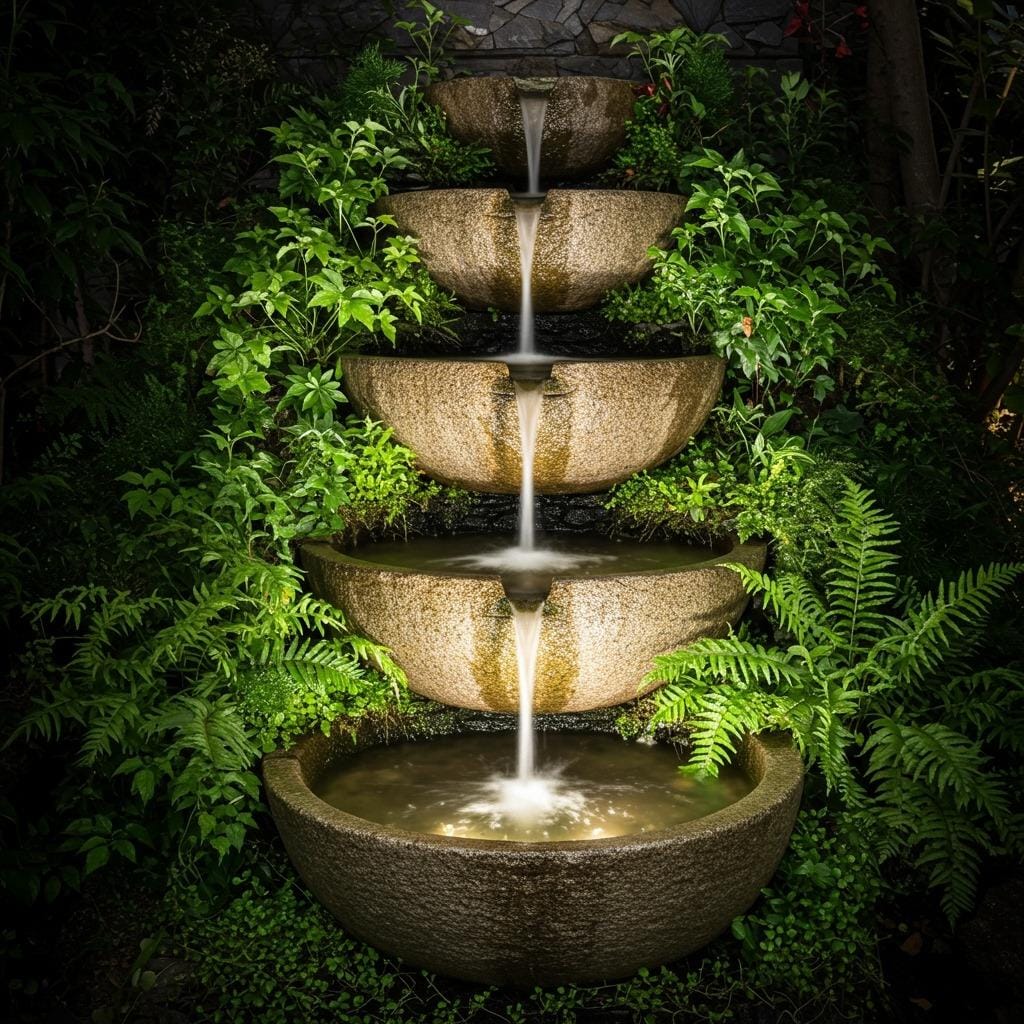
Carved stone basins stacked at different levels create an elegant, traditional fountain. Water fills the top basin and spills into successively lower ones. The carved stone adds a sense of permanence and craft that’s hard to achieve with other materials.
You can purchase pre-carved basins or hire a stone mason to create custom pieces. Each basin needs a channel or spout where water overflows. Stack them using mortar or simply balance them carefully, with tubing running up through the center.
This style suits formal gardens or as a focal point in garden seating areas. The substantial stone presence creates a sense of established permanence. Over time, beneficial algae may develop, adding to the aged appearance.
16. Glass Bottle Water Wall
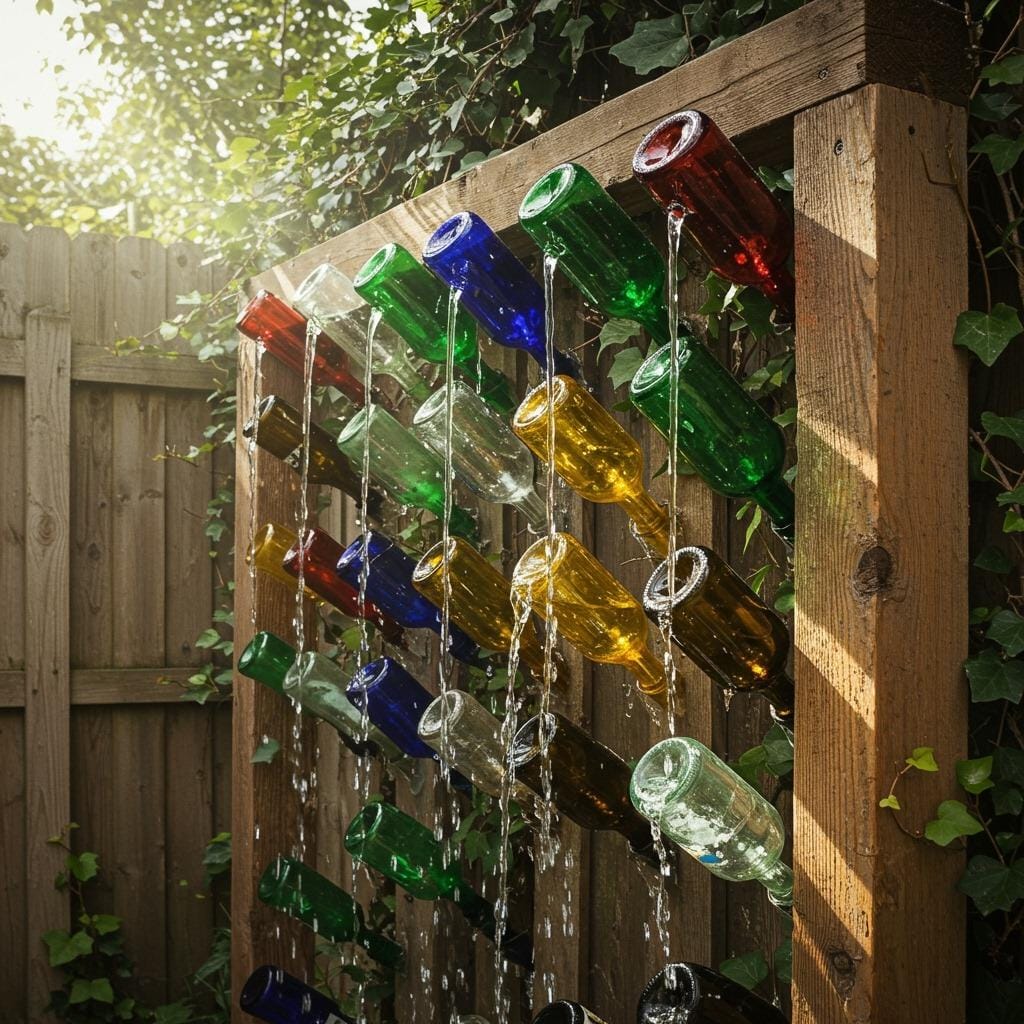
Here’s where creativity really shines. Mount glass bottles (wine, beer, or decorative bottles) on a frame and let water flow through them. The glass colors catch and filter light, creating beautiful effects especially with backlighting.
Drill holes in the bottle bottoms and mount them neck-down at slight angles. Water enters through the drilled holes and flows out the neck openings. You can arrange bottles in patterns, gradients, or random clusters. Each arrangement creates different visual interest.
This approach works as a privacy screen, fence decoration, or standalone feature. The tinkling sound of water entering glass adds another sensory layer. It’s perfect for gardens that embrace artistic or bohemian style. During sunny days, watch colored light patterns dance on nearby surfaces as water moves through the glass.
17. Succulent Container Fountain
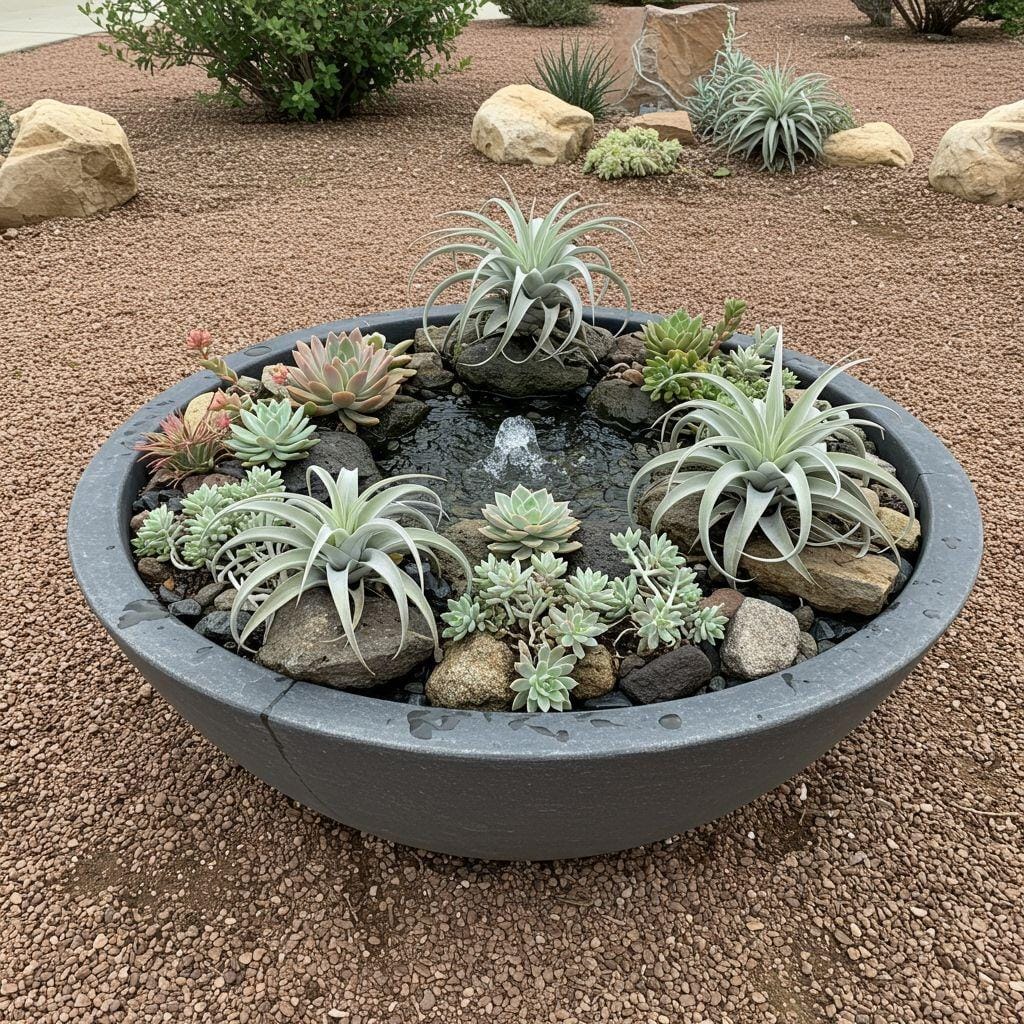
Combine water features with drought-tolerant plants for a unique fountain. A shallow, wide bowl houses a central bubbler while succulents grow in the surrounding areas. This low-maintenance approach suits modern gardens and xeriscapes.
The key is keeping plants elevated above water level using rocks or a built-in ledge around the bowl’s edge. The central fountain bubbles gently, adding humidity that many succulents appreciate. Choose varieties that tolerate occasional splashing.
This design works wonderfully on patios or as a coffee table alternative in outdoor living spaces. The combination of water and sculptural plants creates year-round interest. It’s especially striking in desert landscapes or southwestern-style gardens where traditional lush fountains might look out of place.
Making Your DIY Fountain Last
Once you’ve built your fountain, a few simple habits will keep it running beautifully for years. Check water levels weekly during hot weather – evaporation happens faster than you’d think. Top off with fresh water to keep your pump submerged and functioning properly.
Clean your pump filter monthly by removing debris and rinsing thoroughly. This prevents clogs and maintains proper water flow. During winter in cold climates, drain and store fountain components indoors to prevent freeze damage. For year-round use, add a fountain heater to prevent ice formation.
Algae growth is natural but manageable. Add a fountain treatment solution or use the EPA-approved guidelines for water feature maintenance, especially if you have fish or plants. Scrub surfaces occasionally with a soft brush to prevent buildup. These small maintenance steps ensure your handmade fountain remains a source of beauty and tranquility rather than becoming a neglected project.
Choosing the Right Fountain for Your Space
Your garden’s size and style should guide your fountain choice. Small patios and balconies benefit from compact designs like single-urn fountains or wall-mounted options that don’t consume valuable floor space. Outdoor lighting ideas for patio can further enhance these intimate water features after dark.
Larger yards can accommodate multi-tiered designs or rock formations that create impressive focal points. Consider your garden’s existing aesthetic too – rustic spaces call for weathered materials and vintage elements, while contemporary gardens shine with clean-lined concrete or metal designs. Think about viewing angles as well. Will you mostly see your fountain from one direction, or does it need to look good from all sides?
Sound level matters more than people realize. Position fountains near seating areas where you want that calming water sound, but not so close to windows that it becomes disruptive. Test pump speeds to find the perfect balance between visual appeal and audio presence.
Building your own fountain connects you to an ancient tradition of bringing water into cultivated spaces. These 17 ideas prove you don’t need specialized skills or a massive budget to create something truly special. Whether you choose the simplicity of stacked pots or challenge yourself with a copper pipe wall, you’re adding a living, moving element that transforms your garden’s entire atmosphere. The best fountain is the one you’ll actually build, so pick a project that excites you and matches your skill level. Your outdoor space is waiting for that soothing water soundtrack.

Sanjai creates easy, affordable home decor ideas that anyone can try. Through simple tips and curated finds, he helps you style rooms you’ll love coming home to.