Creating a stunning kitchen backsplash doesn’t require hiring an expensive contractor or settling for basic subway tiles laid in boring rows. The right tile pattern can completely transform your kitchen’s personality – turning a simple cooking space into the heart of your home that guests can’t stop talking about.
Whether you’re working with a tight budget or have room to splurge, these DIY kitchen backsplash tile patterns will help you achieve that custom, high-end look you’ve been pinning on Pinterest. Each pattern offers its own unique charm and can be adapted to work with various tile sizes, colors, and kitchen styles.

1. Classic Brick Pattern – The Timeless Foundation
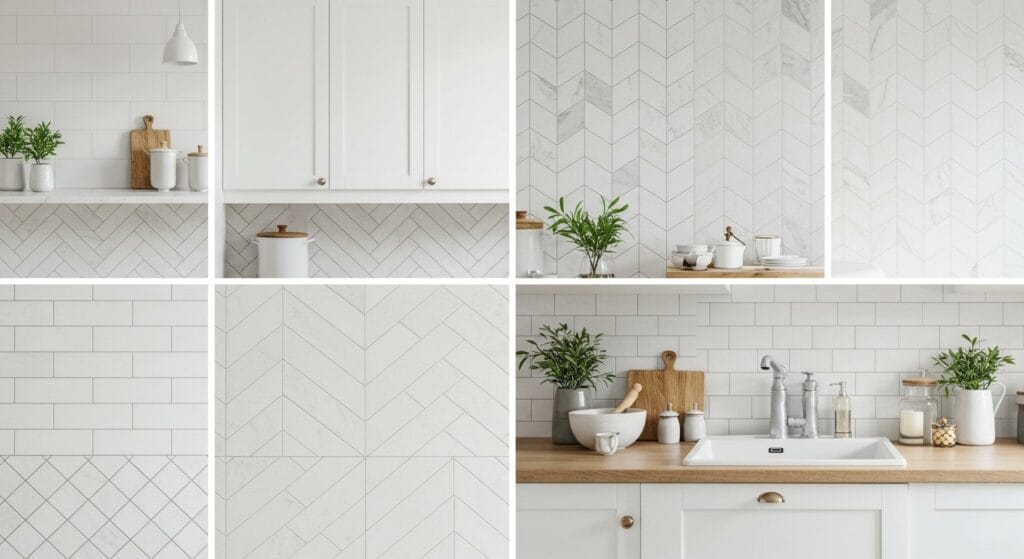
The brick pattern remains popular for good reason – it’s foolproof, forgiving for beginners, and works with virtually any tile shape. This traditional layout staggers each row by half a tile width, creating that familiar brick wall appearance.

Start with your bottom row, ensuring it’s perfectly level using a laser level or traditional bubble level. Each subsequent row should begin with a half tile to create the offset pattern. This method works beautifully with subway tiles, rectangular ceramic tiles, or even natural stone.
For a modern twist on this classic, try using different colored grout or varying your tile sizes slightly. The brick pattern is also incredibly forgiving if your walls aren’t perfectly straight – the staggered layout helps hide minor imperfections.
2. Herringbone – Bold Geometry That Commands Attention

The herringbone pattern creates incredible visual impact by arranging rectangular tiles in a zigzag formation. This sophisticated pattern works exceptionally well in modern farmhouse kitchens and adds instant character to any space.
Begin by finding your center point and marking guidelines on the wall. Each tile sits at a 45-degree angle to the next, forming a “V” shape that repeats across your backsplash. This pattern requires more planning than basic brick layouts, but the stunning results are worth the extra effort.
Consider using this dramatic pattern as an accent area rather than covering entire walls. A herringbone backsplash behind the stove or sink creates a beautiful focal point without overwhelming smaller kitchens.
3. Vertical Stack – Clean Lines for Contemporary Spaces

Sometimes the most striking choice is the simplest one. Vertical stacking creates clean, uninterrupted lines by aligning tiles directly on top of each other without any offset. This modern approach works particularly well with rectangular or square tiles.
The key to success with vertical stacking lies in precise measurement and installation. Unlike brick patterns that can hide slight imperfections, this layout demands perfection since any misalignment becomes immediately obvious.
This pattern pairs beautifully with simple kitchen styling and creates an elongated appearance that can make shorter walls appear taller. Choose contrasting grout colors to emphasize the geometric lines or matching grout for a seamless, monochromatic look.
4. Diagonal Layout – Dynamic Movement and Visual Interest

Installing tiles on a diagonal creates instant drama and makes spaces appear larger than they actually are. This technique works with square tiles of any size and adds sophisticated movement to your backsplash design.
Start by marking a 45-degree guideline from your center point and work outward in both directions. You’ll need to cut edge tiles to fit, but the dynamic visual effect more than compensates for the extra cutting required.
Diagonal layouts work particularly well in open concept living spaces where the kitchen connects to other rooms. The angled lines create visual flow and prevent the backsplash from appearing static or boring.
5. Hexagonal Honeycomb – Organic Curves Meet Modern Style

Hexagonal tiles bring organic beauty and contemporary style to kitchen backsplashes. The honeycomb pattern creates natural flow while maintaining geometric precision, making it perfect for both traditional and modern kitchen designs.
These six-sided tiles naturally tessellate, meaning they fit together seamlessly without requiring complex calculations. Start from your center point and work outward, ensuring each hex sits snugly against its neighbors.
Hexagonal patterns work beautifully with various tile materials – from classic ceramic to natural marble or even metallic finishes. The pattern’s natural texture catches light beautifully and creates visual interest without overwhelming your kitchen’s other design elements.
6. Basket Weave – Textural Depth and Traditional Charm

The basket weave pattern alternates horizontal and vertical tile pairs, creating the illusion of interwoven strips. This classic pattern works best with rectangular tiles and adds wonderful textural depth to kitchen walls.
Install pairs of tiles horizontally, then alternate with pairs installed vertically. The pattern requires careful planning to ensure proper alignment, but creates beautiful traditional charm reminiscent of classic basketry.
This pattern particularly complements Scandinavian kitchen decor and farmhouse styles. Choose natural materials like travertine or ceramic tiles in neutral tones to enhance the organic, handcrafted appearance.
7. Chevron Pattern – Dynamic V-Shapes for Bold Statements

Similar to herringbone but with a key difference – chevron patterns use specially cut tiles that meet at perfect points, creating continuous zigzag lines. This pattern delivers maximum visual impact and works beautifully in contemporary kitchens.
The chevron requires precise cutting and fitting, making it slightly more challenging than herringbone. However, the crisp, unbroken lines create a more polished appearance that’s worth the extra effort.
This bold pattern works particularly well as a feature wall behind ranges or as an accent strip within larger backsplash designs. Consider using green tile backsplash colors to create a fresh, nature-inspired chevron design.
8. Running Bond Vertical – Traditional Pattern with a Twist

Take the classic running bond pattern and rotate it 90 degrees for a fresh perspective. This vertical variation of the traditional brick pattern creates height and draws the eye upward, perfect for kitchens with lower ceilings.
Install your tiles vertically with each row offset by half a tile height rather than width. This simple rotation transforms a familiar pattern into something unexpectedly modern while maintaining the forgiving nature of offset layouts.
The vertical running bond works exceptionally well with black and white kitchen ideas, creating sophisticated contrast and visual movement. Consider using contrasting grout to emphasize the pattern’s direction.
9. Large Format Staggered – Modern Minimalism

Using large format tiles in a simple staggered pattern creates contemporary elegance with minimal visual complexity. This approach works particularly well with 12×24 inch or larger tiles, creating a sophisticated, spa-like atmosphere.
The key to this pattern lies in the subtle offset – typically one-third rather than the traditional half-tile stagger. This creates gentle rhythm without the busy appearance of smaller tile patterns.
Large format staggered patterns complement modern minimalist kitchen designs beautifully. The clean lines and reduced grout lines create a seamless, luxurious appearance that’s perfect for contemporary homes.
10. Pinwheel Pattern – Playful Geometry for Character

The pinwheel pattern combines square and rectangular tiles to create rotating geometric shapes that add playful sophistication to kitchen backsplashes. This pattern typically uses one large square tile surrounded by four smaller rectangular tiles.
Plan your layout carefully to ensure the pinwheel motifs align properly across your backsplash area. This pattern works best when you can complete full pinwheel units, so measure your space thoroughly before beginning installation.
The pinwheel pattern adds wonderful character to farmhouse chic kitchens and traditional spaces. Consider using natural stone or handmade ceramic tiles to enhance the pattern’s organic, artisanal appeal.
11. Arabesque Lantern – Moroccan-Inspired Elegance

Arabesque tiles, also known as lantern tiles, bring exotic sophistication to kitchen backsplashes with their distinctive curved shapes. These tiles create flowing, organic patterns that feel both timeless and contemporary.
The unique shape of arabesque tiles means they naturally tessellate without requiring complex planning. Simply start from your center point and work outward, allowing the tiles’ natural curves to create beautiful flowing patterns.
This elegant pattern works beautifully in both neutral and bold color schemes. Consider metallic finishes or rich jewel tones to create a truly stunning focal point that complements chandelier dining room lighting and elegant kitchen designs.
12. Fish Scale (Scalloped) – Whimsical Curves and Texture

Fish scale tiles, also called scalloped tiles, bring playful sophistication to kitchen backsplashes with their distinctive curved edges. This pattern creates wonderful texture and movement while maintaining a refined, elegant appearance.
Installation requires starting from the bottom and working upward, with each row of scales nestling into the curves of the row below. The natural overlap creates beautiful shadow lines that add depth and visual interest.
Fish scale patterns work particularly well in coastal living rooms and beach-inspired kitchens. Choose soft blues, greens, or classic whites to enhance the oceanic connection and create a fresh, airy feeling.
13. Windmill Pattern – Classic Geometry with Modern Appeal

The windmill pattern combines square and rectangular tiles to create rotating cross shapes that add sophisticated geometric interest. This traditional pattern uses one square tile at the center with four rectangular tiles radiating outward.
Plan your layout to ensure windmill units align properly across your backsplash. This pattern works best with high contrast between the square and rectangular tile colors, creating clear definition between the geometric elements.
This versatile pattern complements various design styles, from traditional farmhouse to contemporary minimalist. The geometric repetition creates visual rhythm while maintaining enough complexity to keep the design interesting.
14. Mixed Pattern Medley – Creative Combinations

Why choose just one pattern when you can artfully combine multiple layouts for truly custom results? Mixed pattern designs allow you to create unique, personalized backsplashes that reflect your individual style.
Consider combining brick pattern fields with herringbone accent strips, or mixing hexagonal areas with linear patterns. The key to success lies in maintaining visual balance and ensuring smooth transitions between different pattern areas.
Start by sketching your design on paper or using tile layout software to visualize how different patterns will work together. This approach works particularly well in larger kitchens where you have space to develop complex, layered designs.
Essential Tips for DIY Success
Installing your own tile backsplash can save thousands compared to professional installation. Start with proper wall preparation – clean, smooth surfaces are essential for professional-looking results. According to the Tile Council of North America, proper substrate preparation prevents 90% of tile installation problems.
Invest in quality tools including a wet tile saw, level, spacers, and proper adhesive for your tile type. Take time to plan your layout completely before applying any adhesive. Mark center points, draw guidelines, and do dry layouts to identify potential issues before they become permanent problems.
Don’t rush the process – proper curing time between steps ensures long-lasting results. Most tile adhesives require 24 hours before grouting, and grout needs additional curing time before heavy cleaning or sealing.
Consider your home improvement ideas holistically – your backsplash should complement your overall kitchen design rather than competing with other elements. Choose patterns that enhance your existing cabinetry, countertops, and lighting.
Choosing the Right Pattern for Your Space
Your kitchen’s size, style, and existing elements should guide your pattern selection. Smaller kitchens benefit from simpler patterns like brick or vertical stack, while larger spaces can handle bold geometric designs like chevron or mixed patterns.
Consider your skill level honestly when selecting patterns. Herringbone and chevron require more precision than basic brick patterns. If you’re new to tile work, start with forgiving layouts and work up to more complex designs as your skills develop.
Think about maintenance requirements too. Patterns with numerous grout lines require more cleaning, while large format tiles with minimal grout are easier to maintain. Busy patterns can hide minor imperfections but may overwhelm small spaces.
Your backsplash should reflect your personal style while adding value to your home. These DIY kitchen backsplash tile patterns offer endless possibilities for creating the custom look you’ve always wanted – without the custom price tag.
Whether you choose classic brick simplicity or bold geometric complexity, the right pattern can transform your kitchen into a space that’s uniquely yours. Take time to plan carefully, invest in quality materials, and don’t be afraid to try something unexpected.

Sanjai creates easy, affordable home decor ideas that anyone can try. Through simple tips and curated finds, he helps you style rooms you’ll love coming home to.