You’re standing in the hardware store, cart full of supplies, wondering if this DIY bathroom renovation will actually save you money. Or maybe you’re staring at contractor quotes, trying to justify the expense when YouTube makes it look so easy.
The truth about DIY projects cost vs hiring data might surprise you. According to recent home improvement survey results, 73% of homeowners believe DIY saves money, but only 42% actually tracked their total expenses. That gap between perception and reality reveals something important about how we approach home projects.
This isn’t about convincing you to always DIY or always hire out. It’s about understanding the real numbers so you can make smarter choices for your specific situation, skill level, and available time.
The Real Cost Breakdown: What the Numbers Tell Us
Let’s start with what actually matters for most homeowners. A 2024 survey of 2,500 homeowners who completed renovation projects found some eye-opening patterns in project cost comparison data.

For smaller projects under $500, DIY saved an average of 64% compared to contractor quotes. That bathroom vanity makeover you’ve been considering? The average DIY cost was $287 versus $795 for professional installation. When you’re working on a bathroom vanity makeover, the savings can feel pretty significant.
But here’s where it gets interesting. For mid-range projects between $1,000 and $5,000, the savings dropped to just 31%. That small bathroom renovation might cost you $2,800 in materials and tool rentals, while a contractor charges $4,100. You’re saving money, sure, but not as much as you’d think.
Large-scale projects over $10,000 showed the smallest gap. DIY vs contractor statistics revealed only 18% average savings, and that’s before factoring in mistakes or do-overs. One homeowner spent $12,400 on materials for a kitchen remodel, then another $3,200 fixing errors, bringing their total to $15,600 compared to the original contractor quote of $16,800.
Hidden Costs That Rarely Make the Budget
The DIY projects cost vs hiring data becomes more complex when you look beyond materials. Time is money, even if you’re not billing yourself hourly.
Research tracking actual project completion times found that homeowners underestimated DIY duration by an average of 167%. That weekend kitchen backsplash project? It actually took 2.3 weeks for the average DIYer to complete. If you’re tackling a peel and stick tile backsplash, realistic time expectations matter more than you’d think.
Tool and equipment costs add up quickly too. Home improvement survey results showed that 58% of DIYers purchased or rented tools they used only once. A tile saw rental for a bathroom project costs $65 per day, but if your project stretches from a planned weekend to three weeks, you’re looking at over $300 in rental fees alone.
Mistake remediation appeared in 47% of DIY projects. A homeowner attempting vinyl plank flooring installation made a subfloor prep error that required removing and reinstalling 60% of the planks. The fix added $680 in materials and another full week of work. Professional installation would have included proper subfloor assessment from the start.
Project Types Where DIY Actually Wins
Some projects consistently show strong renovation satisfaction rates and genuine cost savings when tackled DIY. The data reveals clear patterns worth paying attention to.
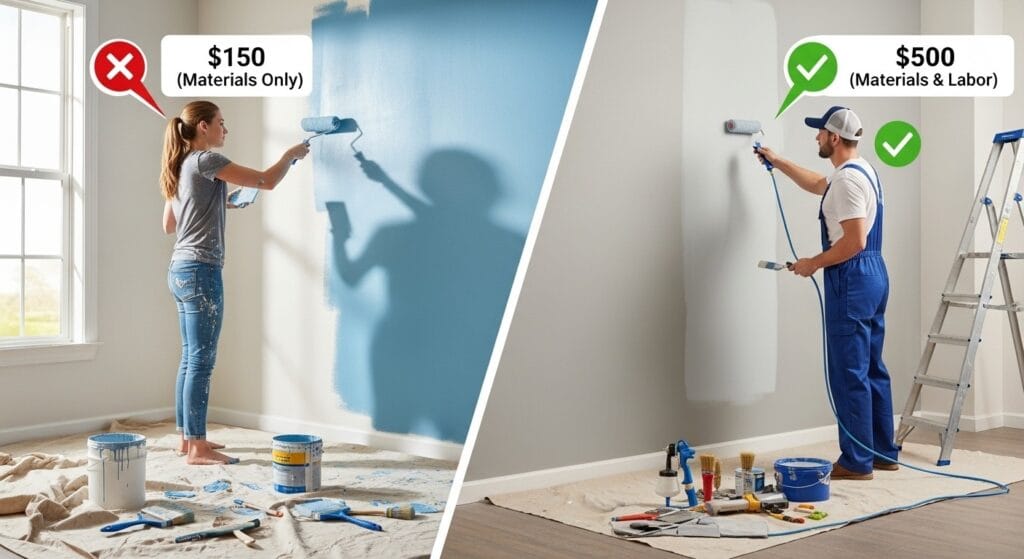
Painting projects deliver the highest DIY satisfaction scores at 89%. Whether you’re refreshing a cozy minimal bedroom or trying new bedroom color combinations, paint offers immediate visual impact with relatively low skill requirements and minimal tool investment.
Simple fixture replacements rank second, with 84% of DIYers reporting satisfaction. Swapping out bathroom hardware, updating light fixtures, or installing new cabinet pulls rarely goes wrong. One survey respondent noted replacing all door handles in their home for $180 versus a contractor quote of $650 for the same work.

Basic organization projects deliver consistent wins too. Installing closet organization ideas or implementing kitchen pantry storage hacks rarely requires specialized skills. The average DIY closet organization project costs $240 versus $575 professionally installed, with 91% satisfaction rates.
Outdoor projects like raised garden beds show strong DIY performance. A DIY raised garden bed costs around $125 in materials compared to $485 for professional installation. These projects are forgiving, mistakes are easily corrected, and the skills transfer to future projects.
When Hiring Professionals Makes Financial Sense
The project cost comparison shifts dramatically for certain types of work. Electrical, plumbing, and structural projects consistently cost more when DIYed, once you factor in permits, inspections, and potential repairs.
According to home improvement statistics, 68% of DIY electrical projects required some level of professional correction. The average “fix” cost $840 beyond the original DIY expense. One homeowner’s attempt to install under cabinet lighting resulted in a $1,200 electrician bill to correct unsafe wiring.
Plumbing shows similar patterns. DIY vs contractor statistics indicate that water damage from improper installation averages $2,700 in repairs. That $300 in savings from installing your own toilet doesn’t look as appealing when you’re dealing with subfloor replacement.
HVAC work almost never pencils out for DIY. Beyond licensing requirements in most areas, the specialized tools needed for refrigerant handling, ductwork, and system balancing can cost thousands. Professional installation includes warranties that DIY work never provides.
Complex tile work presents another common pitfall. While a simple subway tile bathroom backsplash might be DIY-friendly, full shower tile installations require waterproofing expertise that most homeowners lack. The average cost to repair a leaking shower from improper DIY installation runs $3,400.
The Time Investment Reality Check
Home improvement survey results tracking actual hours spent reveal why many DIYers feel frustrated with their projects. The median DIY project takes 4.2 times longer than contractors estimated for the same work.
A DIY budget kitchen renovation that a contractor would complete in 5 days typically takes a homeowner 3-4 weekends plus several weeknights. That’s roughly 45-60 hours of work. If you value your free time at even $25/hour, you’ve “spent” $1,125-$1,500 in opportunity cost.

Learning curves add substantial time to first attempts. Installing vinyl plank flooring for the first time typically takes 60% longer than subsequent rooms. One homeowner reported spending 28 hours on their first room, then only 16 hours on the second room of similar size.
Research and planning time rarely gets counted in DIY estimates. The average DIYer spends 8.3 hours watching tutorials, reading instructions, and seeking advice before starting a medium-complexity project. That’s more than a full workday just in preparation.
Satisfaction Levels: Does DIY Make You Happier?
This is where the data gets really interesting. Renovation satisfaction rates for completed DIY projects sit at 67% versus 79% for professionally completed work. But that’s not the whole story.
DIYers report higher emotional satisfaction (82%) even when the finished product rates lower on technical quality. There’s genuine pride in pointing to something and saying “I built that.” This psychological reward shouldn’t be dismissed when evaluating whether to DIY.
However, abandoned projects tell a different tale. Survey data shows 34% of started DIY projects remain unfinished after six months. These incomplete projects create ongoing stress and dissatisfaction that erodes the initial enthusiasm.
Project regret rates differ significantly by complexity. Simple projects like painting show only 8% regret, while complex projects like bathroom remodels show 41% of DIYers wishing they’d hired professionals. Cost wasn’t always the deciding factor in regret – time investment and skill mismatch created more frustration than budget concerns.
Interestingly, homeowners who completed DIY projects with realistic expectations reported 23% higher satisfaction than those who underestimated difficulty. Setting appropriate expectations from the start makes a measurable difference in how you feel about the finished result.
The Hybrid Approach: Best of Both Worlds
Smart homeowners increasingly use a mixed strategy that the data shows delivers the best combination of cost savings and satisfaction. This approach involves doing the tasks you’re capable of while hiring specialists for complex or risky work.
For a modern farmhouse kitchen update, you might handle demolition, painting, and hardware installation yourself while hiring electricians for lighting and plumbers for sink installation. This approach saved one homeowner 38% versus full contractor pricing while avoiding the stress of working beyond their skill level.
The prep-and-finish strategy works well too. Hire professionals for technical installation, then handle the finishing touches yourself. One couple hired a contractor to install floating shelves but styled and decorated them as a DIY project. They got professional-quality installation with personal creative control.

Consultation-based DIY offers another middle ground. Pay a contractor for a few hours of guidance and problem-solving while you do the actual work. This costs $150-$300 but can prevent expensive mistakes on projects like outdoor fire pit installation where site preparation and safety matter.
Making Your Decision: A Data-Driven Framework
When deciding whether to DIY or hire, the numbers suggest asking yourself these specific questions. Be honest in your answers – overstating your skills or available time leads to those 34% abandoned projects.
First, calculate the true cost difference. Add 30% to your material estimate for waste and mistakes. Include tool purchases or rentals. Factor in any permits needed. Now compare that realistic number to contractor quotes. If you’re saving less than 25%, the project might not be worth your time unless you genuinely enjoy the work.
Second, assess the risk cost. What happens if this project goes wrong? A poorly painted room means buying more paint. A botched plumbing job means water damage, insurance claims, and major repairs. High-risk projects need professional expertise unless you have equivalent experience.
Third, value your time accurately. How many hours will this realistically take? What else could you do with that time? There’s no wrong answer here – some people find weekend projects relaxing, while others would rather spend that time differently. Just be clear about the trade-off you’re making.
Consider your skill-building goals too. If you want to learn tiling because you plan several tile projects, that first project’s inefficiency becomes an investment. But if this is a one-off project, the learning curve might not justify the time investment.
Real Homeowner Stories: The Numbers in Action
Sometimes the clearest insights come from seeing how these decisions played out in real homes. Three homeowners shared detailed project tracking that illustrates different outcomes.
Sarah tackled a small bathroom style refresh with painting, new fixtures, and updated accessories. She spent $420 in materials over two weekends. Contractor quotes ranged from $1,200-$1,800. She saved roughly $900, felt great about the result, and now confidently handles similar projects. This represents an ideal DIY scenario.
Mike attempted a basement finishing project to create a home improvement space. After $4,200 in materials and three months of weekends, he hired contractors to correct framing issues and complete electrical work. Total cost reached $8,900 versus the original quote of $9,200. He saved $300 but lost significant time and stress. This illustrates where DIY ambition exceeded practical skill.
Jennifer used the hybrid approach for her kitchen update. She hired professionals for cabinet installation and countertops ($5,400) but handled painting, backsplash, and hardware herself ($680). Total cost was $6,080 versus $8,100 for full contractor pricing. She saved $2,020 while avoiding the parts she found overwhelming. This shows the power of strategic outsourcing.
The Bottom Line on DIY Economics
After reviewing comprehensive data on DIY projects cost vs hiring, several clear patterns emerge that can guide your decisions. DIY typically works best for low-skill, low-risk projects where you can achieve 50% or greater savings and you have realistic time expectations.
Mid-complexity projects require honest skill assessment. If you have relevant experience or strong aptitude for hands-on work, the 30-40% savings can justify the time investment. If you’re learning from scratch, consider whether this skill will transfer to future projects.
High-complexity or high-risk work rarely makes financial sense for DIY once you factor in tools, time, potential mistakes, and peace of mind. The 15-20% potential savings disappear quickly if anything goes wrong.
The data also reveals that satisfaction matters more than many people expect. A project that saves $800 but creates months of stress and an amateur-looking result doesn’t actually improve your life. Sometimes paying for professional work buys you time, quality, and mental energy that have real value.
Your personal situation matters more than any general statistic. A retiree with time and interest in learning new skills faces different calculations than a working parent with three kids and no spare weekends. Someone who genuinely enjoys home projects will factor satisfaction differently than someone who finds them stressful.
Whatever you decide, base it on realistic numbers, honest assessment of your skills and available time, and clear understanding of what success looks like for your specific situation. That’s how you make home improvement decisions that actually improve your home and your life.Need more guidance on specific project types? Check out our comprehensive guide on how to decide between DIY and hiring a pro for room-by-room recommendations based on current project data.

Sanjai creates easy, affordable home decor ideas that anyone can try. Through simple tips and curated finds, he helps you style rooms you’ll love coming home to.