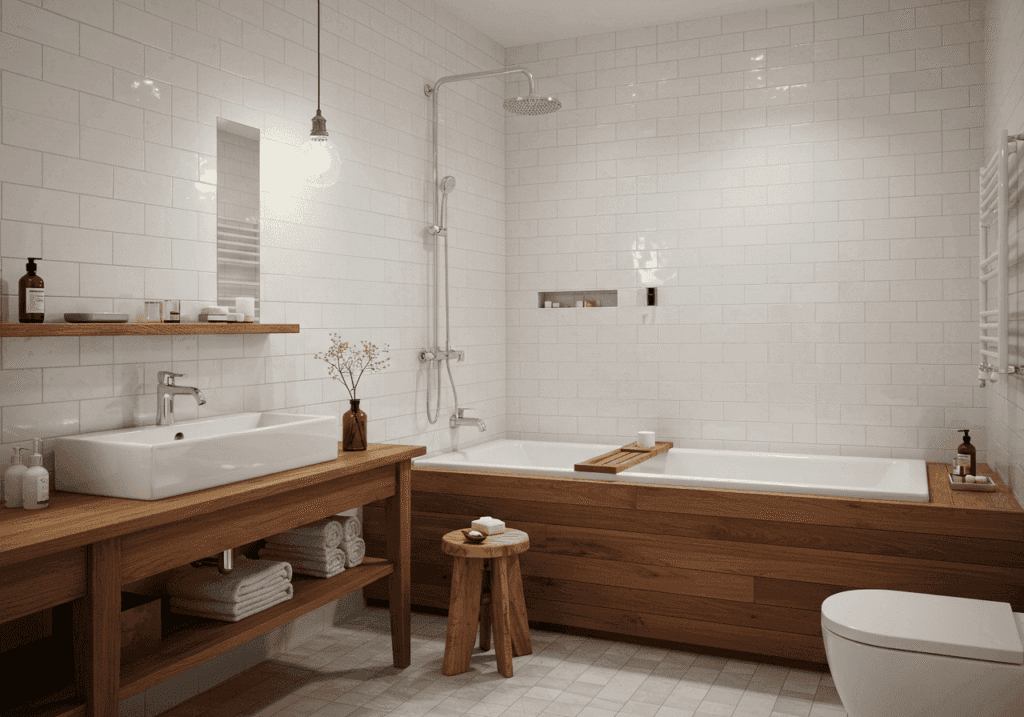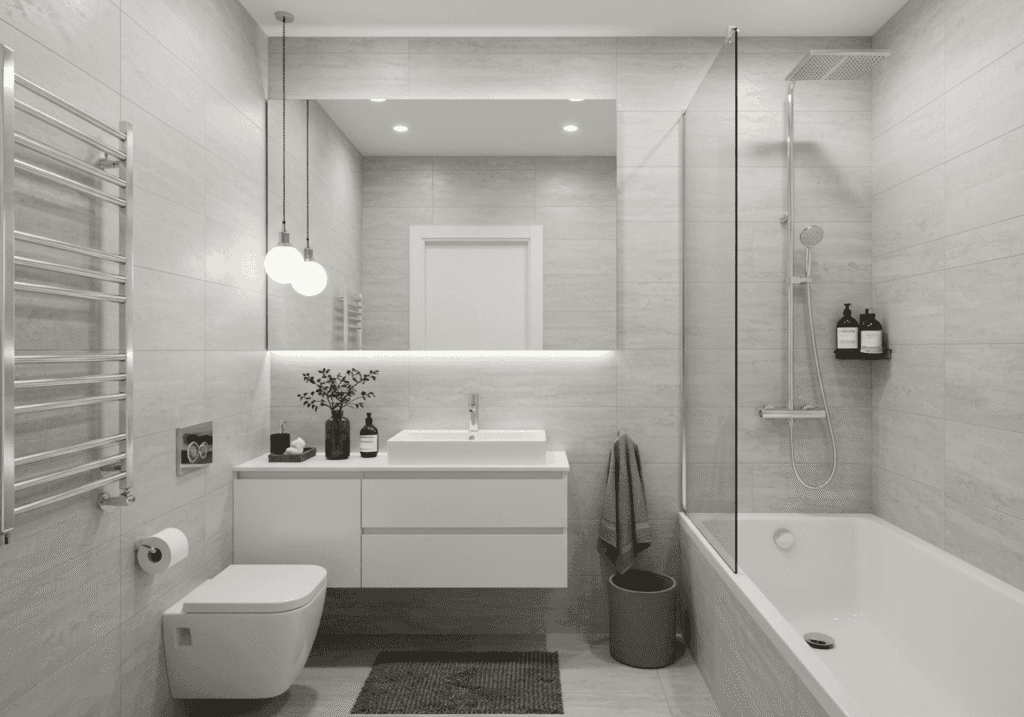
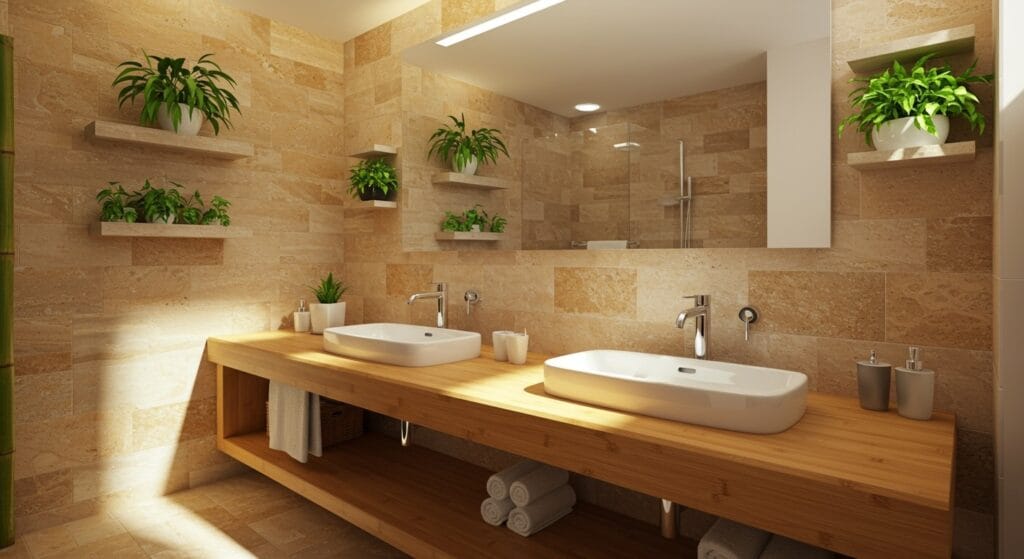
Creating an eco-friendly bathroom doesn’t mean sacrificing style or comfort. With growing awareness about environmental impact, many homeowners are discovering that sustainable bathroom design can be both beautiful and budget-friendly. The key is choosing materials and fixtures that reduce water consumption, minimize waste, and create a healthier indoor environment.
Whether you’re planning a complete bathroom remodel or looking for simple swaps to make your space more sustainable, these ideas will help you create a bathroom that feels like a personal retreat while being kind to the planet. From innovative water-saving fixtures to natural materials that add warmth and texture, there are countless ways to go green without compromising on aesthetics.
Ready to transform your bathroom into an eco-conscious oasis? Let’s explore 17 practical ideas that will reduce your environmental footprint while creating a space you’ll absolutely love spending time in.
1. Install Low-Flow Showerheads and Faucets

Water-saving fixtures are perhaps the most impactful change you can make in your eco-friendly bathroom. Modern low-flow showerheads can reduce water usage by up to 50% while still providing excellent water pressure. The technology has come so far that you honestly won’t notice the difference in your daily routine.
When shopping for faucets, look for the EPA’s WaterSense label, which indicates the fixture meets strict efficiency and performance standards. These fixtures typically use 20% less water than standard models. It’s fascinating how much water we can save with such a simple swap.
The installation process is usually straightforward enough for most DIY enthusiasts, making this one of the easiest eco-friendly upgrades you can tackle. Plus, the water savings will show up on your utility bill pretty quickly.
2. Choose Bamboo for Vanities and Storage

Bamboo has become a favorite material for sustainable bathroom design, and for good reason. It grows incredibly fast – some varieties can grow up to three feet in a single day – making it one of the most renewable resources available. The natural variations in bamboo grain create beautiful, unique patterns that add character to any bathroom.
Unlike traditional hardwoods that can take decades to mature, bamboo reaches harvest maturity in just 3-5 years. This makes it an excellent choice for vanities, shelving, and even flooring. The material is naturally antimicrobial too, which is perfect for humid bathroom environments.
When selecting bamboo furniture, look for pieces that use formaldehyde-free adhesives and finishes. This ensures your bathroom vanity makeover is truly eco-friendly from top to bottom.
3. Incorporate Reclaimed Wood Elements

Reclaimed wood brings incredible character and history to your bathroom while preventing perfectly good timber from ending up in landfills. Each piece tells a story through its weathered texture, nail holes, and natural patina that you simply can’t replicate with new materials.
Using reclaimed wood for accent walls, floating shelves, or vanity bases creates a warm, organic contrast to sleek modern fixtures. The key is properly sealing the wood to handle bathroom humidity while preserving its natural beauty.
Sources for reclaimed wood include old barns, demolished buildings, and even wine barrels. Many specialty retailers now offer pre-treated reclaimed wood specifically for bathroom applications, taking the guesswork out of preparation and sealing.
4. Add Natural Stone and Ceramic Tiles

Natural stone and ceramic tiles are excellent sustainable choices because they’re incredibly durable and can last for decades with proper care. Materials like travertine, slate, and ceramic are made from abundant natural resources and require minimal processing compared to synthetic alternatives.
These materials also offer excellent thermal mass, helping to regulate bathroom temperature naturally. This can reduce your reliance on heating and cooling systems. The variety of textures and colors available means you can create anything from a spa-like bathroom decor to a more rustic, earthy vibe.
When choosing tiles, consider larger formats to reduce grout lines and cleaning time. Look for tiles made locally when possible to minimize transportation emissions, and choose sealers that are low-VOC for better indoor air quality.
5. Install a Dual-Flush Toilet System

Dual-flush toilets represent one of the smartest water conservation technologies available today. These systems offer two flush options – a light flush for liquid waste using about 0.8 gallons, and a full flush for solid waste using around 1.6 gallons. Compare this to older toilets that use 3-7 gallons per flush, and the savings add up quickly.
The EPA estimates that replacing an old toilet with a WaterSense labeled dual-flush model can save a family of four over 16,000 gallons of water annually. That’s not just good for the environment – it translates to real savings on your water bill too.
Modern dual-flush toilets come in sleek designs that complement any bathroom aesthetic. Many models feature soft-close seats and easy-clean surfaces, proving that eco-friendly doesn’t mean sacrificing comfort or convenience.
6. Use VOC-Free and Natural Paints

Traditional paints release volatile organic compounds (VOCs) that can affect indoor air quality for months after application. In a bathroom where you spend intimate time daily, choosing VOC-free or natural paints makes a significant difference in creating a healthier environment.
Plant-based and mineral paints have come a long way in terms of durability and color selection. These formulations often provide better breathability, which is particularly important in humid bathroom environments. They’re less likely to trap moisture behind the paint film, reducing the risk of mold and mildew.
Many eco-friendly paint brands now offer specialized bathroom formulations that resist moisture and mildew naturally. Colors inspired by nature – soft greens, warm earth tones, and calming blues – work beautifully in sustainable bathroom design while creating a connection to the outdoors.
7. Maximize Natural Light with Skylights

Natural light is the most eco-friendly way to illuminate your bathroom during daylight hours. Skylights not only reduce electricity consumption but also create a more spacious, uplifting atmosphere. There’s something magical about bathing or getting ready under natural light that artificial lighting just can’t replicate.
Modern skylights come with advanced glazing options that provide excellent insulation while maximizing light transmission. Some models include automated rain sensors and can be opened for natural ventilation, which helps manage humidity without running exhaust fans constantly.
If installing a skylight isn’t possible, consider expanding existing windows or adding light tubes, which can bring natural light into interior bathrooms. Even small increases in natural light can significantly reduce your dependence on artificial lighting during peak daylight hours.
8. Choose Organic Cotton Towels and Linens

The textiles in your bathroom play a bigger role in sustainability than you might realize. Conventional cotton production uses enormous amounts of water and pesticides, while organic cotton is grown without synthetic chemicals and typically uses less water through more efficient farming practices.
Organic cotton towels and bath mats are not only better for the environment but often feel softer and more luxurious against your skin. They’re free from the chemical residues that can sometimes irritate sensitive skin, making them particularly good for families with allergies or young children.
When shopping for organic linens, look for certifications like GOTS (Global Organic Textile Standard) which ensures the entire supply chain meets environmental and social criteria. Choosing neutral colors and classic styles means your investment will look fresh for years to come.
9. Install Efficient LED Lighting

LED lighting uses up to 80% less energy than traditional incandescent bulbs and lasts significantly longer, reducing both energy consumption and waste. In bathrooms, where lights are often left on for safety and convenience, this efficiency really adds up over time.
The quality of LED lighting has improved dramatically, with options now available in warm, natural color temperatures that are flattering for grooming tasks. Dimmable LEDs allow you to adjust lighting levels throughout the day, creating a relaxing ambiance for evening baths or gentle morning routines.
Consider installing motion sensors for LED lights in areas like powder rooms or walk-in showers. This ensures lights are only on when needed, maximizing energy savings while adding convenience to your daily routine.
10. Add Indoor Plants for Natural Air Purification

Plants are nature’s air purifiers, naturally removing toxins and adding oxygen to your bathroom environment. Certain plants thrive in humid conditions, making them perfect companions for sustainable bathroom design. They also add a spa-like quality that makes your daily routine feel more luxurious.
Snake plants, pothos, and ZZ plants are particularly well-suited for bathrooms because they tolerate low light and high humidity while requiring minimal care. These plants can help remove common indoor air pollutants like formaldehyde and benzene, which may be present in cleaning products or building materials.
Creating a plant-friendly bathroom often means adding floating shelves or plant stands near windows. The key is choosing plants that match your lighting conditions and maintenance preferences – there are low-maintenance options for every skill level.
11. Choose Refillable and Plastic-Free Toiletries

Switching to refillable dispensers and plastic-free toiletries dramatically reduces bathroom waste while often saving money in the long run. Wall-mounted dispensers for soap, shampoo, and conditioner look sleek and modern while eliminating dozens of plastic bottles annually.
Solid shampoo and conditioner bars have become incredibly sophisticated, with formulations for every hair type. They last longer than liquid products, require no packaging, and are perfect for travel. Many people find they actually prefer the way their hair feels after switching to bars.
Look for refill stations at local health food stores or co-ops where you can bring your own containers. Online subscription services now offer eco-friendly toiletries delivered in minimal, recyclable packaging, making the transition to sustainable products easier than ever.
12. Install a Tankless Water Heater

Tankless water heaters, also known as on-demand water heaters, only heat water when you need it, eliminating the energy waste of keeping a large tank of water hot 24/7. They’re typically 24-34% more energy efficient than conventional storage tank water heaters for homes that use 41 gallons or less of hot water daily.
These units take up significantly less space than traditional water heaters, freeing up storage space in your home. They also last longer – typically 20+ years compared to 10-15 years for tank models – reducing replacement frequency and waste.
While the upfront cost is higher, the energy savings and longer lifespan make tankless heaters a smart long-term investment for eco-conscious homeowners. Many utility companies offer rebates for energy-efficient water heater installations, helping offset the initial cost.
13. Use Natural Cleaning Products

Natural cleaning products protect your family’s health while reducing harmful chemicals that enter waterways through drainage. Many effective bathroom cleaners can be made from simple ingredients like white vinegar, baking soda, and castile soap – ingredients that are safe, affordable, and readily available.
Vinegar naturally dissolves soap scum and mineral deposits, while baking soda provides gentle abrasive action for scrubbing. Adding essential oils like tea tree or eucalyptus provides natural antimicrobial properties and leaves your bathroom smelling fresh without synthetic fragrances.
Making your own cleaning products also eliminates plastic packaging waste from store-bought cleaners. Store your homemade cleaners in glass spray bottles that can be reused indefinitely, and you’ll never run out of effective, eco-friendly cleaning power.
14. Install Water-Saving Aerators

Aerators are small, inexpensive devices that attach to faucets to reduce water flow while maintaining pressure by mixing air with the water stream. They’re one of the most cost-effective water conservation measures you can implement, often costing just a few dollars while providing immediate savings.
Most bathroom faucets can benefit from aerators that reduce flow to 1.0-1.5 gallons per minute compared to standard faucets that may flow at 2.2 gallons per minute or more. The difference in water pressure is barely noticeable for most daily tasks like handwashing and teeth brushing.
Installing aerators is usually as simple as screwing them onto existing faucets – no special tools required. This makes them perfect for renters or anyone looking for quick, affordable ways to reduce their bathroom’s environmental impact.
15. Choose Recycled Glass Accessories

Recycled glass accessories bring beautiful color and texture to your bathroom while giving new life to materials that might otherwise end up in landfills. The manufacturing process for recycled glass uses less energy than creating new glass, making it a more sustainable choice for bathroom decor.
These accessories often have unique character – slight variations in color and texture that come from the recycling process. Sea glass-inspired pieces work particularly well in coastal-themed bathrooms, while clear recycled glass complements any style with its clean, modern appearance.
Many artisans now specialize in recycled glass bathroom accessories, offering everything from soap dispensers to decorative bowls. Supporting these craftspeople helps promote sustainable practices while adding unique, handmade touches to your space.
16. Add a Greywater System

Greywater systems capture relatively clean wastewater from sinks, showers, and washing machines for reuse in irrigation or toilet flushing. While this represents a more advanced eco-friendly upgrade, the water savings can be substantial – greywater typically accounts for 50-80% of residential wastewater.
Simple greywater systems can be installed to collect water from bathroom sinks for garden irrigation. More complex systems can integrate with your home’s plumbing to redirect shower and washing machine water for toilet flushing or landscape irrigation.
Before installing any greywater system, check local codes and regulations, as requirements vary by location. Many areas now have specific guidelines for residential greywater systems, recognizing their value for water conservation and environmental protection.
17. Create Storage with Sustainable Materials

Smart storage solutions using sustainable materials help keep your eco-friendly bathroom organized while reinforcing your commitment to environmental responsibility. Natural materials like bamboo, rattan, and reclaimed wood add warmth and texture while providing functional storage for towels, toiletries, and cleaning supplies.
Woven baskets made from sustainable materials like seagrass or jute are perfect for storing extra towels and linens. They’re breathable, which helps prevent mustiness, and they add a spa-like quality to your bathroom storage and organization.
Consider built-in storage solutions using reclaimed wood or bamboo plywood. Custom shelving and cabinets can maximize your space while ensuring every material choice aligns with your sustainability goals. These solutions often prove more durable than mass-produced alternatives.
Creating Your Eco-Friendly Bathroom Oasis
Building an eco-friendly bathroom is about making thoughtful choices that benefit both your family and the environment. Start with one or two changes that appeal to you most – maybe upgrading to water-saving fixtures or switching to natural cleaning products. Each small step builds momentum toward a more sustainable lifestyle.
The beauty of sustainable bathroom design lies in how these eco-conscious choices often enhance your daily experience. Natural materials feel more luxurious, efficient fixtures perform better, and cleaner air quality makes the space more enjoyable. You’re not sacrificing comfort for sustainability – you’re upgrading both.
Remember that creating an eco-friendly bathroom is a journey, not a destination. As new technologies and materials become available, you can continue evolving your space. The foundation you build today with smart material choices and efficient fixtures will serve you well for years to come, proving that sustainable kitchen materials and bathroom materials are investments in both your home’s future and our planet’s wellbeing

Sanjai creates easy, affordable home decor ideas that anyone can try. Through simple tips and curated finds, he helps you style rooms you’ll love coming home to.