Floating shelves living room setups have this magical ability to make your space feel both organized and effortlessly stylish. But here’s what most people don’t realize – there’s actually a strategy behind those Pinterest-perfect shelf arrangements that makes all the difference.
I’ve been experimenting with floating shelves for years now, and honestly? Some arrangements work beautifully while others just… don’t. The key lies in understanding both the practical storage needs and the visual impact you want to create.
Whether you’re dealing with a cramped space that desperately needs storage ideas for small homes or you want to add personality to those blank walls, these 15 floating shelf ideas will help you create something that’s both functional and Instagram-worthy.
1. The Asymmetrical Gallery Wall Approach

Forget perfectly aligned shelves – asymmetrical arrangements create way more visual interest. I love mixing different shelf lengths at varying heights to create a gallery wall effect that actually holds stuff.
Start with your longest shelf as the anchor piece, usually placed at eye level. Then add shorter shelves above and below, offsetting them to create natural visual triangles. This wall shelf decor technique works particularly well in modern spaces.
The beauty of this approach? You can showcase everything from books to small plants while creating negative space that keeps the arrangement from feeling cluttered. It’s like having functional art on your walls.
2. Corner Floating Shelf Solutions

Those awkward corners in your living room are goldmines for storage that most people completely ignore. Corner floating shelves can transform these dead zones into stylish display areas.
I particularly love L-shaped corner shelves because they follow the natural lines of the room. You can create a cascading effect by installing multiple corner shelves at different heights, perfect for displaying plants, books, or decorative objects.
What’s clever about corner shelves is they don’t visually cut into your room’s square footage the way traditional furniture does. They float there, adding storage without making the space feel smaller.
3. Behind-the-Sofa Display Shelving

The wall behind your sofa is prime real estate that often gets wasted with just one piece of art. Installing floating shelves here creates a sophisticated backdrop that’s both practical and beautiful.
Mount shelves at different heights – maybe one long shelf about 12 inches above the sofa back, and a shorter one higher up. This creates layers and gives you space for table lamps, books, or seasonal decor.
This setup works especially well in open concept living rooms where you want to define the seating area without blocking sightlines. The shelves act as a subtle room divider while adding storage.
4. TV Wall Integration

Instead of a bulky entertainment center, try integrating floating shelves around your wall-mounted TV. This creates a custom built-in look without the built-in price tag.
Place shelves asymmetrically around the TV – maybe a long shelf underneath for your streaming devices and shorter ones on either side for books or plants. The key is balancing the visual weight so the TV doesn’t look like it’s floating alone.
I’ve found this approach works beautifully in smaller spaces where traditional entertainment centers would overwhelm the room. Plus, you can easily adjust the shelf arrangement as your needs change.
5. Stacked Shelf Clusters

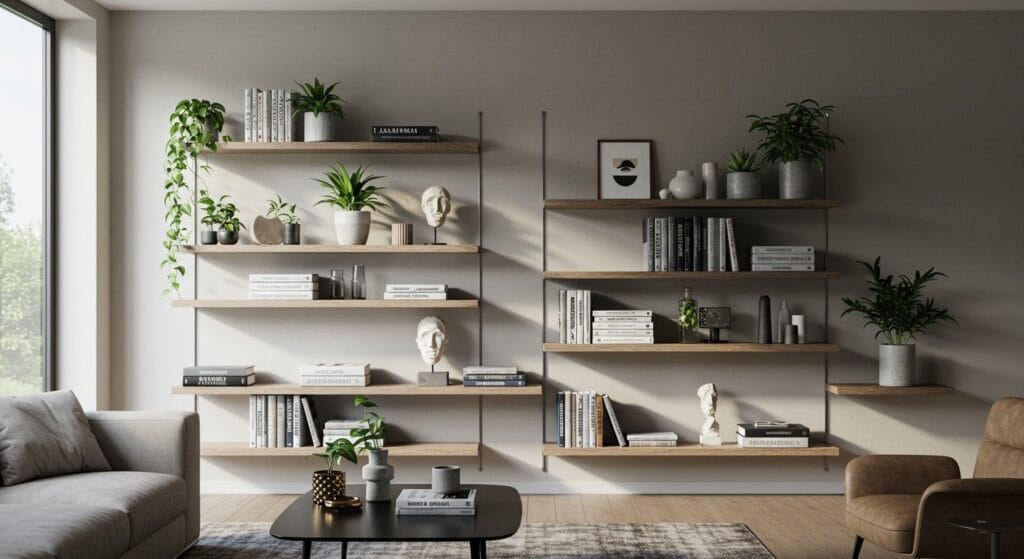
Creating clusters of floating shelves mimics the look of traditional bookcases but with a much lighter visual footprint. Stack 3-4 shelves close together, leaving about 10-12 inches between each shelf.
This modern shelving approach works wonderfully for book collections, but don’t feel limited to just books. Mix in plants, decorative boxes, or artwork leaning against the wall for a more curated look.
The spacing between shelf clusters creates natural breathing room and prevents the wall from looking too busy. It’s like having modular furniture that you can reconfigure whenever inspiration strikes.
6. Minimalist Single Statement Shelf

Sometimes one perfectly placed shelf makes more impact than a whole wall of them. A single, long floating shelf can become a statement piece while providing exactly the storage you need.
I love this approach for displaying a few carefully chosen pieces – maybe a beautiful coffee table book, a sculptural plant, and one piece of pottery. The restraint creates sophistication that busy arrangements often lack.
This works particularly well in small living rooms where you want storage without visual clutter. One well-styled shelf can elevate the entire space.
7. Plant Paradise Shelving

Transform your living room into an indoor jungle with floating shelves designed specifically for plants. Vary the heights to create a cascading green wall that brings life to any space.
Consider the light requirements of your plants when positioning shelves. Higher shelves work great for trailing plants like pothos, while lower shelves can house your statement plants like fiddle leaf figs.
This living room storage idea doubles as air purification and adds that biophilic design element that makes spaces feel more welcoming. Plus, watering is easier when plants are at different accessible heights.
8. Built-In Look with Brackets

Using decorative brackets underneath your floating shelves can create a built-in bookcase look without the major renovation. Choose brackets that complement your room’s style – industrial pipe brackets for modern spaces or ornate metal ones for traditional rooms.
The brackets add visual weight and make the shelves feel more permanent and intentional. This is especially helpful in rental spaces where you want that custom look without making permanent changes.
Space your bracketed shelves consistently – about 12-15 inches apart works well for most books and decorative items. The rhythm creates a cohesive look that feels professionally designed.
9. Floating Shelves with Integrated Lighting

Adding LED strip lights under your floating shelves creates beautiful ambient lighting while highlighting your displayed items. This technique transforms ordinary shelves into sophisticated display cases.
The key is using warm white LEDs that create a cozy glow rather than harsh task lighting. Battery-operated LED strips make this incredibly easy to achieve without dealing with electrical work.
This approach works particularly well for evening entertaining, creating layers of light that make your living room furniture arrangement feel more intimate and welcoming.
10. Seasonal Display Rotation System

Design your floating shelf arrangement with seasonal changes in mind. Choose neutral shelves that can accommodate different color palettes and themes throughout the year.
I keep a few storage bins with seasonal decor that rotates onto the shelves – warm oranges and golds for fall, fresh greens for spring, cozy textures for winter. This keeps your space feeling fresh without major redecorating.
The trick is having a consistent base layer (like books or neutral pottery) that stays year-round, then swapping out 2-3 seasonal accent pieces. It’s like giving your room a mini makeover every few months.
11. Mixed Material Magic

Don’t limit yourself to matching shelves throughout the room. Mixing materials – wood, metal, glass, or even acrylic – creates visual interest while serving different functional needs.
A wooden shelf might be perfect for books and plants, while a sleek metal shelf could showcase modern pottery or sculptures. The variety keeps your eye engaged and prevents the space from feeling too predictable.
Just maintain some consistency in either color tone or style to keep the mix from feeling chaotic. Think of it as creating a collected-over-time look rather than a matching set.
12. Picture Ledge Alternative

Traditional picture ledges can look a bit dated, but using regular floating shelves as picture displays feels fresh and current. The deeper shelf gives you room for layering frames with other decorative objects.
I love this approach because you can easily switch out artwork and photos without making new holes in the wall. Lean frames against the wall and fill in with small plants or books for a curated gallery look.
This works especially well for renters who want to display art without the commitment of hanging everything. Plus, you can showcase more pieces by layering frames at different depths.
13. Height Variation Drama

Creating dramatic height differences between your floating shelves adds architectural interest to flat walls. Think of it as creating your own built-in millwork without the construction.
Start with one shelf quite low (maybe 18 inches from the floor) and another much higher (around 6-7 feet). This creates natural zones for different types of display while making your ceilings feel taller.
The varied heights also solve practical problems – low shelves are perfect for items you use frequently, while high shelves can store decorative pieces that don’t need daily access.
14. Narrow Space Solutions

Those narrow wall spaces that seem too small for furniture are perfect for slim floating shelves. A 6-8 inch deep shelf can provide surprising storage without encroaching on walkways.
These narrow shelves work beautifully for displaying collections – maybe a series of small plants, candles, or books arranged vertically. The vertical emphasis makes the space feel taller and more intentional.
This is particularly useful in small living room layouts where every square inch counts. You’re using dead space without making the room feel more cramped.
15. The Floating Nightstand Extension

Extend the floating shelf concept beyond wall-mounted options by using them as alternative side tables near your seating. Mount a shelf at sofa arm height to create an instant side table that doesn’t take up floor space.
This approach works particularly well in tight layouts where traditional side tables would block traffic flow. You get the functionality of a side table with the visual lightness of floating storage.
Consider adding a small table lamp or keeping frequently used items like remotes and books within easy reach. It’s like having built-in convenience without the built-in commitment.
Making Your Floating Shelves Work Harder
The secret to successful floating shelves living room designs isn’t just about the shelves themselves – it’s about understanding how they fit into your overall space planning. These aren’t just storage solutions; they’re design elements that can completely transform how your room feels and functions.
Think about traffic patterns, sight lines, and how you actually live in your space. The best shelf arrangements work with your lifestyle rather than against it.
Remember that floating shelves should enhance your room’s architecture, not compete with it. When done thoughtfully, they become part of the room’s DNA rather than obvious additions.
Whether you choose one statement shelf or create an entire wall display, the key is intentionality. Every shelf should have a purpose, and every item on those shelves should earn its place through either function or beauty – preferably both.Ready to start your own floating shelf project? Check out more storage and organization ideas to complement your new shelving system and create a living space that truly works for your lifestyle.

Sanjai creates easy, affordable home decor ideas that anyone can try. Through simple tips and curated finds, he helps you style rooms you’ll love coming home to.