Walking into the grocery store with the best intentions, loading your cart with vibrant produce, only to find wilted lettuce and mushy berries a few days later? You’re definitely not alone in this frustrating cycle.
The secret to extending your produce’s lifespan isn’t just about buying fresher items – it’s about understanding how different fruits and vegetables want to be stored. Some prefer the cool darkness of your crisper drawer, while others actually thrive on your countertop. Getting this balance right can literally add weeks to your produce’s life and save you hundreds of dollars each year.
What if I told you that with a few simple changes to your storage and organization approach, you could cut your food waste in half? These aren’t complicated systems that require expensive gadgets – just smart, practical solutions that work with how you actually live.
1. Understanding Produce Storage Basics

Not all produce is created equal when it comes to storage needs. Some fruits and vegetables are what we call “climacteric” – they continue ripening after harvest and produce ethylene gas. Think bananas, tomatoes, and avocados. Others, like berries and leafy greens, are “non-climacteric” and stop ripening once picked.
Most fruits produce a gaseous compound called ethylene that starts the ripening process, according to the University of Maine Cooperative Extension, and understanding this natural process is crucial for proper storage.
This distinction matters more than you might think. When you store ethylene-producing fruits near sensitive vegetables, you’re essentially creating a produce time bomb. That’s why your lettuce wilts so quickly when stored next to apples, or why your potatoes start sprouting when kept near onions.
The key to successful fruit and vegetable storage lies in understanding these relationships and creating separate zones in your kitchen. It’s not about having perfect conditions everywhere – it’s about matching each type of produce with its ideal environment.
2. Refrigerator Storage Solutions

Your refrigerator’s crisper drawers aren’t just random storage spaces – they’re specifically designed with different humidity levels to extend produce life. The high-humidity drawer (usually marked with a closed vent) is perfect for leafy greens, herbs, and vegetables that lose moisture quickly.
Most refrigerators have adjustable humidity controls that many people never touch. The low-humidity drawer works best for fruits and vegetables that produce ethylene gas. This simple adjustment can add days to your produce’s freshness without any additional investment.
Here’s something interesting I’ve discovered: many vegetables actually prefer to be stored in perforated plastic bags rather than completely sealed containers. The small holes allow for air circulation while maintaining enough moisture to prevent wilting. You can easily create these by poking small holes in regular produce bags.
Smart Refrigerator Organization Tips

The kitchen organization in your refrigerator can make or break your produce storage success. Store your most delicate items at eye level where you’ll see them first and use them quickly. Hardy vegetables like carrots and celery can go in lower drawers where temperatures might fluctuate slightly.
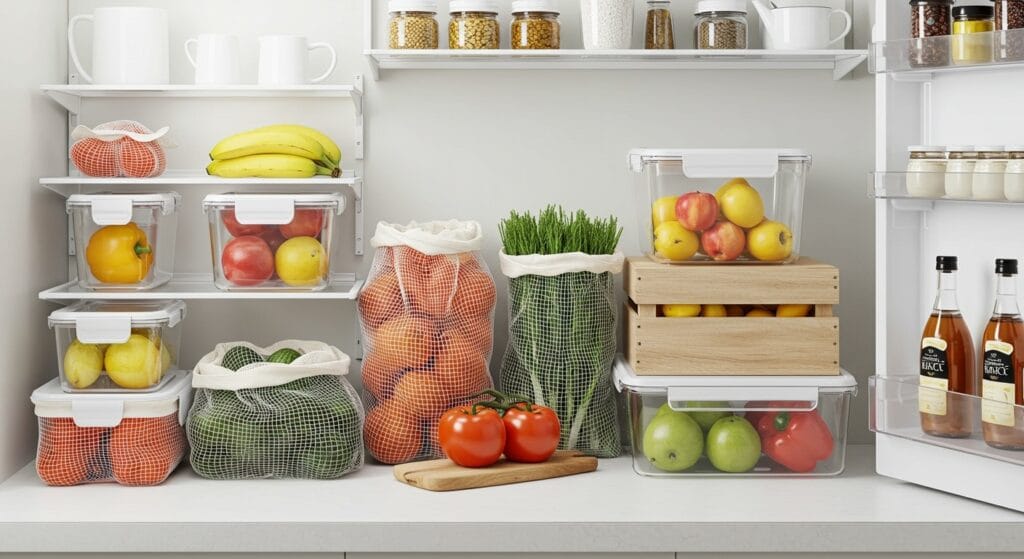
Consider investing in clear, stackable containers for cut vegetables and fruits. Being able to see what you have prevents those “out of sight, out of mind” moments that lead to forgotten produce rotting in the back of your fridge.
Temperature zones matter too. The back of your refrigerator is typically the coldest, while door storage experiences the most temperature fluctuation. Use door storage for condiments and drinks, not delicate produce.
3. Countertop Storage Strategies

Some produce actually hates the cold and will lose flavor or develop an unpleasant texture when refrigerated. Tomatoes, for instance, become mealy and flavorless in the fridge. Potatoes develop a sweet, unpleasant taste when stored below 50°F.
Creating designated countertop zones for different types of produce helps you remember what goes where. A shallow bowl for stone fruits, a banana hanger to prevent bruising, and a cool, dark cabinet for onions and potatoes creates a logical system.
Room temperature storage isn’t just about convenience – it’s about preserving flavor and texture. Many fruits need to ripen at room temperature before they’re ready to eat. Once ripe, you can move them to the refrigerator to slow down further ripening.
Creative Countertop Display Ideas
Your countertop produce storage doesn’t have to be purely functional – it can be part of your kitchen styling too. Wooden bowls, woven baskets, and tiered stands add visual interest while keeping your produce accessible and properly ventilated.
Consider the ripening factor when arranging countertop displays. Keep bananas separate from other fruits unless you want everything to ripen quickly. A banana hanger not only prevents bruising but also contains the ethylene gas they produce.
Rotation is crucial for countertop storage. Place newer produce at the bottom or back, and older items where you’ll grab them first. This simple first-in-first-out system prevents waste and ensures you’re always eating produce at its peak.
4. Specialized Storage Solutions

Certain types of produce benefit from specialized storage solutions that go beyond basic containers. Berry storage, for example, requires excellent drainage and air circulation to prevent mold growth. Shallow, ventilated containers work much better than deep bowls or sealed containers.
Herbs present their own unique storage challenge. Soft herbs like basil and cilantro do best when treated like flowers – trimmed and placed in water with loose plastic covering the leaves. Hardy herbs like rosemary and thyme can be wrapped in slightly damp paper towels and stored in the refrigerator.
Root vegetables often come with their greens attached, but storing them together actually drains moisture and nutrients from the roots. Remove the greens immediately after purchase and store them separately if you plan to use them.
Innovative Storage Products Worth Investing In

While you don’t need expensive gadgets for good produce storage, a few well-chosen tools can make a significant difference. Produce keeper containers with adjustable vents allow you to fine-tune humidity levels for different types of vegetables.
Mesh produce bags are incredibly versatile and allow for proper air circulation while containing smaller items. They’re perfect for storing onions, potatoes, and citrus fruits that need ventilation but tend to roll around loose in drawers. Storage solutions for small kitchens might require more creative approaches, but the same principles apply. Vertical storage, hanging solutions, and multi-functional containers help maximize your space while maintaining proper storage conditions.
5. Extending Produce Freshness Naturally

Beyond proper storage containers and locations, there are several natural methods to extend produce life that our grandparents knew well. Wrapping leafy greens in slightly damp paper towels creates the perfect microenvironment for maintaining freshness without encouraging decay.
Ethylene-absorbing sachets or even a simple bowl of baking soda in your produce drawer can help neutralize the gases that cause premature ripening. These natural solutions work just as well as expensive commercial products.
Understanding which produce items play well together is crucial for kitchen pantry organization. Keep ethylene producers separated from sensitive items, and you’ll be amazed at how much longer everything stays fresh.
Weekly Produce Prep Strategies

Setting aside time each week for produce prep can dramatically improve both freshness and convenience. Washing and properly storing vegetables immediately after grocery shopping removes field heat and surface bacteria that accelerate spoilage.
Pre-cutting vegetables sounds counterintuitive to freshness, but when done properly with immediate proper storage, it can actually help some vegetables maintain quality longer. Cut vegetables stored in airtight containers with a paper towel to absorb excess moisture stay crisp for days.
The key is understanding which produce benefits from immediate prep and which is better left whole until use. Generally, heartier vegetables like carrots, celery, and bell peppers handle pre-cutting well, while delicate items like lettuce and herbs are better prepped just before use.
6. Storage Mistakes That Ruin Fresh Produce

One of the biggest mistakes people make is treating all produce the same way. Storing everything in the refrigerator might seem like the safe choice, but it actually ruins the flavor and texture of many fruits and vegetables.
Overcrowding is another silent produce killer. When fruits and vegetables are packed too tightly, air circulation suffers, moisture builds up, and decay spreads rapidly from one item to the others. Proper spacing is just as important as the right container.
Many people also make the mistake of washing produce before storage. While this seems logical, excess moisture actually encourages bacterial growth and faster spoilage. It’s better to wash produce just before you plan to eat it, not when you bring it home from the store.
Quick Reference Storage Guide
Here’s a quick reference for proper storage of common produce items:
Refrigerate: Leafy greens, berries, grapes, carrots, celery, broccoli, cucumbers, bell peppers
Counter then refrigerate: Avocados, stone fruits (peaches, plums), pears, bananas (once ripe)
Counter only: Tomatoes, potatoes, onions, garlic, winter squash, citrus fruits
Special handling: Herbs in water, mushrooms in paper bags, berries unwashed until use
This simple categorization system takes the guesswork out of produce storage and helps you make quick decisions when putting away groceries. Remember, these are general guidelines – your specific climate and kitchen conditions might require slight adjustments.
Understanding proper fresh food storage tips becomes second nature once you start paying attention to how different produce responds to various storage conditions. The investment in time learning these methods pays dividends in reduced food waste and better-tasting meals.
The difference between produce that lasts days versus weeks often comes down to these simple storage principles. Start with one or two changes – maybe organizing your crisper drawers or creating separate zones for different types of produce. You’ll quickly see which methods work best for your household’s eating patterns and kitchen setup.
Remember, the goal isn’t perfection – it’s progress. Even small improvements in your produce storage system can lead to significant reductions in food waste and noticeable improvements in the quality of your meals. Your wallet and your taste buds will thank you for taking the time to store your fresh food properly.

Sanjai creates easy, affordable home decor ideas that anyone can try. Through simple tips and curated finds, he helps you style rooms you’ll love coming home to.