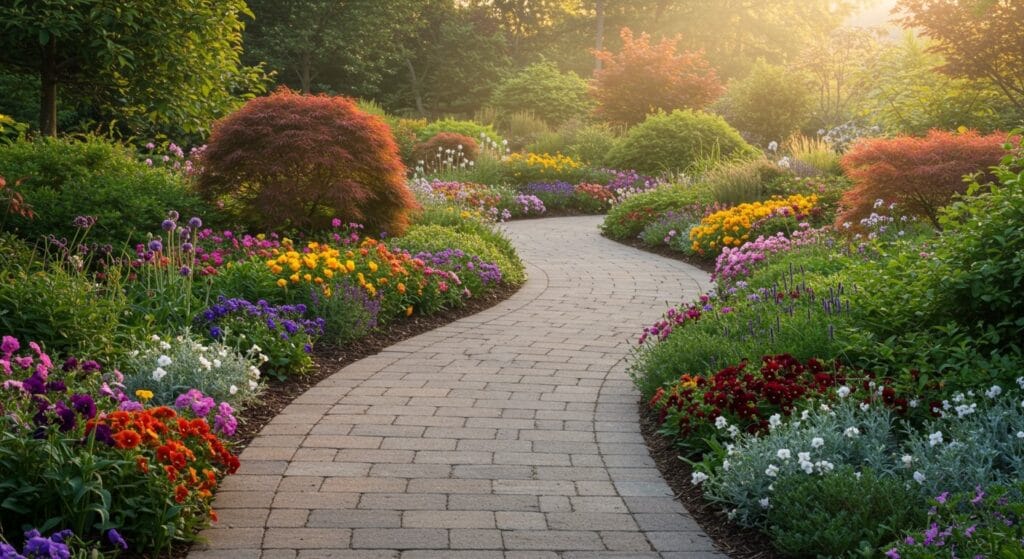
Creating the perfect garden pathways can completely transform how you experience your outdoor space. Whether you’re looking to connect different areas of your yard or simply add visual interest to your landscape, the right walkway design makes all the difference.
Your garden deserves pathways that not only serve a practical purpose but also enhance the overall beauty of your outdoor sanctuary. From rustic stepping stones to elegant brick layouts, these 14 inspiring ideas will help you design walkways that perfectly complement your home’s style and your personal taste.
1. Classic Brick Garden Pathways
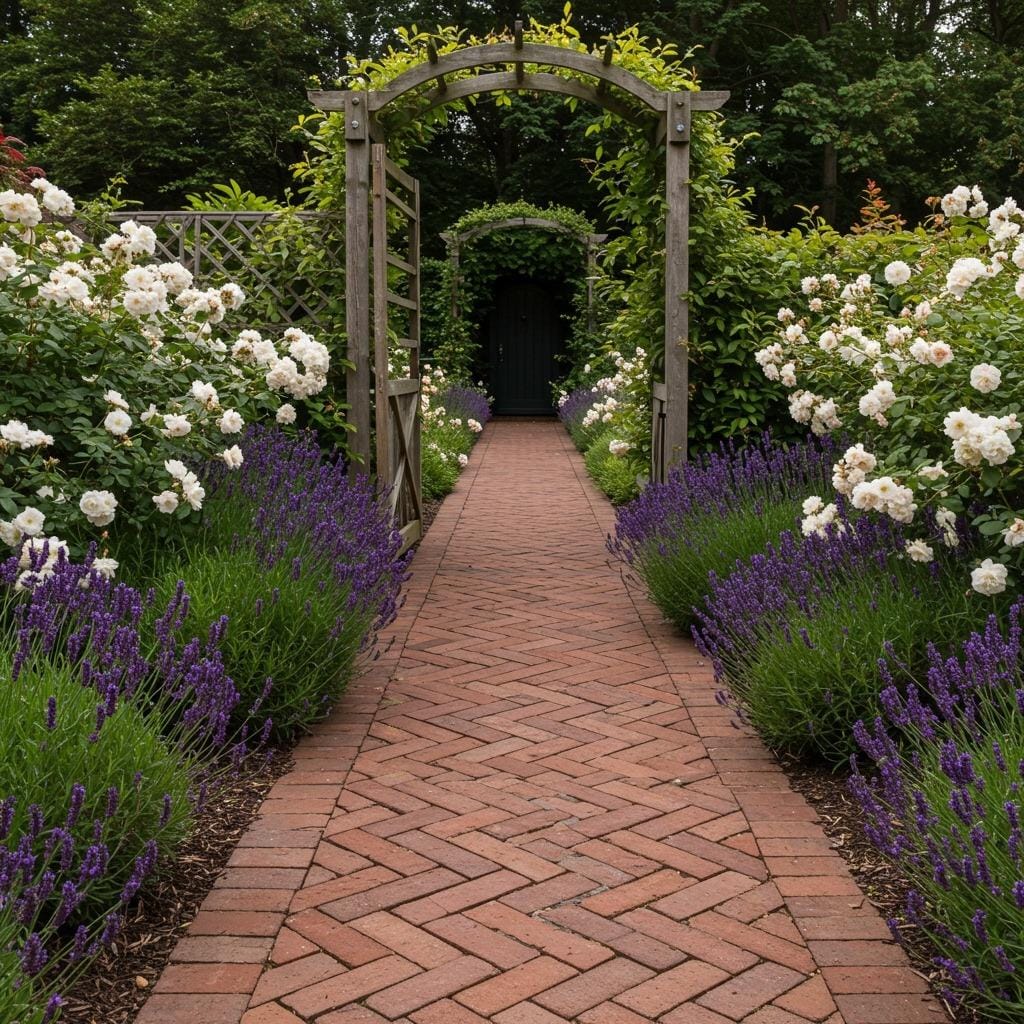
Nothing beats the timeless appeal of brick pathways in creating that traditional garden charm. The warm, earthy tones of brick naturally complement most plant colors and provide a sturdy, long-lasting surface that improves with age.
Brick pathways work particularly well in cottage-style gardens and outdoor spaces ideas where you want to create a sense of history and permanence. The rectangular shape allows for various laying patterns – from simple running bonds to intricate herringbone designs.
Consider using reclaimed bricks for an authentic, weathered look that adds character immediately. The slight irregularities in vintage bricks create a more organic feel that blends beautifully with natural garden settings.
2. Natural Stone Paths for Rustic Appeal

Natural stone paths bring an organic, sculptural quality to your garden that’s hard to replicate with manufactured materials. Each stone tells its own story through unique colors, textures, and shapes that create visual interest along your walkway.
Flagstone, slate, and fieldstone are popular choices that offer different aesthetic qualities. Flagstone provides larger, flatter surfaces ideal for main walkways, while smaller fieldstones work beautifully for meandering paths through planted areas.
The irregular edges of natural stone create perfect pockets for ground cover plants like creeping thyme or moss, softening the pathway’s edges and integrating it seamlessly into your garden seating area.
3. Gravel Pathways with Defined Borders
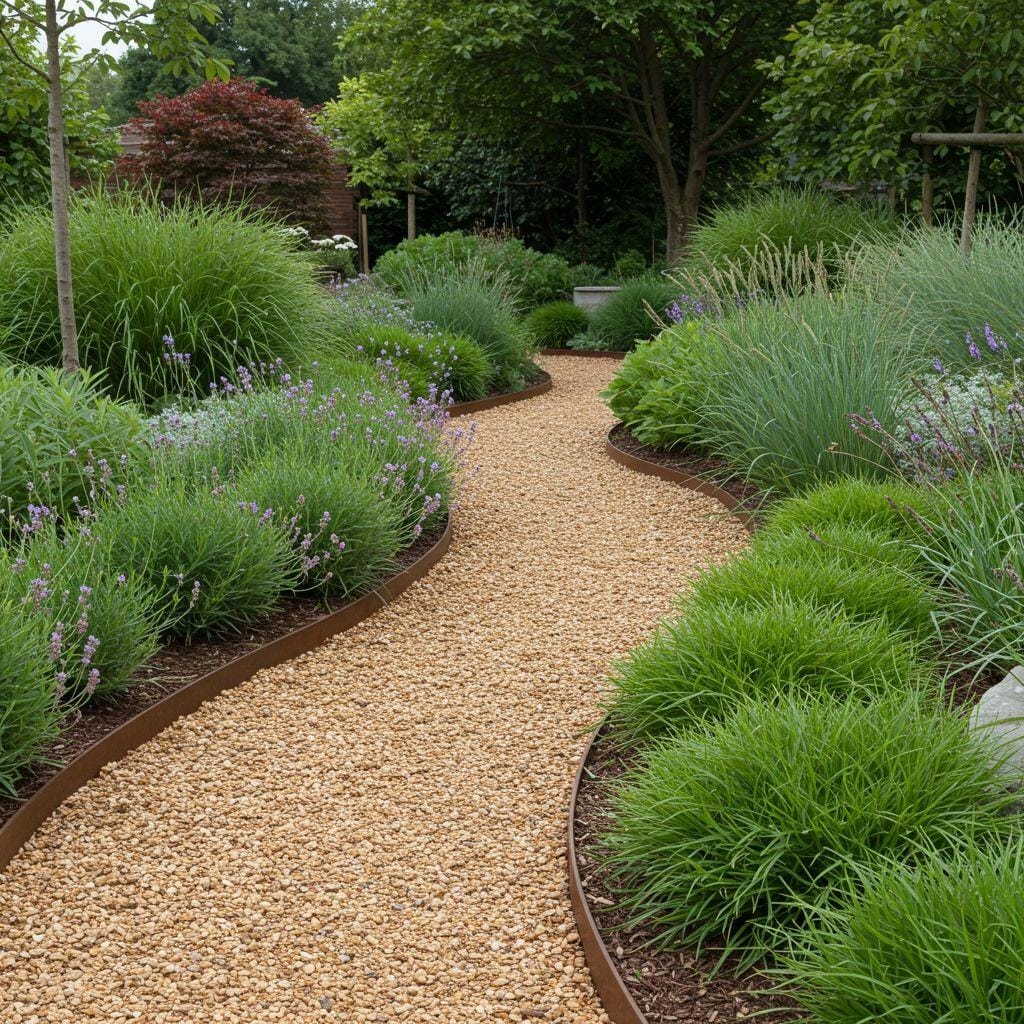
Gravel pathways offer an affordable yet sophisticated solution that provides excellent drainage while creating a pleasant walking surface. The gentle crunch underfoot adds a sensory element that many find quite appealing.
To keep gravel pathways looking neat and purposeful, install proper edging using materials like steel, aluminum, or stone. This prevents the gravel from migrating into planted beds and maintains clean, professional-looking lines.
Different gravel sizes and colors can dramatically change the pathway’s character. Pea gravel creates a smoother walking surface, while larger crushed stone provides better stability for high-traffic areas.
4. Stepping Stone Garden Path Design
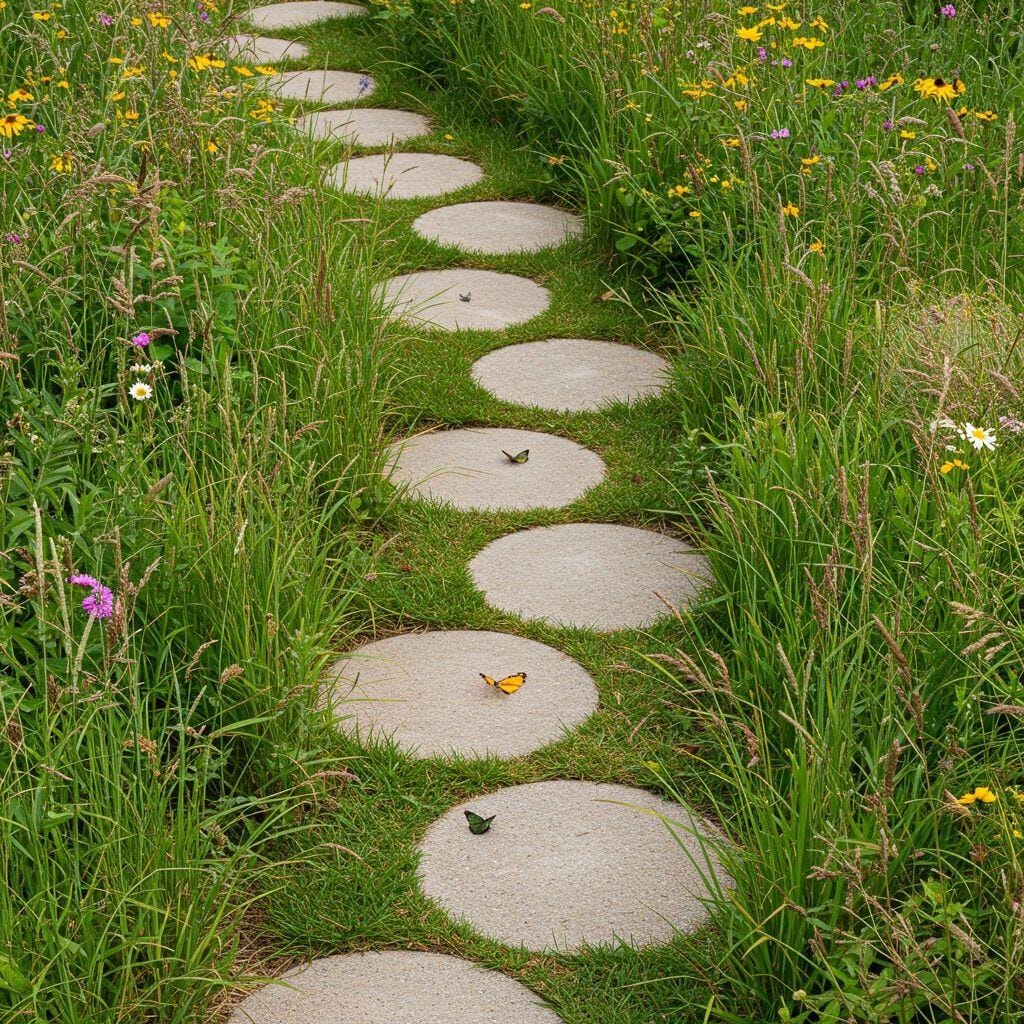
Stepping stone pathways create a playful, informal approach that encourages a slower pace through your garden. This design works especially well in areas where you want to preserve existing plantings or create a more naturalistic feel.
Space your stepping stones according to a comfortable walking stride – typically 18 to 24 inches apart depending on the stone size. Larger stones can handle greater spacing, while smaller ones should be placed closer together for stability.
Mix different stone shapes and sizes for visual interest, or maintain uniformity for a more structured appearance. Consider incorporating your stepping stone path into a larger garden landscaping plan for maximum impact.
5. Wooden Walkways and Boardwalks
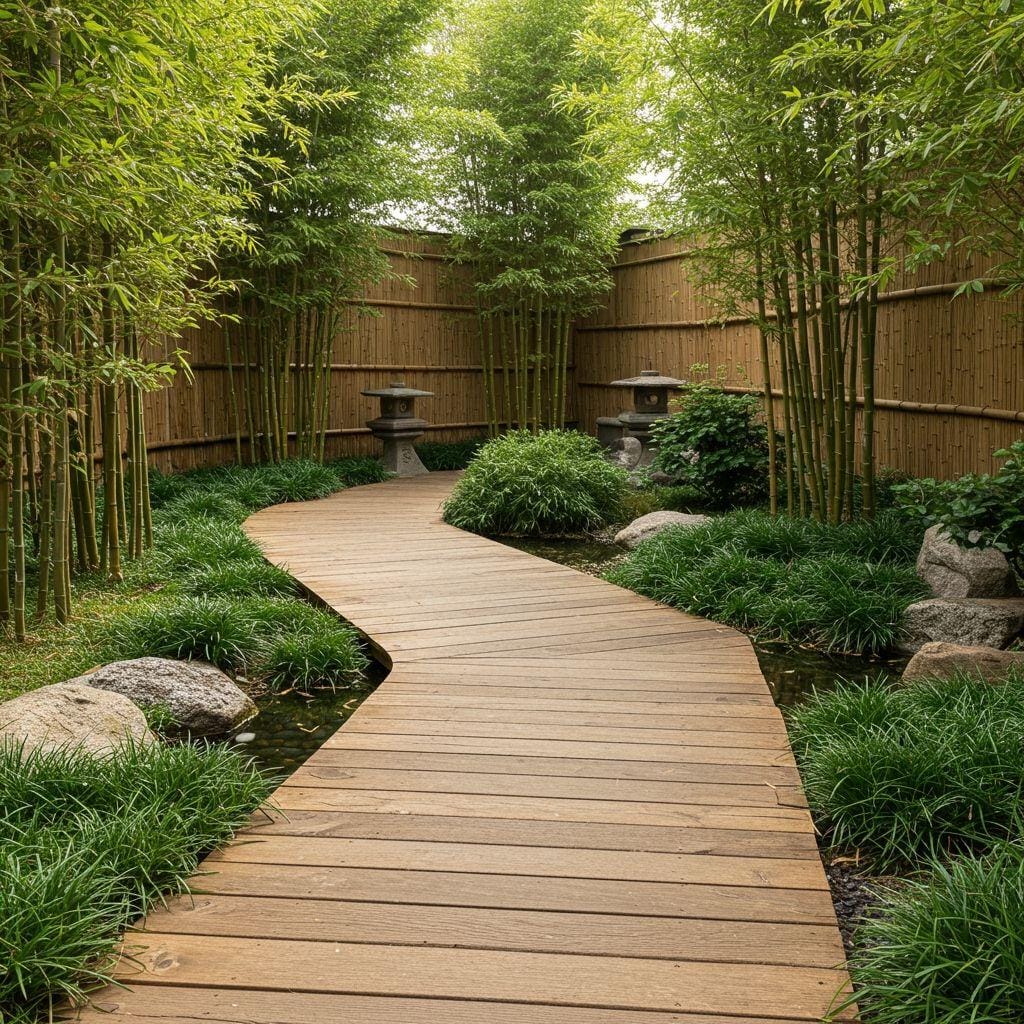
Wooden pathways bring warmth and natural texture that complements both rustic and contemporary garden styles. Cedar, teak, and pressure-treated lumber offer different price points and longevity options for various budgets.
Raised wooden walkways work particularly well in areas with drainage issues or where you want to create visual separation between different garden zones. They’re also excellent for bridging over delicate ground cover or wet areas.
Regular maintenance keeps wooden pathways looking their best and ensures safety. Apply appropriate stains or sealers annually, and check for loose boards or protruding nails that could create hazards.
6. Concrete Pavers in Modern Patterns
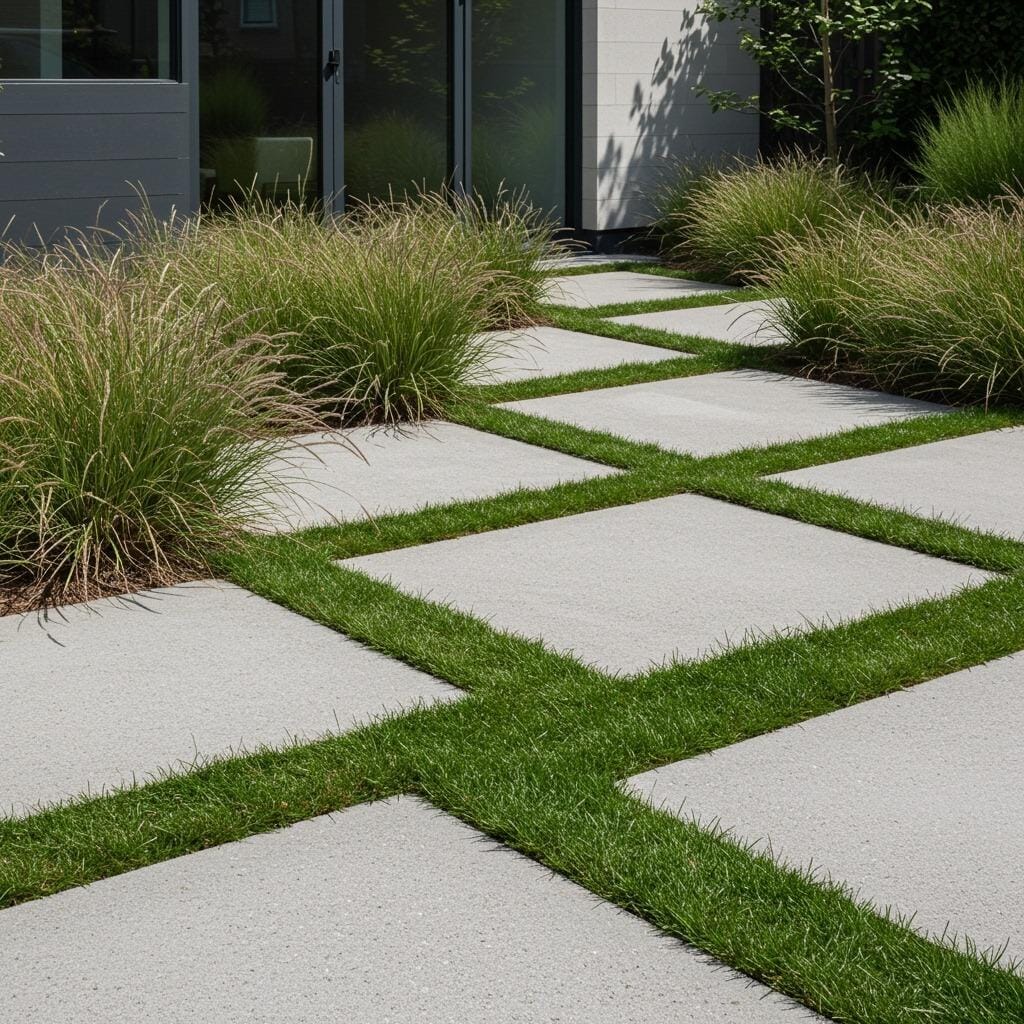
Don’t overlook concrete pavers when planning your garden path design. Modern concrete pavers come in numerous colors, textures, and shapes that can create stunning contemporary pathways at reasonable costs.
Large format pavers create a sleek, minimalist look that works beautifully in modern gardens, while smaller pavers allow for more intricate patterns and curves. Consider pavers that mimic natural materials for the best of both worlds.
Permeable concrete pavers provide environmental benefits by allowing water infiltration while maintaining the clean lines that complement modern outdoor kitchen patio designs.
7. Decomposed Granite Pathways
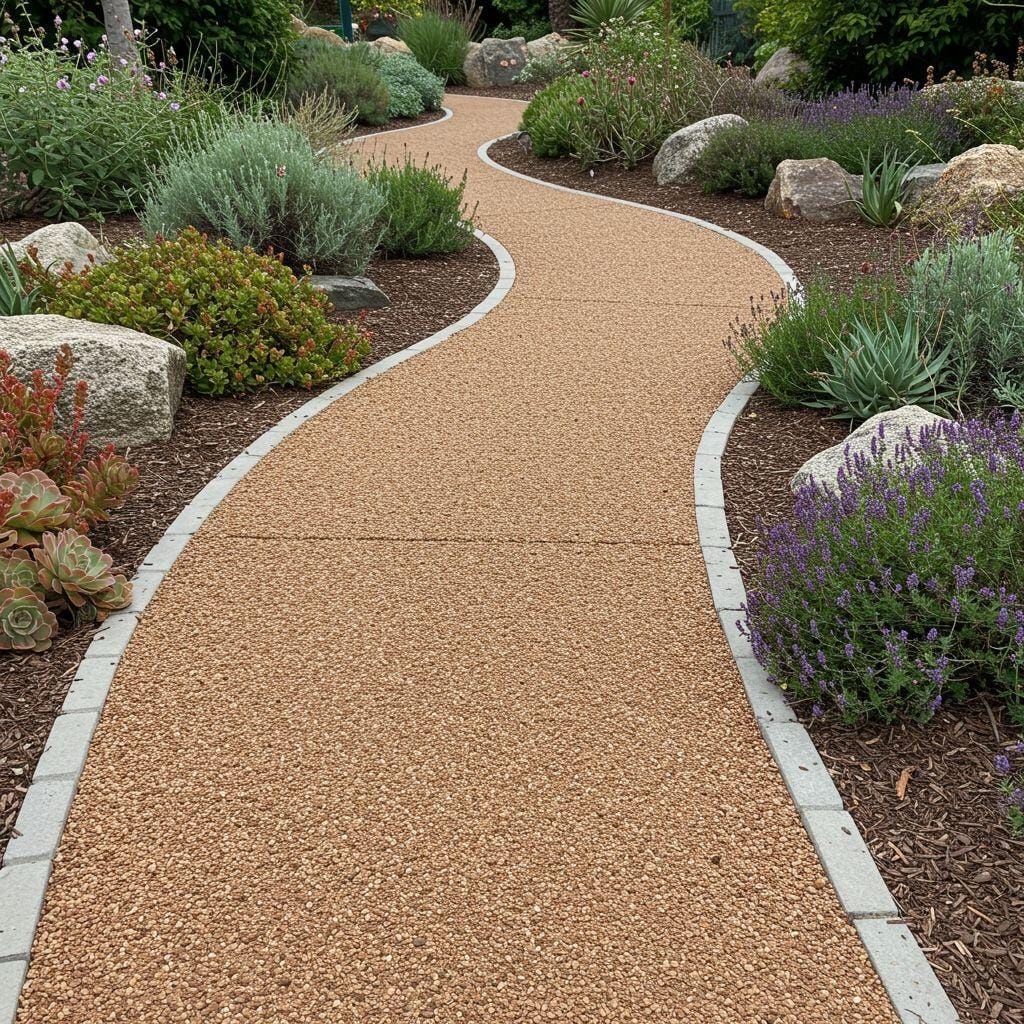
Decomposed granite offers a naturally beautiful, budget-friendly option that compacts well and provides excellent drainage. This material works particularly well in drought-tolerant gardens and Mediterranean-style landscapes.
The fine texture of decomposed granite creates smooth walking surfaces while maintaining a natural appearance that complements most plant palettes. Various colors are available, from warm golden tones to cooler gray shades.
Proper installation with adequate base preparation ensures your decomposed granite pathway will remain stable and attractive for years. Consider combining it with other materials for added visual interest and functionality.
8. Cobblestone Character Walkways
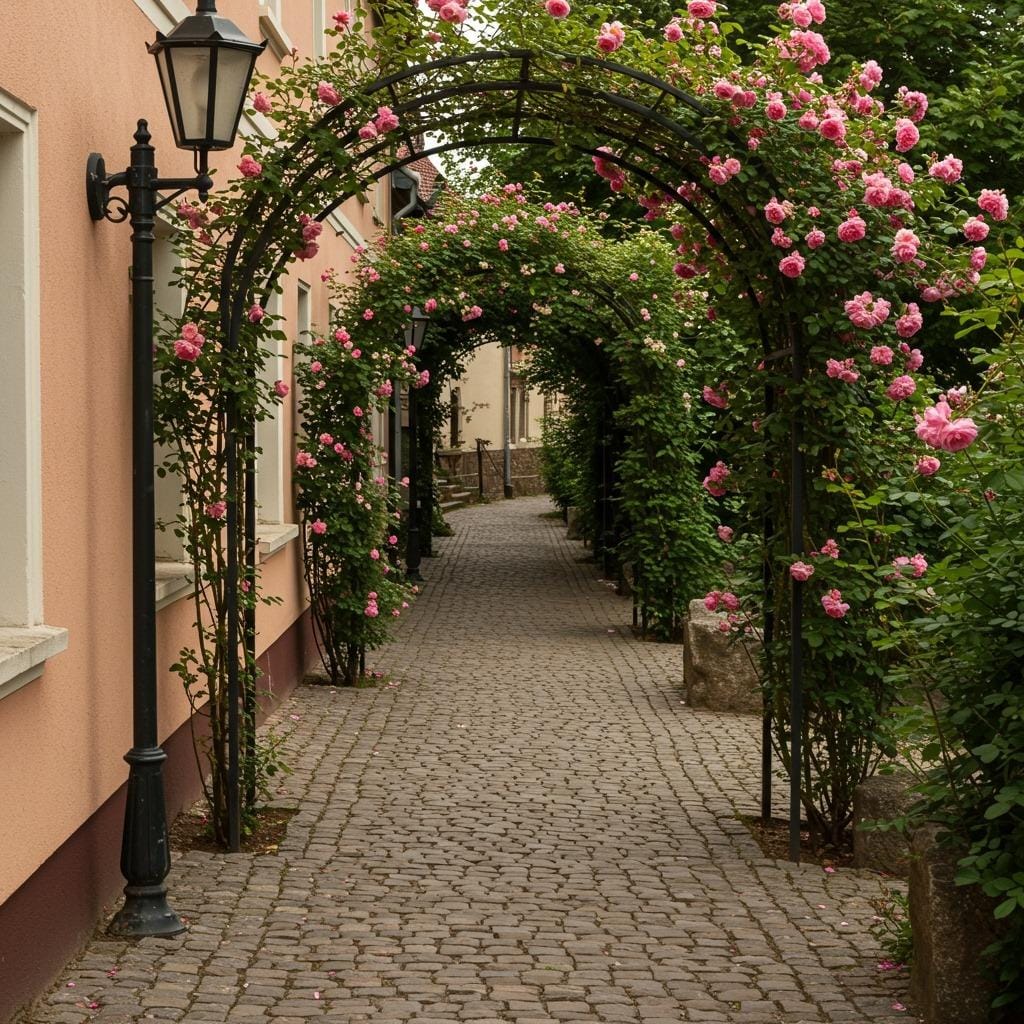
Cobblestone pathways evoke old-world charm and create distinctive texture that adds character to any garden setting. While traditional cobblestones can be expensive, modern alternatives provide similar aesthetics at more accessible price points.
The rounded surfaces of cobblestones create natural drainage channels and provide excellent traction even when wet. This makes them practical choices for areas that receive heavy foot traffic or experience frequent rain.
Consider using cobblestones as accent elements within larger paved areas, or create borders that define planted beds adjacent to smoother pathway surfaces.
9. Mixed Material Pathway Combinations
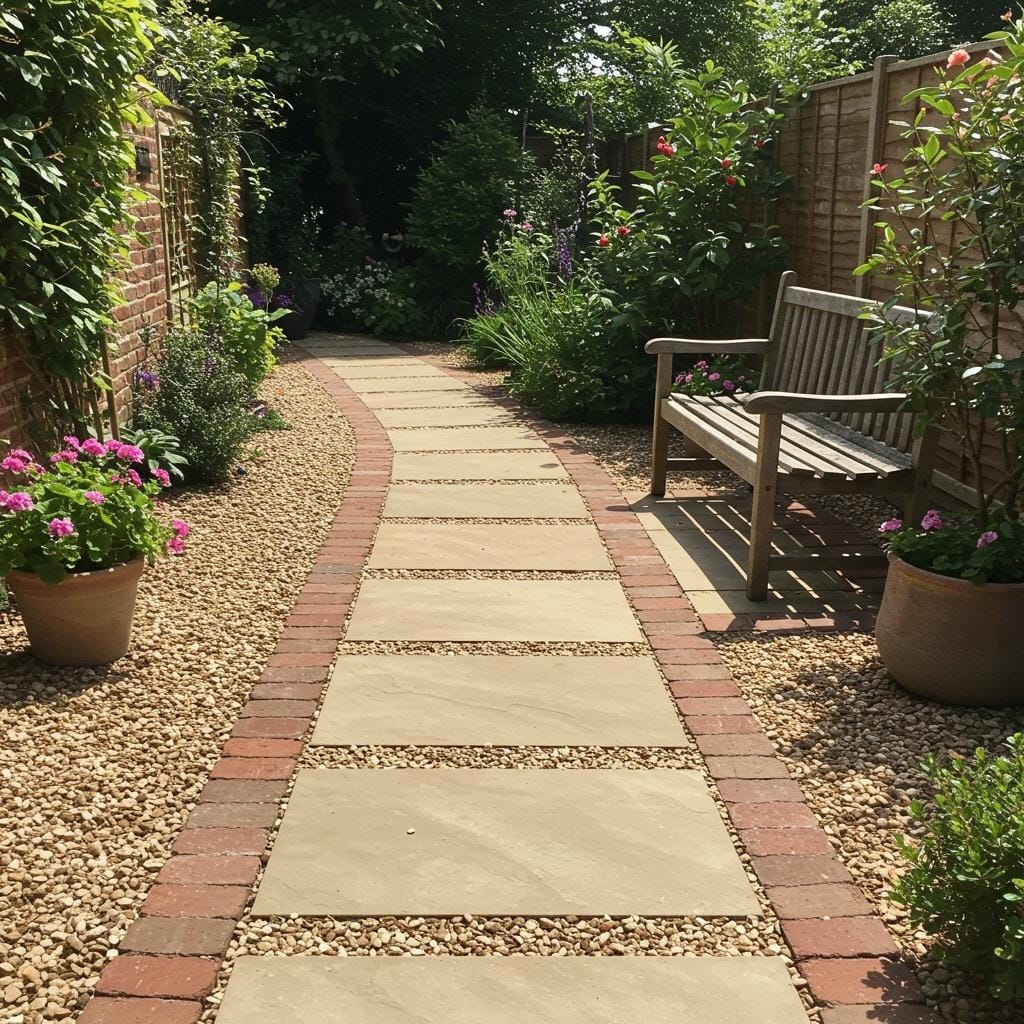
Combining different materials creates visual interest and can help manage costs by using premium materials sparingly as accents. Popular combinations include stone with brick, concrete with gravel, or wood with natural stone.
Mixed material approaches allow you to define different areas of your pathway with appropriate materials – perhaps using more durable stone in high-traffic zones while incorporating decorative elements in quieter garden areas.
This approach also lets you tie your pathway into existing small backyard patio makeover elements by repeating materials used elsewhere in your outdoor space.
10. Living Pathways with Ground Cover
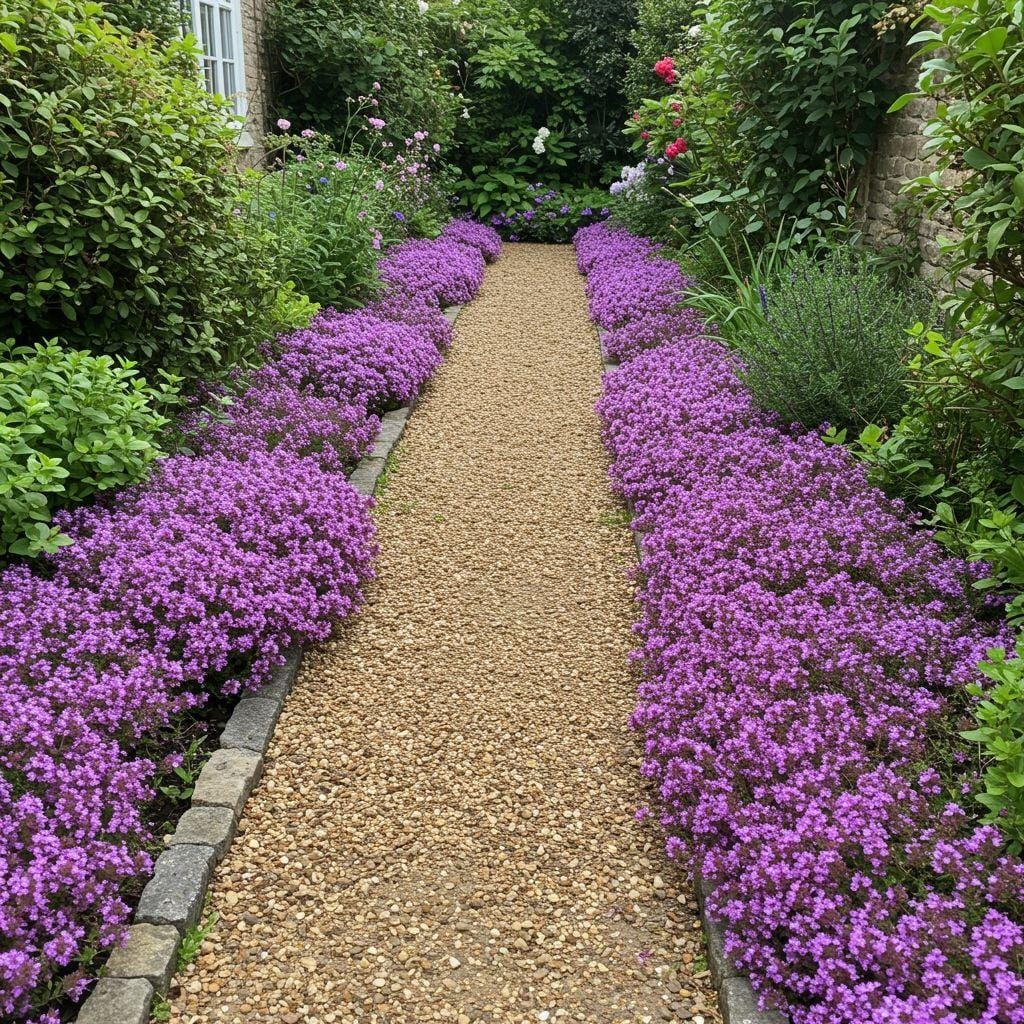
Ground cover pathways blur the line between hardscape and landscape by using low-growing plants as the walking surface. This eco-friendly approach works well for lighter traffic areas and adds living color to your garden circulation.
Creeping thyme, moss, and chamomile are popular choices that can withstand moderate foot traffic while providing fragrant, attractive walking surfaces. These living pathways also support beneficial insects and improve garden biodiversity.
Establish clear edges with harder materials to define the pathway and prevent the ground cover from spreading into unwanted areas. This combination creates beautiful transitions between formal and informal garden spaces.
11. Illuminated Pathway Designs

Integrating lighting into your garden pathways extends their usability into evening hours while creating magical nighttime ambiance. LED strip lights, solar bollards, and low-voltage fixtures offer various approaches to pathway illumination.
Built-in lighting provides the most seamless appearance but requires more complex installation. Solar options offer easier installation and environmental benefits, though they may provide less consistent illumination in shaded areas.
Consider the lighting’s impact on your overall outdoor lighting ideas for patio scheme to create cohesive evening ambiance throughout your outdoor space.
12. Curved and Meandering Garden Paths
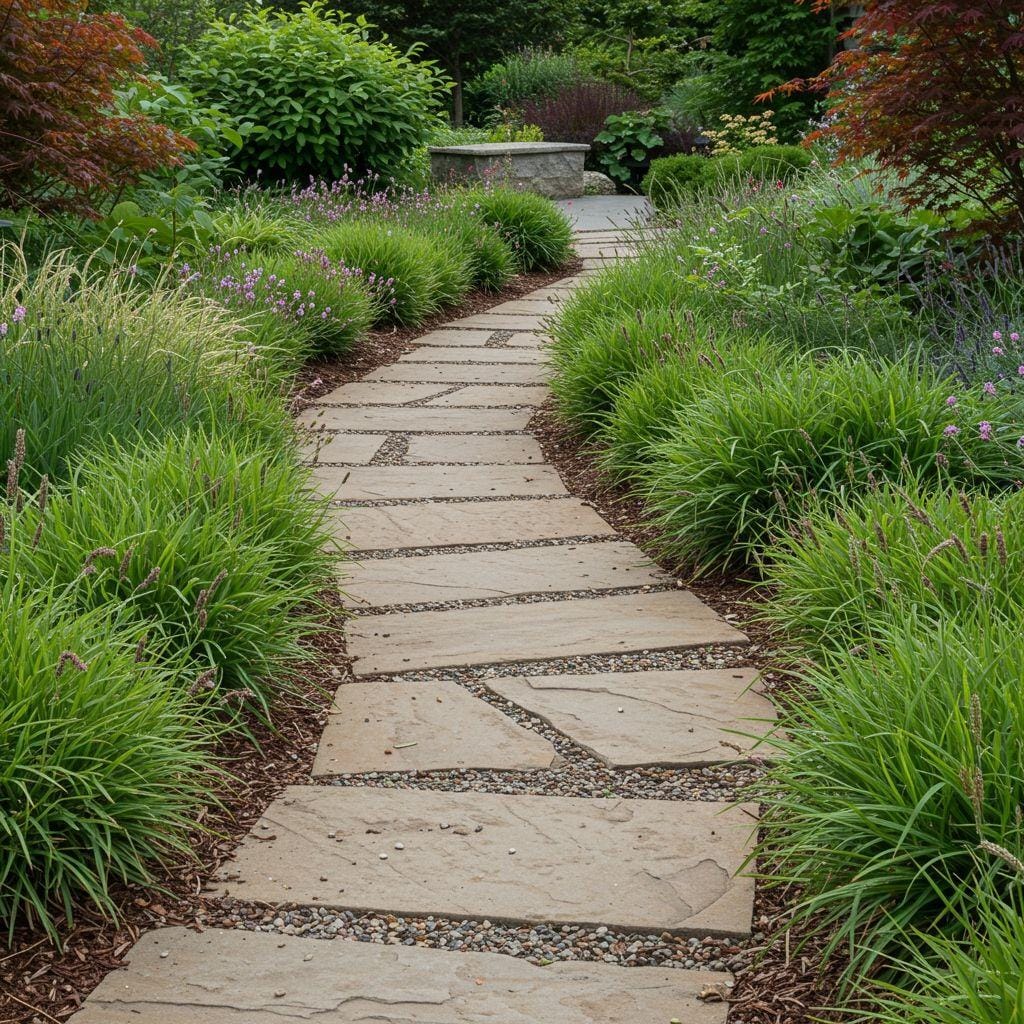
Curved pathways create more interesting visual journeys through your garden while making spaces appear larger than they actually are. The gentle curves encourage slower movement and allow for better appreciation of plantings along the way.
Design curves that feel natural rather than arbitrary by following existing contours or creating sight lines to focal points like outdoor fire pit areas or specimen plants. Avoid tight curves that feel forced or uncomfortable to navigate.
Curved pathways work particularly well with informal planting styles and help soften the geometric lines often found in residential landscapes.
13. Raised and Terraced Walkway Solutions
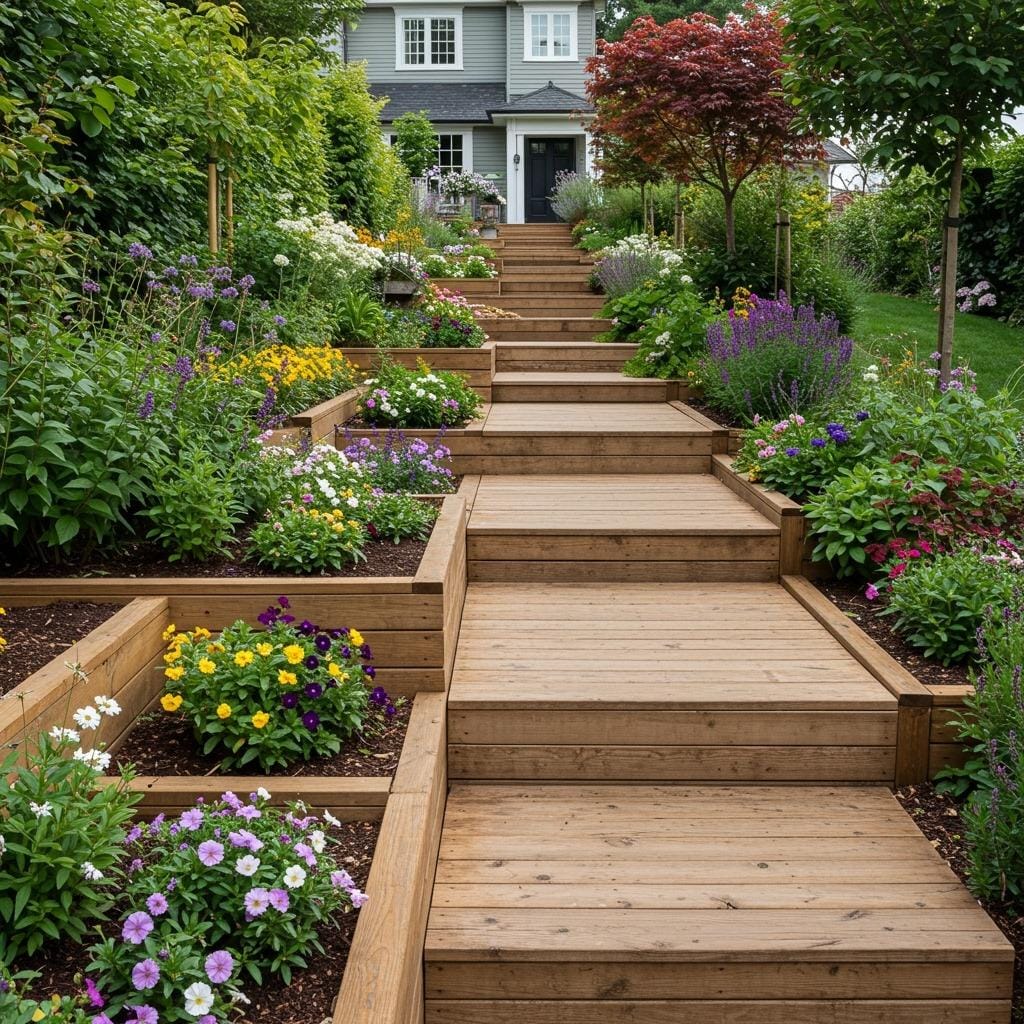
Raised pathways solve drainage problems while creating opportunities for interesting level changes in your garden design. They work particularly well on sloped sites where you need to manage grade changes safely and attractively.
Terraced walkways can incorporate retaining walls, built-in seating, and planting areas that maximize functionality in smaller spaces. Consider materials that complement your home’s architecture for the most cohesive appearance.
Proper drainage planning prevents water damage and ensures long-term stability. Include adequate lighting for safety when pathways include elevation changes.
14. Seasonal and Color-Themed Pathways
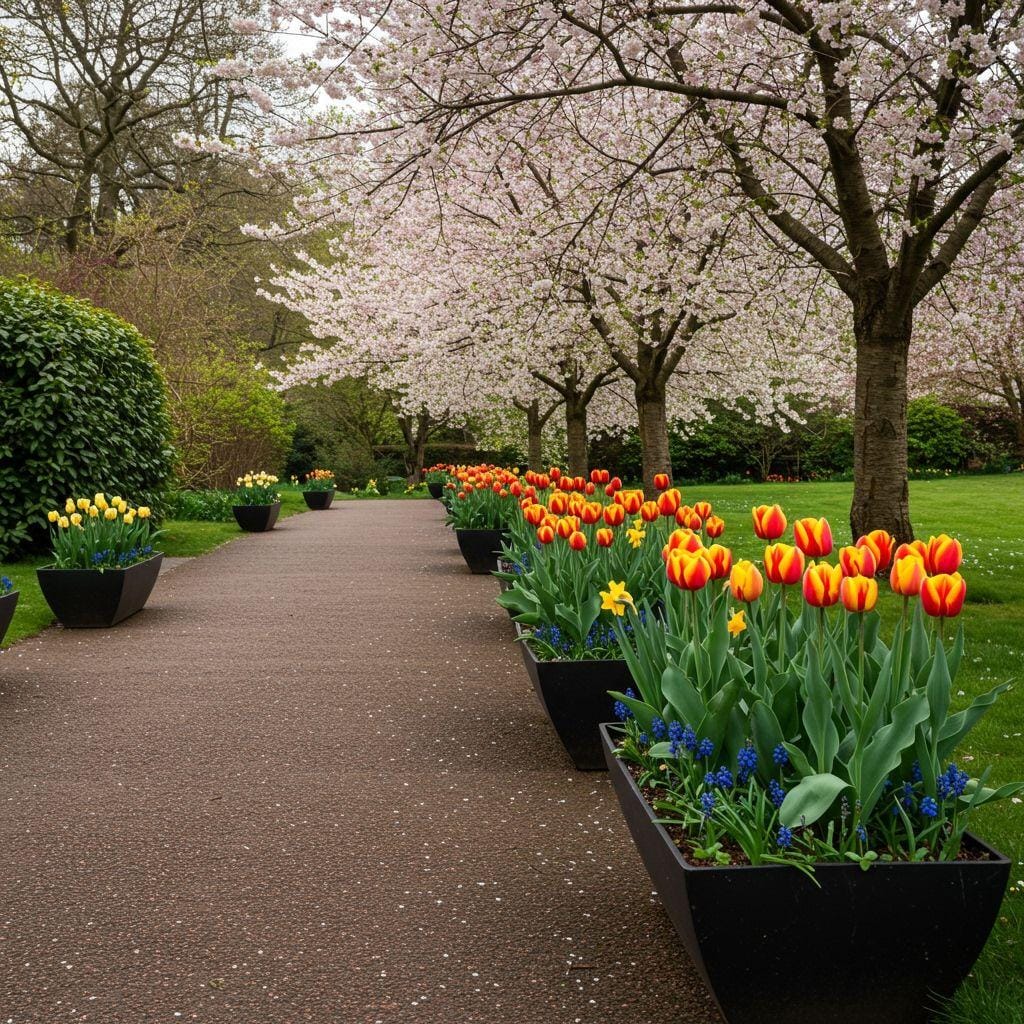
Design pathways that change character with the seasons by incorporating plants and materials that provide year-round interest. This approach ensures your outdoor walkway ideas remain engaging throughout the year.
Consider the seasonal progression of colors in adjacent plantings when selecting pathway materials. Warm-toned stones complement autumn foliage, while cooler grays work beautifully with spring and summer greens.
Incorporate seasonal container plantings along pathway edges to provide flexible color that can change with your preferences and the seasons. This approach works particularly well when coordinated with other seasonal elements in your sustainable outdoor furniture arrangements.
Planning Your Perfect Garden Pathway
Before beginning any pathway project, carefully consider your garden’s existing layout, drainage patterns, and how the new walkway will connect to other outdoor areas. Proper planning ensures your investment will provide years of beauty and functionality.
Think about maintenance requirements for different materials and choose options that fit your lifestyle and budget. While natural stone paths require minimal ongoing care, wooden walkways need regular attention to maintain their appearance and safety.
Remember that garden pathways should enhance your outdoor experience rather than dominate it. The best designs guide visitors through your garden while highlighting the plantings and features that make your space special.
Your garden pathways represent an investment in both the functionality and beauty of your outdoor space. Whether you choose simple gravel walks or elaborate stone installations, the right pathway design will provide years of enjoyment while adding value to your property.

Sanjai creates easy, affordable home decor ideas that anyone can try. Through simple tips and curated finds, he helps you style rooms you’ll love coming home to.