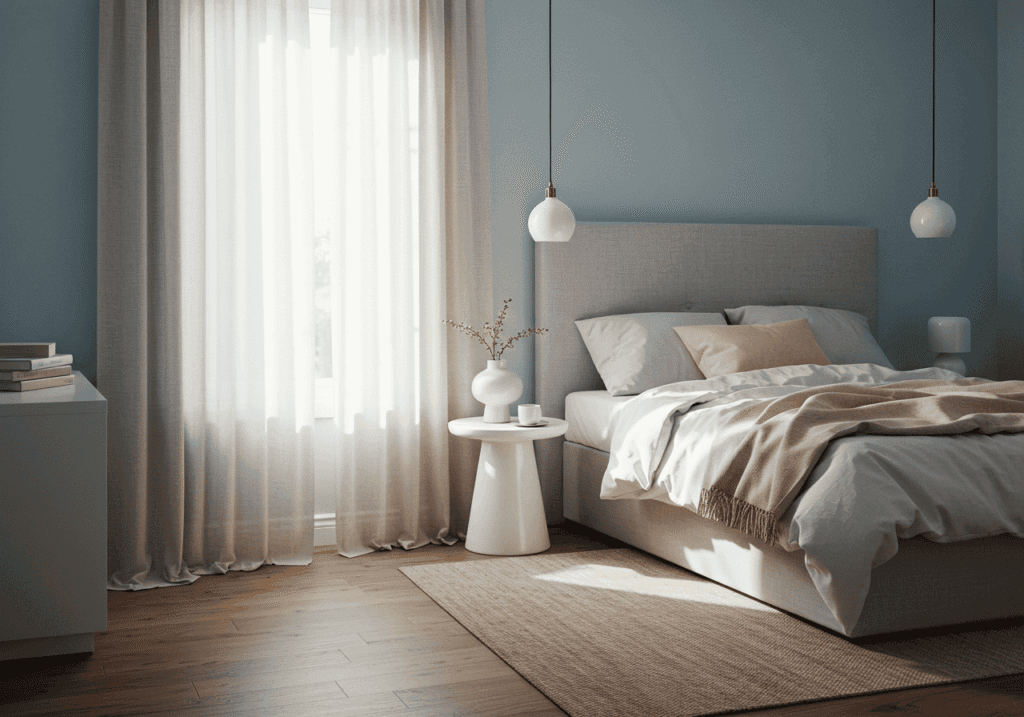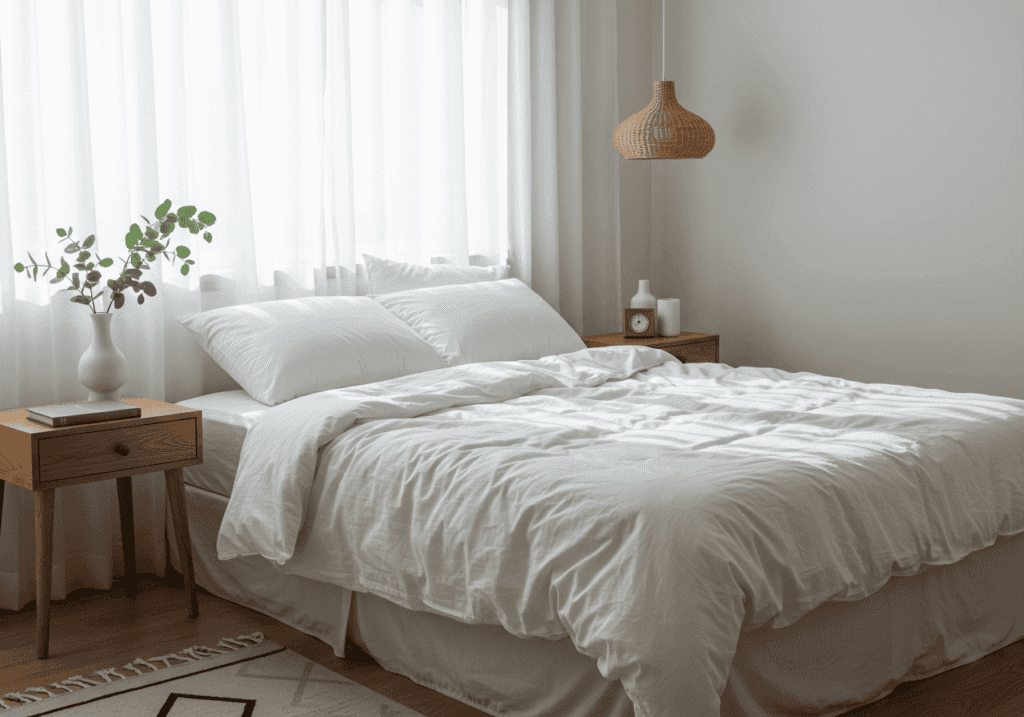
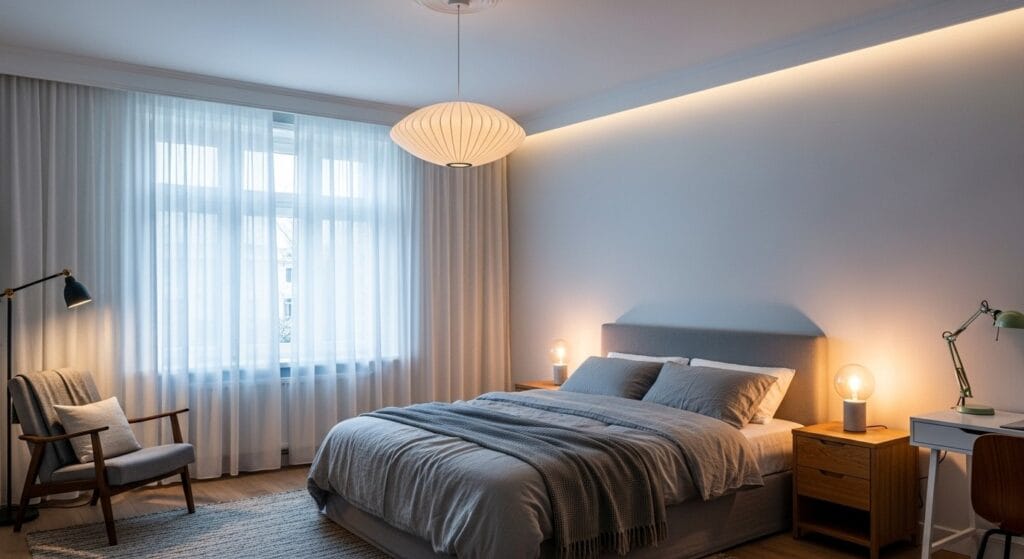
Your bedroom does a lot. It’s where you start your morning routine, wind down with a book, and try to fall asleep without your phone’s blue light keeping you awake. But here’s the thing – one ceiling fixture isn’t going to cut it for all those activities.
Getting bedroom lighting right means thinking about what you’re actually doing in that space. Reading requires focused light that doesn’t strain your eyes. Getting dressed needs bright, even illumination so you can see true colors. And relaxing? That calls for something soft and adjustable that doesn’t jolt you awake when you flip the switch at 11 PM.
This guide walks you through how to choose bedroom lighting that handles every task without making your room feel like a showroom or a cave. We’ll cover which fixtures belong where, how to layer different types of light, and some practical tips that make a real difference in how your bedroom functions.
Understanding the Three Types of Bedroom Lighting

Most people think about lighting in terms of fixtures – lamps, overhead lights, sconces. But before you start shopping, it helps to understand the three categories of light your bedroom actually needs.
Ambient lighting is your base layer. It’s the general illumination that fills the room and lets you move around safely. This typically comes from ceiling fixtures, but it doesn’t have to be harsh or hospital-like. Think of it as the foundation that other lights build on.
Task lighting is exactly what it sounds like. It’s focused light for specific activities like reading, applying makeup, or sorting through your closet. This is where bedside lighting ideas come into play – you need light where you’re actually doing things, not just floating around the center of the room.
Accent lighting adds depth and mood. It’s not strictly necessary, but it’s what takes a bedroom from functional to actually pleasant. String lights behind a headboard, a small lamp on a dresser, or even LED strips under furniture create visual interest without overwhelming the space.
Setting Up Ambient Lighting as Your Foundation
Your ceiling fixture matters more than you think. A lot of bedrooms come with a basic flush-mount that’s either too bright or too dim, with no middle ground. If you’re stuck with one of these, consider swapping it for something dimmable or choosing a fixture with multiple bulbs you can control separately.
The key is having enough light to move around comfortably but not so much that it feels like an interrogation room. For most bedrooms, you’re looking at around 20 lumens per square foot for ambient lighting. That’s a starting point, not a rule – adjust based on how much natural light you get and your personal preference.
Layered lighting becomes really important here. Instead of relying on one powerful overhead, think about distributing light sources around the room. A ceiling fixture combined with wall sconces or floor lamps creates more even illumination and gives you options depending on the time of day.
Consider the color temperature too. Warm white bulbs (2700-3000K) create a cozy atmosphere that’s easier on your eyes in the evening. Cool white might seem brighter, but it can feel clinical in a bedroom setting. Save the daylight bulbs for task lighting where you need accuracy.
Task Lighting for Reading and Nighttime Routines

Bedside lamps are non-negotiable if you read in bed. But not just any lamp works. You need something that directs light onto your book or e-reader without creating glare or shining into your partner’s eyes. Adjustable arm lamps or swing-arm sconces solve this problem better than traditional table lamps.
The height and placement matter just as much as the lamp itself. Your light source should be about 18-24 inches above the mattress, angled so it illuminates your reading material without you having to hunch forward. Wall-mounted reading lights save nightstand space and give you more control over direction.
If you’re setting up a vanity or dressing area in your bedroom, you need task lighting there too. A single overhead light casts shadows on your face, making it impossible to see what you’re doing. Two wall sconces flanking a mirror or a lighted vanity mirror provides even illumination from both sides.
Closet lighting deserves attention as well. It’s frustrating to get dressed in dim light and then step outside to realize your navy pants are actually black. Motion-sensor LED strips inside closets are inexpensive and surprisingly effective. They turn on when you open the door and shut off automatically, so you’re not wasting energy.
Creating a Relaxing Atmosphere with Dimmers and Smart Controls
Here’s where your bedroom lighting goes from functional to genuinely comfortable. Dimmers aren’t just about mood – they’re about giving your brain the right signals at the right time. Bright light in the evening can mess with your circadian rhythm, making it harder to fall asleep even after you turn everything off.
Installing dimmer switches on your main fixtures gives you instant flexibility. You can have full brightness when you’re cleaning or organizing, then dial it down for evening relaxation. If rewiring isn’t an option, smart bulbs offer dimming capability without touching your electrical system.
Smart lighting gets a lot of hype, but it’s actually useful in bedrooms. Being able to adjust brightness from your phone means you don’t have to get out of bed to fix lighting that’s too bright or too dim. Some systems let you program schedules so lights gradually dim in the evening and brighten gently in the morning.
Color temperature adjustment takes this further. Some smart bulbs shift from cool white during the day to warm amber in the evening, mimicking natural light patterns. It sounds gimmicky until you try it – the difference in how awake or relaxed you feel is noticeable.
Don’t overlook lampshades in all this tech talk. The shade material and color affect how light spreads through your room. Opaque shades direct light up and down, while translucent ones create a softer glow. If a lamp feels too harsh, sometimes it’s just the wrong shade.
Bedroom Lamp Tips for Different Room Layouts

Small bedrooms need strategic lighting because you can’t just throw fixtures everywhere. Instead of matching bedside lamps that take up precious surface space, consider one adjustable wall sconce that serves both sides of the bed. Or use a floor lamp behind the headboard that arches over for reading.
Small bedroom storage solutions often mean furniture arrangements that don’t leave room for traditional lamp placement. That’s where alternative solutions like clip-on reading lights or pendant lights hung from the ceiling come in handy. They provide task lighting without requiring floor or table space.
Larger bedrooms benefit from multiple lighting zones. If you have a seating area or reading nook separate from the bed, light it independently. A floor lamp next to a chair creates a distinct space and means you can have light on without illuminating the entire room. This is especially useful if you share the bedroom with someone on a different schedule.
Research from the Lighting Research Center at Rensselaer Polytechnic Institute suggests that exposure to bright light in the evening can suppress melatonin production, making it harder to fall asleep. Having separate, dimmable lighting zones lets you keep task lights on where you need them while keeping the sleeping area darker.
Choosing the Right Bulbs for Each Function
Bulb selection sounds boring until you realize it’s what makes all your fixtures actually work properly. LED bulbs have improved dramatically – the weird color and harsh quality from years ago are mostly gone. They last longer and use less energy, which matters more in bedrooms where lights might stay on for hours.
For ambient fixtures, aim for 800-1100 lumens if you want moderate brightness, higher if you prefer a brighter room. For bedside lamps, 400-600 lumens is usually plenty for reading. Too much and you’ll be squinting instead of relaxing.
The Color Rendering Index (CRI) affects how things actually look under your lighting. A high CRI (90+) means colors appear natural and accurate. This matters more than you’d think when you’re choosing clothes in the morning. Cheap bulbs with low CRI can make everything look slightly off.
When setting up task and ambient light combinations, using bulbs with similar color temperatures helps the room feel cohesive. If your ceiling fixture throws cool white and your bedside lamps are warm yellow, the contrast can feel jarring. Stick within a 500K range across your main light sources.
Avoiding Common Bedroom Lighting Mistakes
The biggest mistake is installing everything on one switch. You walk in and either flood the room with light or stumble around in darkness. Multiple switches – or better yet, multiple circuits – give you control over which lights turn on when.
Overhead lighting directly above the bed sounds convenient until you try to relax with it on. It’s uncomfortable and unflattering. If you’re designing from scratch or doing a renovation, keep overhead fixtures toward the center or foot of the bed, not centered above where your head goes.
Matching lamps on nightstands looks tidy but doesn’t account for how people actually use bedside lighting differently. Maybe one person reads for an hour while the other goes straight to sleep. Asymmetrical lighting – say, a brighter lamp on one side and a dimmer accent light on the other – can work better functionally even if it looks less symmetrical.
Ignoring natural light is another oversight. If you have windows, consider how daylight affects your space before adding artificial light everywhere. Sometimes the issue isn’t that you need more lamps, it’s that your window treatments are blocking too much natural light during the day.
Practical Installation Tips and Safety Considerations

If you’re installing hardwired fixtures, bedroom electrical codes typically require lights to be controlled by switches near the entrance. This seems obvious but affects where you can place certain fixtures. Wall sconces need to connect to existing wiring or require an electrician – they’re not just plug-and-play like lamps.
For rental-friendly options, plug-in wall sconces exist. They look nearly identical to hardwired versions but run on a cord you can hide with cable covers. Smart plugs also turn any lamp into a controllable fixture without installation.
Cord management matters more in bedrooms because you’re walking around barefoot and potentially in the dark. Tape cords along baseboards, use cable clips behind furniture, or run them through cord concealer channels. Tripping hazards aside, visible cords just look messy.
According to the National Fire Protection Association, lighting equipment is involved in roughly 12% of home fires. This includes things like lamps with frayed cords, bulbs that exceed the fixture’s maximum wattage, or fixtures placed too close to bedding and curtains. Basic safety checks – making sure bulbs match fixture ratings, keeping flammable materials away from hot bulbs, replacing damaged cords – prevent most issues.
Adjusting Your Lighting Through the Seasons
Bedroom lighting needs shift more than you’d expect throughout the year. Winter mornings are darker, so you might need brighter task lighting to actually wake up. Summer evenings stay light longer, which can make your usual ambient lighting feel too bright at bedtime.
Some people swap bulbs seasonally – slightly brighter or cooler tones in winter, warmer and dimmer in summer. That’s more effort than most of us want, but it’s an option if lighting really affects your mood. Smart bulbs make this easier since you can adjust without physically changing anything.
Think about how you use your bedroom differently across seasons too. Maybe you read more in winter when it’s cold outside, meaning your bedside lighting gets more use. Or summer heat makes you rearrange furniture away from windows, which changes where you need light sources.
Bedroom color combinations interact with lighting in ways that become more noticeable with seasonal light changes. Darker walls absorb more light, so a room that feels cozy in winter might feel cave-like in summer if you don’t adjust your lighting accordingly.
Putting It All Together: A Room-by-Room Approach
Start with your ambient layer. Walk through your bedroom at different times of day and figure out where you need general illumination. Most rooms do fine with one ceiling fixture plus a secondary ambient source like a floor lamp or wall sconces.
Add task lighting where you actually do things. Bedside tables for reading, vanity area for getting ready, maybe a desk if you work in your bedroom. Each task area needs its own light source that you can control independently.
Layer in accent lighting if you want it. This is the fun part where you add personality. Maybe that’s LED strips behind your headboard, a small lamp on a bookshelf, or picture lights over artwork. These aren’t essential, but they make the room feel finished.
Test everything together. Turn on different combinations and see what works for different activities. You might discover you don’t need the overhead light at all in the evening if your lamps are positioned well. Or that you need more task lighting than you thought.
Final Thoughts on Making Lighting Work for You
How to choose bedroom lighting ultimately comes down to matching light sources to what you’re actually doing in that space. It’s less about following strict design rules and more about paying attention to when lighting feels wrong and fixing those specific issues.
You don’t need to overhaul everything at once. Start with the areas that bother you most – maybe your bedside lamp isn’t bright enough for reading, or your overhead light is too harsh in the evening. Fix those first, then see what else needs adjustment.
The right bedroom lighting setup is one you don’t think about because it just works. When you can read comfortably, get dressed without guessing at colors, and wind down without harsh brightness shocking your system, you’ve figured it out. Sometimes that takes trial and error, and that’s fine. Lighting isn’t permanent – you can always swap bulbs, move lamps, or add dimmers until it feels right.

Sanjai creates easy, affordable home decor ideas that anyone can try. Through simple tips and curated finds, he helps you style rooms you’ll love coming home to.