Your living room probably has great furniture and a solid color scheme, but something still feels a bit flat. That missing ingredient? Texture. It’s what separates a room that looks nice from one that feels incredible to be in.
When you walk into a professionally designed space, there’s an immediate sense of richness and depth. Designers achieve this by thoughtfully combining different materials and finishes throughout the room. The good news is you don’t need a design degree to master this technique.
This guide walks you through exactly how to layer texture in your living room using the same principles interior designers rely on. Whether you’re working with a neutral palette or bold colors, these strategies will help you create a space that looks polished and feels genuinely inviting.
Why Texture Matters More Than You Think

Texture does something paint color alone can’t accomplish – it creates visual interest without overwhelming your eyes. When light hits different surfaces throughout the day, textured elements cast subtle shadows and reflect light in varied ways. This natural interplay makes your space feel dynamic rather than static.
Think about how a smooth leather chair looks next to a nubby bouclé ottoman. Or how a sleek glass coffee table contrasts with a chunky woven rug beneath it. These combinations create tension in the best possible way, making each piece more interesting because of what surrounds it.
Beyond aesthetics, texture also impacts how a room feels emotionally. Soft, plush materials make spaces feel cozy and welcoming, while harder surfaces with clean lines bring structure and sophistication. The magic happens when you balance both qualities in one room.
Start With Your Foundation Pieces
Your sofa and rug form the textural backbone of any living room. These large-scale items set the tone for everything else you’ll add. If you have a smooth leather sofa, you’ll want to bring in softer, more tactile textures elsewhere. Conversely, a plush velvet couch can handle sleeker accessories without the room feeling too precious.
The relationship between your seating and flooring creates your first layer of contrast. A low-pile rug under a deeply tufted sofa gives you visual variety right from the start. Or try pairing a flat-weave kilim with a sectional that has visible texture in the upholstery fabric.
Don’t stress if you’re working with what you already own. Even if your current foundation pieces share similar textures, you can still build compelling layers with what comes next. The key is recognizing what you’re starting with so you know which direction to move in.
Layer Soft Textiles Strategically
Throw pillows, blankets, and curtains offer the easiest way to introduce new textures without major investment. The trick is mixing at least three different fabric types within your soft goods. You might combine linen, velvet, and faux fur, for instance, or cotton, silk, and chunky knit.
Start with your largest textile pieces first. If you have curtains, choose a fabric that differs from your sofa – perhaps flowing linen drapes if your couch is a tighter weave. Then move to throw pillows, selecting varied textures rather than matching everything. One smooth, one nubby, one with visible weave creates more interest than three identical pillows in different colors.
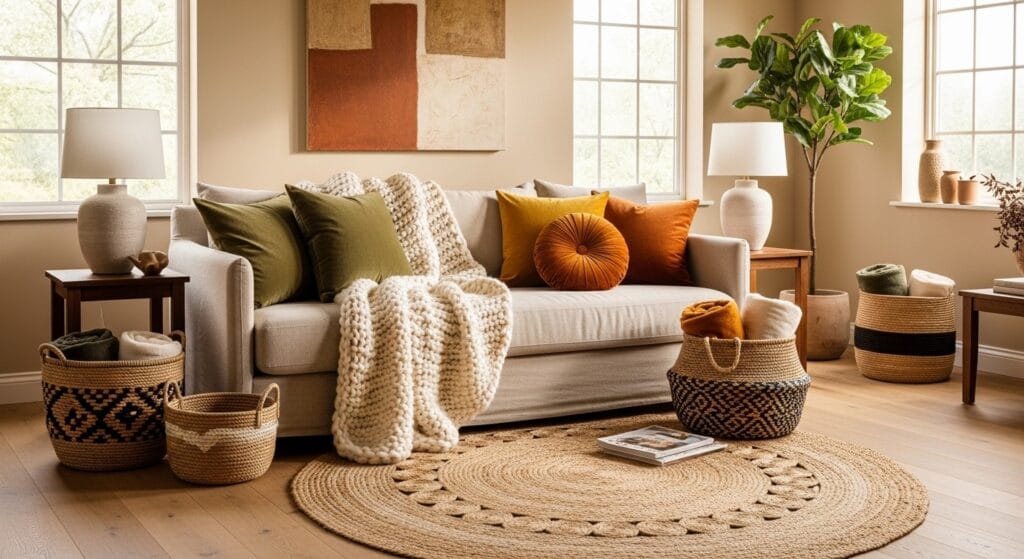
Blankets and throws are your final soft layer. Drape a chunky knit over one arm of the sofa or fold a waffle-weave cotton throw at the foot of your chair. These casual touches look intentionally styled while adding serious textural depth. The goal isn’t perfect symmetry – it’s creating cozy living room styling that feels collected rather than coordinated.
Mix Hard and Soft Materials

Here’s where mixing fabrics and materials gets really interesting. Every soft element needs a hard counterpoint to keep your room from feeling too cushy or dated. This is why designers pair plush sectionals with sleek metal side tables or balance velvet pillows with ceramic lamps.
Look around your space and identify the ratio of soft to hard surfaces. If everything feels padded and upholstered, bring in wood, metal, glass, or stone elements. A marble coffee table, brass floor lamp, or concrete planter immediately adds structure. On the flip side, if your room skews modern with lots of hard surfaces, introducing woven baskets, fabric wall art, or upholstered ottomans will warm things up.
The most successful rooms feature this push and pull throughout. Your eye should travel from soft to hard to soft again as you scan the space. This rhythm keeps the design engaging without any single texture dominating.
Don’t Forget Wall Texture
Walls are often the most overlooked opportunity for adding dimension. You don’t need to install shiplap or board-and-batten to create texture here. Sometimes a woven wall hanging, textured art piece, or even floating shelves with varied objects accomplishes the same goal.
Consider what’s happening on your vertical surfaces right now. Flat, smooth walls benefit from three-dimensional art, macramé pieces, or even a gallery wall with frames in different finishes. If you’re hesitant about hanging things, leaning large-scale textured art against the wall on a console creates similar impact.
Architectural details like exposed brick, stone fireplaces, or wooden beams obviously bring built-in texture. If you have these features, let them shine by keeping nearby textures simpler. The wall itself becomes your statement layer. For more ideas on working with walls, check out these textured wall options that can transform your space.
Balance Scale and Weight
Texture isn’t just about the material itself – it’s also about how substantial that material feels. A chunky cable-knit throw has more visual weight than a thin cotton blanket, even though both are soft textiles. Similarly, a heavy pottery vase reads differently than a delicate glass one.
When layering texture, pay attention to the scale of your textured elements. If you have one large-scale texture like a shaggy rug or an oversized woven pendant light, balance it with medium and small-scale textures elsewhere. This prevents any single element from overwhelming the space.
Weight matters too. Rooms with all lightweight, airy textures can feel insubstantial, while spaces packed with heavy, dense materials might seem oppressive. The sweet spot includes a mix – perhaps a substantial wooden coffee table paired with gauzy linen curtains and medium-weight throw pillows. This variety keeps the room feeling grounded but not weighed down.
Create Texture Through Repetition

Here’s a subtle technique designers use constantly: repeating the same texture in different forms throughout a room. You might use wood in your coffee table, picture frames, and decorative bowls. Or incorporate woven elements through your rug, basket storage, and lamp shade.
This repetition creates cohesion while still building layers. The key is varying the application enough that it doesn’t feel matchy-matchy. Three wooden pieces in three different finishes and styles reads as intentional layering. Three identical wood tones in similar shapes just looks like you bought a furniture set.
The same principle applies to any texture family. Metal accents in brass, copper, and oil-rubbed bronze all play well together. Various natural fibers like jute, sisal, seagrass, and rattan complement each other beautifully. These related-but-not-identical textures create sophisticated depth.
Living Room Decor Tips for Different Design Styles
The specific textures you choose should reflect your overall aesthetic, but the layering principles remain the same across styles. In a minimalist space, you might layer smooth concrete, soft linen, and natural wood – fewer textures overall, but each one carefully considered for maximum impact. These minimalist living room principles can help guide your choices.
For a coastal cottage bedroom vibe translated to your living space, think weathered wood, cotton canvas, jute, and sea grass. The textures feel relaxed and casual but still create plenty of visual interest. This approach works beautifully in beachy or lakeside homes.
If you’re drawn to more dramatic interiors, rich velvet, tufted leather, polished marble, and metallic accents deliver that luxurious feel. The textures themselves have more inherent glamour, but you’re still mixing smooth and rough, hard and soft. The formula doesn’t change – just the ingredients.
Common Texture-Layering Mistakes to Avoid
One of the biggest mistakes is introducing too many competing textures at once. Yes, you want variety, but seven different textures in one seating area creates chaos rather than sophistication. Stick to three to five distinct textures in any single space, then repeat those throughout the room.
Another pitfall is matching textures to colors too precisely. You don’t need your velvet pillows to match your velvet curtains. In fact, varying the textures within your color palette creates much more interest. All your neutrals can include linen, wool, cotton, and silk without everything being the same shade of beige.
Finally, people often forget about finish variety. This applies especially to wood tones and metal finishes. Mixing matte and glossy, rough and polished within your chosen materials adds another subtle layer of textural complexity that elevates the entire room.
Achieving That Designer Living Room Look
Professional designers spend years training their eyes to see and balance texture instinctively. But the fundamentals are straightforward – contrast soft with hard, vary your scales, repeat textures in different applications, and don’t overthink it. Some of the best textured rooms happen when you trust your instincts about what feels good.
Start by auditing what you already have. Identify the textures present in your current furniture and decor. Then determine what’s missing. Too many smooth surfaces? Add some chunky knits and natural fiber elements. Everything feeling rough and rustic? Introduce polished metals or glass to refine the look.
Remember that successful texture layering isn’t about buying all new things. Sometimes repositioning what you own or swapping elements between rooms reveals the mix you need. That leather pouf from your bedroom might be exactly what your living room needs next to a linen sofa.
For more ways to enhance your space, explore these living room decor tips that complement texture layering beautifully.
The difference between a room that photographs well and one that feels amazing to inhabit often comes down to texture. When you master how to layer texture in your living room, you create spaces that engage multiple senses and reward closer inspection. Each time you enter the room, there’s something new to appreciate – the way light hits that woven basket, how the velvet pillow contrasts with smooth leather, the subtle variation in your wood tones.
You don’t need to overhaul everything at once. Building textural layers happens gradually, piece by piece, as you become more attuned to how different materials interact. Start with one or two intentional additions, step back to see how they change the feel of your space, then continue from there. Before long, you’ll have created the kind of sophisticated, welcoming room that makes people wonder if you hired a designer.

Sanjai creates easy, affordable home decor ideas that anyone can try. Through simple tips and curated finds, he helps you style rooms you’ll love coming home to.