If you’ve ever opened your pantry door only to have items tumble out like an avalanche, you’re not alone. A well-organized pantry isn’t just about aesthetics – it’s about creating a functional space that saves you time, money, and stress. Whether you’re dealing with a tiny cabinet or a spacious walk-in pantry, the right organization strategies can completely change how your kitchen functions.
The truth is, most of us underutilize our pantry space without even realizing it. We stack boxes haphazardly, lose track of expiration dates, and buy duplicates because we can’t see what we already have. But what if I told you that with just a few smart tweaks, you could double your storage capacity and actually enjoy opening that door?
These kitchen pantry organization hacks aren’t just theoretical – they’re practical solutions that real people use in real kitchens. From clever vertical storage tricks to genius container swaps, you’ll discover how to make every inch count.
1. Use Clear Airtight Containers for Everything

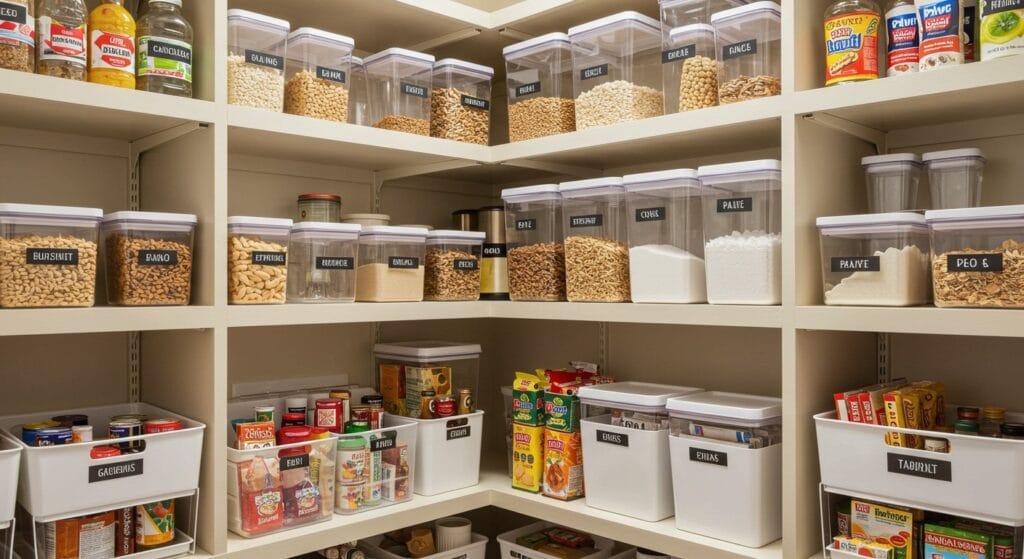
Switching to clear containers is probably the single most impactful change you can make. Not only do they keep food fresher longer, but they also create that Pinterest-worthy uniform look everyone loves. You can see exactly what you have and how much is left at a glance.
The key is choosing containers that stack well and fit your shelves perfectly. Measure your shelf height before shopping – there’s nothing more frustrating than containers that are just a half-inch too tall. I’ve learned this lesson the hard way more times than I’d like to admit.
Consider investing in a variety of sizes rather than all matching ones. Small containers work perfectly for spices and seasonings, while larger ones are ideal for cereals and pasta. The investment pays for itself when you stop buying duplicates of items you already own.
2. Install Pull-Out Drawers in Deep Shelves

Deep shelves are notorious for becoming black holes where items disappear forever. Pull-out drawers solve this problem instantly, bringing everything within easy reach. You can install these in existing cabinets without major renovation work.
These drawers work especially well for canned goods, jars, and other heavy items. Instead of playing Jenga every time you need something from the back, everything slides out smoothly. It’s like having extra cabinet space you didn’t know existed.
The installation might seem intimidating, but most hardware stores offer pre-made solutions that require minimal tools. If you’re handy with basic DIY projects, this could be a weekend game-changer for your kitchen and dining ideas.
3. Create Zones for Different Food Categories
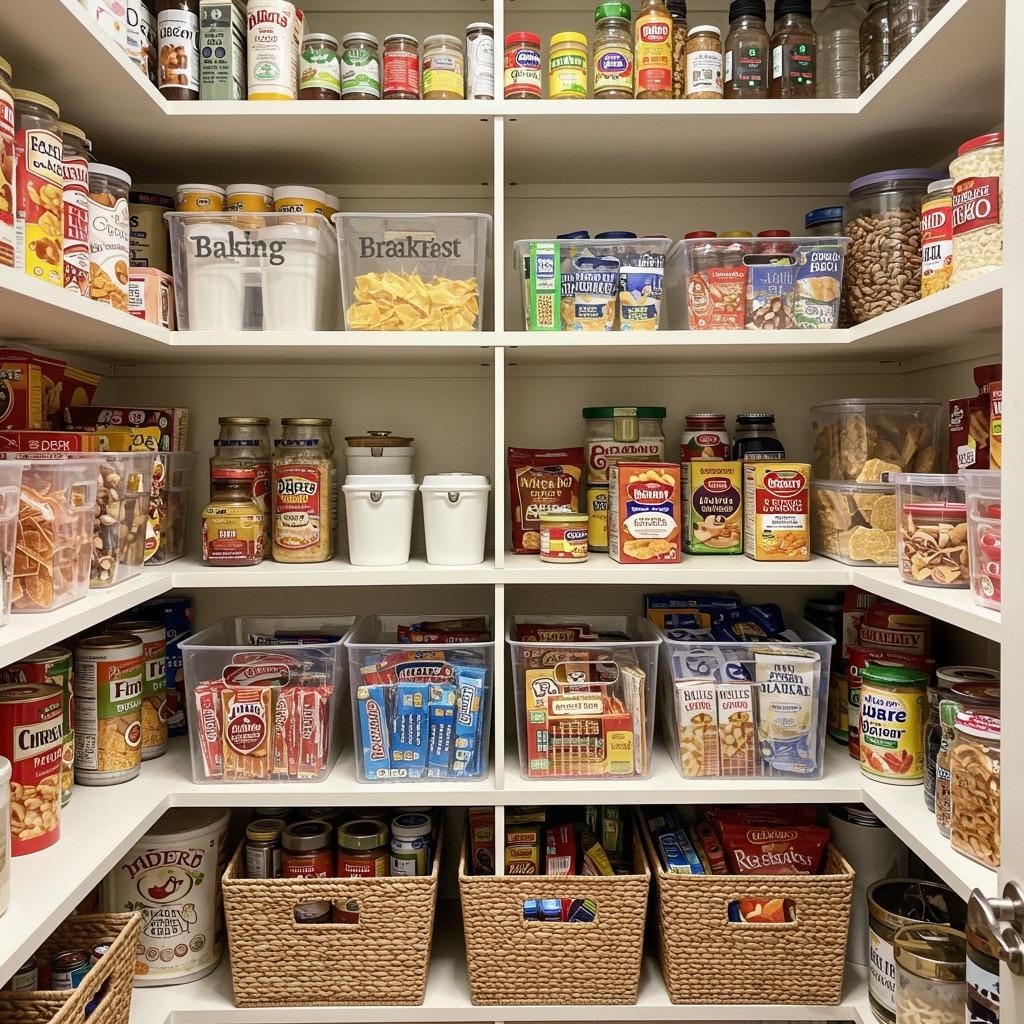
Think of your pantry like a mini grocery store. Group similar items together – all baking supplies in one zone, breakfast items in another, snacks elsewhere. This system makes meal planning easier and prevents you from frantically searching for that one ingredient.
The breakfast zone might include cereals, oatmeal, coffee, and tea. Your baking section could house flour, sugar, vanilla, and mixing bowls if space allows. Keeping categories together means less time hunting and more time cooking.
Don’t forget to consider how often you use certain items. Place everyday essentials at eye level and less frequently used items higher up. Your back will thank you for keeping heavy items like canned goods on lower shelves.
4. Maximize Vertical Space with Stackable Bins
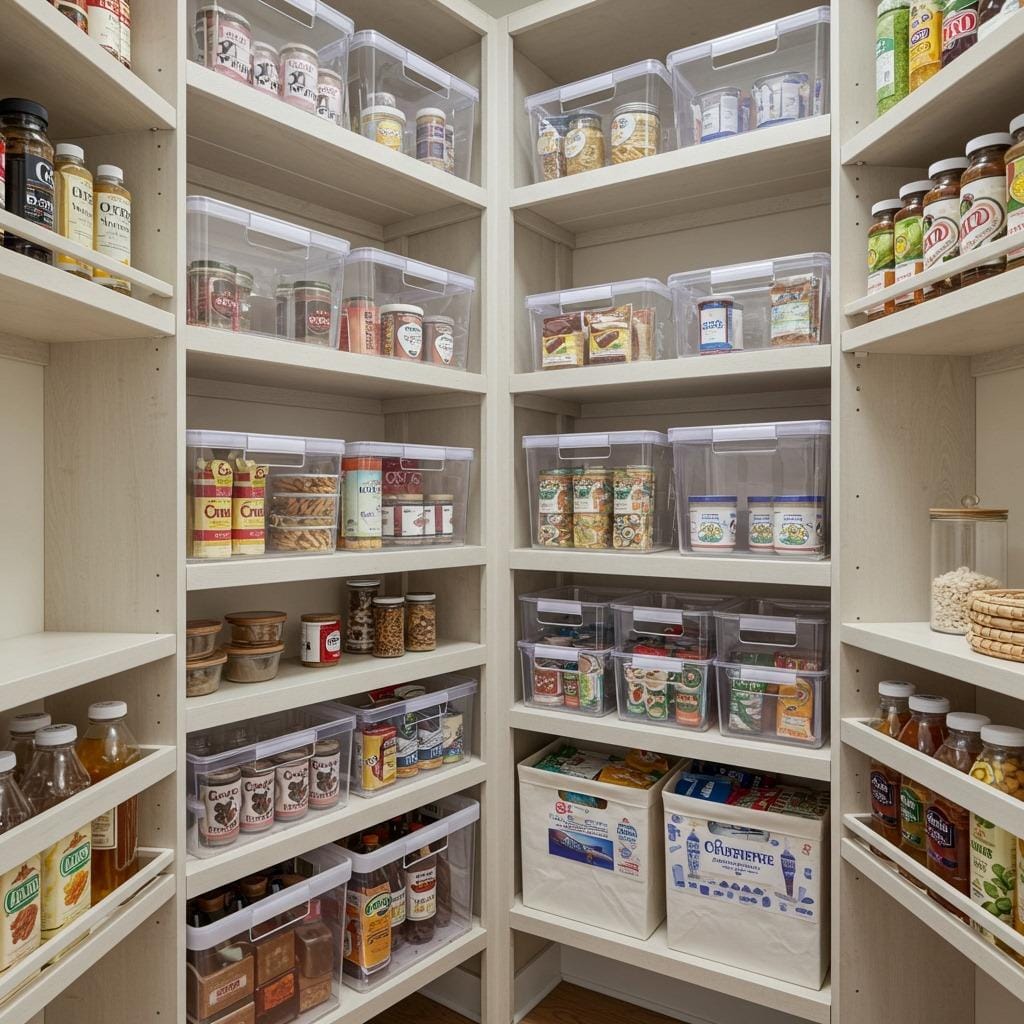
Most people only think horizontally when organizing, but your pantry walls offer tons of untapped potential. Stackable bins let you build upward while keeping everything accessible and organized.
Choose bins with handles for easy lifting, especially for the higher stacks. Wire baskets work well for items like potatoes and onions that need air circulation, while solid bins are perfect for packaged goods. The key is maintaining easy access – if you need a ladder to reach something, it’s probably too high.
Consider the weight distribution too. Keep lighter items in upper bins and heavier staples lower down. This storage hack prevents bins from toppling and makes restocking much safer.
5. Add Door-Mounted Spice Racks

That empty space on the back of your pantry door is prime real estate going to waste. Door-mounted racks can hold spices, condiments, or even cleaning supplies – instantly adding storage without taking up shelf space.
Spice racks work particularly well because spices are lightweight and used frequently. You can see everything at a glance instead of digging through cluttered spice cabinets. Some racks even come with labels to keep everything perfectly organized.
Make sure to choose racks that won’t interfere with your door closing properly. Measure the clearance carefully, and consider the weight capacity if you’re planning to store heavier items like oils or vinegars.
6. Use Lazy Susans for Corner Access
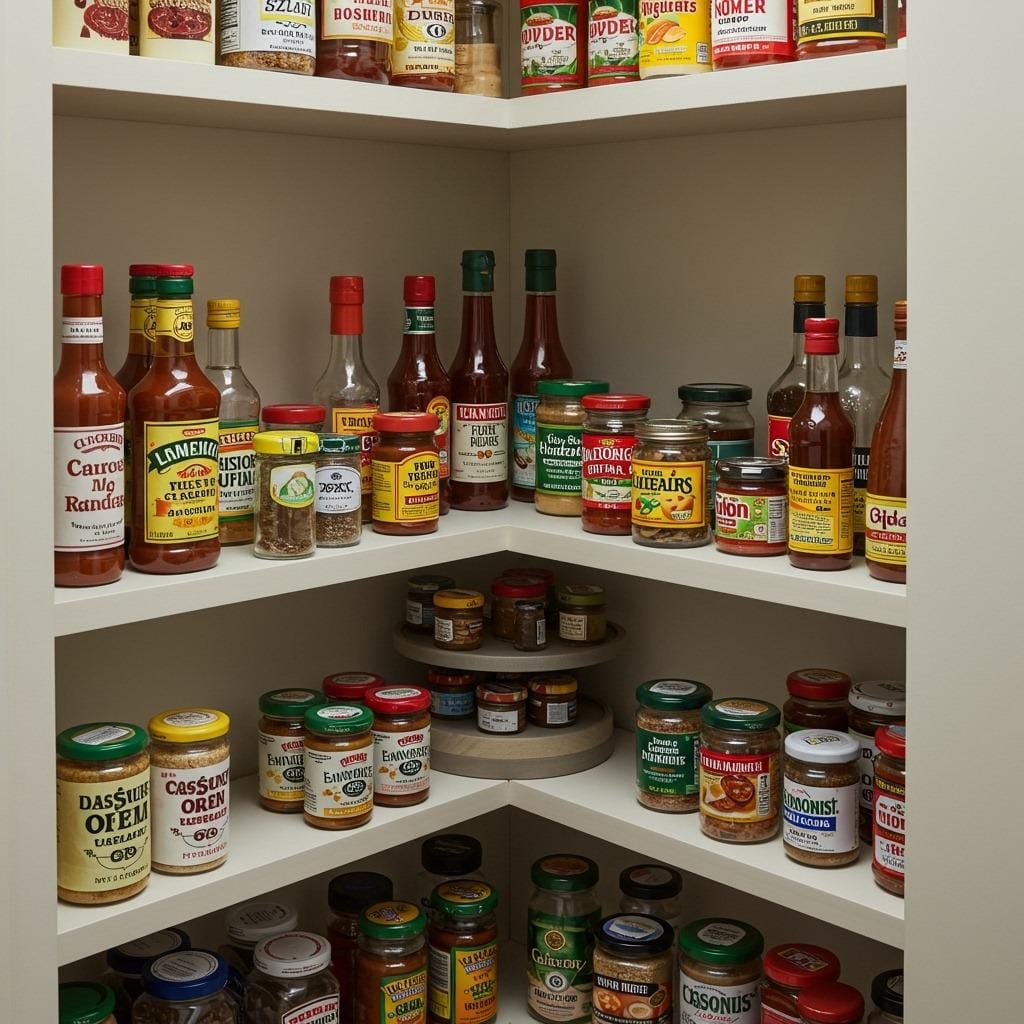
Corner spaces in pantries are notoriously difficult to organize, but lazy Susans make everything accessible with a simple spin. They’re perfect for oils, vinegars, condiments, and other frequently used items that tend to get lost in corners.
The round shape maximizes corner storage while eliminating those hard-to-reach dead zones. You can install them on existing shelves or buy standalone versions that don’t require any modification to your pantry.
Choose lazy Susans with raised edges to prevent items from sliding off during rotation. Some come with dividers to keep bottles from clinking together, which is especially helpful if you store glass containers.
7. Install Under-Shelf Baskets for Extra Storage
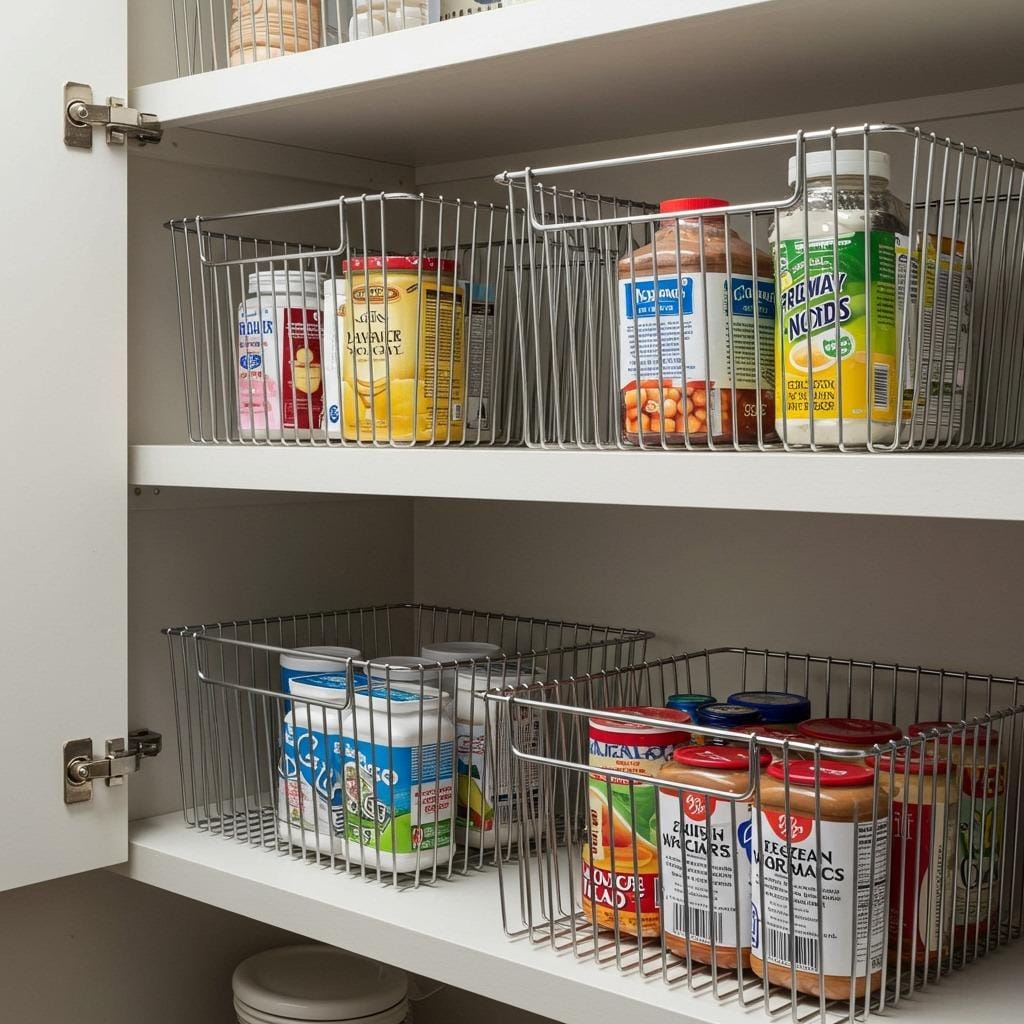
The space underneath your shelves is valuable real estate you’re probably ignoring. Under-shelf baskets slide onto existing shelves and instantly double your storage capacity without any permanent installation.
These work exceptionally well for lightweight items like bread, chips, or paper products. They keep these items easily accessible while freeing up precious shelf space for heavier goods. Plus, they add a nice organized look that’s very Pinterest-worthy.
The installation is usually tool-free – most baskets simply slide over the edge of your existing shelves. Look for adjustable options that can fit different shelf thicknesses, and make sure they don’t interfere with items stored on the shelf below.
8. Label Everything Consistently

Labels might seem unnecessary when you’re the only one using the pantry, but they’re actually game-changers for maintaining organization. They help other family members put things back in the right place and make it easy to spot when you’re running low on essentials.
Consistent labeling creates that polished look you see in magazine photos. Choose a font and style, then stick with it throughout your pantry. Whether you prefer handwritten chalkboard labels or printed ones, consistency is key for a professional appearance.
Don’t forget to label shelves themselves, not just containers. This helps maintain your organizational system even when containers are empty or being washed. It’s like having a roadmap for your pantry that anyone can follow.
9. Store Bulk Items in Large Clear Containers
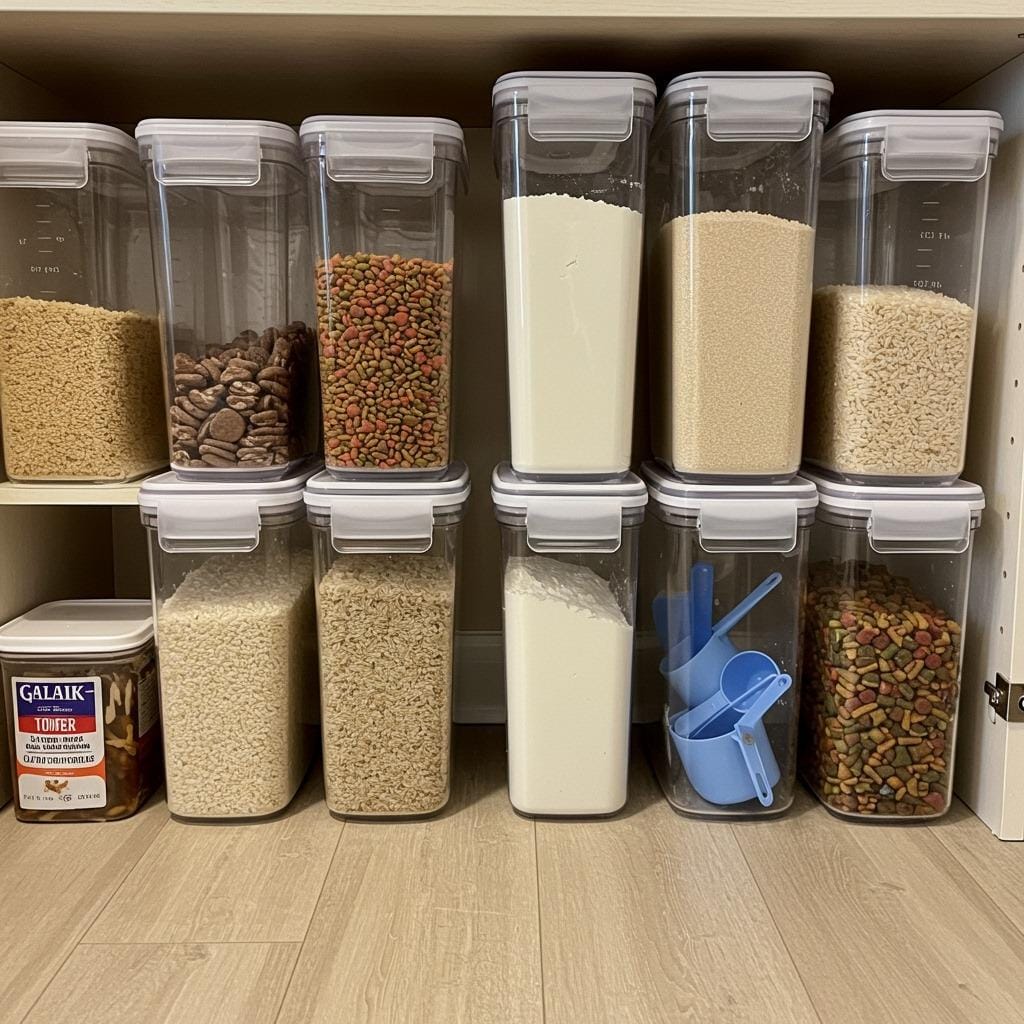
Buying in bulk saves money, but only if you can store items properly. Large clear containers keep bulk purchases fresh while making it easy to monitor quantities. They also stack better than original packaging, maximizing your floor space.
Include measuring scoops inside containers for convenient portioning. This prevents you from digging around with random kitchen utensils and keeps everything sanitary. For items like flour or sugar, consider containers with pour spouts for easier handling.
Make sure containers are completely airtight to prevent pests and maintain freshness. This is especially important for items like rice, pasta, and cereals that can attract unwanted visitors if not properly sealed.
10. Create a Snack Station at Kid Height
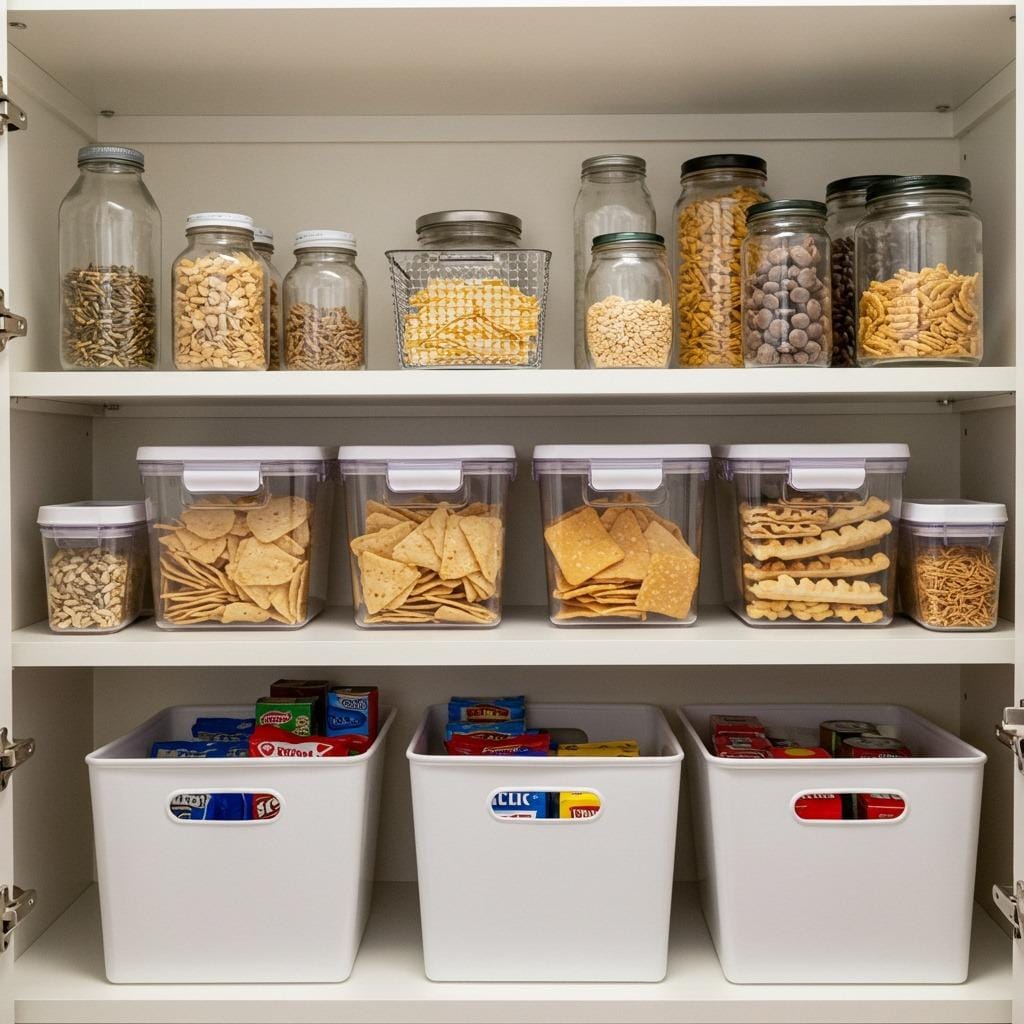
Setting up a dedicated snack area at your children’s eye level promotes independence and reduces constant “what can I eat” questions. Use clear containers so kids can see their options, and include only parent-approved snacks to avoid arguments.
This approach works for portion control too. Pre-portion snacks into small containers so kids grab appropriate amounts rather than taking entire packages. It also helps them develop good organizational habits from an early age.
Consider rotating snack options weekly to keep things interesting. Having a designated snack zone also makes it easier to monitor what your kids are eating and ensure they’re making reasonably healthy choices.
11. Utilize Ceiling Height with Tall Shelving Units
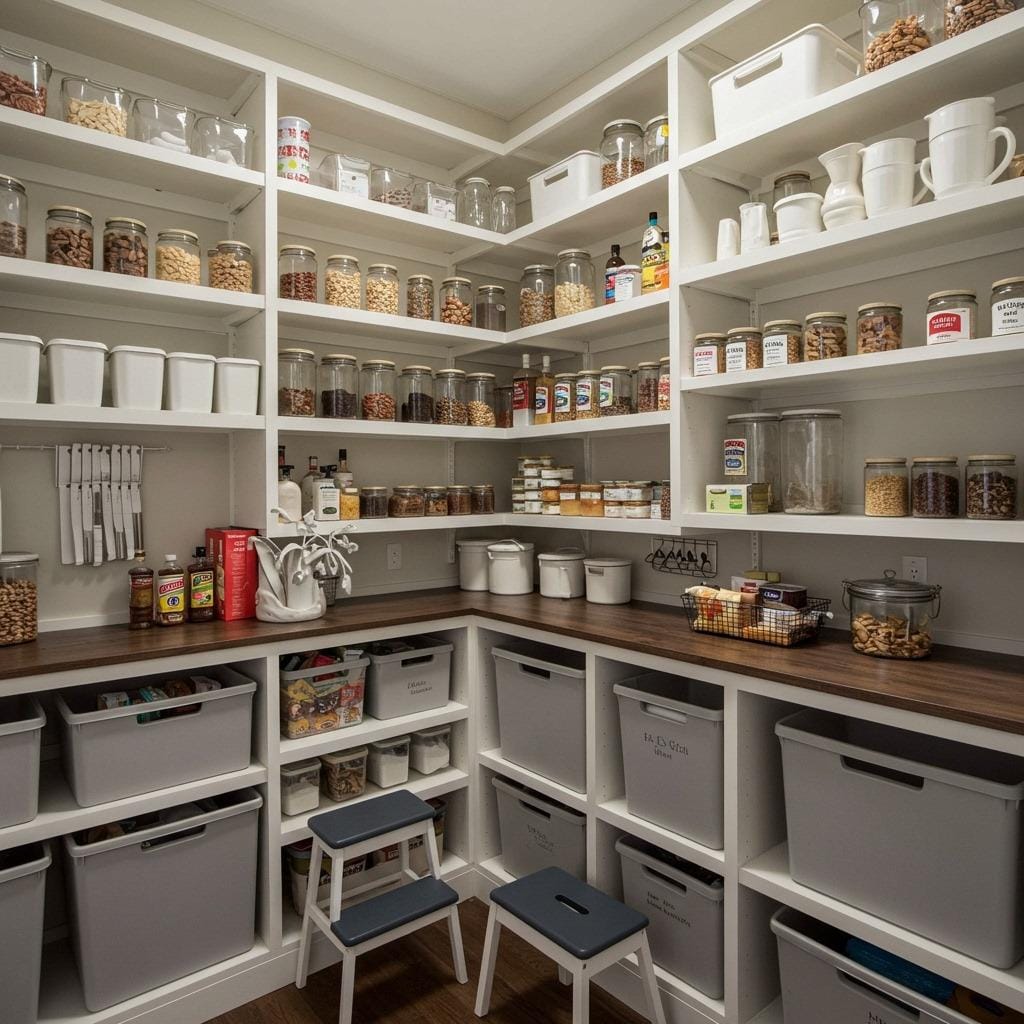
If your pantry has high ceilings, you’re sitting on untapped storage goldmine. Tall shelving units that reach the ceiling provide enormous storage capacity for items you don’t need daily access to.
Keep a sturdy step stool nearby for safe access to upper shelves. Store seasonal items, extra supplies, or bulk purchases up high, and keep everyday essentials within easy reach. This small kitchen organization strategy works particularly well in apartments where every inch counts.
Consider the weight capacity of higher shelves and avoid storing heavy items up there. Paper products, extra linens, or party supplies are perfect for upper storage, while canned goods should stay closer to the ground.
12. Install Wire Shelving for Better Visibility
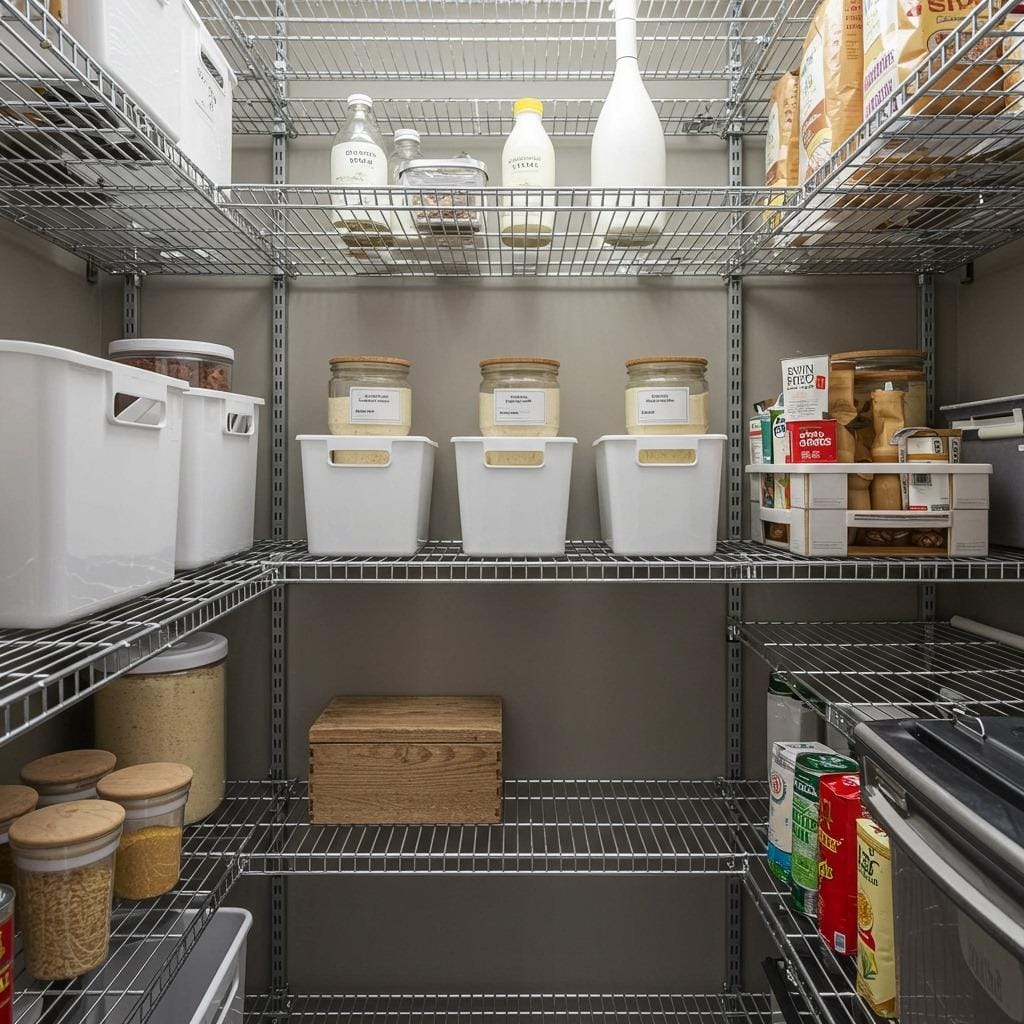
Wire shelving offers several advantages over solid shelves – better air circulation, improved visibility, and a lighter visual appearance. You can see items from multiple angles, making it harder for things to hide and get forgotten.
The open design also allows light to filter through, making your pantry feel brighter and more spacious. This is particularly beneficial in smaller pantries that might feel cramped with solid shelving.
Wire shelving typically offers adjustable heights, letting you customize spacing for different items. You can create tall spaces for cereal boxes and shorter spaces for canned goods, maximizing the efficiency of every shelf.
13. Use Tiered Shelf Organizers for Canned Goods

Canned goods are notorious for hiding behind each other, leading to expired items and duplicate purchases. Tiered organizers solve this problem by creating stadium-style seating for your cans, making every label visible.
These organizers work like steps, with each level slightly higher than the one in front. You can see and access every can without moving others around. They’re especially useful for families who buy canned goods in bulk.
Some tiered organizers are expandable, letting you adjust the width based on your available space and number of cans. Look for sturdy construction that won’t wobble when you remove items from different levels.
14. Add Hooks for Lightweight Items

Don’t overlook your pantry walls as storage opportunities. Simple hooks can hold measuring cups, reusable shopping bags, or even small baskets for odds and ends. They’re especially useful in smaller pantries where every square inch matters.
Hooks work well for items you use frequently but don’t want taking up shelf space. Measuring spoons, small utensils, or mesh bags for storing onions and garlic are perfect hook candidates.
Choose hooks that match your pantry’s style – brushed metal for modern looks or vintage brass for farmhouse vibes. Make sure they’re properly anchored, especially if you’re hanging anything with weight to it.
15. Create a Meal Planning Station
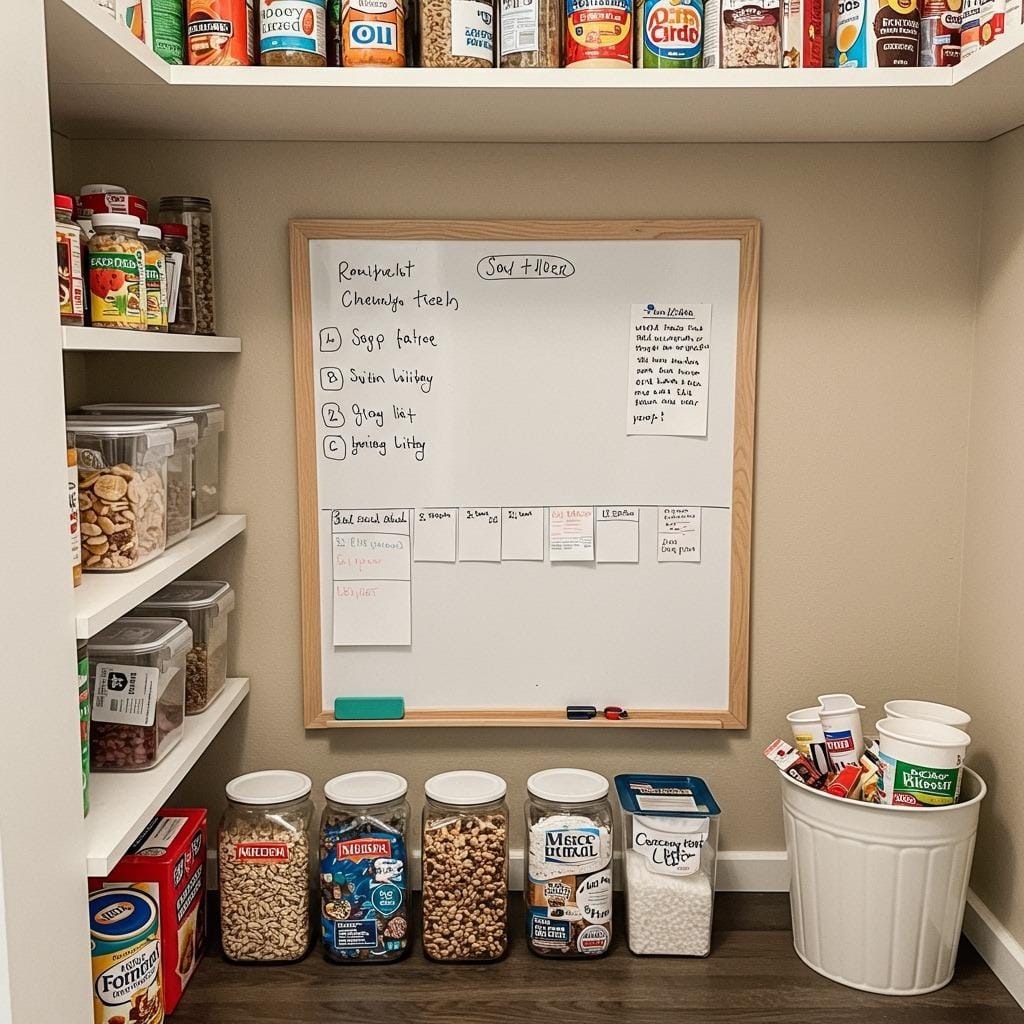
Transform part of your pantry into a meal planning command center. A small whiteboard or chalkboard for weekly menus, plus storage for recipe cards and shopping lists, keeps meal planning organized and convenient.
Having your meal planning station where you store food makes logical sense. You can see what ingredients you have while planning meals, and jot down items you need to buy. This integration reduces food waste and duplicate purchases.
Include a small container for pens, markers, and maybe a calculator for budget tracking. Some people even add a small cork board for pinning favorite simple kitchen styling tips or recipes they want to try.
16. Use Magnetic Strips for Small Metal Items
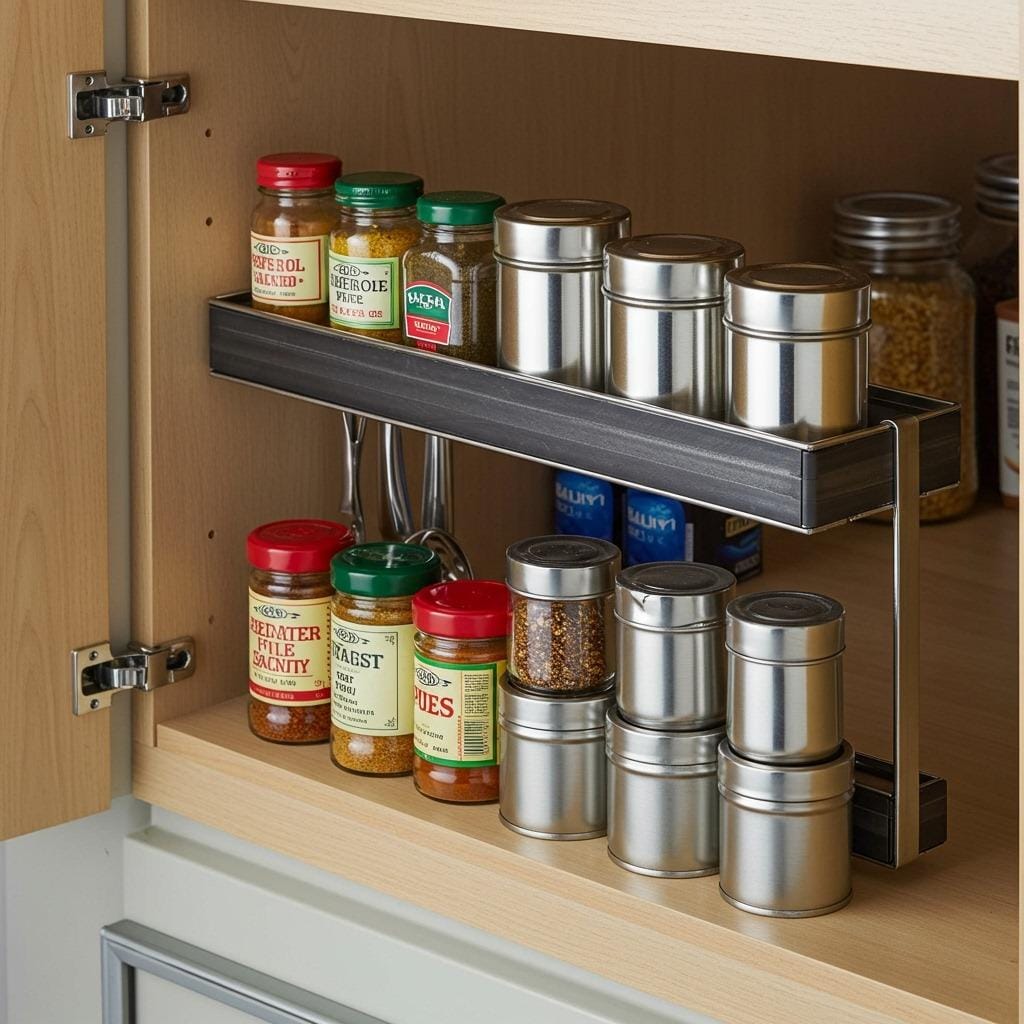
Magnetic strips aren’t just for knife storage – they’re perfect for holding spice tins, measuring spoons, or any small metal items that tend to get lost in drawers. Mount them on walls or even inside cabinet doors for hidden storage.
This works especially well for frequently used spices that come in metal containers. You can see everything at a glance and grab what you need quickly. It also frees up valuable shelf space for bulkier items.
Make sure the magnetic strip is strong enough to hold items securely, especially if your pantry door gets closed firmly. Test it with a few items before loading it up completely to ensure everything stays put.
17. Install LED Strip Lighting for Better Visibility
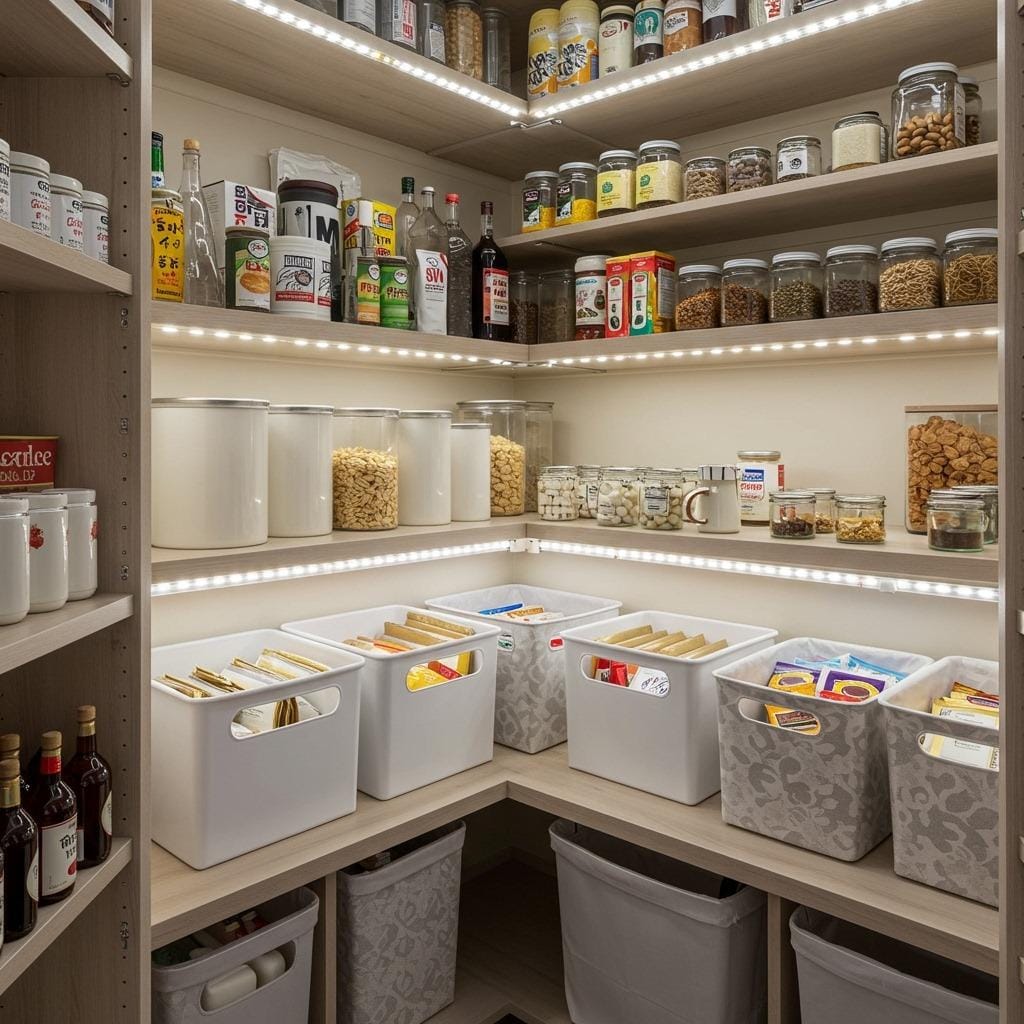
Good lighting transforms any pantry from a dark cavern into an inviting, functional space. LED strip lighting under shelves eliminates shadows and makes it easy to read labels and find what you’re looking for.
Battery-operated LED strips are perfect for rentals or situations where electrical work isn’t feasible. They’re easy to install with adhesive backing and provide surprisingly good illumination for their size.
Consider motion-activated strips that turn on automatically when you open the door. This hands-free lighting is incredibly convenient when your arms are full of groceries or you’re trying to grab something quickly while cooking.
18. Use Vacuum-Sealed Bags for Bulk Dry Goods

Vacuum-sealed storage bags can compress bulky items like pasta, rice, or cereals, allowing you to store more in less space. They also provide excellent protection against pests and moisture, keeping food fresher longer.
This method works particularly well for pantry storage ideas when you’re dealing with limited space. You can fit significantly more in your pantry when items aren’t trapped in bulky original packaging.
Label vacuum-sealed bags clearly with contents and dates, since you won’t have original packaging for reference. A permanent marker works well, or you can attach waterproof labels for a neater appearance.
19. Create Designated Spaces for Paper Products

Paper towels, napkins, and disposable plates can quickly take over pantry space if not properly contained. Creating a designated zone with dividers or bins keeps these items organized and prevents them from toppling over.
Vertical dividers work especially well for paper products, keeping different types separated while maximizing space efficiency. You can see quantities at a glance and easily grab what you need without disturbing other items.
Consider storing paper products in the upper areas of your pantry since they’re lightweight but bulky. This leaves valuable lower shelf space for heavier items you access more frequently.
20. Implement a “First In, First Out” System
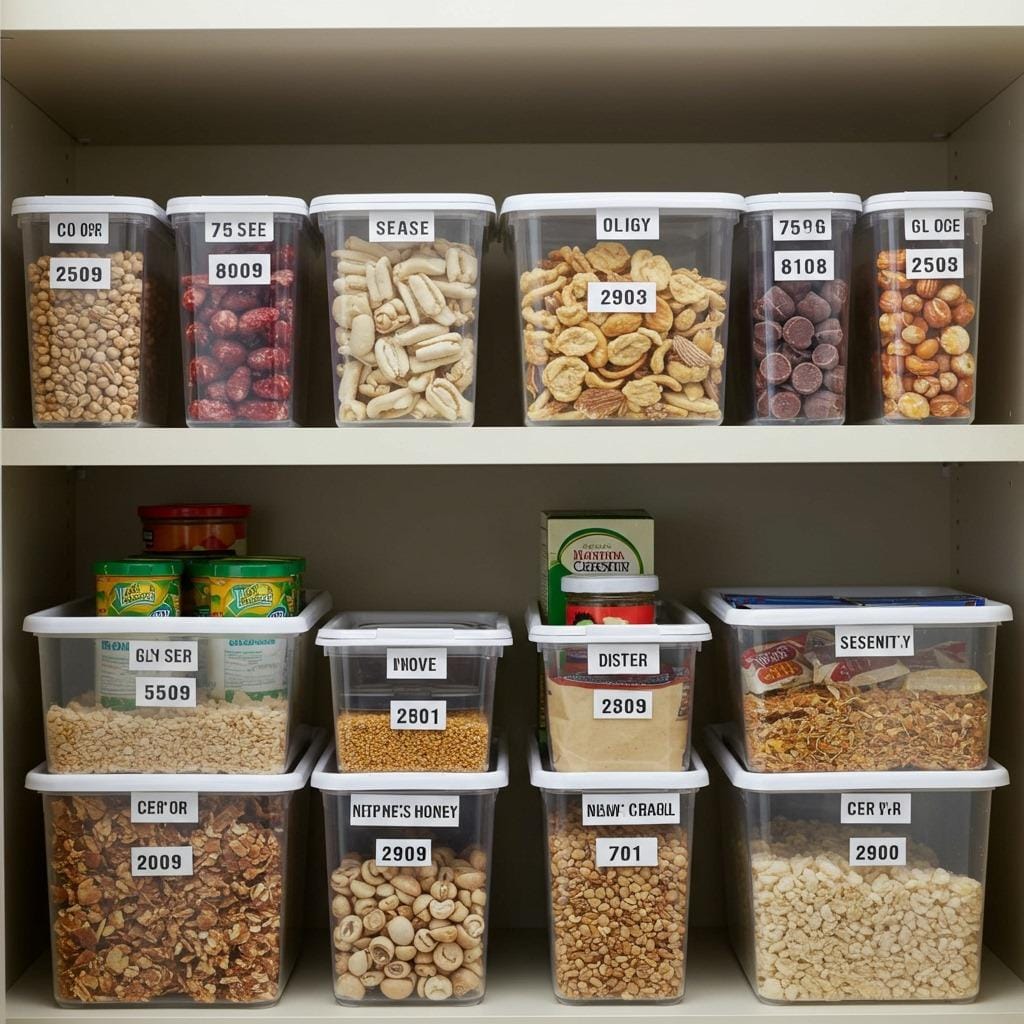
Restaurant-style inventory rotation prevents food waste and saves money. Always put new purchases behind existing items, so older products get used first. This simple system prevents forgotten items from expiring in the back of shelves.
Date labels or a simple marking system help track which items should be used first. This is particularly important for items with shorter shelf lives or things you don’t use frequently.
This system works best when combined with good visibility – another reason why clear containers and good lighting are so important. You can’t rotate stock effectively if you can’t see what you have.
Your pantry transformation doesn’t have to happen overnight. Start with one or two of these hacks that address your biggest pain points, then gradually implement others as time and budget allow. The key is creating a system that works for your family’s specific needs and lifestyle.
Remember, the best organization system is one you’ll actually maintain. Choose solutions that feel natural to you and don’t require constant upkeep. With these kitchen decluttering tips and a bit of planning, you can create a pantry that not only looks amazing but actually makes your daily cooking routine easier and more enjoyable.
The satisfaction of opening your pantry door to reveal a perfectly organized space is worth every minute spent implementing these hacks. Your future self will thank you every time you can find exactly what you need without any searching or frustration.

Sanjai creates easy, affordable home decor ideas that anyone can try. Through simple tips and curated finds, he helps you style rooms you’ll love coming home to.