If you’ve ever felt like you’re running a marathon just to make breakfast, your kitchen layout might be sabotaging you. The work triangle isn’t some outdated design rule your grandmother followed – it’s the secret behind every kitchen that feels effortless to cook in.
Most people focus on pretty backsplashes and cabinet colors when planning a kitchen. But the real magic happens when you nail the distances between your three most-used spots: the fridge, sink, and stove. Get this wrong, and you’ll spend years doing unnecessary laps around your kitchen island.
This kitchen work triangle infographic guide breaks down everything you need to create a layout that works with your natural movements, not against them. Whether you’re renovating a tiny galley kitchen or designing a spacious open-concept space, these principles will transform how you cook.
What Is the Kitchen Work Triangle?

The work triangle concept emerged in the 1940s when designers studied how people actually move while cooking. They discovered that efficiency comes down to the relationship between three key zones: cold storage (refrigerator), cleanup (sink), and cooking (stove or cooktop).
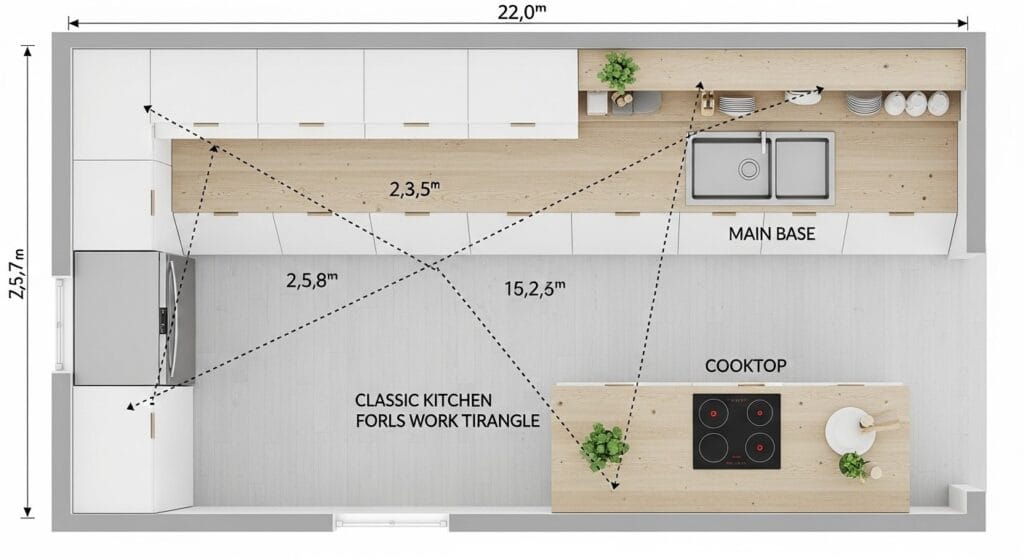
Think of it as connecting three points to form a triangle. The idea is simple – these three stations should be close enough that you’re not hiking across your kitchen with a pot of boiling water, but far enough apart that two people aren’t constantly bumping into each other. The National Kitchen and Bath Association established guidelines that still influence kitchen layout ideas today.
The classic rule suggests each leg of the triangle should measure between 4 and 9 feet, with a total perimeter between 13 and 26 feet. These aren’t random numbers – they’re based on actual ergonomic studies of how far people comfortably reach and step while preparing meals.
Why the Work Triangle Still Matters in Modern Kitchens
You might wonder if this 1940s concept applies to today’s open concept kitchen living room spaces. The short answer? Absolutely, though with some modern adaptations.
Contemporary kitchens often include features the original designers never imagined – double ovens, microwave drawers, coffee stations, and massive islands. But the basic principle of ergonomic kitchen design remains relevant because our bodies haven’t changed. We still need to move efficiently between storing food, washing ingredients, and cooking them.
The work triangle prevents what designers call “traffic jams.” If your sink sits directly between your stove and fridge, you’ll constantly block anyone trying to grab something cold while you’re washing vegetables. Similarly, placing your fridge too far from your prep area means you’ll make endless trips just to assemble ingredients for one recipe.
Modern interpretations sometimes expand the triangle into work zones. Large kitchens might have multiple triangles – one for everyday cooking and another for baking, for example. Small kitchen workflow considerations often mean making the triangle more compact while still maintaining functional relationships between zones.
The Golden Rules of Kitchen Work Triangle Design

Getting the measurements right makes the difference between a kitchen that flows naturally and one that feels awkward. Here’s what actually matters when you’re mapping out your space or evaluating an existing layout.
Triangle Leg Distances
Each side of your work triangle should measure no less than 4 feet and no more than 9 feet. Shorter distances leave you feeling cramped with no counter space between appliances. Longer distances mean you’re wasting steps and energy with every meal. If you’re working on small kitchen cabinet organization, you’ll probably land closer to the 4-foot minimum.
The total perimeter shouldn’t exceed 26 feet. Add up all three legs of your triangle – if the number goes over 26 feet, you’ll feel like you’re working in a scattered, inefficient space. This matters less in huge kitchens where you might intentionally create multiple work zones, but for most homes, staying within this range creates better workflow.
Traffic Flow Considerations
No major traffic paths should cut through your triangle. If the route from your living room to the back door slices right through your work zone, you’ll constantly dodge family members while trying to cook dinner. This becomes especially important in open plan kitchen dining room color schemes where the kitchen connects to multiple spaces.
Unobstructed Movement
Islands and peninsulas shouldn’t block your triangle paths. That gorgeous kitchen island might look stunning in the showroom, but if it forces you to walk around it every time you move between the sink and stove, it’s hurting your layout. Allow at least 42 inches of clearance around islands – 48 inches feels even better if you have the space.
Different Kitchen Layouts and Their Work Triangles

Not all kitchens follow the same triangle pattern. Your space dictates which configuration works best, and understanding these variations helps you make smarter planning decisions.
1. L-Shaped Kitchen Triangle
L-shaped kitchens naturally create efficient triangles because two walls form your work zone. Typically, the sink sits in the corner or along one wall, with the refrigerator at one end and the range on the other leg of the L. This layout works beautifully for small dining space decor because it leaves an open area for a table.
The corner spot is your biggest decision point. Some designers place the sink there because plumbing lines up easily, while others prefer keeping that prime real estate for prep space. Just avoid putting your range in the corner – reaching over burners becomes awkward and potentially dangerous.
2. Galley Kitchen Triangle
Galley kitchens line up appliances along two parallel walls, which can create a elongated triangle. The trick here is distributing your main stations between both sides rather than clustering everything on one wall. One effective setup places the fridge and sink on one side with the range across from them.
This layout demands careful attention to aisle width. Less than 42 inches feels cramped, especially if you often cook with a partner. More than 48 inches and you’re taking unnecessary steps. Small kitchen workflow in galley spaces benefits from keeping frequently used items within arm’s reach on open shelving.
3. U-Shaped Kitchen Triangle
U-shaped kitchens offer the most classic triangle setup, with each appliance on a different wall. This configuration gives you maximum counter space and creates a natural cooking zone that feels separate from the rest of your home. The closed layout prevents traffic from cutting through your work area.
Watch the overall width though. If your U extends too wide, you’ll lose the efficiency benefits of the triangle. Ideally, the distance between parallel walls should stay between 8 and 12 feet – wide enough for two people to work comfortably but not so wide that you’re constantly crossing empty floor space.
4. Island Kitchen Triangle
Adding an island creates opportunities for modified triangles. You might place the cooktop or sink on the island, forming a triangle with the perimeter appliances. This setup works wonderfully for modern luxury kitchen designs where the island becomes a natural gathering spot while you cook.
The island version requires extra thought about clearances. You need space to open the refrigerator and oven doors without hitting the island, plus room for people to sit at the island without blocking your work paths. A kitchen planning guide typically recommends 42-48 inches between the island and perimeter cabinets.
Common Kitchen Triangle Mistakes to Avoid
Even designers mess up work triangles sometimes. Knowing what doesn’t work saves you from expensive fixes down the road.
Oversized Islands
That extra-large island from Pinterest might not fit your actual kitchen footprint. I’ve seen countless kitchen counter decorating ideas that look gorgeous but create impossible triangles. If you can’t comfortably reach across your island to grab something, it’s probably too big for your space.
Refrigerator Placement Near Doorways
Placing the fridge right next to a doorway seems logical until you realize the door swing blocks the entire entryway when someone’s grabbing milk. Position your refrigerator at the end of a counter run where the door can open fully without obstructing traffic. This matters even more when you’re planning storage ideas for small homes where every inch counts.
Ignoring Dishwasher Location
The dishwasher doesn’t form part of the official triangle, but placing it far from the sink creates unnecessary work. Ideally, position it within a step of your sink so you can easily rinse and load dishes. Most people also prefer their dishwasher near their cabinet storage area for efficient unloading.
Stove Too Close to Windows
Windows behind stoves look beautiful in photos but create practical problems. Reaching across hot burners to open windows feels risky, and grease splatters on glass need constant cleaning. If you’re set on this look, leave at least 12 inches between the burner edge and window frame, or install a downdraft vent.
Insufficient Landing Zones
Every appliance needs nearby counter space. Plan for at least 15 inches of counter on the handle side of your refrigerator, 15 inches on at least one side of your cooktop, and 24 inches on one side of your sink. These landing zones let you safely set down hot pots or heavy grocery bags without crossing your kitchen.
Adapting the Work Triangle for Small Kitchens

Tiny kitchens present unique challenges for implementing traditional triangles. The good news? Compact spaces can actually create more efficient workflows when planned thoughtfully.
The Compact Triangle Approach
In small kitchen cabinet organization projects, aim for the lower end of the distance range – around 4 feet per leg. This might feel tight initially, but it means you can literally reach everything while standing in one spot. Think of it as creating a cooking cockpit where efficiency comes from minimal movement.
Some tiny kitchens work better with a “single wall plus island” setup. Place your major appliances along one wall with a small rolling cart or compact island for prep space. You’re not creating a traditional triangle, but rather a linear work zone that accomplishes the same goal.
Vertical Storage Solutions
When floor space is limited, look up. Storage hacks for home organization often include wall-mounted magnetic strips for knives, hanging pot racks, and floor-to-ceiling cabinets. These features keep your counters clear so your compact triangle functions smoothly.
Multi-Functional Elements
Small kitchens benefit from appliances that serve double duty. A range with a built-in microwave above it eliminates one appliance from your layout equation. Under-counter refrigerators maximize vertical space. Consider how small kitchen workflow improvements might include choosing appliances specifically designed for compact layouts.
Work Zones Beyond the Triangle
Modern ergonomic kitchen design recognizes that cooking involves more than just the basic triangle. Creating dedicated zones for different tasks makes your kitchen work harder for you.
The Prep Zone
Your main prep area should sit between the refrigerator and sink since most recipes start with ingredients from the fridge that need washing or trimming. This zone needs at least 36 inches of continuous counter space – more if you regularly cook elaborate meals or bake. Scandinavian kitchen decor often maximizes prep zones with minimalist design that keeps counters clear.
The Cooking Zone
This area centers around your cooktop or range and includes storage for pots, pans, cooking utensils, and oils. Keep your most-used cooking tools within arm’s reach rather than across the kitchen. A utensil crock near the stove beats a drawer on the other side of the room every single time.
The Consumables Zone
Coffee makers, toasters, and other breakfast items deserve their own spot away from your main cooking triangle. This prevents traffic jams during busy mornings when one person makes coffee while another cooks eggs. If you’re working on how to organize kitchen cabinets, consider dedicating one cabinet to all breakfast supplies and appliances.
The Cleaning Zone
Beyond just the sink, your cleaning zone includes dish soap, trash and recycling bins, and dish towels. The dishwasher should anchor this area. Many people also incorporate their kitchen pantry storage hacks into this zone since it’s convenient to put away clean dishes near where dry goods live.
Measuring and Planning Your Kitchen Work Triangle
Ready to map out your own triangle? Here’s how to turn theory into actual floor plan measurements that work for your specific space.
Start With Accurate Measurements
You’ll need the dimensions of your entire kitchen plus the footprint of each appliance. Don’t just measure wall-to-wall – note any obstacles like support columns, radiators, or existing plumbing. These constraints often dictate where certain elements can realistically go, especially when planning a diy budget kitchen renovation.
Measure from the center front of each appliance when calculating your triangle. So for a refrigerator, you’d measure from the midpoint of the door. For the sink, measure from the center of the basin. This gives you the actual walking distance rather than just the distance between appliances.
Use Graph Paper or Design Software
Draw your kitchen to scale – typically 1/4 inch equals 1 foot works well for most home kitchens. Mark permanent features first (windows, doors, structural walls). Then experiment with appliance placement using templates or software. Many home improvement stores offer free kitchen design services that can help visualize different layouts.
Test Your Traffic Flow
Once you have a potential layout, walk through it mentally or on paper. Imagine carrying a pot of pasta from the stove to the sink to drain. Picture opening the refrigerator while someone sits at the island. Think about where you’ll stand to chop vegetables and whether you’ll block the path to the back door. These mental walkthroughs catch problems before they become expensive mistakes.
Consider Door Swings
Draw arcs showing how far each door opens – refrigerator, oven, dishwasher, and cabinets. These swings shouldn’t overlap or block walkways. French door refrigerators work better in tight spaces than single-door models because you only open one side at a time. Similarly, dishwasher drawers solve problems in kitchens where a traditional drop-down door would block traffic.
Creating a Functional Kitchen for Multiple Cooks
If you often cook with a partner or have kids helping in the kitchen, your work triangle needs strategic modifications. One triangle rarely accommodates two people efficiently.
The Double Triangle Concept
Large kitchens can support two separate triangles – maybe one focused on everyday cooking and another for baking or prep work. This might mean adding a prep sink on your island while keeping the main cleanup sink in its traditional spot. Modern luxury kitchen designs often incorporate this dual-zone approach.
The key is ensuring both triangles don’t overlap too much. If two people need access to the same refrigerator at the same time, you’ll still have bottlenecks. Some families solve this with a beverage fridge in the island and the main fridge on the perimeter.
Strategic Appliance Duplication
Multiple work zones benefit from duplicating certain tools. Two sinks prevent arguments about who gets to rinse vegetables. A microwave drawer plus a countertop microwave means one person can reheat while another defrosts. These additions cost money upfront but pay dividends in daily functionality.
Clear Counter Space Divisions
When planning kitchen layout ideas for multiple cooks, designate specific counter sections for each person. Natural dividers like the cooktop or sink help establish these territories. You might prep vegetables on one side of the sink while your partner makes a salad on the other side.
Final Thoughts on Kitchen Work Triangle Planning
The perfect kitchen layout balances textbook guidelines with real-life cooking habits. Your work triangle should feel natural, not forced into place because some rule says it belongs there.
Pay attention to how you actually cook. Do you mostly reheat takeout and make simple meals? You might need less elaborate triangles than someone who cooks from scratch daily. Are you tall or short? Standard counter heights might not suit you, which affects where you’ll want to stand and reach most often.
The work triangle isn’t magic – it’s just smart space planning based on how humans move. Whether you’re renovating or just rearranging what you already have, keeping these principles in mind helps create a kitchen that works with you instead of against you. Sometimes small adjustments, like swapping which cabinet holds your dishes or moving your cutting board storage, improve your workflow without any construction at all.
Start by observing your current patterns, then make changes that support rather than fight them. Your kitchen should feel like the most effortless room in your home, and getting that work triangle right is often the difference between cooking feeling like a chore or a pleasure.

Sanjai creates easy, affordable home decor ideas that anyone can try. Through simple tips and curated finds, he helps you style rooms you’ll love coming home to.