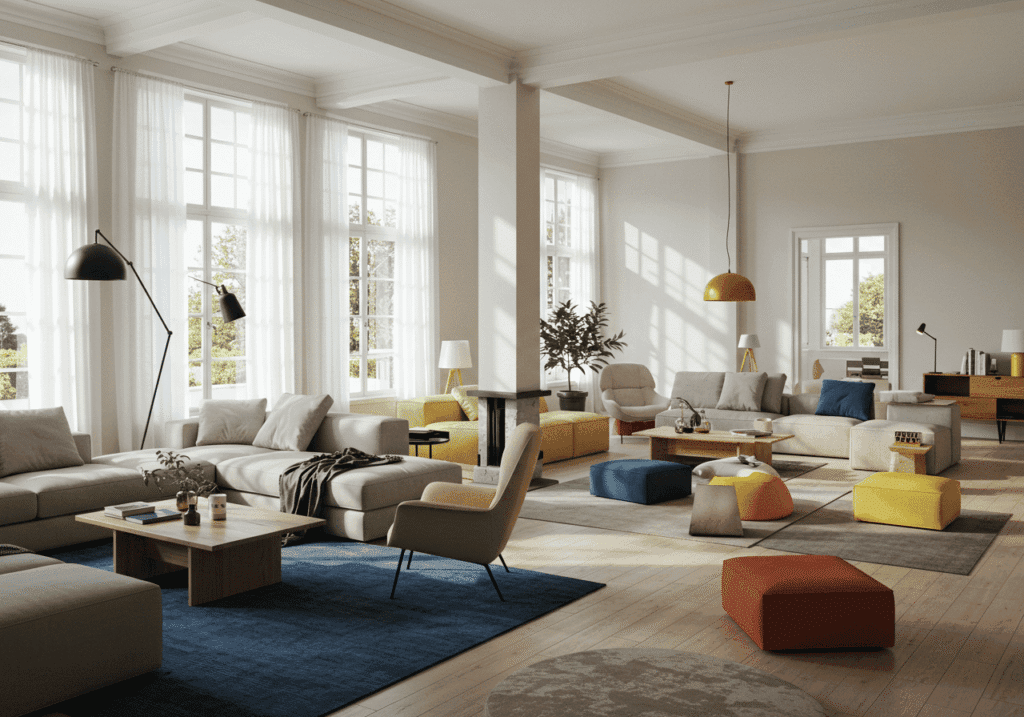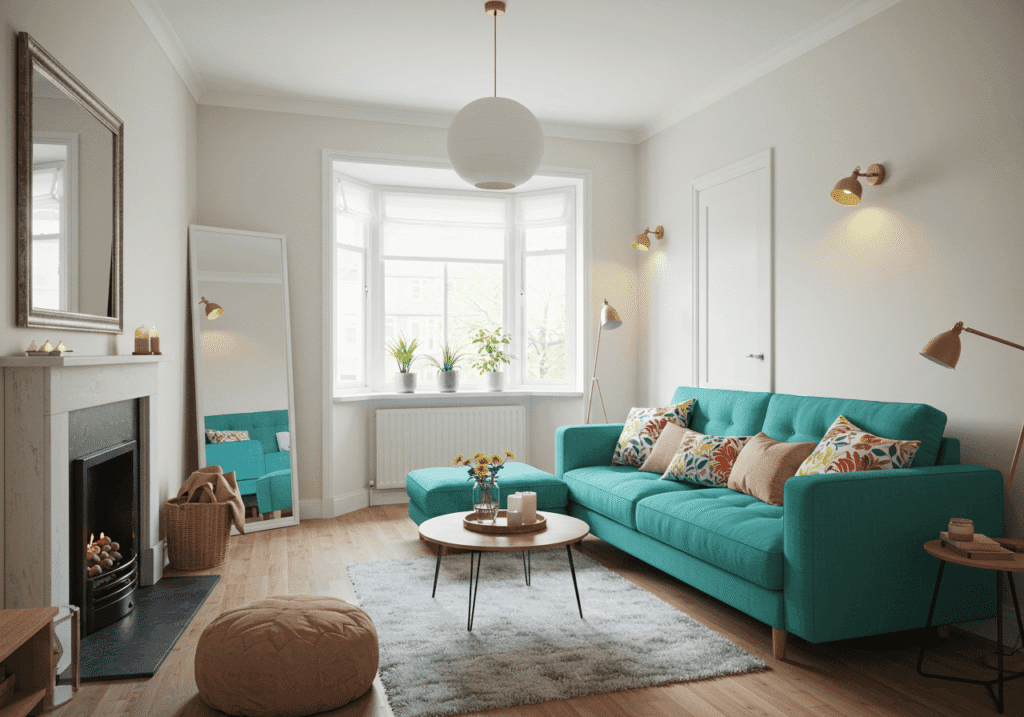
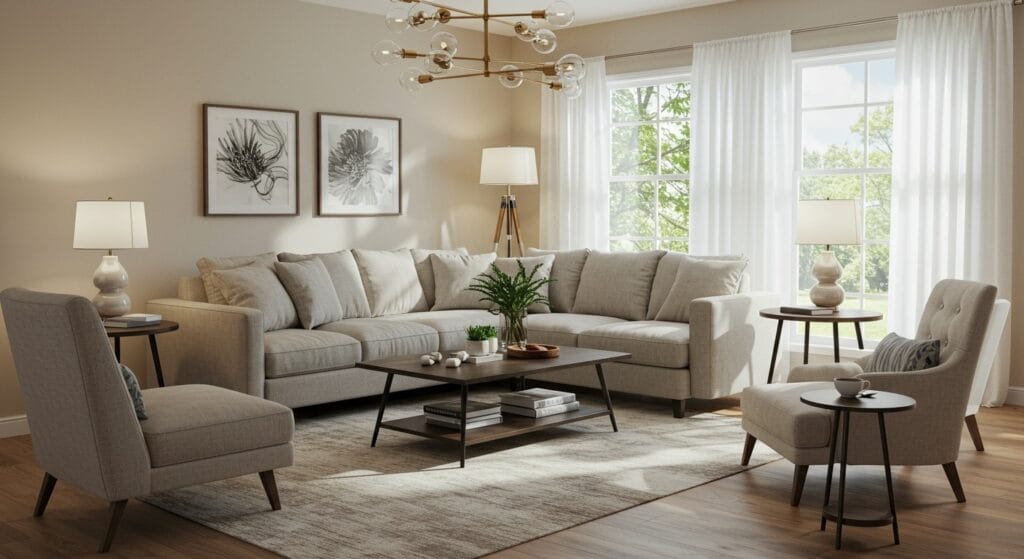
Walking into a living room where every piece of furniture feels perfectly placed – that’s not luck, it’s strategy. Whether you’re working with a cozy 10×12 space or a sprawling open concept, the way you arrange your furniture can make or break the entire feel of your home’s heart.
I’ve seen too many gorgeous sofas pushed against walls like they’re in timeout, and beautiful coffee tables floating awkwardly in the middle of nowhere. The truth? Most of us never learned the fundamental rules of living room furniture arrangement, so we’re basically decorating blind.
But here’s what I’ve discovered after years of rearranging (and re-rearranging) countless living rooms: there are specific principles that work every single time. Once you understand these core concepts, you’ll never look at your space the same way again.

Understanding Your Living Room’s Natural Flow
Before you move a single piece of furniture, you need to understand how people naturally want to move through your space. Think about it – when guests walk into your living room, where do their eyes go first? How do they typically navigate around your furniture?

Every room has what designers call “traffic patterns” – invisible highways that people instinctively follow. The biggest mistake? Blocking these natural pathways with poorly placed furniture. I learned this the hard way when I positioned my beautiful new armchair right in the main walkway to my kitchen.
Your living room’s flow should feel effortless, like a gentle river rather than an obstacle course. When furniture arrangement works with these natural patterns instead of against them, everything just clicks into place.
The Foundation Rule: Start with Your Largest Piece

Your sofa isn’t just seating – it’s the anchor that determines everything else in your room arrangement. I always tell people to think of their sofa as the North Star of their living room layout. Once you get this placement right, the rest of your furniture practically arranges itself.
Most people automatically push their sofa against the longest wall, but that’s not always the best choice. Sometimes floating your sofa in the room creates better conversation areas and more interesting visual depth. The key question isn’t “where can I fit this?” but rather “where does this work best for how we actually live?”
Consider your room’s focal point too. If you have a gorgeous fireplace, stunning windows, or even a beautiful living room layout you’re trying to recreate, position your sofa to take advantage of these features.
Creating Conversation Areas That Actually Work

The secret to a living room that feels welcoming? Furniture positioned so people can comfortably talk to each other without craning their necks or shouting across the room. I call this the “coffee shop test” – would strangers feel comfortable striking up a conversation in your seating arrangement?
The magic number for comfortable conversation is 8 feet. Any farther apart, and people feel disconnected. Any closer, and things get uncomfortably intimate. Position your main seating pieces within this sweet spot, and angle chairs slightly toward each other rather than placing everything in a rigid straight line.
Don’t forget about creating multiple conversation zones if you have the space. Maybe there’s a cozy reading nook by the window separate from your main seating area. These smaller groupings make large rooms feel more intimate and give people options for different types of interactions.
The Coffee Table Formula That Never Fails

Your coffee table should be roughly two-thirds the length of your sofa – this proportion just looks right to the human eye. But here’s what most people miss: the height and distance matter just as much as the size.
The ideal coffee table height is within 2 inches of your sofa seat height. Too tall, and it feels awkward to reach for your drink. Too short, and you’re constantly bending over. Leave 14-18 inches between your sofa and coffee table for comfortable legroom.
If you’re working with small living room tips in mind, consider nesting tables or an ottoman with storage instead of a traditional coffee table. These flexible options give you surface space when you need it without overwhelming a compact room.
Mastering the Art of Rug Placement

A rug can make or break your entire furniture arrangement, yet it’s probably the most misunderstood element in living room design. The goal isn’t just to add color or texture – your rug should unify your furniture groupings and define your space boundaries.
For most living rooms, all furniture legs should be on the rug, or at minimum, the front legs of each piece. This creates visual cohesion and makes your seating area feel intentionally grouped together. If budget or space constraints mean you need a smaller rug, make sure it extends at least 6-8 inches beyond your coffee table on all sides.
In open concept living rooms, rugs become even more crucial for defining separate areas. They’re like invisible walls that tell your eye where one space ends and another begins.
Lighting That Enhances Your Layout

Your furniture arrangement affects how light flows through your room, and smart lighting choices can actually improve how your layout functions. I always plan lighting alongside furniture placement, not as an afterthought.
Every seating area needs task lighting within arm’s reach. This might be a table lamp on an end table, a floor lamp beside a reading chair, or even wall sconces if you’re working with limited table space. The key is ensuring no one has to get up to turn on a light when they want to read or work.
Ambient lighting – your overhead fixtures or ceiling fans – should complement your furniture arrangement, not compete with it. If your layout creates dark corners, address them with strategic floor lamps or accent lighting.
Making Small Spaces Feel Larger

Small living rooms require a completely different approach to furniture arrangement. The instinct is often to push everything against the walls to maximize floor space, but this actually makes rooms feel smaller and less functional.
Instead, try floating smaller pieces away from walls to create the illusion of more space. A narrow console table behind your sofa can provide storage and display space without taking up much room. Mirrors strategically placed to reflect your seating area can visually double your space.
Choose furniture with legs to create visual flow underneath. A sofa that sits directly on the floor can make a small room feel cramped, while the same sofa raised on legs allows light and sight lines to continue, making the space feel more open. For more ideas, check out these small living room layout strategies.
Storage Integration Without Sacrificing Style

The best furniture arrangements seamlessly incorporate storage without making your living room look like a warehouse. Every piece should serve multiple purposes, especially in smaller spaces.
Ottoman storage is your secret weapon – it provides extra seating, a footrest, surface space, and hidden storage all in one piece. Console tables behind sofas offer display space on top and storage inside. Even your coffee table can work harder with drawers or a lower shelf.
Built-in storage solutions or strategically placed bookcases can actually improve your furniture arrangement by creating natural room divisions and providing vertical storage that doesn’t eat up floor space. For more inspiration, explore these storage ideas for small homes.
Common Furniture Arrangement Mistakes to Avoid

Even with the best intentions, certain furniture arrangement mistakes pop up in almost every living room I see. The TV-centric layout is probably the biggest culprit – arranging everything to face the television creates a theater setup that kills conversation.
Pushing all furniture against walls might seem logical, but it actually makes rooms feel cold and impersonal. Your furniture should relate to each other, not just to the architecture. Similarly, matching furniture sets arranged symmetrically can look showroom-perfect but often lack the personality and functionality real families need.
Scale mismatches are another common issue. A tiny coffee table with a massive sectional, or oversized furniture crowding a small space – these proportion problems make even the most expensive pieces look awkward.
Seasonal Flexibility and Future-Proofing
The best living room furniture arrangements adapt to your changing needs throughout the year and over time. Maybe you need more seating during holiday gatherings, or perhaps you want to rearrange for better natural light in winter months.
Choose pieces that can multitask and move easily. Lightweight accent chairs can migrate from room to room as needed. Modular sectionals let you reconfigure your seating arrangement without buying new furniture. Side tables on wheels can serve wherever you need them most.
Think about how your family’s needs might evolve too. That coffee table might need to become a homework station, or you might want to create a play area that doesn’t completely disrupt your adult space. Flexible arrangements grow with you instead of against you.

Your living room furniture arrangement should feel like a warm hug the moment you walk in – welcoming, functional, and perfectly suited to how your family actually lives. It’s not about following rigid rules or copying magazine photos; it’s about understanding the principles and adapting them to your unique space and lifestyle.
Start with one change – maybe floating your sofa away from the wall or repositioning your coffee table for better flow. Notice how that single adjustment affects the entire feel of your room. Good furniture arrangement builds on itself, and once you start seeing the difference, you’ll be motivated to keep refining until everything feels just right.
Remember, the perfect living room furniture arrangement is one that makes your daily life easier and more enjoyable. When your guests naturally gravitate toward your seating areas and conversation flows effortlessly, you’ll know you’ve mastered the art of living room layout.

Sanjai creates easy, affordable home decor ideas that anyone can try. Through simple tips and curated finds, he helps you style rooms you’ll love coming home to.