There’s something magical about the moment you unroll a new rug in your living room. Suddenly, the space feels complete, grounded, and infinitely cozier. But with endless options available, how do you choose the right one?
I’ve spent countless hours researching rug styles, layering techniques, and placement strategies. What I’ve learned is that the perfect living room rug isn’t just about filling empty floor space. It’s about creating a foundation that ties your entire room together while adding warmth underfoot.
Whether you’re working with a sprawling open concept or a cozy corner, these 15 living room rug ideas will help you find exactly what your space needs. From bold patterns to subtle textures, there’s an option here for every style and budget.
1. Oversized Natural Jute Rug for Coastal Vibes
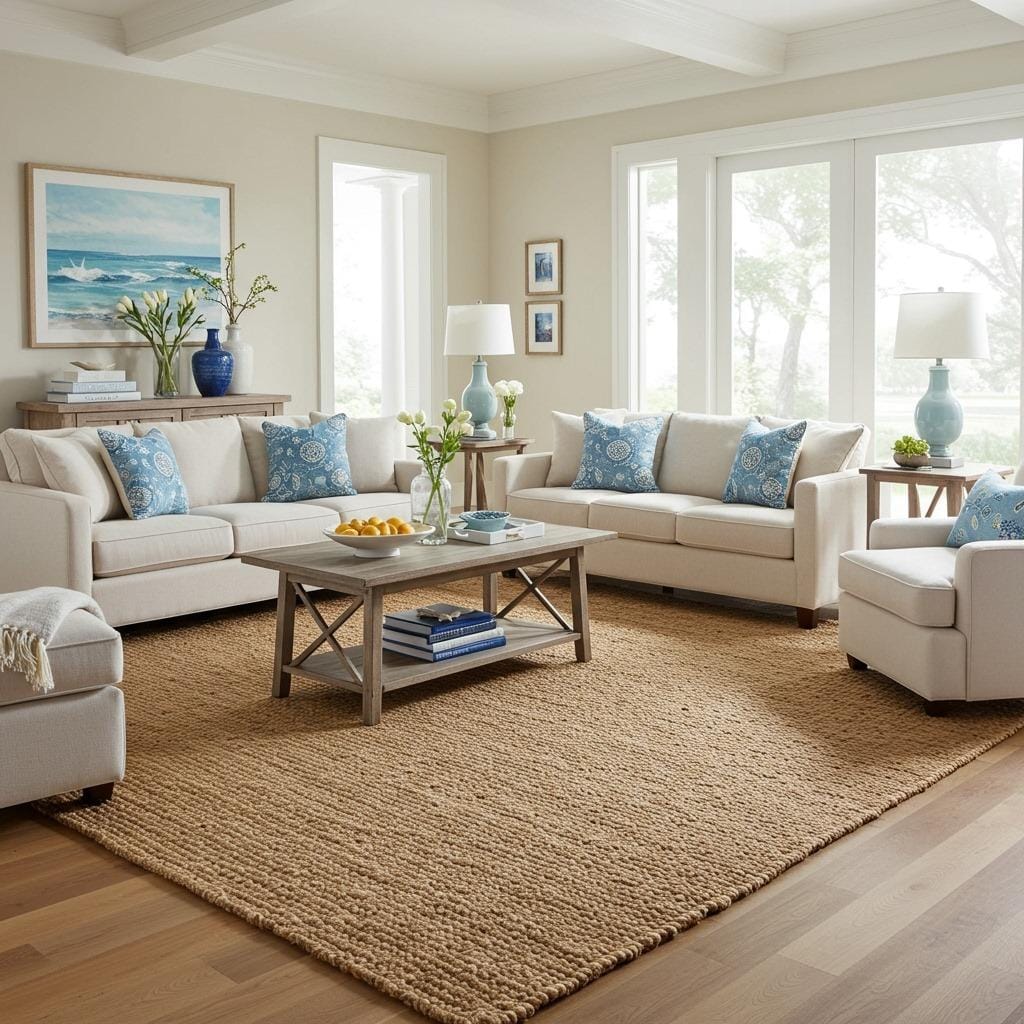
Natural jute rugs bring an organic, textured element that instantly makes a room feel more relaxed. The woven fibers create visual interest without overwhelming your existing decor. I love how these rugs work equally well in coastal living rooms and modern farmhouse spaces.
The beauty of jute lies in its durability and affordability. Unlike synthetic options, these natural fiber rugs age beautifully, developing a soft patina over time. They’re also surprisingly easy to maintain, though I wouldn’t recommend them for high-spill areas.
Size matters here. Go bigger than you think you need – your furniture should sit comfortably on the rug, not teeter on its edges. An 8×10 or 9×12 works well for most standard living rooms.
2. Layered Vintage Persian Over Sisal

Rug layering has become one of my favorite tricks for adding depth without committing to a single style. Start with a neutral sisal or jute base that covers most of your floor space. Then add a smaller vintage Persian or Turkish rug on top for a pop of color and pattern.
This technique works brilliantly in eclectic spaces where you want both texture and personality. The neutral base grounds the room, while the patterned layer adds character. According to The Spruce, this approach also helps protect your vintage investment pieces from heavy foot traffic.
What surprised me most about layering? It actually makes small rooms feel larger by creating distinct zones. The eye travels across multiple textures instead of stopping at one flat surface.
3. Bold Geometric Pattern in Monochrome
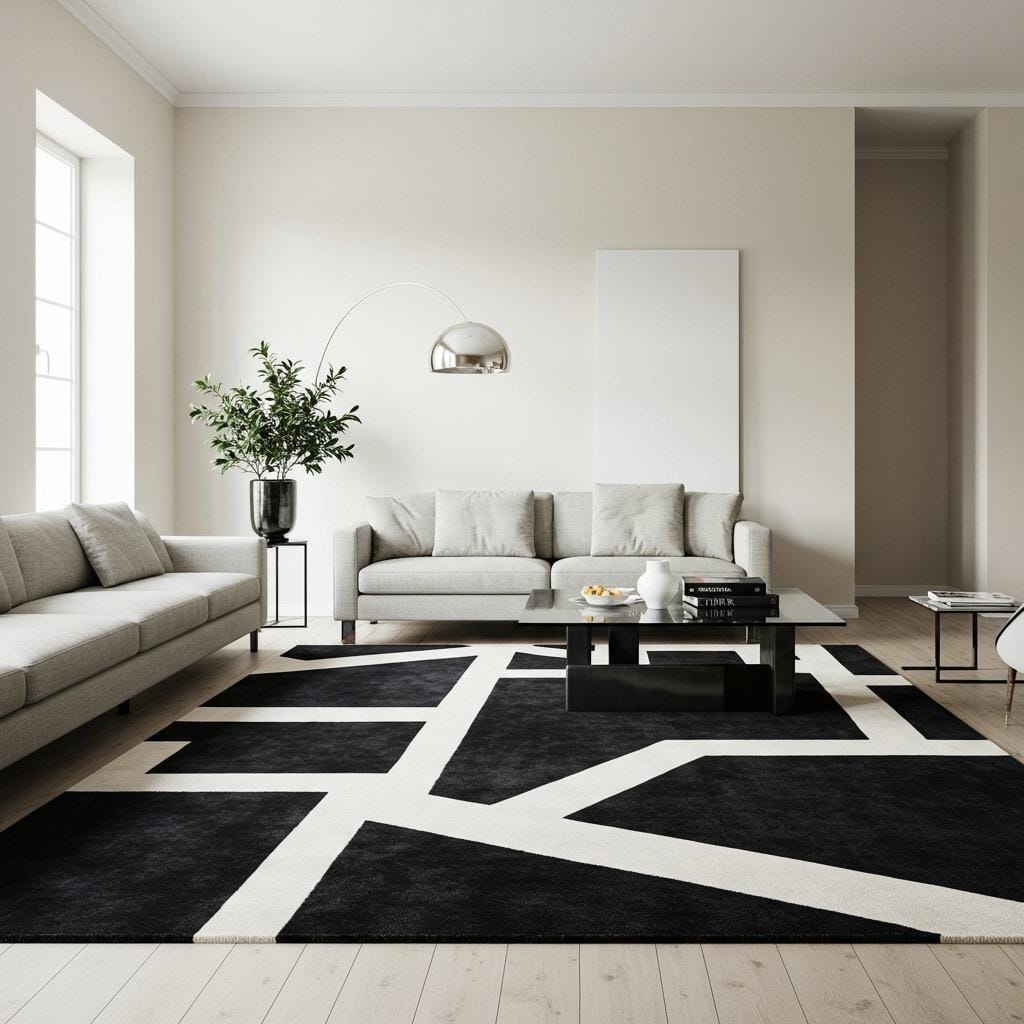
Geometric patterns add instant energy to neutral spaces. Black and white designs work particularly well in contemporary living rooms where you want graphic impact without introducing multiple colors.
These rugs act as artwork for your floor. I’ve noticed they’re especially effective in minimalist spaces that need a focal point. The clean lines complement modern furniture while adding visual weight that anchors your seating arrangement.
One thing to consider – bold patterns can date quickly if you choose trendy designs. Stick with classic geometrics like chevrons, hexagons, or Greek keys for longevity. They’ve been stylish for decades and will likely remain so.
4. Plush Wool Shag for Ultimate Comfort
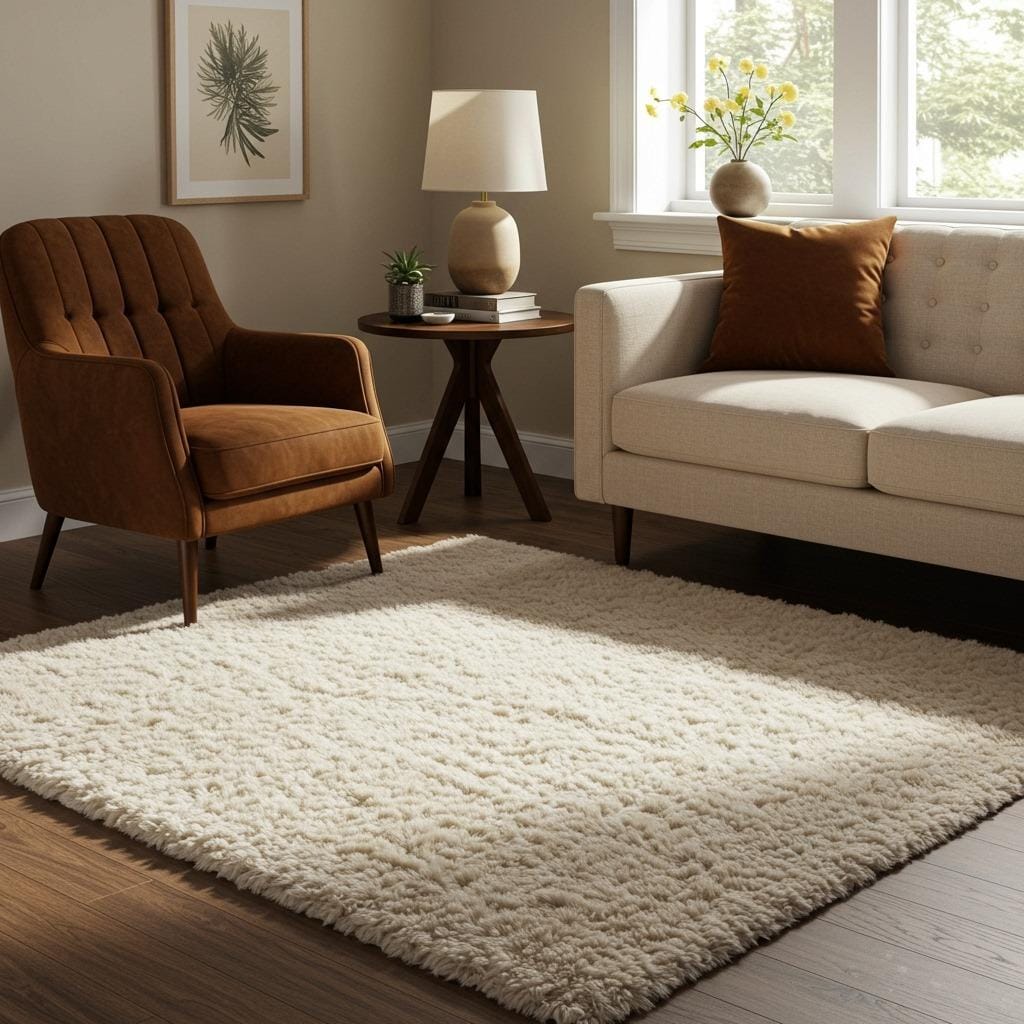
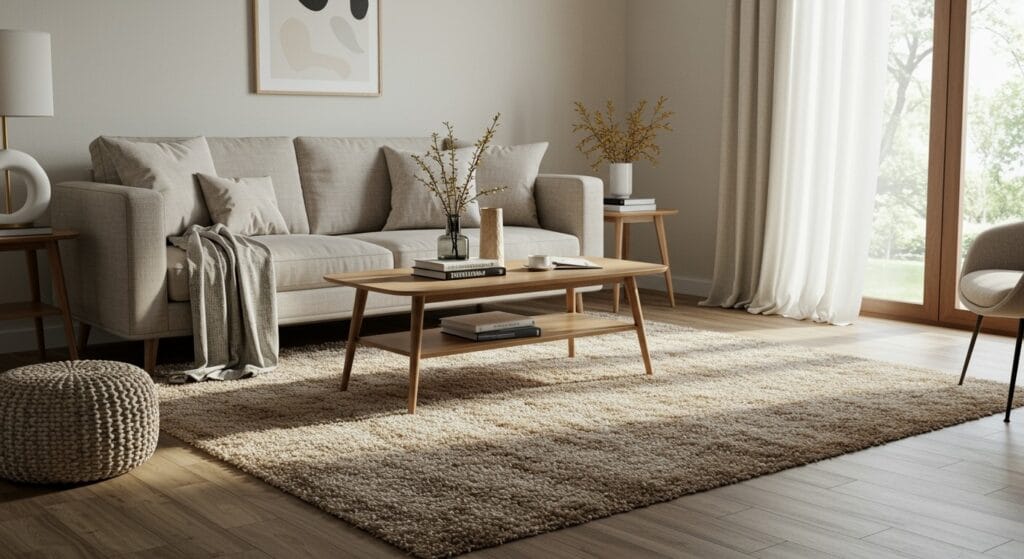
Nothing says luxury quite like sinking your toes into a high-pile wool shag. These rugs transform any living room into a cozy retreat, especially during colder months. The texture adds dimension that flat-weave rugs simply can’t match.
Wool shag rugs are investment pieces, but they’re worth every penny. They regulate temperature naturally, staying cool in summer and warm in winter. Plus, wool is naturally stain-resistant and durable enough to handle everyday family life.
Maintenance is easier than you’d think. Regular vacuuming (without the beater bar) and occasional professional cleaning keep them looking fresh. Just be prepared for the initial shedding period – it’s normal and temporary.
5. Subtle Striped Runner for Narrow Spaces
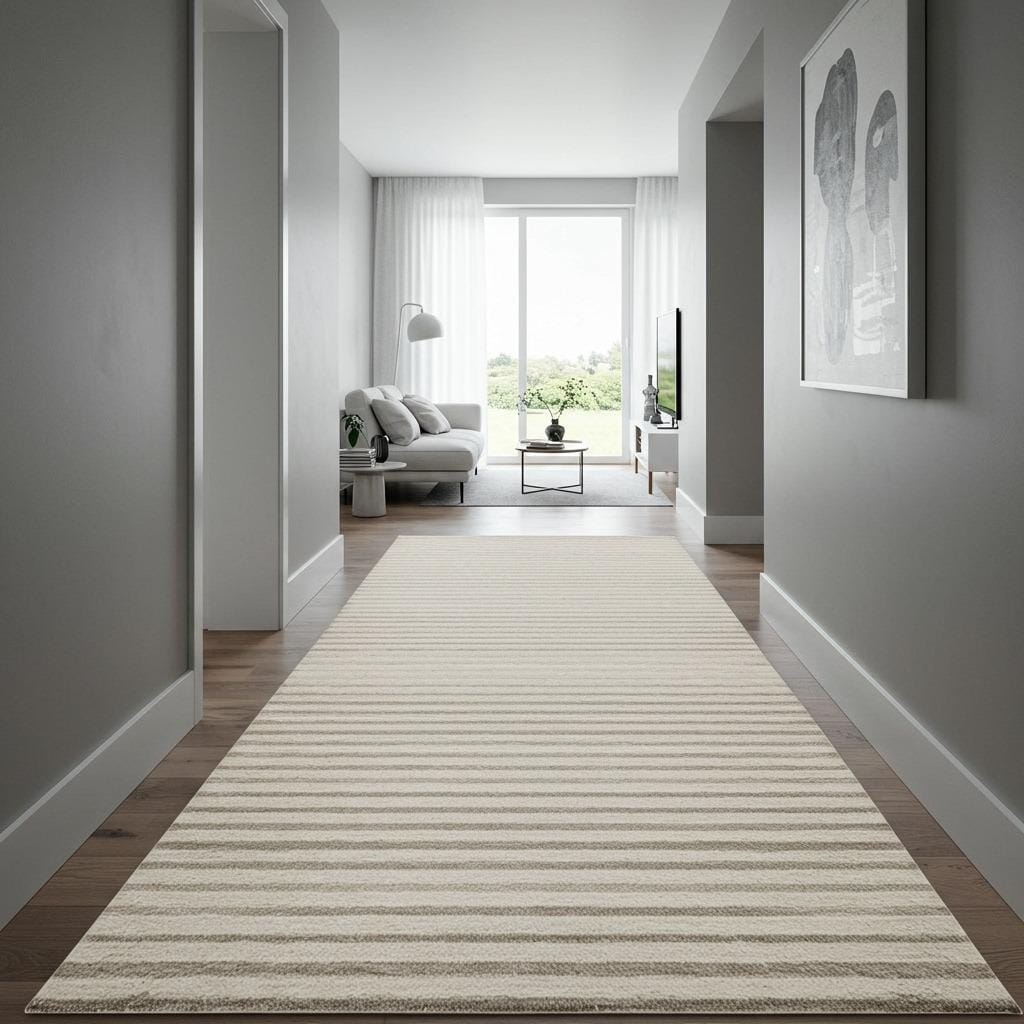
Striped runners solve a common problem in small living rooms or long, narrow spaces. Horizontal stripes make rooms feel wider, while vertical stripes draw the eye down the length of the space.
I prefer subtle, tonal stripes over high-contrast ones for living areas. They add visual interest without competing with your furniture or creating a dizzying effect. Think soft grays, warm taupes, or gentle blues rather than stark black and white.
Placement matters with runners. In narrow living rooms, center the runner under your main seating area. If you’re using it to define a walkway, leave about 18 inches of bare floor on each side for balance.
6. Colorful Kilim for Bohemian Flair

Kilim rugs bring instant personality to any space. These flat-weave beauties originated in Turkey and the Middle East, and each one tells a story through its patterns and colors. They’re perfect for adding that collected, well-traveled vibe to your home.
What makes kilims special is their versatility. They’re lightweight enough to hang as wall art when you want a change, and their low profile makes them ideal for layering. I’ve seen them work beautifully in everything from cozy boho bedrooms to eclectic living spaces.
Don’t be afraid of bold colors here. Kilims naturally feature multiple hues that somehow work together harmoniously. This makes them surprisingly easy to style with various furniture colors and accessories.
7. Neutral Braided Wool for Farmhouse Charm

Braided rugs carry a nostalgic quality that’s perfect for farmhouse and cottage-style homes. Modern versions have evolved beyond grandma’s kitchen floor – today’s braided wool area rugs feature sophisticated color combinations and contemporary silhouettes.
I’m particularly drawn to oval or circular braided rugs for creating conversation areas. They soften the hard lines of rectangular furniture and add a welcoming, informal touch. Pair them with farmhouse chic bedroom elements for a cohesive look throughout your home.
These rugs work harder than they look. The braided construction is incredibly durable, handling foot traffic without showing wear. They’re also reversible, which essentially doubles their lifespan.
8. Modern Abstract Art Rug as Statement Piece
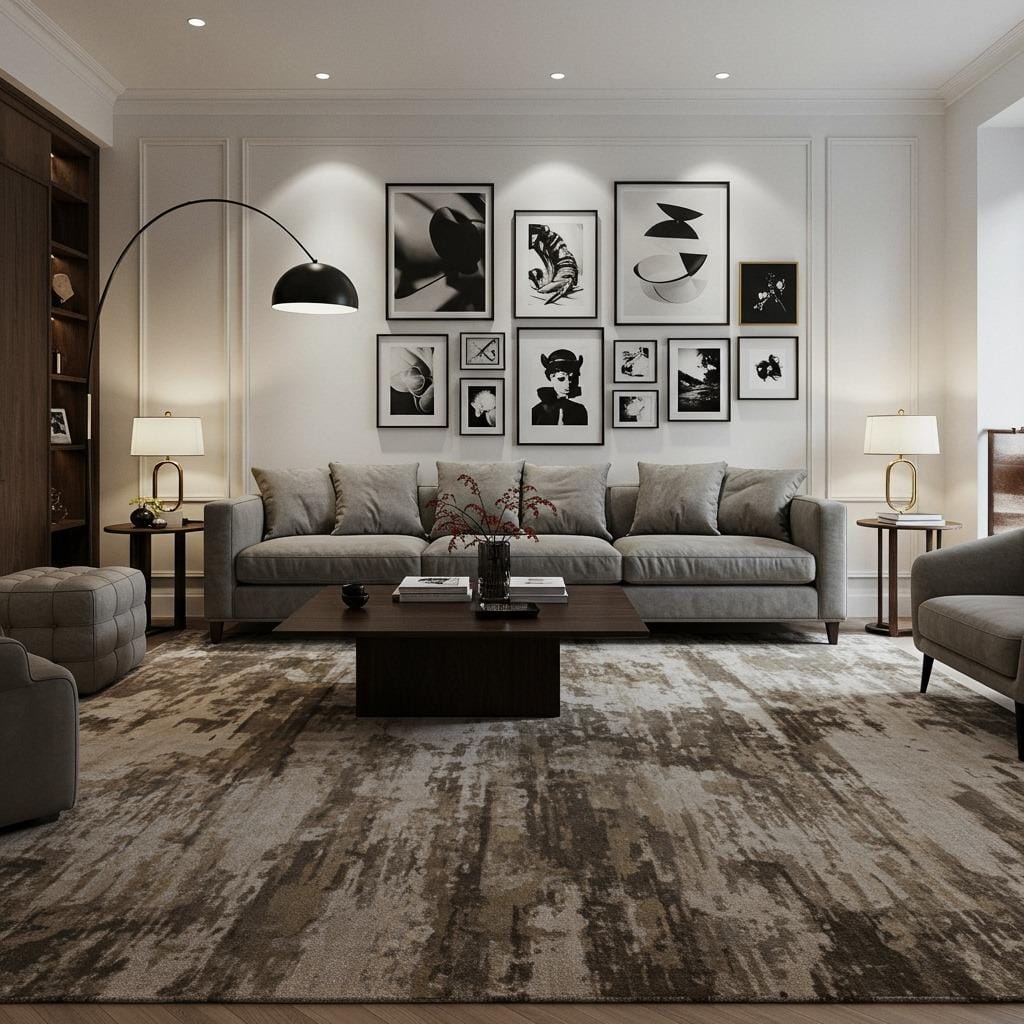
Treating your rug as a piece of art opens up exciting design possibilities. Abstract rugs with painterly patterns bring the sophistication of a gallery into your living room. These work exceptionally well in minimalist living rooms that need a focal point.
The key is letting the rug be the star. Keep surrounding decor relatively simple so the abstract pattern can shine. Think solid-colored furniture, minimal accessories, and lots of negative space. The rug provides all the visual interest you need.
Abstract rugs also solve a practical problem – they hide stains and wear patterns better than solid colors or repetitive patterns. Random designs disguise spills and traffic paths, keeping your rug looking fresh longer.
9. Classic Navy and White Striped for Nautical Touch
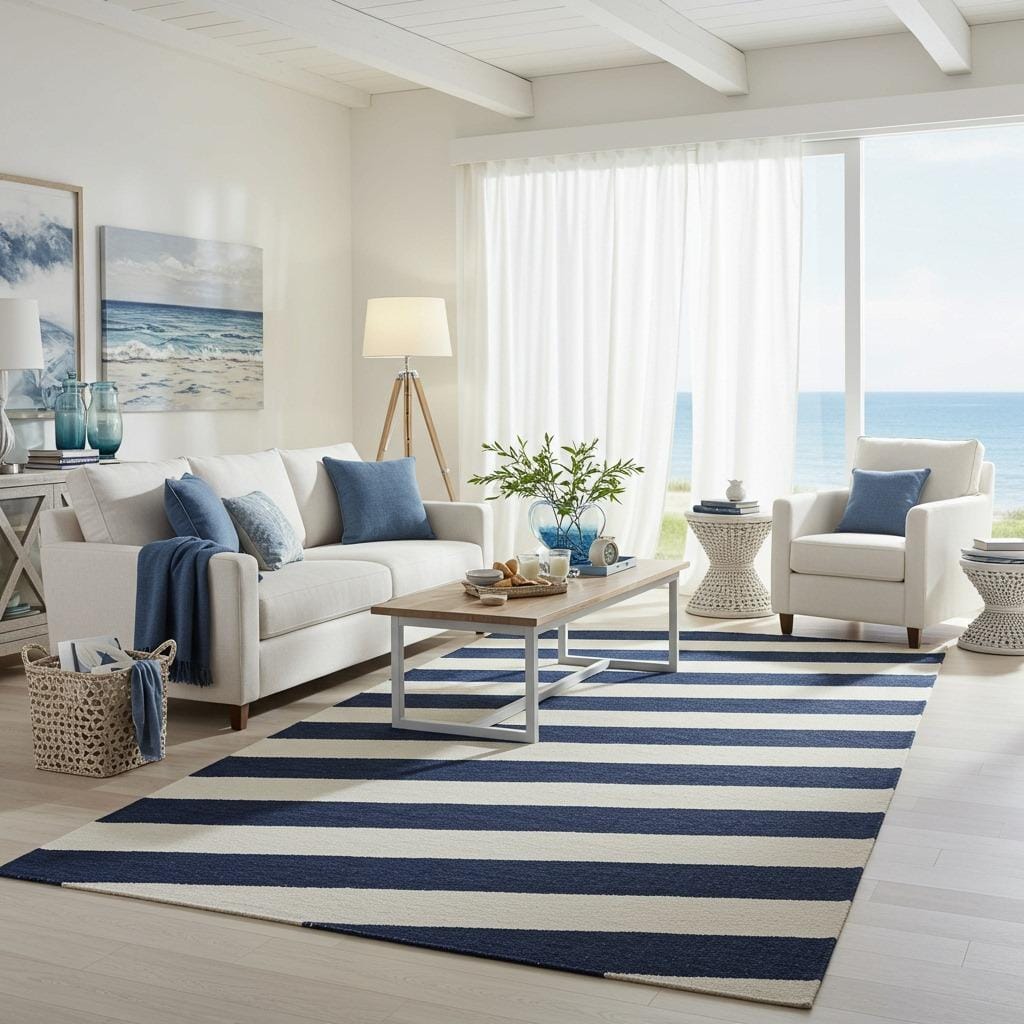
Navy and white stripes never go out of style. This classic combination brings a crisp, nautical feel without being overly themed. The contrast is strong enough to make a statement but timeless enough to work with evolving decor.
These rugs excel in casual spaces where you want polish without formality. I’ve used them in open concept living rooms to define seating areas without visual heaviness. The stripes create structure while maintaining an airy feel.
One advantage of this color scheme? It pairs beautifully with nearly any wood tone and complements both warm and cool accent colors. Whether you lean toward coral and gold or gray and silver, navy stripes provide a neutral foundation.
10. Earthy Terracotta for Warm, Inviting Spaces
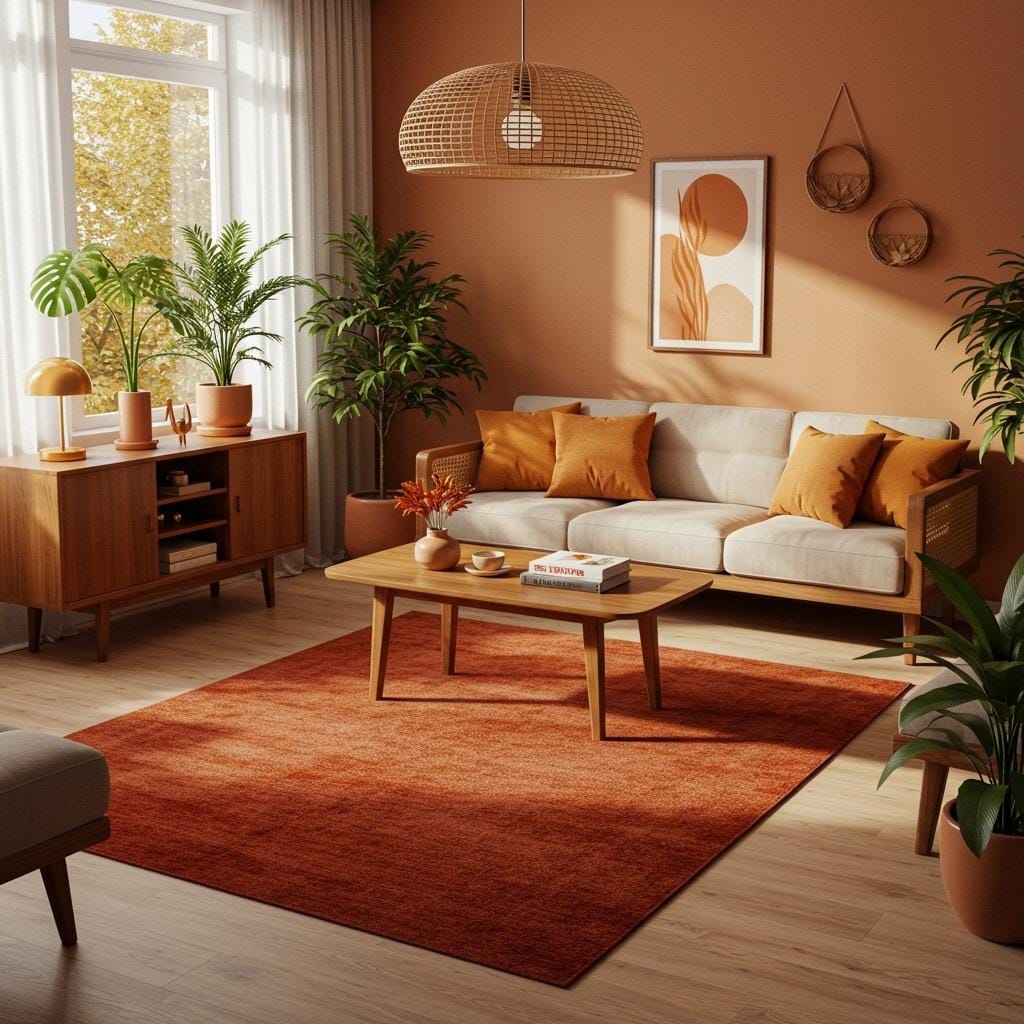
Terracotta rugs have surged in popularity, and it’s easy to see why. This warm, earthy hue adds instant coziness while remaining surprisingly neutral. It bridges the gap between beige and bold, offering color without overwhelming your space.
I love how terracotta works with earthy tones living rooms, complementing both warm woods and cool metals. The color has enough depth to hide minor stains while being light enough to make small rooms feel spacious.
This shade also plays well with current design trends. Pair it with sage green, dusty blue, or warm cream for a modern organic look. Or go bold with burnt orange and mustard for a more maximalist approach.
11. Faded Vintage Look in Soft Gray

Faded vintage-style rugs offer the charm of antique finds without the hefty price tag or delicate care requirements. These modern reproductions capture the weathered beauty of Persian and Turkish rugs, complete with intentionally worn patterns and muted colors.
The beauty of these rugs lies in their forgiveness. That faded, distressed look means new stains and wear blend right in. They’re ideal for busy households where a pristine white rug would be impractical but you still want elegance.
Gray versions work particularly well in transitional spaces that blend traditional and contemporary elements. They add sophistication without the formality of rich jewel tones, making rooms feel collected rather than decorated.
12. Natural Hide Rug for Textural Contrast
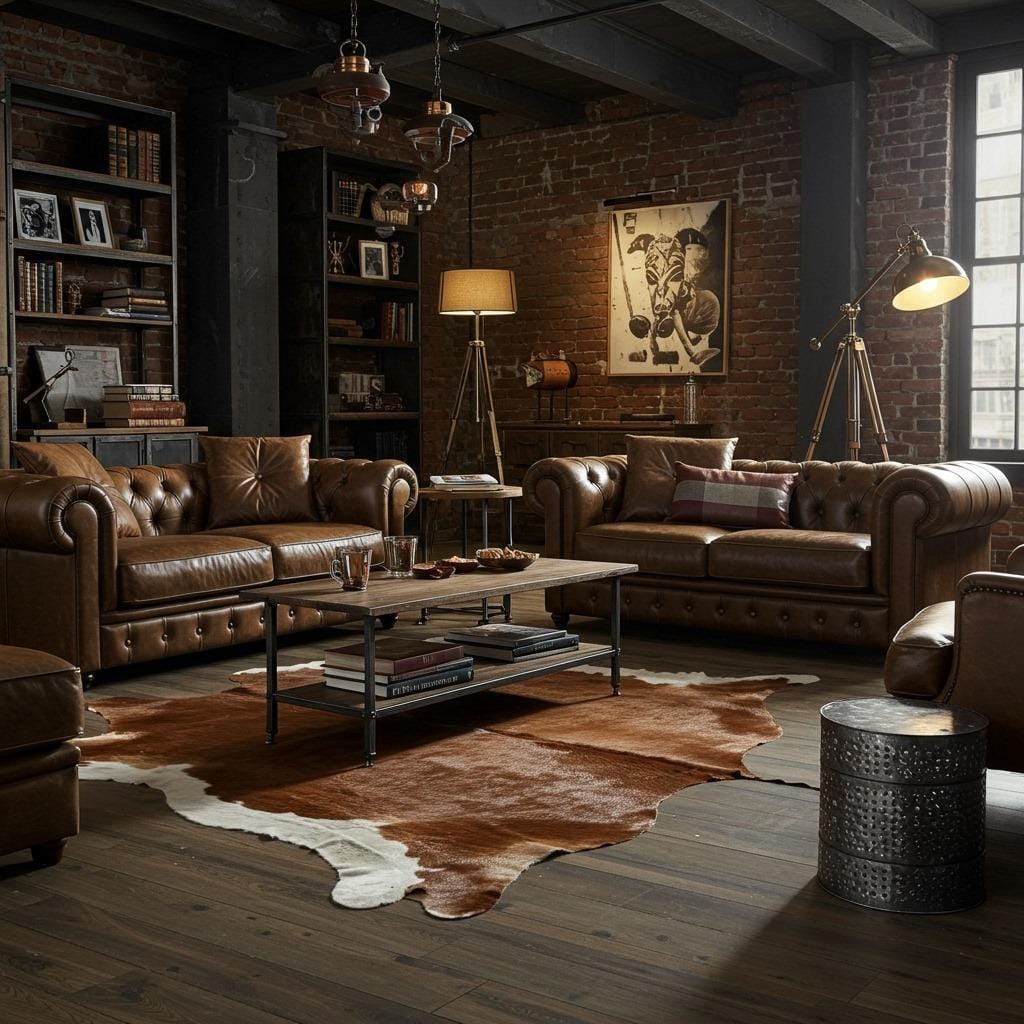
Natural hide rugs bring organic texture that manufactured rugs can’t replicate. Each one is unique, with patterns that occur naturally rather than being designed. This makes them conversation pieces as much as functional floor coverings.
I’ve found these work best in smaller doses – think under a coffee table or in front of a fireplace rather than covering your entire floor. They add a luxe, organic element that balances well with both rustic modern living rooms and sleek contemporary spaces.
Maintenance is simpler than you’d expect. Occasional shaking and spot cleaning keep them looking great. They’re naturally durable and resistant to staining, though I’d avoid placing them in high-moisture areas.
13. Moroccan Trellis Pattern in Soft Cream
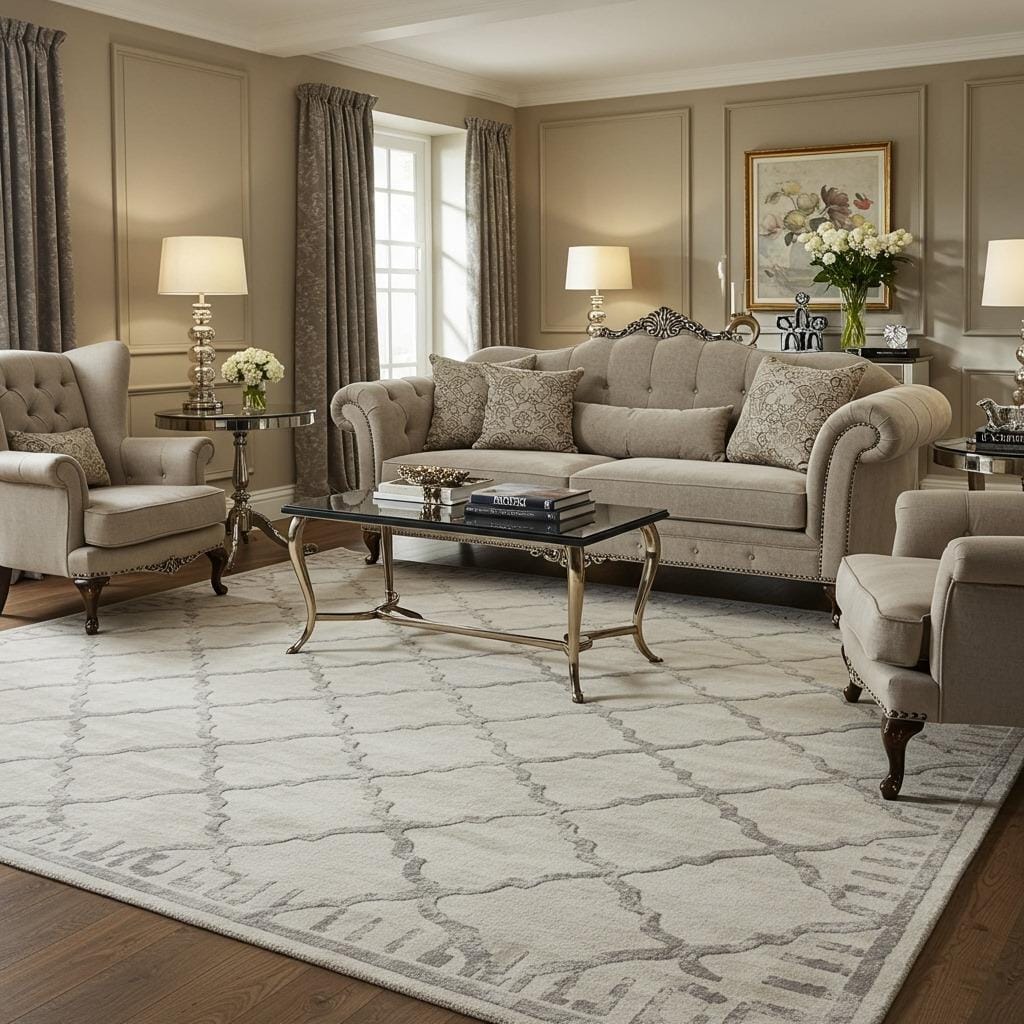
Moroccan trellis patterns offer just enough visual interest without overwhelming your space. The repeating quatrefoil design adds structure and elegance, working beautifully in both traditional and transitional settings.
Cream versions with gray or taupe patterns create a sophisticated foundation. They’re formal enough for proper living rooms but relaxed enough for everyday family spaces. This makes them incredibly versatile as your style evolves.
These patterns also help disguise furniture indentations and traffic patterns better than solid rugs. The regular geometric design tricks the eye, keeping your rug looking fresh even in high-use areas.
14. Textured Flatweave in Charcoal Gray
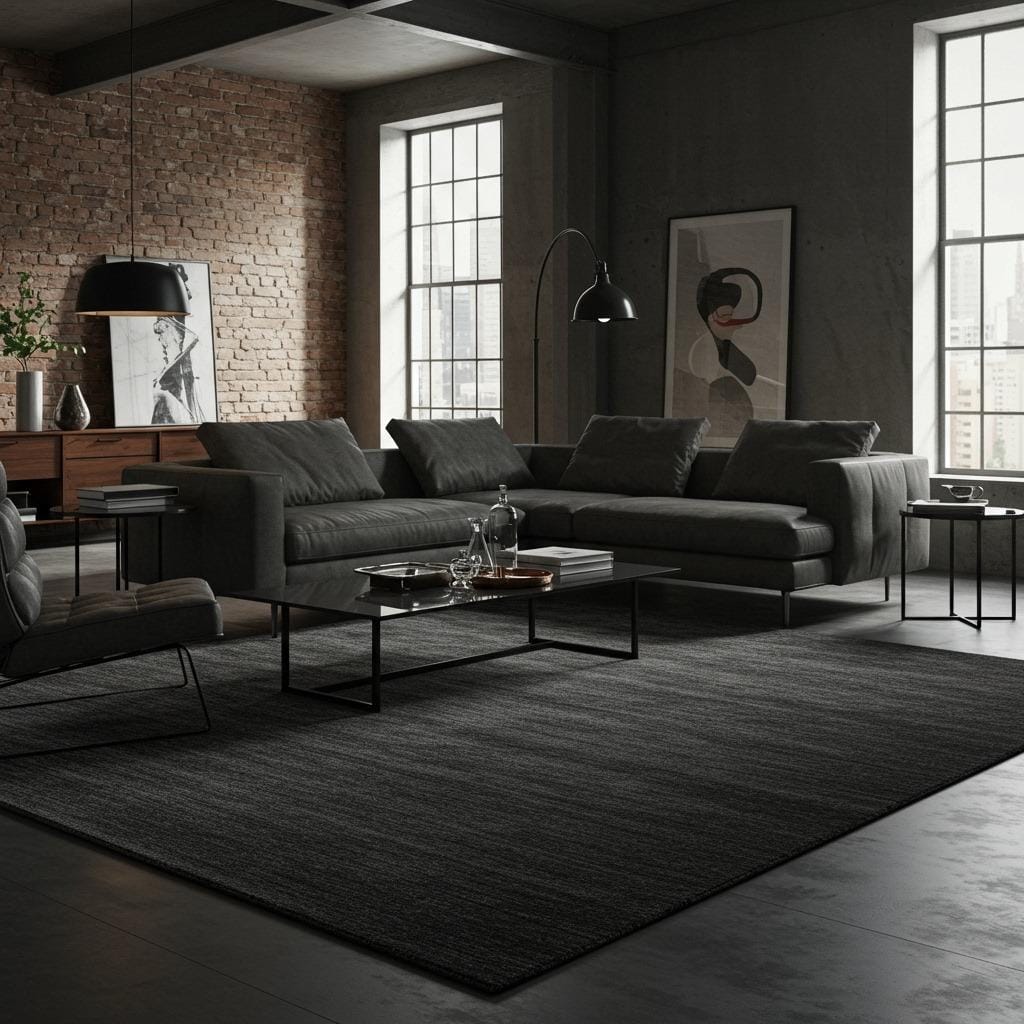
Flatweave rugs in dark colors solve several design challenges at once. They’re low-profile enough to fit under doors and furniture, durable enough for high-traffic areas, and sophisticated enough for formal spaces. Charcoal gray hits that sweet spot between black and light gray.
What I appreciate most is their practical nature. Flatweaves are incredibly easy to clean – most spills wipe right off the surface. They’re also lightweight, making them simple to move when you want to rearrange furniture or change your living room furniture arrangement.
The subtle texture in these rugs keeps them from looking flat or boring. Variations in the weave catch light differently throughout the day, adding depth without pattern. This makes them perfect backdrops for colorful furniture and accessories.
15. Bold Color Block Design for Modern Spaces
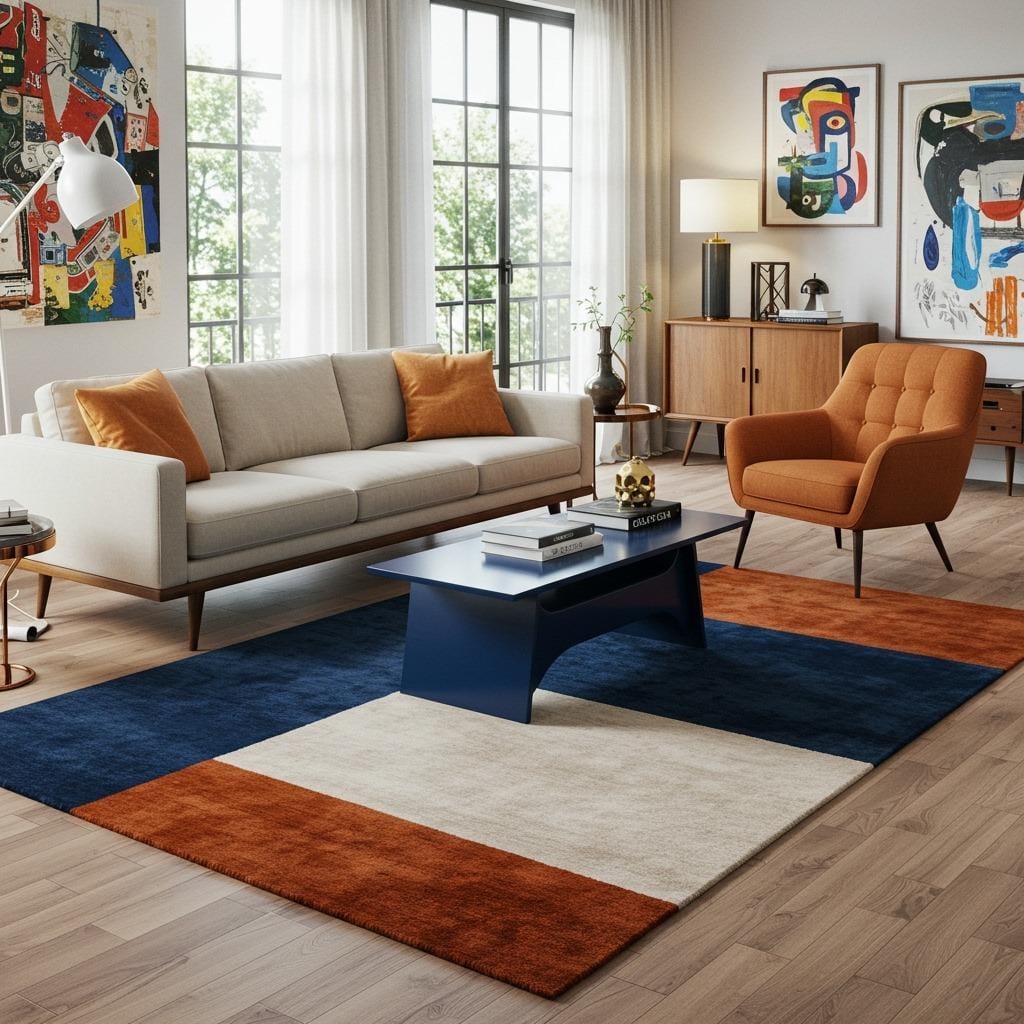
Color block rugs bring a playful, contemporary energy that transforms ordinary living rooms. These designs typically feature two to four distinct color sections, creating visual zones within your space. They’re perfect for open concept areas where you want to define seating zones without walls.
The beauty of this approach is how it allows you to incorporate multiple colors you love without committing to an all-over pattern. Choose shades that appear elsewhere in your room – pull from your throw pillows, artwork, or coffee table styling for cohesion.
These rugs work particularly well with mid-century modern and Scandinavian design aesthetics. The clean geometric shapes complement simple furniture lines while the bold colors add personality and warmth.
How to Choose the Right Size Living Room Rug
Size might be the most important decision you’ll make when selecting living room rugs. Too small, and your furniture looks like it’s floating. Too large, and you’ll have awkward gaps around the perimeter.
For most living rooms, your front furniture legs should sit on the rug while back legs can stay off. This creates a cohesive seating area without requiring an enormous rug. In smaller spaces, consider having all furniture legs on the rug for a more unified look.
Standard sizes work for most spaces: 5×7 for small rooms or under coffee tables, 8×10 for medium living rooms, and 9×12 or larger for spacious areas. When in doubt, go bigger. The most common mistake I see is choosing rugs that are too small.
Rug Placement Tips for Different Living Room Layouts
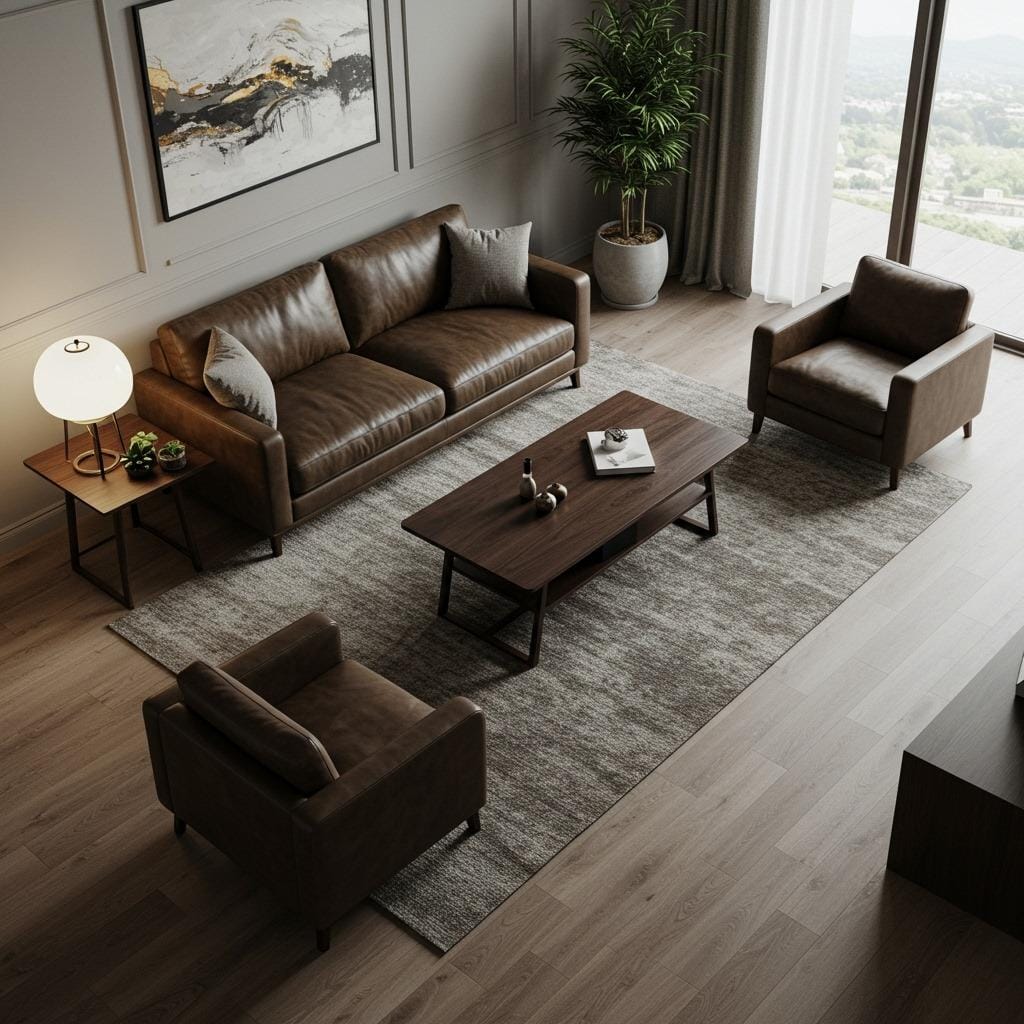
Proper placement makes or breaks your rug’s impact. In traditional seating arrangements with a sofa and two chairs facing each other, center the rug with the living room coffee table placed in the middle. This creates an obvious conversation zone.
For L-shaped or sectional sofas, position the rug so it extends beyond the furniture on all sides by at least 6-12 inches. This frames your seating area and makes the space feel intentional rather than haphazard.
In open concept spaces, use rugs to define different functional areas. A large rug under your living area, a runner in the entryway, and a smaller rug in a reading nook help separate spaces without physical barriers. This works especially well in kitchen living room open concept designs.
Caring for Different Rug Materials
Each rug material requires different care approaches. Natural fibers like jute and sisal can’t handle moisture, so spot clean with dry methods only. Vacuum regularly but avoid beater bars that can damage the weaves.
Wool rugs are more forgiving but still benefit from gentle treatment. Vacuum weekly, rotate every few months to ensure even wear, and address spills immediately by blotting rather than rubbing. Professional cleaning every 1-2 years keeps wool looking its best.
Synthetic rugs (polypropylene, polyester) are the most practical for families with kids or pets. Most can handle spot cleaning with mild soap and water. Some are even machine washable, though always check manufacturer guidelines first.
Final Thoughts on Living Room Rug Selection
Choosing the perfect rug isn’t about following rigid rules – it’s about finding what speaks to your personal style while serving your practical needs. Maybe that’s a plush wool shag that invites bare feet, or perhaps it’s a practical flatweave that stands up to your active household.
Pay attention to how different rugs make you feel when you walk into a room. Does that bold pattern energize you, or does it feel overwhelming? Does the soft texture make you want to kick off your shoes immediately? Trust those instincts alongside practical considerations.
The right rug truly transforms a living room from a collection of furniture into a cohesive, inviting space. Whether you choose one of these 15 ideas or they inspire you to find your own perfect match, you’ll know it when you see it. That’s the moment your living room finally feels complete.

Sanjai creates easy, affordable home decor ideas that anyone can try. Through simple tips and curated finds, he helps you style rooms you’ll love coming home to.