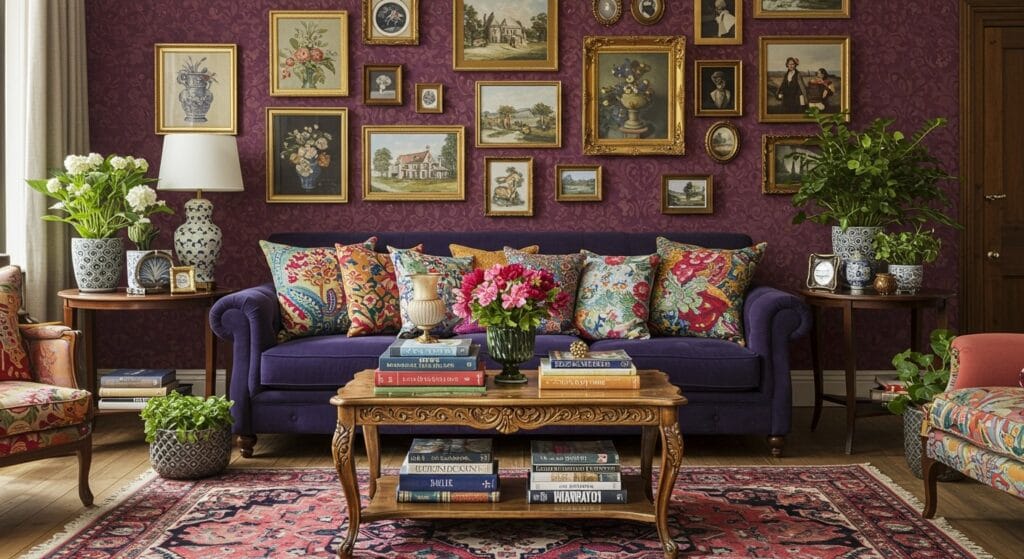
Have you ever walked into a room and felt your heart skip a beat because there was just so much to look at, and all of it was beautiful? That’s the magic of maximalist living room décor. While minimalism whispers, maximalism sings at full volume, celebrating color, pattern, and personality without apology.
I’ll be honest – when I first started decorating, I thought “more is more” meant chaos. But maximalism isn’t about randomly throwing things together. It’s about intentional layering, thoughtful color choices, and creating a space that tells your story through every object, textile, and artwork you love. If you’ve been holding back on that bold wallpaper or hesitating to mix those patterns, this guide is your permission slip to go all in.
Creating a maximalist space might seem intimidating, but it’s actually more forgiving than you’d think. Unlike minimalist living room spaces where every piece needs to be perfect, maximalism celebrates the eclectic and unexpected. These 21 ideas will show you how to layer like a pro, mix patterns without fear, and create a living room that’s bursting with personality and style.
1. Start With a Statement Wallpaper
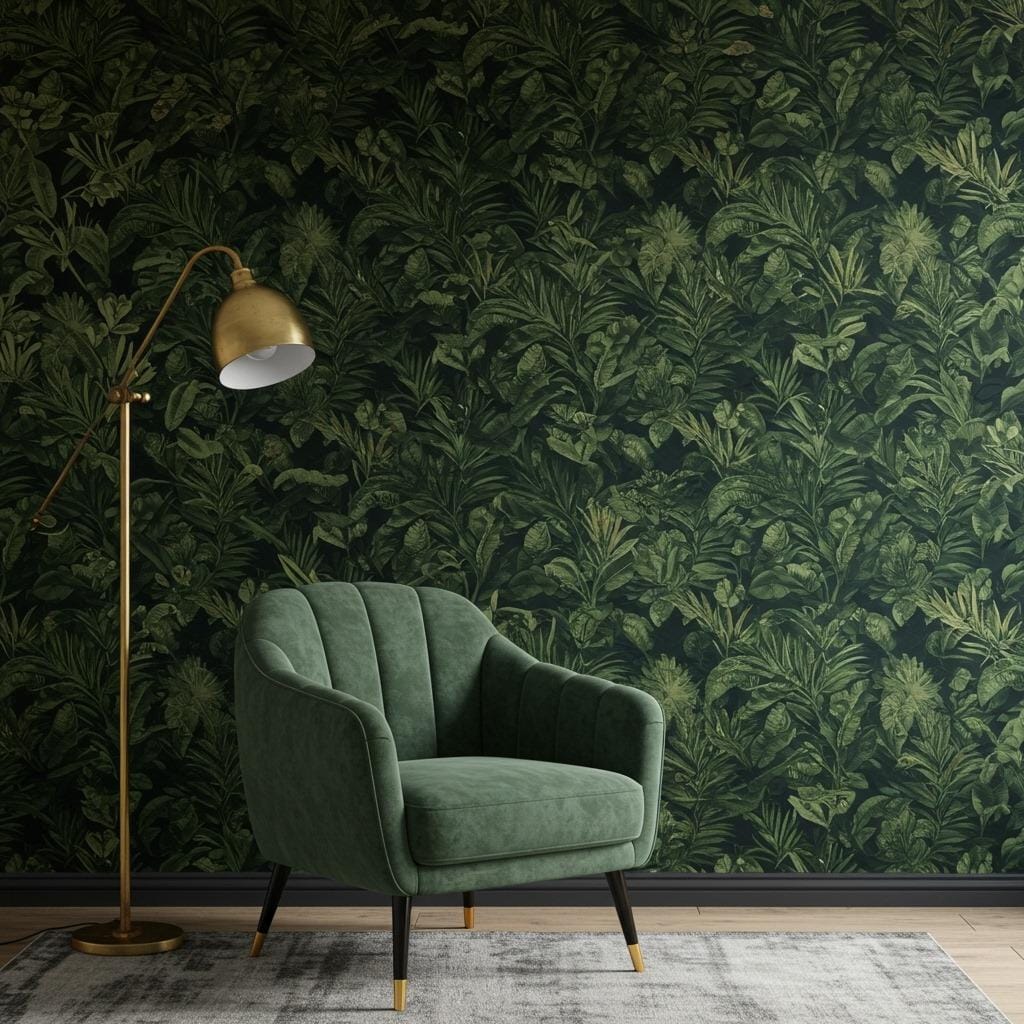
Nothing sets the tone for maximalist living room décor quite like bold wallpaper. Think large-scale florals, intricate damask patterns, or even hand-painted chinoiserie scenes that transform your walls into works of art. The wallpaper becomes your foundation, and everything else builds from there.
Don’t worry about the wallpaper overwhelming your space. In maximalism, that’s kind of the point. Choose colors you genuinely love, whether that’s deep emerald greens, rich burgundies, or vibrant coral tones. The pattern should make you smile every time you walk into the room.
If you’re renting or commitment-phobic, peel-and-stick options have come a long way. You can achieve the same dramatic effect without the permanence. Just make sure to select a design with enough visual interest to anchor all the layers you’ll add.
2. Layer Rugs for Texture and Dimension
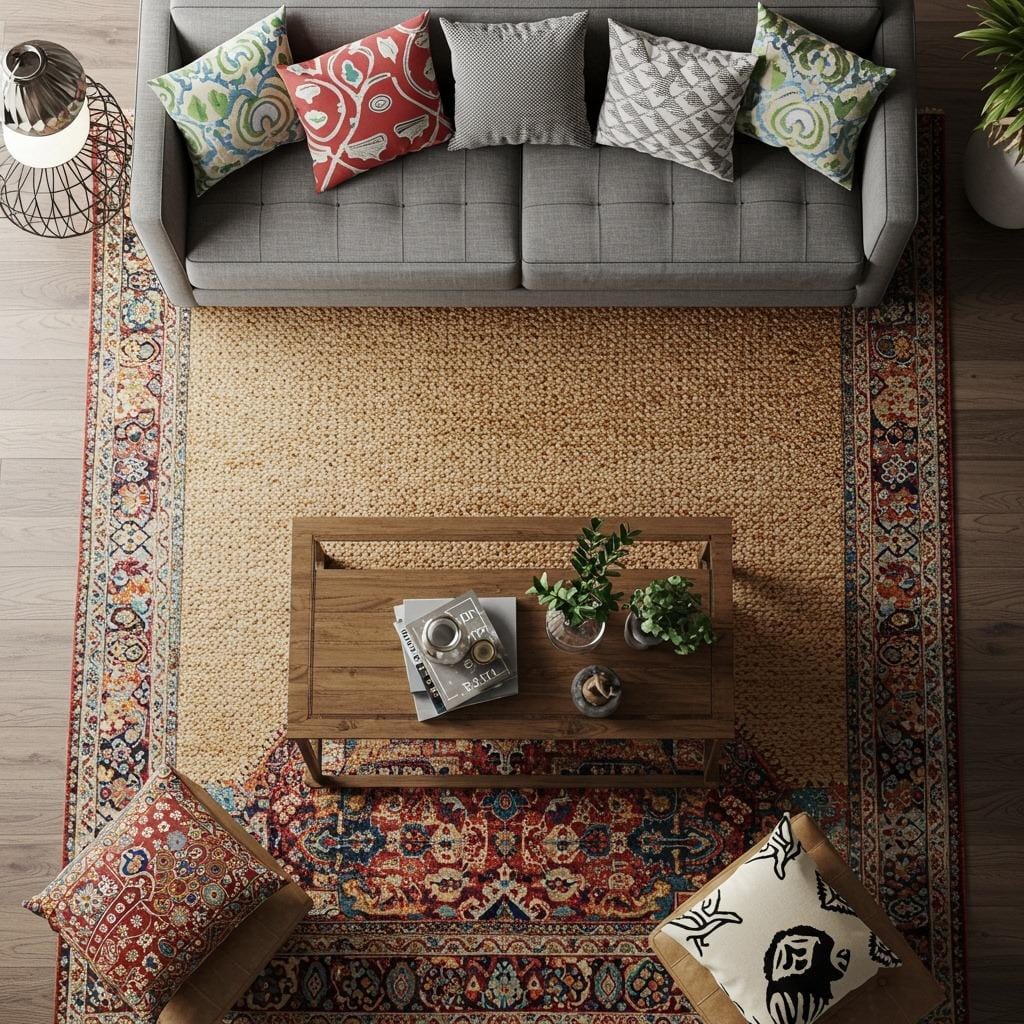
Here’s where maximalism really shines – rug layering. Start with a larger neutral jute or sisal rug as your base, then add a smaller Persian or vintage-inspired rug on top with bold colors and intricate patterns. This creates incredible depth and makes your space feel collected over time.
The beauty of layering rugs is that you’re not committed to one look. You can swap out the top rug seasonally or whenever you want a refresh. Try a Moroccan boucheroute in winter for extra coziness, then switch to a flat-weave kilim in summer.
Make sure your bottom rug extends beyond your furniture perimeter while the top rug anchors your main seating area. This technique also works wonders if you’re dealing with a rug you like but don’t love – just layer something more exciting on top.
3. Create a Gallery Wall With Mixed Frame Styles
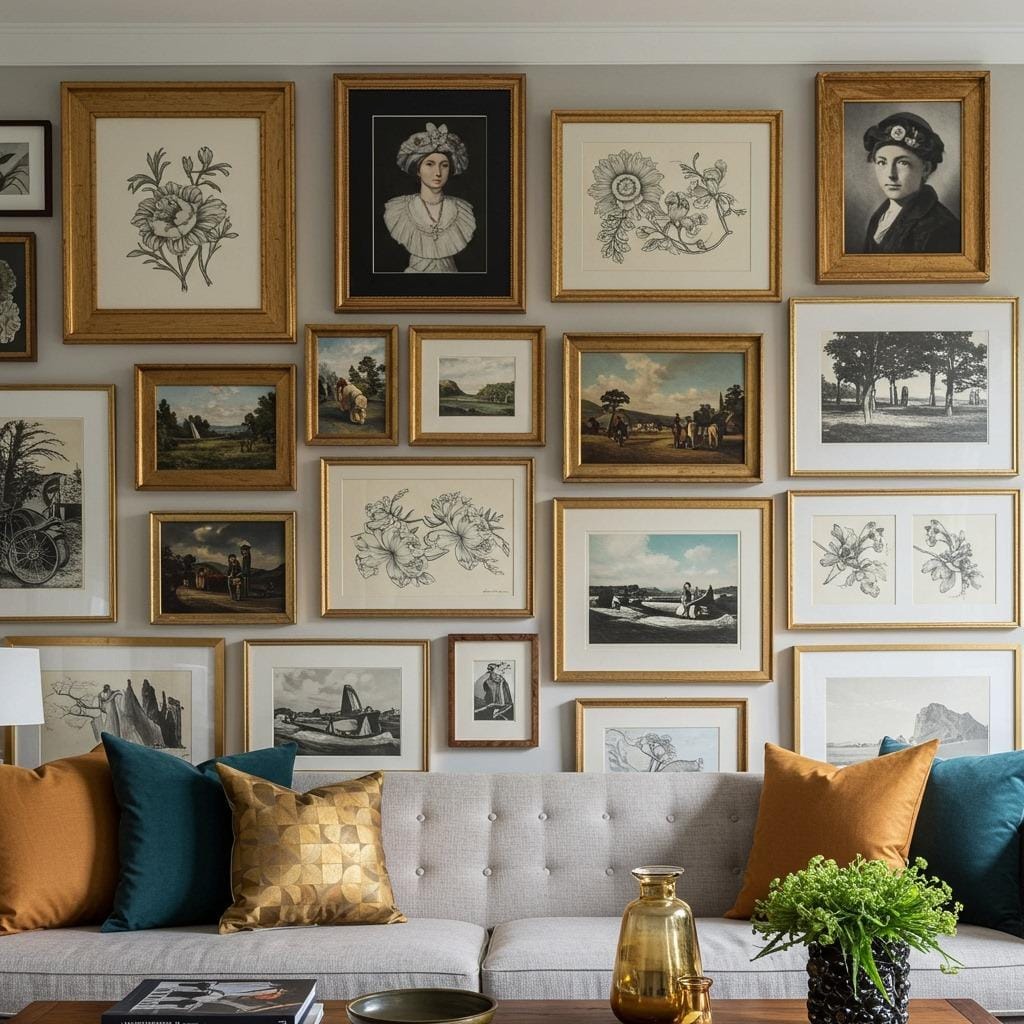
Forget matchy-matchy frames. A true maximalist gallery wall mixes ornate gold baroque frames with sleek black modern ones, vintage wood frames with colorful painted options. The eclectic room inspiration comes from treating your wall like a curated collection rather than a coordinated set.
Start by laying out your arrangement on the floor first. Include various art styles – abstract paintings next to vintage botanical prints, family photos alongside quirky illustrations. The mix of subject matter adds to the visual richness that defines colorful home decorating.
Don’t leave too much space between frames. In maximalist design, you want that slightly crowded, salon-style hanging that draws the eye around the entire composition. Aim for 2-3 inches between frames rather than the typical 4-6 inches you’d use in minimal spaces.
4. Embrace Jewel-Toned Velvet Upholstery
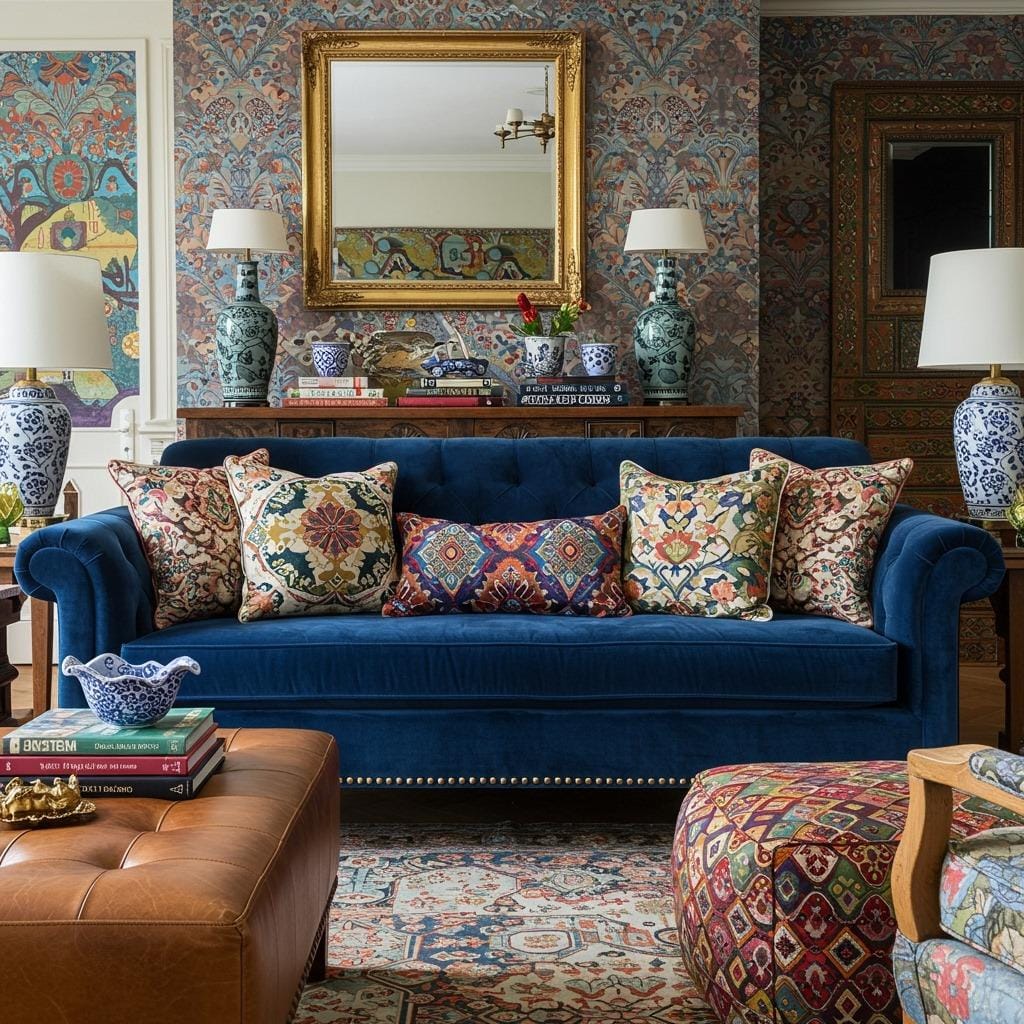
There’s something undeniably luxurious about jewel tones in velvet. A sapphire blue sofa, an emerald green accent chair, or amethyst purple ottoman instantly elevates your space. The way velvet catches light adds another layer of visual interest throughout the day.
When selecting your velvet pieces, don’t feel pressured to match everything. A teal sofa paired with a burnt orange chair creates the kind of unexpected color combination that makes maximalist spaces so captivating. The key is choosing colors that share a similar depth and intensity.
Velvet also ages beautifully. Unlike some trendy fabrics, the slight wear patterns that develop over time add character. Just be mindful of pets if you’re going for the plushest velvet – performance velvet options now exist that offer the same rich look with better durability.
5. Mix Patterns With Confidence
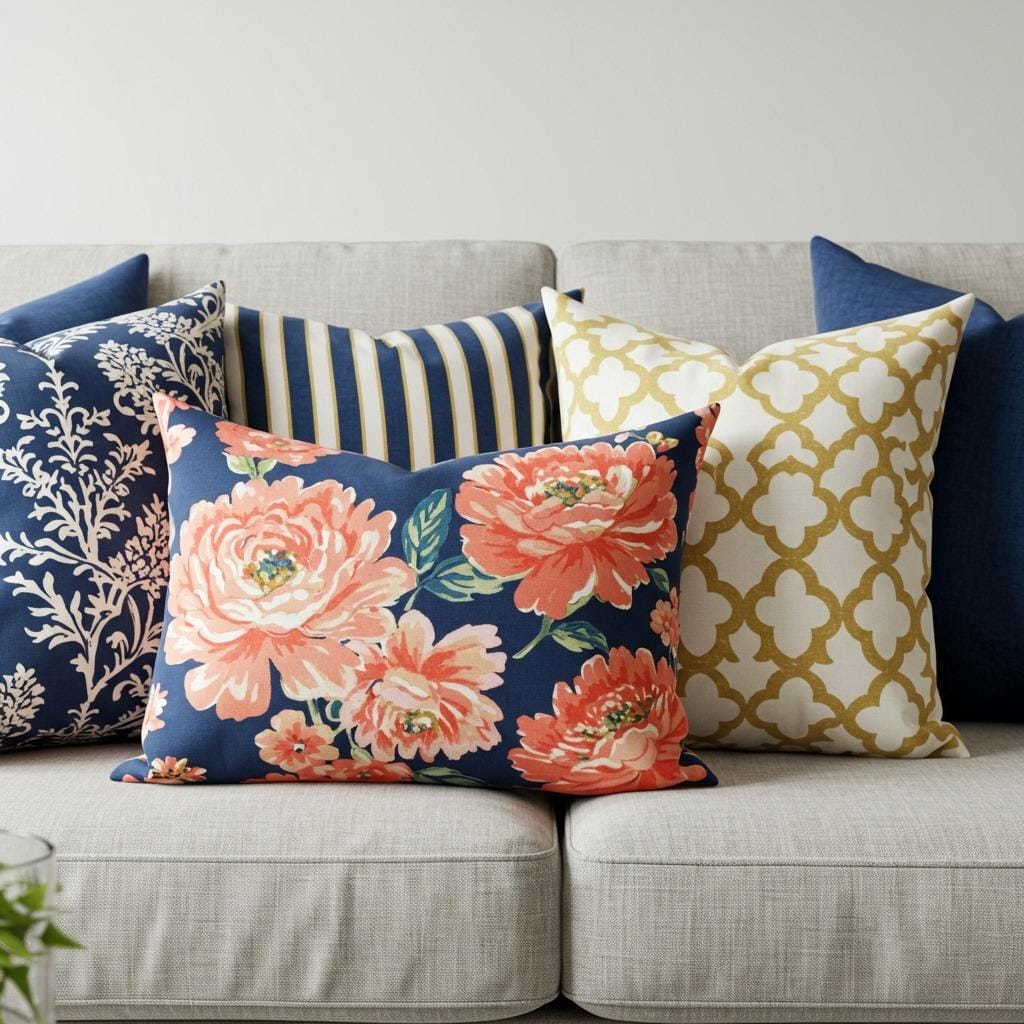
The secret to successful pattern mixing? Vary your scale. Pair large-scale florals with small geometric prints, or mix a bold stripe with a delicate dot pattern. When you vary the size of your patterns, they complement rather than compete with each other.
Choose patterns that share at least one or two colors to create cohesion. If your curtains have touches of coral and navy, pull those same colors into your throw pillows, even if the patterns are completely different. This color thread ties everything together visually.
Start with three patterns if you’re new to this. One large-scale (like curtains), one medium (throw pillows), and one small (maybe a patterned throw blanket). Once you see how well they work together, you’ll feel braver about adding more.
6. Stack Books as Décor

Books aren’t just for shelves in a maximalist space. Stack them on your coffee table styling, use them to add height under decorative objects, create small towers in empty corners. The spines add color, and the varied heights create visual rhythm.
Choose books with beautiful covers or interesting spines. Coffee table books about art, fashion, travel, and design serve double duty – they look gorgeous and give guests something interesting to flip through. Vintage books with worn leather bindings add that collected-over-time feeling.
Mix horizontal and vertical stacking. A tall vertical stack next to a lower horizontal stack creates more interesting sightlines than uniform arrangements. Top your stacks with small objects like decorative boxes, candles, or small plants to complete the vignette.
7. Hang Curtains in Bold Colors or Patterns
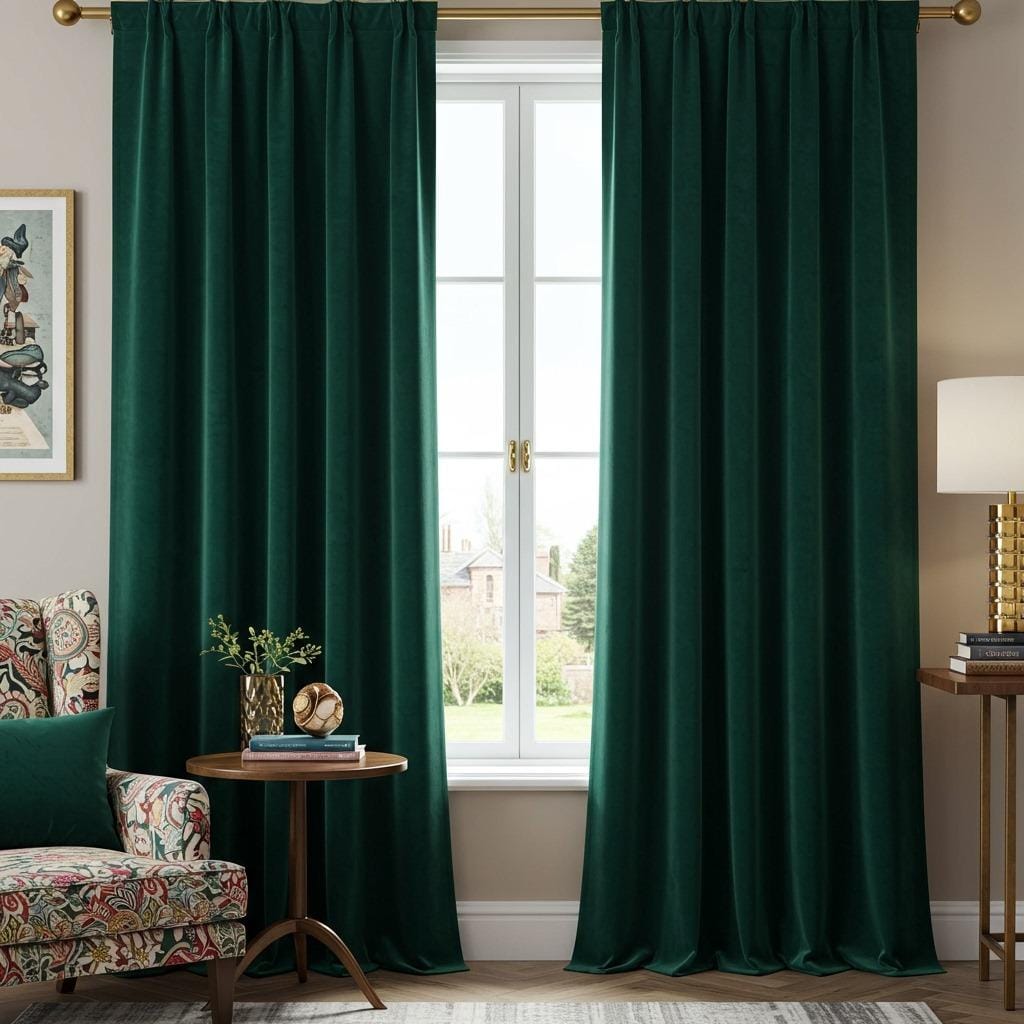
Your living room ideas shouldn’t stop at the walls. Curtains offer a massive opportunity for drama in maximalist spaces. Floor-to-ceiling panels in rich colors or bold patterns frame your windows and add softness to balance all those hard surfaces.
Consider velvet curtains in a deep color for ultimate luxury, or opt for patterned linen that filters light beautifully. If your walls are already busy with wallpaper, solid colored curtains in a coordinating bold hue work perfectly. The goal is adding another layer of color and texture.
Hang your curtains high and wide – mount the rod close to the ceiling and extend it several inches beyond the window frame on each side. This makes your windows appear larger and your ceilings higher, which helps prevent a maximalist room from feeling cramped.
8. Display Collections Proudly
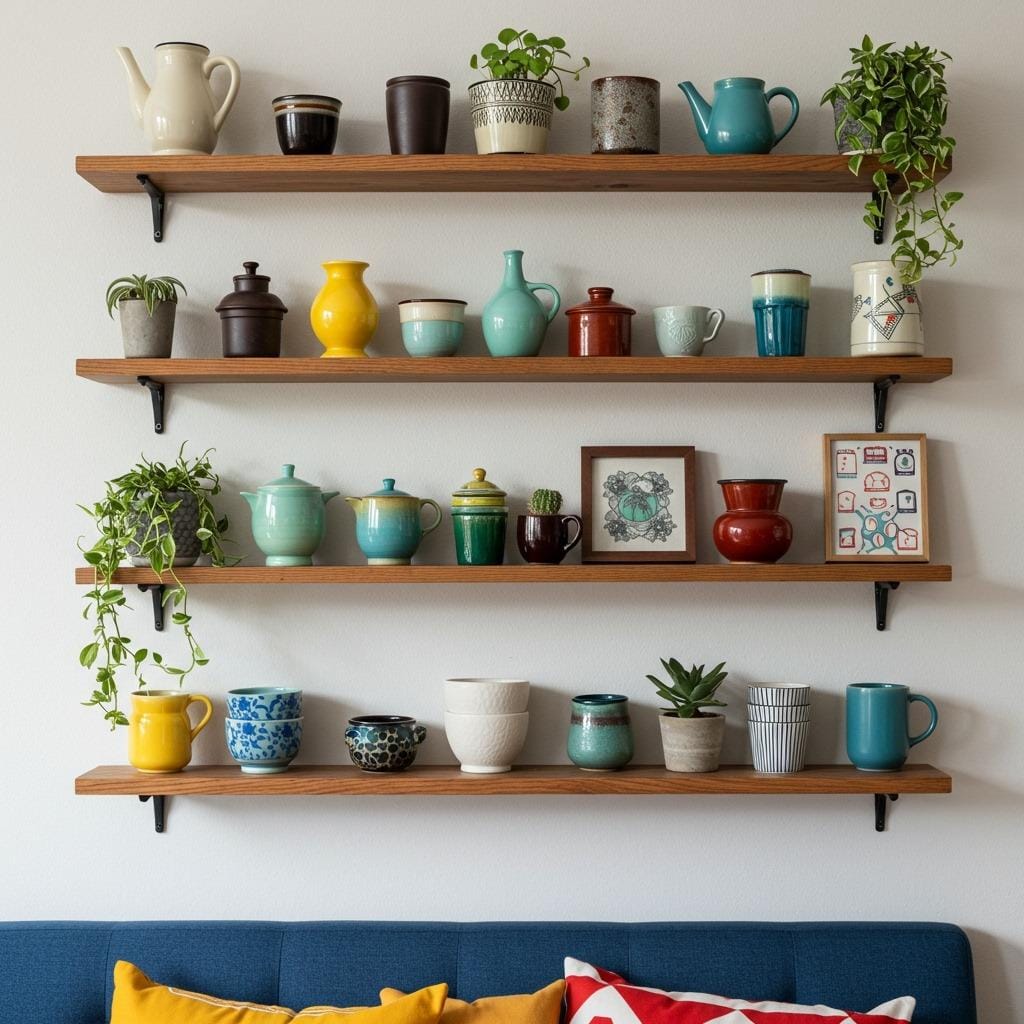
Got a collection of vintage cameras, colorful ceramics, or brass candlesticks? Display them! Maximalism celebrates collections in a way minimalism never could. Group similar items together for impact rather than scattering them around.
Use floating shelves, étagères, or built-ins to showcase your treasures. The repetition of similar objects creates a cohesive display even when individual pieces are quite different. Fifteen vintage bottles together make a statement that one bottle never could.
Rotate your displays seasonally if you have multiple collections. This keeps your space feeling fresh and gives you a reason to shop thrift stores and antique markets for new additions. According to the Smithsonian’s collecting guide, thoughtful display transforms objects into conversation pieces.
9. Incorporate Metallic Accents Throughout
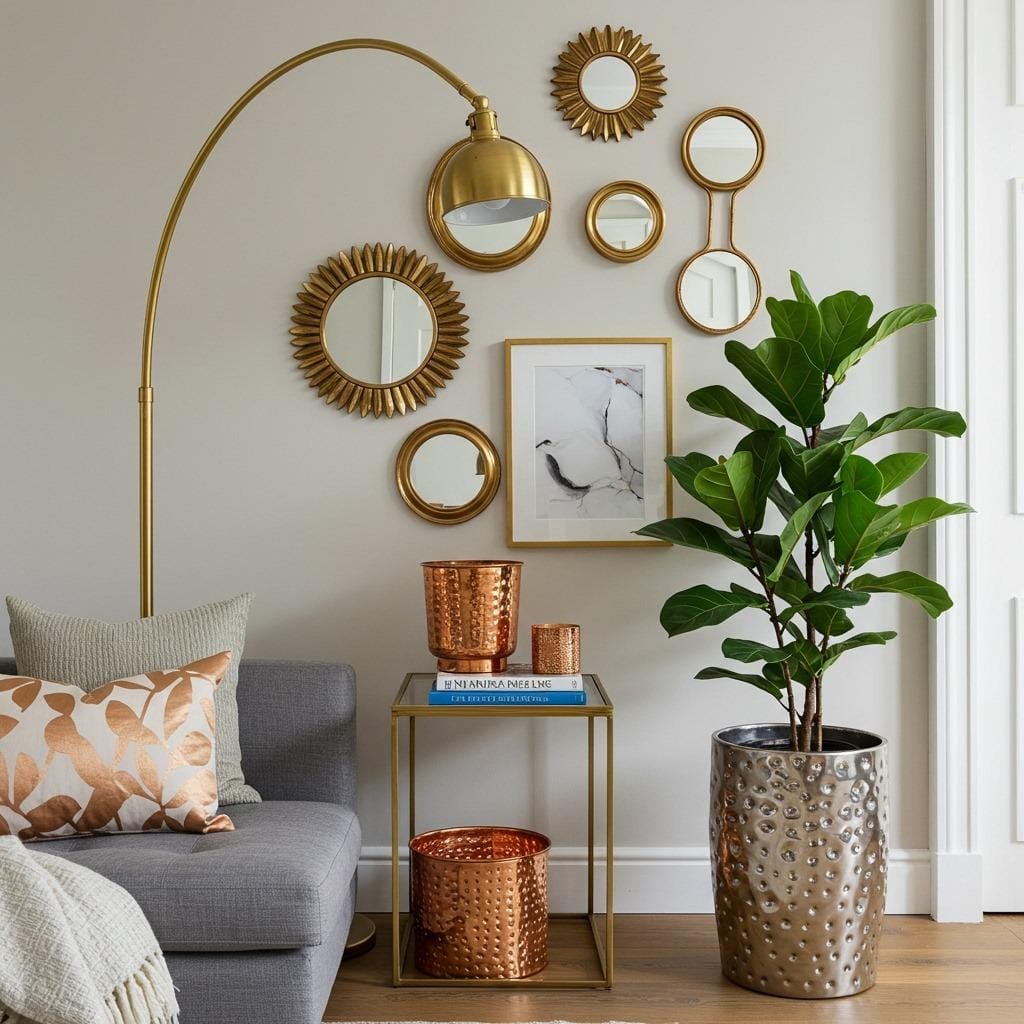
Gold, brass, copper, silver – maximalist spaces embrace all the metallics without choosing just one. A brass floor lamp next to a silver-framed mirror, gold picture frames above a copper planter. The mix feels intentionally collected and adds warmth and shine.
The key is distributing metallics throughout the space rather than clustering them in one area. This creates visual flow as your eye travels around the room catching glints of shine. Think of metallics as jewelry for your room – they add polish and catch the light beautifully.
Don’t stress about mixing metal finishes. That old decorating rule about sticking to one metal finish? Maximalism throws it out the window. The eclectic mix is part of the charm, as long as you’re distributing them evenly across the space.
10. Add Oversized Art Pieces
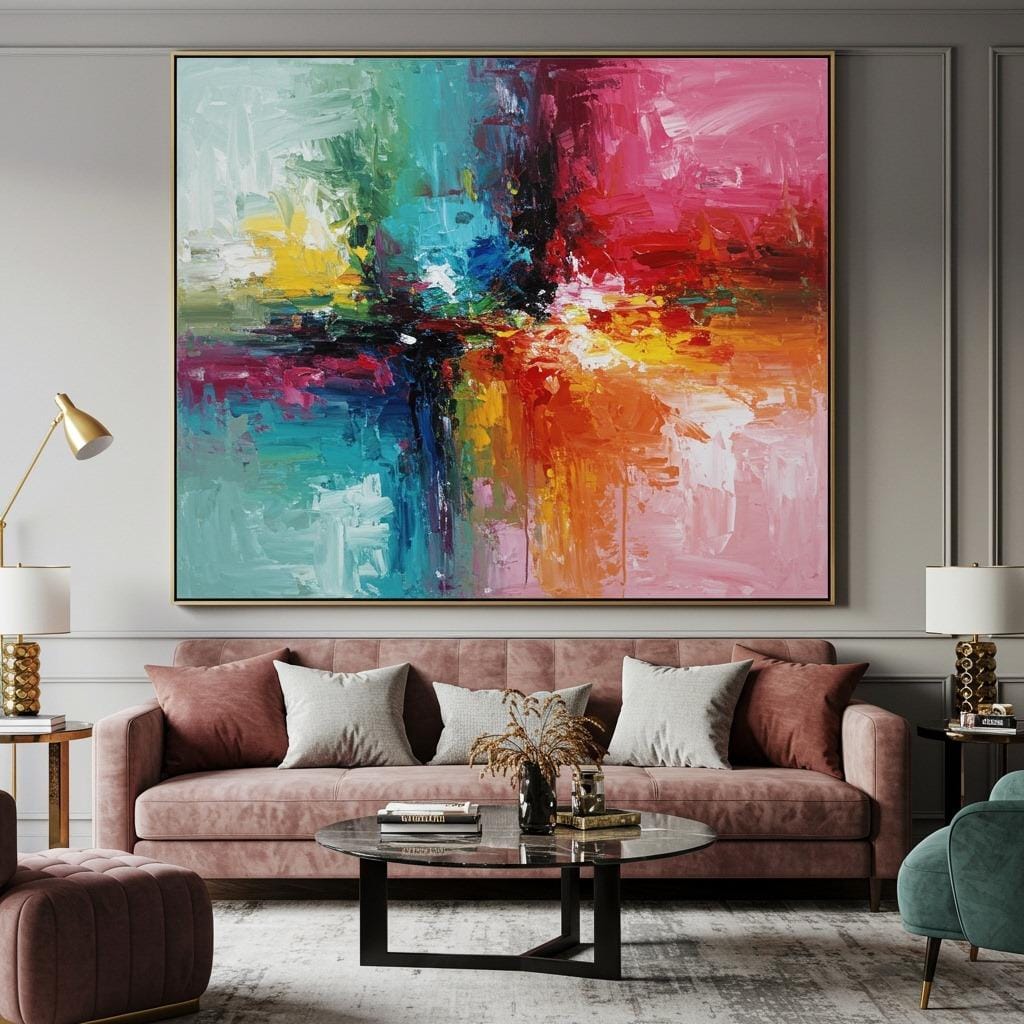
Go big or go home applies perfectly to maximalist art. An oversized abstract painting, a large-scale photograph, or even a tapestry makes an immediate impact. Large art anchors your space and gives the eye a place to rest amid all the pattern and color.
Don’t be afraid of art that nearly touches the ceiling. In fact, that scale often works better than undersized pieces that get lost against busy walls. The art should feel substantial enough to hold its own against patterned wallpaper or colorful furniture.
If original oversized art is beyond budget, explore sites like Minted or Artfully Walls for affordable large-scale prints. You can also commission local artists – many offer more reasonable pricing for large pieces than you might expect.
11. Layer Throw Pillows Liberally
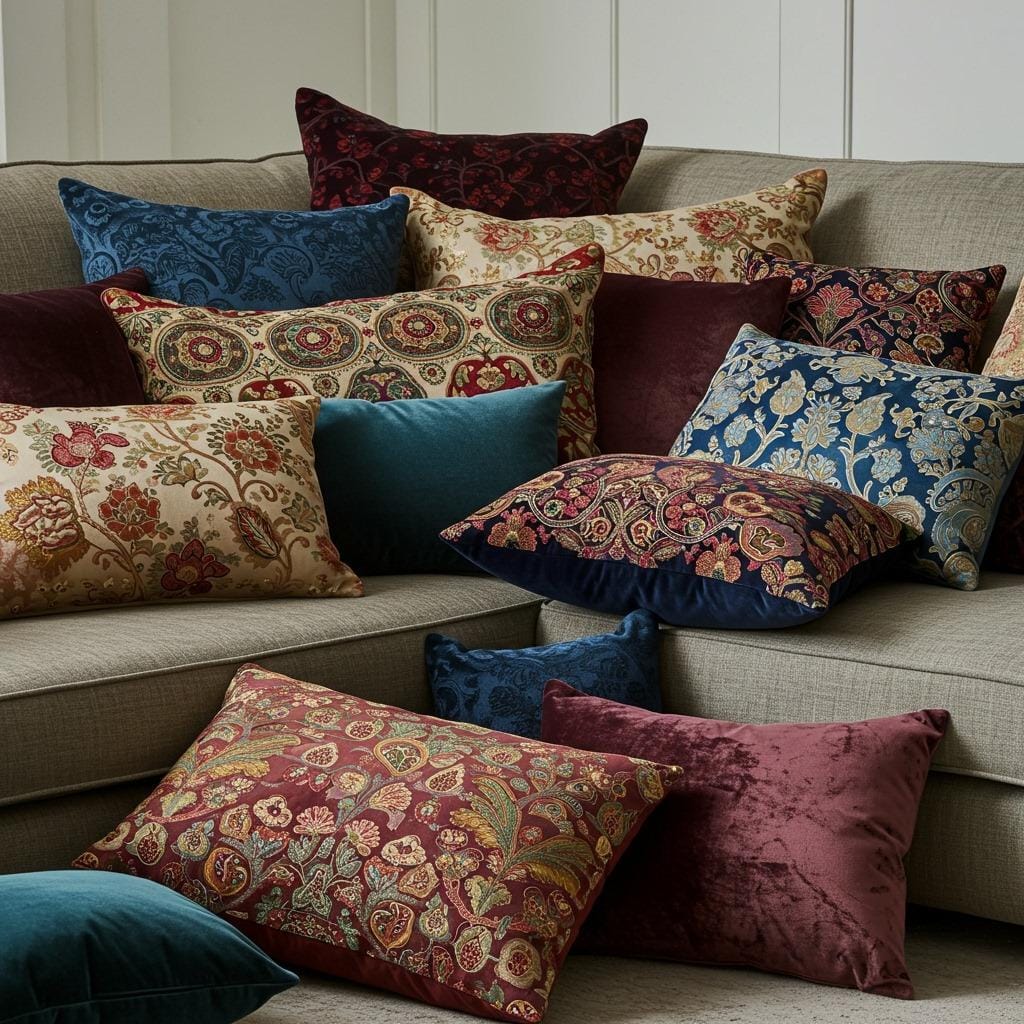
If minimalists have three pillows, maximalists have fifteen. Okay, maybe not quite that many, but definitely more than feels necessary. Layer different sizes, shapes, textures, and patterns. Mix velvet with linen, silk with cotton, embroidered with printed.
Start with your largest pillows in the back corners, then layer medium-sized ones in front, finishing with smaller accent pillows or bolsters. Vary the patterns according to the mixing advice earlier – different scales, shared colors. Add in some solid textured pillows to give the eye a resting place.
Change out your pillow covers seasonally. This is one of the easiest and most affordable ways to refresh your maximalist space. Keep the inserts, just swap the covers based on the season or your mood. It’s like redecorating without the commitment.
12. Incorporate Unexpected Furniture Pieces
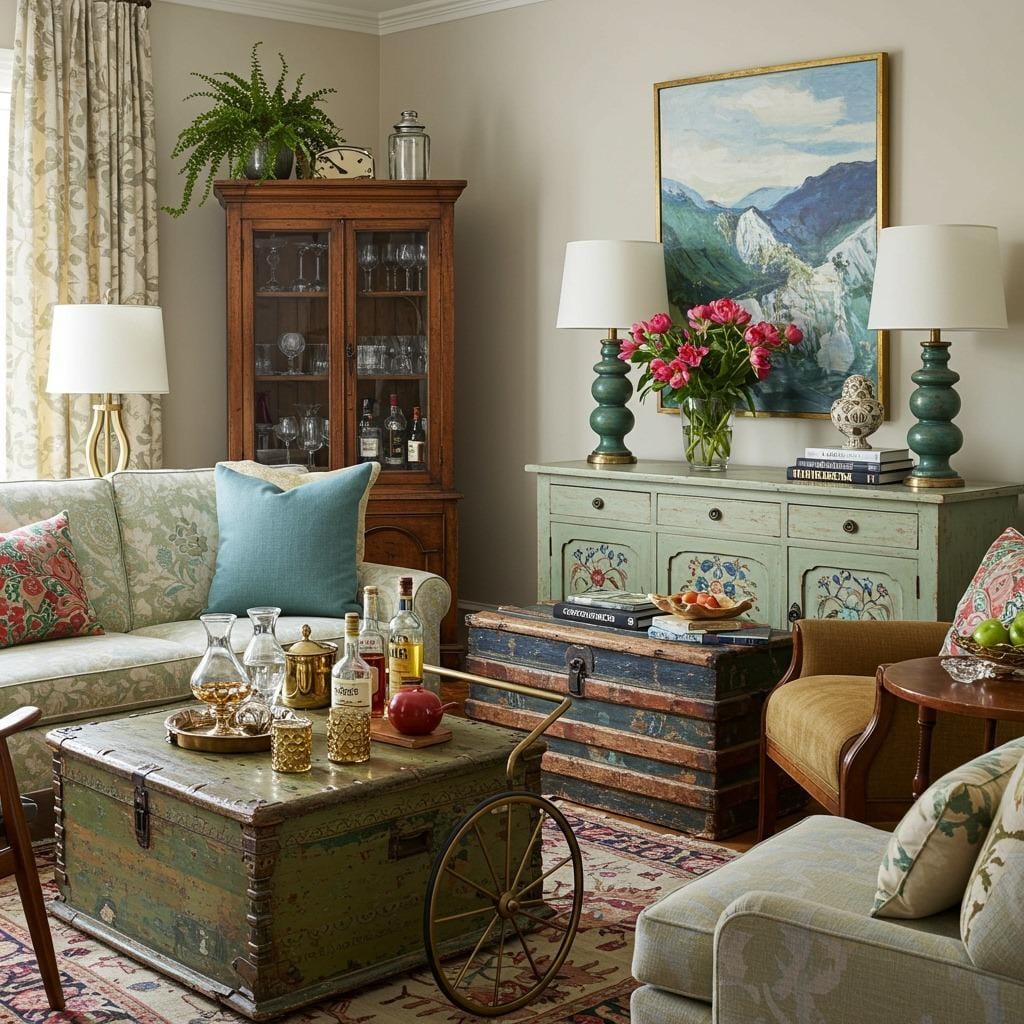
Why have a regular side table when you could use a vintage bar cart? Or a painted chest instead of a typical media console? Maximalism loves furniture with stories. Scour antique stores, estate sales, and even curbside finds for pieces with character.
Mix furniture styles intentionally. A mid-century modern sofa pairs beautifully with a Victorian side table and a contemporary coffee table. The unexpected combinations create those “where did you find that?” moments that make visiting maximalist homes so interesting.
Paint old furniture in bold, unexpected colors if needed. That dated oak dresser becomes a showstopper when painted in glossy navy or deep forest green. Don’t be afraid to take risks – you can always repaint if you change your mind.
13. Bring the Outdoors In With Abundant Plants

Maximalist spaces thrive on life and energy, and nothing brings that like plants. Fill your space with a variety of plants in different sizes – a tall fiddle leaf fig in one corner, trailing pothos on shelves, a cluster of smaller plants on your coffee table.
The pots matter just as much as the plants. Mix colorful ceramic planters with woven baskets, glazed terra cotta with modern concrete vessels. Each pot becomes another decorative element that adds to your overall aesthetic.
If you struggle with plant care, invest in high-quality faux plants for certain spots. Modern faux plants look remarkably realistic, and mixing them with real plants gives you the lush look without the maintenance stress in every corner.
14. Install Open Shelving for Display
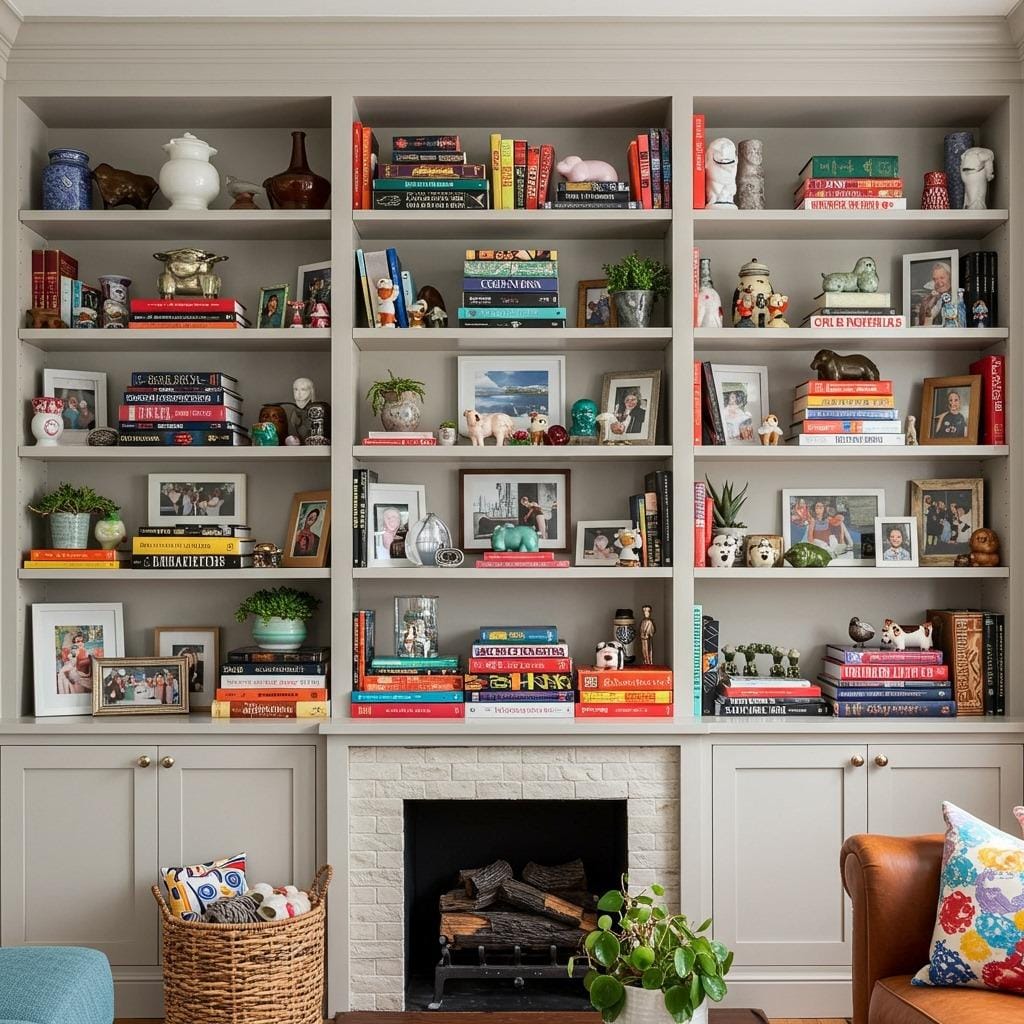
Built-in or floating shelves give you prime real estate for displaying all those objects that make your heart happy. Style them with books, plants, photos, collections, and decorative objects layered for maximum visual interest.
The key to styling maximalist shelves is filling them without making them look cluttered. Leave some breathing room, but not too much. Play with height by using books or small boxes as risers. Place taller items on outer edges and shorter items toward the center.
Light your shelves if possible. Small LED strips or puck lights make displayed objects glow and add ambiance to the entire room. This is especially effective for showing off glass collections or metallic objects that sparkle in the light.
15. Choose a Bold, Patterned Sofa
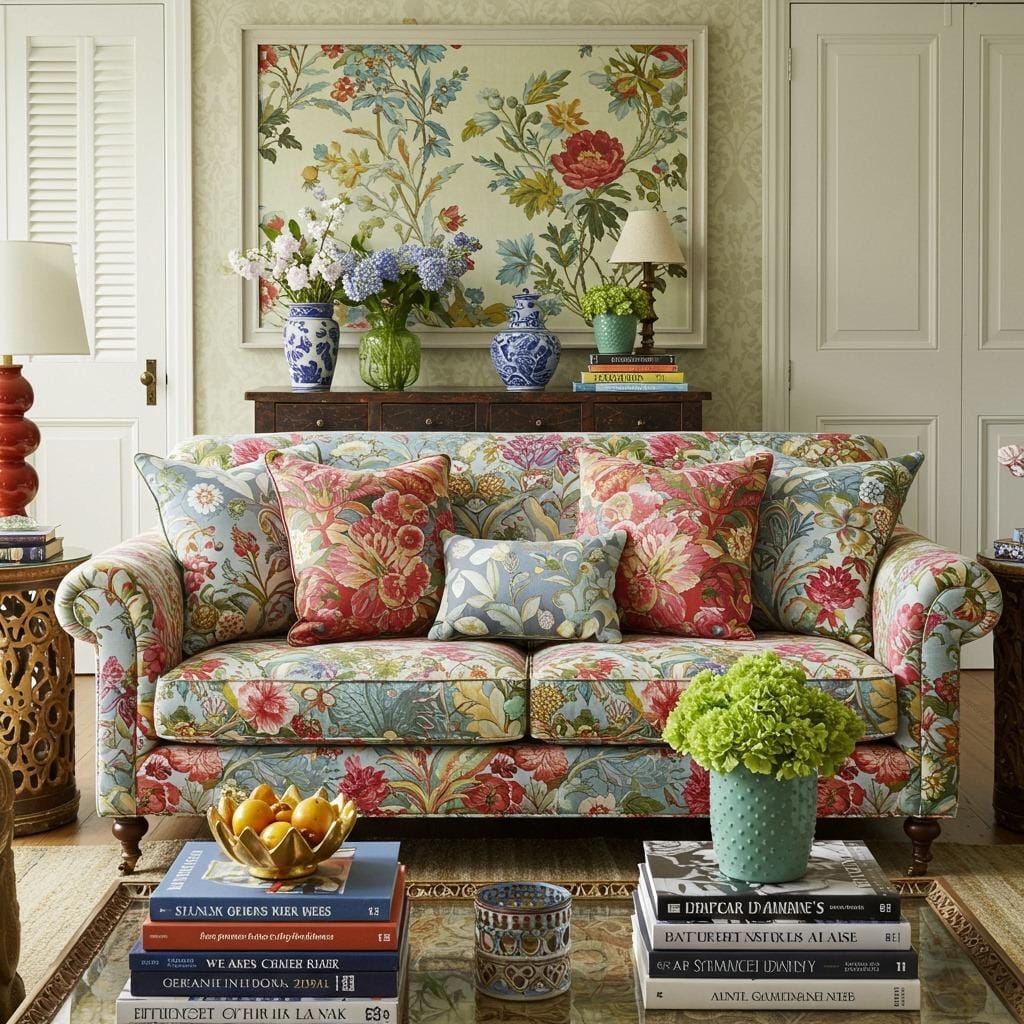
While many people play it safe with neutral sofas, a maximalist knows the sofa is an opportunity. A floral chintz sofa, a bold geometric print, or even an animal print brings personality right to your main seating piece.
If you’re nervous about commitment, many companies now offer changeable slipcovers. You can start with one bold pattern and switch it out seasonally or as your tastes evolve. It’s like having multiple sofas without the storage issues.
Balance a patterned sofa with some solid elements nearby. If your sofa is loud, maybe your curtains are solid (but still colorful), or vice versa. You want layers of pattern throughout the room, but giving each major pattern its moment to shine prevents chaos.
16. Add Vintage or Ornate Lighting Fixtures
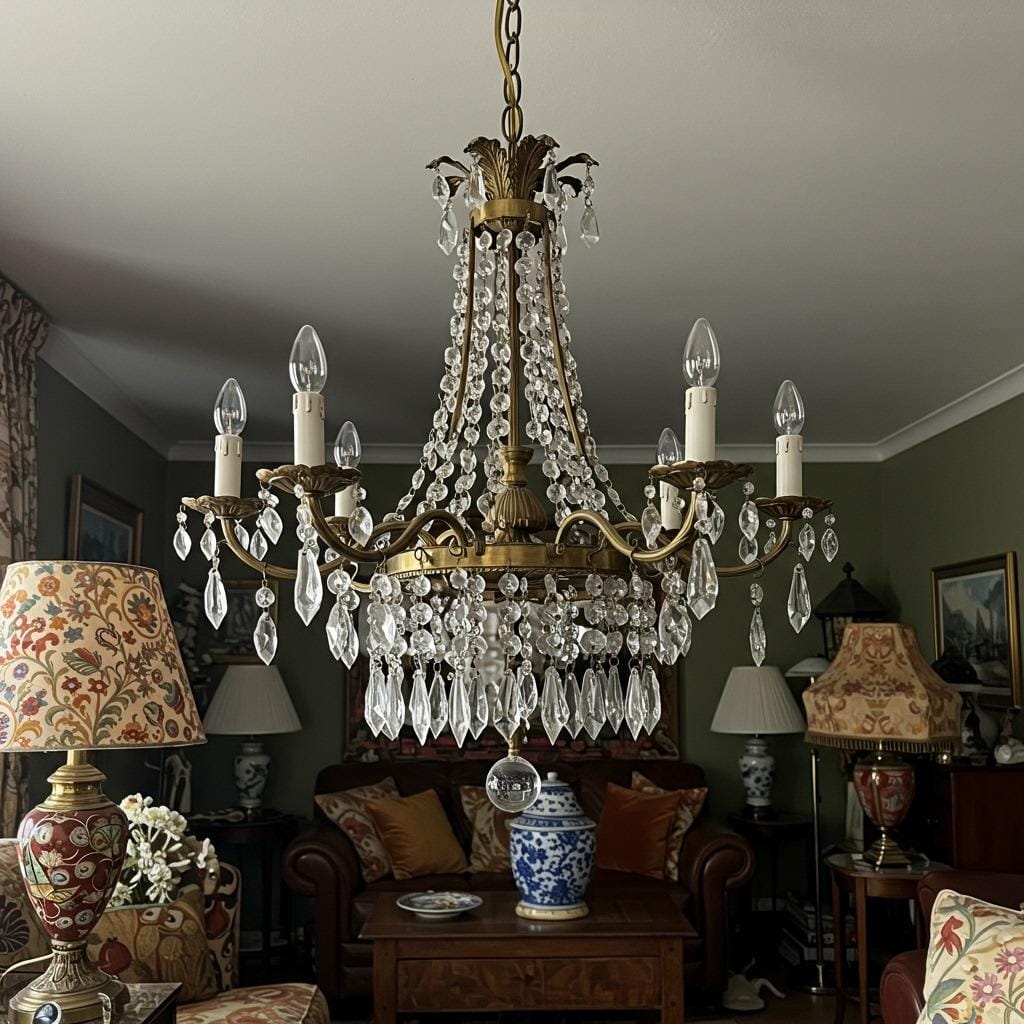
A crystal chandelier, a vintage brass floor lamp with a patterned shade, an ornate table lamp with a beaded fringe – lighting in maximalist spaces is sculptural and decorative. These aren’t just light sources; they’re statement pieces that add personality even when turned off.
Layer your lighting with multiple sources at different heights. A chandelier or pendant overhead, table lamps on side tables, floor lamps in corners, maybe even string lights or LED strips for ambiance. This creates mood and highlights different areas of your carefully curated space.
Don’t match all your lighting fixtures. An ornate vintage chandelier looks fantastic with modern table lamps. The contrast adds interest, and the variety keeps your eye moving around the room discovering new details.
17. Create Cozy Corners With Layered Textiles

Maximalism is all about comfort. Create inviting nooks by layering a throw blanket over the arm of your chair, draping another over a ottoman, keeping a basket full of cozy textiles nearby. Mix textures like chunky knits with silky fringe, faux fur with woven cotton.
These textile layers add softness that balances harder elements like wood furniture and metal accents. They also make your space feel lived-in and welcoming rather than museum-like. People should feel like they can actually sit down and get comfortable.
Change your throws seasonally just like you do pillows. Lighter linens and cottons for warmer months, heavier velvets and knits when temperature drops. This simple switch refreshes your entire space without major redecorating.
18. Mix Furniture Heights and Proportions
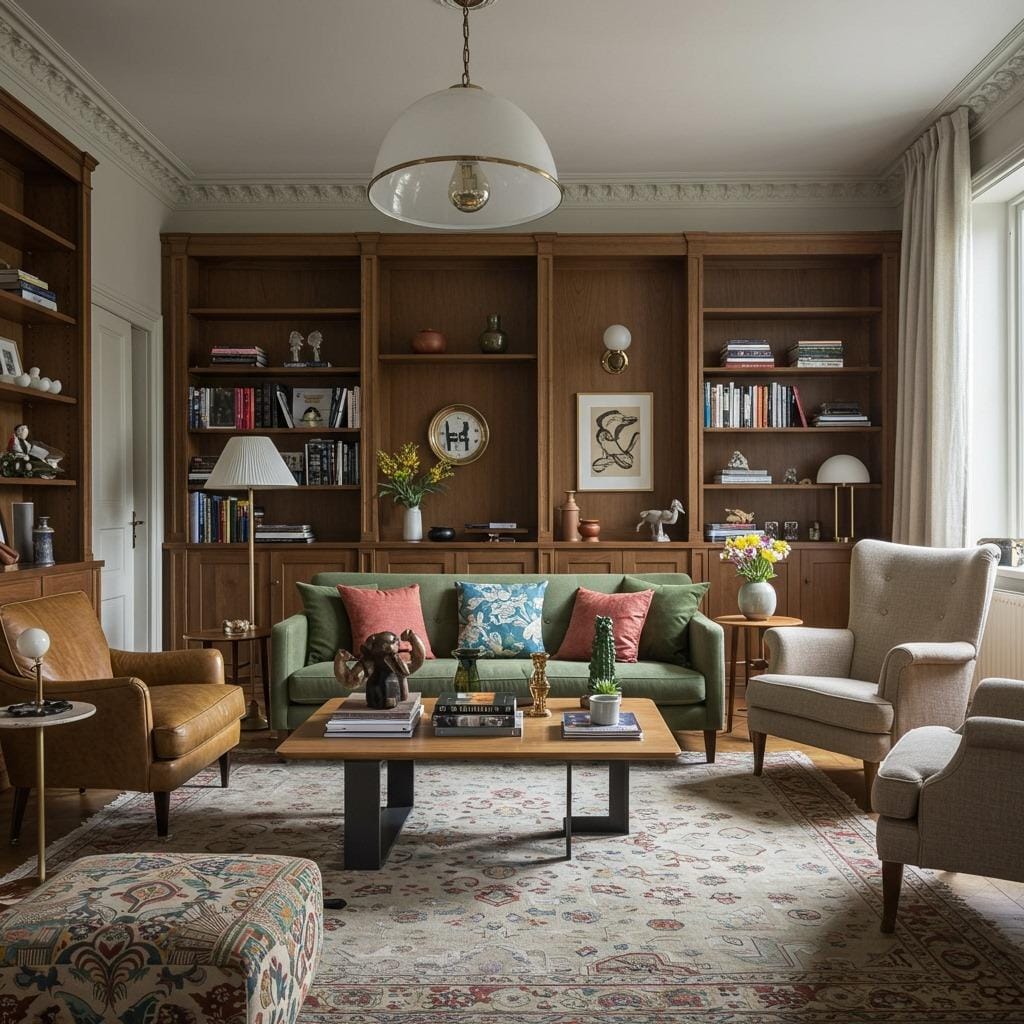
Not everything should be the same height in a maximalist living room. A low-slung sofa next to a tall bookshelf, a high-backed chair across from a low coffee table – these variations create visual interest and make your space feel more dynamic.
This principle applies to your décor too. On your coffee table, mix tall candlesticks with short stacks of books, elevated objects on pedestals next to things sitting flat on the surface. The varied heights create rhythm and keep the eye moving.
Think about sightlines from different angles. When you’re seated, when you’re standing, when you first walk in – each viewpoint should offer something interesting to look at without feeling cluttered. It’s a delicate balance that comes with experimentation.
19. Feature Statement Lighting as Art

Your lighting fixtures can be as bold as your art. A sculptural floor lamp, a geometric pendant that looks like modern art, or a vintage chandelier with colored glass shades. In maximalist design, lighting transcends function to become focal points.
Consider the visual weight of your lighting. A substantial chandelier can balance a large gallery wall on the opposite wall. An oversized floor lamp fills a corner that might otherwise feel empty. Lighting helps distribute visual interest evenly throughout the space.
Colored or patterned lampshades add another opportunity for pattern play. A lamp with a bold geometric shade or a vintage floral shade becomes more than light – it’s another layer in your colorful home decorating story.
20. Use Decorative Objects in Clusters
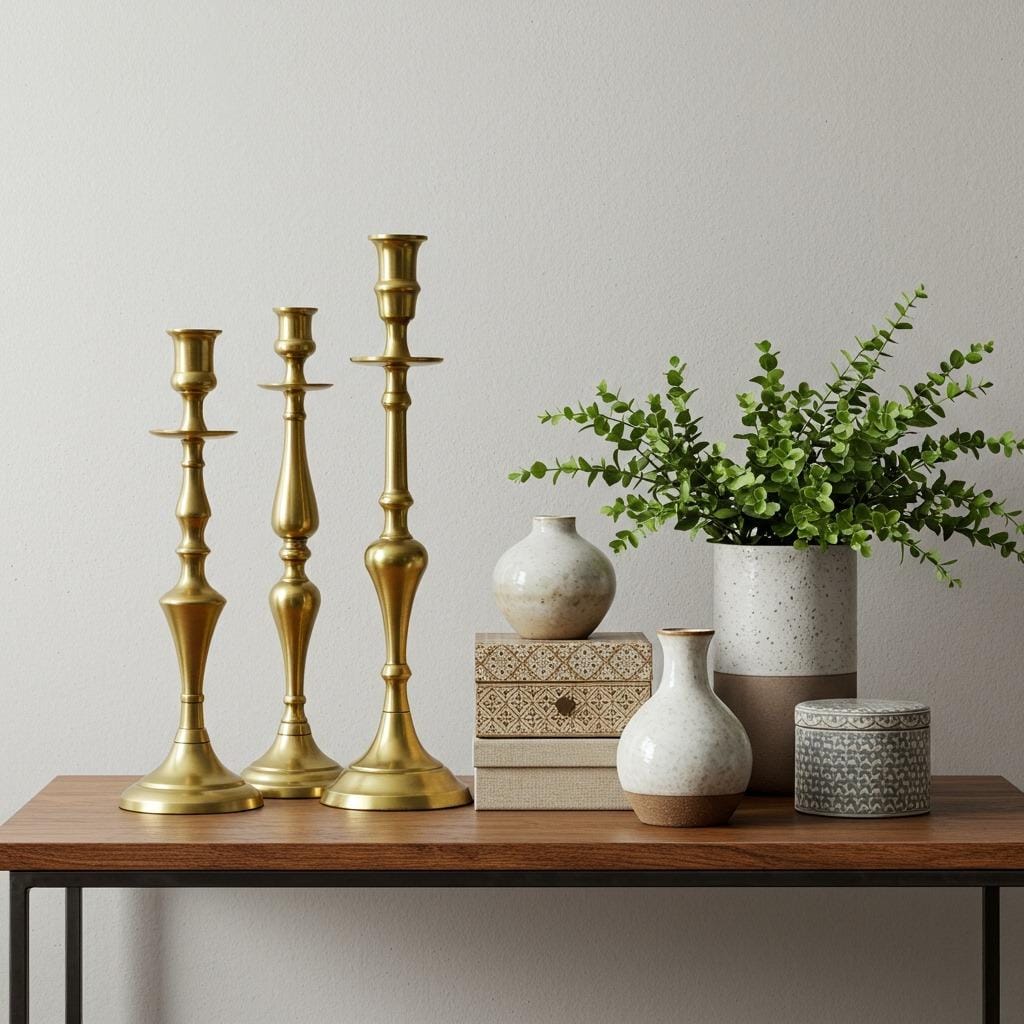
Instead of one vase, try three in different sizes. Rather than a single candlestick, group five. Clustering decorative objects creates impact while maintaining that collected-over-time feeling that maximalist spaces embody.
Odd numbers work better visually – group things in threes, fives, or sevens rather than even numbers. Vary the heights within each cluster, and leave a bit of space between groups to prevent the surface from looking chaotic.
Style your living room furniture arrangement surfaces with purpose. Your coffee table might have a cluster of books and objects, your console table another grouping, side tables their own small vignettes. Each surface tells part of your style story.
21. Don’t Forget the Fifth Wall – Your Ceiling

Maximalists know the ceiling is decorating real estate too. Paint it a bold color, add wallpaper, install a medallion around your light fixture, or even add architectural details like crown molding or decorative beams. This unexpected touch completes the immersive environment.
A painted ceiling can be breathtaking. Deep navy, soft blush, or even metallic gold creates an envelope effect that makes the room feel complete. If you’re hesitant about color, even continuing your wall color onto the ceiling rather than defaulting to white adds cohesion.
Wallpapered ceilings are having a moment for good reason. A subtle pattern or a bold design draws the eye upward and makes your space feel more finished. It’s one of those dramatic design tips that separates good maximalist rooms from truly exceptional ones.
Making Maximalism Work For You
The beauty of maximalist living room décor is that it’s personal by nature. You can’t really do it wrong as long as you’re choosing things you genuinely love. Sure, there are guidelines about color coordination and scale variation, but ultimately, your space should reflect your personality unapologetically.
Start with one or two ideas from this list that speak to you most. Maybe it’s finally hanging that bold wallpaper you’ve been eyeing, or giving yourself permission to display that collection you’ve been hiding in boxes. Build from there, adding layers gradually until your space feels complete.
The most successful maximalist rooms feel curated rather than cluttered. Each piece has intention behind it, whether it’s adding color, texture, pattern, or personal meaning. When you walk into your finished space, it should feel like a warm hug – enveloping, personal, and unmistakably you. That’s when you know you’ve nailed maximalist style.

Sanjai creates easy, affordable home decor ideas that anyone can try. Through simple tips and curated finds, he helps you style rooms you’ll love coming home to.