You’ve probably wondered if investing in that backyard patio or garden renovation is really worth the effort. Maybe you’ve scrolled through gorgeous outdoor seating ideas on Pinterest and thought, “But will this actually add value to my home?”
Here’s the thing – outdoor living spaces aren’t just pretty to look at. They’re powerful investments that can transform both your daily life and your property’s bottom line. The numbers tell a compelling story about how Americans are prioritizing their yards, decks, and gardens more than ever before.
This isn’t just about curb appeal anymore. It’s about creating functional, livable spaces that extend your home’s footprint and boost its market value in measurable ways. Let’s explore what the data actually reveals about outdoor living investments.
The Outdoor Living Boom: Current Trends and Spending Patterns
Something significant shifted in how we view outdoor spaces over the past few years. What used to be an afterthought in home design has become a central focus for homeowners across the country.

According to the National Association of Realtors, 81% of real estate agents report that outdoor living spaces have become increasingly important to homebuyers. This isn’t a small shift – it’s a complete transformation in priorities. The pandemic certainly accelerated this trend, but the momentum hasn’t slowed down.
Homeowners spent an average of $8,475 on outdoor living projects in 2024, with many projects ranging significantly higher depending on scope and materials. That’s not pocket change, but here’s what makes it interesting: the vast majority of these homeowners report high satisfaction with their investment.
The most popular outdoor living upgrades break down into three main categories. Hardscaping projects like patios and decks lead the pack, followed closely by landscaping improvements and outdoor kitchen installations. About 42% of homeowners who completed outdoor projects tackled multiple improvements at once, creating cohesive outdoor living environments rather than piecemeal additions.
Patio and Deck Value: Real ROI Numbers That Matter
When you’re deciding whether to build that dream deck or patio, return on investment becomes more than just a buzzword. It’s the difference between a smart upgrade and an expensive mistake.

Deck additions deliver an average ROI of 72-80% according to Remodeling Magazine’s Cost vs. Value Report. That means a $15,000 deck could add approximately $10,800-$12,000 to your home’s resale value. Wood decks tend to recoup about 75% of their cost, while composite decking sits slightly lower at around 69% but requires virtually no maintenance.
Patios tell an even more impressive story in some markets. A well-designed patio can return 50-80% of its installation cost, with stamped concrete and natural stone options performing particularly well in higher-end neighborhoods. The variability depends heavily on your local market and the quality of materials used.
Size matters more than you might think. The sweet spot for deck size seems to be 16×20 feet – large enough to accommodate furniture and gatherings but not so massive that it dominates the yard. Small backyard patio makeovers can actually outperform larger projects in terms of percentage ROI because they’re more affordable to execute well.
Location within your property significantly impacts value too. Decks attached to main living areas recoup more value than detached structures. Patios visible from the street contribute more to curb appeal data, while those tucked into private backyard corners score higher on homeowner satisfaction surveys.
The materials you choose create lasting ripple effects on value retention. Pressure-treated lumber remains the most budget-friendly option at $15-$25 per square foot installed, but composite decking at $30-$45 per square foot increasingly wins favor for its longevity. Natural stone patios command premium pricing but can justify higher asking prices in upscale markets.
Garden Upgrade Impact: How Landscaping Affects Property Values
Gardens do something almost magical to property values – they create immediate emotional connections that translate into real dollars. Professional landscaping can boost home values by 5-20% depending on the extent and quality of improvements.
The front yard carries disproportionate weight in this equation. According to landscape industry research, a well-maintained front garden can add 7-14% to perceived home value even before potential buyers step inside. That first impression really is everything, and nothing communicates care and attention quite like thoughtful landscaping.
Foundation plantings – those shrubs and perennials hugging your home’s base – deliver one of the highest returns for minimal investment. A coordinated planting scheme along the front of your house costs $1,500-$4,000 for most homes but can add $10,000-$15,000 to market value in competitive neighborhoods.
Mature trees might be the unsung heroes of outdoor living statistics. A single mature tree can add $1,000-$10,000 to property value depending on species, size, and placement. Properties with mature tree cover sell 1.7% higher on average than comparable homes without established trees. The National Tree Benefit Calculator from the Arbor Day Foundation lets you estimate specific values for trees on your property.
Backyard gardens operate differently than front yard landscaping in terms of value impact. While they don’t influence curb appeal directly, they significantly affect buyer behavior once someone tours your property. Homes with well-designed backyard gardens spend 5-10 fewer days on market compared to similar properties with neglected yards.
DIY raised garden beds have exploded in popularity, and for good reason beyond the ROI. About 35% of homeowners report starting vegetable or herb gardens in the past three years, driven by desires for fresh produce and outdoor hobbies. While a veggie garden won’t boost appraisal values like ornamental landscaping might, it’s a strong selling point for certain buyer demographics.
Low-maintenance landscaping has become the gold standard in many markets. Drought-tolerant native plants, automated irrigation systems, and strategic hardscaping that minimizes lawn area appeal to time-strapped buyers. According to a study by the EPA, homes with water-efficient landscaping can see utility cost reductions of 20-50% for outdoor water use, a selling point that resonates in water-conscious regions.
Curb Appeal Data: First Impressions in Real Estate
Real estate agents have known it forever, but recent data quantifies just how much curb appeal influences buying decisions. Properties with excellent curb appeal sell for 7% more on average than similar homes with average exterior presentation.

The numbers get even more interesting when you look at showing-to-offer ratios. Homes with strong curb appeal convert showings to offers at nearly double the rate of comparable properties with neglected exteriors. In competitive markets, that differential can mean the difference between a bidding war and languishing on market.
Outdoor lighting deserves special mention in curb appeal data. Professionally designed outdoor lighting for patios and walkways increases after-dark appeal and perceived safety. Homes with quality exterior lighting sell 20% faster during fall and winter months when daylight showings are limited.
Clean, defined edges between lawn and garden beds signal maintenance and care to potential buyers. This simple detail – often achieved with a $50 edging tool and an afternoon of work – disproportionately influences buyer perception of overall property condition.
Entry areas command premium attention in curb appeal equations. The path from street or driveway to front door represents your home’s handshake with visitors. Upgraded walkways using pavers, natural stone, or decorative concrete add $2,500-$8,000 in perceived value while costing $1,200-$4,500 to install for typical residential applications.
Color psychology plays a fascinating role in outdoor spaces. According to landscape designer surveys, homes with coordinated color schemes in their landscaping (flowering plants that complement exterior paint colors) photograph better and create stronger emotional responses from buyers. Given that 95% of buyers begin their home search online, those photos matter tremendously.
Fencing impacts curb appeal in nuanced ways. Privacy fencing in backyards adds value and appeal in urban and suburban settings. Front yard fencing reads differently – decorative options can enhance curb appeal while solid privacy fences may reduce it by making homes feel closed off. Local preferences vary significantly on this point.
Outdoor Space Trends: What’s Hot in Backyard Design
Current outdoor space trends reveal where homeowners are actually putting their money and attention. Understanding these patterns helps you make choices that align with both personal preferences and market desirability.
Outdoor kitchens and dining areas have transformed from luxury amenities to expected features in many markets. About 28% of home renovation projects now include some form of outdoor cooking space, from simple built-in grills to fully equipped outdoor kitchen patios with refrigerators, sinks, and pizza ovens. These spaces return 55-70% of their cost at resale while providing years of enjoyment.
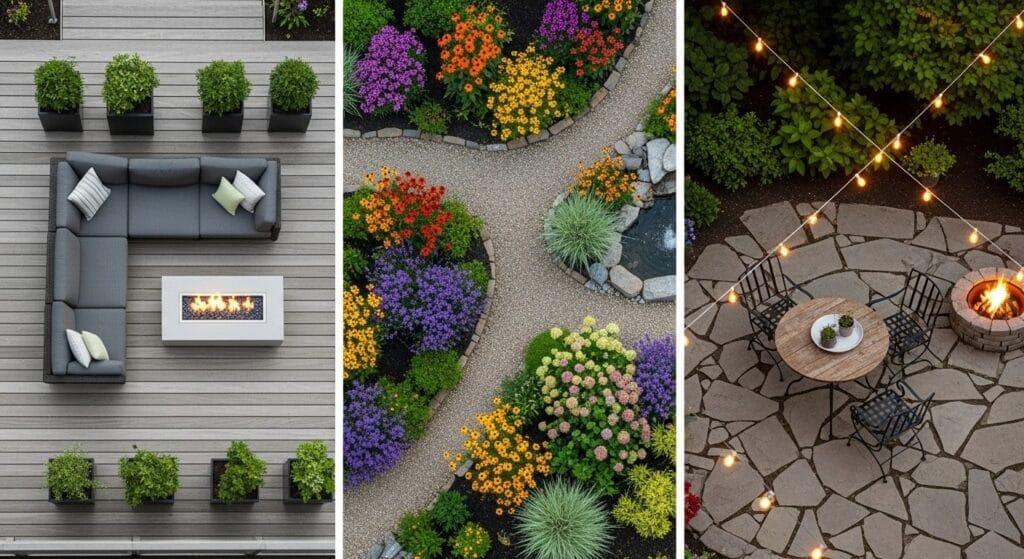
Fire pits and fireplaces extend the usability of outdoor spaces across more seasons. Nearly 40% of outdoor living projects completed in the past two years included some type of fire feature. Backyard fire pit ideas range from simple $300 portable units to custom stone installations costing $5,000+, with the sweet spot for value around $1,500-$2,500 for a quality permanent installation.
Multi-season use defines successful outdoor spaces in current design thinking. Pergolas, covered patios, and retractable awnings allow homeowners to use outdoor areas during light rain or intense sun. These features add 10-15% to the functional “square footage” of a home without the costs of interior construction.
Sustainable and eco-friendly outdoor design has moved from niche to mainstream. Permeable paving materials that reduce runoff, native plant selections that support local ecosystems, and rainwater collection systems appeal to environmentally conscious buyers. These features particularly resonate with millennial homebuyers, who make up the largest segment of current purchasers.
Privacy solutions have become non-negotiable in many outdoor space designs. Backyard privacy screens, strategic plantings, and decorative fencing create intimate spaces even in densely populated neighborhoods. Homes with private outdoor areas sell 8-12% faster than comparable properties where neighbors can easily observe backyard activities.
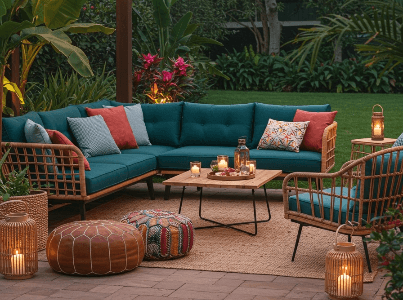
Outdoor entertainment spaces have evolved beyond simple seating areas. Built-in sound systems, outdoor televisions rated for weather exposure, and comfortable all-weather furniture transform backyards into true living spaces. About 19% of homeowners report using their outdoor spaces daily during warm months, up from 12% just five years ago.
Low-maintenance design principles dominate current outdoor space trends. Composite decking, artificial turf in targeted areas, and self-cleaning pool systems reduce the weekend warrior burden while maintaining attractive appearances. This trend particularly influences busy professionals and aging homeowners looking to downsize maintenance commitments without sacrificing outdoor enjoyment.
Making Smart Outdoor Living Investments
Not all outdoor improvements deliver equal returns, so strategic thinking separates wise investments from money pits. Understanding which projects pencil out helps you prioritize limited budgets effectively.
Start with high-impact, lower-cost improvements before tackling major installations. Fresh mulch, seasonal flowers, and power-washing existing hardscaping might cost $500-$1,000 but can improve curb appeal by 30-40% in visual impact. These quick wins often inspire and fund larger projects.
Consider your timeline before starting major outdoor projects. If you’re selling within a year, focus on cosmetic improvements and maintenance rather than expensive installations. Major additions like pools or outdoor kitchens need 3-5 years of personal enjoyment to justify their cost since you typically won’t recoup 100% at resale.
Regional preferences dramatically affect which outdoor improvements add the most value. Pools add significant value in warm climates like Florida and Arizona but can actually reduce appeal in northern states with short swimming seasons. Research your specific market before committing to major investments.
Quality of installation matters as much as the improvement itself. A professionally installed paver patio adds more value than a DIY concrete pour that shows amateur craftsmanship, even if the DIY version cost less. Know your skill limitations and bring in professionals for projects requiring specialized knowledge.
Maintenance considerations should factor into every outdoor living decision. That beautiful natural wood deck requires annual staining and regular sealing. Composite alternatives cost more upfront but virtually eliminate maintenance expenses. Calculate the 10-year cost of ownership, not just the installation price.
Permit compliance isn’t optional for deck, patio, and major landscaping projects in most jurisdictions. Beyond the legal requirements, permitted work reassures future buyers that structures meet code and safety standards. Unpermitted work can tank deals during the inspection phase.
The outdoor spaces ideas that perform best at resale balance personal taste with broad market appeal. Highly customized installations may bring you joy but can limit buyer pool. Aim for classic designs with quality materials rather than trendy looks that might feel dated quickly.
Why These Numbers Matter for Your Home
Raw statistics only tell part of the story. Understanding what outdoor living statistics mean for your specific situation requires connecting data points to your goals, timeline, and property characteristics.
Your neighborhood sets the baseline for reasonable outdoor investments. If most homes on your street have basic yards and patios, installing a $50,000 outdoor kitchen positions your home as the overimproved outlier. Conversely, if every neighbor has a deck and you don’t, that absence becomes a competitive disadvantage.
Personal enjoyment should carry significant weight in outdoor living decisions. The statistical ROI matters most if you’re selling soon. If you’re staying put for years, the daily quality of life improvements from a beautiful outdoor space may justify investments that don’t pencil out purely on resale value.
Life stage influences which outdoor improvements make sense. Young families prioritize safe play areas and durable surfaces. Empty nesters often invest in entertaining spaces and low-maintenance landscaping. Understanding your needs over your likely occupancy period guides smarter choices.
Climate change considerations are increasingly relevant to outdoor living investments. Drought-resistant landscaping may have seemed niche a decade ago but now represents practical necessity in many regions. Forward-thinking improvements that address water scarcity, extreme heat, or changing weather patterns will likely appreciate in value.
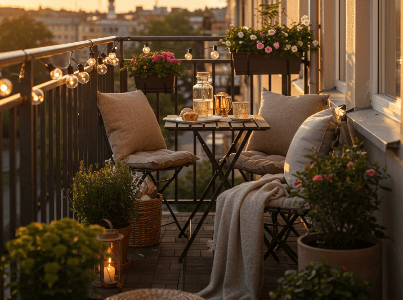
The data clearly shows that outdoor living spaces have transitioned from nice-to-have amenities to expected features in today’s housing market. Whether you’re thinking about a small balcony makeover or planning extensive landscaping, the numbers support strategic investments in outdoor living areas.
Market dynamics shift, but the fundamental appeal of well-designed outdoor spaces remains constant. Humans are drawn to nature, comfort, and beauty – outdoor living improvements deliver all three while adding measurable value to your property. That’s a combination worth considering for any homeowner looking to enhance their space.
The statistics paint a clear picture: outdoor living spaces deliver tangible returns on investment while enriching your daily experience at home. Whether you’re preparing to sell or simply want to love where you live, thoughtful improvements to your patio, deck, or garden represent some of the smartest home improvement choices you can make. The question isn’t whether outdoor living adds value – the data confirms it does. The question is which improvements align best with your goals, budget, and lifestyle.

Sanjai creates easy, affordable home decor ideas that anyone can try. Through simple tips and curated finds, he helps you style rooms you’ll love coming home to.