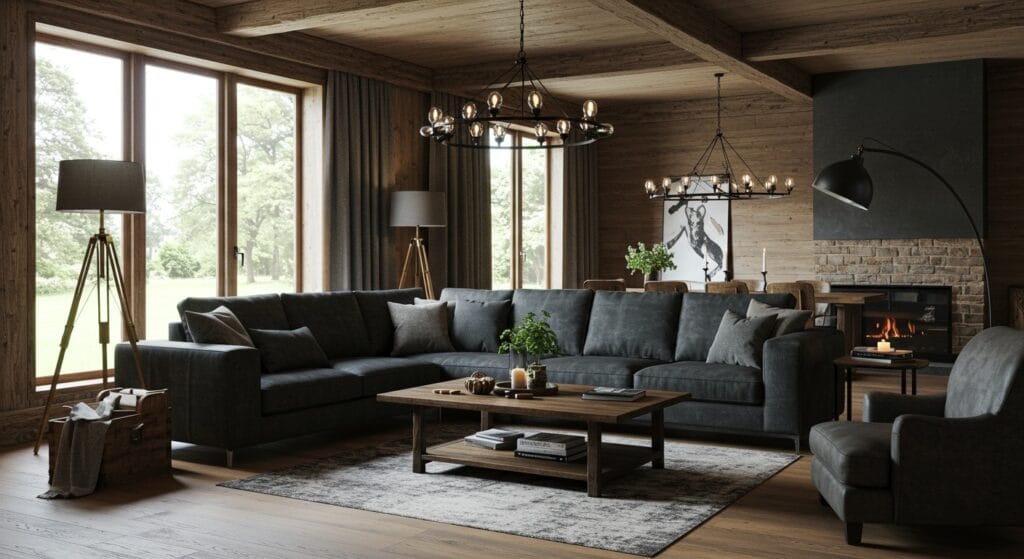
Creating a rustic modern living room might seem like combining oil and water, but trust me – when done right, this style fusion creates spaces that feel both sophisticated and soul-warming. I’ve been obsessing over this design trend lately, and honestly, it’s become my go-to recommendation for clients who can’t decide between sleek contemporary vibes and cozy cabin feels.
The beauty of rustic modern lies in its contradictions. You get the clean lines and minimalist principles of modern design, but with the texture, warmth, and character that only rustic elements can provide. It’s like having your design cake and eating it too – except this cake happens to look incredible on Pinterest.
What makes this style so compelling is how it speaks to our desire for both comfort and sophistication. We want spaces that look magazine-worthy but still feel like home. These 12 ideas will show you exactly how to achieve that perfect balance.
1. Mix Raw Wood with Sleek Metal Accents
The foundation of any great rustic modern space starts with understanding how opposite materials can complement each other. Raw, weathered wood brings that authentic rustic charm, while sleek metal adds the contemporary edge that keeps your space from feeling too cabin-like.

Think about incorporating a live-edge walnut dining table paired with powder-coated steel chairs. Or consider a reclaimed barn wood accent wall balanced by brushed stainless steel light fixtures. The contrast creates visual interest while maintaining that coveted rustic modern aesthetic.
I particularly love how metal picture frames can modernize rustic elements. Try framing black and white photography in thin black metal frames against a shiplap wall – it instantly elevates the entire look while keeping that cozy factor intact.
2. Choose a Neutral Color Palette with Strategic Pops
Rustic modern thrives on a foundation of neutral tones, but that doesn’t mean boring. Your base should consist of warm whites, soft grays, and natural wood tones, then add personality through carefully chosen accent colors.

Start with paint colors like Benjamin Moore’s “White Dove” or Sherwin Williams’ “Accessible Beige” for your walls. These create the perfect backdrop for both rustic wood elements and modern furnishings. Then introduce deeper tones through textiles and accessories – think charcoal throw pillows, forest green blankets, or rich navy accents.
The key is restraint. Choose one or two accent colors maximum, and use them sparingly throughout the room. This creates cohesion while preventing your space from feeling cluttered or confused about its style identity.
3. Incorporate Statement Lighting That Bridges Both Styles
Lighting is where you can really have fun with the rustic modern concept. The right fixtures can instantly transform your space and serve as conversation pieces that perfectly embody this design philosophy.

Consider a chandelier made from reclaimed wood and black metal, or industrial-style pendant lights with Edison bulbs over your seating area. These pieces feel authentically rustic while maintaining clean, modern proportions.
Floor lamps offer another opportunity to blend styles. Look for pieces that combine natural materials like wood or rope with sleek metal finishes. The layered lighting approach works particularly well in rustic modern spaces, creating depth and ambiance.
4. Select Modern Furniture with Natural Textures
The furniture selection process for rustic modern requires a delicate balance. You want pieces that feel contemporary in their silhouette but incorporate natural materials and textures that nod to the rustic element.

A streamlined sofa in natural linen paired with a chunky knit throw creates this balance beautifully. The sofa’s clean lines keep things modern, while the textile adds rustic texture and warmth. Similarly, consider a contemporary living room coffee table with a live-edge wood top and steel legs.
When selecting seating, opt for pieces with exposed wood frames or natural fabric upholstery. Avoid anything too ornate or traditional – the goal is sophisticated simplicity with organic touches.
5. Create Texture Through Natural Materials and Fabrics
Texture is absolutely crucial in rustic modern design because it’s what prevents your space from feeling sterile or cold. The interplay between smooth, polished surfaces and rough, natural textures creates the visual and tactile interest that makes these rooms so appealing.

Layer different textures throughout your room – a jute rug underfoot, linen curtains at the windows, a wool throw over your sofa, and perhaps a rough-hewn wood side table. Each material should feel authentic and purposeful, not decorative for decoration’s sake.
Don’t forget about wall textures either. Shiplap, exposed brick, or even a subtle grasscloth wallpaper can add that rustic element while keeping the overall look sophisticated and current.
6. Use Exposed Architectural Elements as Design Features
If you’re fortunate enough to have exposed beams, brick walls, or other architectural elements in your home, these can become the stars of your rustic modern design. If not, consider adding some strategically.

Exposed ceiling beams work particularly well in this style. You can leave them natural for maximum rustic impact, or paint them in a soft gray or white to better integrate with modern elements. The same principle applies to brick walls – sometimes a whitewash treatment can help them feel more contemporary while maintaining their rustic character.
These architectural features provide the authentic backdrop that makes your modern furnishings feel intentionally chosen rather than randomly placed. They’re the foundation that gives your living room furniture arrangement context and purpose.
7. Incorporate Vintage and Antique Pieces Selectively
The key to successfully incorporating vintage elements in a rustic modern space is selectivity and restraint. One or two carefully chosen antique pieces can add character and history without overwhelming your contemporary aesthetic.

Consider a vintage leather armchair with clean lines, an antique wooden trunk used as a coffee table, or a collection of old books displayed on modern floating shelves. These pieces should feel curated, not collected randomly over time.
The goal is to create stories within your space – pieces that spark conversation and add personality while maintaining the overall sophisticated feel of your rustic modern aesthetic.
8. Balance Clean Lines with Organic Shapes
Modern design loves clean lines and geometric shapes, while rustic design embraces the irregular beauty of nature. In rustic modern spaces, you need both elements working in harmony.

Pair a streamlined rectangular sofa with round side tables or organic-shaped pottery. Use geometric artwork alongside natural elements like driftwood or river rocks. The contrast creates visual rhythm and prevents your space from feeling too rigid or too casual.
This balance extends to your coffee table styling as well. Mix angular books with round objects, straight-lined trays with curved vessels, creating a composition that feels both intentional and natural.
9. Create Focal Points with Modern Art and Natural Elements
Art selection in a rustic modern living room requires thoughtful curation. You want pieces that complement both the contemporary and rustic elements without favoring one style over the other.

Abstract art in neutral tones works beautifully, as does black and white photography in simple frames. Nature photography can bridge both styles perfectly – think dramatic landscapes or close-up textures captured with a modern eye.
Consider creating a gallery wall that mixes different mediums – perhaps a combination of framed prints, a small floating shelf with natural objects, and one larger statement piece. The key is maintaining visual balance while telling a cohesive story about your style preferences.
10. Layer Rugs and Textiles for Warmth and Depth
Textiles are your secret weapon for making a rustic modern space feel lived-in and inviting. The right combination of rugs, throws, and pillows can instantly warm up even the most contemporary furniture pieces.

Start with a large neutral base rug – jute or a flat-weave in natural tones works well. Then layer a smaller rug with more pattern or texture on top. This technique adds visual interest while maintaining the sophisticated palette that rustic modern design requires.
For small living room tips, this layering approach can help define different areas within your space while adding the warmth and texture that makes the room feel larger and more inviting.
11. Maximize Natural Light with Minimal Window Treatments
Natural light is essential in rustic modern design because it highlights the beautiful contrast between materials and keeps the space feeling fresh and contemporary. Your window treatment choices can make or break this aesthetic.

Choose simple linen curtains in white or natural tones, hung higher and wider than your actual windows to create the illusion of larger openings. Avoid heavy drapes or overly decorative treatments that compete with your carefully curated aesthetic.
If privacy is a concern, consider cellular shades in neutral tones that can disappear completely when raised. The goal is to let your beautiful interior elements be the stars, not your window treatments.
12. Add Plants and Natural Elements as Living Accessories
Nothing bridges the gap between rustic and modern quite like living plants. They bring organic shapes and natural color into contemporary spaces while adding the life and freshness that makes rustic modern feel authentic rather than styled.

Choose plants with interesting architectural qualities – fiddle leaf figs, snake plants, or olive trees work particularly well. Display them in simple ceramic or concrete planters that complement your neutral color scheme.
Consider creating a vertical garden wall as a living art piece, or arrange smaller plants on floating shelves mixed with books and decorative objects. The key is making the plants feel intentional rather than afterthoughts.
Making It All Work Together
The secret to successful rustic modern design lies in restraint and intentionality. Every piece in your room should serve the overall aesthetic while bringing something unique to the conversation. It’s not about having equal parts rustic and modern – it’s about creating a harmonious blend where both elements enhance each other.
Start with your largest pieces – your sofa, coffee table, and any architectural elements – then build around them with carefully chosen accents and accessories. Remember that this style works particularly well in open concept living room spaces where the clean lines can flow seamlessly while rustic elements add warmth and definition.
The most successful rustic modern living rooms feel collected over time rather than decorated all at once. Don’t rush the process – let your space evolve as you find pieces that speak to both sides of this beautiful design philosophy.
What draws you most to rustic modern style? Sometimes I think it’s our desire to honor both where we’ve been and where we’re going – celebrating craftsmanship and history while embracing the clean simplicity of contemporary life. Whatever the reason, these 12 ideas should give you the foundation to create a space that feels authentically you.

Sanjai creates easy, affordable home decor ideas that anyone can try. Through simple tips and curated finds, he helps you style rooms you’ll love coming home to.