You know that feeling when you walk into a hotel kitchen or a high-end showroom and everything just feels… effortless? That’s the magic of sleek handleless kitchen cabinets. No visible hardware, no fussy knobs breaking up the lines. Just smooth, uninterrupted surfaces that make your kitchen look twice as expensive as it actually is.
I’ll be honest – when I first considered ditching cabinet handles, I wondered if it was just a trend that would look dated in five years. But after seeing how these designs transform even modest kitchens into sophisticated spaces, I’m convinced this is one of those ideas that actually makes sense. The absence of handles isn’t just about aesthetics. It’s about creating a kitchen that feels open, clean, and genuinely easier to navigate.
Whether you’re planning a full renovation or just dreaming about what’s possible, these handleless cabinet ideas will show you exactly how to achieve that coveted minimalist look. Some are surprisingly budget-friendly, others require a bit more investment. But all of them prove that sometimes, less really is more.
1. Push-to-Open Matte Black Cabinets
There’s something undeniably sophisticated about matte black cabinetry, especially when you remove all the hardware. Push-to-open mechanisms let you tap the cabinet door and it springs open – no pulling, no handles to clean around, just pure functionality wrapped in style.
The beauty of this approach is how it handles fingerprints better than you’d expect. Matte finishes are far more forgiving than glossy ones, and the dark color naturally camouflages daily wear. I’ve seen kitchens where black handleless cabinets are paired with brass or gold fixtures elsewhere in the room, and the contrast is stunning.
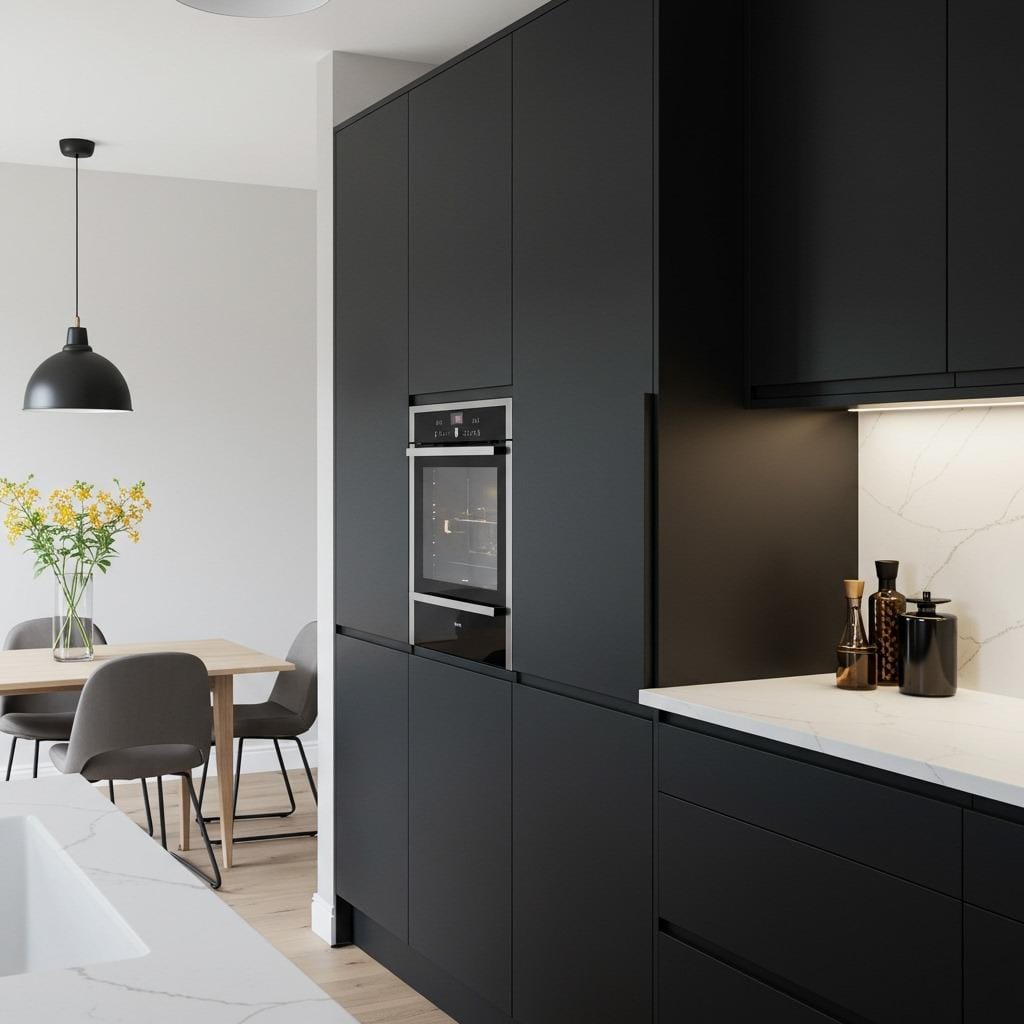
This works especially well if you’re going for a modern luxury kitchen vibe but want to keep things grounded. The absence of shiny hardware prevents the space from feeling too formal. You get elegance without the stuffiness.
2. Integrated Handle Channels in Natural Wood
Not ready to commit fully to a handleless design but want that streamlined look? Integrated handle channels give you the best of both worlds. These are horizontal grooves cut directly into the cabinet door or drawer front, typically along the top edge.
Wood cabinets with this treatment feel warm and organic rather than cold and clinical. The grain pattern continues through the recessed channel, so it doesn’t break up the visual flow the way a metal handle would. Oak, walnut, and even lighter woods like ash all work beautifully with this technique.
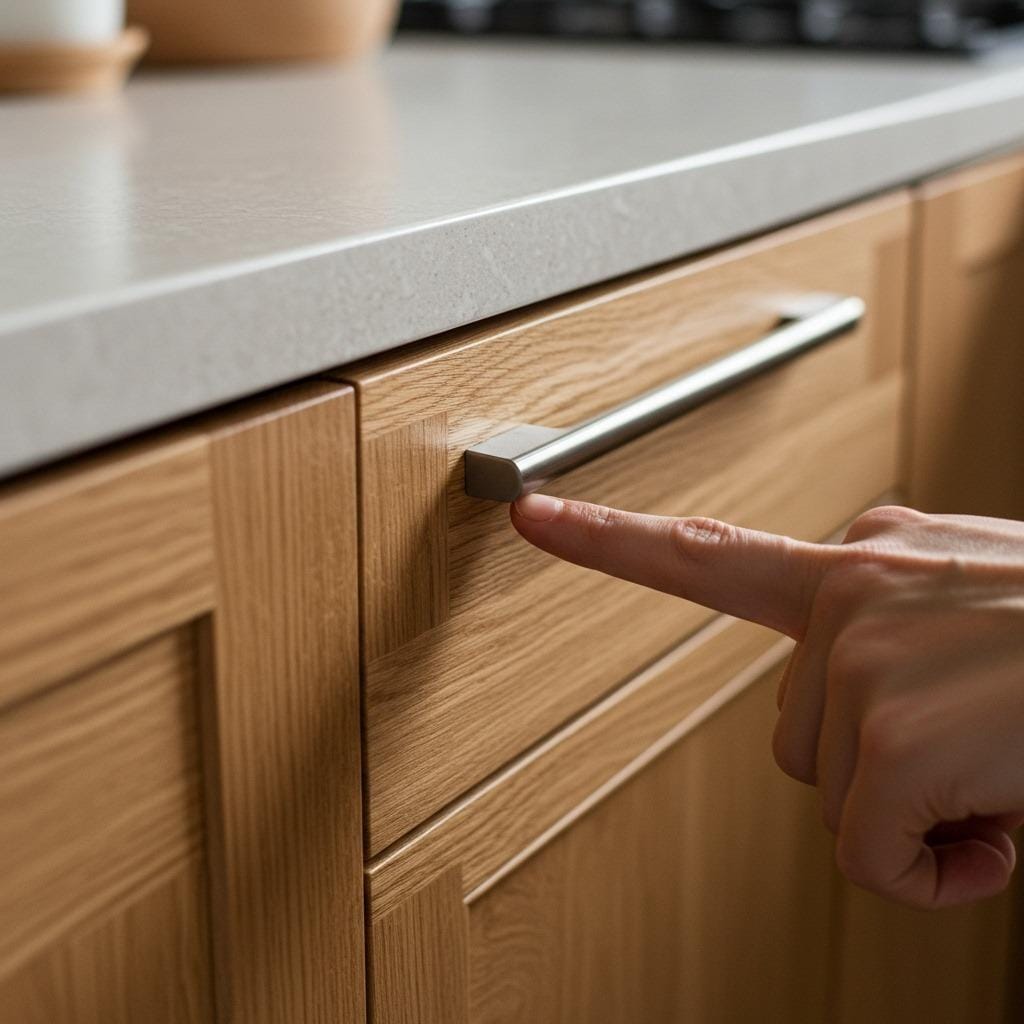
What I appreciate most about channels is how intuitive they are. Unlike some push mechanisms that can be finicky, you always know exactly where to grab. They’re also easier to retrofit into existing cabinets if you’re not doing a complete overhaul. Consider pairing these with simple kitchen styling elements to maintain that uncluttered aesthetic throughout the space.
3. High-Gloss White Lacquer with Touch Latches
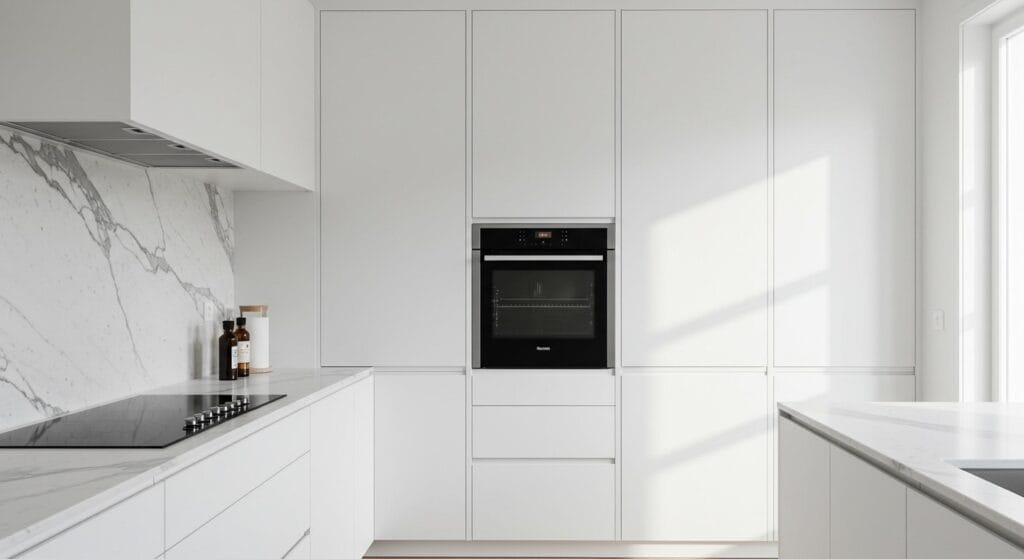
If you want your kitchen to feel like it belongs in a contemporary design magazine, high-gloss white cabinets with touch latches might be your answer. The reflective surface bounces light around the room, making even compact kitchens feel more spacious and airy.
Touch latches work similarly to push-to-open systems, but they’re typically more sensitive and require just a gentle press. The technology has improved dramatically over the past few years, so the reliability issues that plagued earlier versions are mostly resolved now.
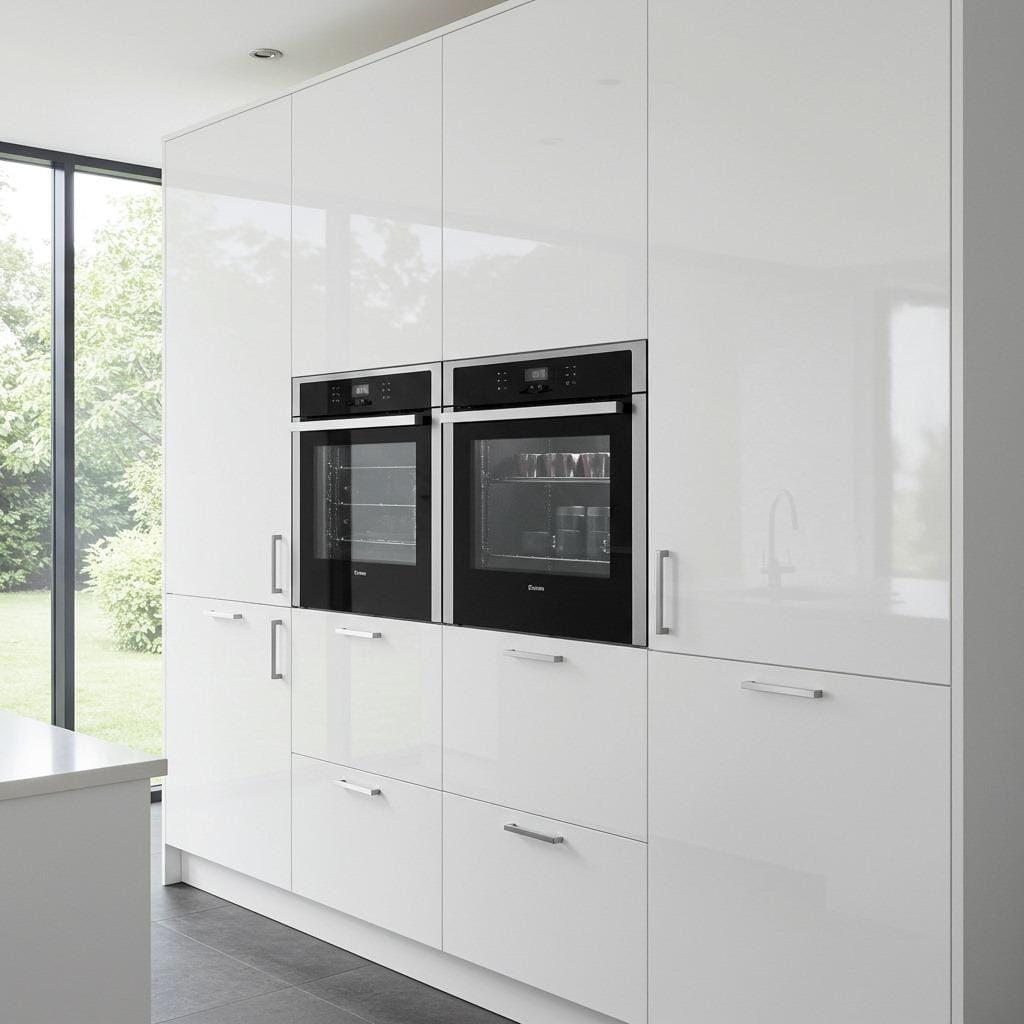
The trick with glossy surfaces is keeping them clean – they will show fingerprints and smudges more than matte options. But honestly? A quick wipe with a microfiber cloth takes seconds, and the visual payoff is worth it. This style pairs wonderfully with minimalist kitchen decor principles, where every element serves a purpose.
4. Two-Tone Cabinets with Top Channel Grips
Two-tone kitchens aren’t going anywhere, and they look particularly striking when executed without visible hardware. The classic combo is dark lower cabinets with light uppers, but you can flip that or go with more adventurous pairings.
Using channel grips on both cabinet colors creates consistency while still allowing each tone to make its own statement. The recessed channels cast subtle shadows that add depth without cluttering the visual field. I’ve noticed this approach works especially well in open-concept spaces where the kitchen flows into the living area.
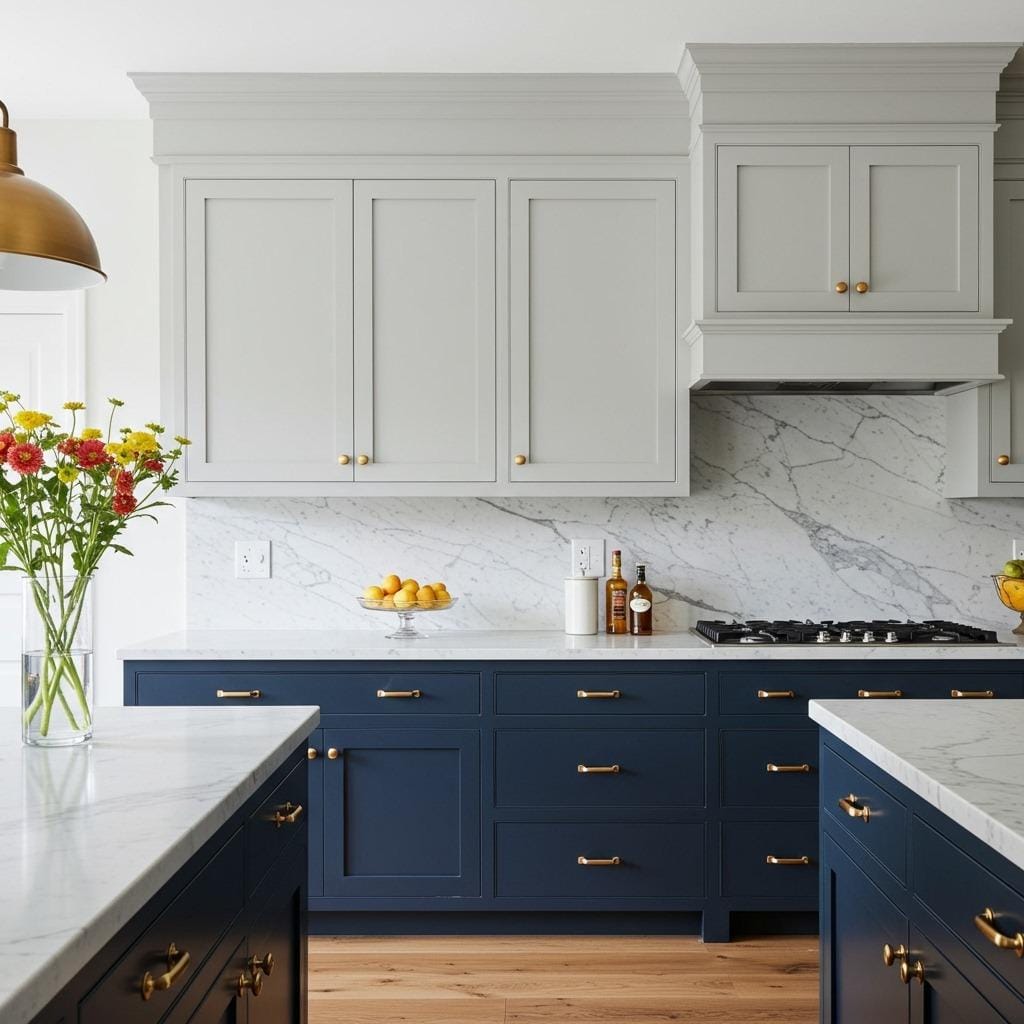
The beauty of two-tone designs is how they can define different functional zones within your kitchen. Darker colors on base cabinets hide wear better in high-traffic areas, while lighter uppers keep the space from feeling heavy. Architectural Digest, says two-tone kitchen cabinets remain one of the most requested design features in modern renovations.
5. Seamless Floor-to-Ceiling Storage Walls
Want to make a dramatic statement? Take your handleless cabinets all the way from floor to ceiling, creating what essentially looks like a sleek storage wall. This approach is incredibly popular in European kitchen design and it’s finally catching on elsewhere.
The absence of handles on tall cabinet runs emphasizes the vertical lines and makes standard ceiling heights feel more generous. You can mix cabinet sizes – some standard depth, some shallow for pantry items – and the handleless fronts unify everything into one cohesive surface.
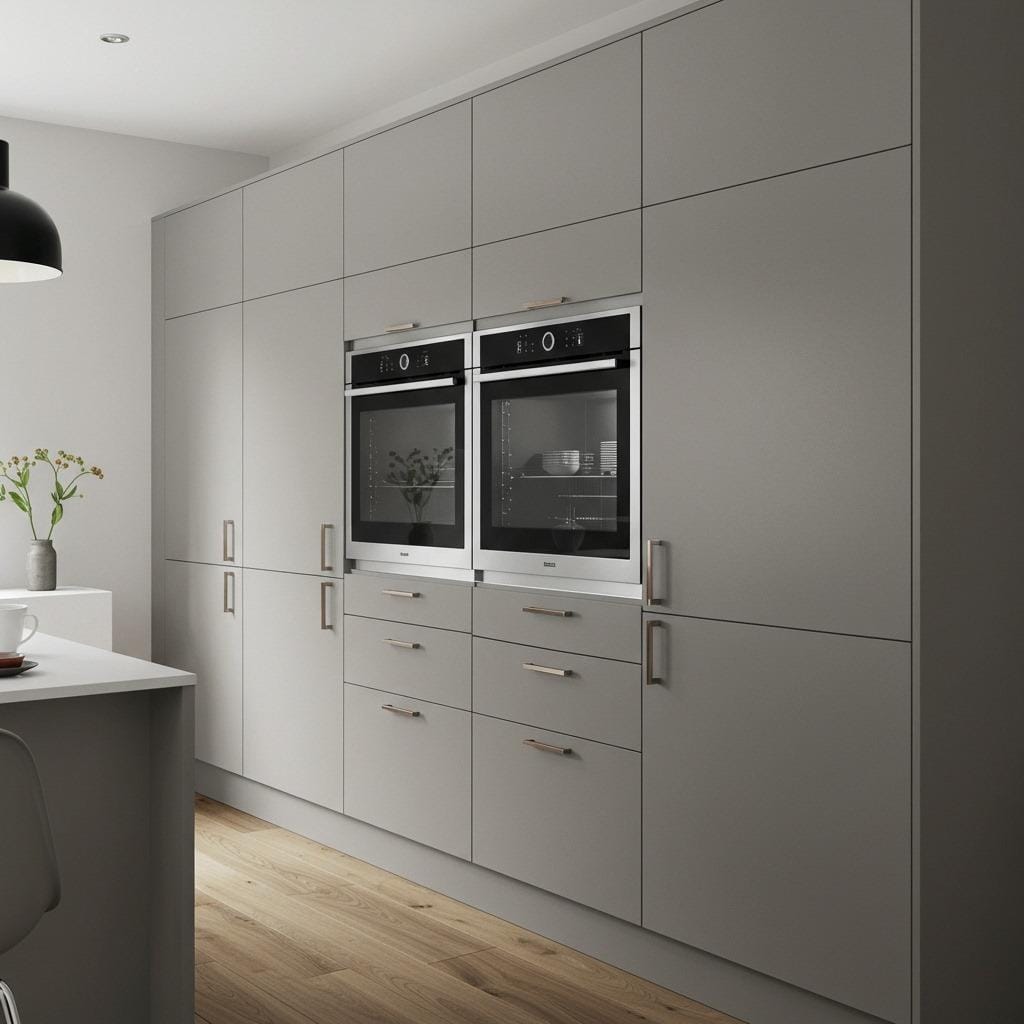
I find this particularly clever for small kitchen cabinet organization because it maximizes every inch of vertical space without visual chaos. The trick is organizing what goes where carefully, since you don’t have the visual cues of different handle styles to remind you what’s inside.
6. Textured Concrete-Effect Cabinets
Who says modern kitchen cabinets have to be smooth? Textured finishes like concrete-effect or stone-look laminates bring tactile interest to handleless designs. The rough texture actually makes the absence of hardware feel intentional rather than stark.
These finishes hide fingerprints remarkably well and bring an industrial-chic element that’s softer than full concrete but more interesting than plain paint. Push latches work perfectly with these materials, and the slight texture gives you something to grip if you prefer the feel of a recessed channel.
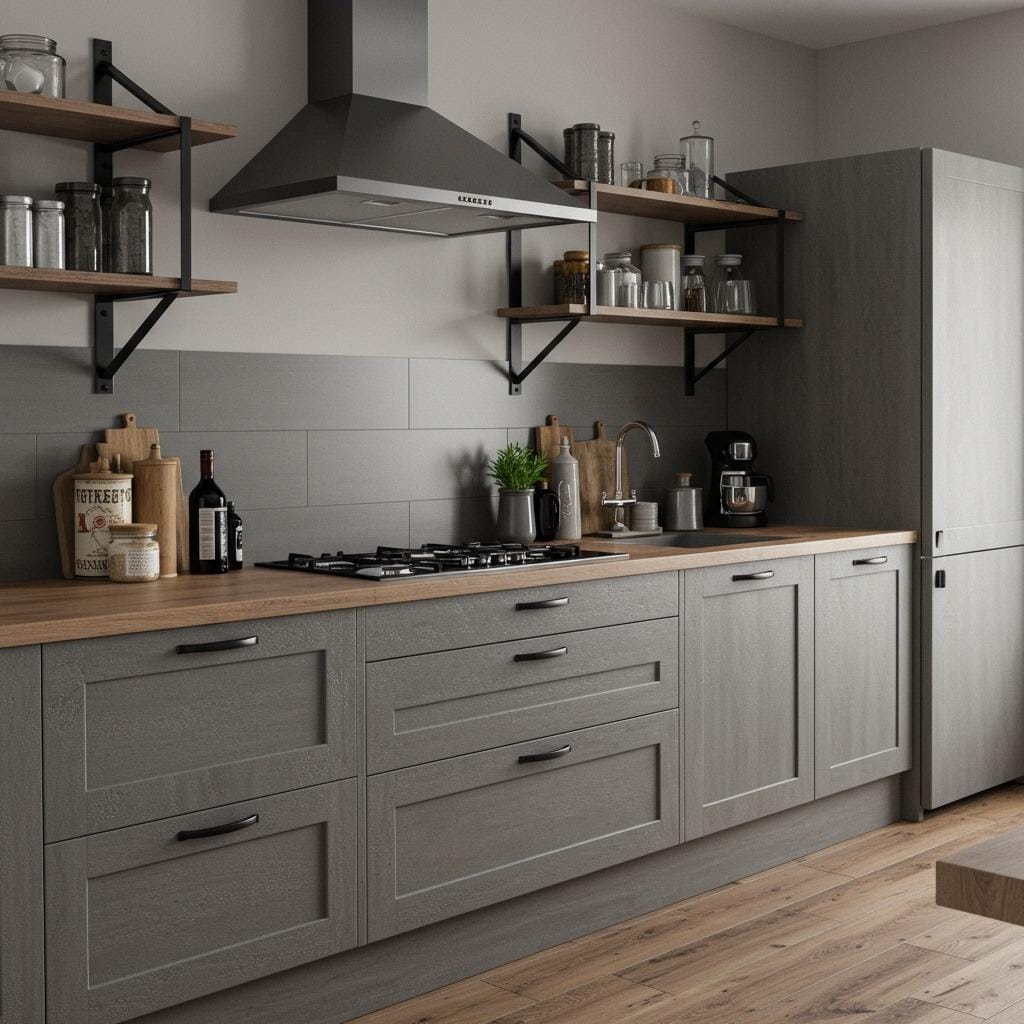
Pair concrete-effect cabinets with natural wood elements to warm things up, or lean into the industrial aesthetic with metal accents and exposed bulb lighting. This style fits beautifully into contemporary living spaces where you’re mixing materials and textures rather than sticking to one style.
7. J-Pull Profile Lower Cabinets
J-pull profiles are technically a form of integrated handle, but they’re worth highlighting separately because they offer such a distinct look. Instead of a horizontal channel on top, the cabinet or drawer front extends slightly at the bottom, creating an overhang you can hook your fingers under.
This works particularly well on lower cabinets and drawers where a top channel would be awkward to reach. The profile creates a subtle shadow line that adds architectural interest without breaking up the smooth facade. It’s especially popular in Scandinavian kitchen decor for its blend of function and simplicity.
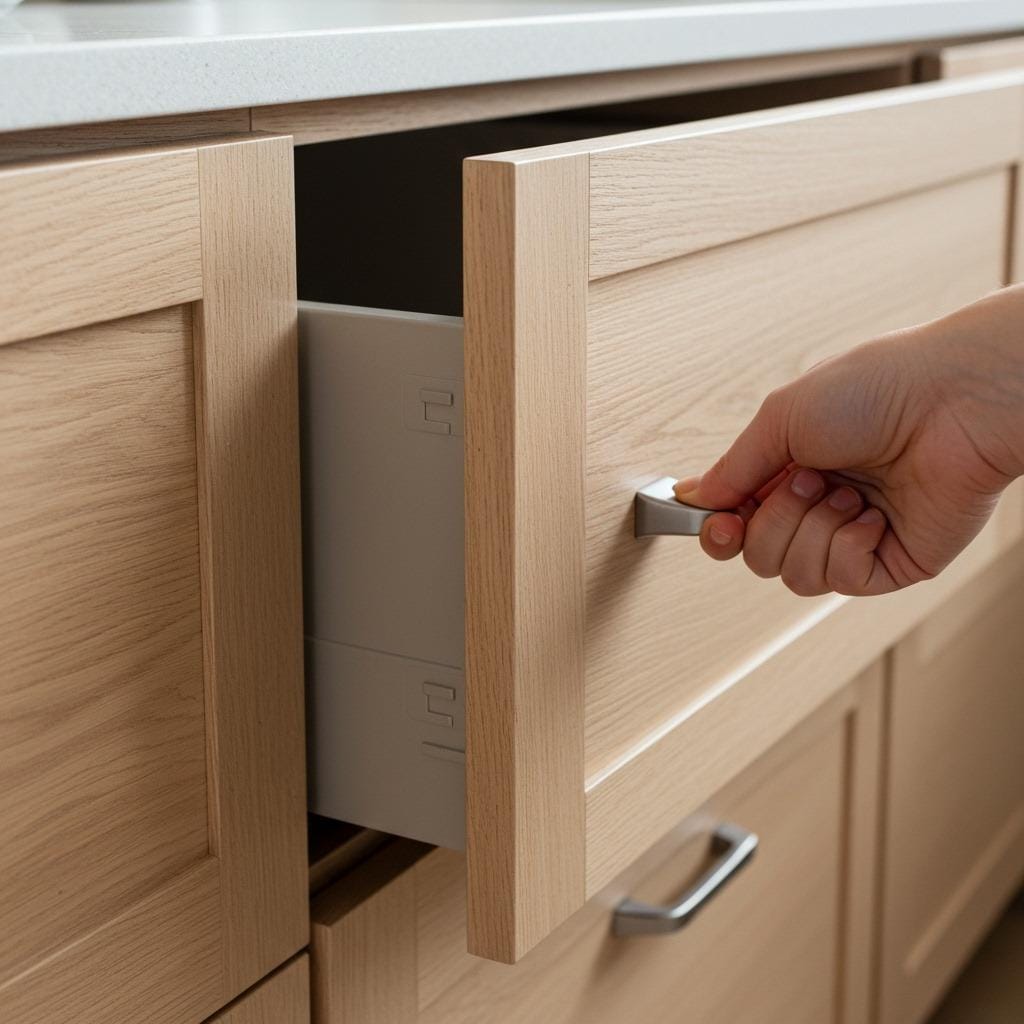
The nice thing about J-pulls is that they work with almost any material – wood, laminate, painted finishes, even metal. They’re also easier on the budget than some push-open mechanisms since they’re simply part of the door construction rather than requiring additional hardware.
8. Color-Blocked Island with Hidden Handles
Your kitchen island is a perfect place to experiment with handleless design, especially if you’re not ready to commit to it throughout the entire space. A color-blocked island in a bold hue – deep green, rich navy, even a warm terracotta – becomes a focal point that doesn’t need hardware to make its statement.
Hidden handles or touch latches on an island feel particularly intuitive since you’re naturally approaching it from multiple angles throughout the day. The smooth surfaces also make it easier to slide bar stools in and out without catching on protruding hardware.
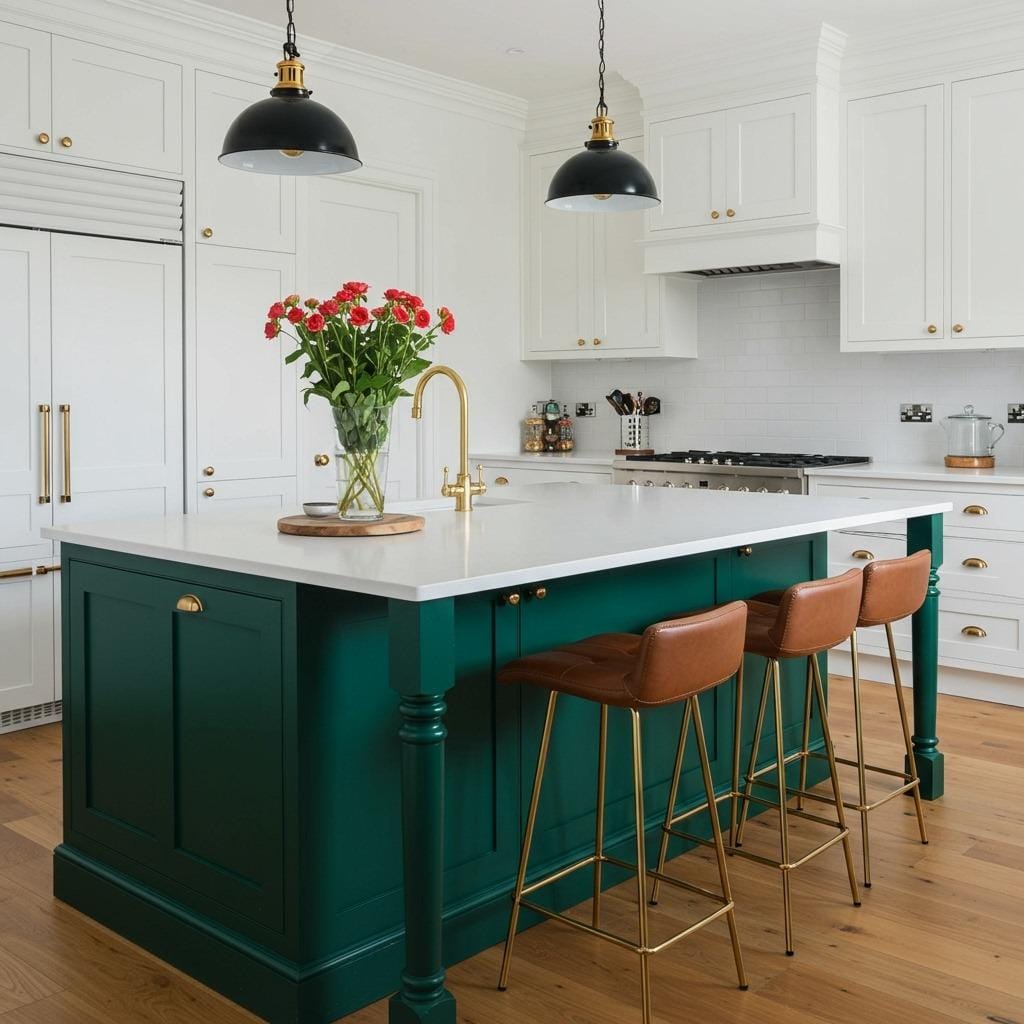
I’ve noticed that islands with handleless design tend to feel more furniture-like and less utilitarian. That makes sense when you think about it – fine furniture rarely has visible hardware. If you’re exploring kitchen island ideas, consider how the absence of handles might allow the color and material to shine without competing elements.
9. Aluminum Frame Glass-Front Uppers
Not all cabinets need to be completely solid and opaque. Aluminum-framed glass-front upper cabinets with integrated handles maintain the sleek aesthetic while adding lightness and the opportunity to display beautiful dishware or glassware.
The aluminum frames can include a thin horizontal rail that doubles as a handle, or the glass can be set in a frame with a small lip at the bottom edge. Either way, you get the visual interest of displayed items without the visual clutter of traditional cabinet knobs or pulls.
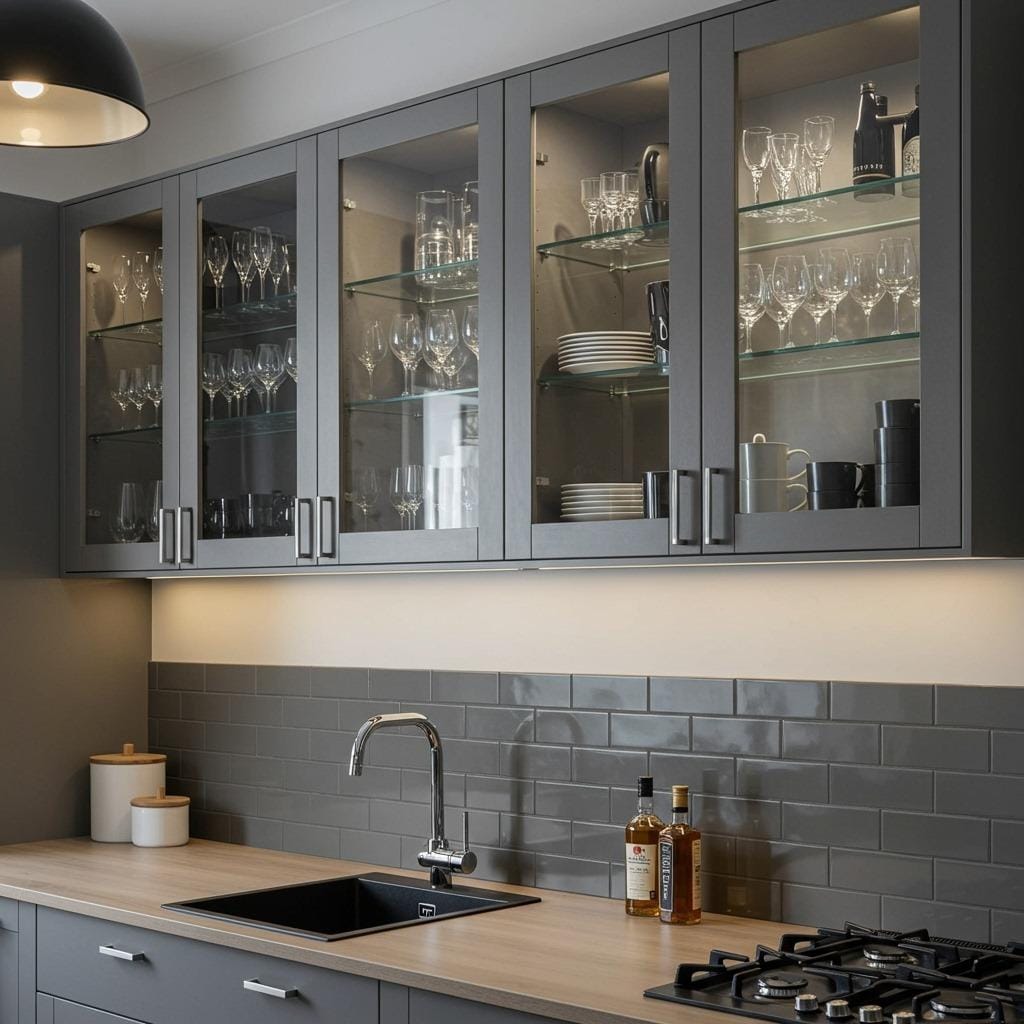
This approach works beautifully in black and white kitchen ideas where the glass breaks up what could otherwise feel too stark. The key is being thoughtful about what you display inside – these cabinets reward careful curation.
10. Mixed Mechanism Approach for Accessibility
Here’s something that doesn’t get discussed enough: handleless cabinets don’t have to be all-or-nothing. A mixed approach that combines push-to-open on upper cabinets with recessed channels on lower ones can actually improve accessibility while maintaining that streamlined look.
Push mechanisms can be tricky for people with arthritis or limited hand strength, but channels provide something solid to grip. Similarly, toe-kick drawers at the base of your cabinets can use a tap-to-open mechanism since you’re activating them with your foot anyway.
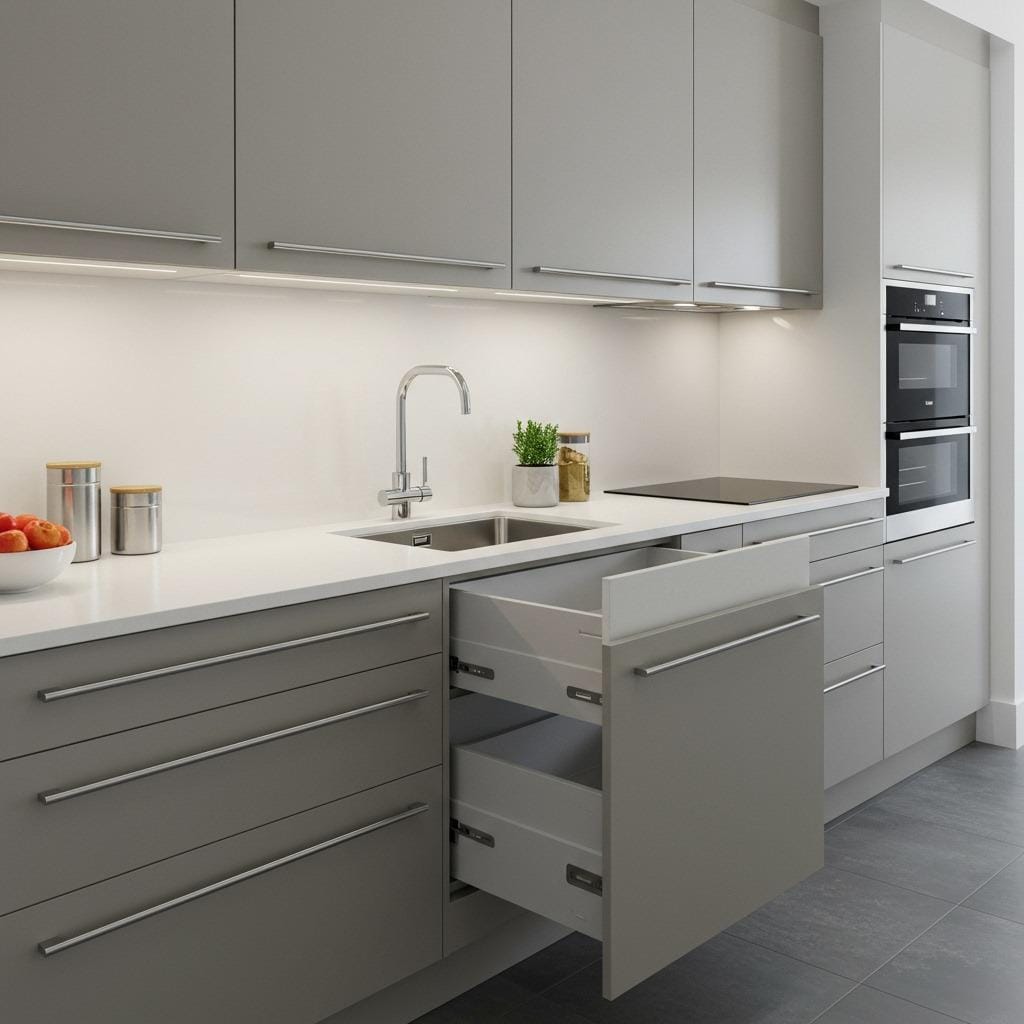
The goal is creating a kitchen that works for everyone who uses it, not just achieving a specific aesthetic. Thoughtful storage ideas for small homes often incorporate this kind of flexibility, recognizing that different tasks require different approaches.
Making the Switch: What to Consider
If you’re seriously contemplating sleek handleless kitchen cabinets for your own space, there are a few practical considerations beyond just the look. Installation quality matters more with handleless designs – push mechanisms need to be properly aligned, and channels need to be precisely cut to function well and look professional.
Budget is another factor, though it might not be as expensive as you think. While some push-to-open hardware can cost more than traditional handles, integrated channels are often comparable in price since they’re part of the door construction. You’re essentially trading one expense for another rather than adding cost.
Think about your daily habits too. Do you tend to have wet or greasy hands while cooking? Push-to-open mechanisms require a clean touch point, though channels give you more flexibility. How much storage do you actually use? Handleless cabinets work best when you’re not constantly opening and closing every door – another good reason to declutter and simplify what you keep in your kitchen.
The payoff, though, is a kitchen that photographs beautifully, feels more spacious, and has a sophisticated simplicity that never goes out of style. Whether you choose matte black drama, natural wood warmth, or glossy white brightness, the absence of hardware lets the bigger design decisions shine.
Sometimes the most powerful design choice is knowing what to leave out. Sleek handleless kitchen cabinets prove that point every single day.

Sanjai creates easy, affordable home decor ideas that anyone can try. Through simple tips and curated finds, he helps you style rooms you’ll love coming home to.