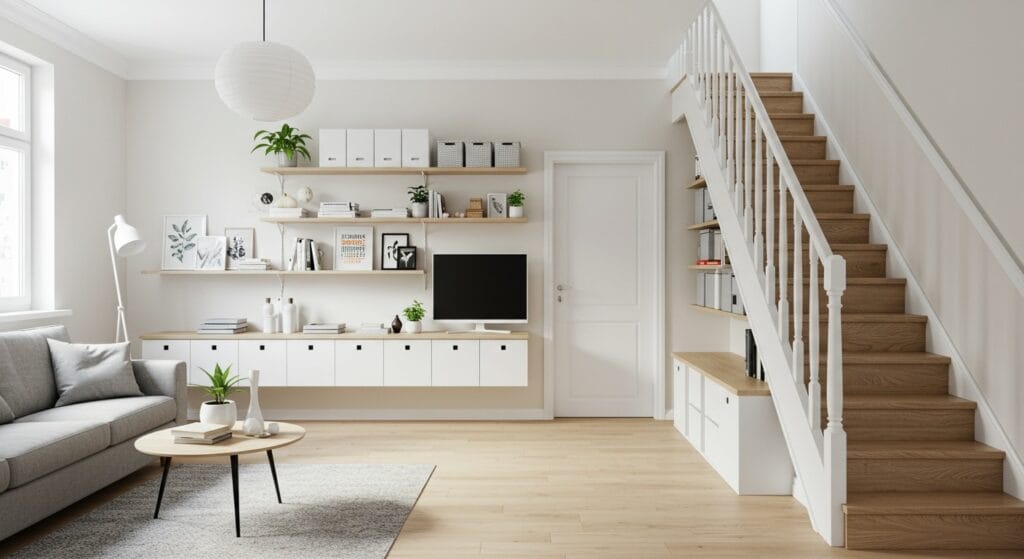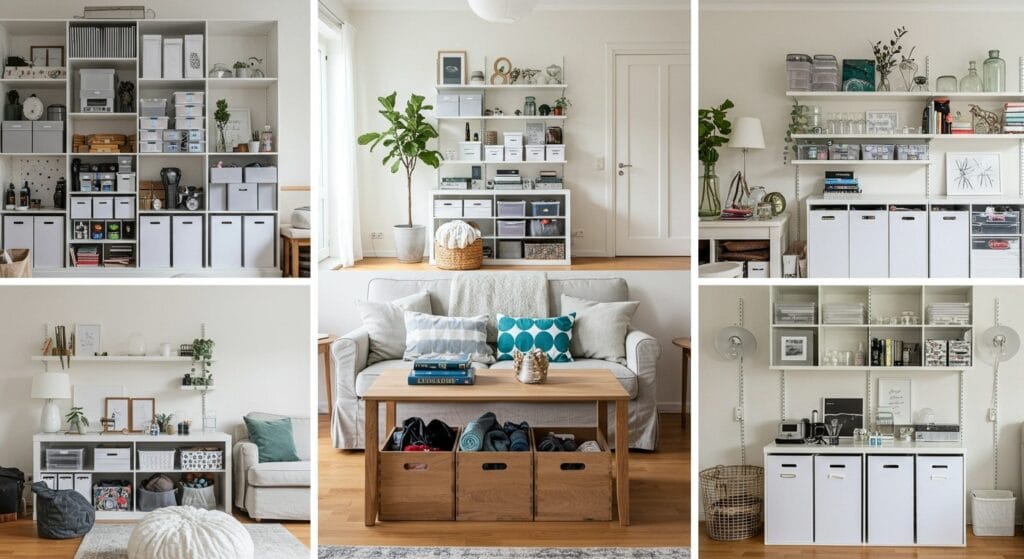

Staring at your overstuffed closet wondering how people with walk-in wardrobes manage to fit everything so perfectly? You’re definitely not alone in this struggle. Small closets can feel like impossible puzzles, but the right shelving strategy can literally double your usable space.
I’ve been helping homeowners tackle storage and organization challenges for years, and small closet shelving remains one of the most requested solutions. The truth is, most closets waste at least 50% of their vertical space simply because we stick with the basic hanging rod setup that came with the house.
What if I told you that with a weekend and some smart planning, you could transform your cramped closet into a perfectly organized storage powerhouse? These 16 shelving ideas will show you exactly how to make every single inch count.
1. Double-Height Hanging with Shelf Dividers

Installing a shelf between two hanging rods creates instant double storage. Most closets have way more vertical space than we use, especially if you’re only hanging full-length items occasionally.
This setup works incredibly well for separating work clothes from casual wear. I like to use the top rod for seasonal items and the bottom for daily essentials.
The key is measuring carefully – you want about 40 inches for long items and 38 inches for shorter pieces. Leave yourself some breathing room because cramped clothes wrinkle faster.
2. Corner Floating Shelves for Dead Space

Those awkward corner spaces in closets are storage goldmines waiting to happen. Corner floating shelves fit perfectly into these areas without taking up valuable hanging space.
I’ve found that corner shelves work best for lightweight items – think folded t-shirts, pajamas, or accessories. They’re also perfect for displaying your favorite handbags or shoes.
The installation is surprisingly straightforward with the right brackets. Just make sure to hit at least one wall stud for proper support, especially if you’re planning to store heavier items.
3. Adjustable Wire Shelving Systems

Wire shelving systems are the Swiss Army knives of small space storage. You can adjust the height as your storage needs change, and the open design doesn’t make small spaces feel claustrophobic.
What I love about wire systems is how they handle air circulation. Your clothes stay fresher because air can move freely around everything, which is especially important in tight spaces.
Most systems come with additional accessories like hanging baskets and shoe racks. Start with the basic setup and add components as you figure out what works best for your specific needs.
4. Over-Door Shoe Shelving Units

The back of your closet door is prime real estate that most people completely ignore. Over-door shoe shelves can hold 12-20 pairs depending on the style you choose.
These units work for more than just shoes. I use the clear pockets for belts, scarves, and small accessories. Some compartments are perfect for storing socks or underwear too.
Installation is usually tool-free, which makes this one of the easiest storage hacks to implement. Just make sure your door can support the weight when fully loaded.
5. Built-In Cubby Storage Shelves

Built-in cubbies maximize every inch of wall space while creating a custom, high-end look. Each compartment can be sized for specific items – larger for folded jeans, smaller for accessories.
This option requires more planning and possibly professional help, but the results are worth it. You can design the layout to match your exact wardrobe needs.
Consider mixing open cubbies with some that have doors or baskets. This gives you flexibility for items you want visible versus things you prefer hidden.
6. Pull-Out Drawer Shelves

Pull-out drawer shelves bring everything to you instead of making you dig through deep shelves. This is particularly helpful for small bedroom storage where you need quick access to daily items.
The sliding mechanism means you can utilize the full depth of your closet without losing items in the back. No more forgotten sweaters hiding behind everything else.
Installation varies depending on your closet setup, but most systems work with standard shelf brackets. Measure your closet depth carefully to ensure smooth operation.
7. Stackable Shelf Risers

Shelf risers are the quickest way to double your existing shelf space. These simple platforms create two levels where you previously had one.
I recommend starting with one or two risers to test the concept before investing in a full set. Different heights work better for different items – taller for boots, shorter for folded shirts.
The beauty of stackable systems is their flexibility. Rearrange them seasonally or as your wardrobe changes. They’re also budget-friendly compared to complete closet overhauls.
8. Slanted Shoe Shelf Display
Slanted shelves let you see every pair of shoes at a glance while using vertical space efficiently. No more digging through shoe piles or forgetting what you own.
This setup works particularly well for frequently worn shoes. You can quickly grab what you need without disturbing other pairs. It also encourages you to put shoes back properly.
The angled design typically accommodates different shoe heights automatically. Heels, flats, and sneakers all fit without requiring separate storage solutions.
9. Hanging Shelf Organizers

Hanging organizers add instant shelving without any installation. They hook right onto your existing closet rod and provide multiple compartments for folded items.
These work especially well for seasonal storage rotation. Keep current season items at eye level and rotate less-used pieces to higher or lower compartments.
Choose sturdy fabric or canvas options that won’t sag under weight. Some styles include side pockets for smaller accessories, maximizing the storage potential.
10. Under-Shelf Hanging Baskets

Under-shelf baskets utilize the often-wasted space beneath your existing shelves. They slide onto shelf edges and create instant storage for smaller items.
This solution works perfectly for items you use frequently but don’t want cluttering your main shelf space. Think belts, ties, or small accessories that tend to get lost.
The wire construction keeps things visible while maintaining airflow. Some styles include dividers for even better organization of tiny items.
11. Modular Cube Storage Systems

Modular cube systems let you build exactly the storage configuration you need. Start small and add cubes as your collection grows or changes.
The beauty of these systems lies in their adaptability. Rearrange the layout seasonally or when you move. Mix open storage with closed bins based on what you want visible.
Many cube systems work with standard fabric bins or baskets. This gives you the option to hide less attractive items while keeping favorites on display.
12. Vertical Divider Shelving

Vertical dividers transform wide shelves into organized sections for different clothing categories. No more toppling stacks of folded items when you remove something from the middle.
This approach works incredibly well for items like t-shirts, sweaters, or jeans. Each category gets its own slot, making it easy to maintain organization long-term.
You can purchase adjustable dividers or create your own using thin boards or heavy cardboard. The key is making sections just wide enough for each category.
13. Ceiling-Height Tower Shelving

Floor-to-ceiling towers make use of every inch of vertical space, often the most underutilized area in small closets. These narrow units fit into corners or alongside hanging areas.
The tower design is perfect for seasonal storage. Keep frequently used items at comfortable heights and seasonal pieces up high or down low.
Safety is important with tall units – make sure to secure them to the wall, especially if you’re storing heavier items on upper shelves.
14. Sliding Shelf Rails

Sliding rails allow multiple shelves to occupy the same footprint while giving you full access to each level. Pull out what you need without disturbing other shelves.
This system works particularly well for small closet organization because it maximizes depth utilization. Deep closets often have items lost in the back – sliding rails solve this problem.
Installation requires some planning and possibly professional help, but the convenience and space savings make it worthwhile for serious organization enthusiasts.
15. Multi-Level Hanging Rod System

Multiple hanging rods at different heights accommodate various garment lengths while leaving room for shelving between levels. This creates a layered storage approach that maximizes every inch.
The secret is planning your rod heights based on your actual wardrobe. Measure your longest items and work backward to determine optimal spacing for shelves.
Consider your daily routine when planning rod placement. Put frequently used items at the most convenient heights and seasonal pieces higher or lower.
16. Custom Corner Shelving Units

Custom corner units make the most of awkward spaces that standard shelving can’t accommodate. These can be built to your exact specifications and storage needs.
While this option requires more investment, the space efficiency is unmatched. Every square inch serves a purpose, and the custom fit looks professionally designed.
Consider incorporating different shelf depths within the same unit. Shallow shelves for accessories and deeper ones for folded clothes or shoes.
Making Your Small Closet Work Harder
The National Association of Home Builders reports that the average bedroom closet is just 24 square feet, yet most homeowners only use about 60% of available space effectively. With smart shelving choices, you can easily access that unused 40% and truly double your storage capacity.
Remember that the best shelving solution depends on your specific wardrobe and daily habits. Start with one or two ideas that address your biggest pain points, then build from there. Your perfectly organized closet is just a weekend project away.
What challenges are you facing with your current closet setup? Sometimes the simplest shelving addition makes the biggest difference in how your morning routine flows.

Sanjai creates easy, affordable home decor ideas that anyone can try. Through simple tips and curated finds, he helps you style rooms you’ll love coming home to.