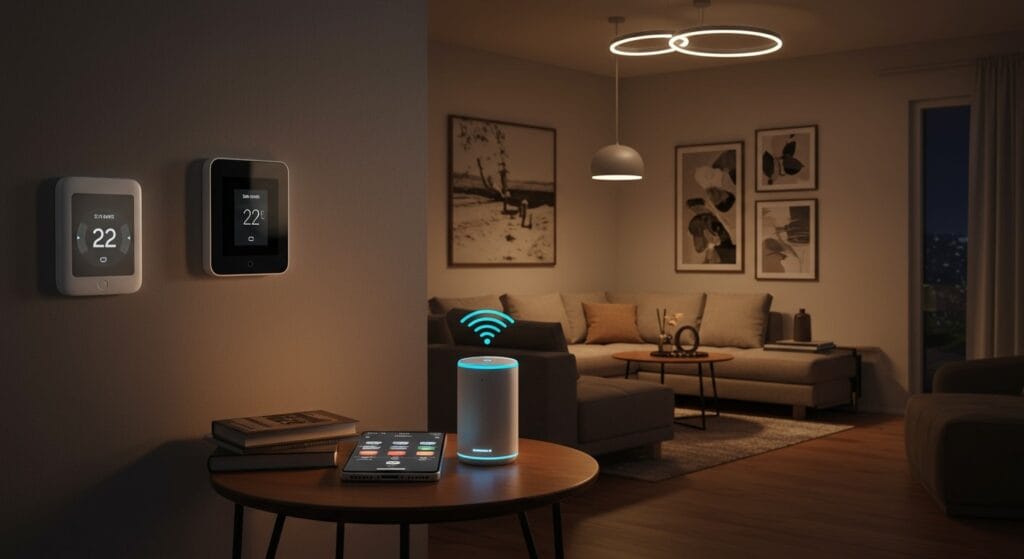
Your morning alarm goes off, and before you even open your eyes, your home is already preparing for your day. The blinds slowly open, the coffee maker starts brewing, and your favorite playlist begins softly in the background. This isn’t science fiction – it’s the reality of smart home automation in 2025.
Smart home technology has evolved from a luxury for tech enthusiasts to an accessible way to make daily life more comfortable, secure, and energy-efficient. Whether you’re looking to dip your toes into home improvement ideas or ready to transform your entire living space, these automation ideas will help you create a more connected and convenient home.

The best part? You don’t need to be a tech wizard to get started. Many of these solutions are surprisingly simple to install and use, making connected home devices more approachable than ever before.
Smart Lighting Solutions That Set the Perfect Mood

1. Automated Color-Changing Bulbs
Automated lighting goes far beyond flipping switches with your voice. Modern smart home automation allows you to create lighting scenes that adapt to your daily rhythms and activities.
Start with smart bulbs that can adjust both brightness and color temperature throughout the day. Cool, bright light in the morning helps you wake up naturally, while warm, dim lighting in the evening signals your body to wind down. Program these changes to happen automatically – no manual adjustments needed.
Motion-sensor lighting transforms hallways, bathrooms, and closets. Walking into a dark bathroom at 2 AM becomes effortless when soft lighting automatically illuminates your path. The small bathroom style in your home can benefit enormously from hands-free lighting that doesn’t disturb others.
2. Motion-Activated Pathway Lighting
Consider installing smart switches that remember your preferences. Unlike traditional dimmers, these learn your patterns and can automatically adjust lighting based on the time of day, weather conditions, or your schedule. Some can even detect natural light levels and adjust accordingly.
Outdoor smart lighting enhances both security and ambiance. Path lights that activate when you arrive home, landscape lighting that highlights your garden’s best features, and porch lights that welcome guests – all controlled from your phone or voice assistant.
The magic happens when you combine multiple lighting elements into scenes. A “Movie Night” scene might dim the living room ideas lighting, turn off overhead fixtures, and activate bias lighting behind your TV for the perfect viewing experience.
3. Smart Scene Programming
Smart scenes transform how you interact with your home’s lighting. Instead of manually adjusting multiple switches and dimmers, a single voice command or app tap creates the perfect ambiance for any activity.
Create scenes for different times of day – “Good Morning” brightens the kitchen and small dining space decor areas, while “Bedtime” dims lights throughout the house and activates nightlights. These scenes can run automatically based on your schedule or sunrise/sunset times.
Party scenes add excitement to gatherings by cycling through colors or creating dynamic lighting effects that respond to music. Meanwhile, “Focus” scenes provide bright, clear lighting perfect for reading or working from home.
Temperature Control That Thinks Ahead

4. Smart Thermostats with Learning Capabilities
Smart thermostats represent one of the most practical applications of home automation systems. These devices learn your schedule and preferences, then automatically adjust temperature to save energy while keeping you comfortable.
Modern smart thermostats can detect when you’re away and adjust accordingly. They also consider weather forecasts, automatically pre-cooling your home before a hot day or warming it up before a cold snap arrives. This proactive approach maintains comfort while reducing energy bills.
Zone-based heating and cooling takes temperature control to the next level. Smart vents and thermostats work together to heat or cool only the rooms you’re using. Why waste energy conditioning empty bedroom ideas spaces when you’re spending the evening in the living room?
5. Automated Window Treatments
Smart blinds and curtains work in harmony with your climate control system. They can automatically close during the hottest part of summer days to block heat, then open in winter to let warming sunlight stream in.
These window treatments also enhance privacy and security. Program them to open and close at different times when you’re away, creating the appearance that someone’s home. Some systems can even respond to weather conditions, automatically closing during storms or high winds.
The convenience factor is incredible – imagine lying in bed and having your bedroom blinds gradually open as your wake-up time approaches, naturally easing you into consciousness with gentle morning light.
6. Smart Ceiling Fans with Climate Integration
Modern smart ceiling fans integrate seamlessly with your smart home technology ecosystem. They automatically adjust speed based on temperature readings and can work in conjunction with your HVAC system to improve air circulation and comfort.
Some advanced fans include humidity sensors and air quality monitors. They can detect when indoor air becomes stuffy and automatically increase circulation, particularly useful in small living room tips where air can feel stagnant.
Voice control makes these fans incredibly convenient – simply ask for more airflow during a workout or request gentle circulation for sleep. The best models remember your preferences for different situations and times of day.
Security Systems That Keep You Connected

7. Smart Doorbell Cameras
Smart doorbells have revolutionized home security by putting eyes on your front door even when you’re thousands of miles away. These devices offer crystal-clear video, two-way audio, and instant notifications to your phone.
Modern smart doorbells can distinguish between people, packages, and pets, reducing false alerts. Some models offer pre-recorded messages for delivery drivers or can automatically unlock smart locks for trusted visitors when you’re not home.
The peace of mind extends beyond security. Check if packages have arrived, communicate with service providers, or simply see who’s at the door without getting up from your comfortable spot in your cozy minimal bedroom.
8. Automated Door Locks with Custom Access
Smart locks eliminate the worry of forgotten keys while providing detailed access logs. Grant temporary codes to house sitters, cleaners, or contractors that automatically expire after a set time.
These locks integrate beautifully with other connected home devices. Imagine your door unlocking as you approach with groceries, triggered by your phone’s location or a specific app command. Some systems can even detect your car’s proximity and prepare for your arrival.
Family members can have individual codes, allowing you to track who comes and goes. This feature proves especially helpful for families with teenagers or when managing multiple service providers who need periodic access.
9. Whole-Home Security Camera Networks
Modern security camera systems offer far more than basic recording. AI-powered cameras can distinguish between family members, friends, and strangers, sending customized alerts based on who they detect.
Indoor cameras can serve multiple purposes – pet monitoring, baby cameras, or simply checking that you turned off appliances before leaving home. Many integrate with smart lighting to automatically illuminate areas when motion is detected.
The storage solutions have evolved too. Cloud storage ensures your footage is safe even if cameras are damaged, while local storage options provide privacy-conscious homeowners with complete control over their data.
Kitchen Automation for Effortless Cooking

10. Smart Appliances That Cook for You
The modern smart kitchen goes far beyond programmable coffee makers. Smart ovens can recognize different foods and automatically adjust cooking times and temperatures, while smart refrigerators track expiration dates and suggest recipes based on available ingredients.
Precision cookers and smart sous vide devices ensure restaurant-quality results every time. Program these devices remotely, so dinner starts cooking during your commute home. Your simple kitchen styling can accommodate these sleek, intelligent appliances without cluttering counters.
Smart dishwashers can automatically detect soil levels and adjust wash cycles accordingly, while also running during off-peak energy hours to save money. Some models send alerts when cycles complete or when maintenance is needed.
11. Automated Grocery Management
Smart refrigerators with internal cameras let you check contents while grocery shopping. Never wonder if you need milk again – simply open the app and see inside your fridge from anywhere.
These systems can automatically add items to shopping lists as they run low. Some integrate with grocery delivery services, potentially reordering essentials before you even realize you need them.
Pantry management systems use sensors or smartphone apps to track dry goods, spices, and canned items. Scan barcodes when storing items, and the system alerts you when supplies run low or approach expiration dates.
12. Voice-Controlled Recipe Assistance
Smart kitchen displays and voice assistants transform cooking by providing hands-free recipe guidance. Ask questions, set multiple timers, and get step-by-step instructions without touching a single device with messy hands.
These systems can suggest recipe modifications based on dietary restrictions or available ingredients. Some even provide nutritional information and can scale recipes up or down depending on serving sizes needed.
Integration with smart appliances means your voice assistant can preheat ovens, set timer alerts, and even adjust cooking temperatures based on the specific recipe you’re following.
Entertainment Systems That Respond to Your Mood

13. Multi-Room Audio Systems
Whole-home audio systems create seamless music experiences throughout your living space. Play the same song everywhere for parties, or enjoy different audio in each room based on activities and preferences.
Modern systems learn your listening habits and can automatically adjust volume levels based on time of day or detected activity. Morning news might play softly in the kitchen, while evening jazz flows through your beautiful living room layouts at the perfect volume.
Voice control makes music effortless – request specific songs, artists, or moods without reaching for a device. Some systems can even identify songs playing elsewhere and synchronize throughout the house.
14. Smart TV Integration with Ambient Lighting
Smart TVs now integrate with lighting systems to create immersive viewing experiences. Ambient lighting behind your television can match the colors on screen, extending the visual experience beyond the display itself.
These systems can automatically adjust room lighting when you start watching content. Movie mode dims overhead lights and activates accent lighting, while sports mode might keep things brighter for social viewing with friends.
Some advanced setups can detect content types and adjust accordingly – automatically creating cinema-like conditions for films while maintaining comfortable lighting for news or casual viewing.
15. Automated Gaming and Entertainment Zones
Dedicated gaming areas benefit enormously from smart home automation. Gaming scenes can automatically adjust lighting, close blinds to reduce screen glare, and even adjust room temperature to maintain comfort during extended sessions.
Smart power strips can automatically turn on gaming consoles, sound systems, and displays with a single command, while also managing power consumption when not in use. This proves particularly useful in small living room layout situations where entertainment equipment might serve multiple purposes.
Advanced setups can integrate with streaming platforms and gaming systems to create different ambiance for various content types – bright and energetic for action games, or subdued and immersive for story-driven experiences.
Bathroom Comfort and Efficiency

16. Smart Shower Systems with Temperature Memory
Smart shower systems remember individual preferences for temperature, water pressure, and duration. Family members can have personalized profiles that activate with voice commands or smartphone apps.
These systems can preheat water to your preferred temperature before you step in, eliminating uncomfortable temperature adjustments. Some models include steam functions, aromatherapy dispensers, and even color-changing LED lighting for a true spa-like bathroom decor experience.
Water conservation features automatically shut off flow after preset times or when motion sensors detect you’ve left the shower area. This combines luxury with environmental responsibility.
17. Automated Bathroom Ventilation
Smart bathroom fans activate automatically when humidity levels rise, preventing mold and mildew without manual intervention. These systems can detect when showers or baths are in use and adjust ventilation accordingly.
Advanced models include air quality sensors that can detect odors and activate appropriate ventilation levels. Some integrate with lighting systems to provide gentle illumination during nighttime bathroom visits.
Timer functions ensure proper ventilation duration after use, while quiet operation modes provide effective air circulation without disturbing sleep or relaxation.
18. Smart Mirror Technology
Smart mirrors display weather, news, calendar appointments, and even fitness tracking information while you complete your morning routine. Some models include built-in lighting that simulates natural sunlight for better grooming visibility.
Voice control allows hands-free interaction while brushing teeth or applying skincare products. Ask for music, weather updates, or reminders without touching any devices.
Health-focused mirrors can track posture, provide skincare analysis, or offer guided meditation sessions. These features transform routine bathroom visits into opportunities for self-care and wellness.
Outdoor Living Automation

19. Smart Irrigation Systems
Automated sprinkler systems use weather data, soil moisture sensors, and plant databases to water your landscape efficiently. These systems skip scheduled watering during rainy periods and adjust frequency based on seasonal needs.
Zone-based watering allows different areas of your yard to receive appropriate amounts of water. Vegetable gardens might need daily attention while established trees require less frequent deep watering. Your small backyard patio makeover can include smart irrigation for container plants and garden beds.
Remote monitoring lets you check system status and make adjustments from anywhere. Receive alerts about broken sprinkler heads, unusual water usage, or when plants need extra attention during heat waves.
20. Outdoor Entertainment Automation
Outdoor living spaces benefit from the same automation conveniences as indoor areas. Smart outdoor speakers provide weather-resistant audio for outdoor seating ideas and entertaining spaces.
Automated outdoor lighting creates ambiance for evening gatherings while providing security and safety. Motion sensors can illuminate pathways when guests arrive, while programmable accent lighting highlights landscape features.
Weather integration automatically protects sensitive outdoor electronics by retracting screens, closing covers, or moving equipment to safe positions when storms approach.
21. Smart Pool and Hot Tub Management
Pool automation systems monitor and adjust water chemistry, temperature, and filtration schedules automatically. Smart sensors detect when chemical levels need adjustment and can even order supplies when running low.
Automated cleaning systems work on schedules that adapt to usage patterns and weather conditions. Heavy pool use or windy conditions might trigger additional cleaning cycles automatically.
Safety features include smart pool covers that can be controlled remotely and alarm systems that detect unexpected water entry. These features provide peace of mind for families while maintaining water quality and energy efficiency.
Energy Management and Sustainability

22. Comprehensive Home Energy Monitoring
Smart energy management systems provide detailed insights into your home’s power consumption. Identify energy-hungry appliances and optimize usage patterns to reduce utility bills while maintaining comfort.
These systems can automatically shift energy-intensive tasks to off-peak hours when electricity rates are lower. Dishwashers, water heaters, and pool equipment can run during optimal times without any manual intervention.
Integration with renewable energy sources like solar panels maximizes efficiency by prioritizing battery storage during peak production hours and using stored energy during expensive peak rate periods.
Solar panel systems now integrate seamlessly with home automation systems to optimize energy production and consumption. Smart inverters can sell excess power back to the grid during peak demand periods while storing energy for evening use.
According to the U.S. Department of Energy, smart home technologies can reduce energy consumption by 10-25% through automated optimization and improved efficiency monitoring. These systems pay for themselves through reduced utility costs while providing valuable insights into consumption patterns.
Battery storage systems work intelligently with time-of-use electricity rates, charging during low-cost periods and providing power during expensive peak hours. Some systems can even provide backup power during outages, maintaining critical systems automatically.
Creating Your Smart Home Strategy
Starting your smart home automation journey doesn’t require renovating everything at once. Begin with one area that addresses your biggest daily frustration – whether that’s lighting, security, or temperature control.
Choose devices that work together within the same ecosystem. While it’s possible to mix different brands, staying within compatible systems ensures smoother operation and better integration between devices. Popular ecosystems include Apple HomeKit, Google Home, Amazon Alexa, and Samsung SmartThings.
Consider your internet infrastructure before adding many connected devices. A robust Wi-Fi network forms the foundation of reliable smart home technology. Mesh networks often provide better coverage and stability than single-router setups, especially in larger homes.
Think about privacy and security when selecting smart devices. Choose manufacturers with good security track records and regular software updates. Change default passwords and enable two-factor authentication wherever possible.

The beauty of modern smart home systems lies in their ability to learn and adapt to your lifestyle. What starts as simple voice-controlled lighting can evolve into a comprehensive system that anticipates your needs and responds accordingly.
Start small, experiment with different features, and gradually expand your system as you discover what works best for your lifestyle. The goal isn’t to automate everything, but to use technology to make your home more comfortable, efficient, and enjoyable.
Your smart home should feel like a natural extension of how you live, not a complicated system that requires constant attention. When implemented thoughtfully, smart home automation becomes invisible – working quietly in the background to make every day a little bit easier and more pleasant.

Sanjai creates easy, affordable home decor ideas that anyone can try. Through simple tips and curated finds, he helps you style rooms you’ll love coming home to.