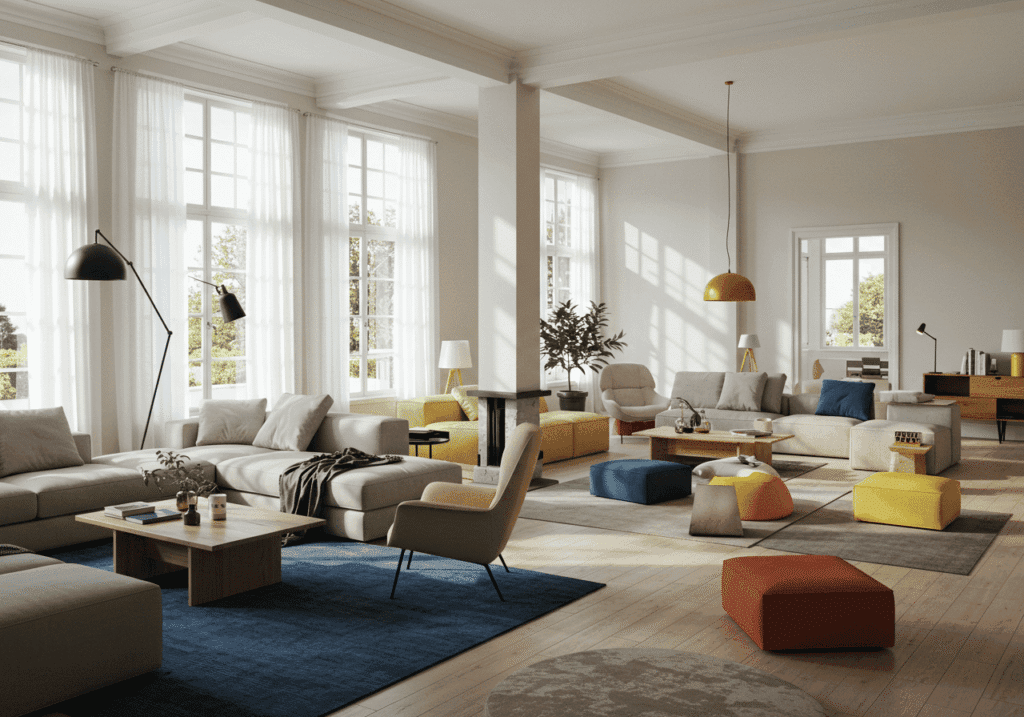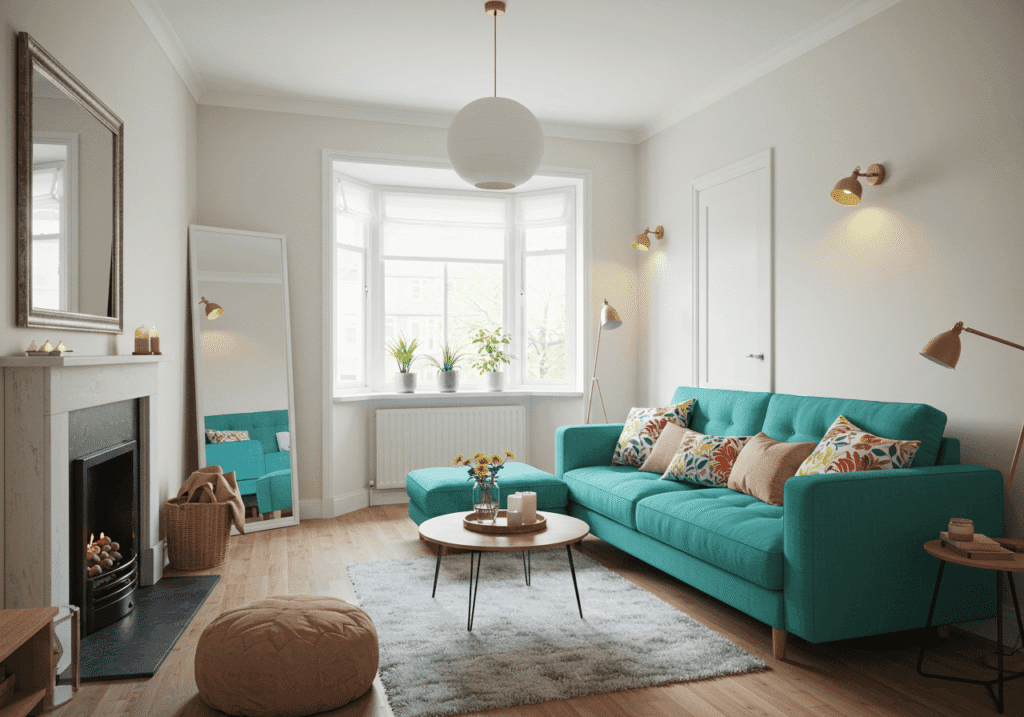

You’ve probably scrolled past it on Pinterest – that retro living room with built-in seating nestled below floor level, looking impossibly cozy and stylish. That’s a conversation pit, and it’s making waves again in home design circles.
This iconic feature from the 1960s and 70s is experiencing a revival, but with modern updates that address the original design’s quirks. Whether you’re renovating or just daydreaming about unique home features, understanding what makes conversation pits work (and why they vanished) helps you decide if this bold statement belongs in your space.
Let’s explore what defines a conversation pit, trace its interesting history, and figure out whether this sunken seating trend deserves a spot in today’s homes.
What Exactly Is a Conversation Pit?
A conversation pit is a sunken seating area built into your floor, typically positioned several inches to a few feet below the main level. Think of it as an architectural invitation to gather, relax, and actually talk face-to-face instead of staring at screens.
The design usually features built-in seating around the perimeter, creating an intimate square, circular, or rectangular space. Cushions line the edges, and there’s often a low table or fireplace at the center. The sunken design naturally draws people in and creates a cozy, enclosed feeling without actual walls.
What makes it different from just rearranging your furniture? The permanence. This isn’t something you can move around when you’re tired of the layout – it’s a committed architectural feature that defines how your living space functions. That’s part of its charm and its challenge.
The History Behind the Sunken Living Room Trend
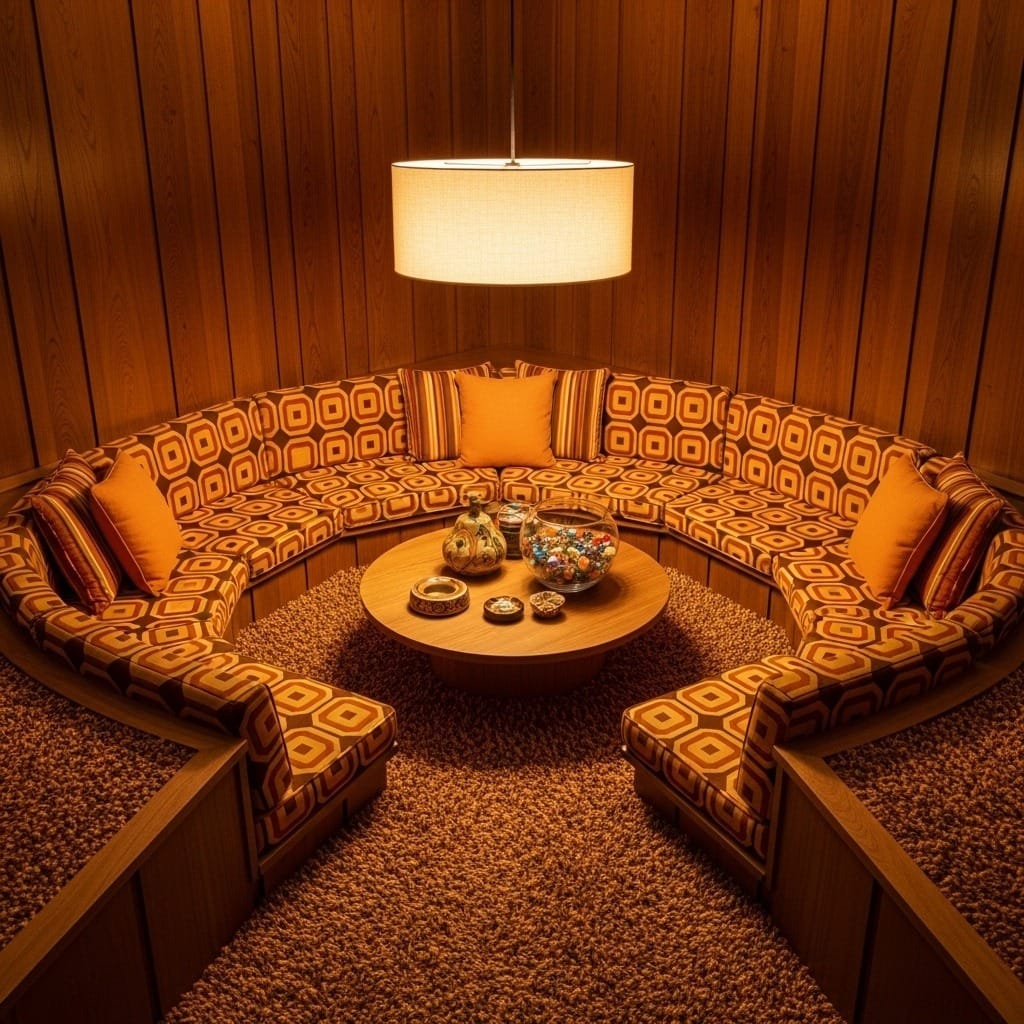
Conversation pits emerged during the mid-century modern movement when architects were experimenting with how spaces could encourage interaction. The design was rooted in the idea that homes should facilitate meaningful connection, not just provide places to sit.
Eero Saarinen, the Finnish-American architect, popularized the concept in the 1950s with his Miller House design. His sunken living room became an instant icon, inspiring countless imitations throughout the following decades. The 60s and 70s saw conversation pits appear everywhere from suburban homes to bachelor pads, symbolizing sophistication and social living.
By the 1980s, though, the trend collapsed. Open floor plans took over, and homeowners realized sunken rooms posed accessibility issues and safety concerns. The barriers to entry (literally) and the difficulty of childproofing these spaces sent them out of fashion. For decades, they were viewed as dated relics – until recently.
Why Conversation Pits Disappeared (And What Changed)
Several practical problems contributed to the conversation pit’s decline. Accessibility topped the list – steps create barriers for elderly family members, people with mobility challenges, and anyone carrying food or drinks. One misstep could mean a tumble, making these spaces less family-friendly than originally thought.
Changing social habits also played a role. As televisions became living room focal points and open-concept layouts dominated, the intimate, enclosed feeling of conversation pits seemed restrictive rather than cozy. People wanted flexibility, and permanent sunken seating didn’t offer that.
Building codes evolved too, with stricter requirements around railings and safety features that made conversation pits more complicated to construct. Combined with shifting aesthetic preferences toward minimalism and multifunctional spaces, these architectural features simply fell out of favor. Until social media reminded us how undeniably cool they look.
Modern Takes on the Conversation Pit
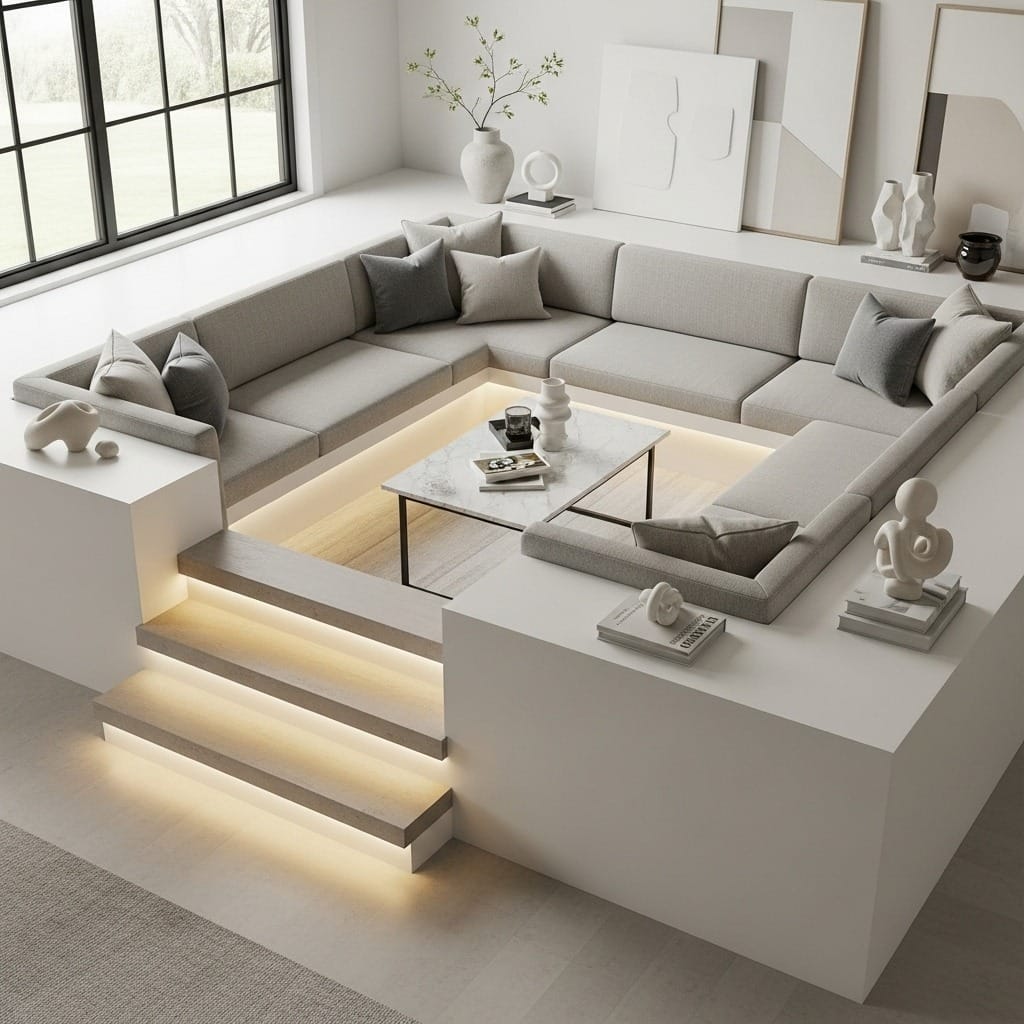
Today’s conversation pits aren’t carbon copies of their 70s predecessors. Designers are adapting the concept with safety improvements, better materials, and layouts that work with contemporary lifestyles. The core idea remains, but the execution has matured.
Modern versions often include gentler slopes instead of dramatic drops, built-in lighting along steps to prevent accidents, and removable cushions that can be refreshed or changed seasonally. Some homeowners are creating “semi-sunken” areas that lower seating just 6-12 inches instead of the original 2-3 feet, maintaining the visual interest without the safety concerns.
Materials have upgraded too. Where vintage pits relied heavily on shag carpeting and foam cushions, today’s designs incorporate performance fabrics, leather, and even outdoor-grade materials that can withstand spills and heavy use. This makes them more practical for real families, not just design magazines.
Design Elements That Define Social Living Spaces
Creating an effective conversation pit requires more than just digging out your floor. The proportions need to feel right – too shallow and it loses its impact, too deep and it becomes awkward to navigate. Most successful designs sink 18-24 inches below the main floor level, enough to feel distinct without feeling like a basement.
Seating arrangement matters enormously. The original circular and square layouts work because they position everyone facing inward, naturally encouraging conversation. Linear arrangements along one or two walls don’t create the same effect – you end up with people sitting side by side rather than across from each other.
Lighting transforms these spaces from potentially dark pits into warm, inviting retreats. Layered lighting works best here, with ambient light from above, task lighting near seating areas, and accent lights highlighting architectural details. Consider the sightlines too – from the main floor level, you want to see into the pit without it feeling like you’re looking down into a hole.
Is a Conversation Pit Right for Your Home?
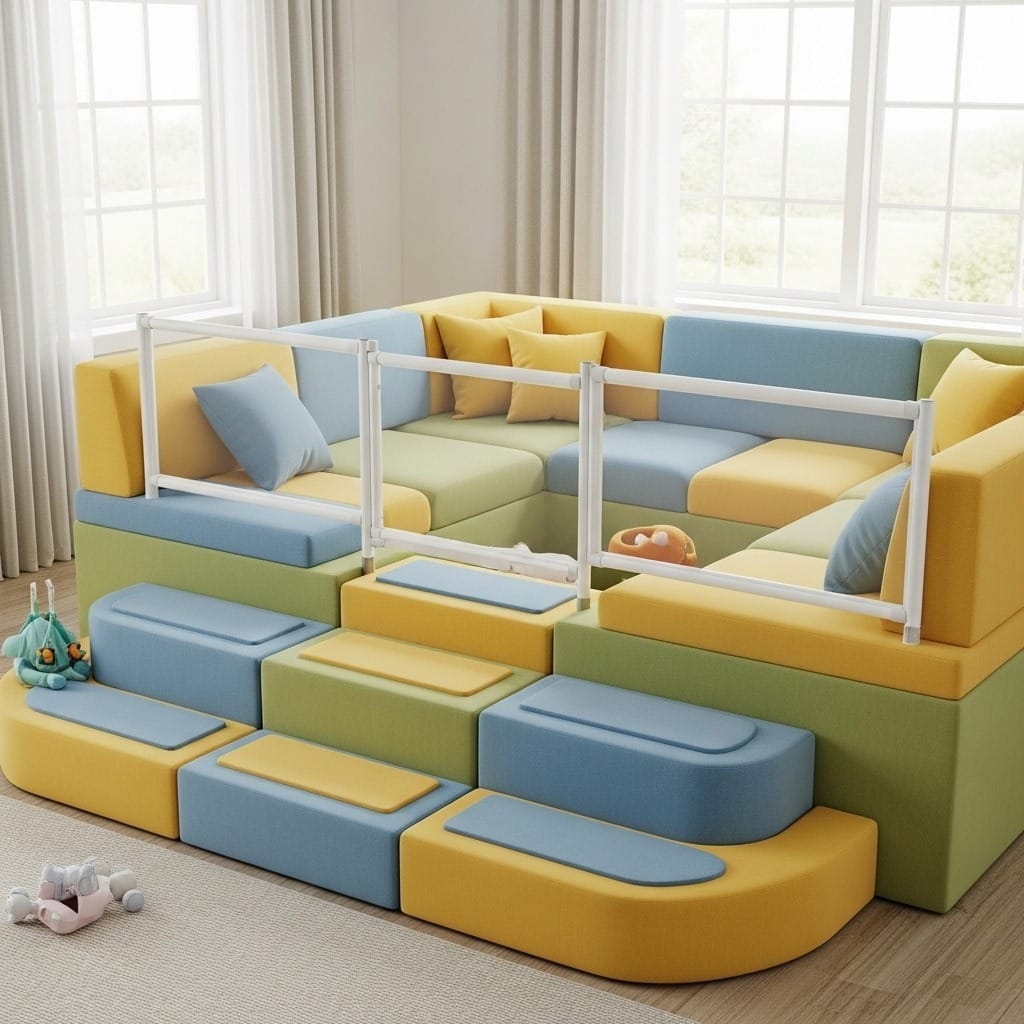
Not every home can accommodate this feature, and not every homeowner should attempt it. Structural considerations come first – you need sufficient floor depth, proper foundation support, and compliance with local building codes. Retrofitting a conversation pit into an existing home costs significantly more than including one in new construction.
Your lifestyle matters more than your aesthetic preferences here. If you have young children or elderly family members visiting regularly, the safety concerns might outweigh the cool factor. Small living room layouts might not have the square footage to lose to a sunken area without making the rest of the space feel cramped.
Consider your entertaining style too. If you regularly host large groups, a conversation pit can be fantastic – but if you prefer intimate gatherings of 4-6 people, traditional living room seating layouts might serve you better. The conversation pit works best when you actually use it for its intended purpose: facilitating face-to-face conversation.
Alternatives That Capture the Same Vibe
If you love the concept but can’t commit to permanent construction, several alternatives create similar intimacy without the architectural commitment. Lowered platform seating achieves a similar effect by raising the surrounding floor instead of lowering the seating area – same visual impact, easier to modify later.
Strategic furniture arrangement can mimic the conversation pit’s magic. Creating a U-shaped or circular seating arrangement with your existing furniture, perhaps on a large area rug that defines the space, brings people together in the same inward-facing configuration. Beautiful living room layouts prove you don’t need to break out the jackhammer to create an inviting gathering spot.
Outdoor spaces offer the perfect testing ground for this concept. Many homeowners are building conversation pit-inspired outdoor seating areas with built-in benches around fire pits. You get the same social benefit without risking your home’s resale value, and you can experiment with the concept before committing to an indoor version.
The Resale Reality
Here’s the uncomfortable truth – conversation pits can be polarizing for potential buyers. What you see as a unique architectural feature, others might view as an outdated liability. Real estate agents often note that highly personalized features, especially ones that can’t be easily reversed, can narrow your buyer pool.
That said, design trends move in cycles. As mid-century modern aesthetics continue their revival and younger buyers seek distinctive character in homes, the conversation pit’s reputation is shifting. In the right market, with the right execution, it could be a selling point rather than a deterrent. Location and target demographic matter enormously here.
If resale concerns you, focus on safety features, quality materials, and versatile styling that won’t feel dated in five years. A well-executed conversation pit in a high-end home in a design-forward market will fare better than a DIY version in a traditional suburban neighborhood. Consider consulting a real estate agent familiar with your area before breaking ground.
Practical Tips for Creating Your Own
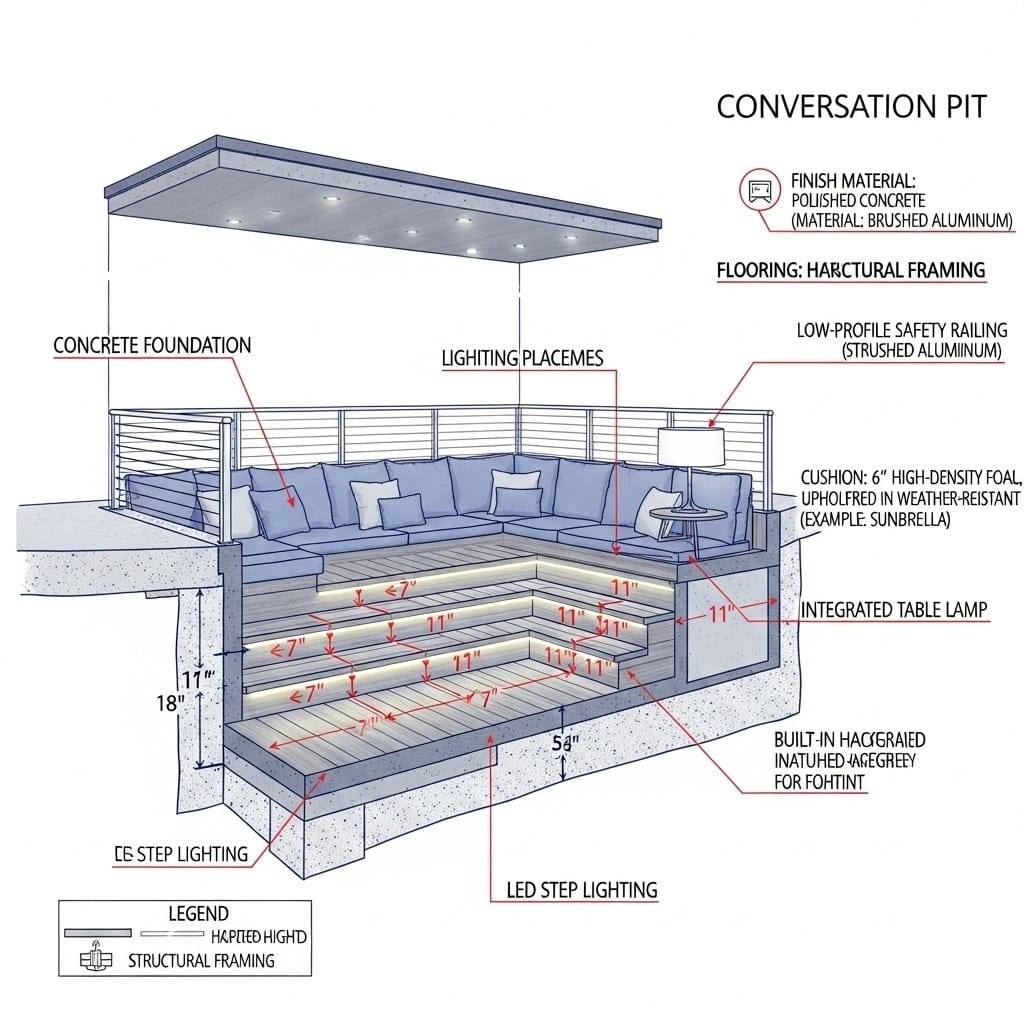
If you’re moving forward with a conversation pit, start with professional help. An architect or structural engineer needs to assess your foundation, floor joists, and HVAC considerations. This isn’t a YouTube tutorial project – you’re literally changing your home’s structure, and mistakes can be expensive and dangerous.
Budget realistically. Expect to spend $15,000-$50,000 or more depending on size, materials, and complexity. This includes structural work, finishing, seating construction, electrical for lighting, and possibly HVAC adjustments. Many homeowners underestimate costs because they focus on the visible elements and forget the infrastructure changes required.
Think about the long game. Choose timeless materials and neutral colors for the built-in elements, saving personality and color for changeable items like cushions and throws. What feels trendy today might make you cringe in five years, but quality craftsmanship in classic materials ages well. Visit HGTV’s living room design section for inspiration on timeless design choices that won’t feel dated quickly.
Final Thoughts on This Retro Living Room Idea
Conversation pits represent something we’re craving more of lately – intentional spaces designed for actual human connection. In a world where we’re together but staring at separate screens, there’s something appealing about a room feature that literally brings people face-to-face.
But wanting one and actually needing one in your home are different things. This works best for design enthusiasts willing to embrace an unconventional choice, homeowners who genuinely entertain regularly, and people who view their home as a long-term creative project rather than just an asset. If that sounds like you, the conversation pit might be worth exploring.For everyone else, remember that great social living spaces can be created without construction. Sometimes the best way to encourage conversation is simply turning off the TV, putting away the phones, and arranging your furniture so people can actually see each other’s faces. The sunken floor is optional – the intention behind it isn’t.

Sanjai creates easy, affordable home decor ideas that anyone can try. Through simple tips and curated finds, he helps you style rooms you’ll love coming home to.