Walking into a home that adjusts the lights before you even flip a switch feels like something out of a sci-fi movie. But here’s the thing – smart home upgrades aren’t futuristic fantasies anymore. They’re practical solutions that make daily routines smoother, spaces more comfortable, and homes genuinely responsive to how we live.
A smart home upgrade refers to integrating connected technology into your living space to automate tasks, improve efficiency, and enhance convenience. These upgrades range from voice-controlled assistants and automated lighting to thermostats that learn your schedule and security systems you can monitor from anywhere. The beauty of smart home devices lies in their ability to communicate with each other, creating a seamless connected home experience.
Not every room needs the same level of automation, though. Some spaces naturally benefit more from smart technology than others. Kitchens become more functional with smart appliances that preheat ovens remotely. Living rooms transform into entertainment hubs with integrated systems. Bedrooms offer better rest with automated climate control and blackout shades that respond to sunrise.
Understanding which rooms gain the most from these upgrades helps you invest wisely. You’re not just adding gadgets – you’re designing a home that anticipates your needs and responds intuitively throughout the day.
Why Smart Home Upgrades Matter More Than You Think

The shift toward home automation ideas isn’t just about convenience, though that’s certainly part of the appeal. These upgrades address real challenges homeowners face every day. Forgetting to turn off lights when rushing out the door, adjusting the thermostat constantly to find that comfortable temperature, or worrying about home security while traveling – smart technology solves these pain points elegantly.
Energy efficiency becomes tangible when your thermostat automatically adjusts based on whether anyone’s home. Safety improves when smart locks send alerts if a door is left unlocked. Accessibility increases for those with mobility challenges who can control their environment through voice commands. These aren’t minor tweaks – they’re meaningful improvements to how a home functions.
What makes smart home devices particularly appealing is their scalability. You don’t need to automate everything at once. Start with one room, see how it changes your routine, then expand gradually. This approach keeps costs manageable while letting you experiment with what actually improves your daily life versus what just sounds cool on paper.
The technology has also become remarkably user-friendly. Gone are the days when setting up smart home automation required technical expertise. Most devices now connect through simple apps, and many work together regardless of brand through common platforms like Alexa, Google Home, or Apple HomeKit.
Smart Kitchen and Living Room: Where Automation Shines Brightest
The Connected Kitchen Revolution
Kitchens have evolved into command centers for modern homes, and smart technology amplifies this role beautifully. Imagine preheating your oven during your commute home so it’s ready when you walk through the door. Or asking a voice assistant to set multiple timers while your hands are covered in flour. These moments showcase why smart kitchen and living room upgrades deliver such immediate value.
Smart refrigerators with internal cameras let you check what groceries you need while standing in the store aisle. Connected faucets dispense precise measurements of water for recipes. Smart displays mounted on walls or counters pull up recipes, play music, show security camera feeds, and control other devices throughout the home. The kitchen becomes not just smarter, but genuinely more functional.
Simple kitchen styling pairs wonderfully with smart upgrades because the technology often hides in plain sight. You’re not sacrificing aesthetics for functionality – many smart devices feature minimalist designs that complement contemporary decor. Under-cabinet lighting controlled by motion sensors adds ambiance without cluttering counters with switches.
The real magic happens when these devices work together. Your smart speaker can trigger your coffee maker in the morning. Your smart oven can send alerts to your phone when dinner is ready. Your lighting adjusts automatically as natural daylight fades. This interconnected ecosystem makes cooking less stressful and more enjoyable.
Living Rooms Become Entertainment and Comfort Hubs

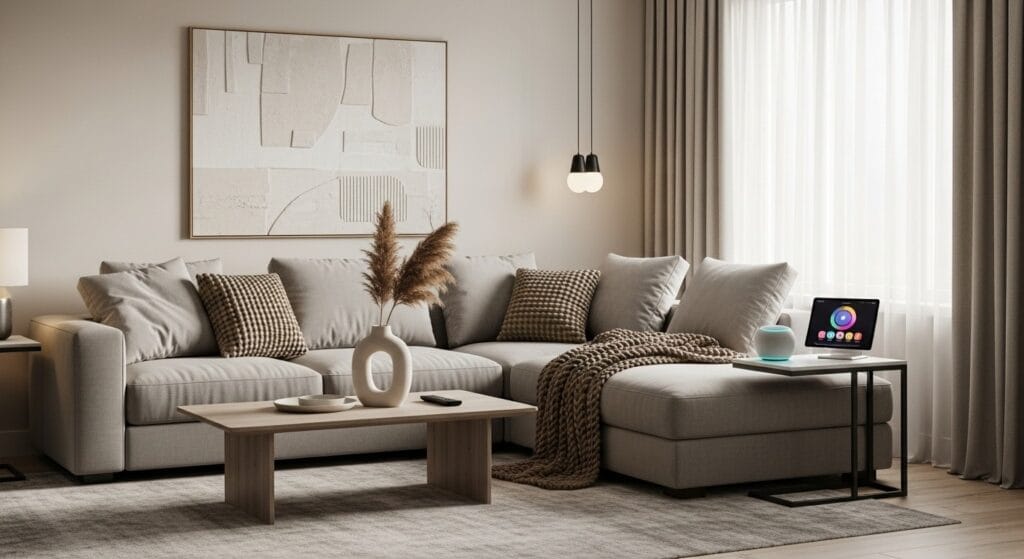
Living rooms benefit from smart upgrades in ways that touch both entertainment and everyday comfort. Smart TVs integrate streaming services seamlessly. Sound systems controlled by voice create the perfect ambiance for movie nights without fumbling with multiple remotes. Lighting systems adjust for different activities – bright for reading, dimmed for watching films, soft for entertaining guests.
Temperature control makes a significant difference in living spaces where families spend most of their time. Smart thermostats learn when you typically use the room and adjust accordingly. They can even create temperature zones if your home supports it, so the living room stays comfortable without cooling or heating unused bedrooms unnecessarily.
Living room ideas expand dramatically when you consider motorized window treatments that respond to time of day or sun position. These prevent glare on TV screens during afternoon viewing while maintaining privacy in the evening. Paired with smart lighting, your living room adapts throughout the day without constant manual adjustments.
Smart plugs deserve special mention here because they make any existing device “smart” instantly. Plug lamps, fans, or seasonal decorations into these adapters and control them remotely or set schedules. This affordable option lets you test smart home concepts before investing in more integrated systems. According to CNET’s smart home guide, starting with smart plugs and lighting is the most cost-effective entry point for home automation.
Bedrooms and Bathrooms: Personal Comfort Through Automation
Creating the Perfect Sleep Environment
Bedrooms might seem like simple spaces, but smart technology transforms them into personalized rest sanctuaries. Smart lighting that gradually dims at bedtime mimics natural sunset, helping your body prepare for sleep. Morning routines become gentler when lights slowly brighten to simulate sunrise, easing you awake more naturally than jarring alarms.
Temperature regulation proves crucial for quality sleep, and smart thermostats excel here. Program your bedroom to cool down before you typically fall asleep and warm slightly before waking. This subtle adjustment – often just a few degrees – can dramatically improve sleep quality without constant thermostat adjustments.
Bedroom ideas often focus on aesthetics, but comfort matters just as much. Smart ceiling fans adjust speed based on room temperature. Automated blackout shades block early morning light on weekends but open on weekdays when you need to wake up. White noise machines or smart speakers playing sleep sounds can be scheduled to turn off after you’ve drifted off.
Smart security adds peace of mind, particularly for ground-floor bedrooms. Window sensors alert you if anything opens unexpectedly during the night. This layer of protection doesn’t require complex installation – most sensors attach with adhesive and connect wirelessly to a central hub you can monitor from your phone.
Bathroom Upgrades That Add Luxury and Efficiency
Bathrooms benefit from smart upgrades in surprisingly practical ways. Smart mirrors with built-in lighting eliminate that frustrating morning struggle to apply makeup or shave in poor light. Some include defoggers that activate automatically during showers, so you’re not wiping condensation constantly.
Water usage monitoring through smart shower systems helps you understand consumption patterns and identify leaks early. These systems can also preset your preferred water temperature, so every shower starts at exactly the right warmth without that initial cold blast or scalding surprise.
Bathroom ideas traditionally focus on fixtures and finishes, but small smart additions elevate functionality considerably. Motion-sensor nightlights guide you safely during nighttime visits without flooding the space with bright light that disrupts sleep. Smart ventilation fans activate automatically when humidity rises, preventing mold and mildew without remembering to flip a switch.
Heated floors controlled through smartphone apps mean stepping onto warm tiles on cold mornings. You can schedule them to activate before you typically wake up, adding a touch of luxury to your daily routine. These upgrades don’t require visible technology cluttering your carefully designed space – most smart bathroom devices integrate seamlessly into existing aesthetics.
Entry Points and Outdoor Spaces: Security Meets Convenience
Smart Entryways That Welcome and Protect

Your home’s entry deserves special attention when planning smart upgrades because it’s where security and convenience intersect most obviously. Smart locks eliminate fumbling for keys when carrying groceries. You can grant temporary access codes to guests, service providers, or housesitters without making extra keys. Forgot to lock the door after leaving? Check and secure it remotely through your phone.
Video doorbells have become incredibly popular for good reason. Seeing who’s at your door before answering, whether you’re home or away, changes how you interact with deliveries, unexpected visitors, and potential security concerns. Two-way audio lets you communicate with whoever’s there, even instructing delivery drivers where to leave packages safely.
Smart lighting for entryways serves dual purposes – welcoming you home while deterring potential intruders. Motion-activated lights along walkways illuminate your path while signaling occupancy. You can also control these lights remotely, making your home appear occupied while traveling. This simple upgrade impacts both convenience and security significantly.
Package theft has become a genuine concern, and smart entry systems address this modern problem elegantly. Receive instant notifications when someone approaches your door. Watch in real-time as packages arrive. Some systems even integrate with smart locks to create secure delivery boxes that drivers can access once, then lock automatically.
Extending Smart Living Outdoors
Outdoor spaces gain functionality through smart upgrades that might surprise you. Smart irrigation systems analyze weather patterns and soil moisture to water gardens only when needed, conserving water while maintaining healthier plants. You’re not guessing whether your garden needs watering – the system decides based on actual conditions.
Outdoor spaces ideas expand when you consider smart outdoor lighting that adapts to seasons and usage patterns. Illuminate patios automatically at dusk for evening entertaining. Create lighting scenes for different moods – bright for outdoor dining, subtle for ambiance, or colorful for parties. All controllable from inside your home or through voice commands.
Smart outdoor security cameras monitor your property’s perimeter, sending alerts when motion is detected in specific zones. Configure them to ignore small animals or moving trees while catching actual security concerns. Night vision capabilities mean 24-hour monitoring regardless of outdoor lighting conditions.
Weather-resistant smart speakers let you extend your connected home experience to decks, patios, and pool areas. Control indoor and outdoor music systems simultaneously for seamless entertaining. Check weather forecasts with voice commands while gardening. The boundary between indoor comfort and outdoor living blurs beautifully with these additions.
Planning Your Smart Home Journey: Practical Steps Forward
Starting With What Matters Most to You
The biggest mistake people make with smart home upgrades is trying to automate everything simultaneously. This approach overwhelms both your budget and your ability to actually use the technology effectively. Instead, identify which pain points bother you most in daily life. Do you constantly adjust the thermostat? Start there. Worry about home security? Begin with smart locks and cameras.
Consider your home improvement ideas holistically. Smart upgrades work best when integrated into broader renovation plans. Installing smart lighting during a room refresh costs less than retrofitting later. Planning smart systems during kitchen remodels lets you hide wiring and create cleaner installations. This strategic timing maximizes both functionality and aesthetics.
Compatibility matters more than you might initially think. Before purchasing devices, research whether they work together through common platforms. Amazon Alexa, Google Home, and Apple HomeKit each have different device ecosystems. Choosing one platform and sticking with compatible devices prevents future frustration when trying to create automation routines that span multiple systems.
Budget concerns are valid, but smart home upgrades don’t require massive upfront investment. Start with affordable options like smart plugs, smart bulbs, and a voice assistant. These entry-level devices let you experience automation benefits while learning what features actually matter to your lifestyle. Expand gradually as you discover which upgrades deliver genuine value versus novelty appeal.
Avoiding Common Smart Home Pitfalls

Internet reliability becomes crucial with connected homes. These devices depend on stable WiFi connections, so upgrading your router might actually be your first smart home investment. Mesh WiFi systems eliminate dead zones that could leave parts of your home disconnected. This foundational upgrade ensures all your smart devices communicate reliably.
Privacy and security deserve careful consideration. Change default passwords on all smart devices immediately after setup. Enable two-factor authentication wherever possible. Regularly update device firmware to patch security vulnerabilities. These steps protect your connected home from unauthorized access while letting you enjoy automation benefits confidently.
Don’t overlook the learning curve associated with new technology. Even user-friendly smart devices require some setup time and experimentation. Give yourself permission to troubleshoot, adjust settings, and discover what works best for your household. Some features you’ll use constantly, while others might prove less useful than anticipated. That’s okay – customization is part of the process.
Power outages reveal an important consideration: backup plans. Some smart devices revert to manual operation during outages, while others require power to function at all. Smart locks typically include physical key overrides. Smart thermostats usually maintain basic heating and cooling. Understanding how your devices behave without power prevents frustrating surprises during storms or electrical issues.
The Future Living in Your Home Today
Smart home upgrades represent more than adding gadgets to your space. They fundamentally change how you interact with your environment, making homes more responsive, efficient, and attuned to individual preferences. The technology continues evolving rapidly, but the core benefit remains constant – reducing friction in daily routines so you spend less time managing your home and more time enjoying it.
Which rooms benefit most depends entirely on your lifestyle and priorities. Families with young children might prioritize smart security and lighting for safety. Remote workers could focus on home office comfort through smart climate control and lighting. Empty nesters might appreciate smart assistants for convenience and voice-controlled entertainment systems. There’s no universal answer because homes serve different needs for different people.
The accessibility improvements deserve highlighting again. For individuals with mobility limitations, chronic pain, or aging in place, smart home devices aren’t luxuries – they’re tools that maintain independence and dignity. Voice control eliminates the need to physically reach switches or thermostats. Automated routines reduce the number of tasks requiring physical effort. This aspect of smart home technology often gets overshadowed by convenience discussions but matters profoundly to many households.
Starting your smart home journey doesn’t require perfect planning or unlimited budgets. It requires curiosity about how technology might solve problems you face daily. Begin somewhere. Experiment with one device. Notice what changes in your routine. Then expand thoughtfully based on actual experience rather than assumptions about what should be useful. Your connected home will evolve naturally as you discover what genuinely improves your daily life versus what just seemed like a good idea initially.

Sanjai creates easy, affordable home decor ideas that anyone can try. Through simple tips and curated finds, he helps you style rooms you’ll love coming home to.