You’ve probably noticed a shift in how living spaces feel lately. There’s less clutter, sure, but also more warmth than the stark white rooms we used to see everywhere. That’s cozy minimalism, and it’s changing how we think about simple living room design.
If you’ve ever felt torn between wanting a clean, uncluttered space and craving somewhere that actually feels like home, this style might be exactly what you’re looking for. It takes the “less is more” philosophy and adds back the comfort and personality that make a house feel lived-in.
But here’s where it gets interesting. Many people assume cozy minimalism and Scandinavian living room style are the same thing. They’re cousins, maybe, but definitely not twins. The differences are subtle yet significant, and understanding them can help you create a space that truly reflects what you want from your home.
Understanding Cozy Minimalism Living Room Style
Cozy minimalism is really about finding that sweet spot between simplicity and comfort. Think of it as minimalism that invites you to stay awhile, not just admire from afar.
The foundation is still minimal. You won’t find rooms packed with furniture or surfaces covered in decorative objects. But unlike strict minimalism, cozy minimalist decor embraces texture, warmth, and those thoughtful touches that make you want to curl up with a book on a Sunday afternoon.
What makes this style work is intentionality. Every piece in the room has a purpose, whether functional or emotional. That chunky knit throw isn’t just decoration – it’s the blanket you reach for during movie nights. The single piece of art on the wall isn’t there to fill space, but because it genuinely speaks to you.
The Core Elements of Cozy Minimalist Decor

Warmth is everything in this approach to warm minimal interiors. While traditional minimalism might lean cool and austere, cozy minimalism wraps you in comfort from the moment you walk in.
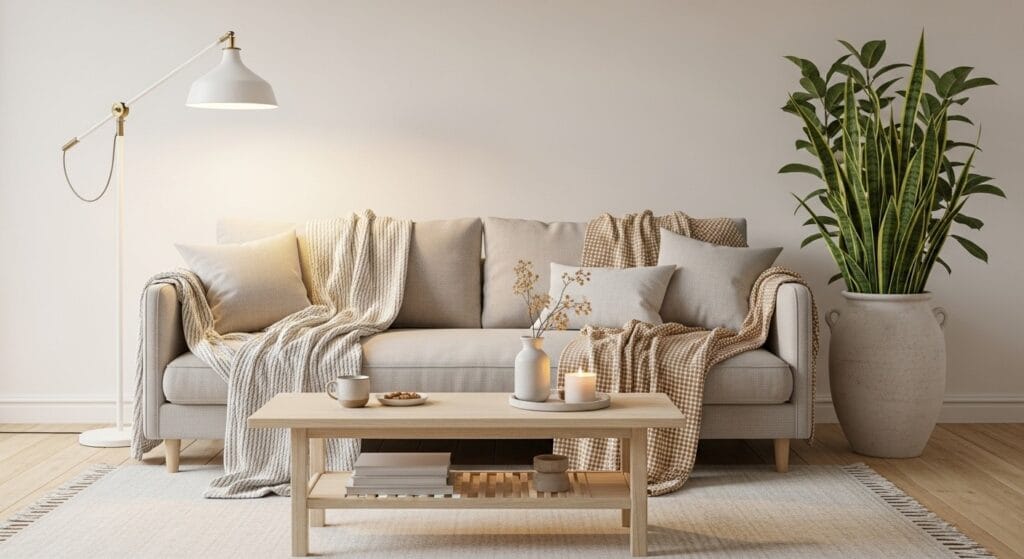
Natural materials do most of the heavy lifting here. Wood tones bring organic warmth, whether it’s a reclaimed oak coffee table or walnut shelving. Linen, cotton, wool – these fabrics add softness without visual noise. Even the stone or ceramic pieces you choose should feel touchable and inviting.
Color palettes stay neutral but shift toward the warmer end of the spectrum. Creamy whites instead of stark white, warm grays rather than cool ones, soft beiges and taupes that create a sense of calm. You might spot terracotta, rust, or muted sage as accent colors, always grounded and never jarring. Earthy tones living room palettes work beautifully within this aesthetic.
Lighting deserves special attention. Harsh overhead lights have no place here. Instead, layer in warm ambient lighting through floor lamps, table lamps with linen shades, and maybe some subtle LED strips behind shelving. The goal is a gentle glow that makes evening hours feel particularly cozy.
Texture becomes your secret weapon when you’re working with a limited color palette. A room done in shades of cream and beige could feel flat, but add a nubby throw pillow, a jute rug, a velvet accent chair, and smooth ceramic vases – suddenly there’s visual interest everywhere without adding clutter.
How Scandinavian Living Room Style Differs
Scandinavian design shares minimalism’s love of simplicity, but it has its own distinct personality. The climate and culture of Nordic countries shaped this aesthetic in ways that set it apart.
Light is the driving force behind Scandi style. Those long, dark winters mean Scandinavian living room style prioritizes brightness above almost everything else. You’ll see white walls, light wood floors, and strategic use of mirrors to bounce natural light around. The whole room feels airy and open, designed to maximize every ray of sunshine. According to Architectural Digest, Scandinavian design emerged in the early 20th century as a response to harsh Nordic climates, emphasizing functionality and natural light.
The color approach differs noticeably. Pure whites dominate Scandi spaces – crisp, clean, almost clinical in their brightness. When color appears, it’s often in the form of black accents for contrast or cool blues and greens inspired by Nordic landscapes. Everything feels fresh and invigorating rather than warm and enveloping.
Furniture in Scandinavian spaces tends toward iconic mid-century pieces with clean lines and functional beauty. Think Eames chairs, sleek credenzas, and sculptural lighting fixtures that double as art. There’s an appreciation for design heritage that you don’t necessarily find in cozy minimalism’s more eclectic approach.

Function reigns supreme in Scandinavian design. Every item earns its place through usefulness, and there’s less emphasis on the emotional or comfort-driven choices that define cozy minimalism. A Scandinavian living room furniture setup often feels more curated and design-forward.
Key Differences at a Glance
Temperature is probably the easiest way to distinguish these styles. Scandi spaces feel cool and refreshing, while cozy minimal rooms wrap you in warmth. Neither is better – they simply serve different needs and preferences.
The approach to white tells you a lot. Scandinavian design embraces bright, pure white as a foundational element. Cozy minimalism uses softer, warmer whites – think cream, ivory, or white with subtle undertone shifts that make spaces feel less stark.
Material choices overlap but with different emphases. Both styles love natural wood, but Scandi leans toward lighter ash and birch while cozy minimalism gravitates toward warmer oak, walnut, and reclaimed woods. Both appreciate textiles, but Scandi keeps them simpler while cozy minimalism layers them for added comfort.
Personal expression shows up differently too. Scandinavian style often showcases design pieces as art – that iconic chair or sculptural lamp becomes a focal point. Cozy minimalism makes room for more personal items like family photos, handmade pottery, or collected objects, as long as they’re displayed thoughtfully rather than cluttering surfaces.
Contrast plays a bigger role in Scandi interiors. You’ll often see black accents against white walls – graphic, bold, intentional. Cozy minimalism prefers gentler transitions between tones, creating spaces that feel cohesive and flowing rather than punctuated.
Creating Your Own Cozy Minimalist Living Room
Start with what you have before buying anything new. Look around your current space and identify items that spark joy or serve a genuine purpose. Everything else? Time to let it go. This isn’t about deprivation – it’s about making room for what matters.
Choose a warm neutral base for walls and large furniture pieces. This creates a calm backdrop that won’t compete with the textures and subtle accents you’ll layer in. Soft white, warm greige, or gentle beige all work beautifully. You can explore bedroom color combinations principles that translate well to living spaces too.
Invest in quality over quantity when it comes to furniture. One really comfortable, well-made sofa beats three mediocre pieces any day. Look for clean lines but soft edges – nothing too severe or angular. Natural materials like wood and linen signal quality while adding warmth. Living room furniture arrangement becomes simpler when you’re working with fewer, better pieces.
Layer textures intentionally throughout the space. Start with a natural fiber rug as your foundation – jute, sisal, or wool all work well. Add throw pillows in varying textures but similar tones. Drape a chunky knit or waffle-weave blanket over the sofa. Hang linen curtains that filter light softly. Each texture adds visual interest without adding clutter.

Keep surfaces mostly clear but not empty. A coffee table might hold a simple wooden tray with your current read and a small plant. A side table needs just a lamp and maybe a small dish for reminders. Less really is more here, but not to the point of sterility. If you’re working with limited space, small living room layout ideas can help maximize your cozy minimal approach.
Light the room for ambiance, not just function. Overhead lighting should be dimmable if possible. Add 2-3 sources of warm, soft light at different heights – a floor lamp in the corner, a table lamp on a side table, perhaps candles on the mantel. This layered approach creates depth and coziness that overhead lighting alone never achieves.
Bring in natural elements thoughtfully. A large fiddle leaf fig or monstera adds life without fuss. Display branches in a simple vase. Use wood, stone, and ceramic pieces rather than plastic or overly shiny metals. These organic touches connect the indoors with nature, something both cozy minimalism and minimalist living room styles appreciate, though with different executions.
Common Mistakes to Avoid
Going too neutral can backfire. Yes, cozy minimalism loves warm neutrals, but a room that’s entirely beige can feel bland rather than calm. Add depth through varying shades within your neutral palette, or introduce one or two muted accent colors like terracotta or sage.
Forgetting about comfort in pursuit of aesthetics defeats the whole purpose. That beautiful but uncomfortable chair? It doesn’t belong here. If you can’t relax in your living room, you’ve missed the “cozy” part of cozy minimalism. Every piece should invite use, not just admiration.
Neglecting proper lighting creates a cold space no matter how warm your color palette. Relying solely on overhead lights or having insufficient light sources makes rooms feel harsh during the day and unwelcoming at night. Think about how the space will be used during different times and light accordingly.
Over-styling defeats the minimal aspect. It’s tempting to add just one more plant, one more throw pillow, one more decorative object. Resist. The beauty of this style lies in restraint. If you find yourself constantly rearranging or adding things, step back and remove a few items instead.
Ignoring scale creates awkward spaces. A tiny sofa in a large room or oversized furniture in a small space disrupts the calm these interiors are meant to provide. Choose furniture that fits your room’s proportions, and don’t be afraid of some open floor space – it’s a feature, not a problem to solve.
Adapting the Style to Your Space

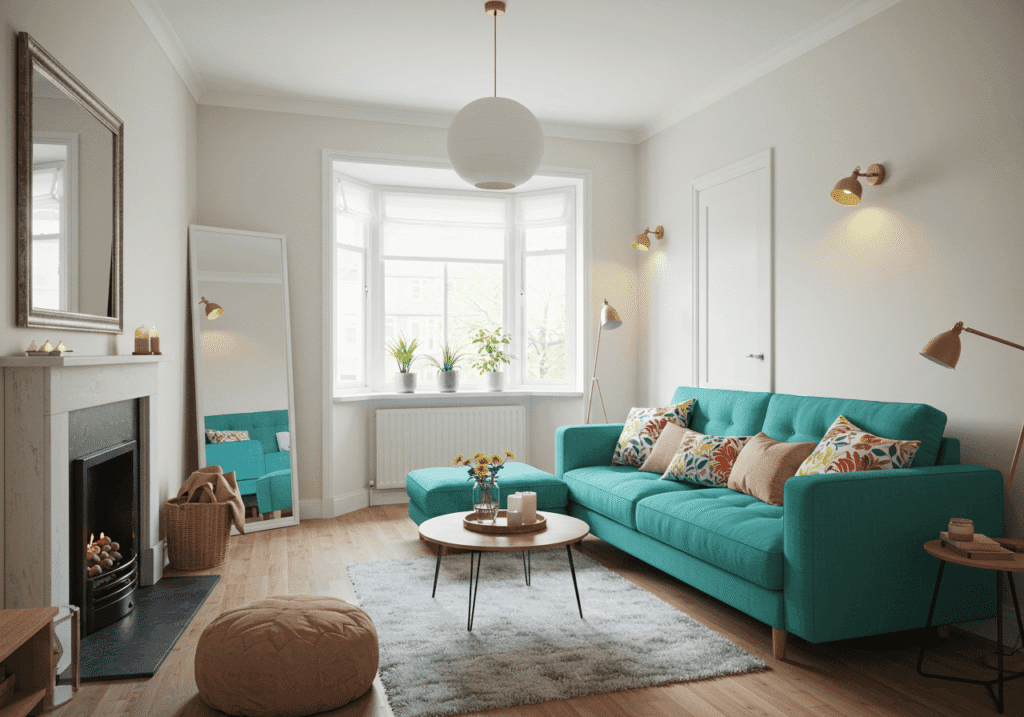
Small living rooms actually excel at cozy minimalism. The style’s emphasis on essentials means you’re not trying to cram unnecessary furniture into limited square footage. A loveseat instead of a full sofa, a narrow console instead of a bulky entertainment center, floating shelves living room instead of heavy bookcases – these choices make small spaces feel intentional rather than cramped.
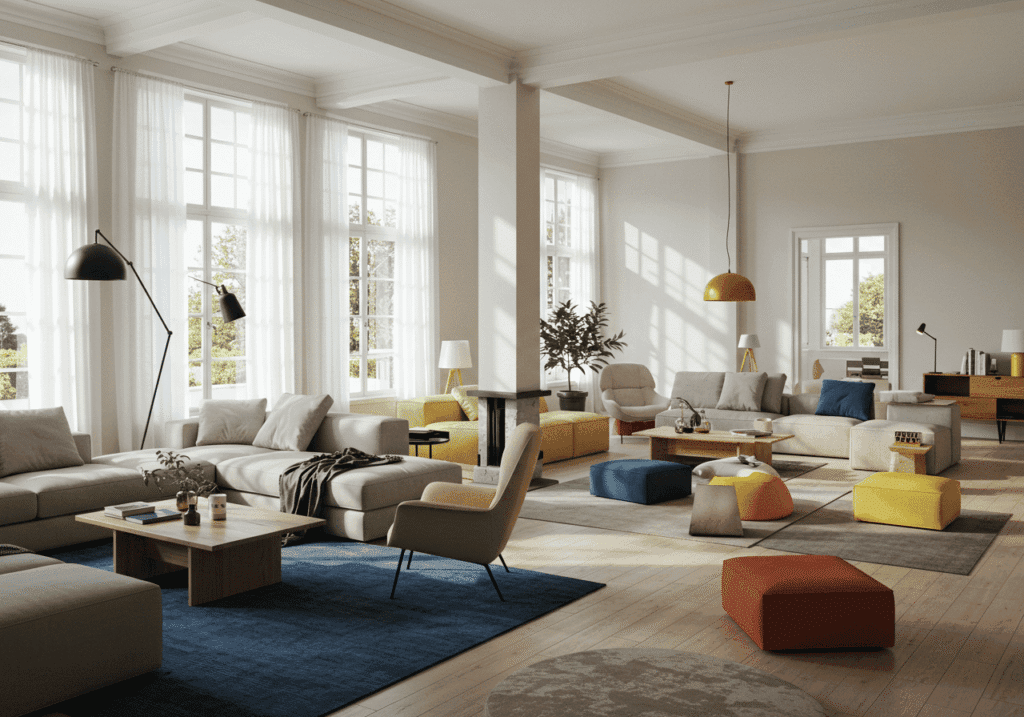
Large open spaces need strategic furniture groupings to avoid feeling empty. Create distinct zones for different activities – a seating area around the fireplace, a reading nook by the window, perhaps a small workspace in the corner. Each zone should feel complete and purposeful, with appropriate spacing between them. An open concept living room can benefit from these defined areas while maintaining flow.
Rooms with architectural features like exposed beams, brick walls, or built-in shelving have built-in character that supports cozy minimalism beautifully. Don’t fight these features – celebrate them. A brick accent wall doesn’t need much decoration. Exposed beams add warmth and texture without any styling effort on your part.
Work with your home’s existing style rather than against it. Modern spaces easily accommodate this aesthetic, but traditional homes can too. Keep the bones of the room – crown molding, wainscoting, original flooring – and simply pare back the furnishings and decor. The result feels fresh but respectful of the home’s history.
Rental-friendly approaches work perfectly with cozy minimalism since the style doesn’t require major renovations. Focus on furniture, textiles, and portable lighting. Add removable elements like peel-and-stick wallpaper in warm tones or temporary curtain rods for soft drapery. You can create the entire aesthetic without changing anything permanent.
Making It Work Long-Term
Seasonal shifts should be subtle in a cozy minimalist space. You’re not completely redecorating four times a year. Instead, swap your lightweight cotton throw for a heavier wool one in winter. Change out pillow covers from linen to velvet. Add a few pine branches in a vase during the holidays. These small changes honor the seasons without creating storage nightmares or cluttering your space.
Edit regularly to maintain the intentional feel. Every few months, walk through your living room and honestly assess each item. Does it serve a purpose? Does it bring you joy? If the answer to both is no, it’s time to let it go. This ongoing curation prevents the slow creep of clutter that can undermine the whole aesthetic. For broader home organization, check out these storage ideas for small homes.
Budget-conscious choices align perfectly with cozy minimalism. The style’s emphasis on quality over quantity means you buy less but better. Thrift stores and vintage shops offer amazing finds – look for natural materials and simple shapes. Focus your budget on the pieces you’ll use most: a great sofa, comfortable seating, proper lighting. Everything else can be added slowly as you find pieces that truly fit.
Resist trend cycles that don’t serve your space. Every season brings new “must-have” colors, patterns, or furniture styles. That doesn’t mean you need them. Cozy minimalism’s timeless approach means your space won’t look dated in two years because you didn’t chase every passing trend in the first place.
This style grows and changes with you because it’s rooted in genuine needs and preferences rather than following rigid rules. As your life shifts, your space can too. New baby? Adjust the layout and add smart storage and organization ideas while maintaining the calm aesthetic. Kids grown and gone? Pare back even further or reclaim space for new hobbies. The framework stays consistent even as the details evolve.
The beauty of understanding what cozy minimalism living room style really means – and how it differs from its Scandinavian cousin – is that you can create a space uniquely suited to your needs. You’re not following a strict design rulebook or recreating someone else’s Pinterest board. You’re building a room that feels like home, just with a lot less stuff getting in the way of actually living there.

Sanjai creates easy, affordable home decor ideas that anyone can try. Through simple tips and curated finds, he helps you style rooms you’ll love coming home to.