Ever walked through a beautifully organized kitchen and wondered where they hide all their clutter? The secret often lies behind those elegant doors leading to a butler’s pantry. This dedicated storage space has become the unsung hero of modern kitchens, offering both functionality and style that makes everyday cooking so much smoother.
A butler’s pantry isn’t just about extra storage – it’s about creating a seamless workflow between your kitchen and dining areas. Whether you’re hosting dinner parties or simply trying to keep your main kitchen counters clear, learning how to build a butler’s pantry can transform how you use your entire home.
Today’s homeowners are rediscovering this classic feature, adapting it for modern lifestyles with clever pantry design ideas that work for both small and large spaces. From simple conversions to full custom builds, there’s a butler pantry layout that can work for almost any home.
What Exactly Is a Butler’s Pantry?
Think of a butler’s pantry as your kitchen’s best friend – a separate room or alcove positioned between your main kitchen and dining room. Traditionally, these spaces served as staging areas where butlers (hence the name) would prepare and plate meals before serving them to the family.

Modern butler’s pantries have evolved far beyond their formal origins. Today, they function as secondary prep areas, coffee stations, and storage powerhouses that keep your main kitchen looking pristine. Many homeowners use them for storing small appliances, extra dishes, or even as bar areas for entertaining.
The beauty of a butler’s pantry lies in its versatility. Some are compact closet conversions, while others occupy entire rooms with full kitchen storage solutions including sinks, dishwashers, and extensive cabinetry. The key is designing one that matches your specific needs and available space.
What makes these spaces so appealing is their ability to hide the mess while keeping essentials within reach. During parties, guests see your spotless main kitchen while all the prep chaos stays tucked away behind closed doors.
Planning Your Butler’s Pantry Layout
Before you start swinging hammers, take time to really think about how you want to use this space. Are you dreaming of a coffee station where you can brew your morning cup without disturbing sleeping family members? Maybe you need extra storage for holiday dishes that only come out twice a year?

The most successful butler pantry layouts start with honest self-reflection about your cooking and entertaining habits. If you host large gatherings, prioritize counter space for plating and serving. For busy families, focus on storage that keeps everyday items organized and accessible.
Location matters tremendously in your planning. The ideal spot connects your kitchen to your dining room, but don’t let traditional rules limit your creativity. I’ve seen stunning pantries carved out of hallway nooks, unused closets, and even corners of large laundry rooms.
Consider the triangle concept – your pantry should create an efficient workflow between storage, prep, and cleanup areas. Storage and organization ideas can help you maximize every inch while maintaining that seamless flow that makes cooking feel effortless.
Essential Features Every Butler’s Pantry Needs
Counter space tops the list of must-have features, but not just any counter will do. Choose surfaces that can handle hot dishes, spills, and frequent use. Quartz and granite offer durability, while butcher block adds warmth and character to the space.

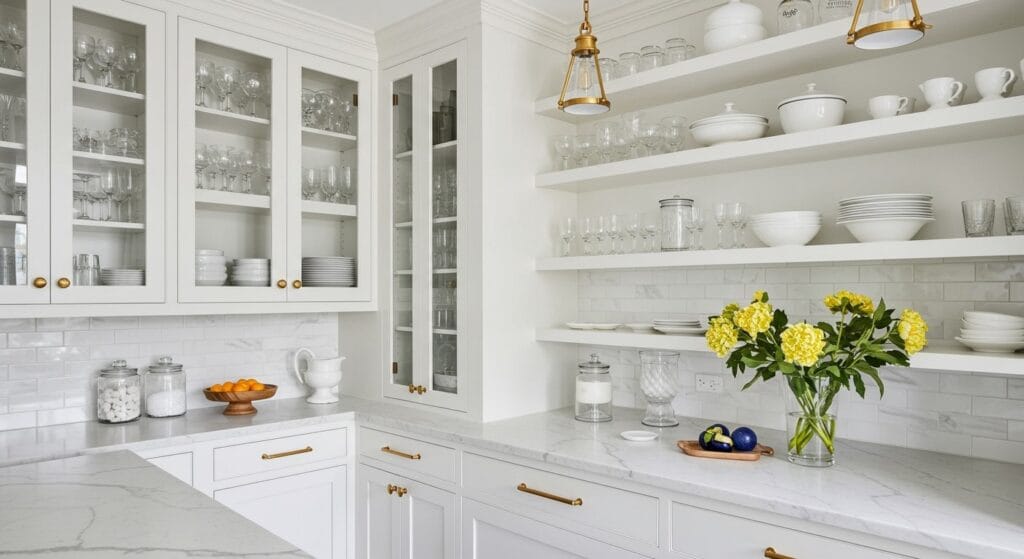
Storage variety keeps your pantry functional rather than just pretty. Mix closed cabinets for hiding clutter with open shelving for displaying beautiful dishes or frequently used items. Deep drawers work wonderfully for storing large serving pieces, while adjustable shelves accommodate everything from tall vases to small spice jars.
Don’t underestimate the power of a prep sink if your space and budget allow it. This feature transforms your pantry from simple storage into a full prep station where you can wash produce, fill water glasses, or clean up without crowding your main kitchen sink.
Electrical planning deserves serious attention early in your design process. Plan for plenty of outlets to power small appliances, under-cabinet lighting, and any future additions you might want. Simple kitchen styling often depends on having the right lighting to showcase your organized spaces beautifully.
Step-by-Step Construction Guide
Start with the structural work – this isn’t the time to cut corners. If you’re converting an existing closet or room, check that walls can support the weight of loaded cabinets and countertops. Some projects might need additional framing or electrical work that requires professional help.

Electrical rough-in happens before drywall goes up, so plan your outlet placement carefully. Include outlets for small appliances, under-cabinet lighting, and a few extras for future needs. GFCI protection is typically required if you’re installing a sink, so check your local building codes early in the process.
Drywall and painting create the foundation for your finished space. Choose paint colors that complement your main kitchen while creating a cohesive flow throughout the area. Light colors help small pantries feel larger, while darker hues can add drama to more spacious rooms.
Cabinet installation requires precision and patience. Whether you choose custom built-ins or high-quality stock cabinets, proper installation affects both function and longevity. Take time to ensure everything is level, plumb, and securely attached to wall studs.
Smart Storage Solutions That Actually Work
Think vertically when designing your storage – walls offer tremendous potential that many homeowners overlook. Floor-to-ceiling cabinets maximize storage capacity, while varying shelf heights accommodate different item sizes throughout the space.

Pull-out drawers and lazy Susans prevent items from getting lost in deep cabinets. These mechanisms might cost a bit more upfront, but they pay dividends in daily usability. You’ll actually use items you can see and reach easily, rather than forgetting about them in dark corners.
Consider your family’s specific needs when planning storage zones. Create dedicated areas for coffee supplies, baking ingredients, serving pieces, and everyday dishes. Storage ideas for small homes can inspire creative solutions even in compact pantry spaces.
Adjustable shelving offers flexibility as your needs change over time. What works for young couples might not suit families with teenagers, so plan for adaptability. Wire shelving provides good airflow for pantry items, while solid shelves create clean lines for display pieces.
Design Ideas for Different Spaces
Small pantries pack maximum punch when every element serves multiple purposes. A narrow galley layout can work beautifully if you plan the workflow carefully – place frequently used items at eye level and reserve upper shelves for occasional pieces.

Large butler’s pantries offer room for luxury features like islands, multiple prep areas, or even seating. These spaces can function almost like secondary kitchens, complete with full-size appliances and extensive storage. The key is maintaining organization so the space doesn’t become a catch-all for kitchen overflow.
Modern farmhouse styles blend beautifully with butler’s pantry functionality. Shiplap walls, barn doors, and vintage-inspired hardware create character while maintaining the clean functionality that makes these spaces so practical. Modern farmhouse kitchen ideas can inspire design elements that work throughout your home.
Traditional designs emphasize classic proportions and timeless materials. Think raised panel cabinets, crown molding, and sophisticated hardware that complements your main kitchen’s aesthetic. These pantries age gracefully and add significant value to your home.
Lighting That Makes Everything Beautiful
Task lighting transforms functional storage into beautiful display space. Under-cabinet LED strips eliminate shadows while showcasing your organized shelves. These fixtures use minimal energy and last for years, making them both practical and economical choices.

Ambient lighting creates warmth and welcomes you into the space. A single pendant light or small chandelier adds personality while providing general illumination. Choose fixtures that complement your kitchen’s style while adding their own character to the pantry.
Natural light, when available, makes any pantry feel more spacious and inviting. If you can add a window during construction, the investment pays off in both daily enjoyment and home value. Even a small window can dramatically change how the space feels.
Consider dimmer switches for flexibility in different situations. Bright task lighting works well for food prep, while softer ambient lighting creates a cozy atmosphere for evening coffee preparation or casual conversation.
Budget-Friendly DIY Approaches
Closet conversions offer the most affordable entry into butler’s pantry ownership. Start with good bones – a closet with decent depth and height – then add shelving, lighting, and a countertop to create functional storage space.

IKEA hacks can create custom-looking storage at fraction of traditional cabinet costs. Their modular systems adapt well to pantry spaces, and countless online tutorials show how to modify standard pieces for specific needs. Storage hacks for home organization provides inspiration for creative adaptations.
Open shelving costs significantly less than full cabinetry while creating an airy, accessible feel. Mix store-bought brackets with custom wood shelves, or repurpose vintage finds for unique character. Paint everything in coordinating colors to create a cohesive, intentional look.
DIY cabinet refacing can update existing storage without full replacement costs. New doors, drawer fronts, and hardware can completely transform tired cabinets into fresh, functional storage that matches your vision perfectly.
Common Mistakes to Avoid
Insufficient ventilation tops the list of pantry problems that develop over time. Food storage areas need air circulation to prevent moisture buildup and odors. Include ventilation in your planning, even if it’s just ensuring doors can close properly without creating dead air spaces.

Inadequate lighting makes even well-organized pantries feel unwelcoming and hard to use. Dark corners collect dust and forgotten items, while poor task lighting makes food prep frustrating. Plan for multiple light sources from the beginning rather than trying to add them later.
Poor workflow planning creates bottlenecks and frustration during busy cooking times. Think through how you’ll move between your main kitchen and pantry, especially when carrying hot dishes or multiple items. Kitchen living room open concept principles apply to pantry design too.
Overcomplicating the design often leads to maintenance headaches and reduced functionality. Simple, well-executed solutions usually outperform complex systems that require constant adjustment or specialized knowledge to operate effectively.
Maximizing Your Investment
Professional installation for complex elements like electrical work and plumbing ensures safety and code compliance while protecting your investment. Some projects require permits and inspections, so factor these costs and timelines into your planning from the start.

Quality materials pay dividends in durability and daily satisfaction. Solid wood cabinets, stone countertops, and premium hardware cost more initially but maintain their beauty and function for decades. Consider these elements as long-term investments rather than short-term expenses.
Proper organization systems keep your pantry functioning beautifully long after construction ends. Invest in quality storage containers, label makers, and organizational tools that match your family’s habits and preferences. Kitchen pantry storage hacks can help you maintain organization over time.
Regular maintenance preserves both function and appearance. Wipe down surfaces regularly, reorganize as needed, and address small issues before they become major problems. A well-maintained butler’s pantry continues adding value to your home for years to come.
Building a butler’s pantry represents more than just adding storage – you’re creating a space that enhances your daily routines and makes entertaining more enjoyable. Whether you choose a simple closet conversion or an elaborate custom build, focus on solutions that match your specific needs and lifestyle.
The most successful projects balance beautiful design with practical functionality, creating spaces that work as hard as they look good. Take time to plan carefully, invest in quality where it matters most, and don’t be afraid to adapt traditional concepts for your modern needs.
Your future self will thank you every time you effortlessly host dinner parties, prepare holiday meals, or simply enjoy a peaceful morning coffee in your perfectly organized space. The investment in time, money, and energy pays dividends in daily satisfaction and long-term home value.

Sanjai creates easy, affordable home decor ideas that anyone can try. Through simple tips and curated finds, he helps you style rooms you’ll love coming home to.