
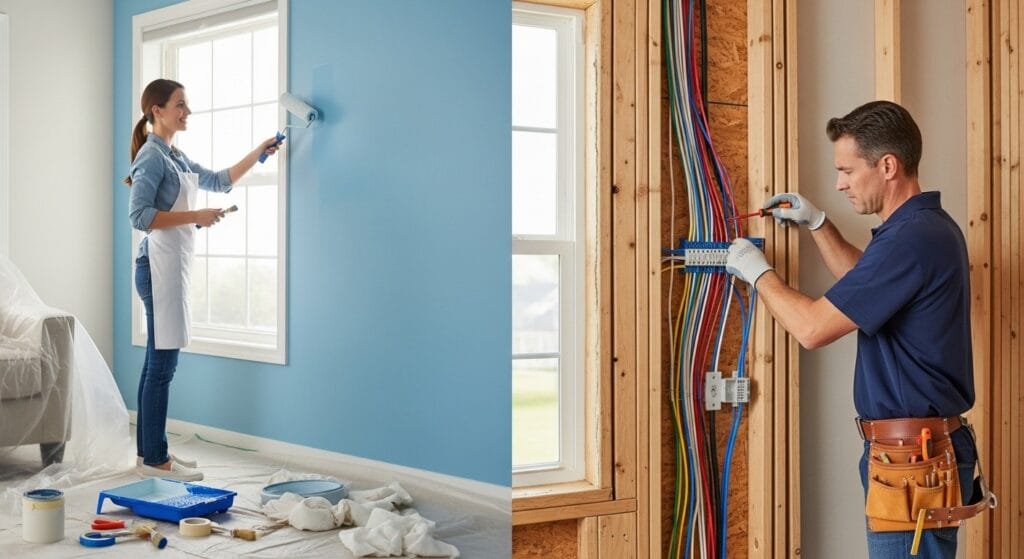
You’ve been pinning bathroom makeovers and kitchen transformations for months. The vision is crystal clear in your mind. But then comes the million-dollar question: should you tackle this project yourself or call in the professionals?
This decision can make or break your renovation experience. Get it right, and you’ll save money while gaining new skills or enjoying a flawless finish from experienced hands. Get it wrong, and you might face costly mistakes, project delays, or safety hazards that haunt you for years.
The truth is, there’s no one-size-fits-all answer. Some projects practically beg for professional expertise, while others are perfect weekend DIY adventures. The key is understanding where your specific project falls on that spectrum and being honest about your capabilities, timeline, and budget.
1. Assess Your Skill Level Honestly

Before you even think about remodeling planning tips or comparing quotes, take a hard look at what you actually know how to do. This isn’t about ego – it’s about setting yourself up for success.
Start by making a list of projects you’ve completed successfully. Did you install that peel and stick tile backsplash without issues? Great, that shows you can handle precise measurements and follow installation instructions. But have you ever worked with electrical wiring, plumbing connections, or structural supports? These skills don’t translate directly from simpler projects.
Consider the learning curve too. Some tasks require months or years of experience to master, while others can be learned through a few YouTube tutorials and practice. Painting walls, installing shelving, or even building a DIY raised garden bed are relatively forgiving projects. Relocating plumbing lines or removing load-bearing walls? Not so much.
Be especially cautious with your first major renovation. Many homeowners overestimate their abilities based on watching professionals work or following renovation shows. The reality is that contractors make difficult work look easy because they’ve solved the same problems hundreds of times.
2. Understand the True Cost Comparison
The home renovation costs debate isn’t as simple as DIY being cheaper. Yes, you’ll save on labor costs, which typically account for 20-35% of a contractor’s quote. But that’s only part of the story.
When you DIY, you’ll need to buy or rent specialized tools that professionals already own. A tile saw, pneumatic nailer, or concrete mixer can add hundreds or thousands to your budget. Factor in the cost of mistakes too – that crooked tile installation or incorrectly measured countertop cut represents wasted materials and your time.
Professionals bring buying power you don’t have. They often get contractor discounts on materials, sometimes 20-40% off retail prices. They also know which products offer the best value and durability for your specific application. That knowledge alone can prevent expensive do-overs down the line.
Time is money, especially when your kitchen or bathroom is out of commission. A professional crew might complete in two weeks what takes you three months of weekends. During that time, are you eating takeout every night because your kitchen is unusable? Those costs add up quickly and rarely appear in DIY vs contractor calculations.
3. Identify Projects That Require Licensed Professionals

Some renovation work isn’t just difficult – it’s legally required to be completed by licensed professionals. Ignoring these requirements can void your insurance, decrease your home’s value, and create serious safety hazards.
Electrical work beyond simple fixture replacements almost always requires a licensed electrician. This includes adding circuits, upgrading your electrical panel, or installing hardwired appliances. The risks of DIY electrical work range from house fires to electrocution, and inspectors will flag unpermitted work when you sell your home.
Major plumbing modifications fall into the same category. Running new water lines, relocating drains, or installing gas connections should be handled by licensed plumbers. Even if you feel confident, most municipalities require permits and inspections for this work. A licensed professional knows the local codes and ensures everything passes inspection the first time.
Structural changes always demand professional expertise. Removing walls, adding windows or doors, or modifying your home’s foundation affects the entire structure’s integrity. Engineers and licensed contractors understand load distribution, proper support systems, and building codes that keep your home safe. For projects like a basement finishing or attic conversion, professional guidance becomes essential.
According to the National Association of Home Builders, nearly 35% of renovation insurance claims stem from improper DIY work or unlicensed contractors. That’s a risk most homeowners can’t afford to take.
4. Evaluate Your Available Time and Energy
Renovations consume more time than you think. That bathroom update you estimated at two weekends? Plan on four to six if you’re being realistic. And that’s assuming everything goes smoothly, which rarely happens.
Consider your current life situation honestly. Do you work long hours? Have young children who need supervision? Already feeling stretched thin with existing commitments? Adding a major DIY project to that mix often leads to half-finished renovations that languish for months.
Think about the project timeline too. Certain renovations have natural deadlines – maybe you’re hosting holiday gatherings or have family visiting. Professional contractors can guarantee completion dates (usually with penalties if they miss them). Your DIY timeline depends entirely on your available hours, energy levels, and whether unexpected complications arise.
The physical demands matter as well. Demolition, carrying materials, and repetitive tasks like tiling or painting require sustained physical effort. If you’re working on your small bathroom renovation after a full workday, will you have the stamina to do quality work? Fatigue leads to mistakes, injuries, and poor craftsmanship.
5. Consider the Complexity and Risk Factors
Some projects carry higher stakes than others. Messing up paint color selection for your living room? Annoying and expensive, but fixable with another coat. Incorrectly installing a shower pan? You’re looking at water damage, mold growth, and a complete teardown to fix.
Water-related projects require special attention. Improper waterproofing in bathrooms, incorrect flashing around windows, or poorly sealed exterior work can cause damage that exceeds the original project cost many times over. These issues often don’t appear immediately either – they develop slowly over months or years.
Roof work represents another high-risk category. Beyond the obvious fall danger, improper roof installation or repair leads to leaks, structural damage, and voided manufacturer warranties. Most roofing material warranties are only valid when installed by certified professionals.
When it comes to when to hire a professional, consider projects involving your home’s envelope (roof, windows, siding) or moisture barriers as automatic candidates for professional work. The long-term consequences of errors simply aren’t worth the upfront savings. For more guidance on high-ROI renovations, understanding which projects deliver the best return often points toward professional installation.
6. Know When DIY Makes Perfect Sense
Not every project requires professional help. Many home improvement ideas are perfectly suited for confident DIYers who want to save money and add personal touches to their spaces.
Cosmetic updates top the DIY-friendly list. Painting walls, installing floating shelves, or updating cabinet hardware require minimal specialized knowledge and carry low risk. Even if the result isn’t absolutely perfect, these projects rarely cause lasting problems or safety issues.
Decorative finishing work often falls into DIY territory too. Installing trim, replacing light fixtures (without new wiring), or creating accent walls with peel-and-stick wallpaper let you personalize your space without major investment or risk. These projects also offer great learning opportunities for future renovations.
Landscaping and outdoor improvements frequently work well as DIY projects. Building a backyard fire pit, creating a vertical garden wall, or installing outdoor lighting can transform your space without requiring contractor-level expertise. The stakes are generally lower since errors won’t compromise your home’s structure or safety systems.
Organization projects like closet organization or pantry storage hacks make excellent DIY candidates. You can work at your own pace, customize solutions to your exact needs, and easily modify or undo changes if needed.
7. Explore the Hybrid Approach
The DIY vs contractor debate doesn’t have to be all-or-nothing. Many successful renovations use a hybrid model where professionals handle technical or risky elements while you tackle the simpler tasks.
Consider hiring contractors for the critical infrastructure work – plumbing, electrical, structural modifications – then doing the finishing work yourself. This approach gives you the safety and expertise where it matters most while keeping costs down on labor-intensive but straightforward tasks like painting or installing trim.
The demolition phase often works well as DIY territory. Tearing out old cabinets, removing flooring, or demolishing non-structural walls requires more muscle than skill. Just be certain you understand what’s structural before you start swinging that sledgehammer. Contractors typically charge significant labor for demo work, so handling it yourself can reduce costs considerably.
This hybrid approach works especially well for kitchen renovations. Have professionals install cabinets, countertops, and appliances, then handle the backsplash installation and painting yourself. You get professional results where precision matters most while adding personal touches through your own work.
Communication becomes critical with this approach. Make sure contractors know which portions you’re handling and understand the timeline. Some professionals won’t warranty their work if you’re interfering with parts of the project, so clarify these details upfront.
Choosing between DIY and hiring professionals isn’t about proving your capabilities or saving every possible dollar. It’s about understanding your project’s specific requirements, being realistic about your skills and time, and making the choice that leads to the best long-term outcome for your home.
The most successful renovations often blend both approaches strategically. Maybe you paint and install shelving while professionals handle the plumbing and electrical work. Or perhaps you save DIY efforts for lower-stakes projects while investing in professional expertise for complex renovations.
What matters most is that you’re honest with yourself about the factors we’ve discussed. When you match your project to the right approach – whether that’s rolling up your sleeves, calling in the pros, or finding a middle ground – you set yourself up for a renovation that you’ll love for years to come.
Ready to move forward with confidence? Take time to really evaluate each factor as it applies to your specific project. Your future self (and your home) will thank you for making a thoughtful, informed decision rather than rushing into a choice you might regret.

Sanjai creates easy, affordable home decor ideas that anyone can try. Through simple tips and curated finds, he helps you style rooms you’ll love coming home to.